
The Brain The Brain 4 Major regions Cerebrum
The Brain
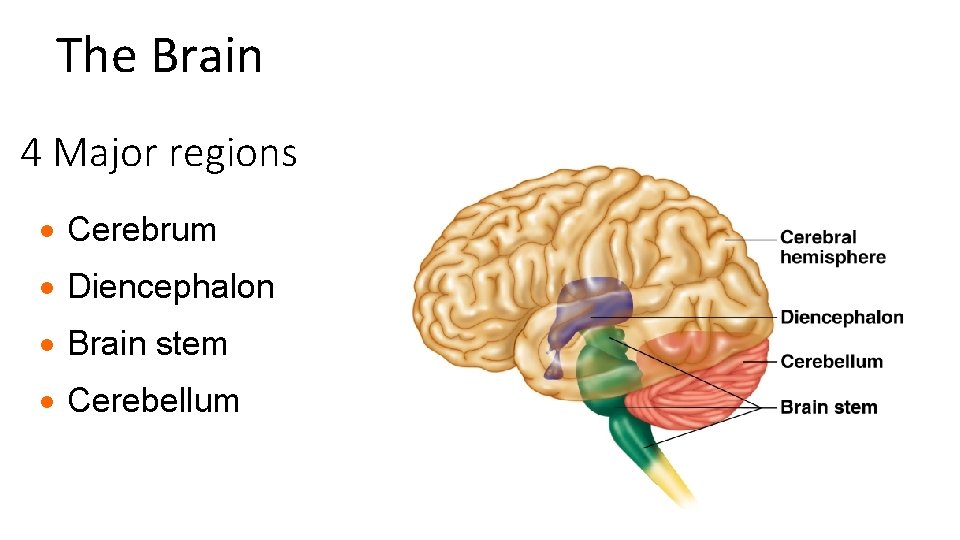
The Brain 4 Major regions · Cerebrum · Diencephalon · Brain stem · Cerebellum
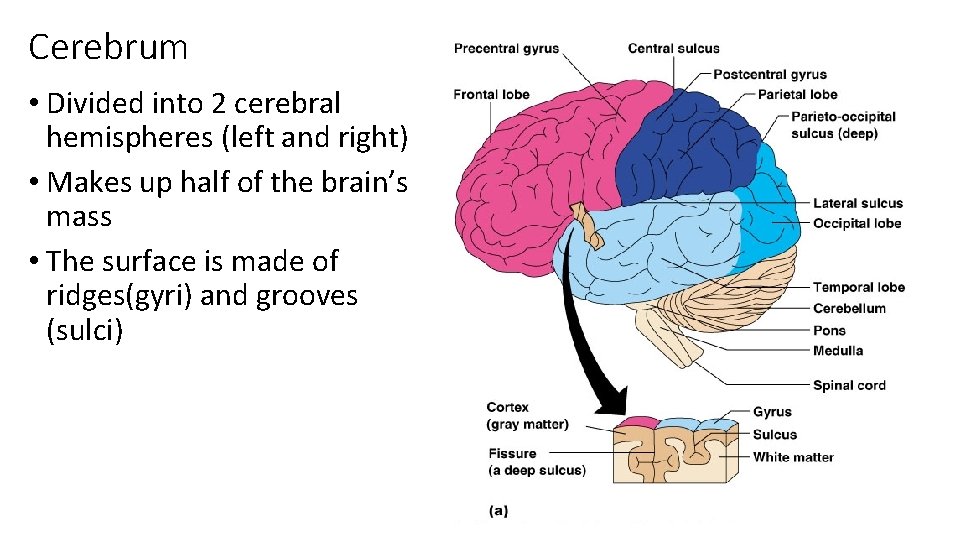
Cerebrum • Divided into 2 cerebral hemispheres (left and right) • Makes up half of the brain’s mass • The surface is made of ridges(gyri) and grooves (sulci)
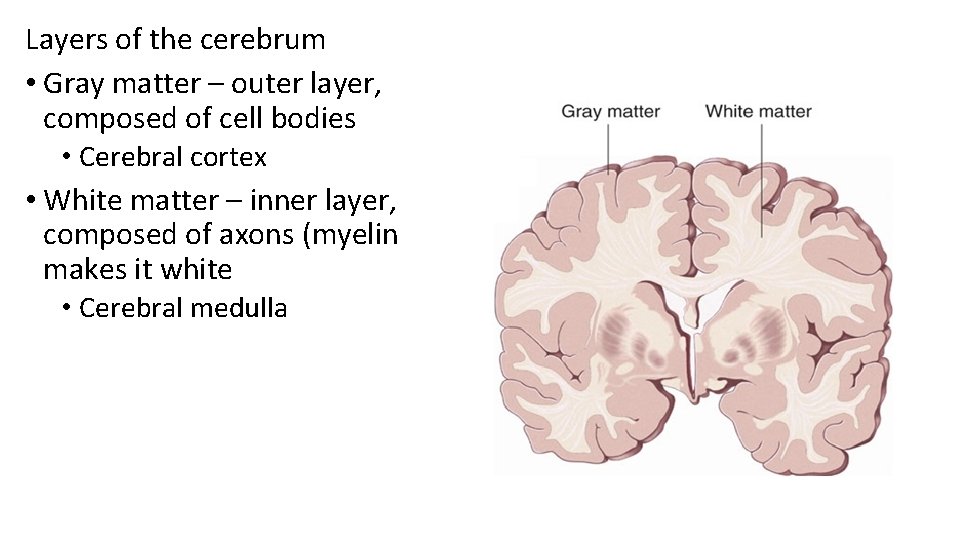
Layers of the cerebrum • Gray matter – outer layer, composed of cell bodies • Cerebral cortex • White matter – inner layer, composed of axons (myelin makes it white • Cerebral medulla
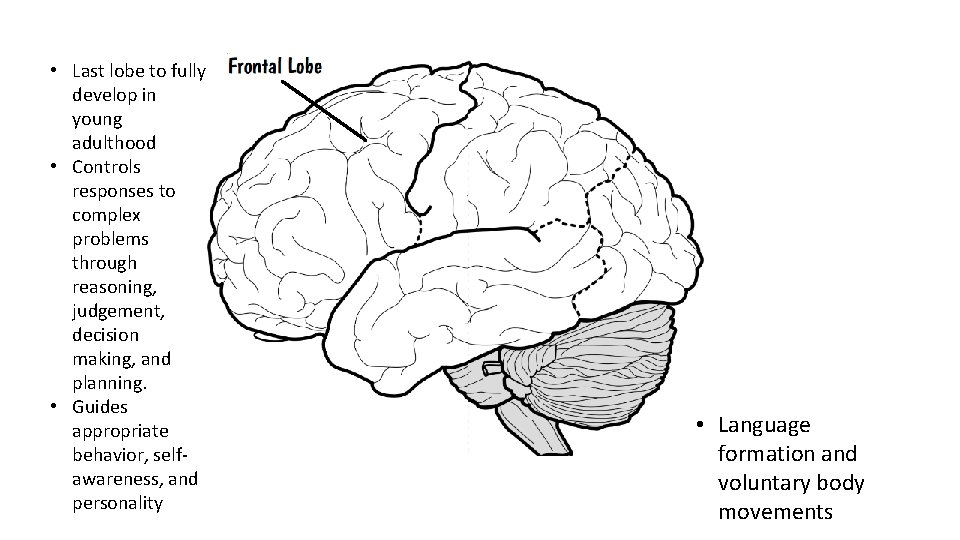
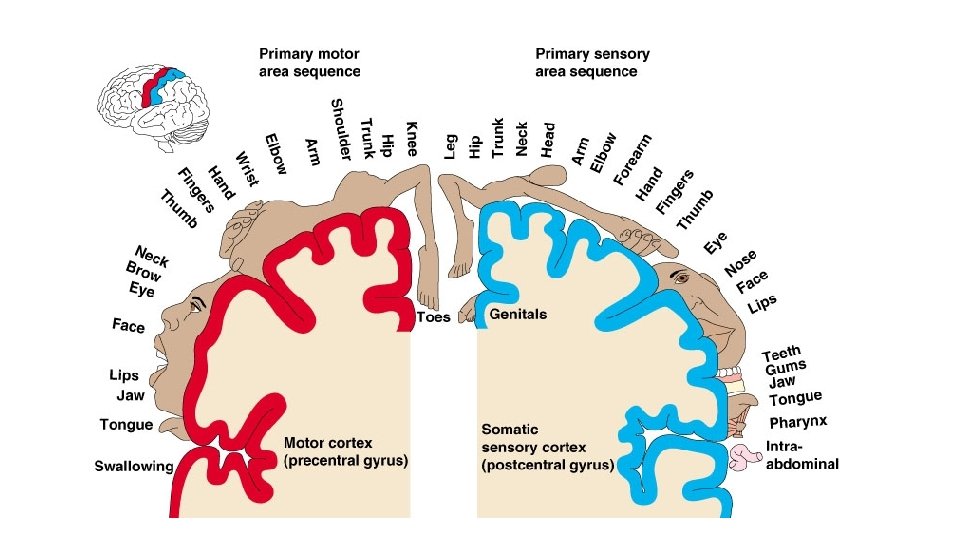
• Last lobe to fully develop in young adulthood • Controls responses to complex problems through reasoning, judgement, decision making, and planning. • Guides appropriate behavior, selfawareness, and personality • Language formation and voluntary body movements
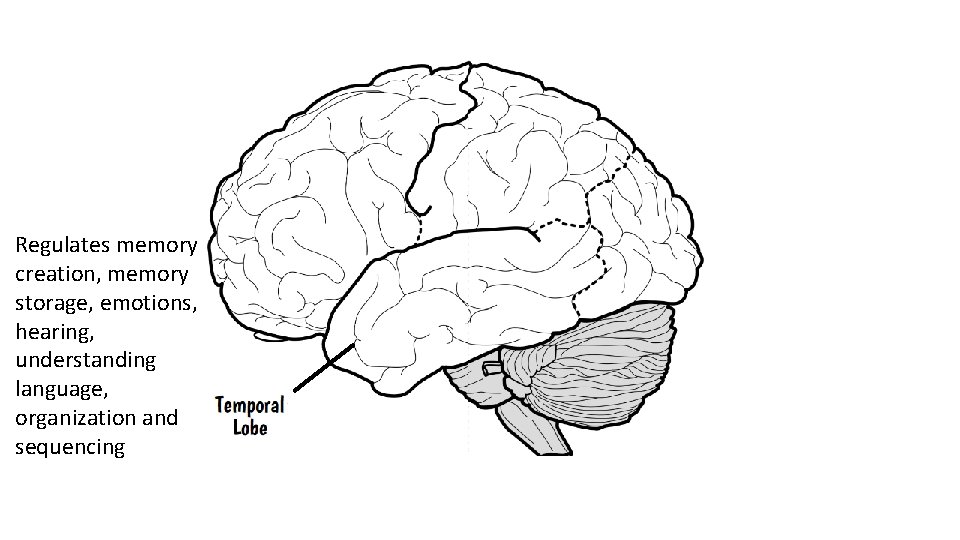
• Regulates memory creation, memory storage, emotions, hearing, understanding language, organization and sequencing
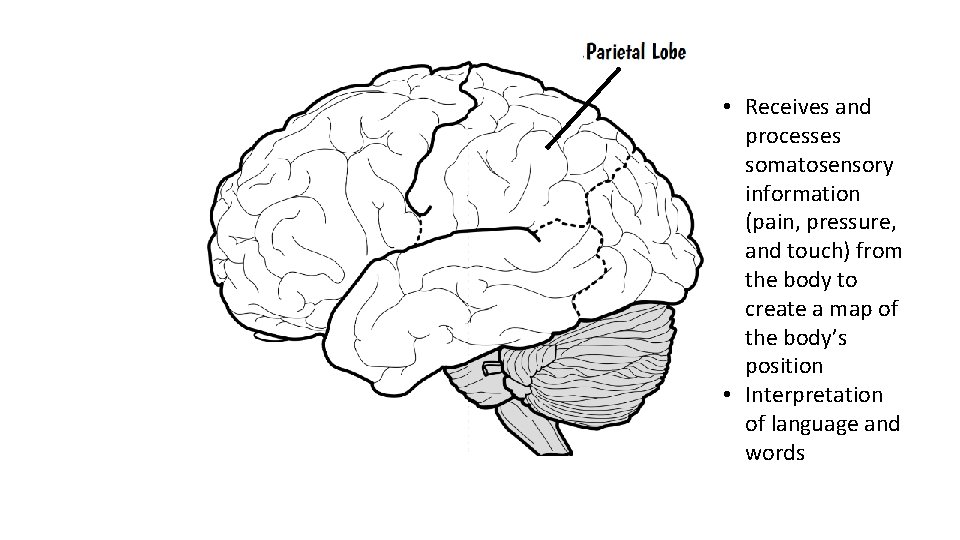
• Receives and processes somatosensory information (pain, pressure, and touch) from the body to create a map of the body’s position • Interpretation of language and words
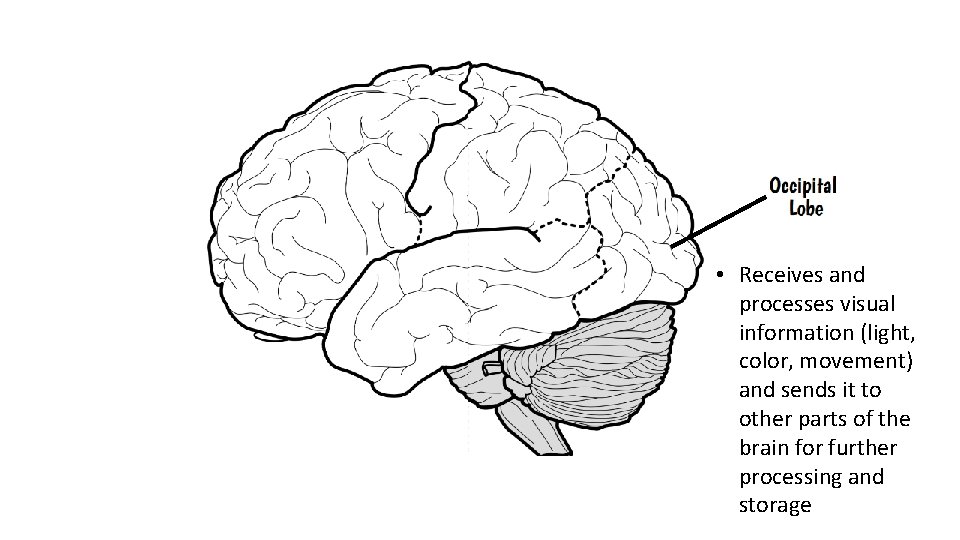
• Receives and processes visual information (light, color, movement) and sends it to other parts of the brain for further processing and storage
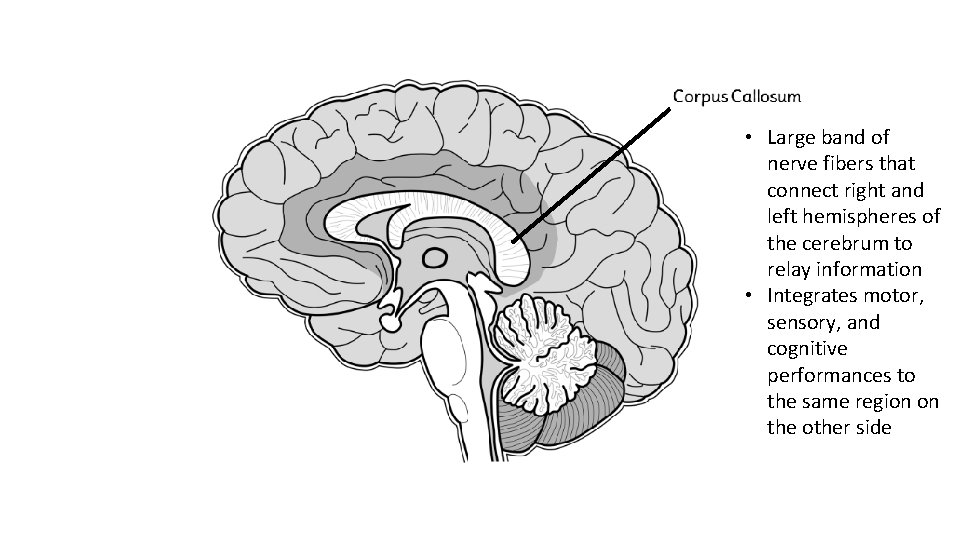
• Large band of nerve fibers that connect right and left hemispheres of the cerebrum to relay information • Integrates motor, sensory, and cognitive performances to the same region on the other side
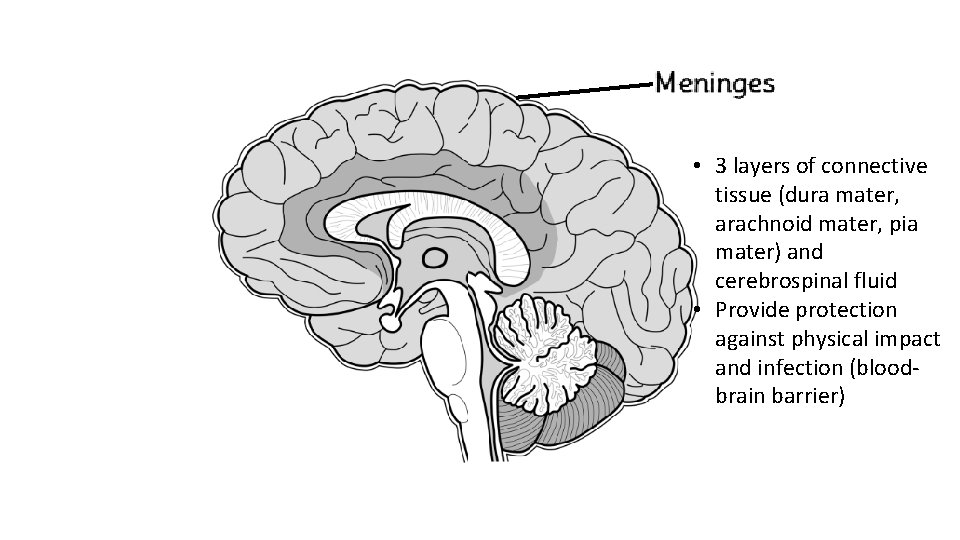
• 3 layers of connective tissue (dura mater, arachnoid mater, pia mater) and cerebrospinal fluid • Provide protection against physical impact and infection (bloodbrain barrier)
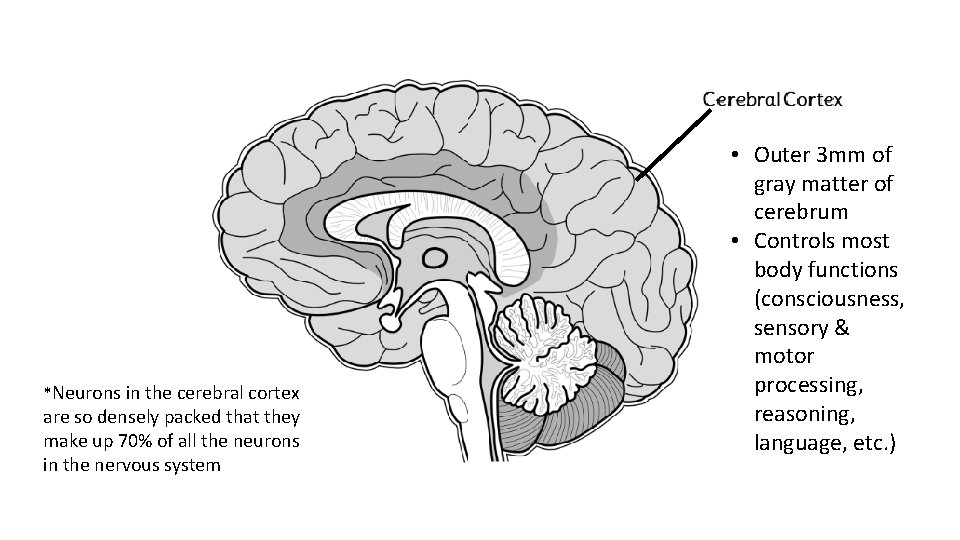
*Neurons in the cerebral cortex are so densely packed that they make up 70% of all the neurons in the nervous system • Outer 3 mm of gray matter of cerebrum • Controls most body functions (consciousness, sensory & motor processing, reasoning, language, etc. )
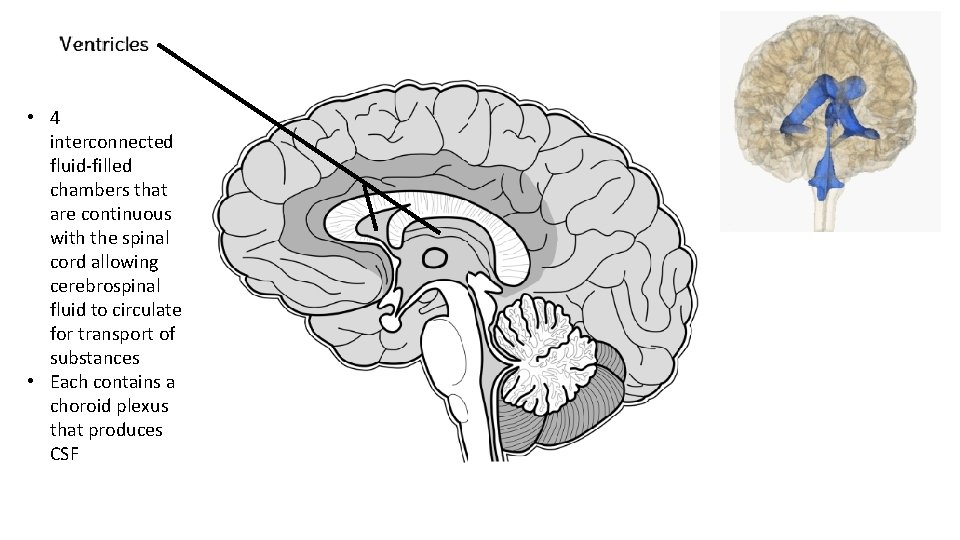
• 4 interconnected fluid-filled chambers that are continuous with the spinal cord allowing cerebrospinal fluid to circulate for transport of substances • Each contains a choroid plexus that produces CSF
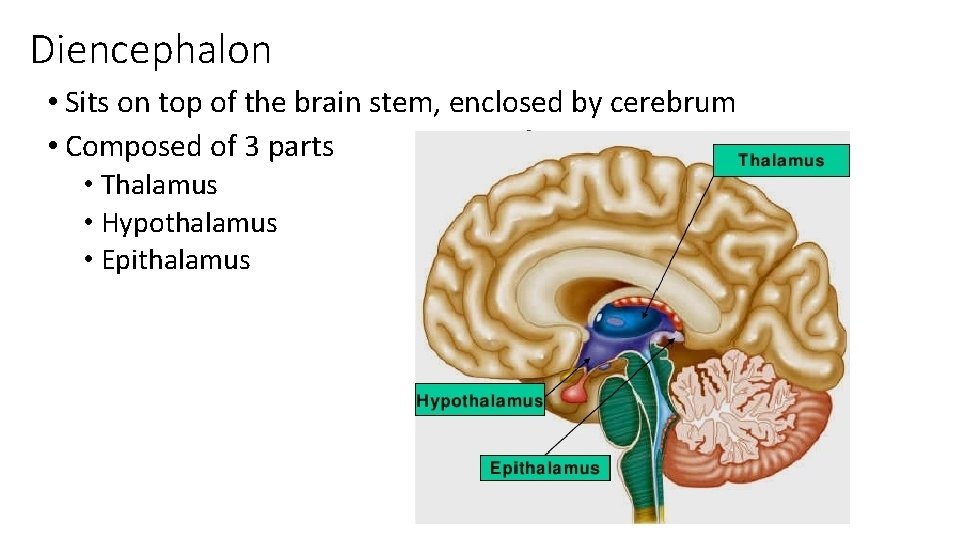
Diencephalon • Sits on top of the brain stem, enclosed by cerebrum • Composed of 3 parts • Thalamus • Hypothalamus • Epithalamus
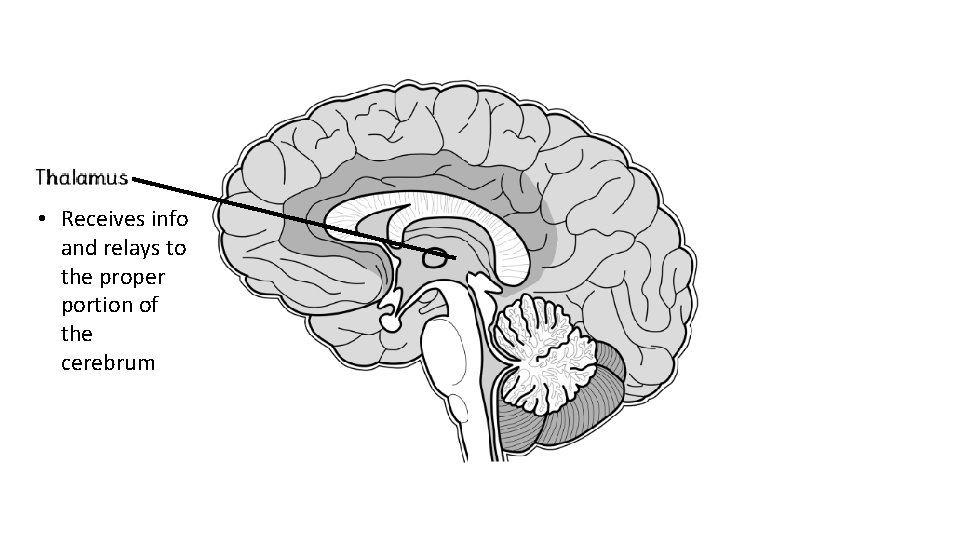
• Receives info and relays to the proper portion of the cerebrum
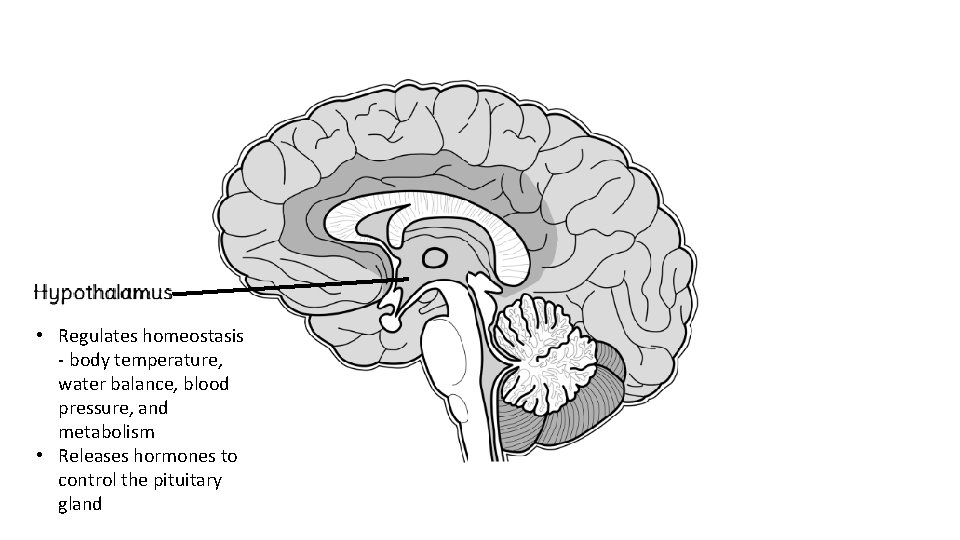
• Regulates homeostasis - body temperature, water balance, blood pressure, and metabolism • Releases hormones to control the pituitary gland
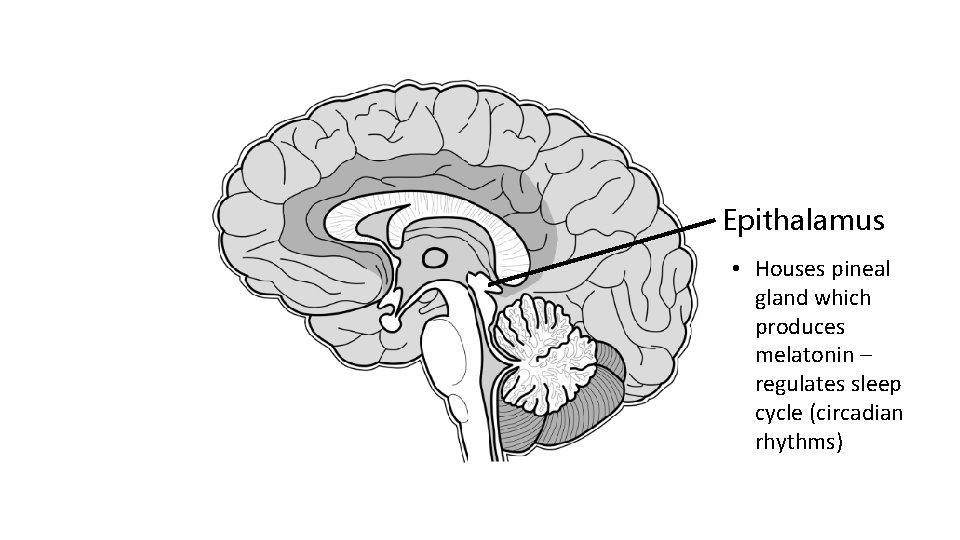
Epithalamus • Houses pineal gland which produces melatonin – regulates sleep cycle (circadian rhythms)
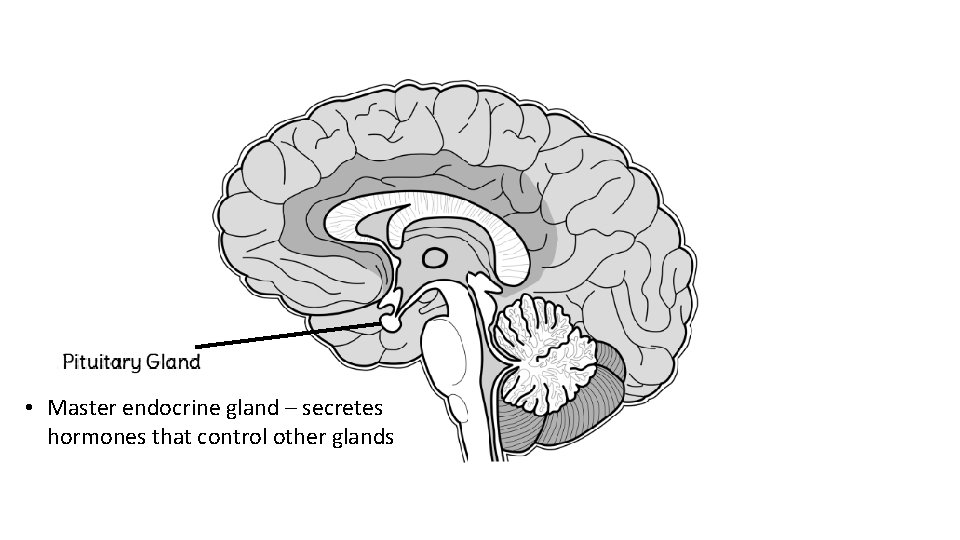
• Master endocrine gland – secretes hormones that control other glands
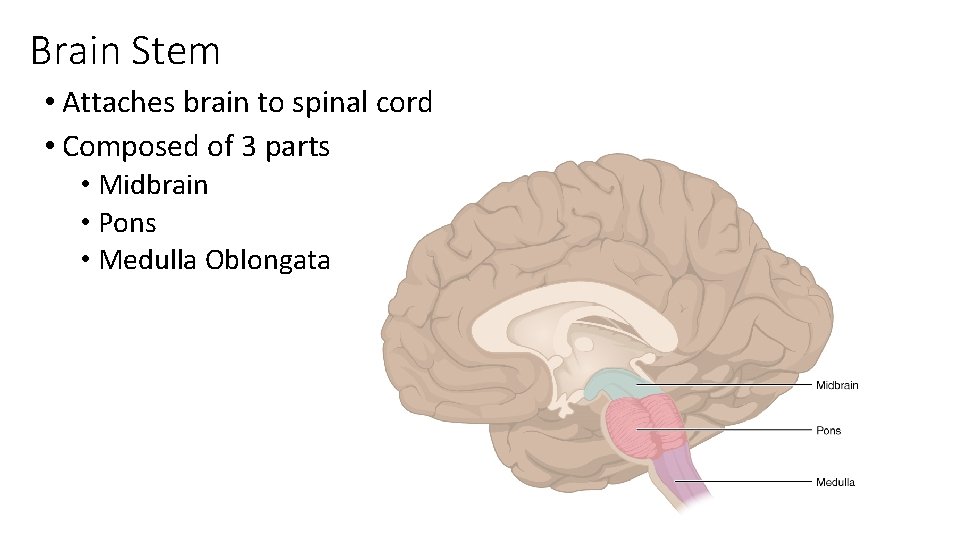
Brain Stem • Attaches brain to spinal cord • Composed of 3 parts • Midbrain • Pons • Medulla Oblongata
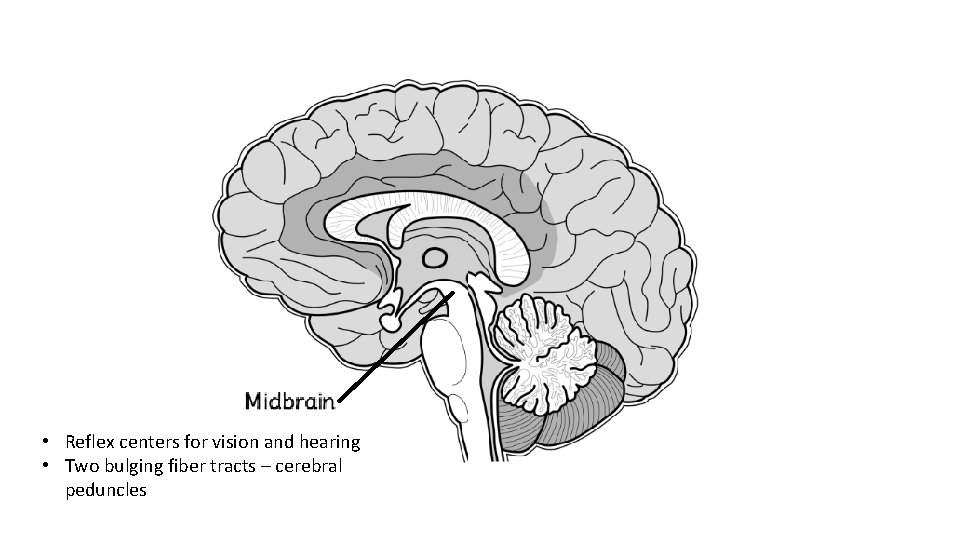
• Reflex centers for vision and hearing • Two bulging fiber tracts – cerebral peduncles
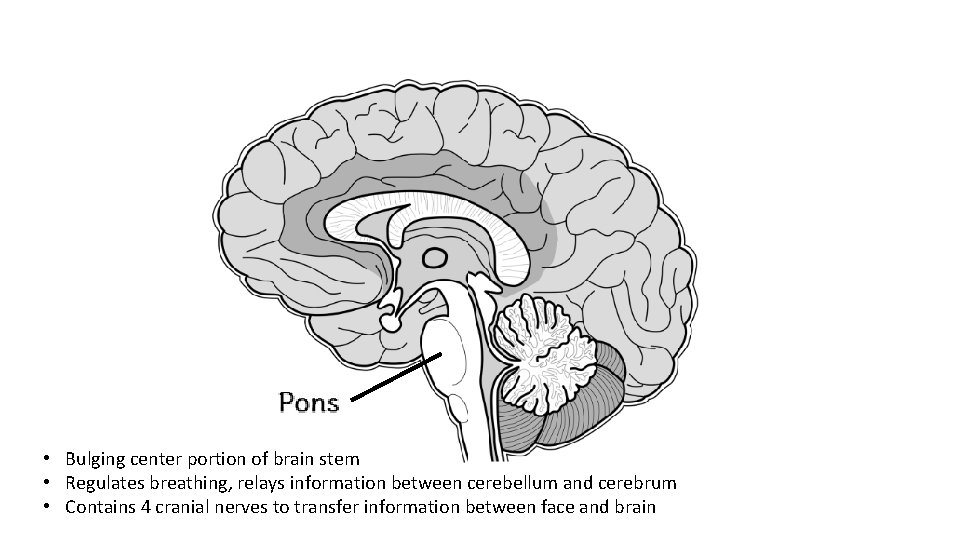
• Bulging center portion of brain stem • Regulates breathing, relays information between cerebellum and cerebrum • Contains 4 cranial nerves to transfer information between face and brain
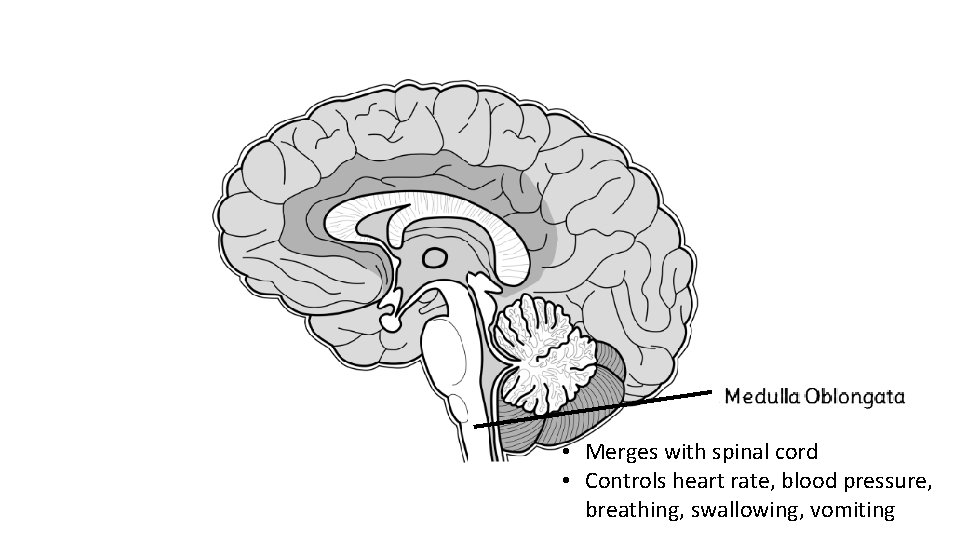
• Merges with spinal cord • Controls heart rate, blood pressure, breathing, swallowing, vomiting
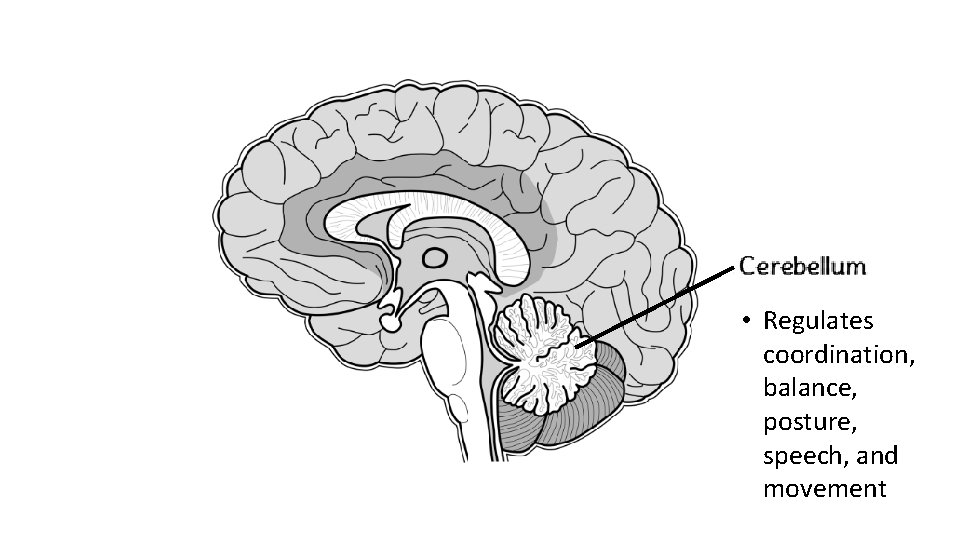
• Regulates coordination, balance, posture, speech, and movement
- Slides: 23