
The Brain Poudre High School By Ben Kirk
The Brain Poudre High School By: Ben Kirk
The Brain • General: – Part of the Central Nervous System – Large, mushroom shaped organ • Approximately 3 lbs. in adults – 4 major components • Cerebrum, Cerebellum, Diencephalon, Brain Stem
The Brain • Cerebrospinal Fluid (CSF): Circulates throughout the subarachnoid space surrounding the spinal cord and brain, and within the ventricles of the brain – Ventricles: cavities within the brain that communicate with one another • 2 lateral ventricles • 1, 3 rd ventricle • 1 4 th ventricle – 80 -150 ml CSF • Produce about 500 ml CSF per day (Total replacement of CSF every 8 hours) – Made of glucose, urea, proteins, and salt – Functions as a shock absorber and circulatory medium • Nutrients, waste, chemical messengers
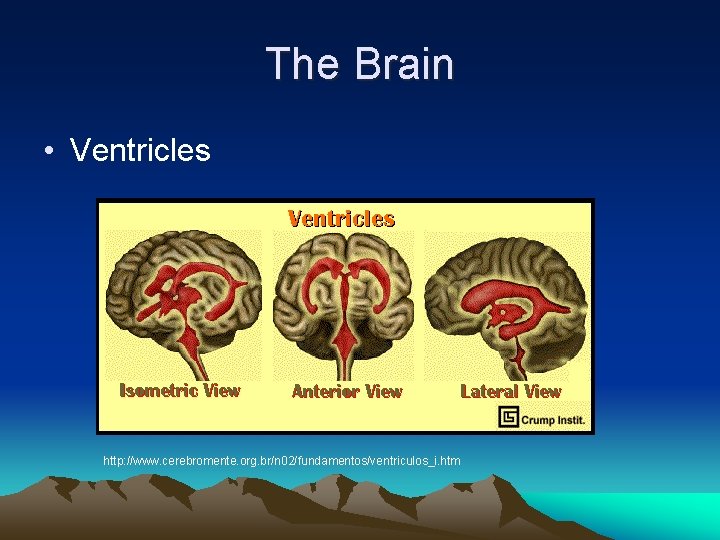
The Brain • Ventricles http: //www. cerebromente. org. br/n 02/fundamentos/ventriculos_i. htm
The Brain • Blood Supply: – The brain is a highly active organ, thus needing an extensive blood supply (O 2 and nutrients) – Arterial Blood: Delivered via internal carotids and vertebral arteries • Circle of Willis – Venous Return: Delivered via internal jugular veins
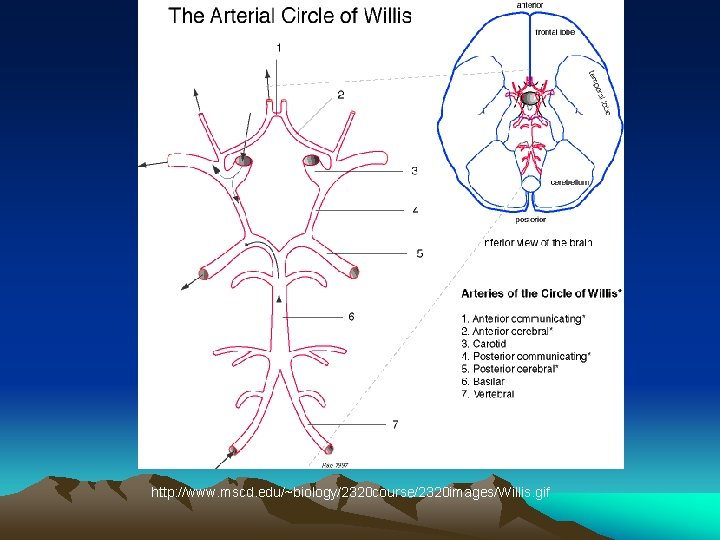
http: //www. mscd. edu/~biology/2320 course/2320 images/Willis. gif
The Brain • Blood Supply: – Interruptions: • Brief blockage or interruption = faint – Karate chop to neck: Internal carotids – Blow to jaw: Vertebral and brain stem • 1 -2 minute blockage = weakened cells • >4 minutes of blockage = Permanent damage to cells • Cerebrovascular accident (CVS)/Stroke: Neurons die in localized areas – Only specific functions impaired – Neurons in CNS cannot regenerate – Localized takeover by neighboring neurons
The Brain • Blood-Brain Barrier (BBB): – Regulates what can and cannot enter cerebral circulation – Made of tightly packed endothelial cells lining the capillaries of the CNS • Can enter: CO 2, ammonia, lipids (steroids, alcohols) • Cannot enter: antibiotics, H 20, Ions
The Brain Stem: Lower extension of the brain where it connects to the spinal cord • Medulla Oblongata: Continuation of the spinal cord that contains ALL ascending and descending tracts – White matter only (myelinated axons) – All communication between brain and spinal cord passes through the Medulla Oblongata – Both pyramidal tracts cross over in the Medulla • Decussation of pyramids: one side of brain controls the other side of the body – Severe blow to jaw twists this region of the brain stem resulting in knockout – Contains nuclei that control rate and force of heartbeat and breathing rhythm.
The Brain • Brain Stem: – Pons: Structure just above the medulla • Consists of nuclei and white matter • Connects spinal cord to brain and brain parts together • Helps regulate breathing, consciousness and sleep – Midbrain: Between the Pons and the lower portion of the diencephalon • Contains motor fibers connecting the cerebral cortex to the spinal cord • Regulates most occulomotor responses (eye movement, pupil dilation, responses to sight), hearing and body movement
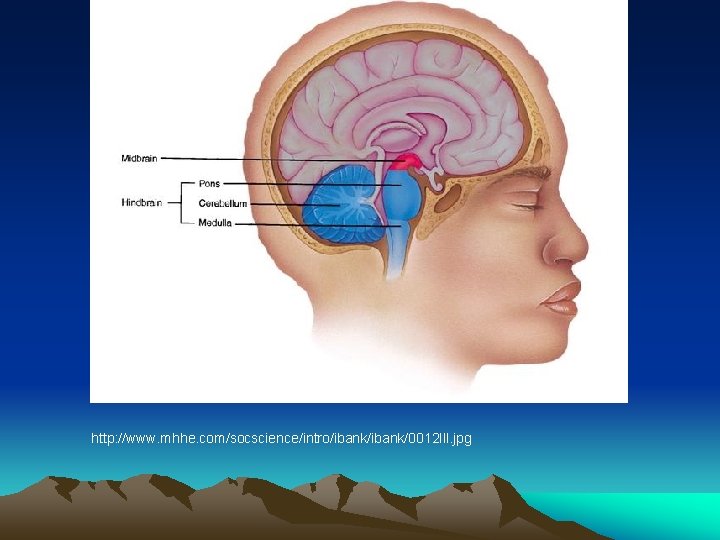
http: //www. mhhe. com/socscience/intro/ibank/0012 lll. jpg
The Brain • Reticular Activating System (RAS): Center of arousal and activation – – – Cardiac Rhythm: 24 hour sleep and wake patterns Consciousness results from RAS activation Sleep results from RAS inactivation Feedback causes increased activation and arousal Altered by cocaine, alcohol. Anesthetics, meditation, and amphetamines – Faulty RAS • ADHD: Increased RAS activation, leads to abnormal stimulation • Coma: semi permanent sleep caused by faulty or injured RAS
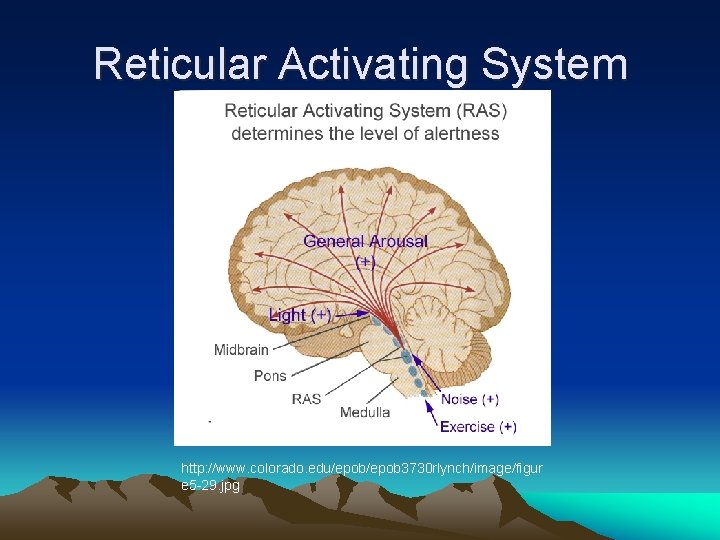
Reticular Activating System http: //www. colorado. edu/epob 3730 rlynch/image/figur e 5 -29. jpg
The Brain • Diencephalon: – Integrates conscious and unconscious sensory information and motor commands – Thalamus (Gray Matter): Relay station for all ascending sensory information. • Interprets impulses such as pain, heat, pressure and light touch – Hypothalamus: Contains homeostatic mechanisms primarily • Autonomic Nervous System: (heart rate, gastrovascular movement, bladder contractions • Body Temperature • Rage and Aggression • Food intake/hunger • Thirst center • Consciousness and Sleep patterns
The Brain • Cerebrum: Bulk of the Brain – Cerebral Cortex: Thin layer of gray matter making up the outer covering of the cerebrum • 6 layers of cell bodies – Development: The brain increases in size, with gray matter increasing in size faster than white matter • Causes folds (fissures) to form • Longitudinal Fissure: Separates right an left hemispheres – Corpus Callosum: White matter that connects the right and left hemispheres • Larger in females
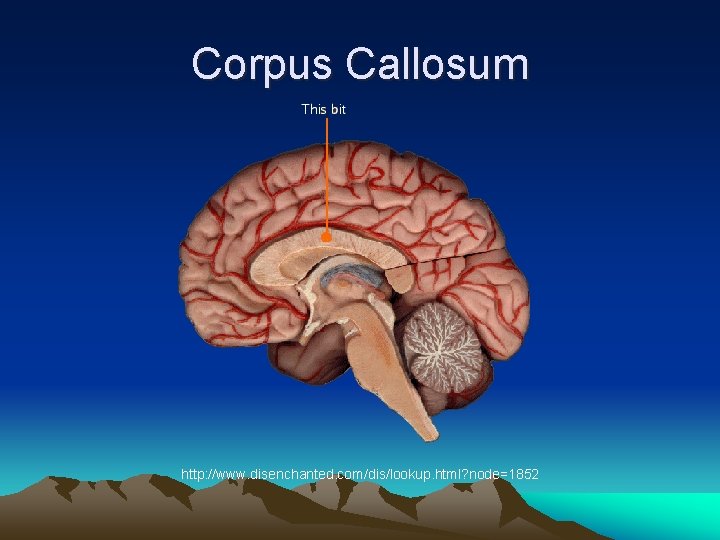
Corpus Callosum http: //www. disenchanted. com/dis/lookup. html? node=1852
The Brain • Cerebrum: – Lobes: • Each hemisphere has 4 lobes divided by sulci (shallow) or fissures (deep) • Frontal, parietal, occipital, and temporal • Functions: – Frontal (primary Motor Cortex): Voluntary control of skeletal muscles – Parietal (primary Sensory Cortex): Conscious perception of pain, temperature, taste, pressure, and vibration – Occipital (Visual Cortex): Conscious perception of visual stimuli – Temporal (Auditory and Olfactory Cortex): Conscious perception of auditory and olfactory (smell) stimuli
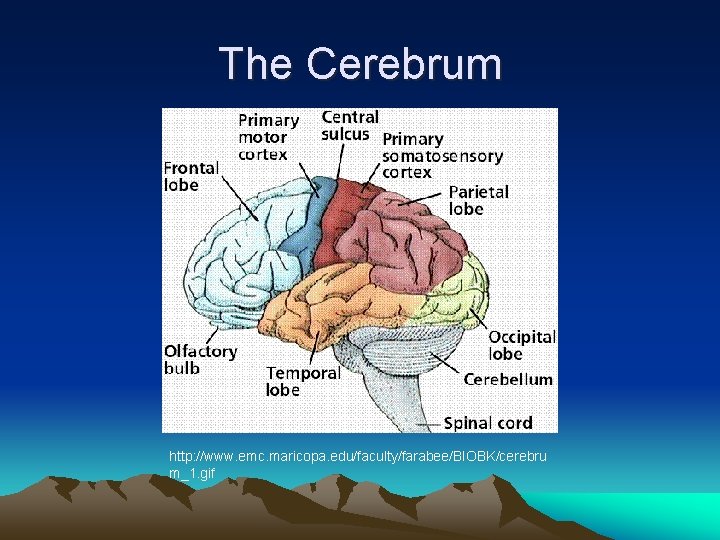
The Cerebrum http: //www. emc. maricopa. edu/faculty/farabee/BIOBK/cerebru m_1. gif
The Brain • Cerebrum: – Also has a function in memory – Brain Lateralization: – Left hemisphere: right handed control, written and spoken language, numerical and scientific skills, and reasoning – Right Hemisphere: Random, intuition, subjectivity, synthesizing, and artistic
The Brain • Cerebrum: – White Matter: Myelinated Axons – 3 types • Association Fibers: Transmit impulses between gyri (bumps or elevated areas) of the same hemisphere • Commissural Fibers: Communicate one side of the brain with the other (corpus callosum) • Projection Fibers: Transmit impulses from cerebrum to other parts of the brain
The Brain • Cerebrum: – Basal Ganglia: Paired masses of gray matter within the white matter of each hemisphere • Controls subconscious movement (ex. Swinging of arms while walking) • Does not initiate movement, but provides pattern for repeated movements (walking, chewing, etc. . ) • If damaged, uncontrolled shaking results – Parkinson’s Disease • Stroke in this area results in total paralysis of opposite side of the body.
The Brain • Limbic System – Wishbone shaped group of structures encircling the brain stem (between the cerebrum and the diencephalon) – Controls emotions of pain, pressure, anger, rage, fear, sorrow, sexual feelings and affection
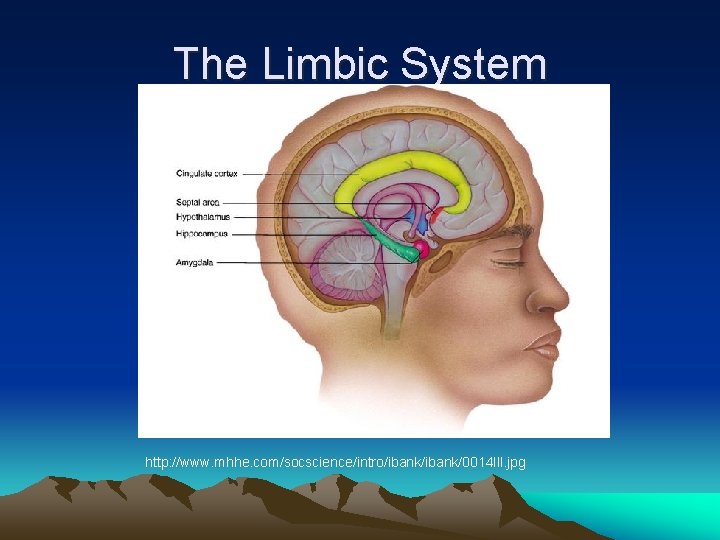
The Limbic System http: //www. mhhe. com/socscience/intro/ibank/0014 lll. jpg
The Brain • Cerebellum: – 2 nd largest part of the brain • Behind the medulla and pons, and bellow the occipital lobes – Cortex (outer covering) consists of gray matter – White matter resembles tree branches – Controls subconscious skeletal muscle movements • Balance, posture, coordination – Ataxia: lack of coordination
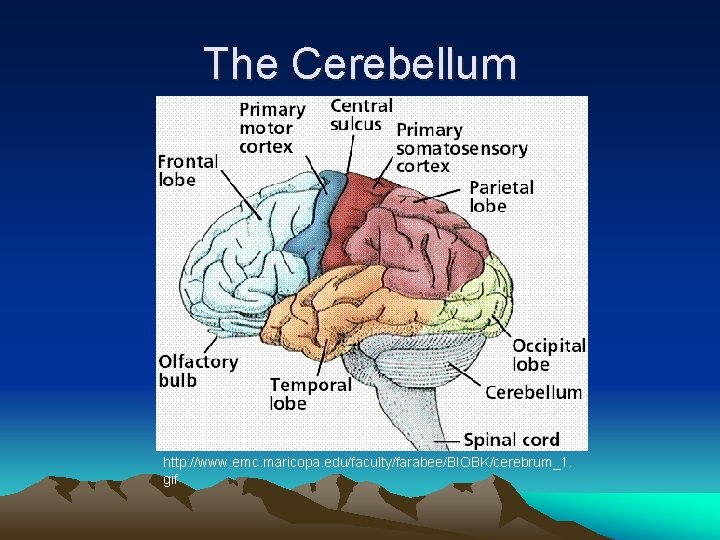
The Cerebellum http: //www. emc. maricopa. edu/faculty/farabee/BIOBK/cerebrum_1. gif
The Brain • Neurotransmitters: – Acetylcholine: Usually excitatory, skeletal neuromuscular junctions – Dopamine: Emotional responses, subconscious movements of skeletal muscles • Parkinson’s Disease – Norepinephrine: Neuromuscular and neuroglandular junctions • Related to arousal, dreaming, and mood
The Brain • Neurotransmitters: – Serotonin: Inhibitory, induces sleep, sensory reception, temperature regulation and mood – Gamma Aminobuteric Acid: Inhibitory, Target of anti-anxiety drugs like Valium – Substance P: Associated with pain • Stimulates perception of pain • Opposite of Endorphins – Eukephalins: Suppresses substance P
The Brain • Neurotransmitters: – Endorphins: Inhibits substance P • Also have a role in memory, learning, and sexual activity • Have been linked to depression and schizophrenia
The Brain • Cranial Nerves – 12 pairs of nerves – 10 pair originating from the brain stem – Designated by roman numerals. – Part of the Somatic Nervous System – Some are sensory only, while others are mixed
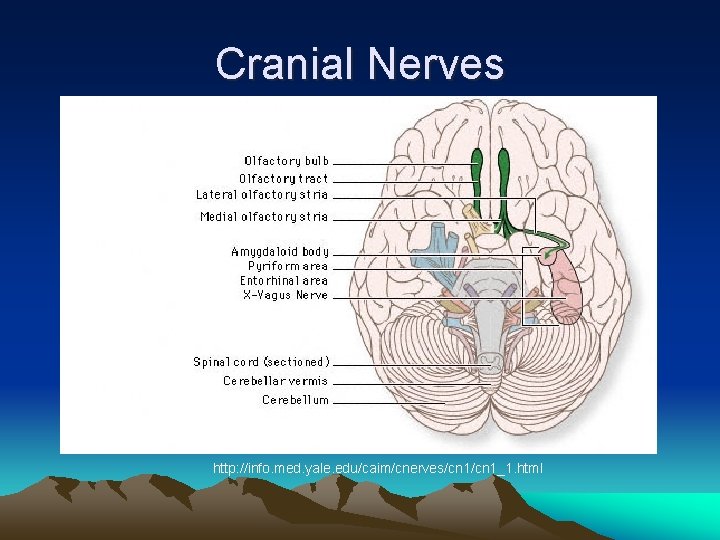
Cranial Nerves http: //info. med. yale. edu/caim/cnerves/cn 1_1. html
- Slides: 30