
The Brain as an Historical Organ How Early
The Brain as an Historical Organ How Early Experiences and Relationships Impact Current Functioning Michelle Maikoetter Child Trauma Academy Fellow
“To increase awareness and understanding of the unique needs of youth and young adults… with a mental health diagnosis or need. ”
Why are we here, really?

I used to want to save the world. To end war and bring peace to mankind. And now I know, that only love can truly save the world. So I stay, I fight, and I give, for the world I know can be. This is my mission now. Forever.
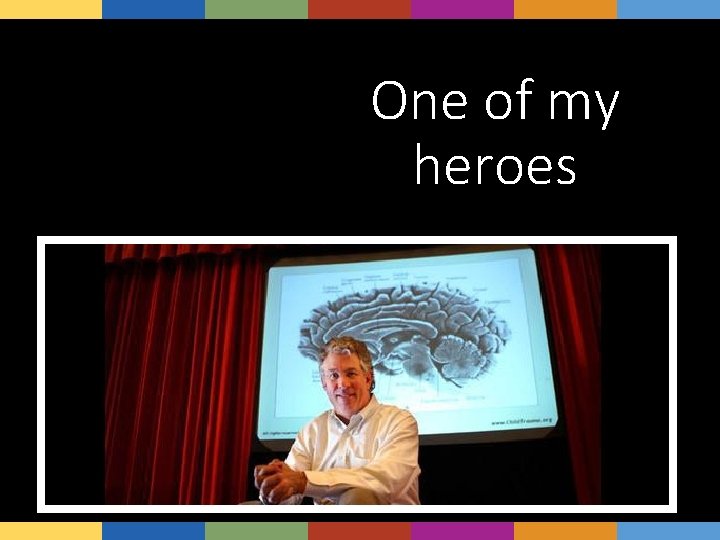
One of my heroes
What is Bruce Perry’s Neurosequential Model or NM ? s Six © Healthy Development Understanding how relationships and experiences affect brain development
“The human brain is the organ responsible for everything we do. It allows us to love, laugh, walk, talk, create or hate. For each of us, our brain’s functioning is a reflection of our experiences. ” -BP
Our approach moves us from the certainty that behavior is simple willful defiance to being curious as to what need is behind the behavior.

Curious about what?

Everything.
Curious about relationships. . .
and experiences. . .
And also Neurodevelopment
“…in order to understand trauma, we have to understand memory. In order to appreciate how children heal, we need to understand how they learn to love, how they cope with challenge, how stress affects them. ” -BP
Where do we start? At the very beginning.
Beginning at conception.
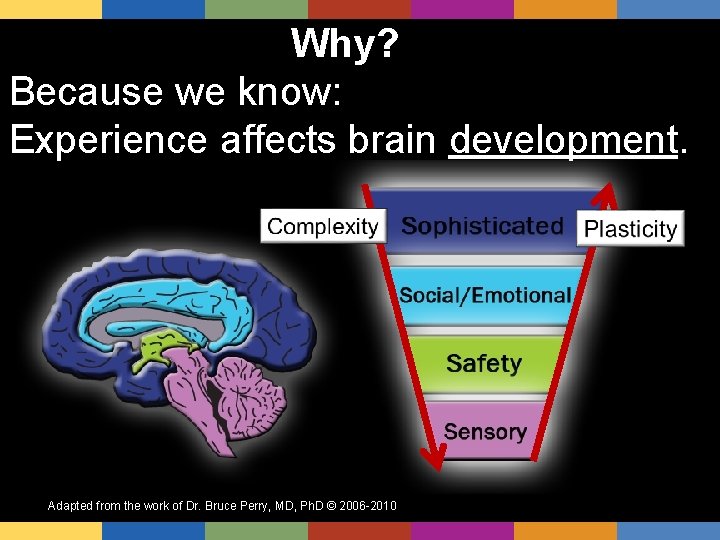
Why? Because we know: Experience affects brain development. . Adapted from the work of Dr. Bruce Perry, MD, Ph. D © 2006 -2010
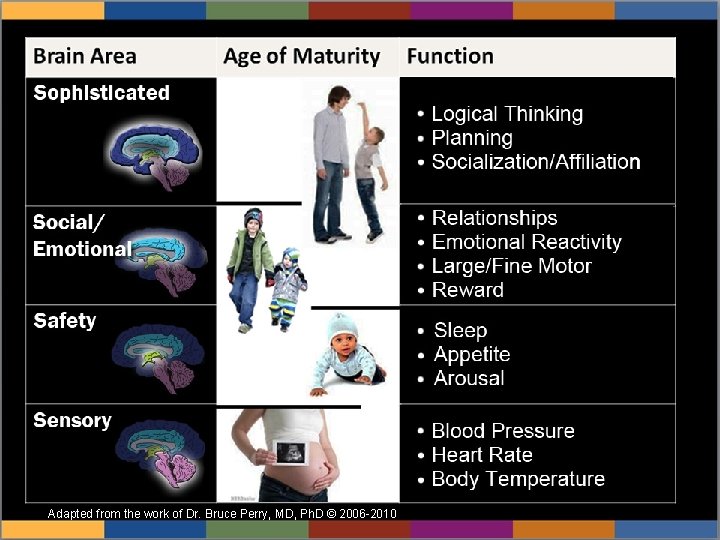
Adapted from thethe work of Dr. Bruce Perry, MD, Ph. D © 2006 -2010 Adapted from work of Dr. Bruce Perry, Ph. D © 2006 -2010
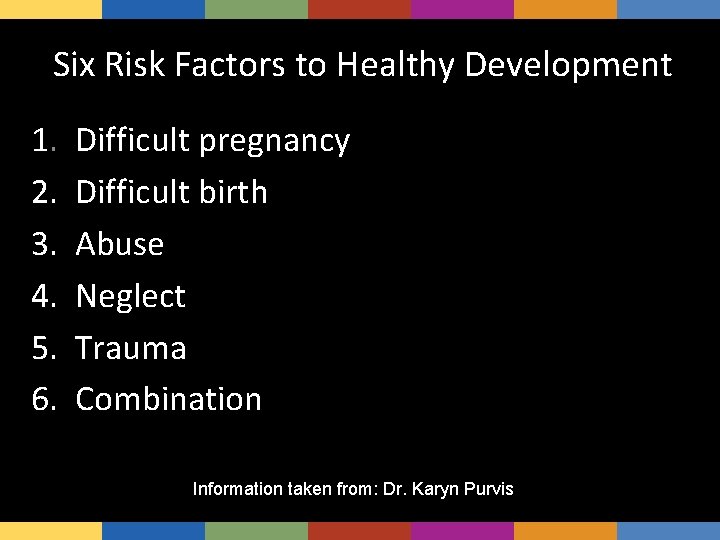
Six Risk Factors to Healthy Development 1. 2. 3. 4. 5. 6. Difficult pregnancy Difficult birth Abuse Neglect Trauma Combination Information taken from: Dr. Karyn Purvis
The Brain • • ma Organized in a hierarchical fashion, primitive to sophisticated bottom to the top from inside out all incoming sensory input enters the lower parts of the brain first
First things first. Your brain’s # 1 directive is. . .

Singing Alien video
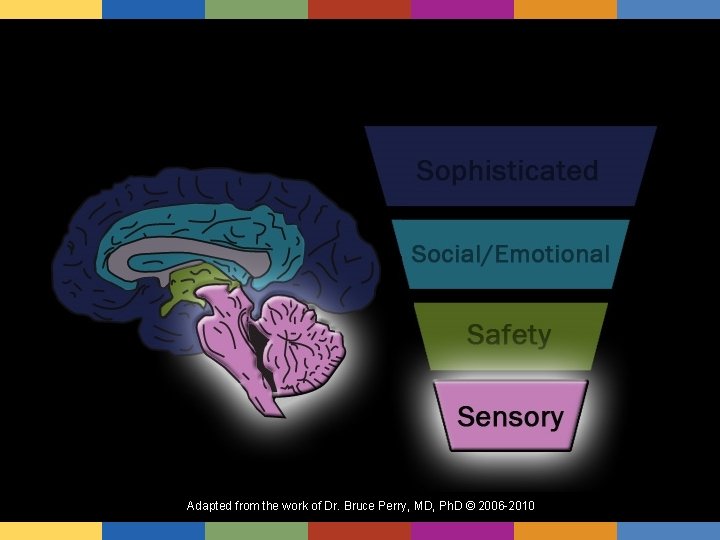
Adapted from the work of Dr. Bruce Perry, MD, Ph. D © 2006 -2010
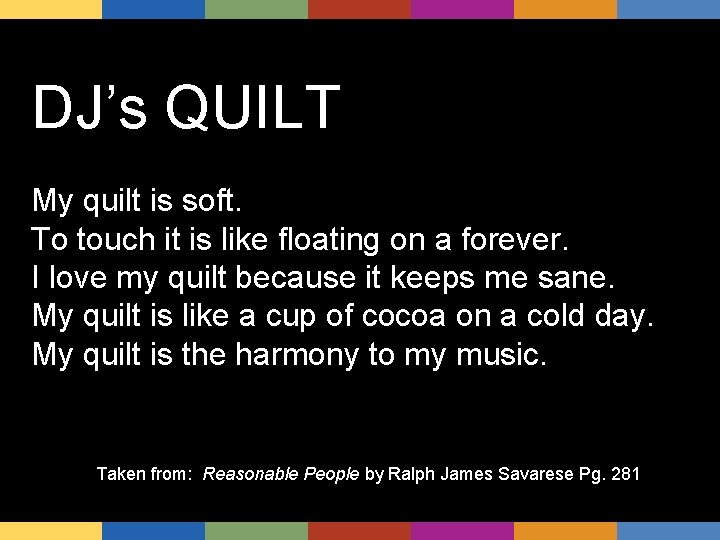
DJ’s QUILT My quilt is soft. To touch it is like floating on a forever. I love my quilt because it keeps me sane. My quilt is like a cup of cocoa on a cold day. My quilt is the harmony to my music. Taken from: Reasonable People by Ralph James Savarese Pg. 281
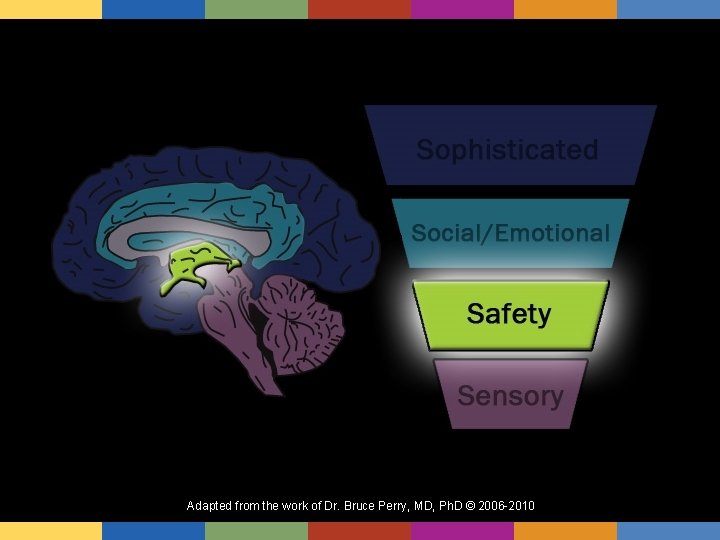
Adapted from the work of Dr. Bruce Perry, MD, Ph. D © 2006 -2010
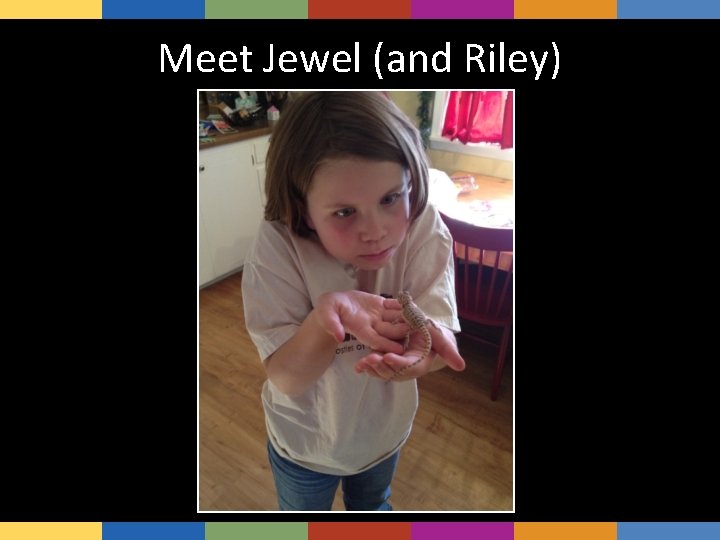
Meet Jewel (and Riley)
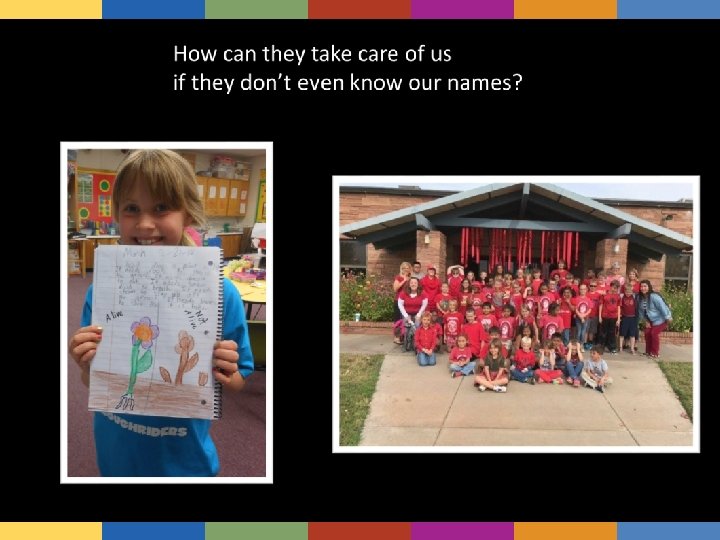
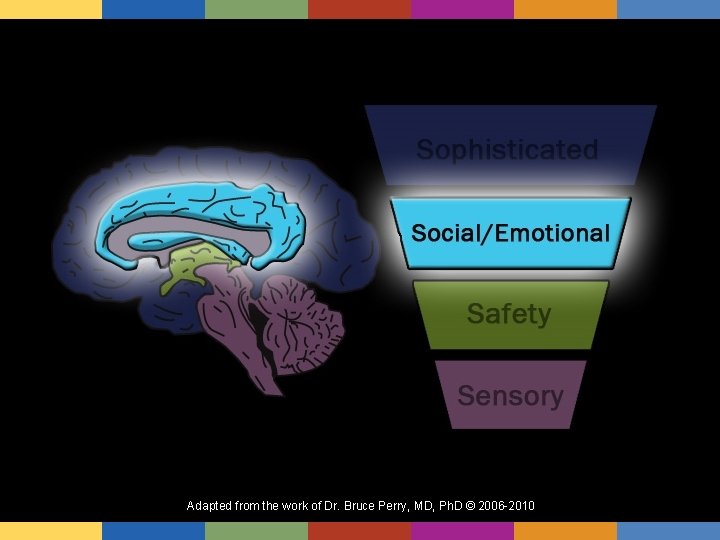
Adapted from the work of Dr. Bruce Perry, MD, Ph. D © 2006 -2010
Now Meet Madie. . .
Katelyn and the Cupcake
What about the adolescent brain?
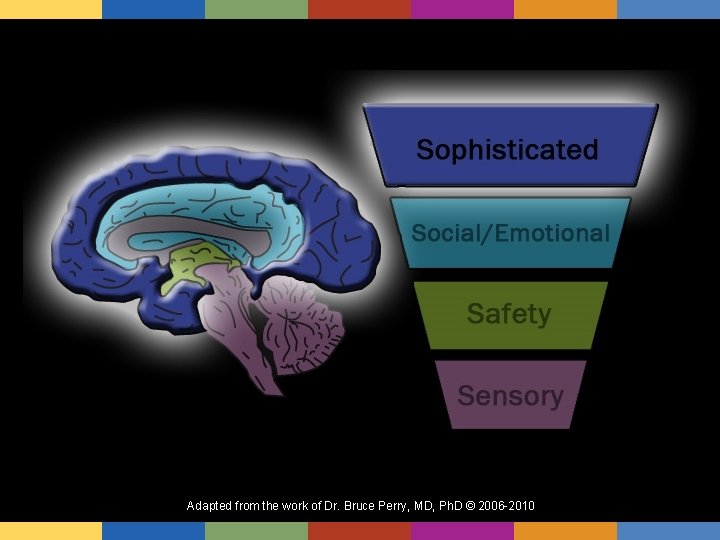
Adapted from the work of Dr. Bruce Perry, MD, Ph. D © 2006 -2010
Experiences – good and bad • Timing • Intensity • Duration
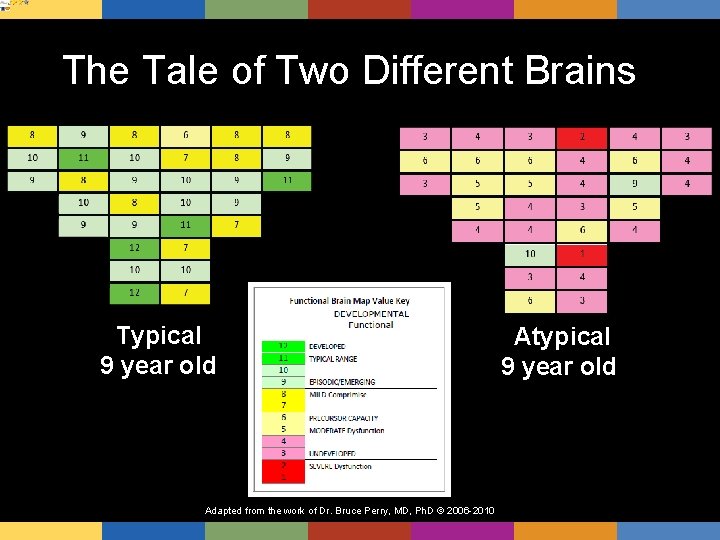
The Tale of Two Different Brains Typical 9 year old Adapted from the work of Dr. Bruce Perry, MD, Ph. D © 2006 -2010 Atypical 9 year old
One of the most important outcomes of early developmental insults: The brain learns the world is unsafe, and gets stuck in a state of surviving.
Experiences – good and bad • Timing • Intensity • Duration
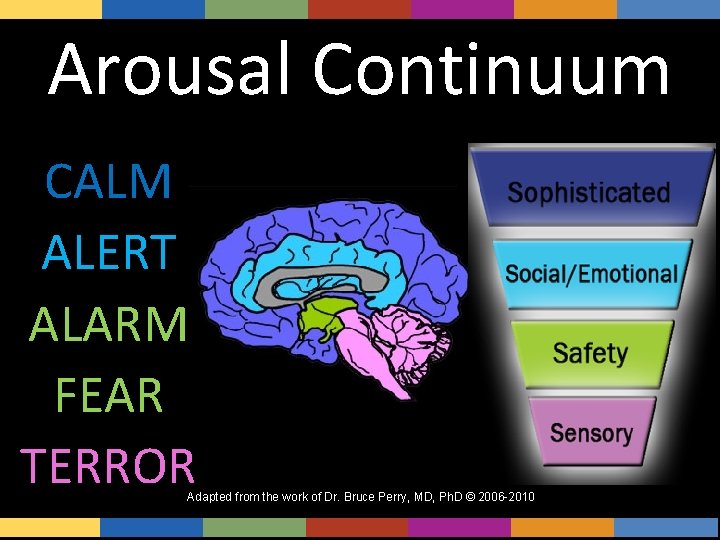
Arousal Continuum CALM ALERT ALARM FEAR TERROR Adapted from the work of Dr. Bruce Perry, MD, Ph. D © 2006 -2010 Upside down triangle representation of brain and arousal continuum – DR. BRUCE
Stress (fear/shame) makes us SToo. PID
Our brains are pattern seeking and meaning making machines
Why? The brain must anticipate and make associations based on past experiences in order to survive.
It constantly and continuously tags incoming information as Positive Negative Or Neutral Based on your past experiences.
This is the basis of ALL learning – passive and active.
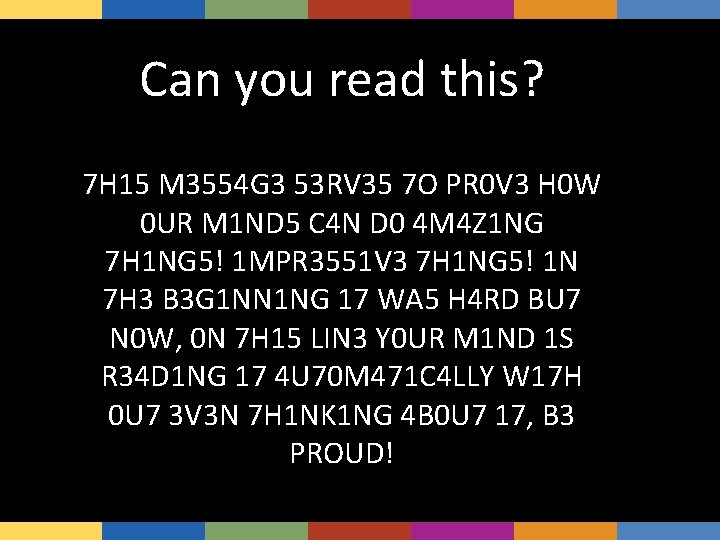
Can you read this? 7 H 15 M 3554 G 3 53 RV 35 7 O PR 0 V 3 H 0 W 0 UR M 1 ND 5 C 4 N D 0 4 M 4 Z 1 NG 7 H 1 NG 5! 1 MPR 3551 V 3 7 H 1 NG 5! 1 N 7 H 3 B 3 G 1 NN 1 NG 17 WA 5 H 4 RD BU 7 N 0 W, 0 N 7 H 15 LIN 3 Y 0 UR M 1 ND 1 S R 34 D 1 NG 17 4 U 70 M 471 C 4 LLY W 17 H 0 U 7 3 V 3 N 7 H 1 NK 1 NG 4 B 0 U 7 17, B 3 PROUD!
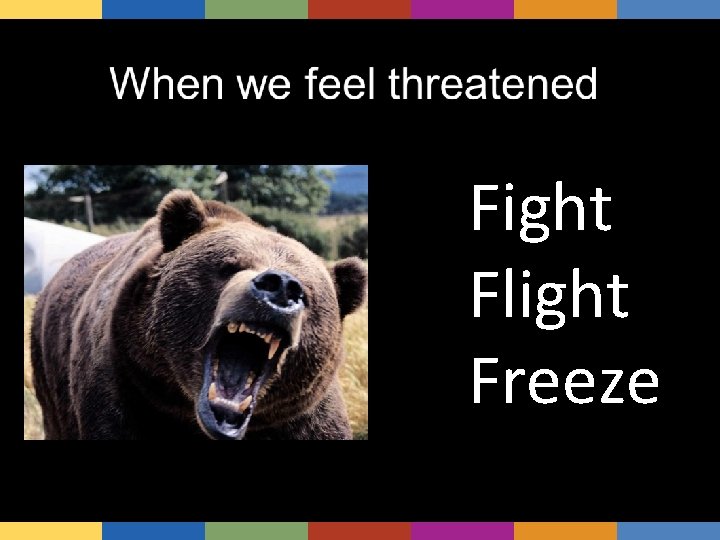
Fight Flight Freeze
OR? FLOCK- to gather, congregate
Why would one system be activated over the other?
So. . . What is Threat? It depends.
With trauma Similar = Same
Our brains take notice of And Novelty (n. ) innovation, newness, uniqueness, originality, freshness Why?
New experiences signal opportunity OR danger novelty provides challenges to our stress response system
What our brain tags as threatening depends on our past experiences. . .
and what it thinks is the most important to our survival.
Especially early experiences with caregivers
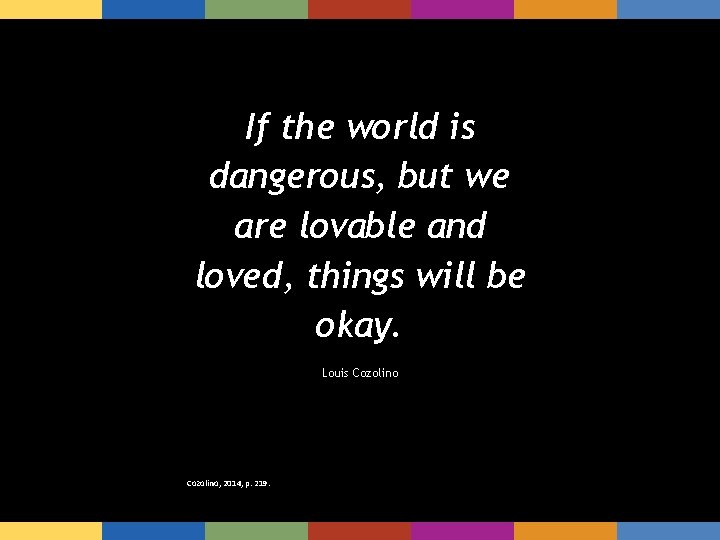
If the world is dangerous, but we are lovable and loved, things will be okay. Louis Cozolino, 2014, p. 219.
And our default is ALWAYS…
And Suspicion (it’s known as the negativity bias)
Why?
Attachment and BELONGING • • Ability for one heart to emotionally connect to another Based on our relationships with our first caregivers –sets the foundation for all future ones For the most part, we love the way we have been loved and parent the way we were parented We can only give what we have been given
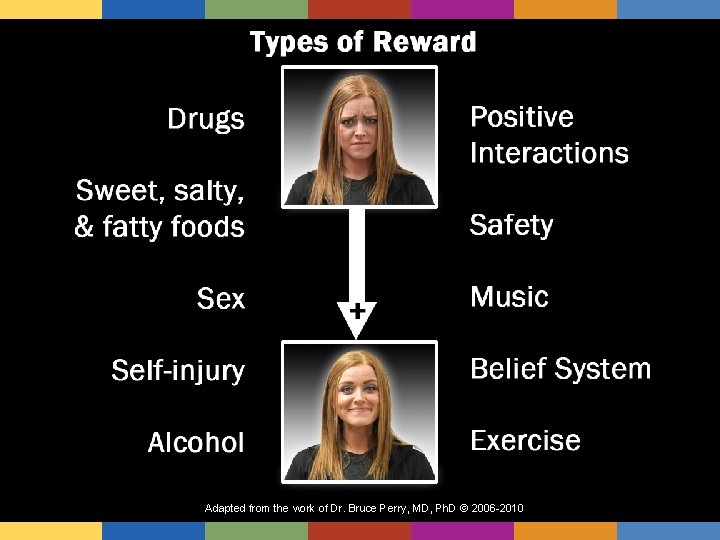
Adapted from the work of Dr. Bruce Perry, MD, Ph. D © 2006 -2010
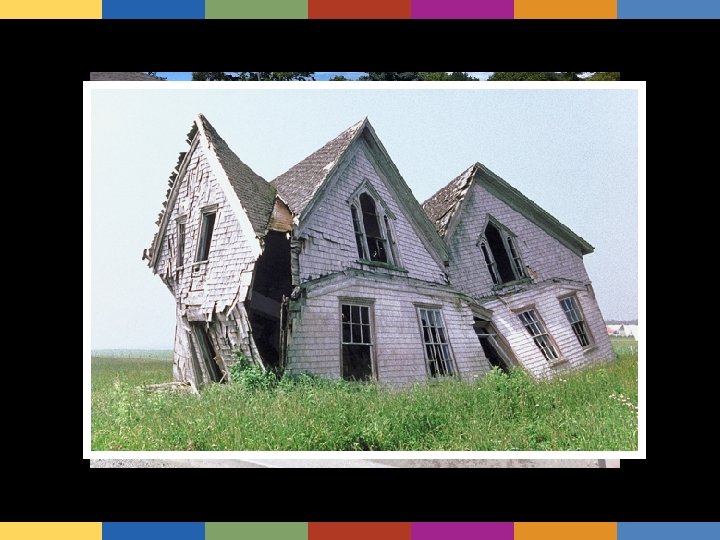
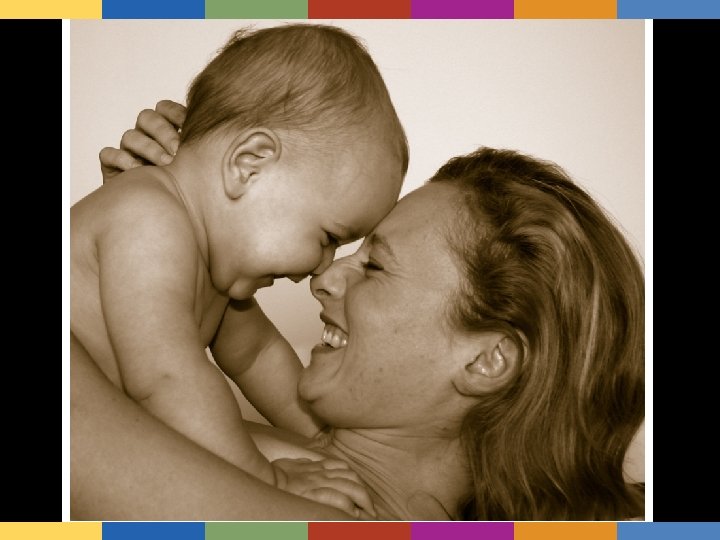
So if this is your early caregiving. . . What could your template be? I am. . . Others are. . . The world is. . . So I must. . . Information taken from: Brendtro & du Toit, 2005
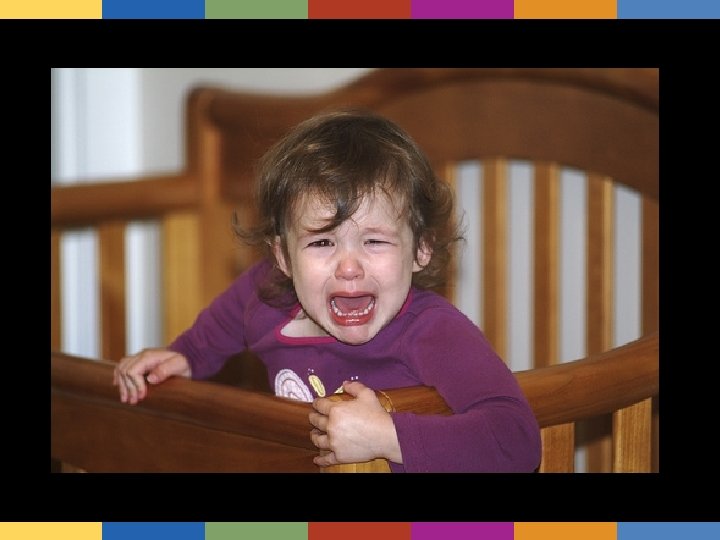
So if this is your early caregiving. . . What could your template be? I am. . . Others are. . . The world is. . . So I must. . . Information taken from: Brendtro & du Toit, 2005
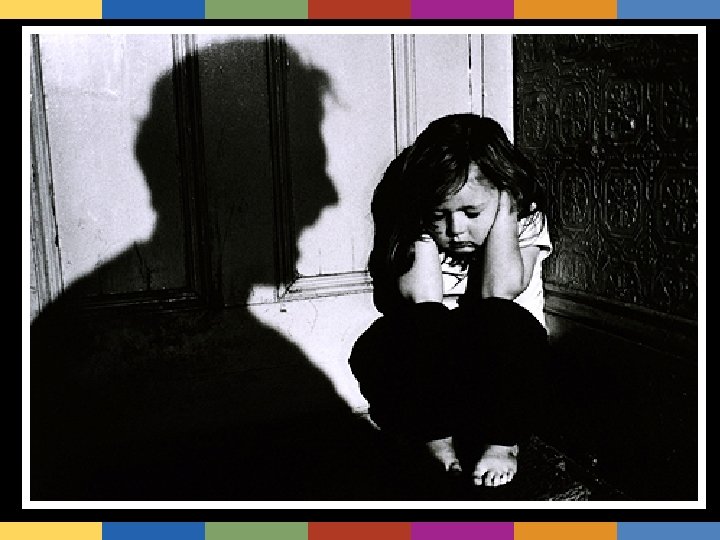
So if this is your early caregiving. . . What could your template be? I am. . . Others are. . . The world is. . . So I must. . . Information taken from: Brendtro & du Toit, 2005
Case Study – How do you see Brooke? Therapy vs therapeutic
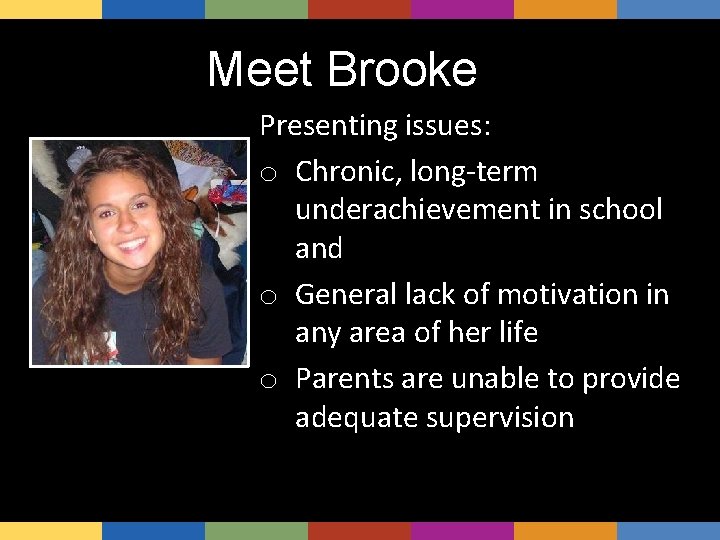
Meet Brooke Presenting issues: o Chronic, long-term underachievement in school and o General lack of motivation in any area of her life o Parents are unable to provide adequate supervision
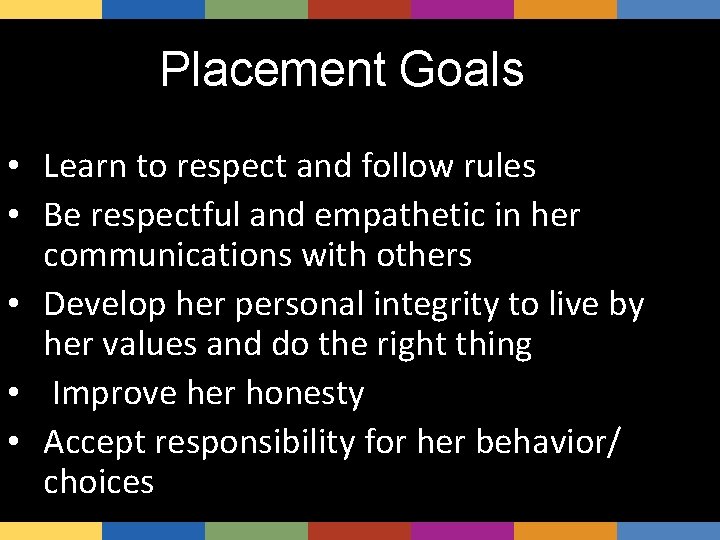
Placement Goals • Learn to respect and follow rules • Be respectful and empathetic in her communications with others • Develop her personal integrity to live by her values and do the right thing • Improve her honesty • Accept responsibility for her behavior/ choices
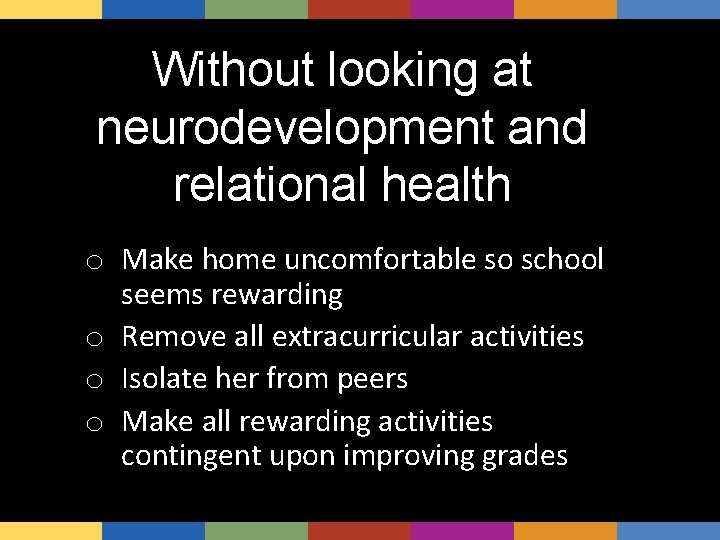
Without looking at neurodevelopment and relational health o Make home uncomfortable so school seems rewarding o Remove all extracurricular activities o Isolate her from peers o Make all rewarding activities contingent upon improving grades
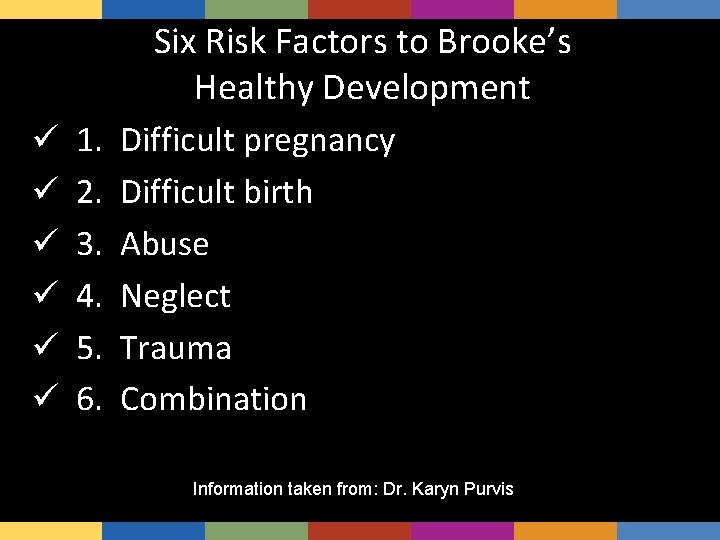
Six Risk Factors to Brooke’s Healthy Development ü ü ü 1. 2. 3. 4. 5. 6. Difficult pregnancy Difficult birth Abuse Neglect Trauma Combination Information taken from: Dr. Karyn Purvis
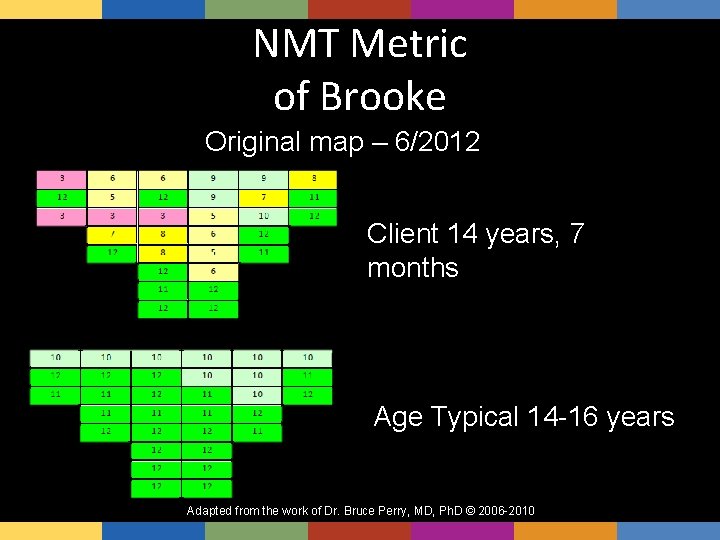
NMT Metric of Brooke Original map – 6/2012 Client 14 years, 7 months Age Typical 14 -16 years Adapted from the work of Dr. Bruce Perry, MD, Ph. D © 2006 -2010
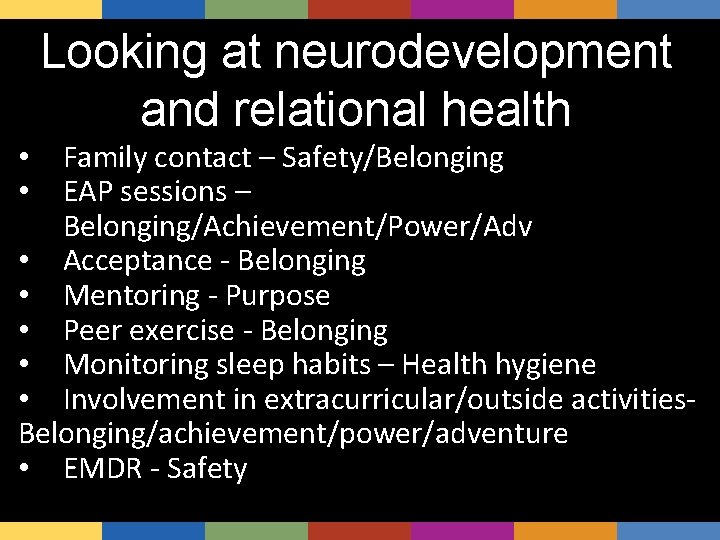
Looking at neurodevelopment and relational health Family contact – Safety/Belonging EAP sessions – Belonging/Achievement/Power/Adv • Acceptance - Belonging • Mentoring - Purpose • Peer exercise - Belonging • Monitoring sleep habits – Health hygiene • Involvement in extracurricular/outside activities. Belonging/achievement/power/adventure • EMDR - Safety • Psycho-education • •
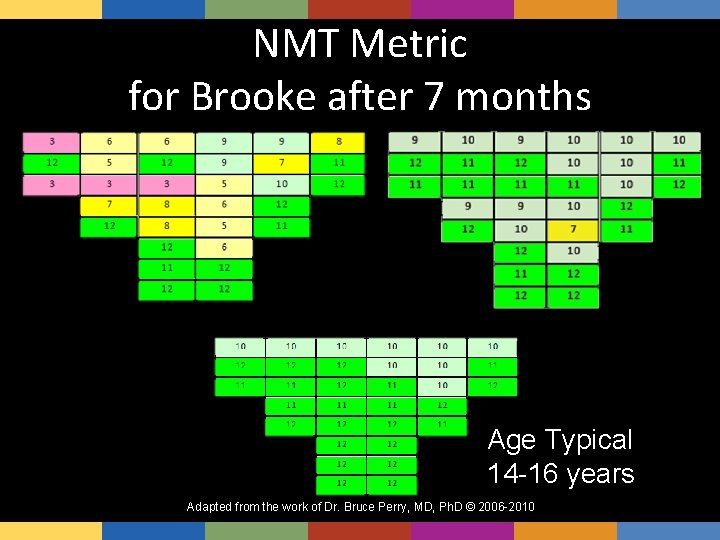
NMT Metric for Brooke after 7 months Age Typical 14 -16 years Adapted from the work of Dr. Bruce Perry, MD, Ph. D © 2006 -2010
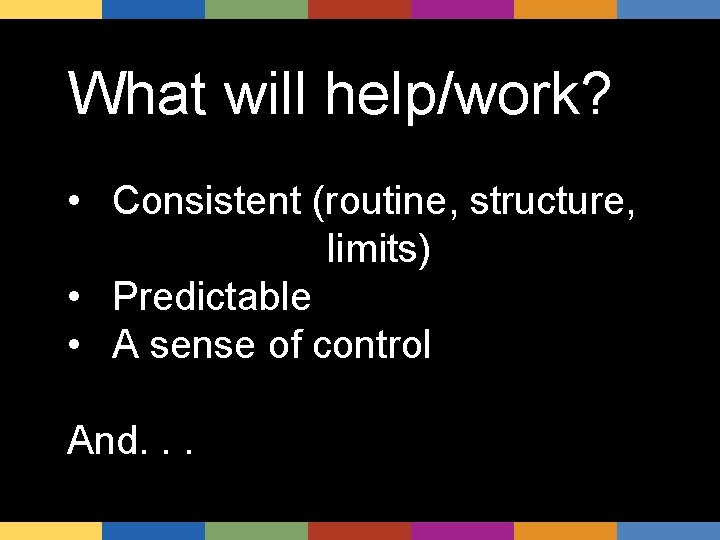
What will help/work? • Consistent (routine, structure, limits) • Predictable • A sense of control And. . .
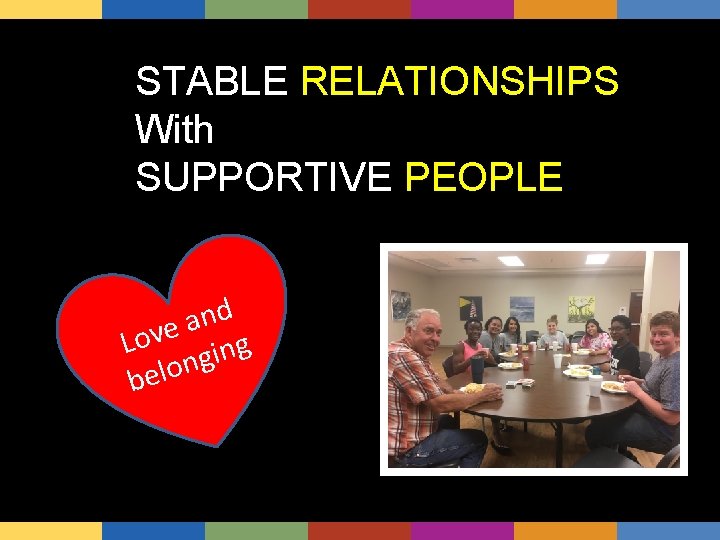
STABLE RELATIONSHIPS With SUPPORTIVE PEOPLE d n a e v o L g n i g n o l e b
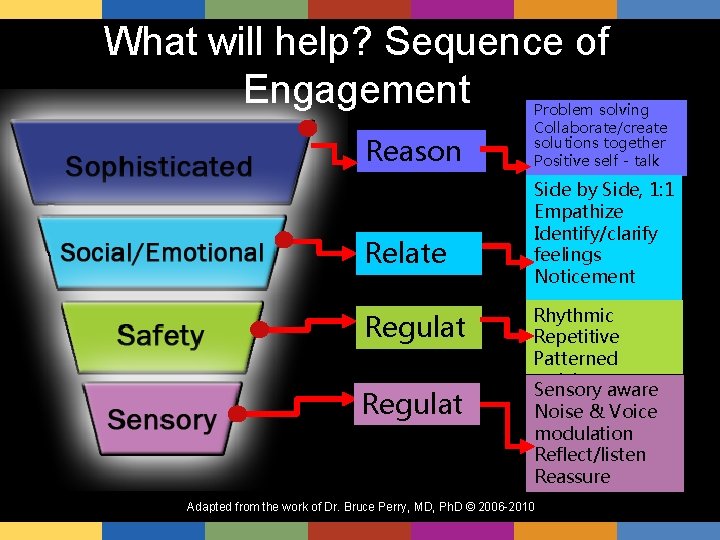
What will help? Sequence of Engagement Reason Relate Regulat e Problem solving Collaborate/create solutions together Positive self - talk Side by Side, 1: 1 Empathize Identify/clarify feelings Noticement Rhythmic Repetitive Patterned activity Sensory aware Noise & Voice modulation Reflect/listen Reassure Adapted from the work of Dr. Bruce Perry, MD, Ph. D © 2006 -2010
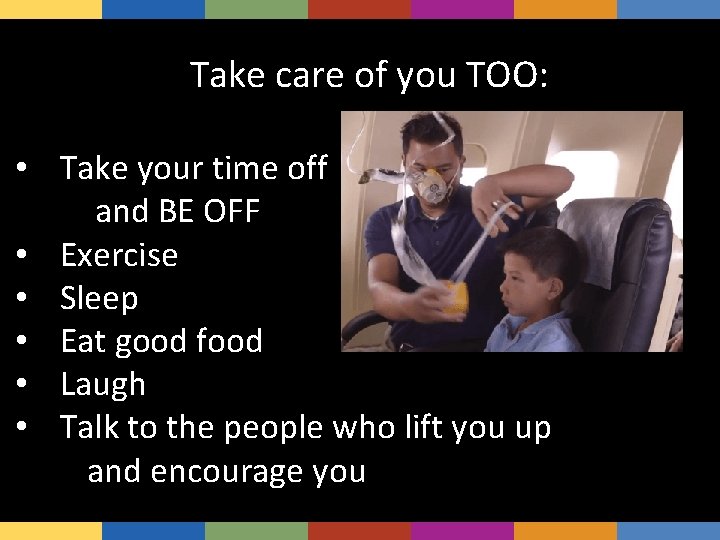
Take care of you TOO: • Take your time off and BE OFF • Exercise • Sleep • Eat good food • Laugh • Talk to the people who lift you up and encourage you
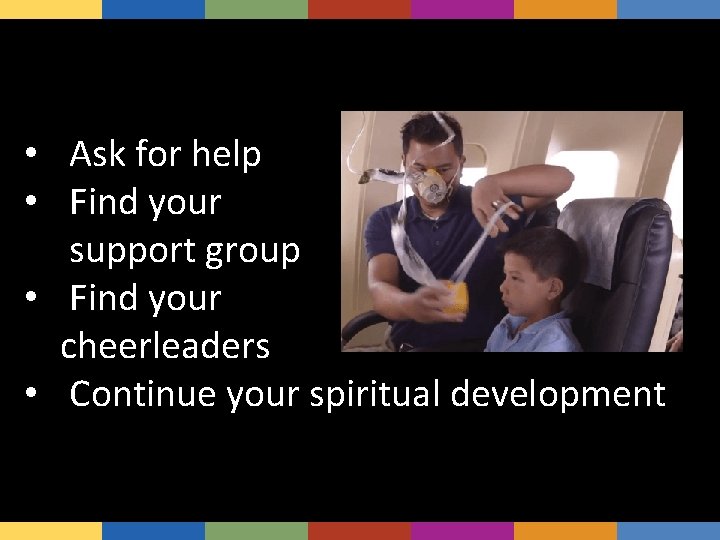
• Ask for help • Find your support group • Find your cheerleaders • Continue your spiritual development
“We get sicker in isolation, we heal in community. ”
michellemaikoetter@calfarley. org Y’all come see us! www. cflearning. org
- Slides: 85