
The Brain and Cranial Nerves Largest organ in
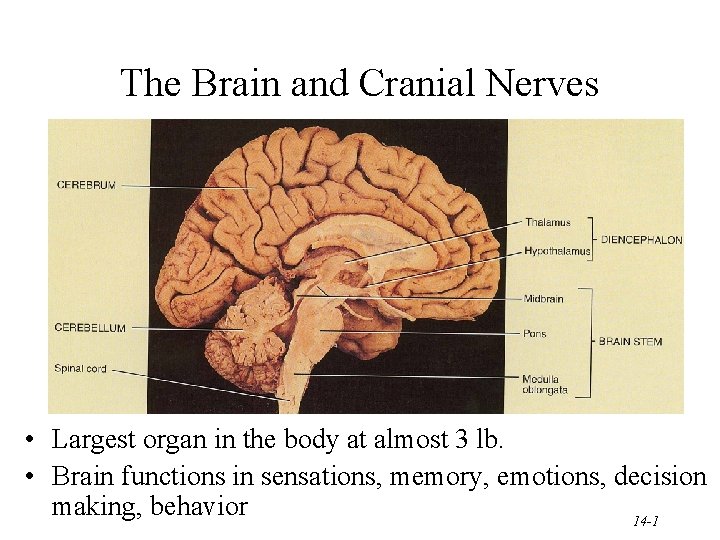
The Brain and Cranial Nerves • Largest organ in the body at almost 3 lb. • Brain functions in sensations, memory, emotions, decision making, behavior 14 -1
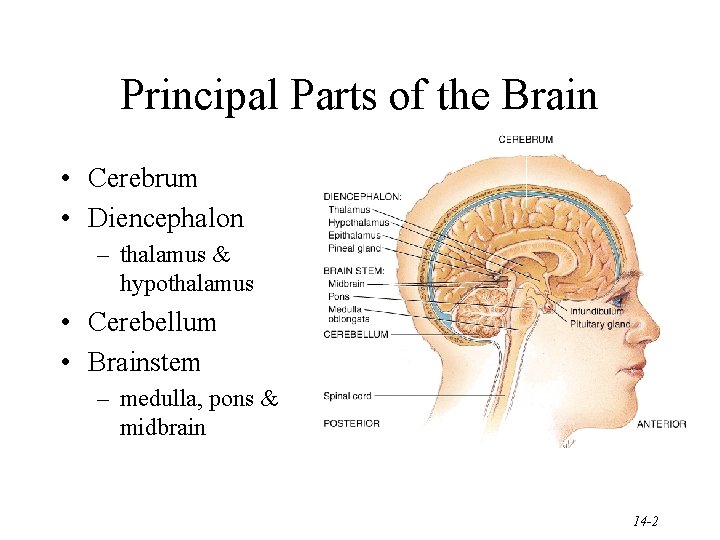
Principal Parts of the Brain • Cerebrum • Diencephalon – thalamus & hypothalamus • Cerebellum • Brainstem – medulla, pons & midbrain 14 -2
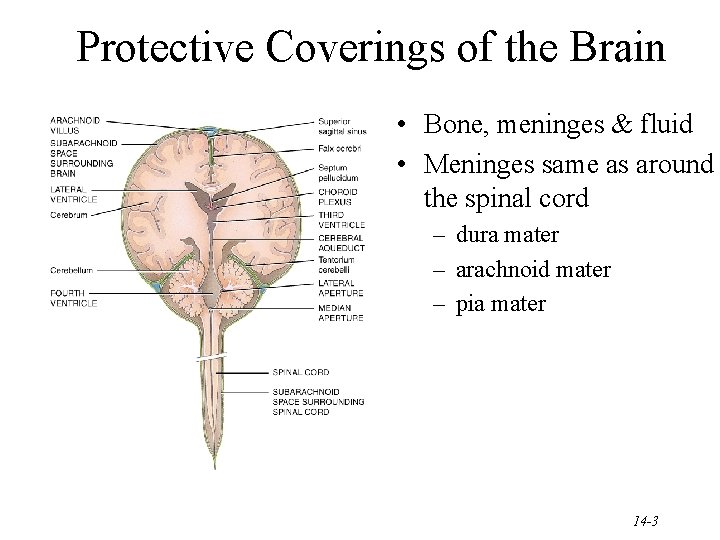
Protective Coverings of the Brain • Bone, meninges & fluid • Meninges same as around the spinal cord – dura mater – arachnoid mater – pia mater 14 -3
Blood Supply to Brain • Uses 20% of our bodies oxygen & glucose needs – blood flow to an area increases with activity in that area – deprivation of O 2 for 4 min does permanent injury • at that time, lysosome release enzymes • Blood-brain barrier (BBB) – protects cells from some toxins and pathogens • proteins & antibiotics can not pass but alcohol & anesthetics do – tight junctions seal together epithelial cells, continuous basement membrane, astrocyte processes covering capillaries 14 -4

Cerebrospinal Fluid (CSF) • 80 -150 ml (3 -5 oz) • Clear liquid containing glucose, proteins, & ions • Functions – mechanical protection • floats brain & softens impact with bony walls – chemical protection • optimal ionic concentrations for action potentials – circulation • nutrients and waste products to and from bloodstream 14 -5
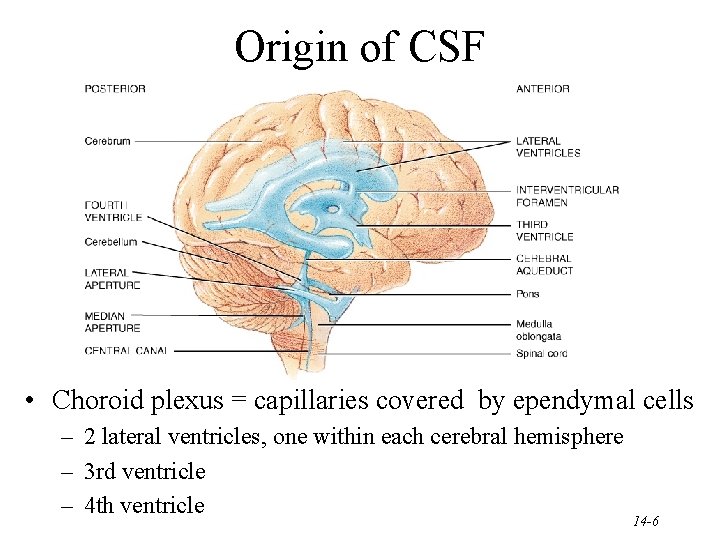
Origin of CSF • Choroid plexus = capillaries covered by ependymal cells – 2 lateral ventricles, one within each cerebral hemisphere – 3 rd ventricle – 4 th ventricle 14 -6
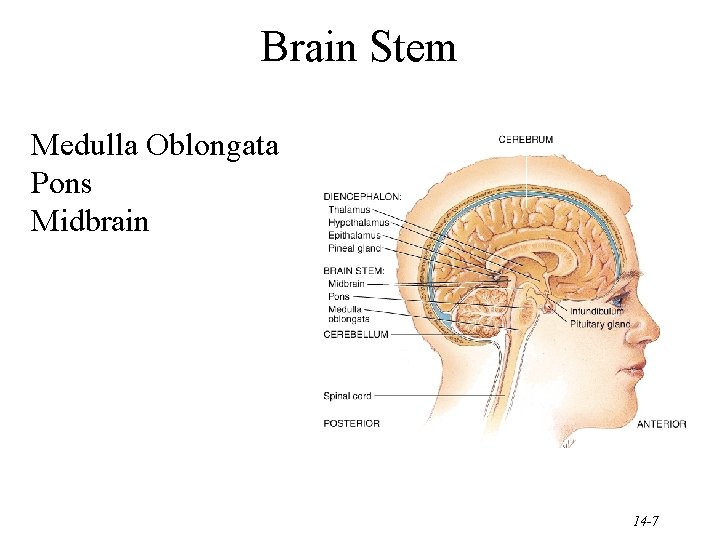
Brain Stem Medulla Oblongata Pons Midbrain 14 -7
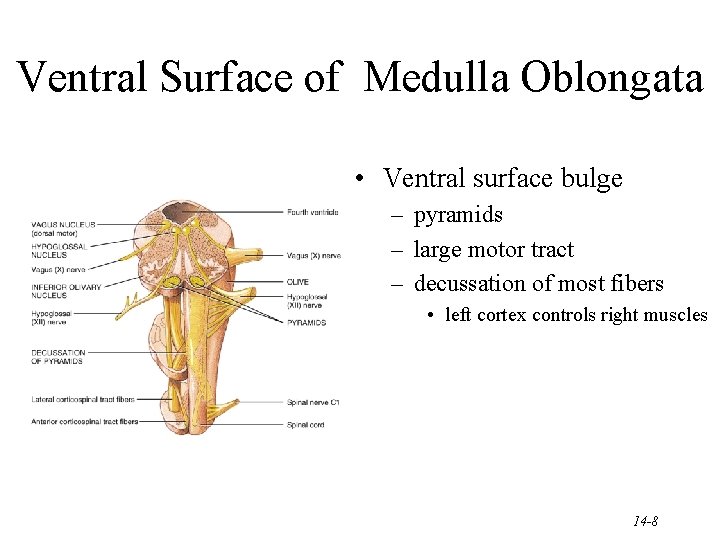
Ventral Surface of Medulla Oblongata • Ventral surface bulge – pyramids – large motor tract – decussation of most fibers • left cortex controls right muscles 14 -8

Reticular Formation • Scattered nuclei in medulla, pons & midbrain • Reticular activating system – alerts cerebral cortex to sensory signals (sound of alarm, flash light, or intruder) to awaken from sleep – maintains consciousness & helps keep you awake with stimuli from ears, eyes, skin and muscles • Motor function is involvement with maintaining muscle tone 14 -9
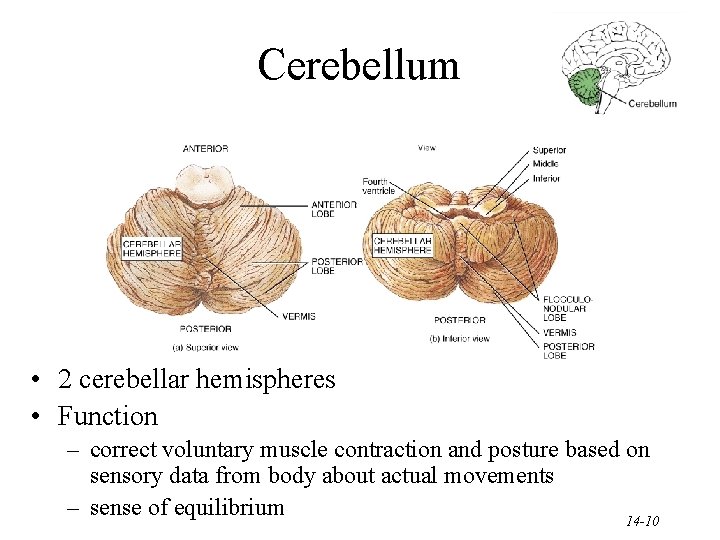
Cerebellum • 2 cerebellar hemispheres • Function – correct voluntary muscle contraction and posture based on sensory data from body about actual movements – sense of equilibrium 14 -10
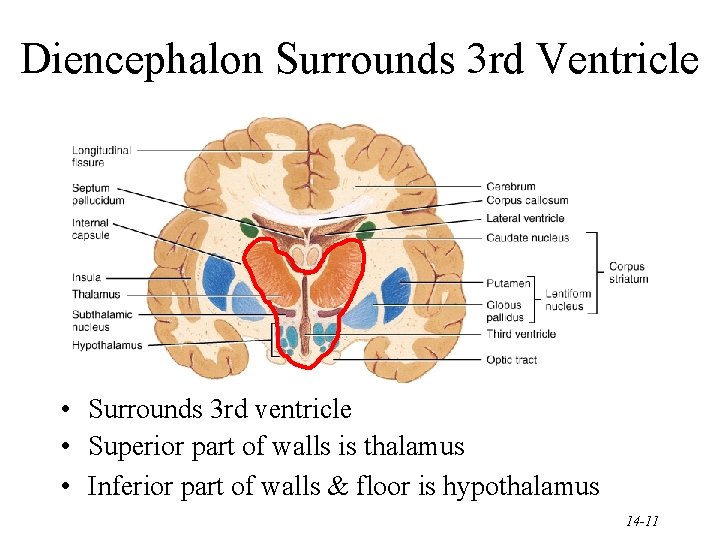
Diencephalon Surrounds 3 rd Ventricle • Surrounds 3 rd ventricle • Superior part of walls is thalamus • Inferior part of walls & floor is hypothalamus 14 -11
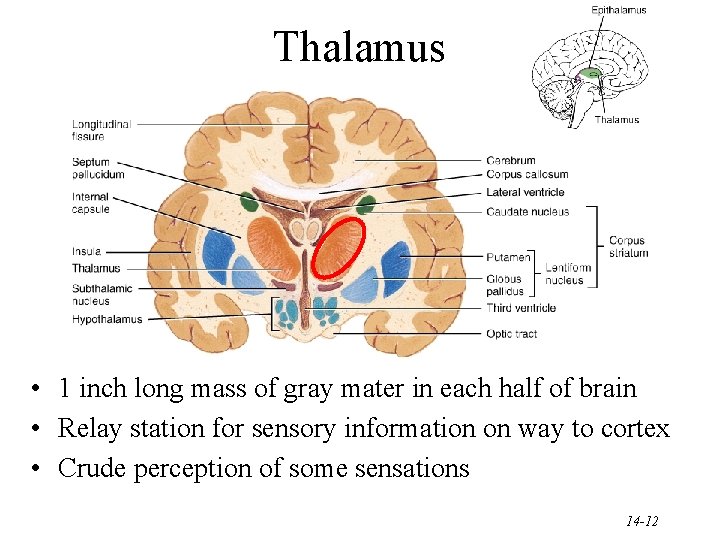
Thalamus • 1 inch long mass of gray mater in each half of brain • Relay station for sensory information on way to cortex • Crude perception of some sensations 14 -12
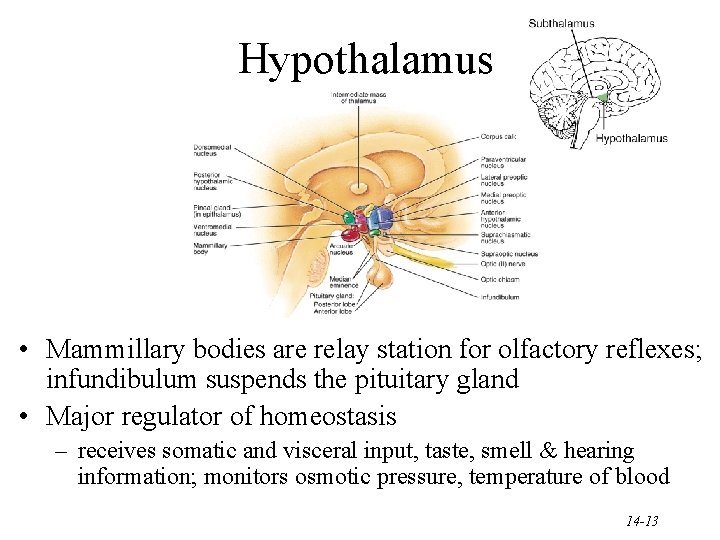
Hypothalamus • Mammillary bodies are relay station for olfactory reflexes; infundibulum suspends the pituitary gland • Major regulator of homeostasis – receives somatic and visceral input, taste, smell & hearing information; monitors osmotic pressure, temperature of blood 14 -13
Functions of Hypothalamus • Controls and integrates activities of the ANS which regulates smooth, cardiac muscle and glands • Synthesizes regulatory hormones that control the anterior pituitary • Contains cell bodies of axons that end in posterior pituitary where they secrete hormones • Regulates rage, aggression, pain, pleasure & arousal • Feeding, thirst & satiety centers • Controls body temperature • Regulates daily patterns of sleep 14 -14
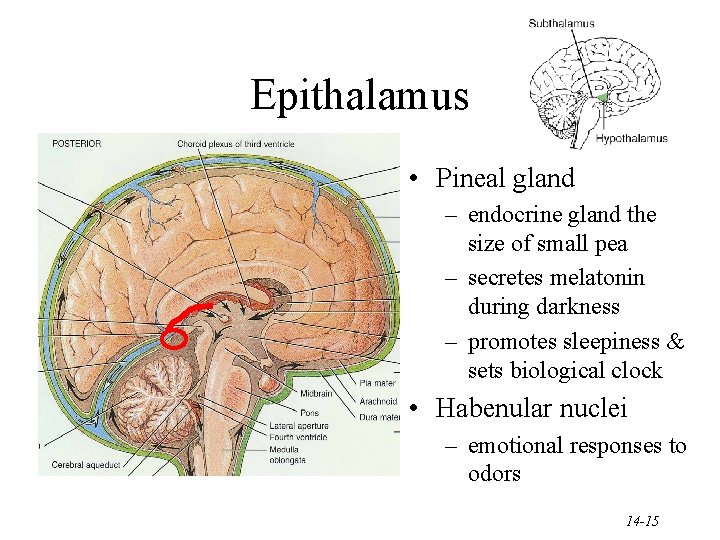
Epithalamus • Pineal gland – endocrine gland the size of small pea – secretes melatonin during darkness – promotes sleepiness & sets biological clock • Habenular nuclei – emotional responses to odors 14 -15
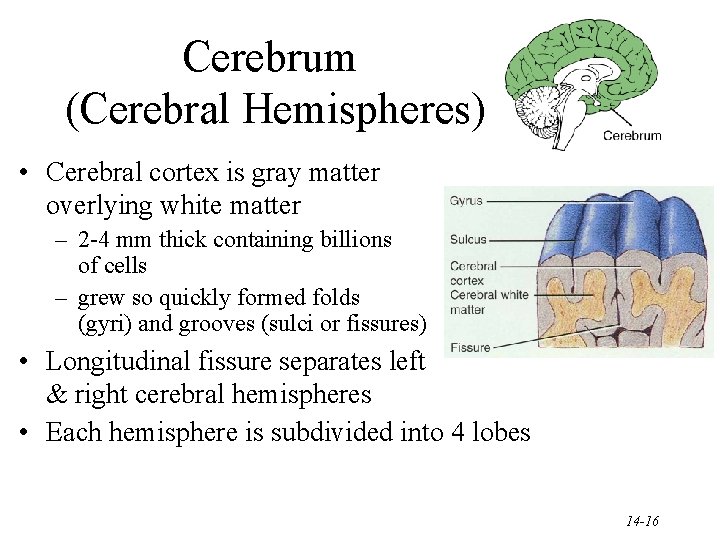
Cerebrum (Cerebral Hemispheres) • Cerebral cortex is gray matter overlying white matter – 2 -4 mm thick containing billions of cells – grew so quickly formed folds (gyri) and grooves (sulci or fissures) • Longitudinal fissure separates left & right cerebral hemispheres • Each hemisphere is subdivided into 4 lobes 14 -16
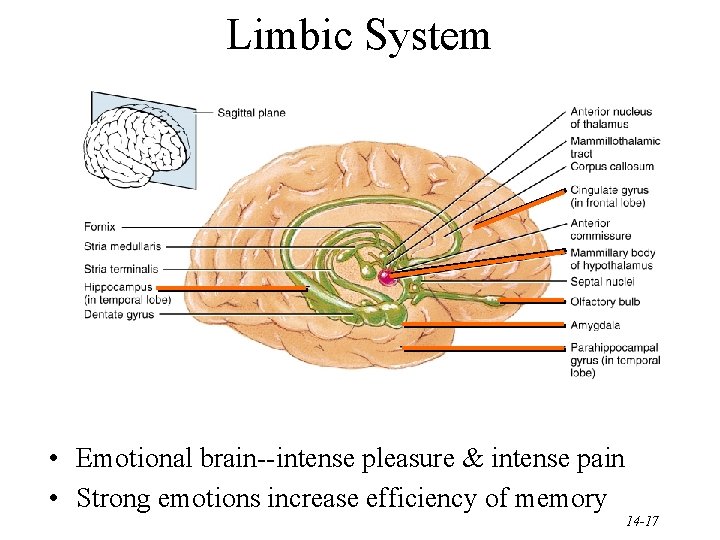
Limbic System • Emotional brain--intense pleasure & intense pain • Strong emotions increase efficiency of memory 14 -17
- Slides: 17