
The Brain Anatomy Function HSP 3 U Psychology
The Brain: Anatomy & Function HSP 3 U Psychology Unit

• Phineas Gage's Brain Injury
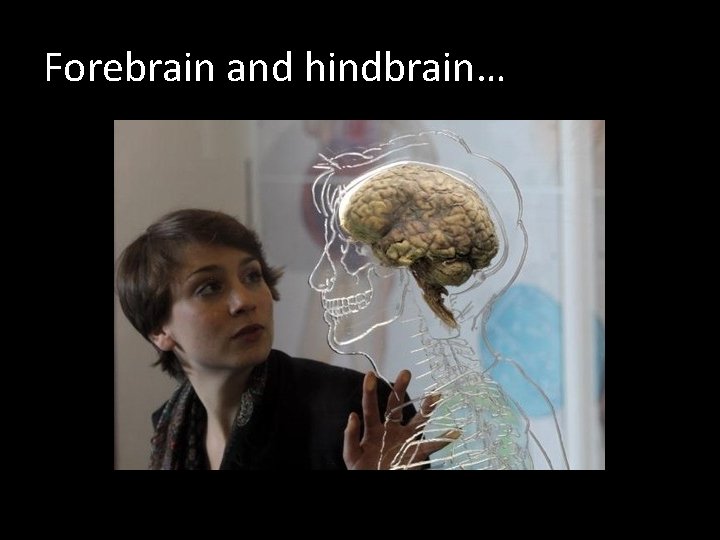
Forebrain and hindbrain…
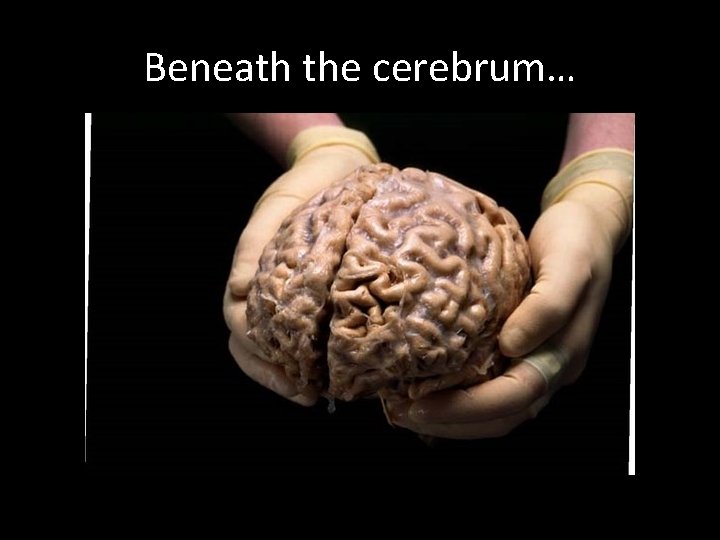
Beneath the cerebrum…
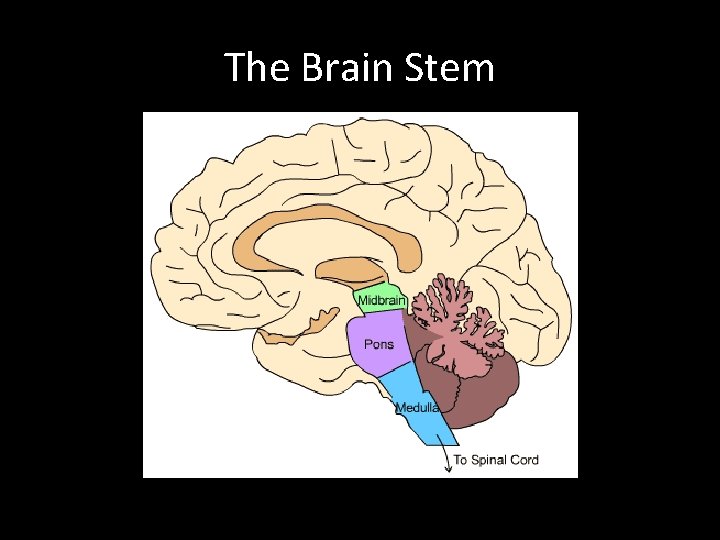
The Brain Stem

The Brain Stem (Hindbrain) • Function – Action fight or flight response – Instinct aggression & territoriality – Rhythms of life heartbeat, respiration, hunger & thirst
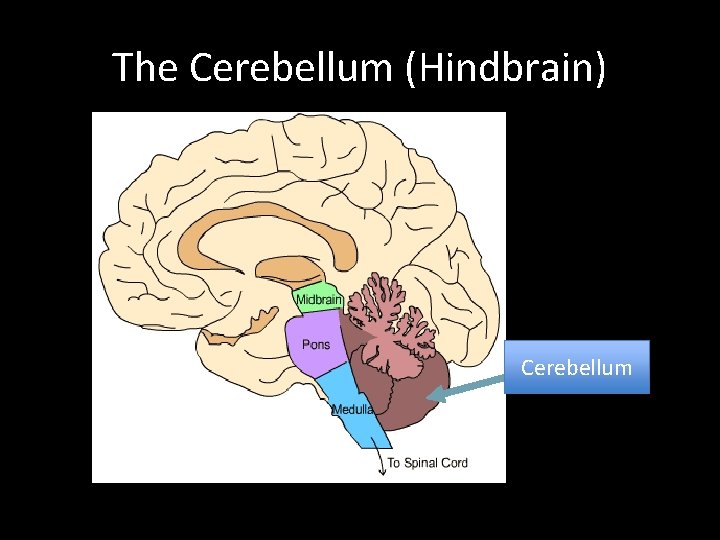
The Cerebellum (Hindbrain) Cerebellum
The Cerebellum (Hindbrain) • Evolution – Present in all species with a brain • Function – Coordinates muscle movement and allows for smooth, precise, timed actions like walking and talking
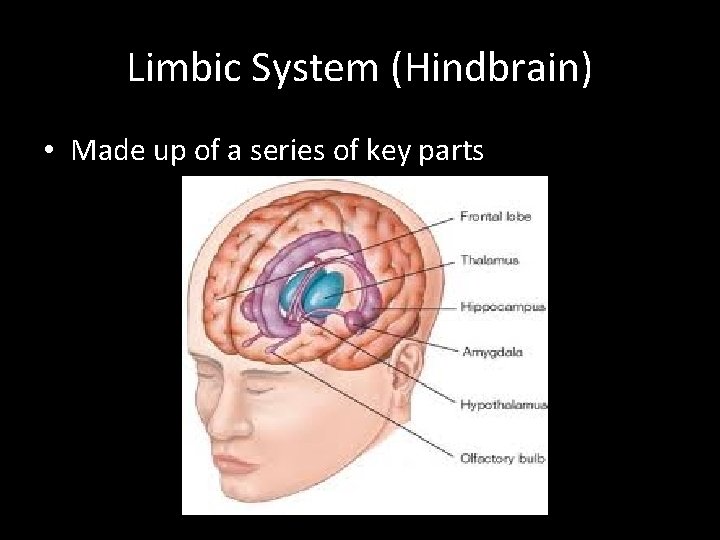
Limbic System (Hindbrain) • Made up of a series of key parts
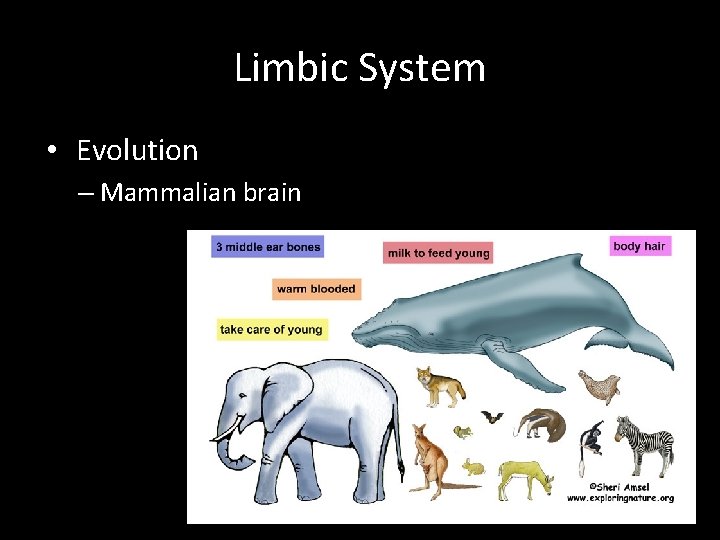
Limbic System • Evolution – Mammalian brain
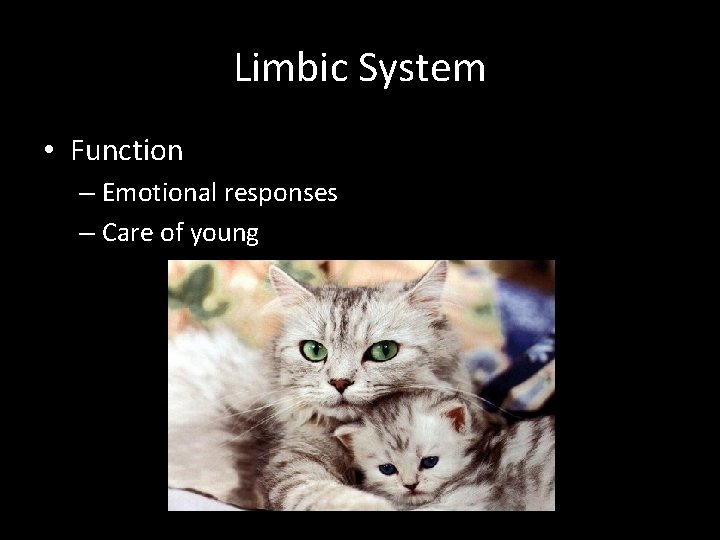
Limbic System • Function – Emotional responses – Care of young
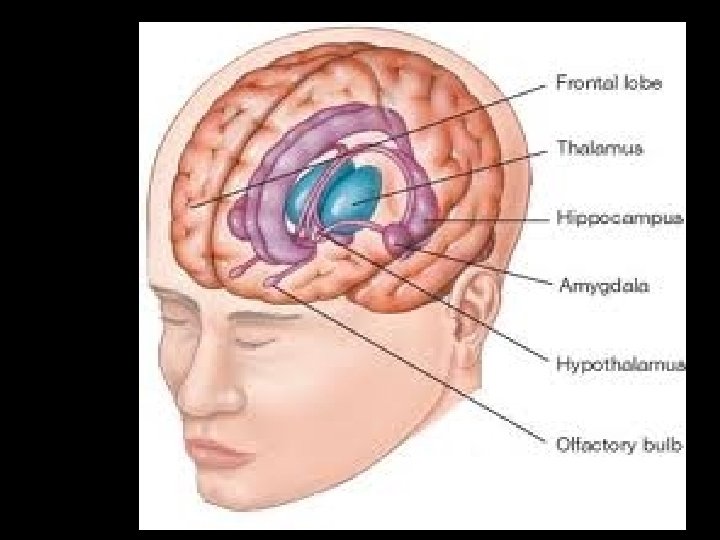
a) Thalamus • Function – Relay station sends sensory information to the cerebral cortex – Processor
b) Hypothalamus • Function – Regulates body temperature, food intake, thirst, sleep, emotional responses – Regulates physical needs – Originally thought to be the pleasure center (as in the experiment in the next slide) – Now thought to be the “seeking” centre, not pleasure at all
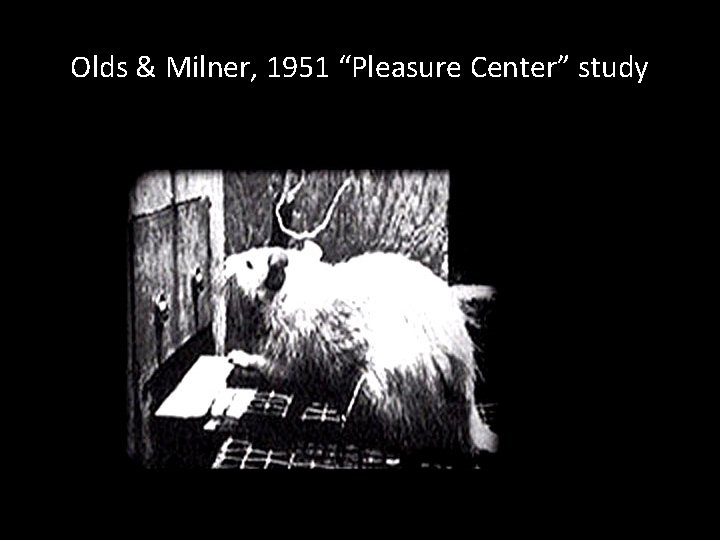
Olds & Milner, 1951 “Pleasure Center” study
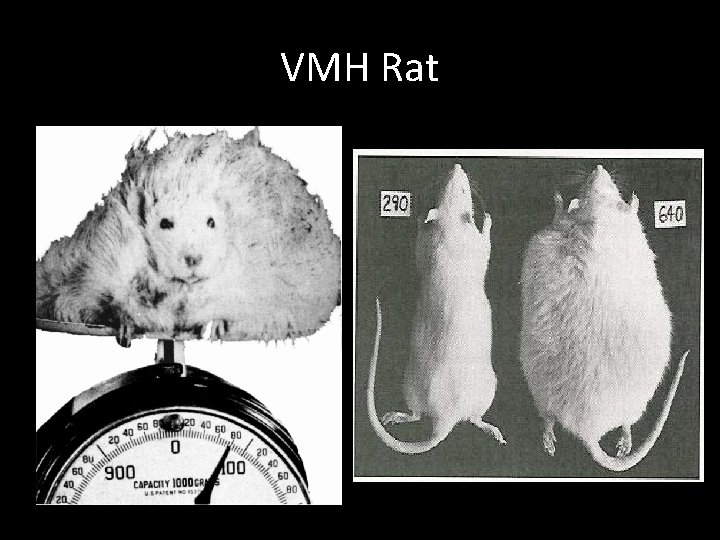
VMH Rat
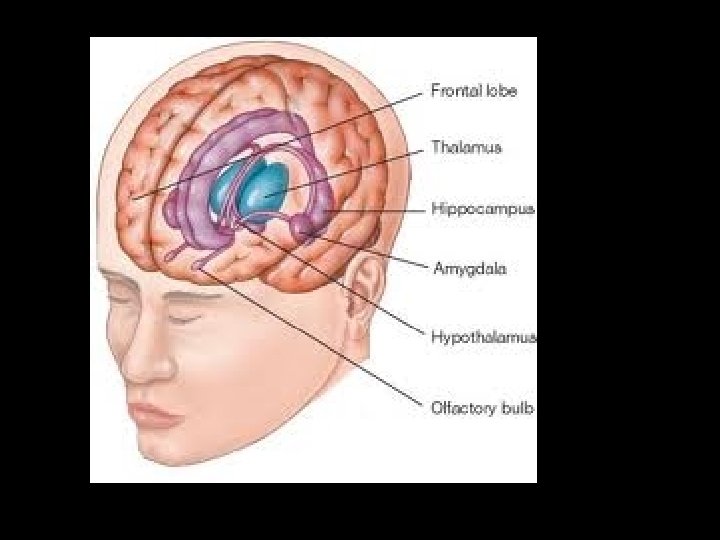
c) Hippocampus • Function – Memory – Proximity to olfactory bulbs (smell) – Strong association between smell and memory
d) Amygdala • Function – Integrates basic emotional states and sensory inputs – Matches sensation to emotion and memory • Example: sound of predators = fear • Evolutionary advantage

…to light up our amygdalas…
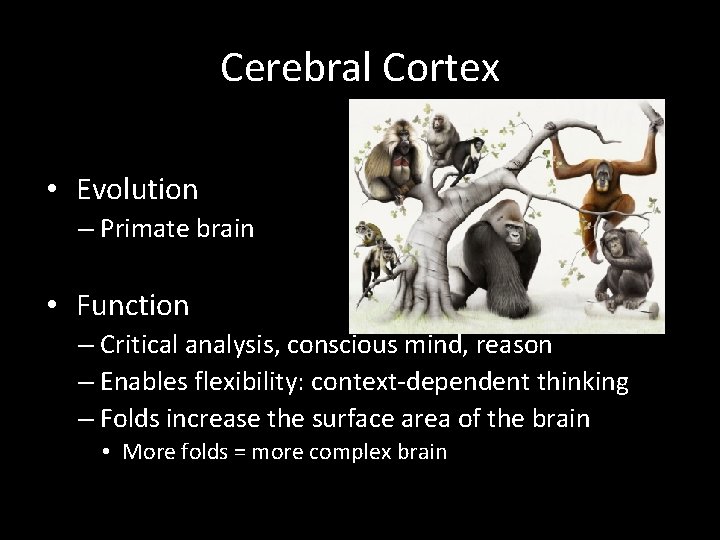
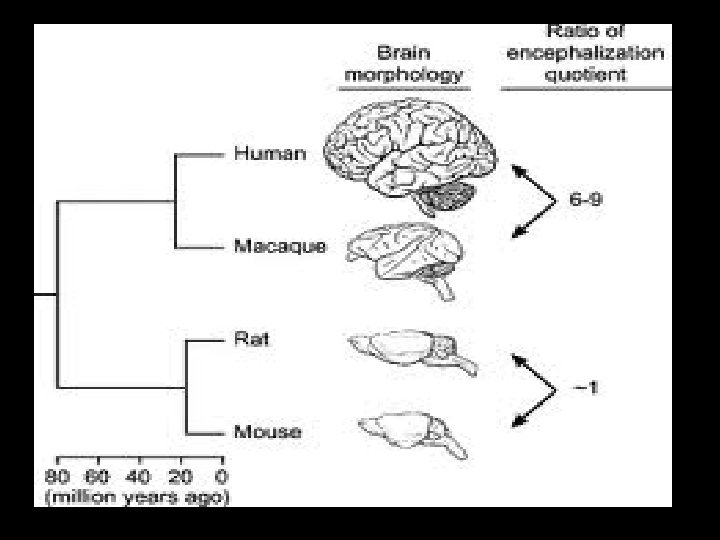
Cerebral Cortex • Evolution – Primate brain • Function – Critical analysis, conscious mind, reason – Enables flexibility: context-dependent thinking – Folds increase the surface area of the brain • More folds = more complex brain
Cerebral Cortex • Frontal lobes (which includes orbital part) – Personality, social behaviour, decision making – Develops last; fully developed by 25 -30 years old • Parietal lobes – Integrating sensory input with vision – Sense of touch • Temporal lobes – Hearing, memory, language & learning • Occipital lobe – Vision
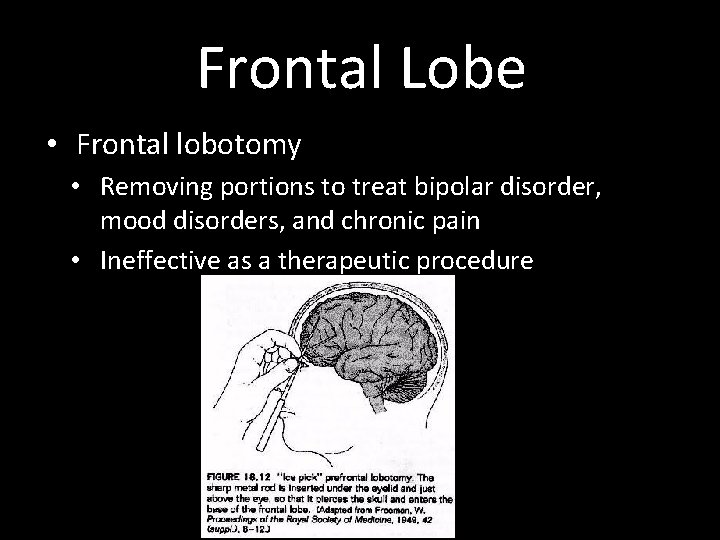
Frontal Lobe • Frontal lobotomy • Removing portions to treat bipolar disorder, mood disorders, and chronic pain • Ineffective as a therapeutic procedure
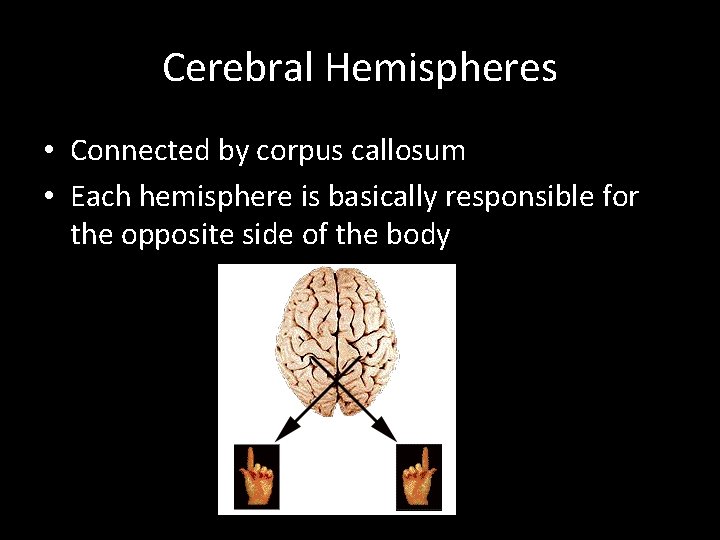
Cerebral Hemispheres • Connected by corpus callosum • Each hemisphere is basically responsible for the opposite side of the body
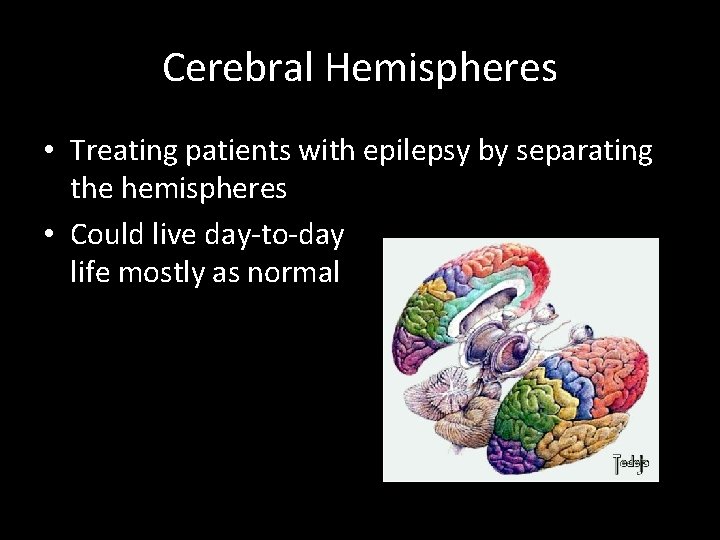
Cerebral Hemispheres • Treating patients with epilepsy by separating the hemispheres • Could live day-to-day life mostly as normal
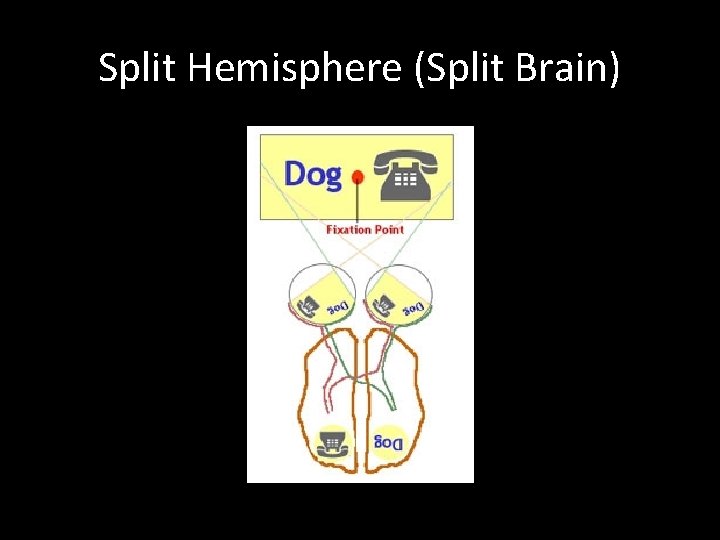
Split Hemisphere (Split Brain)
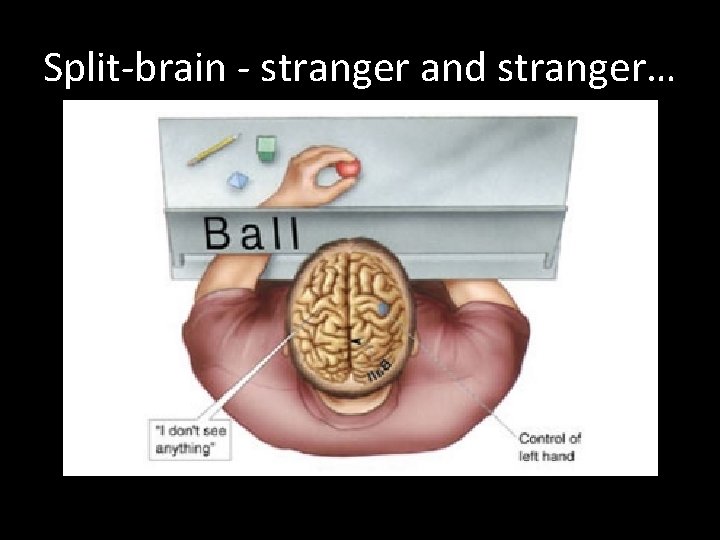
Split-brain - stranger and stranger…
- Slides: 28