
The Bottlenose Dolphin By Carl Myers Classification Kingdom
The Bottlenose Dolphin By: Carl Myers

Classification Kingdom: Animalia Phylum: Chordata Class: Mammalia Order: Cetacea Family: Delphinidae Genus: Tursiops Species: Truncatus Tursiops means “dolphin like” Scientific Name: Tursiops truncatus
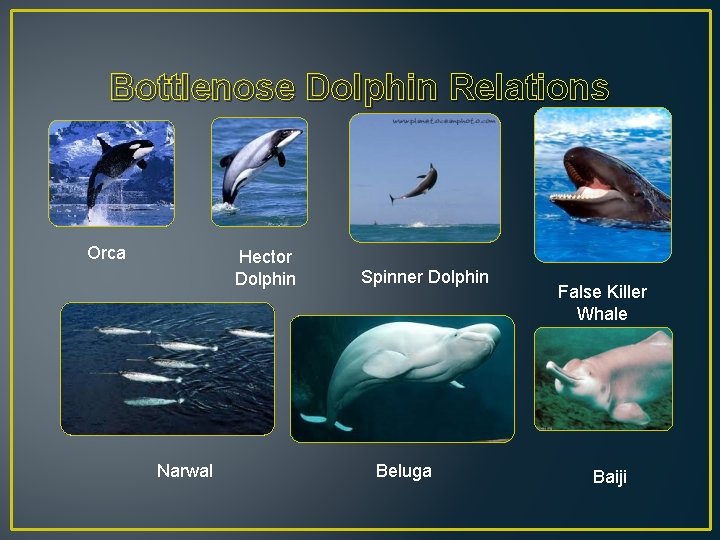
Bottlenose Dolphin Relations Orca Hector Dolphin Narwal Spinner Dolphin Beluga False Killer Whale Baiji
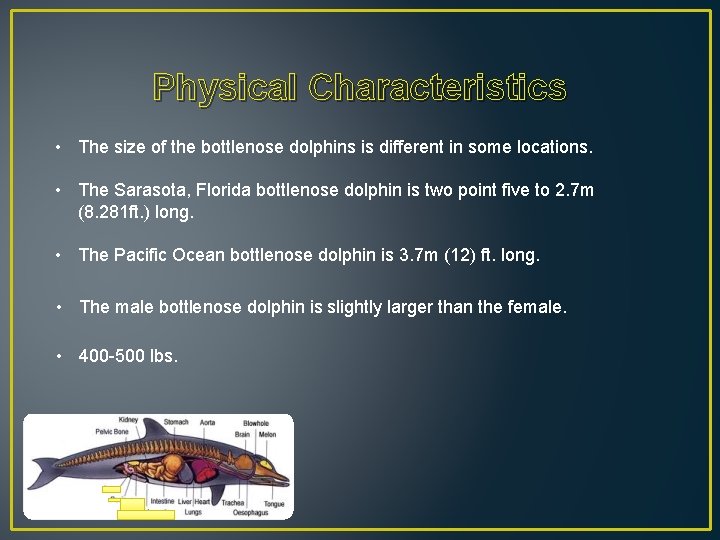
Physical Characteristics • The size of the bottlenose dolphins is different in some locations. • The Sarasota, Florida bottlenose dolphin is two point five to 2. 7 m (8. 281 ft. ) long. • The Pacific Ocean bottlenose dolphin is 3. 7 m (12) ft. long. • The male bottlenose dolphin is slightly larger than the female. • 400 -500 lbs.
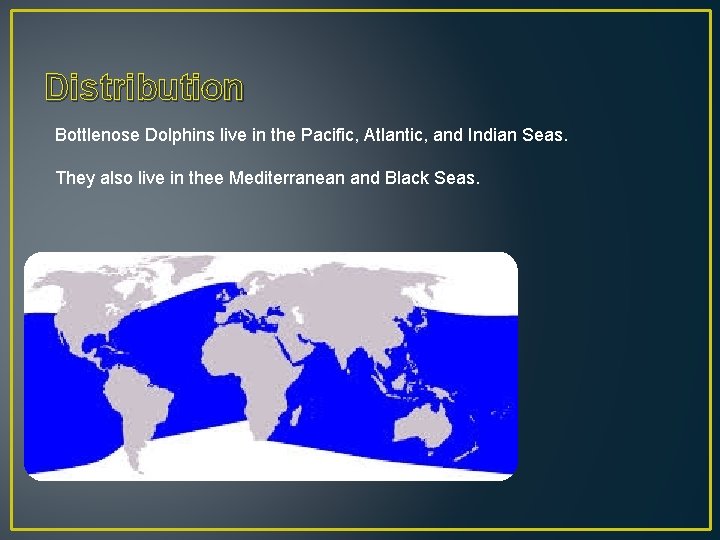
Distribution Bottlenose Dolphins live in the Pacific, Atlantic, and Indian Seas. They also live in thee Mediterranean and Black Seas.
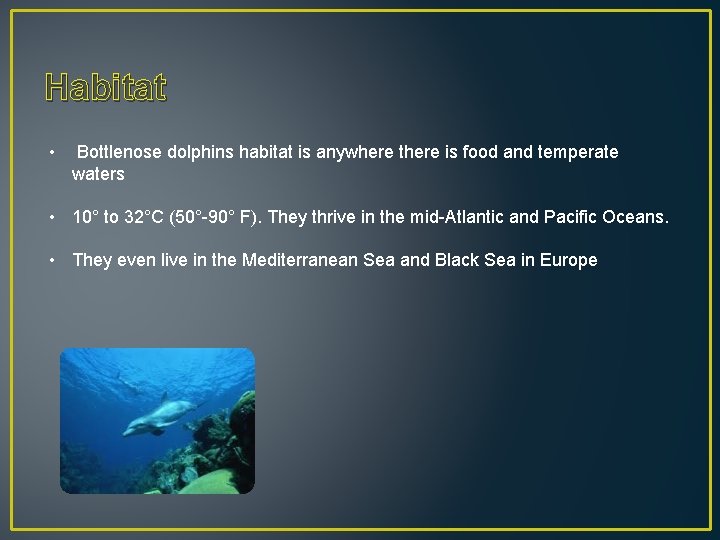
Habitat • Bottlenose dolphins habitat is anywhere there is food and temperate waters • 10° to 32°C (50°-90° F). They thrive in the mid-Atlantic and Pacific Oceans. • They even live in the Mediterranean Sea and Black Sea in Europe
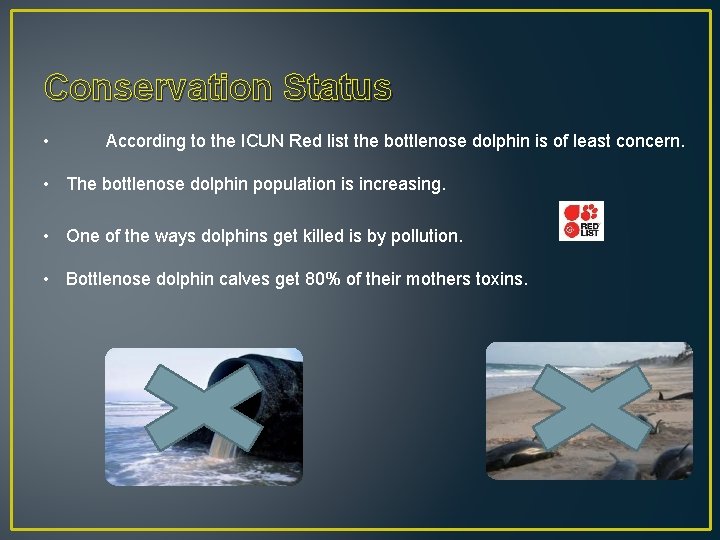
Conservation Status • According to the ICUN Red list the bottlenose dolphin is of least concern. • The bottlenose dolphin population is increasing. • One of the ways dolphins get killed is by pollution. • Bottlenose dolphin calves get 80% of their mothers toxins.
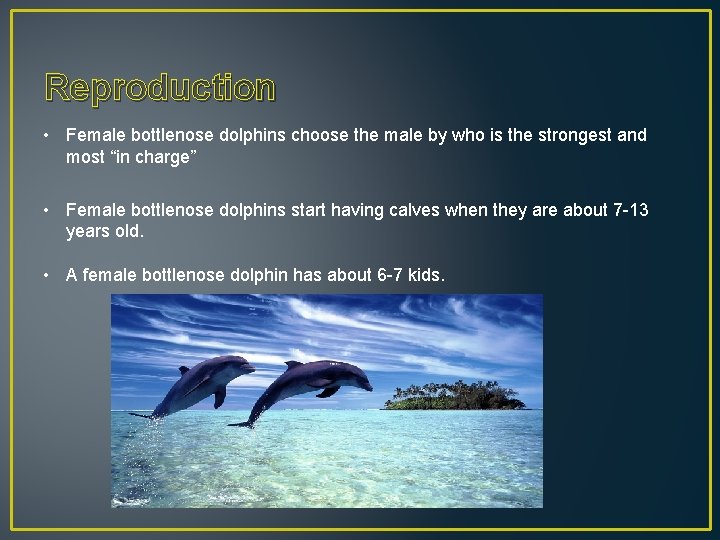
Reproduction • Female bottlenose dolphins choose the male by who is the strongest and most “in charge” • Female bottlenose dolphins start having calves when they are about 7 -13 years old. • A female bottlenose dolphin has about 6 -7 kids.
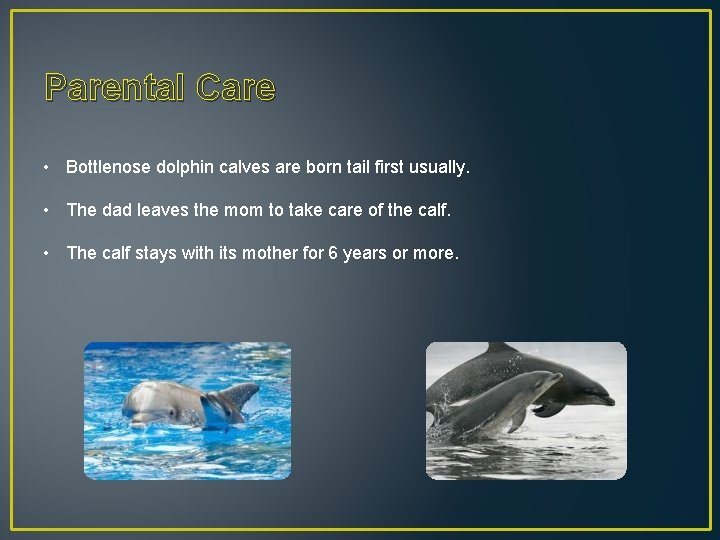
Parental Care • Bottlenose dolphin calves are born tail first usually. • The dad leaves the mom to take care of the calf. • The calf stays with its mother for 6 years or more.
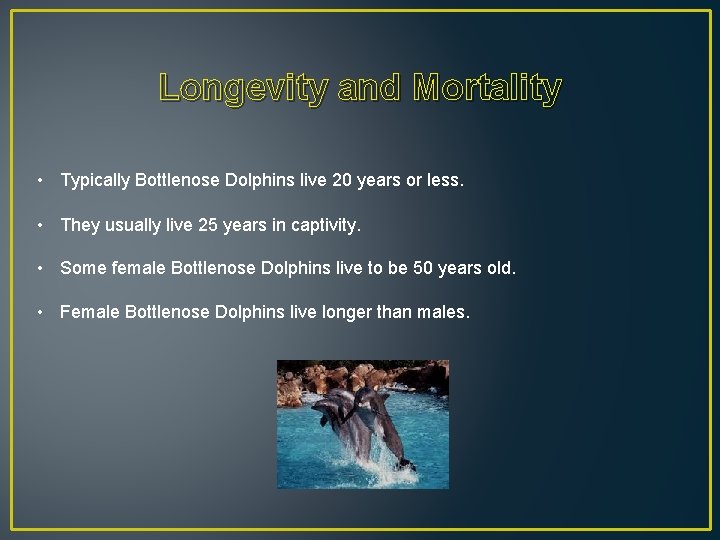
Longevity and Mortality • Typically Bottlenose Dolphins live 20 years or less. • They usually live 25 years in captivity. • Some female Bottlenose Dolphins live to be 50 years old. • Female Bottlenose Dolphins live longer than males.
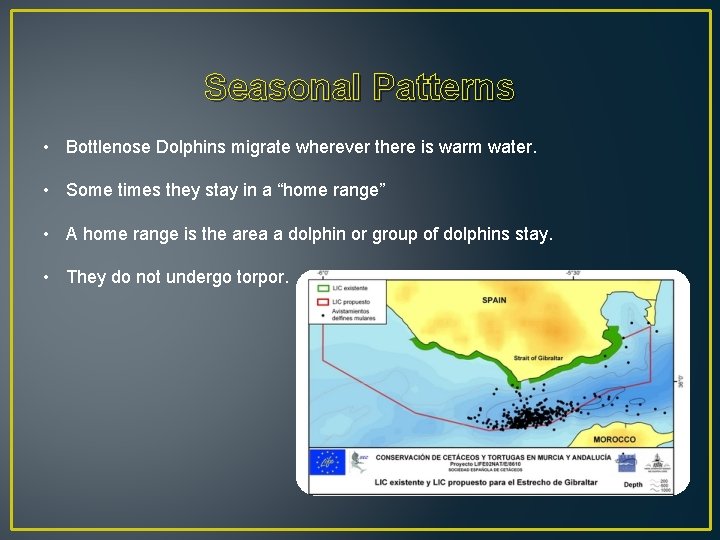
Seasonal Patterns • Bottlenose Dolphins migrate wherever there is warm water. • Some times they stay in a “home range” • A home range is the area a dolphin or group of dolphins stay. • They do not undergo torpor.
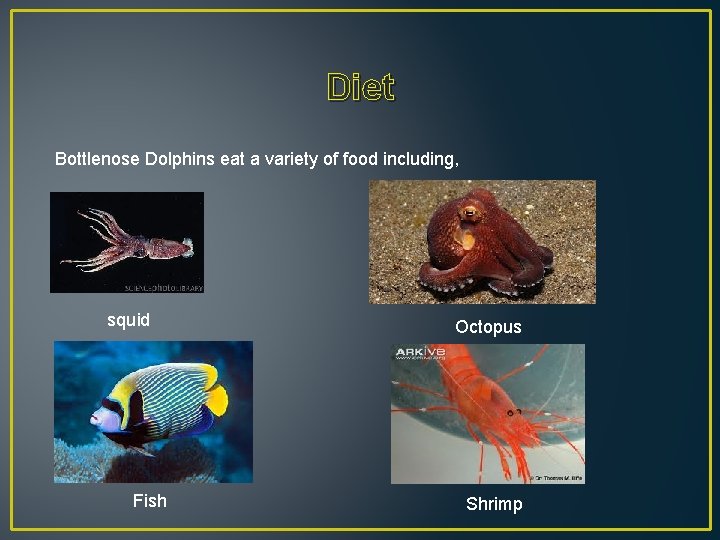
Diet Bottlenose Dolphins eat a variety of food including, squid Fish Octopus Shrimp
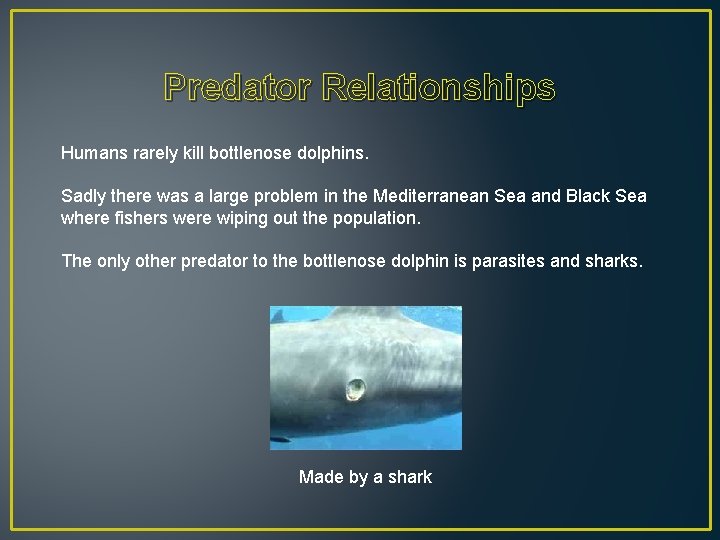
Predator Relationships Humans rarely kill bottlenose dolphins. Sadly there was a large problem in the Mediterranean Sea and Black Sea where fishers were wiping out the population. The only other predator to the bottlenose dolphin is parasites and sharks. Made by a shark
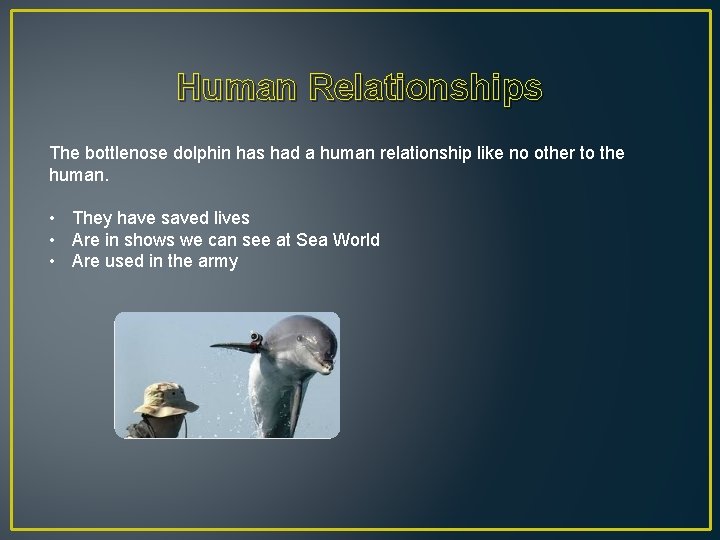
Human Relationships The bottlenose dolphin has had a human relationship like no other to the human. • They have saved lives • Are in shows we can see at Sea World • Are used in the army
Fun Facts • Dolphins communicate using squeaks, grunts, and clicks. • Bottlenose Dolphins never fully sleep. • Dolphins use echolocation to hunt • They are extremely smart https: //www. youtube. com/watch? v=P 0 v 01 X mnp 9 Y
Works Cited American Cetacean Society, n. d. Web. 25 Feb. 2013. <http: //acsonline. org/fact-sheets/bottlenose-dolphin/>. Animals. Seaworld, n. d. Web. 25 Feb. 2013. <http: //seaworld. org/>. Cahill, Tim. Dolphins. Washington D. C. : National Geographic Society, [2000? ]. Print. Martin, Richard Mark. Mammals of the Oceans. New York City: G. P. Putnam's Sons, 1977. Print. National Geographic, n. d. Web. 25 Feb. 2013. <http: //animals. nationalgeographic. com/animals/mammals/bottlenosedolphin/? source=A-to-Z>. Nuzzolo, Deborah. Bottlenose Dolphin Training and Interaction. San Diego: Sea World, 2003. Print. Oracle: Think. Quest. Thinkquest Team 17963, n. d. Web. 25 Feb. 2013. <http: //library. thinkquest. org/17963/genus-Tursiops. html>. Reynolds, John E. , Randall S. Wells, and Samantha D. Eide. The Bottlenose Dolphin: Biology and Conservation. Gainesville: U P of Florida, 2000. Print. Samuels, Amy. Follow That Fin: Studying Dolphin Behavior. Austin: Raintree Steck. Vaughn, 2000. Print. Schomp, Virginia. The Bottlenose Dolphin. New York City: Dillon, 1994. Print.
Thanks
- Slides: 17