
The Boreal Shield Glossary Terms Muskeg Taiga Timberland
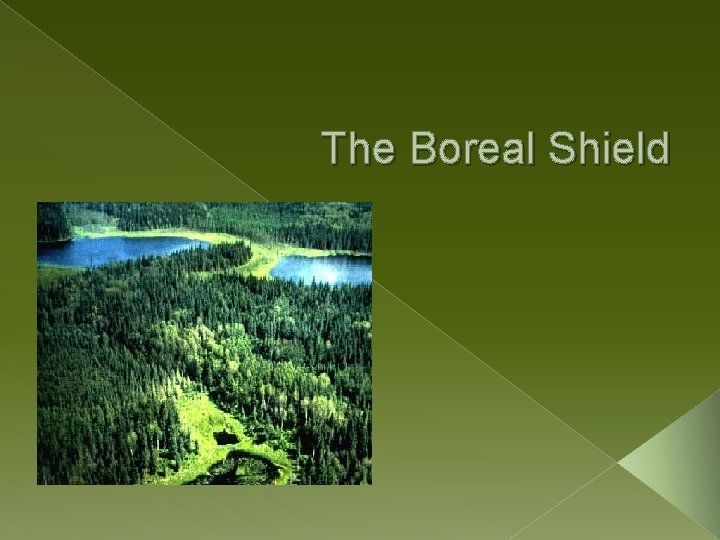
The Boreal Shield
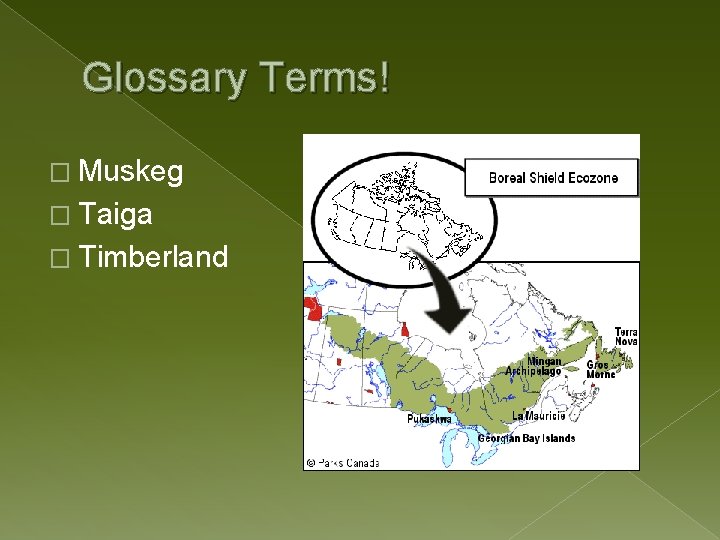
Glossary Terms! � Muskeg � Taiga � Timberland
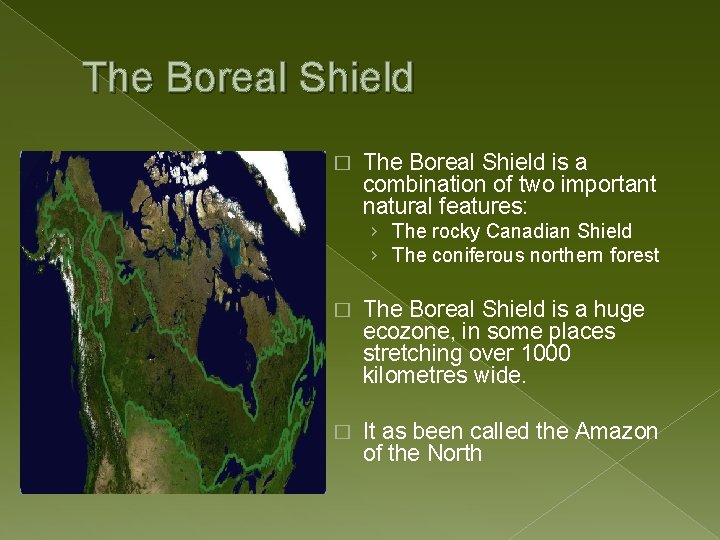
The Boreal Shield � The Boreal Shield is a combination of two important natural features: › The rocky Canadian Shield › The coniferous northern forest � The Boreal Shield is a huge ecozone, in some places stretching over 1000 kilometres wide. � It as been called the Amazon of the North
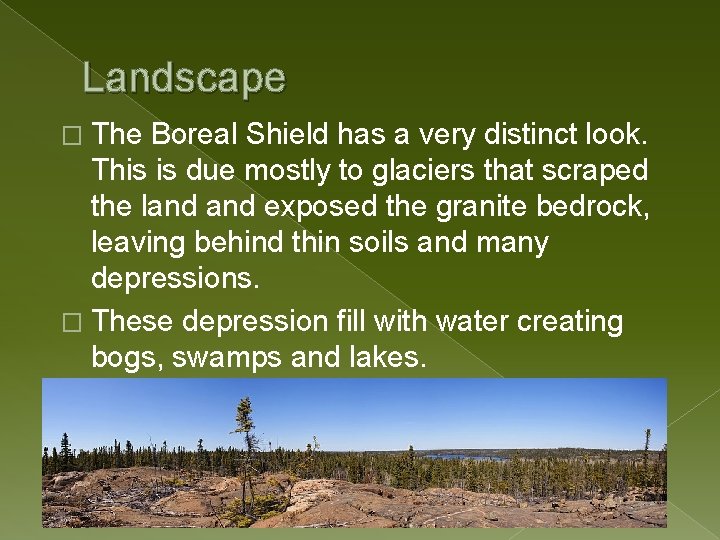
Landscape � The Boreal Shield has a very distinct look. This is due mostly to glaciers that scraped the land exposed the granite bedrock, leaving behind thin soils and many depressions. � These depression fill with water creating bogs, swamps and lakes.
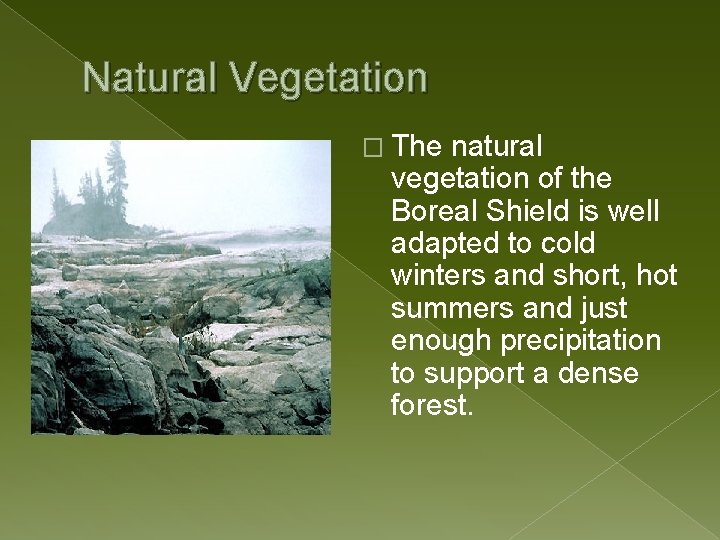
Natural Vegetation � The natural vegetation of the Boreal Shield is well adapted to cold winters and short, hot summers and just enough precipitation to support a dense forest.
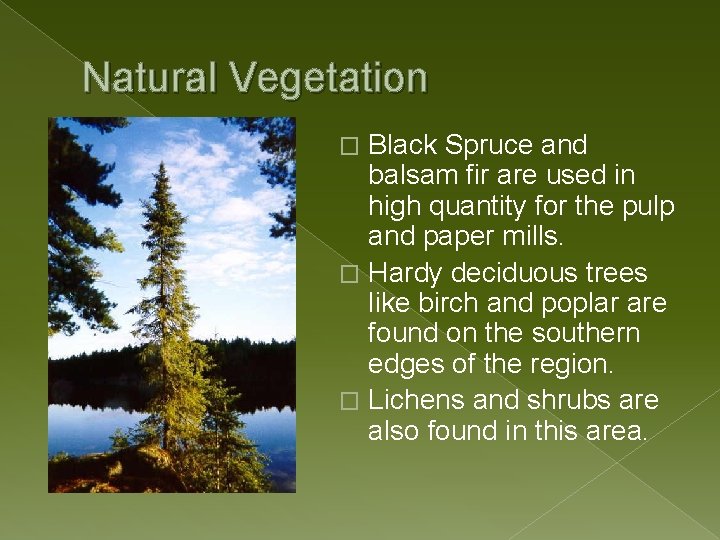
Natural Vegetation Black Spruce and balsam fir are used in high quantity for the pulp and paper mills. � Hardy deciduous trees like birch and poplar are found on the southern edges of the region. � Lichens and shrubs are also found in this area. �
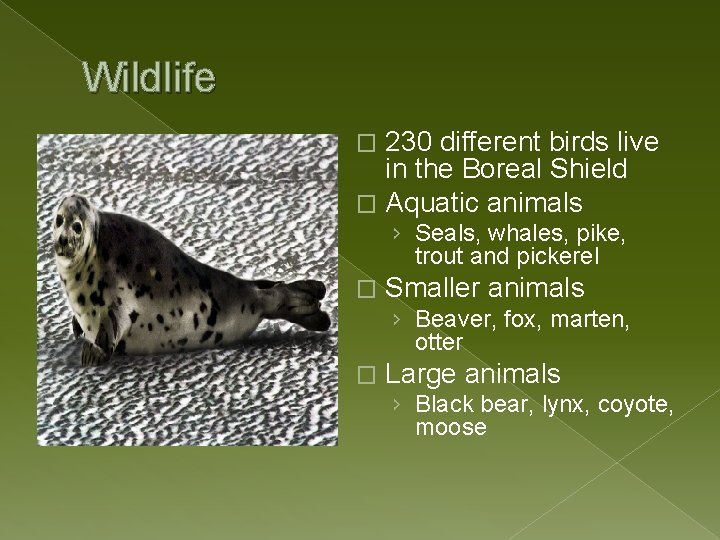
Wildlife 230 different birds live in the Boreal Shield � Aquatic animals � › Seals, whales, pike, trout and pickerel � Smaller animals › Beaver, fox, marten, otter � Large animals › Black bear, lynx, coyote, moose
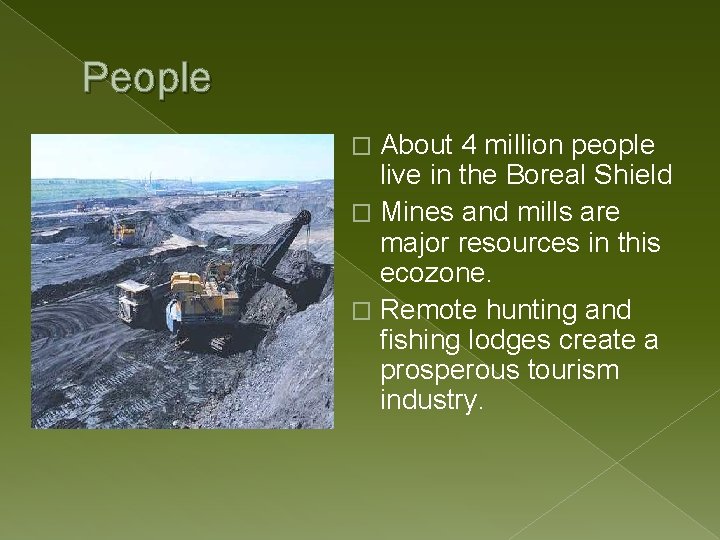
People About 4 million people live in the Boreal Shield � Mines and mills are major resources in this ecozone. � Remote hunting and fishing lodges create a prosperous tourism industry. �
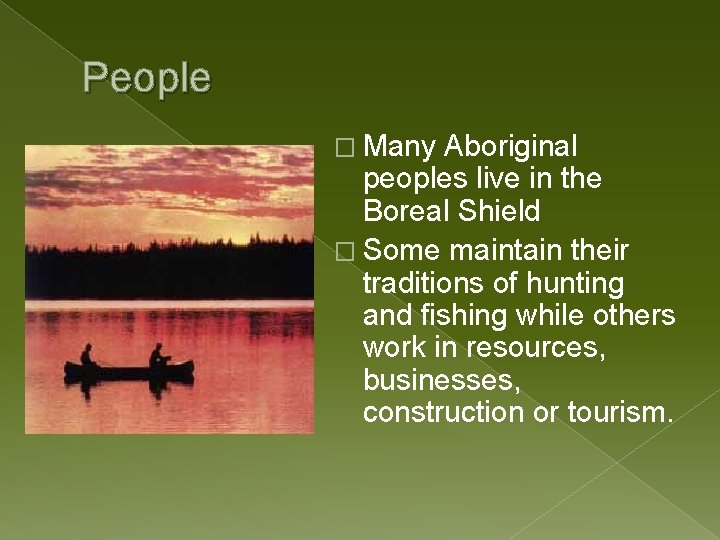
People � Many Aboriginal peoples live in the Boreal Shield � Some maintain their traditions of hunting and fishing while others work in resources, businesses, construction or tourism.
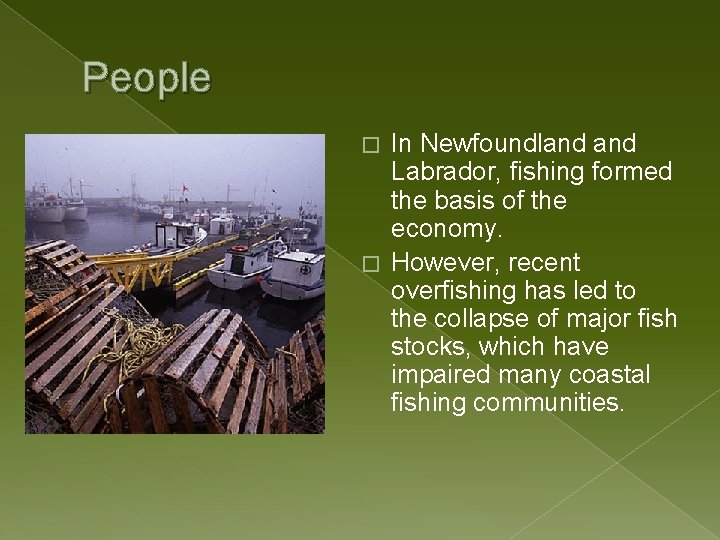
People In Newfoundland Labrador, fishing formed the basis of the economy. � However, recent overfishing has led to the collapse of major fish stocks, which have impaired many coastal fishing communities. �
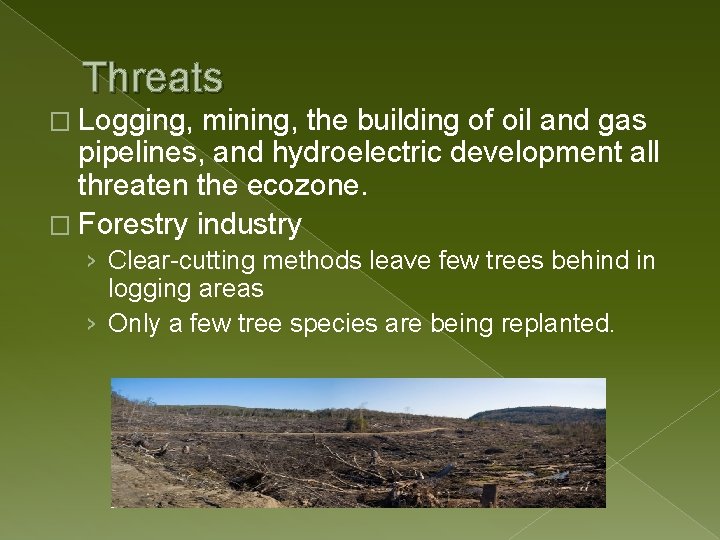
Threats � Logging, mining, the building of oil and gas pipelines, and hydroelectric development all threaten the ecozone. � Forestry industry › Clear-cutting methods leave few trees behind in logging areas › Only a few tree species are being replanted.
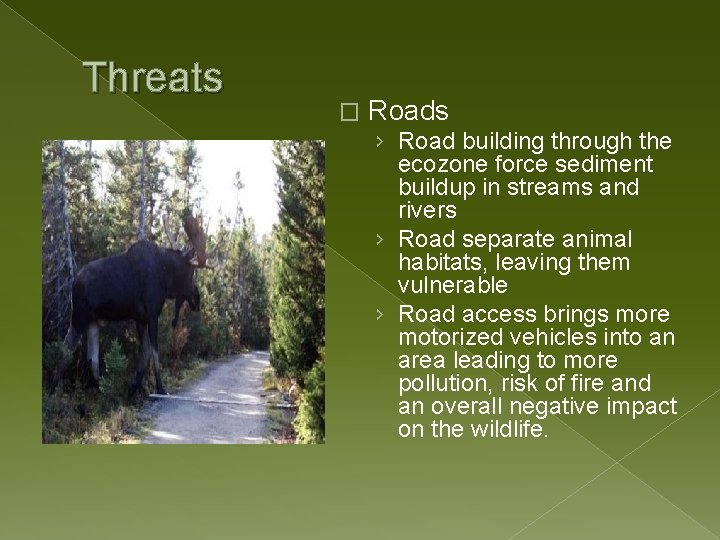
Threats � Roads › Road building through the ecozone force sediment buildup in streams and rivers › Road separate animal habitats, leaving them vulnerable › Road access brings more motorized vehicles into an area leading to more pollution, risk of fire and an overall negative impact on the wildlife.

Activate your Learning! � Page 121 � # 1, 2 & 4
- Slides: 13