
The Book of Isaiah Lecture 1 Introduction Lecture
The Book of Isaiah Lecture 1 - Introduction


Lecture 1 - Introduction Book of Isaiah The Times of Isaiah • Dating in the 8 th C. BC – a ministry that likely spanned 55 years • He was a contemporary of Hosea, Micah, and Amos • He was a prophet under the reigns of Uzziah, Jotham, Ahaz, Hezekiah, and likely Manasseh • Uzziah died in 739 -740 BC. • Hezekiah took the throne approx. 716 BC and reigned until 686 BC.
Lecture 1 - Introduction Book of Isaiah The Times of Isaiah • Set in the context of the NK rebelling against God, the prophet watches it go into captivity – Isaiah speaks to the SK who is flirting with Assyria for its own political reasons • The crisis and rising threat of Assyria (which came to a head in 701 BC – during Hezekiah’s reign), serves as the occasion and initial backdrop of the book
Lecture 1 - Introduction Book of Isaiah The Political Scene • Israel – a brief period of prosperity from 790 -750 BC, which saw an increase in idol worship and materialism • Assyria – major and expanding world power, they conquer the NK in 722 BC • Babylon – the power that arises and conquers Assyria – they take Jerusalem in 586 BC • Egypt – the nation that Judah forms alliance with • Persia – conquers Babylon in 539 BC - decree of Cyrus in 538 BC
Lecture 1 - Introduction Book of Isaiah – The Man • His name means, The Lord Saves, or The Lord is Salvation (Hebrew Yisha’yahu) • He was the son of Amoz-Rabbinic literature suggests he was a cousin to King Uzziah (Amaziah), and a descendent of the royal house of Judah and Tamar • 2 Chronicles 26: 22 tells us that Isaiah wrote a history on the reign of King Uzziah
Lecture 1 - Introduction Book of Isaiah – The Man • His wife was called a prophetess, either a title, or because she also had the prophetic gift (8: 1 -4) • He had two sons – Shear-Jashub (A remnant shall return) and Maher-Shalal-Hash-Baz (Spoil quickly, plunder speedily) • Isaiah may have had a “school” or “disciples” (see 8: 16) • Tradition holds he was sawn in half by Manasseh (Hebrews 11: 37; Ascension of Isaiah)
Lecture 1 - Introduction Book of Isaiah – The Man • How many Isaiah’s? One (1 -39), Two (40 -55), or Three (56 -66)? • We will be working on the premise of a unified work by a single author.
Lecture 1 - Introduction Book of Isaiah Characteristics of the Book • • • Apex of Hebrew literary art Broad vocabulary Wide ranging use of literary devices Elegant word pictures Only Psalms is alluded to or quoted more frequently than Isaiah
Lecture 1 - Introduction Book of Isaiah Theology/Message of the Book • • “Holy One of Israel” Moral and ethical implications Implications for God’s person Redemptive implications – God’s intervention (grace) – Atonement – Human response – A Redeemer
Lecture 1 - Introduction Book of Isaiah Eschatological Implications of the Book • A renewed Jerusalem • A restored people • A re-settled people
Lecture 1 - Introduction Book of Isaiah Structure (Wolf pg. 40) • Chapters 1 -35 – Backdrop is the Assyrian Empire – Major literary device – poetry – Major King – Ahaz • Chapters 36 -39 – Historical interlude – Defeat of Assyria, Babylonian captivity predicted – Major literary device – prose – Major King - Hezekiah
Lecture 1 - Introduction Book of Isaiah Structure (Wolf pg. 40) • Chapters 40 -66 – Backdrop is the Babylonian Empire – Major literary device – poetry – Major King - Cyrus
Lecture 1 - Introduction Book of Isaiah Structure (Alternate Proposal – Dr. Gus Konkel) • Chapters 1 -39 (The judgment of Jerusalem) – Prologue: case against Jerusalem (1) – Prophecy: shame and the glory (2 -4) – History: Jerusalem from start to finish (5 -39) • God with us (5 -12) • God over us (13 -27) • God for us (28 -39)
Lecture 1 - Introduction Book of Isaiah Structure (Alternate Proposal – Dr. Gus Konkel) • Chapters 40 -45 (The Restoration of Jerusalem) – The new exodus (40 -48) – The servant (49 -55) • Chapters 56 -66 (The New Jerusalem) – Justice for the righteous (56 -59) – The dawning light (60 -62) – The coming glory (63 -66)
Isaiah’s World Historical Background and Context
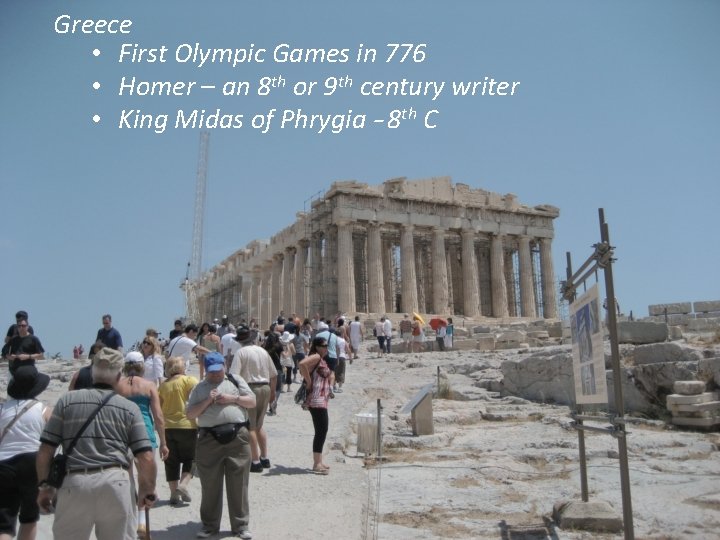
Greece • First Olympic Games in 776 • Homer – an 8 th or 9 th century writer • King Midas of Phrygia – 8 th C
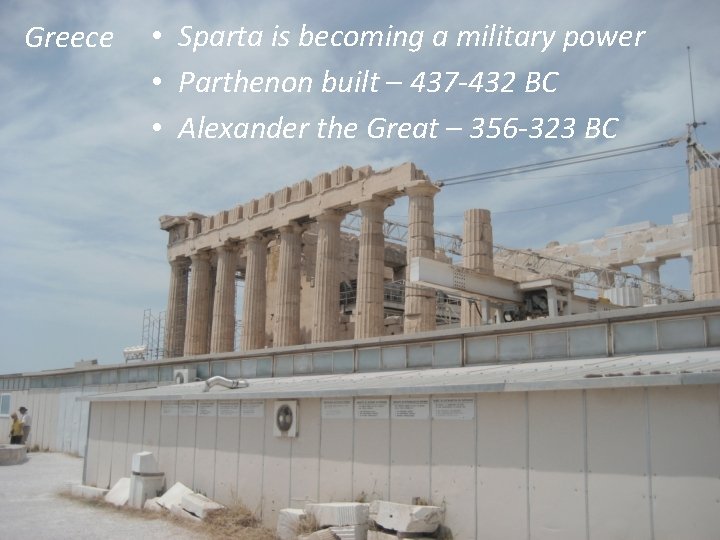
Greece • Sparta is becoming a military power • Parthenon built – 437 -432 BC • Alexander the Great – 356 -323 BC
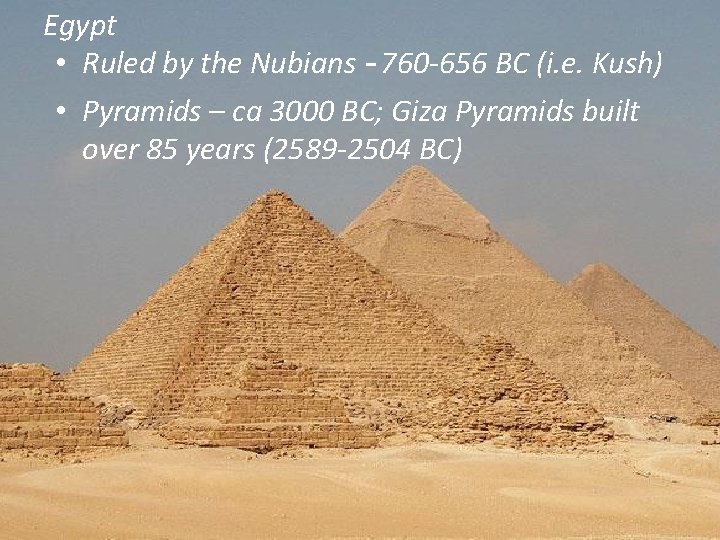
Egypt • Ruled by the Nubians – 760 -656 BC (i. e. Kush) • Pyramids – ca 3000 BC; Giza Pyramids built over 85 years (2589 -2504 BC)
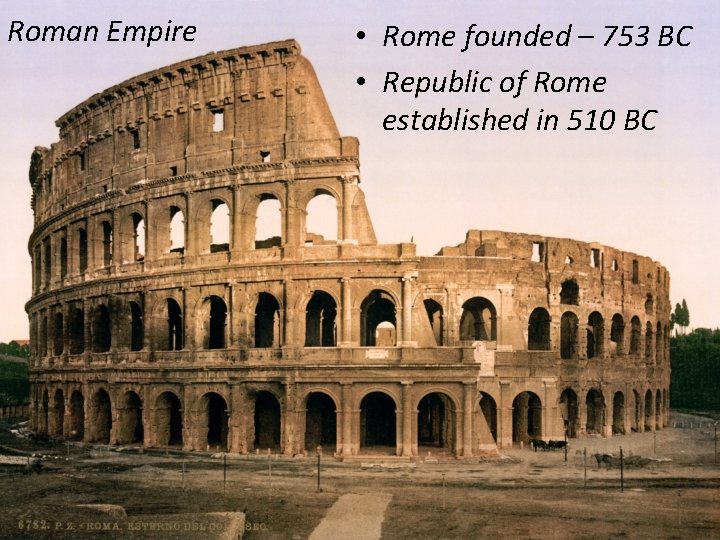
Roman Empire • Rome founded – 753 BC • Republic of Rome established in 510 BC
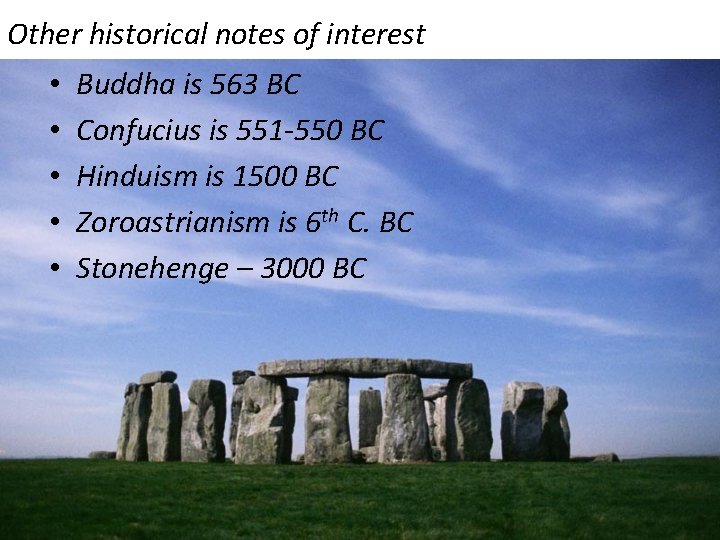
Other historical notes of interest • • • Buddha is 563 BC Confucius is 551 -550 BC Hinduism is 1500 BC Zoroastrianism is 6 th C. BC Stonehenge – 3000 BC
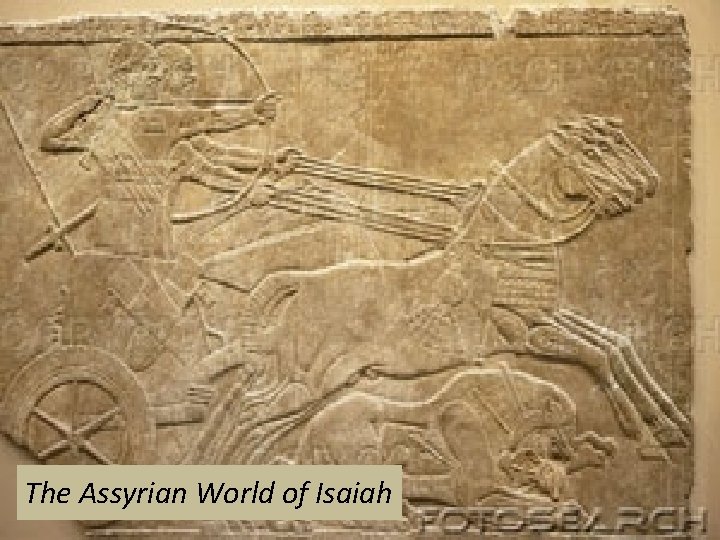
The Assyrian World of Isaiah
Assyria – A Nation unknown • • • Locks and keys first used They developed the sexagesimal system First paved roads First postal system First use of iron First magnifying glasses First libraries First electric batteries First guitars Assyria – A Nation unknown
Assyria – A Nation unknown First aqueducts First arch First to develop latitude and longitude Developed sophisticated medical science that greatly influences medicine as far away as Greece • They invented backgammon • • Assyria – A Nation unknown
Assyria – A Nation unknown • In battle they were among history’s most brutal – The favourite pastime of Kings – war and hunting – They were savage and merciless – Known to burn whole cities to the ground – They would burn children before parents – They would impale victims and leave them as a trail along highways – No trouble loping off heads or other body parts Assyria – A Nation unknown
Assyria – A History unknown, from Jesus onward…. . • 350 B. C. Assyrians attempt to reestablish their autonomy, but the Persians suppress the attempt and castrate 400 members of Assyrian ruling families. • 33 A. D. Assyrians become the first nation to convert to Christianity. The Holy Apostolic Catholic Assyrian Church of the East is founded by Thomas, Theodos and Bartholomew.
Assyria – A History unknown, from Jesus onward…. . • 256 A. D. The last known Ashur worshippers. Assyrians are now all Christians. • 358 A. D. The School of Nisibis is Established, the first university in the world.
Assyria – A History unknown, from Jesus onward…. . • 400 A. D. Assyrian monks, because of their close ties with Greek Christianity, translate the significant body of Greek knowledge into Assyrian, including all the great works of religion, medicine, philosophy, science, and mathematics. • These works are eventually translated into Arabic and brought to Spain by the Moors, where they are translated from Arabic to Latin and distributed through Europe, igniting the Renaissance.
Assyria – A History unknown, from Jesus onward…. . • 450 A. D. The Assyrian Church splits over a doctrinal dispute. Mar Yacob leaves the Church of the East and establishes the Monophysitic Syrian Orthodox Church (also known as the Jacobite church). • 650 A. D. The Church of the East missionaries reach China and Japan.
Assyria – A History unknown, from Jesus onward…. . • 1000 A. D. Assyrian monks develop a writing systems for Mongolians using the Assyrian alphabet. • 1200 A. D. The Church of the East is at its largest, larger than the Greek Orthodox and Roman Catholic combined, with eighty million members, from Egypt to Japan.
Assyria – A History unknown, from Jesus onward…. . • Approx. 1360 A. D. Tamerlane the Mongol sweeps westward and destroys everything in his path. The Assyrian Church of the East is completely destroyed. Assyrians are forced to retreat into the Hakkary mountains of eastern Turkey. The Church becomes a small, single nation entity.
- Slides: 31