
The Bohr Model The Quantum Mechanical Model Ms
-The Bohr Model -The Quantum Mechanical Model Ms. Pare Physical science
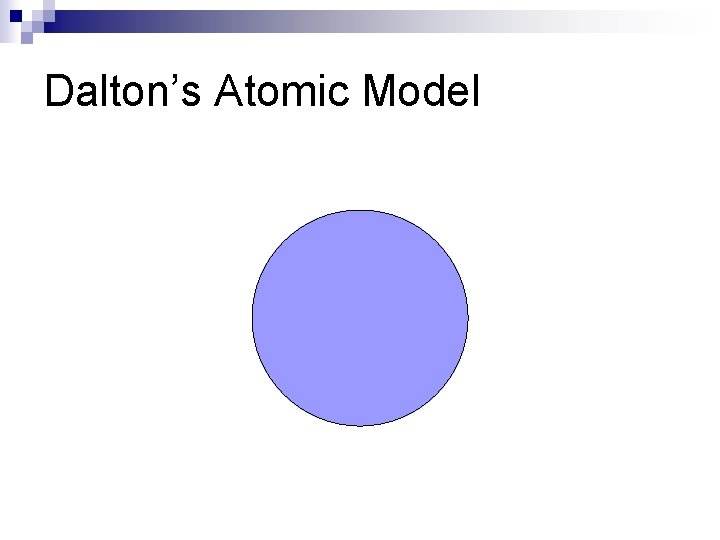
Dalton’s Atomic Model
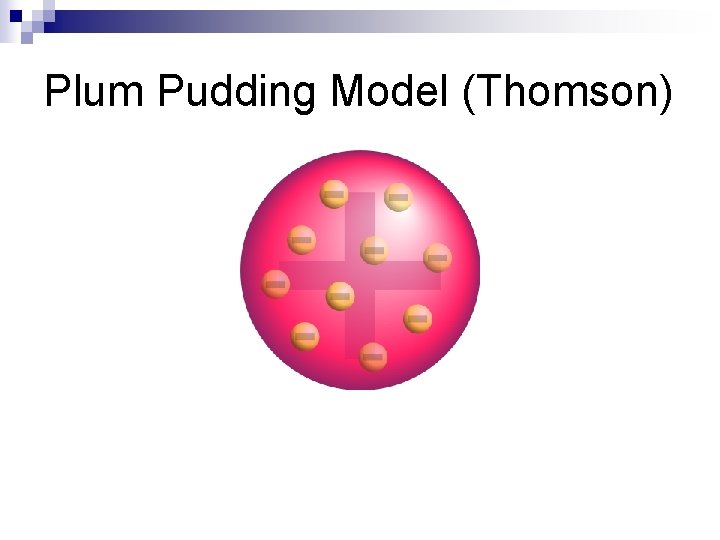
Plum Pudding Model (Thomson)
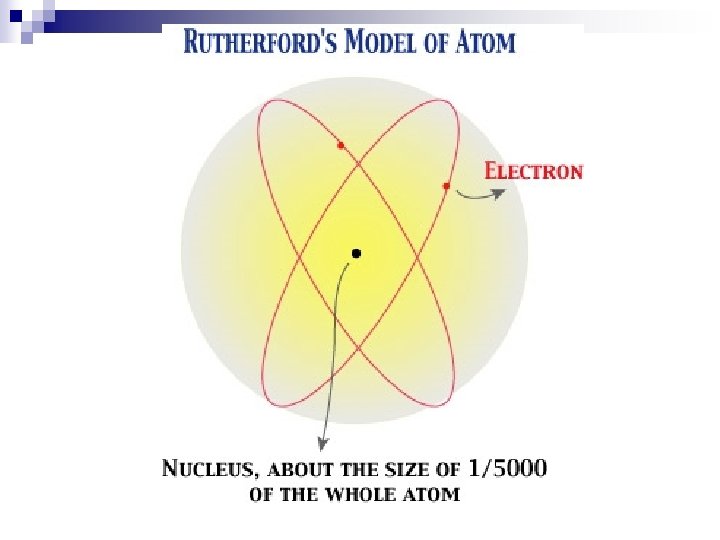

Niels Bohr (Born in Denmark 1885 -1962) n Student of Rutherford

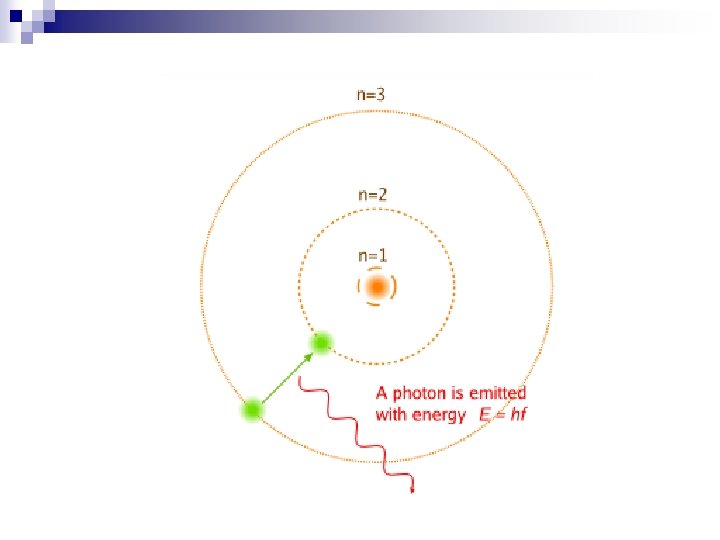
Niels Bohr’s Model (1913) n Electrons orbit the nucleus in circular paths of fixed energy (energy levels).
How do we know this? Energy emitted by the electron as it leaps from the higher to the lower energy level is proportional to the frequency of the light wave. n Frequency define the color of visible light. n
Niels Bohr’s Atom Cont’d n Electrons can jump from energy level to energy level. n Electrons absorb or emit light energy when they jump from one energy level to another.
Quantum n. A quantum of energy is the amount of energy required to move an electron from one energy level to another.
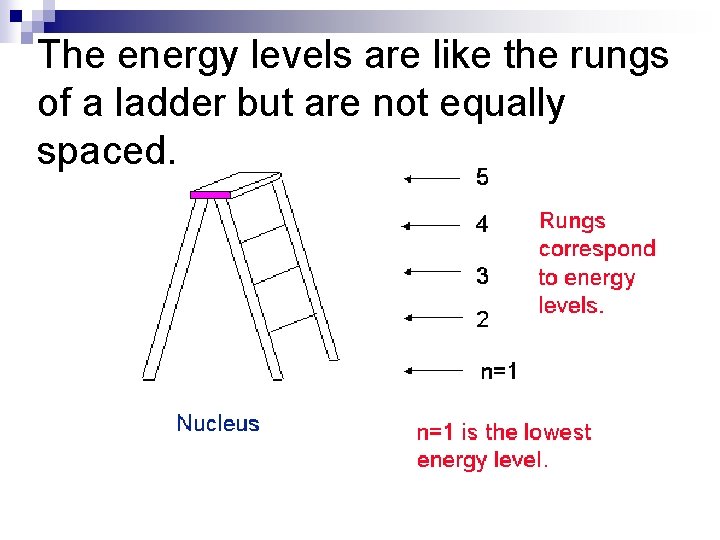
The energy levels are like the rungs of a ladder but are not equally spaced.
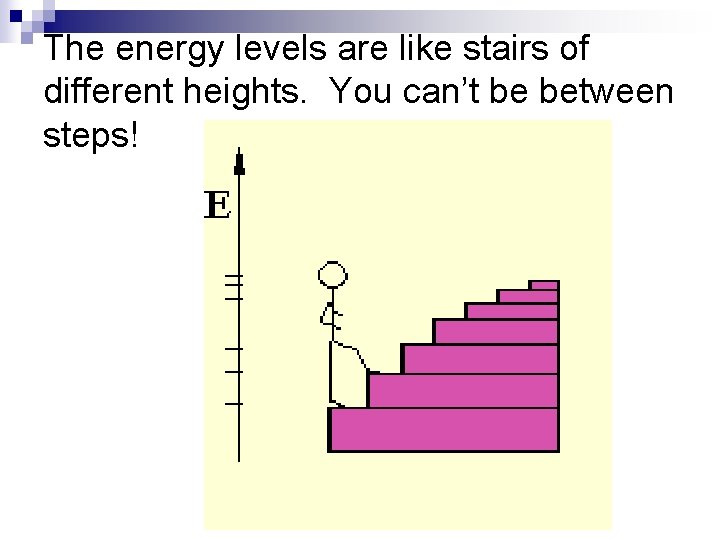
The energy levels are like stairs of different heights. You can’t be between steps!
Photons n Photons are bundles of light energy that is emitted by electrons as they go from higher energy levels to lower levels.
Excited State and Ground State n Ground state: the lowest possible energy level an electron be at. n Excited state: an energy level higher than the ground state.
Emission Spectrum n Light emitted produces a unique emission spectrum.
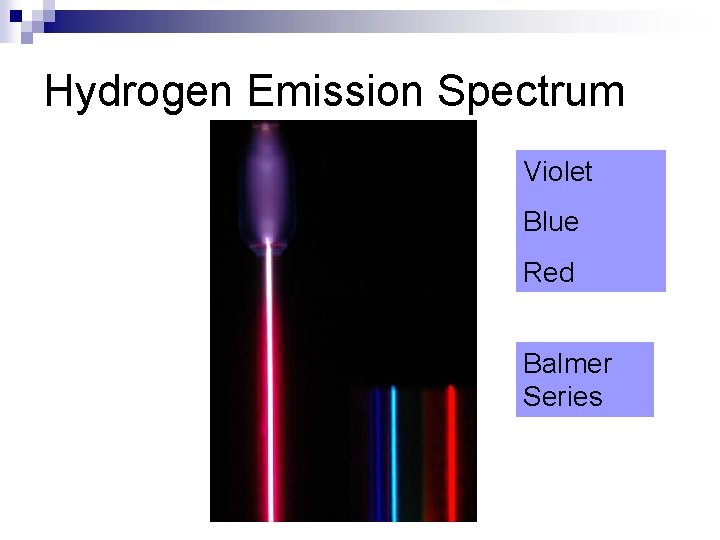
Hydrogen Emission Spectrum Violet Blue Red Balmer Series
Bohr Atom http: //science. sbcc. edu/physics/flash/silicons olarcell/bohratom. swf
n The Bohr model explained the emission spectrum of the hydrogen atom but did not always explain those of other elements.
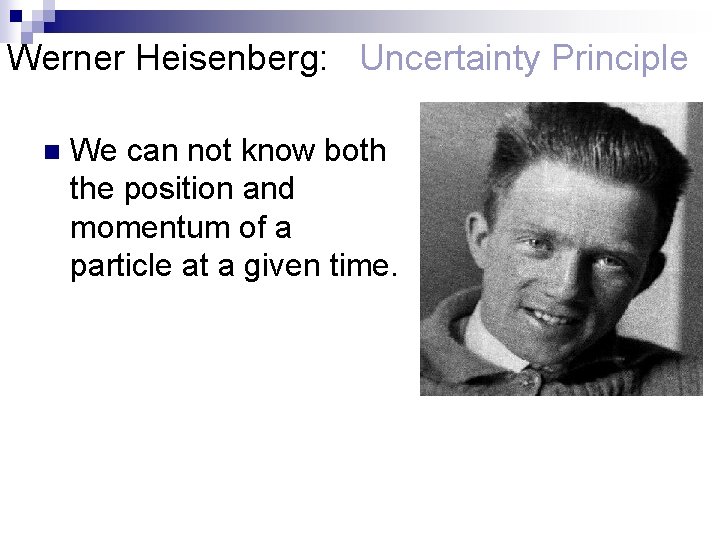
Werner Heisenberg: Uncertainty Principle n We can not know both the position and momentum of a particle at a given time.
Atomic Orbital: A region in space in which there is high probability of finding an electron.
Quantum Numbers: Specify the properties of atomic orbitals and their electrons.
Principal Quantum Number, n n Indicates main energy levels n = 1, 2, 3, 4… n Each main energy level has sub-levels
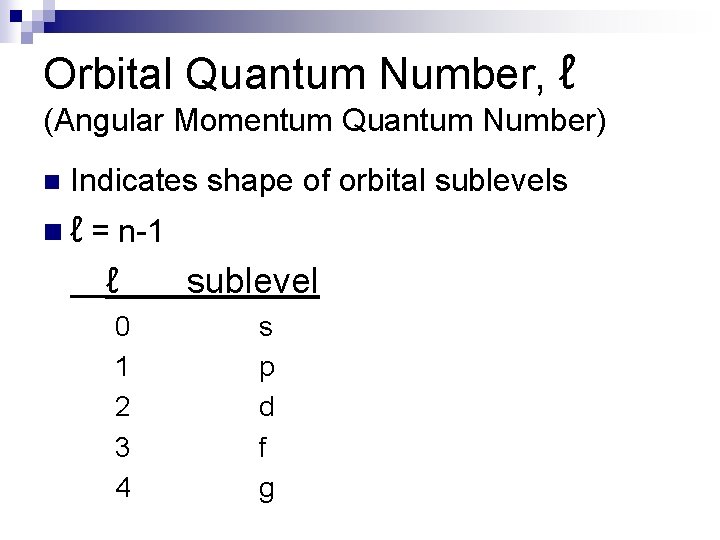
Orbital Quantum Number, ℓ (Angular Momentum Quantum Number) n Indicates shape of orbital sublevels n ℓ = n-1 ℓ 0 1 2 3 4 sublevel s p d f g

Atomic Orbital s 2 s
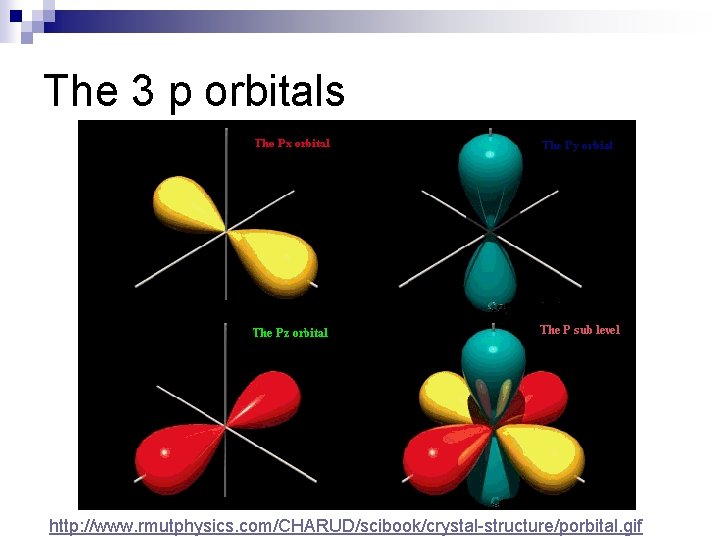
The 3 p orbitals http: //www. rmutphysics. com/CHARUD/scibook/crystal-structure/porbital. gif
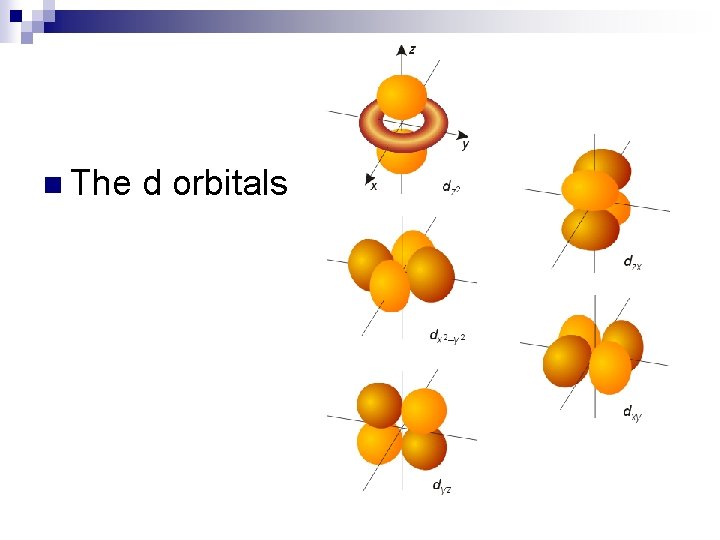
n The d orbitals
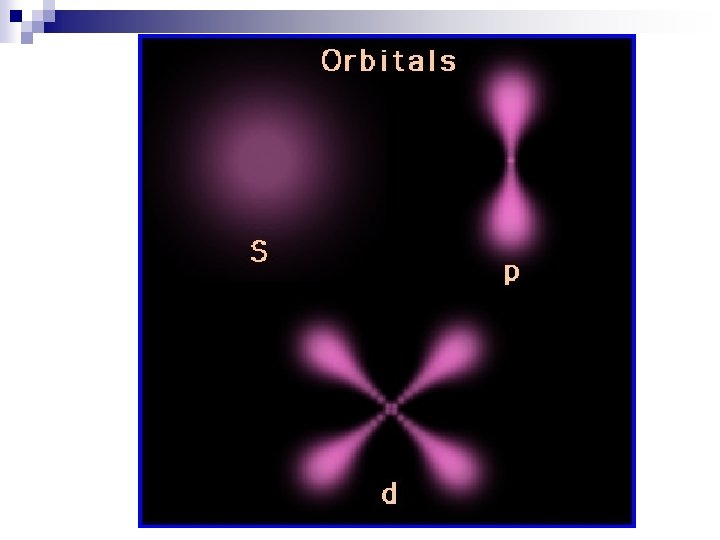
The Electron Cloud n The electron cloud represents positions where there is probability of finding an electron.
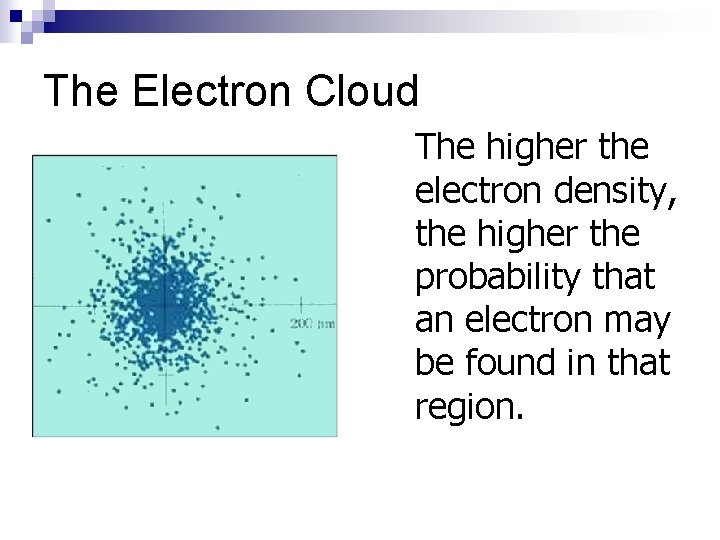
The Electron Cloud The higher the electron density, the higher the probability that an electron may be found in that region.
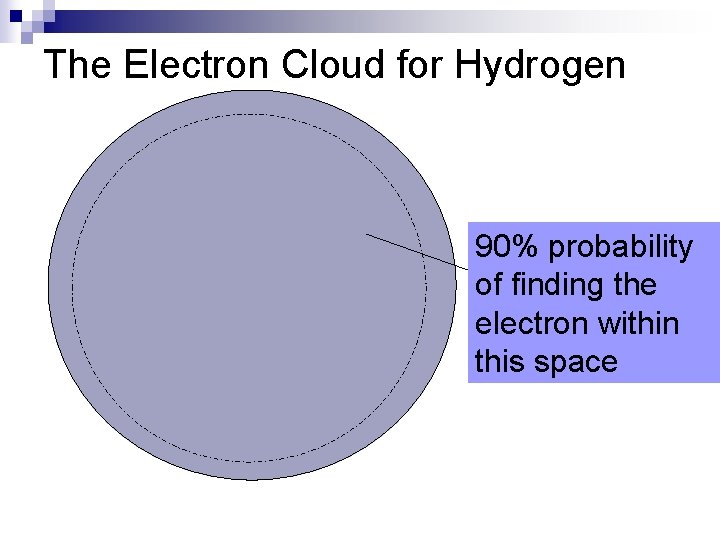
The Electron Cloud for Hydrogen 90% probability of finding the electron within this space
Quantum Mechanical Model n Electrons are located in specific energy levels. n There is no exact path around the nucleus. n The model estimates the probability of finding an electron in a certain position.
- Slides: 31