
The Bodys Reproductive System Male Reproductive System External

The Body’s Reproductive System
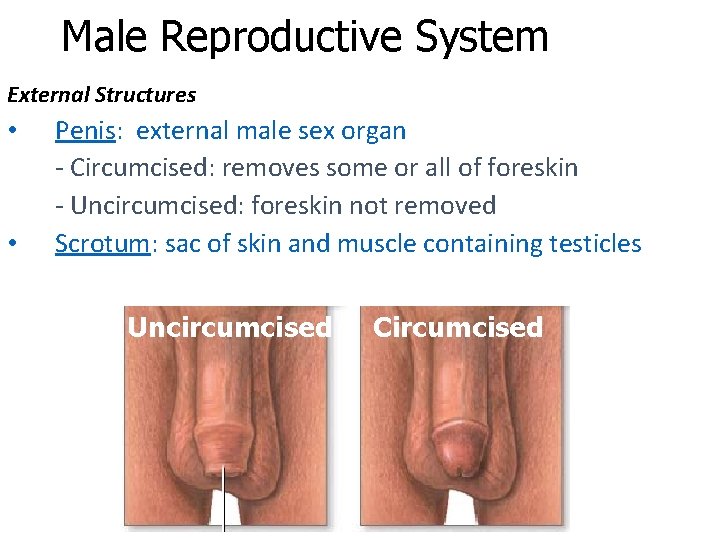
Male Reproductive System External Structures • • Penis: external male sex organ - Circumcised: removes some or all of foreskin - Uncircumcised: foreskin not removed Scrotum: sac of skin and muscle containing testicles Uncircumcised Circumcised
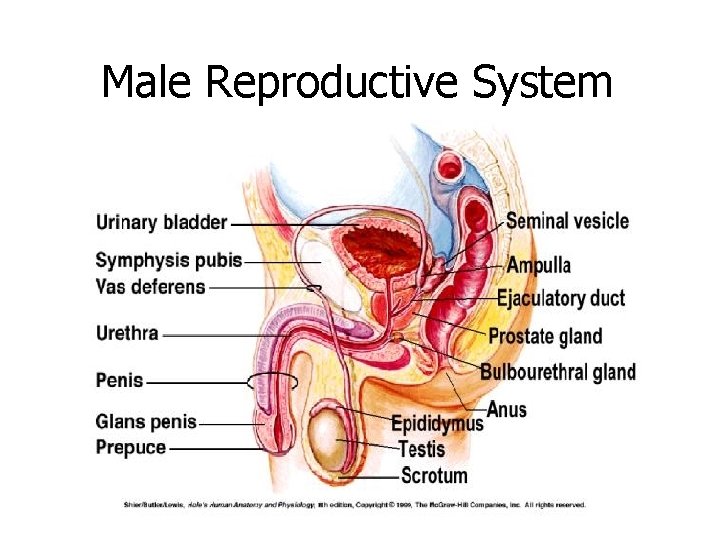
Male Reproductive System
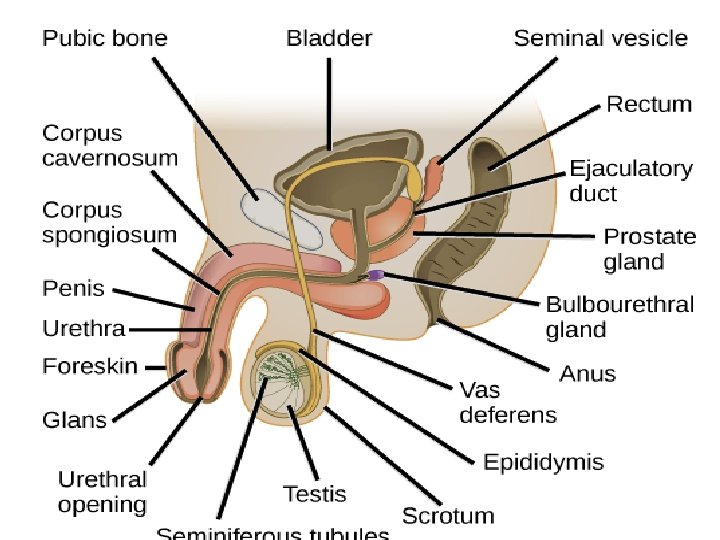
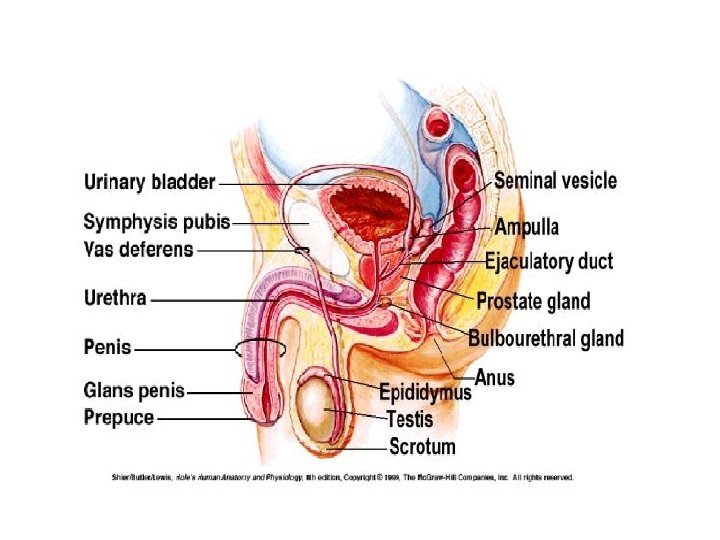
Male Reproductive System Internal Structures • • Prostate: exocrine gland of male reproductive system Vas Deferens: tubes connecting epididymis to ejaculatory ducts Epididymis: organ where sperm matures Testicles: organ where sperm is created Urethra: tube that connects bladder to outside of body Cowper’s Gland: secretes lubricating fluid Seminal Vesicle: make semen (seminal fluid) http: //www. youtube. com/watch? v=HPH 4 b. VKa. U 4 Y
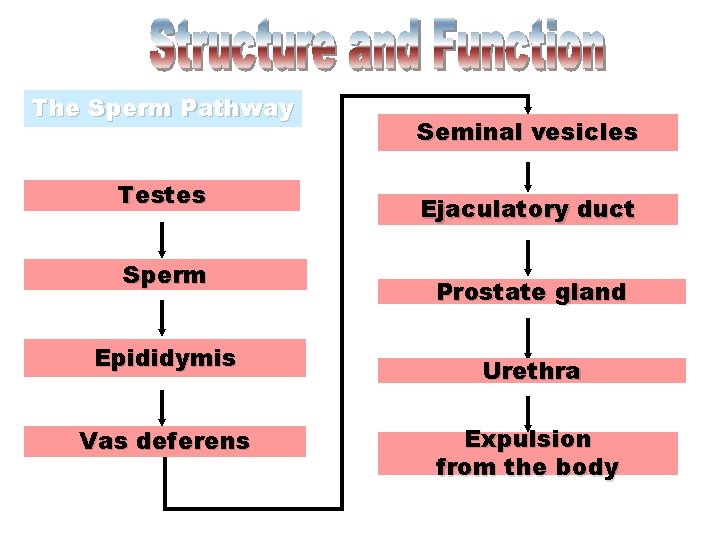
The Sperm Pathway Testes Sperm Epididymis Vas deferens Seminal vesicles Ejaculatory duct Prostate gland Urethra Expulsion from the body

Male Reproductive Disorders
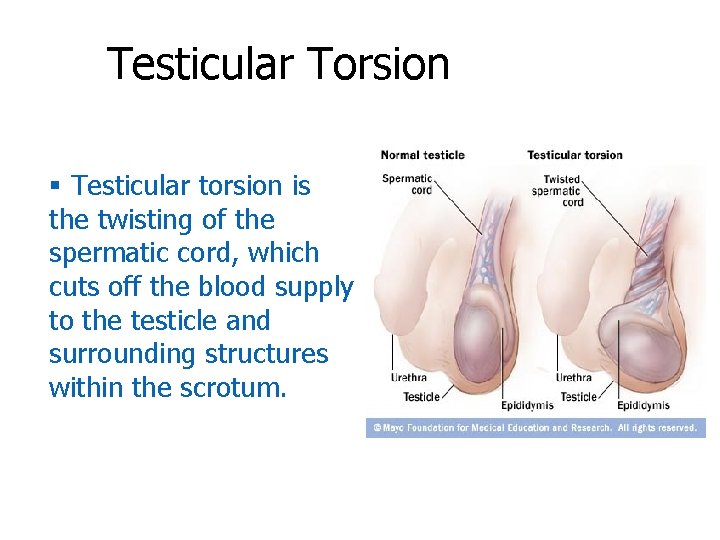
Testicular Torsion § Testicular torsion is the twisting of the spermatic cord, which cuts off the blood supply to the testicle and surrounding structures within the scrotum.
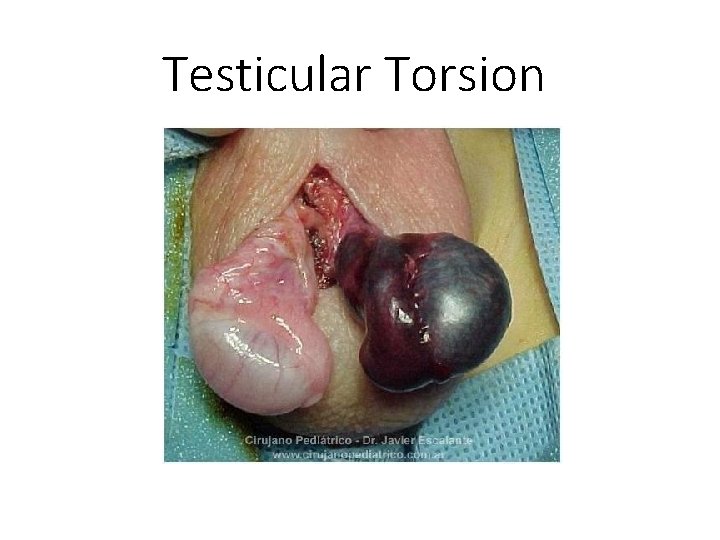
Testicular Torsion
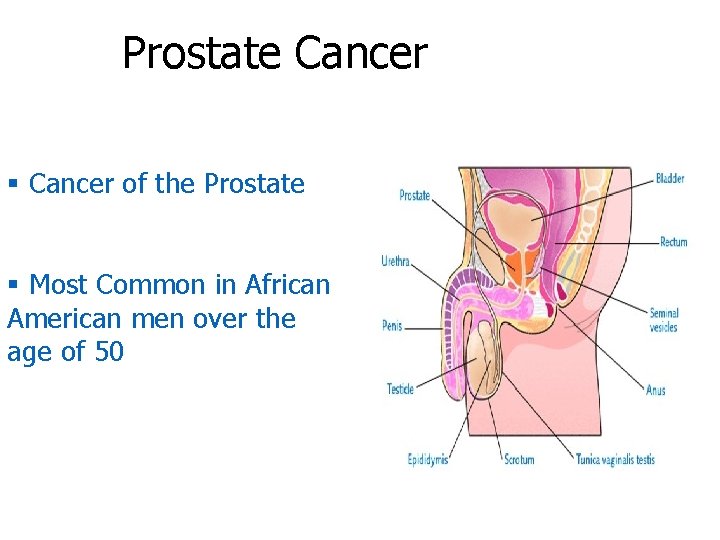
Prostate Cancer § Cancer of the Prostate § Most Common in African American men over the age of 50
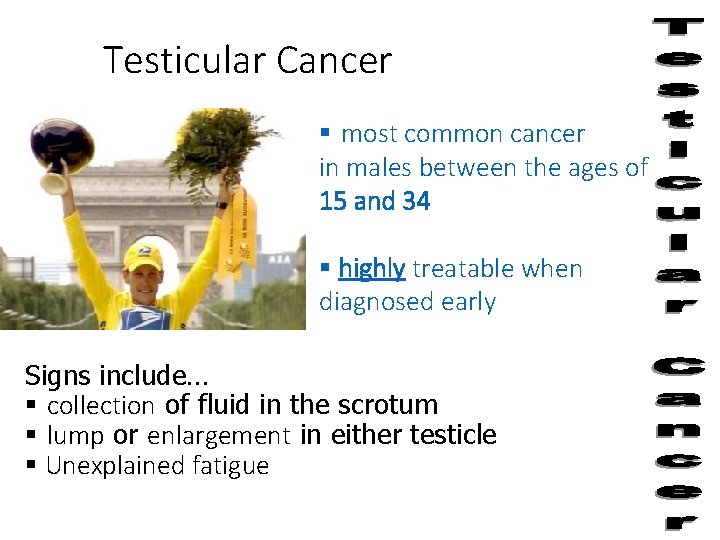
Testicular Cancer § most common cancer in males between the ages of 15 and 34 § highly treatable when diagnosed early Signs include… § collection of fluid in the scrotum § lump or enlargement in either testicle § Unexplained fatigue
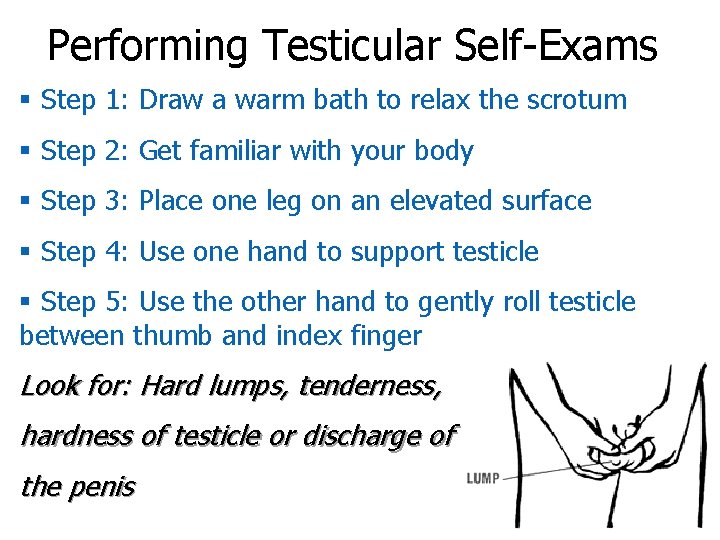
Performing Testicular Self-Exams § Step 1: Draw a warm bath to relax the scrotum § Step 2: Get familiar with your body § Step 3: Place one leg on an elevated surface § Step 4: Use one hand to support testicle § Step 5: Use the other hand to gently roll testicle between thumb and index finger Look for: Hard lumps, tenderness, hardness of testicle or discharge of the penis
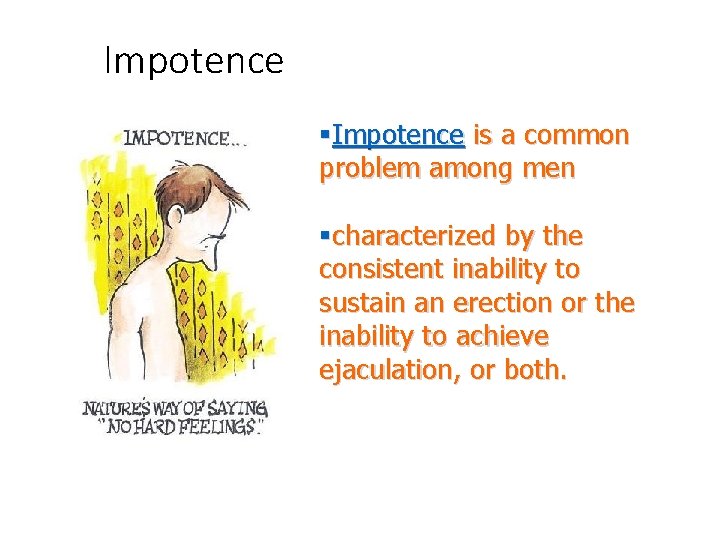
Impotence §Impotence is a common problem among men §characterized by the consistent inability to sustain an erection or the inability to achieve ejaculation, or both.
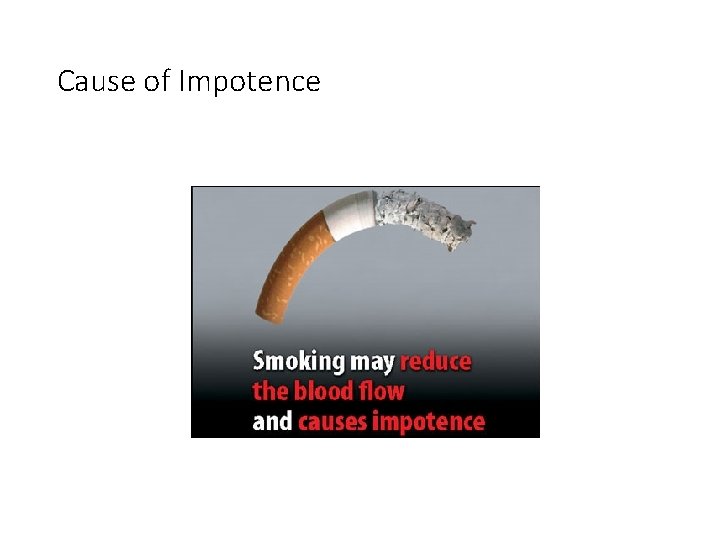
Cause of Impotence
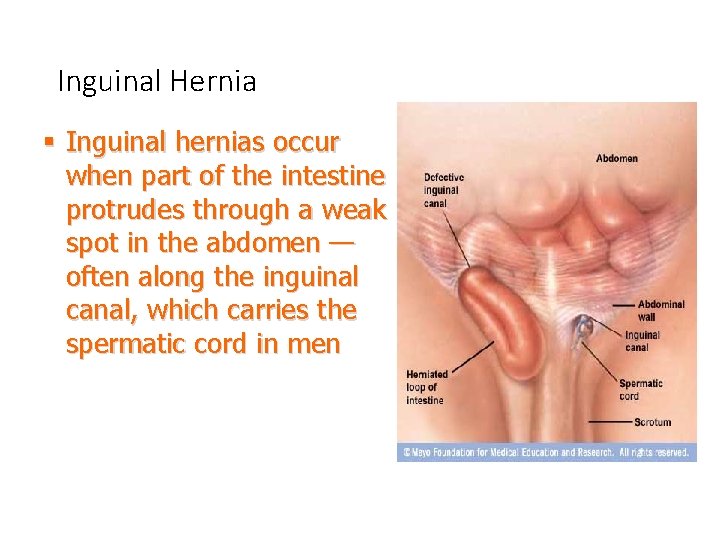
Inguinal Hernia § Inguinal hernias occur when part of the intestine protrudes through a weak spot in the abdomen — often along the inguinal canal, which carries the spermatic cord in men
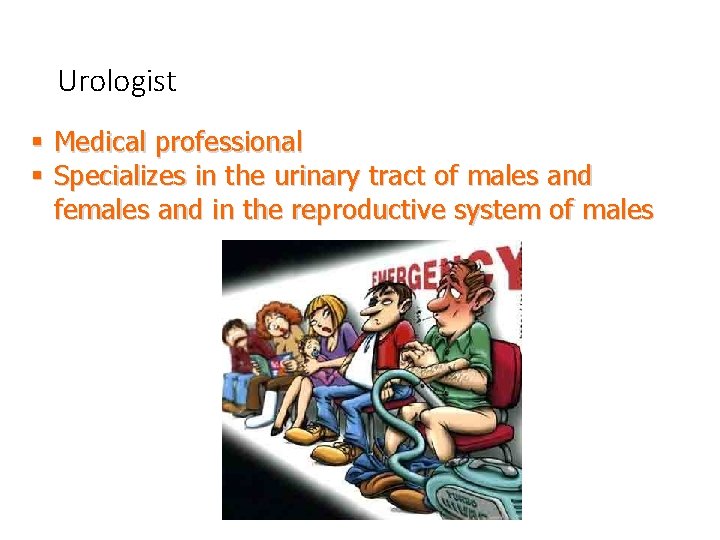
Urologist § Medical professional § Specializes in the urinary tract of males and females and in the reproductive system of males
Female Reproductive system
Female Reproductive System External Structures § Mons Pubis: soft mound of flesh above genitals § Labia: lip-like structures on the outside of the vagina § Clitoris: sex organ whose sole function is pleasure
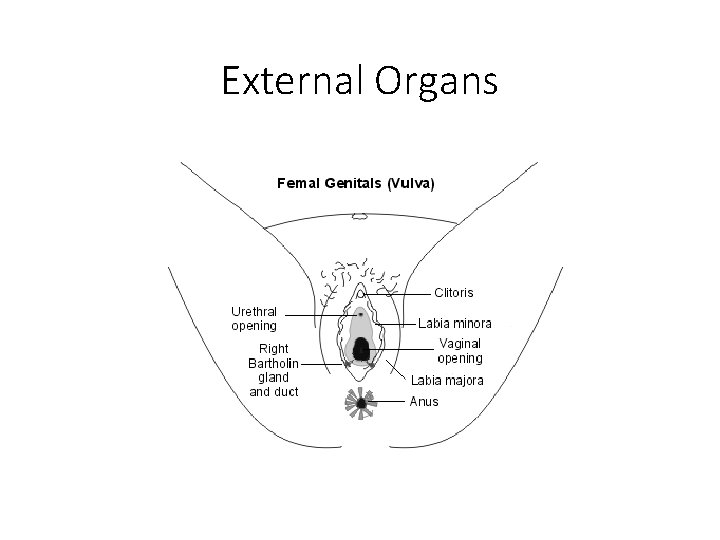
External Organs
Female Reproductive System Internal Structures §Vagina: tract from uterus to exterior §Hymen: mucous membrane around vaginal opening §Cervix: lower, narrow portion of uterus §Uterus: pear-shaped organ containing growing fetus §Fallopian Tubes: pathway for egg travel during ovulation §Ovaries: egg-producing organs
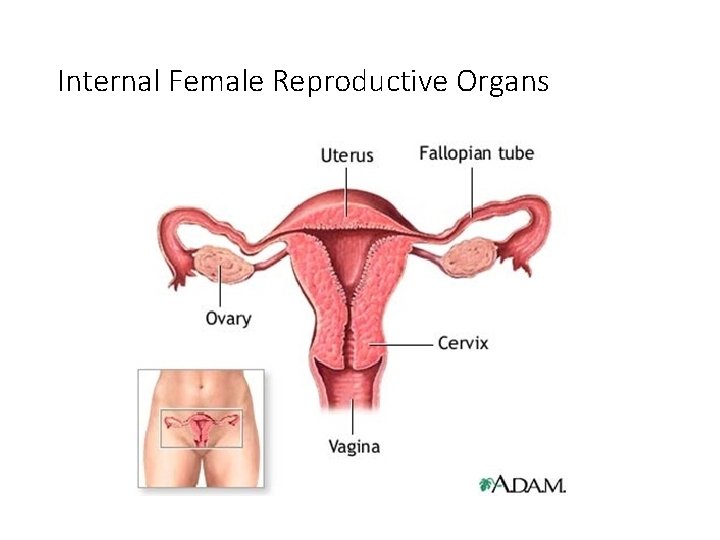
Internal Female Reproductive Organs

Female Reproductive Systems Disorders
Pelvic Inflammatory Disease • Progressive infection—gets worse over time • Affects fallopian tubes, uterus, cervix or ovaries • Can lead to long term reproductive problems • Symptoms include: foul-smelling discharge, heavier than normal periods, painful urination • Causes: bacteria move upward from a woman's vagina or cervix (opening to the uterus) into her reproductive organs. Many different organisms can cause PID, but many cases are associated with gonorrhea and chlamydia, two very common bacterial STDs
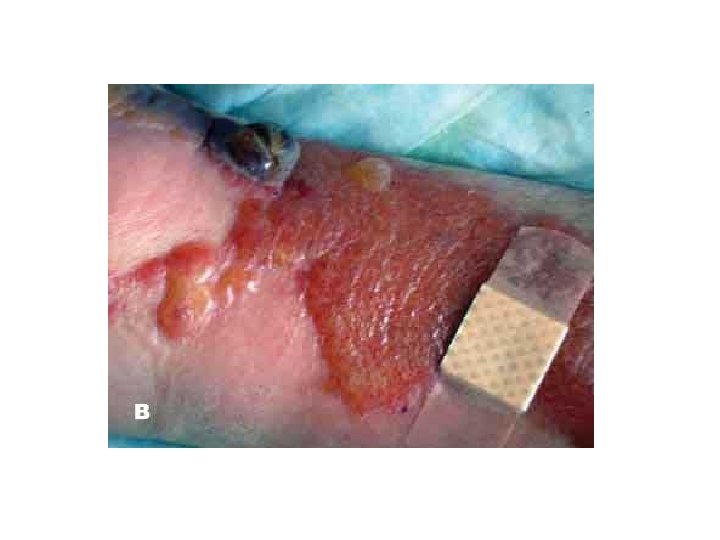
§Systemic illness: it affects the whole body §Caused by toxic bacterial Ways to get it… Using superabsorbent tampons Wearing a diaphragm or contraceptive sponge Having a staph or strep infection, especially if you have skin wounds or healing surgical incisions §Symptoms include: high fever, rapid drop in blood pressure, sun burn like rash, weakness, headaches and even kidney failure
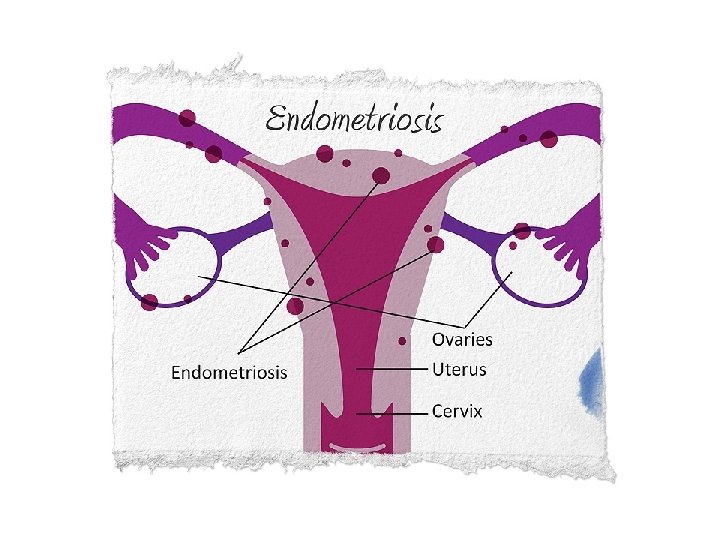
• • In Endometriosis, the tissue begins to grow on the outside of the uterus Causes: menstrual blood containing endometrial cells flows back through the fallopian tubes and into the pelvic cavity instead of out of the body. These displaced endometrial cells stick to the pelvic walls and surfaces of pelvic organs, where they grow • Symptoms include: severe pelvic pain, constipation, diarrhea Pain when having intercourse, can cause infertility
The Facts About Breast Cancer • Second Leading cause of cancer among women (232, 340 new cases a year) • Every 3 minutes a woman is diagnosed with breast cancer. 1 in 8 women will be diagnosed in their lifetime. • Approximately 2, 150 men will be diagnosed each year. • There are 2. 8 million breast cancer survivors today. • Early detection is the best way to protect yourself
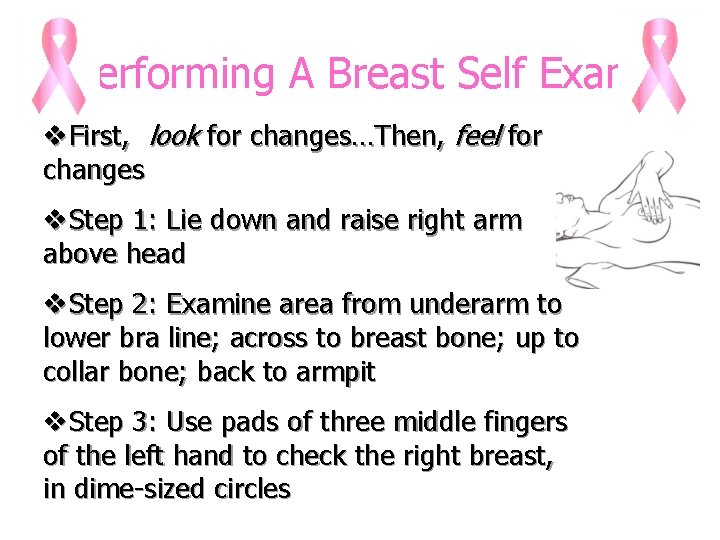
Performing A Breast Self Exam v. First, look for changes…Then, feel for changes v. Step 1: Lie down and raise right arm above head v. Step 2: Examine area from underarm to lower bra line; across to breast bone; up to collar bone; back to armpit v. Step 3: Use pads of three middle fingers of the left hand to check the right breast, in dime-sized circles
- Slides: 30