
The Blue Helmets Why the Blue Helmets United
The Blue Helmets
Why the Blue Helmets?
United Nations Peacekeeping Why the United Nations? ü 1945, following WWII ü… to save the succeeding generations fro the scourge of war… ü new Collective security system üGA, SC, ICJ, ECOSOC, TC, SG ü Bretton Woods institutions
Security Council: Functions and Powers § to maintain international peace and security in accordance with the principles and purposes of the United Nations; § to investigate any dispute or situation which might lead to international friction; § to recommend methods of adjusting such disputes or the terms of settlement; § to formulate plans for the establishment of a system to regulate armaments; § to determine the existence of a threat to the peace or act of aggression and to recommend what action should be taken; § to call on Members to apply economic sanctions and other measures not involving the use of force to prevent or stop aggression; § to take military action against an aggressor; § to recommend the admission of new Members; § to exercise the trusteeship functions of the United Nations in "strategic areas"; § to recommend to the General Assembly the appointment of the Secretary. General and, together with the Assembly, to elect the Judges of the International Court of Justice.
Security Council Chapters of the Charter: § VI “Pacific settlement of disputes” (consent) § VII “Action with respect to threats to the peace, breaches of the peace and acts of aggression” (coercion) § VIII “Regional arrangements” (delegation / subsidiarity)
Security Council: subsidiary organs § Commissions and investigative bodies § Sanctions and other committees § Standing and ad hoc Committees § International Tribunals § Groups and Panels § Missions of the SC and the SG § Peacebuilding Commission § Peacekeeping Operations = Blue Helmets § Political missions and offices § Reps, Mediators, Coordinators & Good Offices
Who are the Blue Helmets?
United Nations Peaekeeping Who contributes? üNo standing army, voluntary contribution ü#120 contributors üTop 10 contributors approx. 50% üLargest: Ethiopia= 7, 059, Rwanda = 6, 520 üSmallest (Iran, Yemen) = 1 üDisparity between regions (Africa, SAsia) üRise of East Asia, limited return of Europe and. . . Peacekeeping Capability Readiness System (PCRS), superseded UNSAS
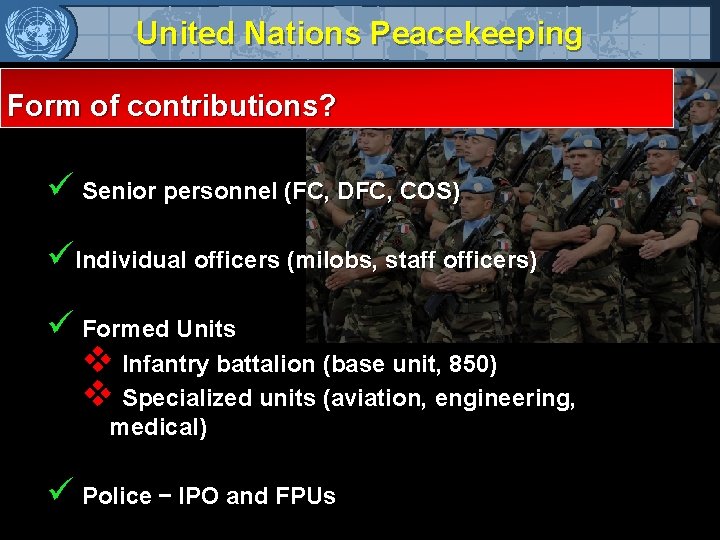
United Nations Peacekeeping Form of contributions? ü Senior personnel (FC, DFC, COS) üIndividual officers (milobs, staff officers) ü Formed Units v Infantry battalion (base unit, 850) v Specialized units (aviation, engineering, medical) ü Police – IPO and FPUs
United Nations Peacekeeping UN Peacekeeping today: ü 14 operations / 4 continents ü 86, 687 uniformed personnel ü 75, 443 troops/SO and 1, 314 UNMEM ü 9, 930 police ü 12, 000 civilian personnel; ü 1, 334 UN Volunteers üTOTAL = #100, 000
![United Nations Peacekeeping What is a peacekeeping operation? ü [Security Council mandated] ü Field](http://slidetodoc.com/presentation_image_h2/3fa06eb3a354a16f55c13449d7989135/image-11.jpg "United Nations Peacekeeping What is a peacekeeping operation? ü [Security Council mandated] ü Field")
United Nations Peacekeeping What is a peacekeeping operation? ü [Security Council mandated] ü Field component: it is an intervention ü Related to peace and security ü It involves uniformed personnel ü Framed within a peacekeeping doctrine ü there has to be a peace to keep ü consent and neutrality (then impartiality, the use of force) ü Though uniformed personnel, quintessentially political
It’s all about partnerships and collective action … to protect peace and civilians
Peacekeeping: a complex partnership üSecurity Council: v mandate (legal) v political support üAll Member States: v doctrine v funding (assessed) v military and police (voluntary) v adherence to Council decisions ü Secretariat: manages on behalf of SC
Peacekeeping: a complex partnership üHost Government: v Consent v Cooperation ü Neighbouring states: v Cooperation (incl. passage) v Political support üRegional organizations: v Political support v Leverage on host Government ü INGOs/NGOs: human rights, etc
Where are the Blue Helmets?
United Nations Peacekeeping UN Peacekeeping in the past: ü First operation – UNTSO 50 (1948) ü 71 operations on four continents ü One in four states has hosted a PKO ü Includes ONUSAL, MINUGUA ü A variety of mandates ü > 3, 800 personnel have lost their lives, approx. 1, 000 killed by malicious acts
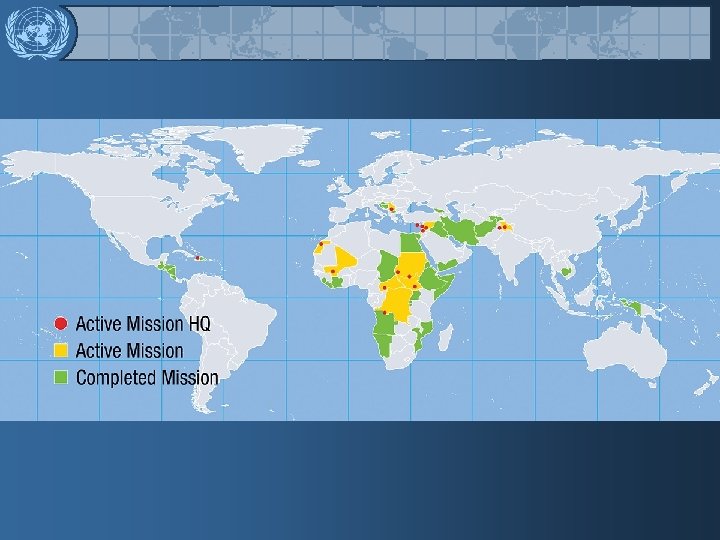
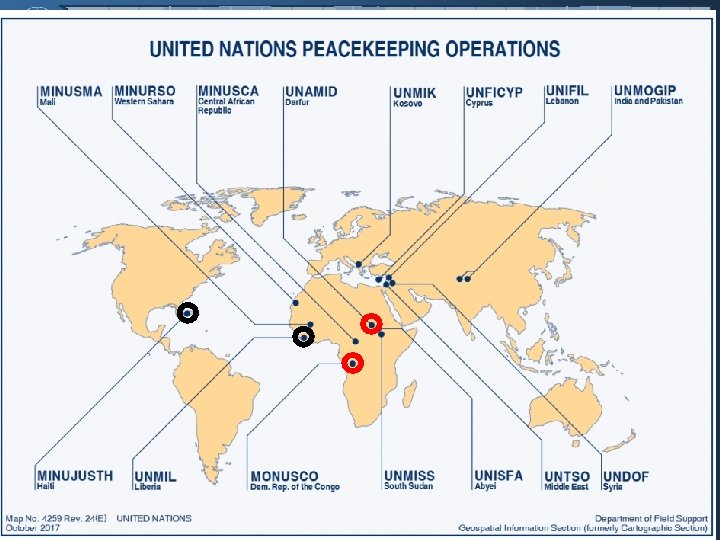
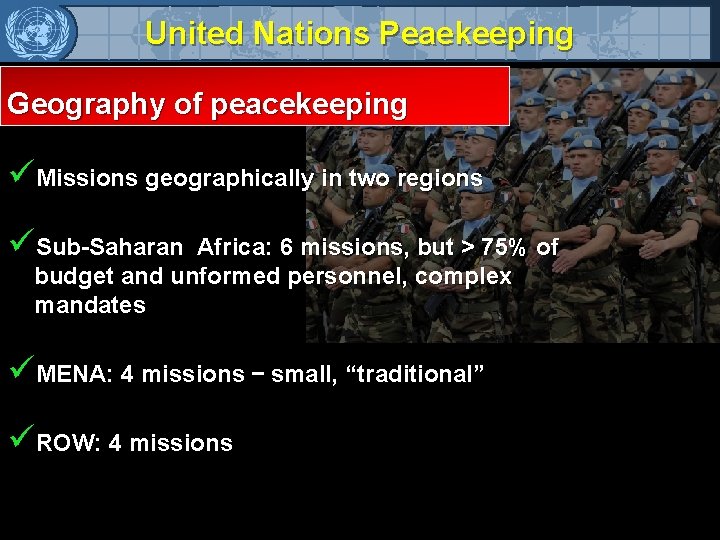
United Nations Peaekeeping Geography of peacekeeping üMissions geographically in two regions üSub-Saharan Africa: 6 missions, but > 75% of budget and unformed personnel, complex mandates üMENA: 4 missions – small, “traditional” üROW: 4 missions
United Nations Peaekeeping Evolution / Typology of conflicts üUN: WWII legacy ü Inter-state conflicts (Middle East, etc) ü Intra-state conflicts with heavy involvement of neighbouring states (DRC) üIntra-state conflicts (failed states – CAR, Mali) ü Trans-state conflicts (transnational threats)
What are the key principles of the Blue Helmets?
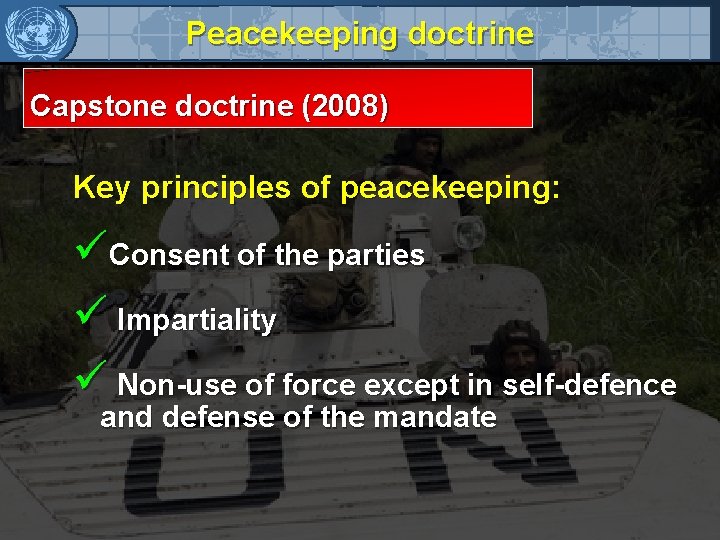
Peacekeeping doctrine Capstone doctrine (2008) Key principles of peacekeeping: üConsent of the parties ü Impartiality ü Non-use of force except in self-defence and defense of the mandate
Peacekeeping doctrine Capstone doctrine (2008) ü Doctrine has not changed since 2008 üImportant work to set standards and policies ü The international environment has changed, though: v. More competition, less cooperation (ethnic nationalism, ) v. Transnational threats, including crime and violent extremism v Return of conflict (e. g. Syria)
United Nations Peacekeeping 29 MAY INTERNATIONAL PEACEEKPERS’ DAY
United Nations Peacekeeping FOLLOW US ON: un. org/peacekeeping twitter. com/unpeacekeeping facebook. com/unpeacekeeping
- Slides: 25