
The Blood Human Biology What is blood o
The Blood Human Biology
What is blood? o Blood is the liquid tissue of transport in humans. o It carries oxygen, carbon dioxide, nutrients, cellular wastes, and hormones throughout the body. o Most people have about 6 litres of blood.
Six Functions of Blood 1. Blood transports materials from one place to another. 2. Blood provides the watery environment for individual cells. 3. Blood helps to maintain a constant internal body temperature.
Six Functions of Blood 4. Blood plays a major role in combating disease and infection 5. Blood helps to regulate the body’s p. H levels. 6. Blood prevents the loss of body fluids through the clotting process.
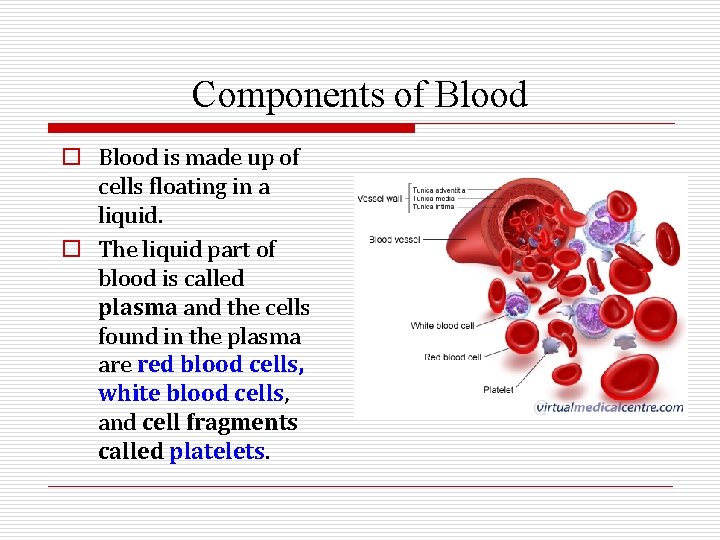
Components of Blood o Blood is made up of cells floating in a liquid. o The liquid part of blood is called plasma and the cells found in the plasma are red blood cells, white blood cells, and cell fragments called platelets.
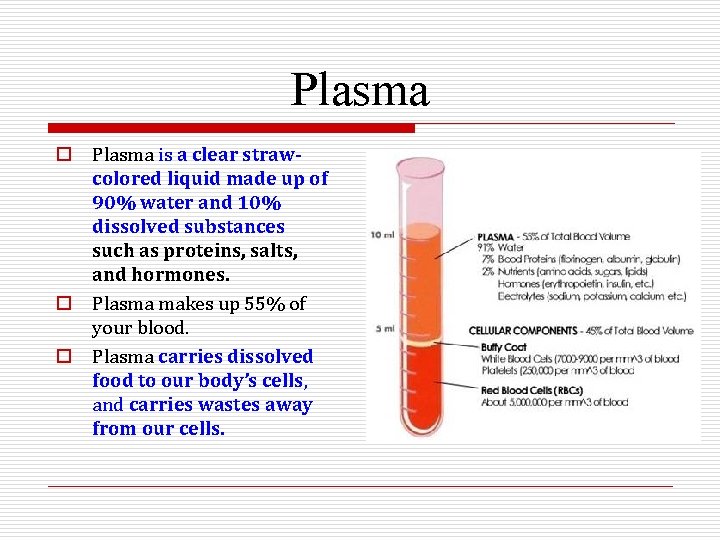
Plasma o Plasma is a clear strawcolored liquid made up of 90% water and 10% dissolved substances such as proteins, salts, and hormones. o Plasma makes up 55% of your blood. o Plasma carries dissolved food to our body’s cells, and carries wastes away from our cells.
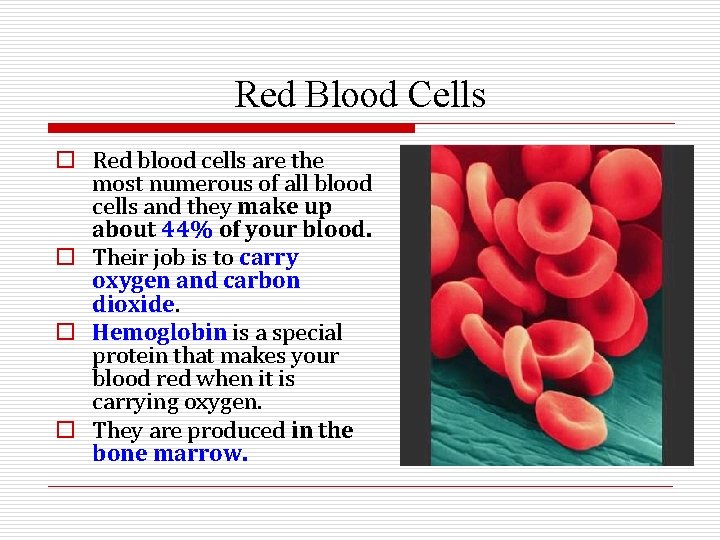
Red Blood Cells o Red blood cells are the most numerous of all blood cells and they make up about 44% of your blood. o Their job is to carry oxygen and carbon dioxide. o Hemoglobin is a special protein that makes your blood red when it is carrying oxygen. o They are produced in the bone marrow.
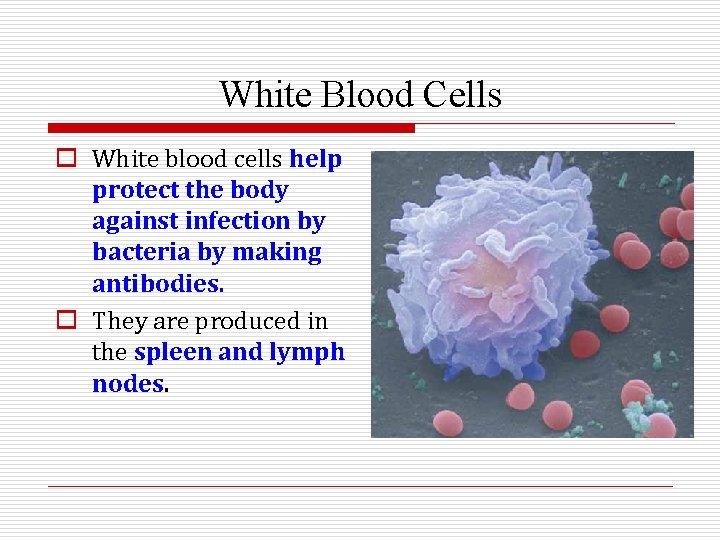
White Blood Cells o White blood cells help protect the body against infection by bacteria by making antibodies. o They are produced in the spleen and lymph nodes.
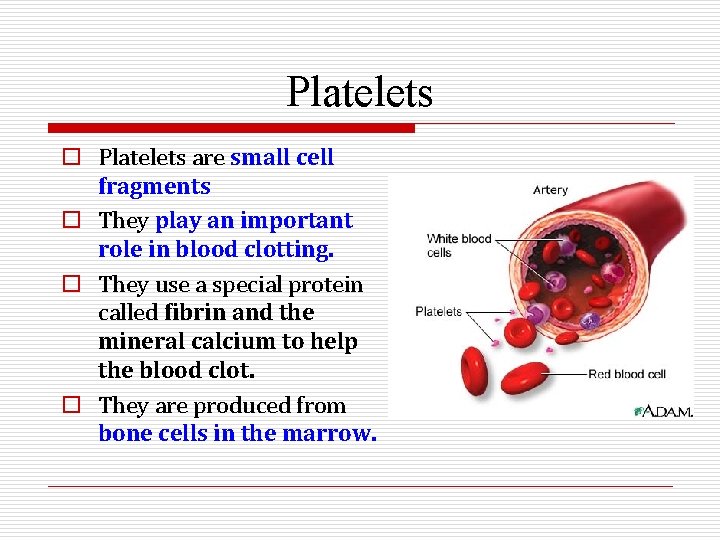
Platelets o Platelets are small cell fragments o They play an important role in blood clotting. o They use a special protein called fibrin and the mineral calcium to help the blood clot. o They are produced from bone cells in the marrow.
- Slides: 9