
The Black Magic of Meteor Scatter David R
The Black Magic of Meteor Scatter David R. Kerl N 9 HF Linda H. Straubel N 9 LHS DBARA March, 2019
What is meteor scatter and what can hams do with it? • Meteor scatter allows us a contact range of 500 to 1, 400 miles on 28 MHz – 432 MHz. • While millions of meteors soar over the earth every day, most are too small to use for meteor scatter. • Usable meteors range in size from a grain of sand to a grain of rice. You might well think that bouncing a signal off such a tiny particle careening through space would be impossible. You’d be right!
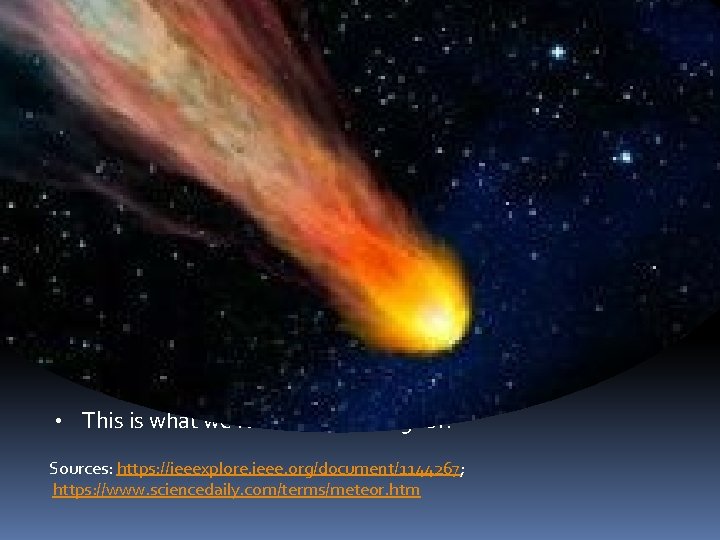
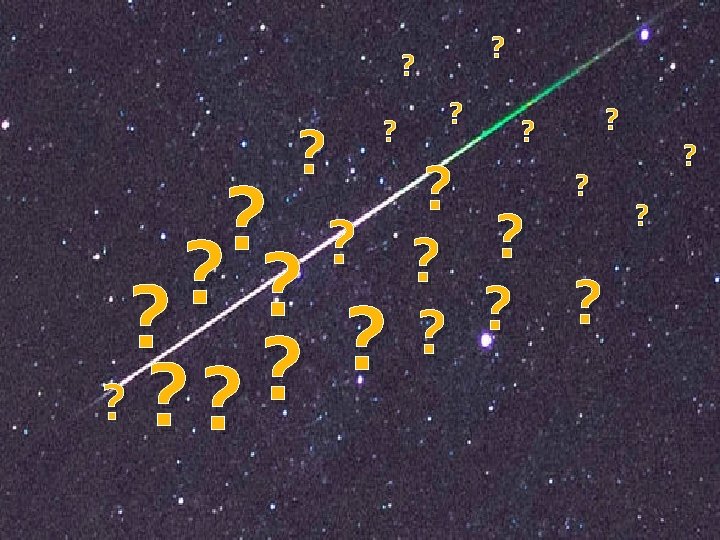
What is the signal actually bouncing off? • • The term “meteor scatter” is a bit of a misnomer. We are actually bouncing signals off their ionized trails. • These trails can be up to 30 km or 18 miles long. * • Duration is anywhere from a fraction of a second to 45 minutes. ** • While longer durations are possible, 30 seconds is the longest usual duration before the trail dissipates. • This is what we’re actually aiming for: Sources: https: //ieeexplore. ieee. org/document/1144267; https: //www. sciencedaily. com/terms/meteor. htm
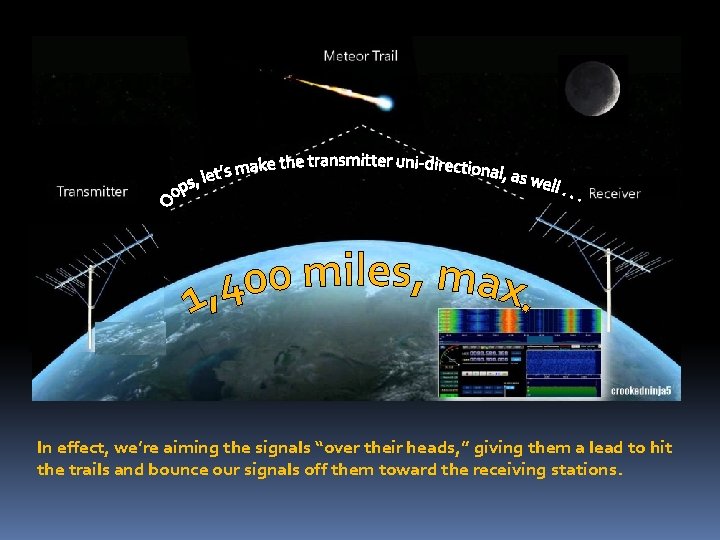
In effect, we’re aiming the signals “over their heads, ” giving them a lead to hit the trails and bounce our signals off them toward the receiving stations.

What equipment and software does meteor scatter require? Example of an interface EQUIPMENT: • • SSB transceiver capable of 50 -100 watts minimum, a Yagi antenna (e. g. 6 m, 3 elements or more), a computer with Windows and WSJT-X installed, and a radio-to-computer interface. SOFTWARE: • WSJT-X • This is a suite of many weak-signal and EME programs, of which we are only interested in two, FT-8 and MSK-144.
MSK-144 is the program we will be using for meteor scatter. • For those used to FT-8 for digital work, it is inadequate for meteor scatter. Here’s why: • FT-8 requires approximately 6 -7 seconds minimum of a solid signal to decode. • MSK-144 will decode with a signal duration of fractions of a second. (Remember: that ionized trail may sometimes last only a fraction of a second. )
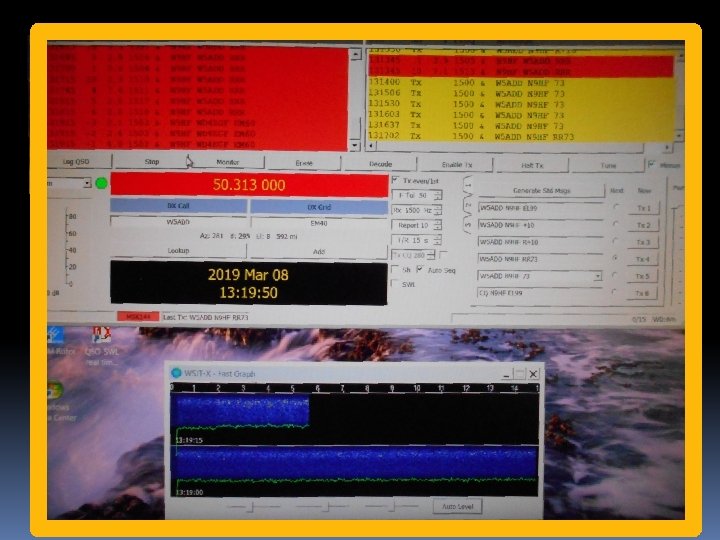
Here’s what my monitor looks like during meteor scatter:
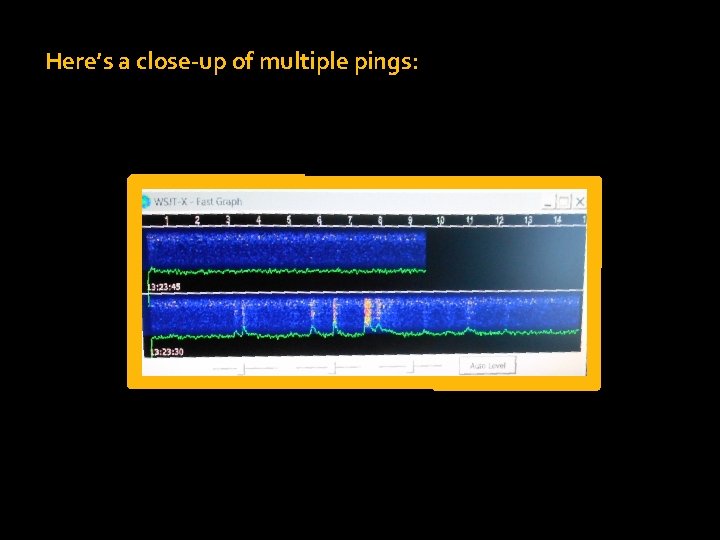
Here’s a close-up of multiple pings:
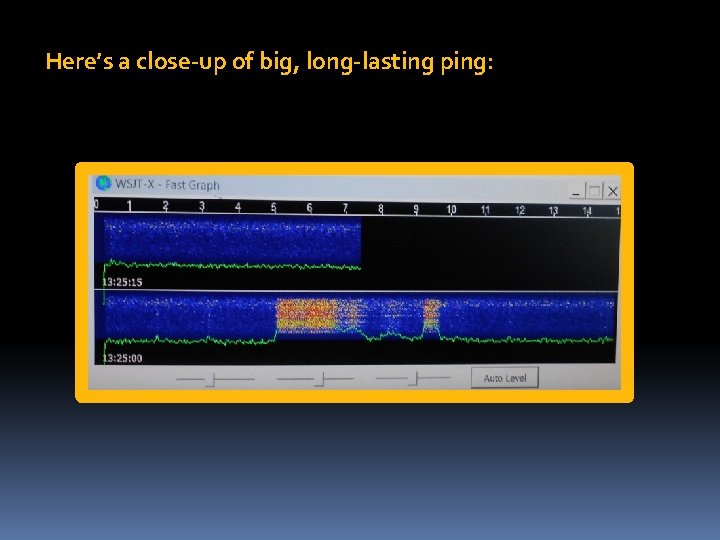
Here’s a close-up of big, long-lasting ping:
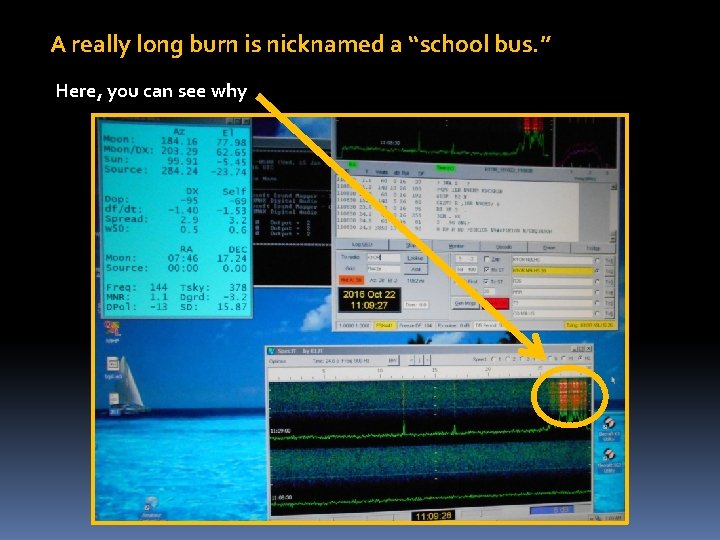
A really long burn is nicknamed a “school bus. ” Here, you can see why
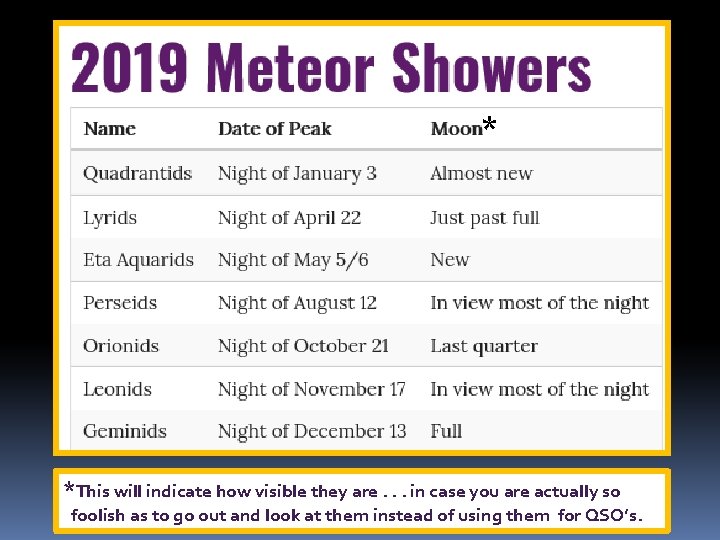
* *This will indicate how visible they are. . . in case you are actually so foolish as to go out and look at them instead of using them for QSO’s.
- Slides: 12