
The Birthplace in England Research Programme Peter Brocklehurst
The Birthplace in England Research Programme Peter Brocklehurst on behalf of the Birthplace in England Research Programme Collaborative Group

Overview • Background • Aim • Component studies • Findings

Maternity policy • ‘Every woman should be able to choose the most appropriate place and professional to attend her during childbirth based on her wishes and cultural preferences and any medical and obstetric needs she and her baby may have’ • ‘…options for midwife-led care will include midwife-led units in the community or on a hospital site’ and that care was to be provided in a ‘…framework which enables easy and early transfer of women and babies who unexpectedly require specialist care’ The Maternity Standard of the National Service Framework (NSF) for Children, Young People and Maternity Services
• Maternity Matters consolidated this policy direction for maternity care emphasising – ‘choice, access and continuity in a safe service’ • and setting out a – ‘national choice guarantee’ for place of birth
Current evidence • A lack of accurate quantification of the risk of adverse outcomes associated with births planned in different settings • Interpreting available evidence has been difficult because actual place of birth has often been used to make inferences about planned place of birth

Evidence • • Stewart M, Mc. Candlish R, Henderson J, Brocklehurst P. Review of evidence about clinical, psychosocial and economic outcomes for women with straightforward pregnancies who plan to give birth in a midwife-led birth centre, and outcomes for their babies. Report of a structured review of birth centre outcomes. Revised 2005. Oxford: National Perinatal Epidemiology Unit: ; 2004. Hodnett ED, Downe S, Walsh D, Weston J. Alternative versus conventional institutional settings for birth. Cochrane Database Syst Rev. 2010; 9: CD 000012. Walsh D, Downe SM. Outcomes of free-standing, midwife-led birth centers: a structured review. Birth. 2004 Sep; 31(3): 222 -9. Olsen O, Jewell MD. Home versus hospital birth. Cochrane Database of Systematic Reviews. 1998(3): CD 000352. Olsen O. Meta-analysis of the safety of home birth. Birth. 1997 Mar; 24(1): 4 -13. de Jonge A, van der Goes BY, Ravelli AC, Amelink. Verburg MP, Mol BW, Nijhuis JG, et al. Perinatal mortality and morbidity in a nationwide cohort of 529, 688 low-risk planned home and hospital births. BJOG. 2009 Aug; 116(9): 1177 -84. Janssen PA, Saxell L, Page LA, Klein MC, Liston RM, Lee SK. Outcomes of planned home birth with registered midwife versus planned hospital birth with midwife or physician. CMAJ. 2009 Sep 15; 181(6 -7): 377 -83. • • • Lindgren HE, Radestad IJ, Christensson K, Hildingsson IM. Outcome of planned home births compared to hospital births in Sweden between 1992 and 2004. A population-based register study. Acta Obstet Gynecol Scand. 2008; 87(7): 751 -9. Mori R, Dougherty M, Whittle M. An estimation of intrapartum-related perinatal mortality rates for booked home births in England Wales between 1994 and 2003. BJOG. 2008 Apr; 115(5): 554 -9. Wax JR, Lucas FL, Lamont M, Pinette MG, Cartin A, Blackstone J. Maternal and newborn outcomes in planned home birth vs planned hospital births: a metaanalysis. Am J Obstet Gynecol. 2010 Sep; 203(3): 243 e 1 -8. Gyte G, Dodwell M, Newburn M, Sandall J, Macfarlane A, Bewley S. Safety of planned home births. Findings of meta-analysis cannot be relied on. BMJ. 2010; 341: c 4033. Editors' comment. American Journal of Obstetrics and Gynecology. 204(4): e 20. National Collaborating Centre for Women's and Children's Health. Intrapartum care: care of healthy women and their babies during childbirth. London: ; 2007.
Birthplace • Programme of research funded by: – NIHR Service Delivery and Organisation (SDO) Programme – DH Policy Research Programme • Component studies
Aim • To compare outcomes of births planned in – Obstetric unit (OU) – Home – Freestanding Midwifery Unit (FMU) – Alongside Midwifery Unit (AMU)
Component studies • Mapping survey of NHS Trusts in England • Prospective cohort study • Cost-effectiveness study • Case studies
Mapping maternity care: the configuration of maternity care in England Two questionnaire surveys of trusts and units providing maternity healthcare in England in 2007 and 2010
National prospective study of planned place of birth • To compare outcomes by planned place of birth at the start of care in labour – Obstetric unit (OU) – Home – Freestanding Midwifery Unit (FMU) – Alongside Midwifery Unit (AMU)
National prospective study of planned place of birth • Primary objective: – to compare intrapartum and early neonatal mortality and morbidity – by planned place of birth at the start of care in labour – in women judged to be at ‘low risk’ of complications according to current national clinical guidelines
Cost-effectiveness analysis To determine the cost-effectiveness of the four planned settings for birth (OU, home, FMU, AMU) in women at ‘low risk’ of complications prior to the onset of labour
Qualitative organisational case studies To describe and explore features of maternity care systems that may affect the provision of high quality and safe care in different birth settings using qualitative methods
Mapping maternity care: the configuration of maternity care in England Findings
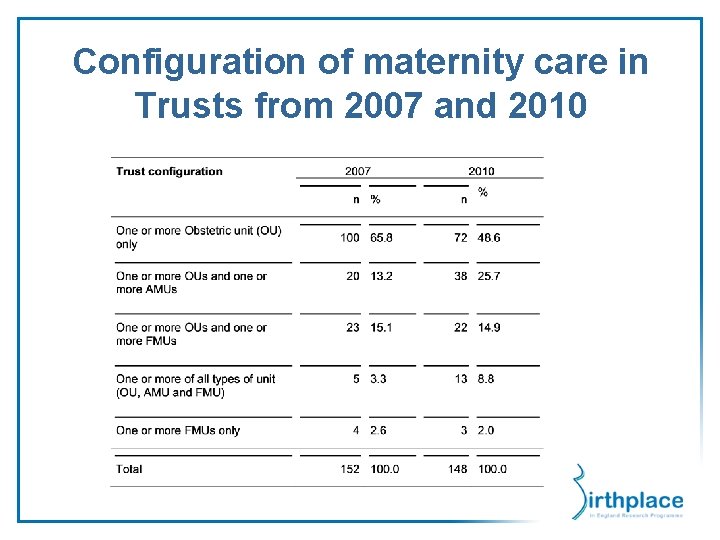
Configuration of maternity care in Trusts from 2007 and 2010
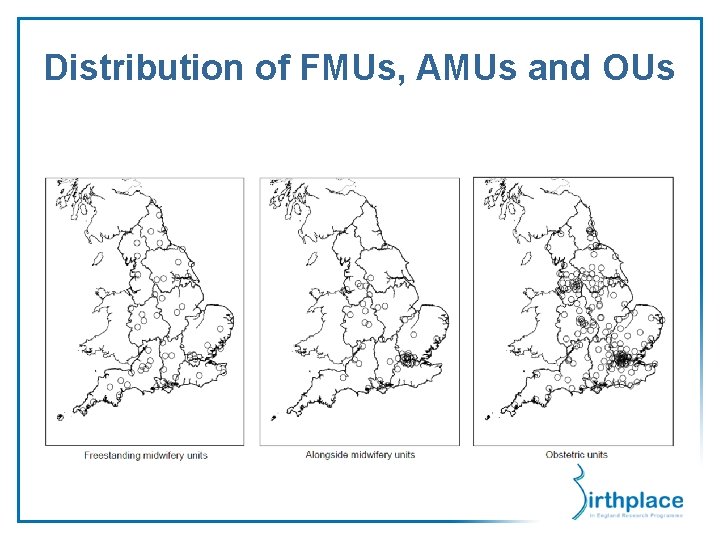
Distribution of FMUs, AMUs and OUs
Summary • Options for place of birth have improved since 2007 but a substantial proportion of women are unlikely to have a full range of choices available locally • While midwifery units have increased in number, there are regional differences in availability and capacity is limited, such that most women will give birth in an obstetric unit

National prospective study of planned place of birth
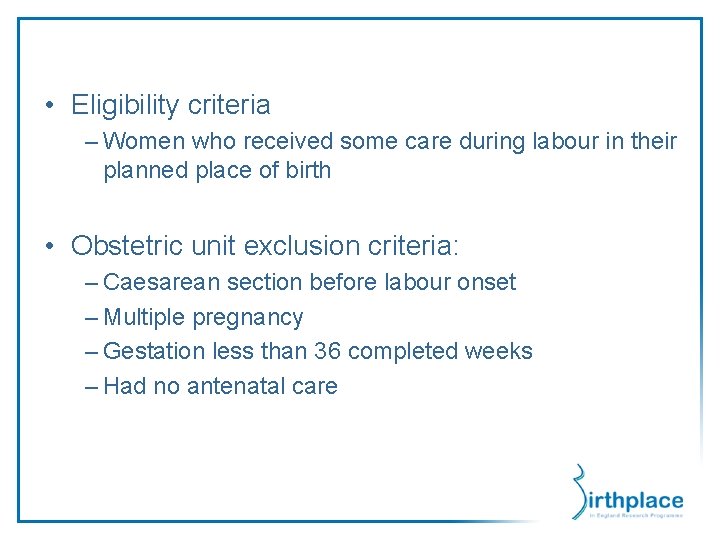
• Eligibility criteria – Women who received some care during labour in their planned place of birth • Obstetric unit exclusion criteria: – Caesarean section before labour onset – Multiple pregnancy – Gestation less than 36 completed weeks – Had no antenatal care
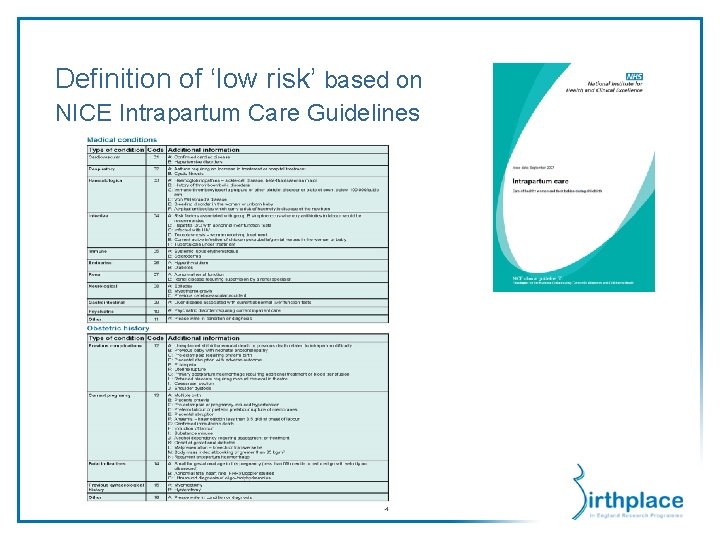
Definition of ‘low risk’ based on NICE Intrapartum Care Guidelines
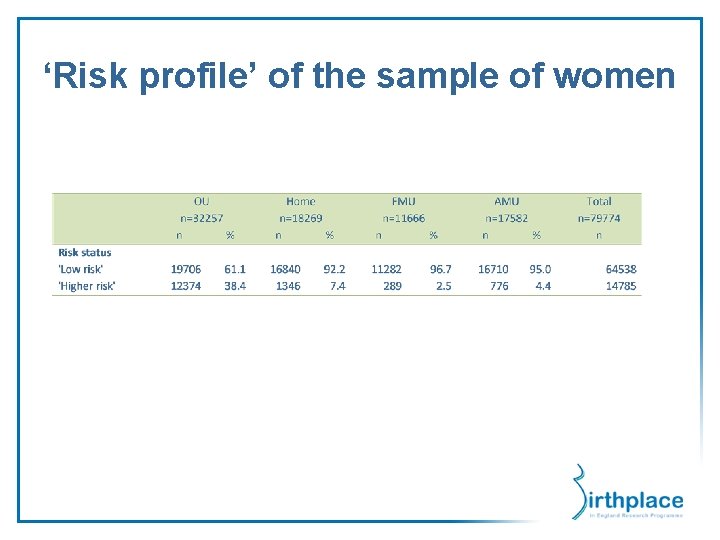
‘Risk profile’ of the sample of women
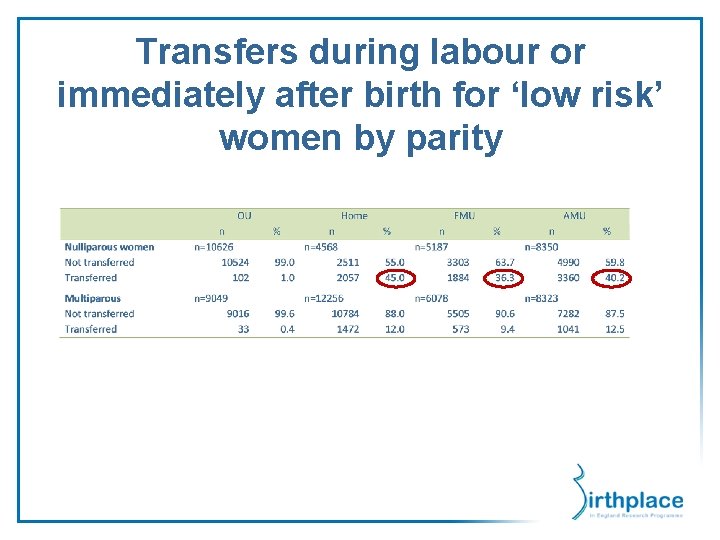
Transfers during labour or immediately after birth for ‘low risk’ women by parity
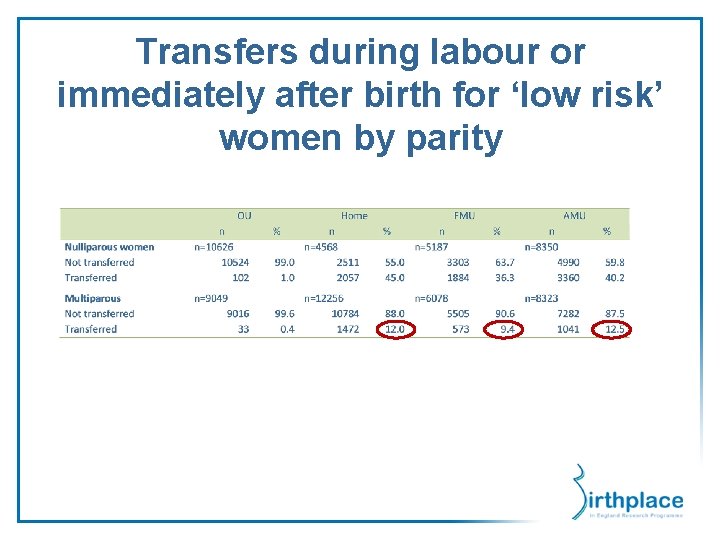
Transfers during labour or immediately after birth for ‘low risk’ women by parity
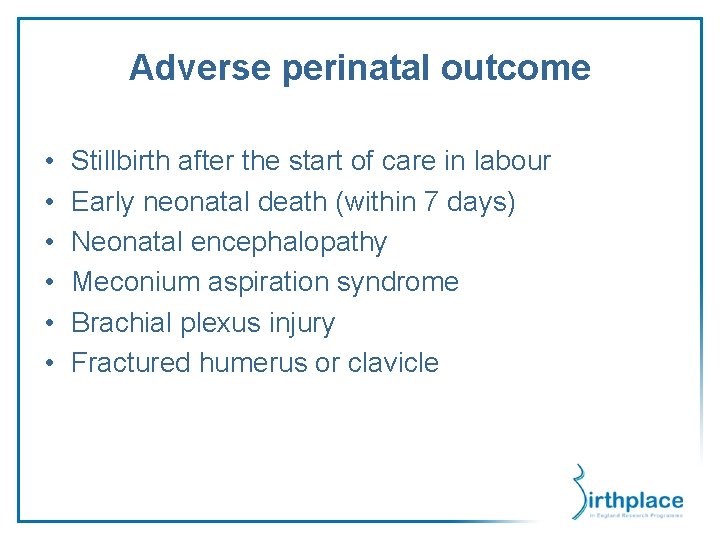
Adverse perinatal outcome • • • Stillbirth after the start of care in labour Early neonatal death (within 7 days) Neonatal encephalopathy Meconium aspiration syndrome Brachial plexus injury Fractured humerus or clavicle
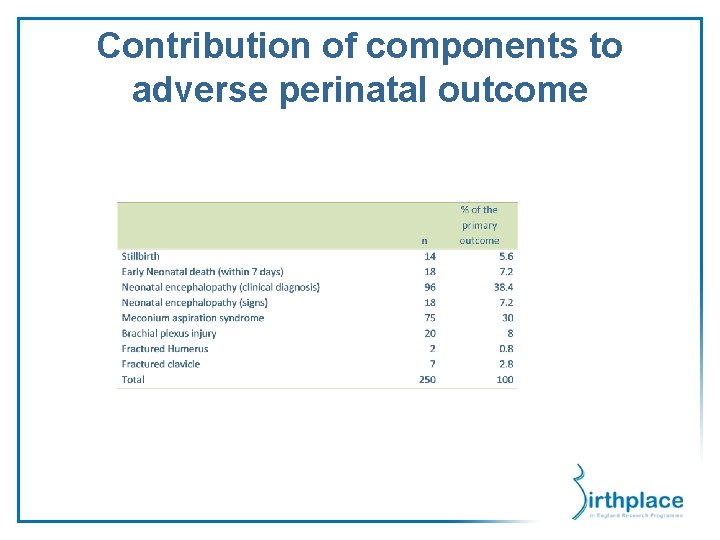
Contribution of components to adverse perinatal outcome
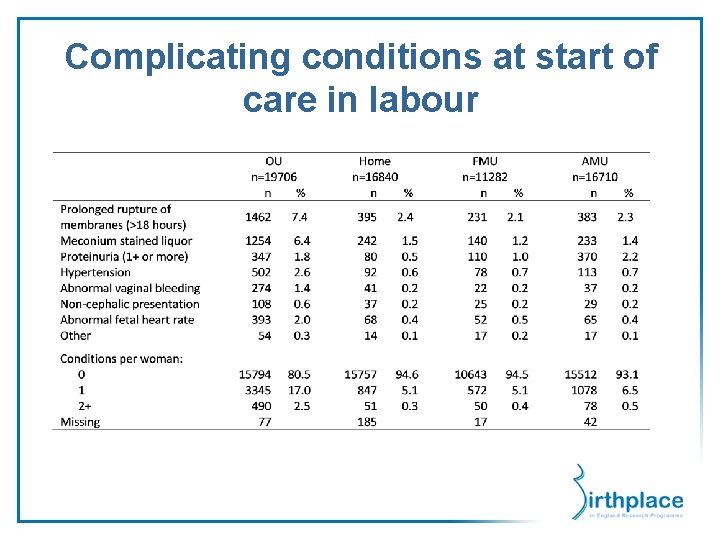
Complicating conditions at start of care in labour
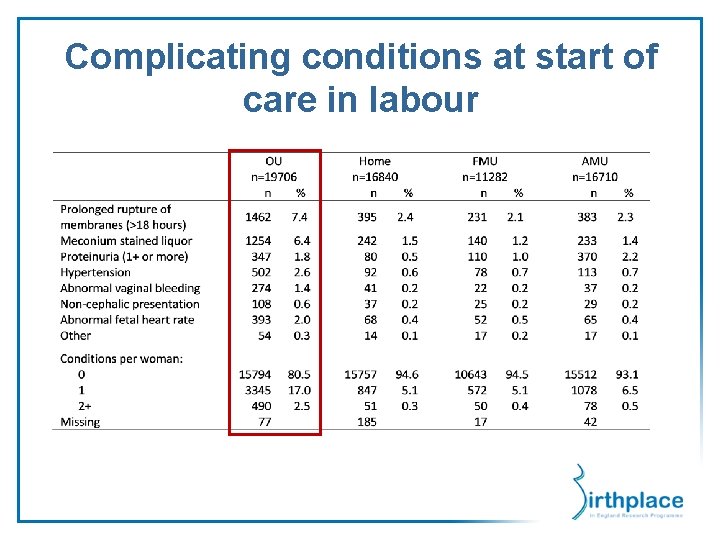
Complicating conditions at start of care in labour
• For ‘low risk women’, the incidence of adverse perinatal outcomes is low in all birth settings – 4. 3 adverse perinatal outcome events per 1000 births
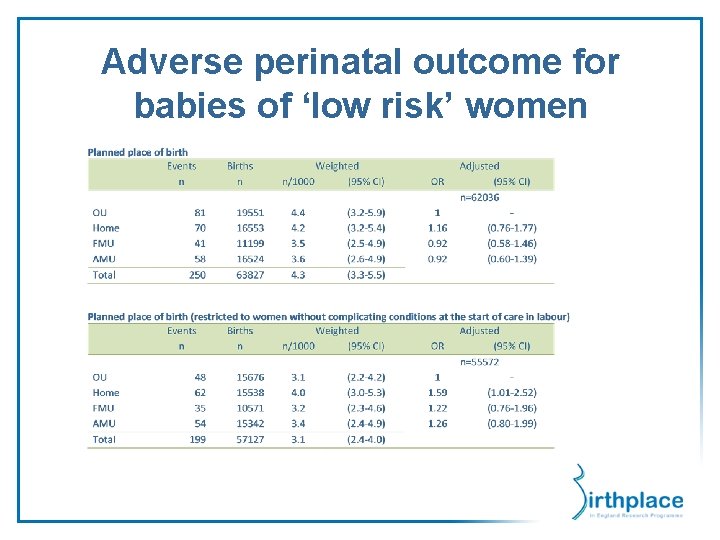
Adverse perinatal outcome for babies of ‘low risk’ women
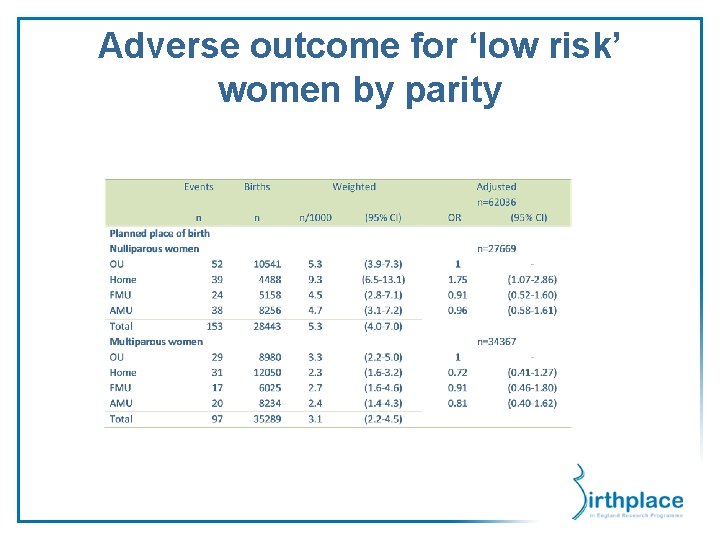
Adverse outcome for ‘low risk’ women by parity
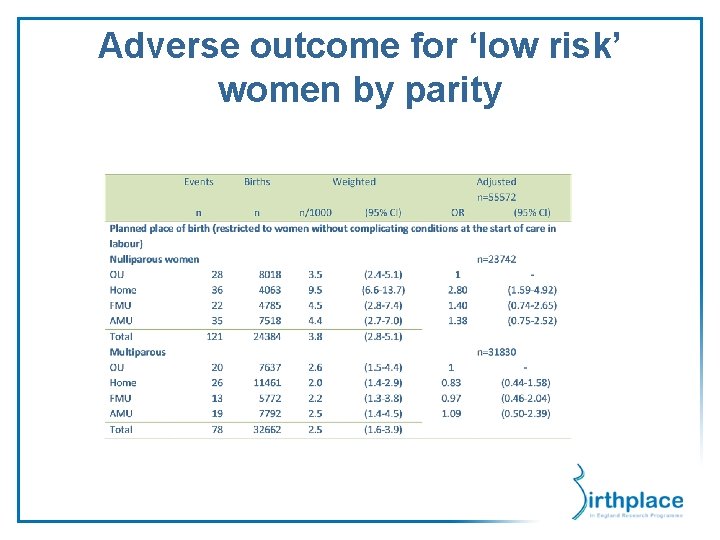
Adverse outcome for ‘low risk’ women by parity
Adverse perinatal outcome • For multiparous ‘low’ risk women there are no differences in adverse perinatal outcomes between settings • The risk of an adverse perinatal outcome appears to be higher for nulliparous women who plan to give birth at home (9. 3 primary outcome events per 1000 births vs. 5. 3 per 1000 births in an OU)
Maternal outcomes • Mode of birth • Maternal morbidity and mortality • Interventions during labour and birth
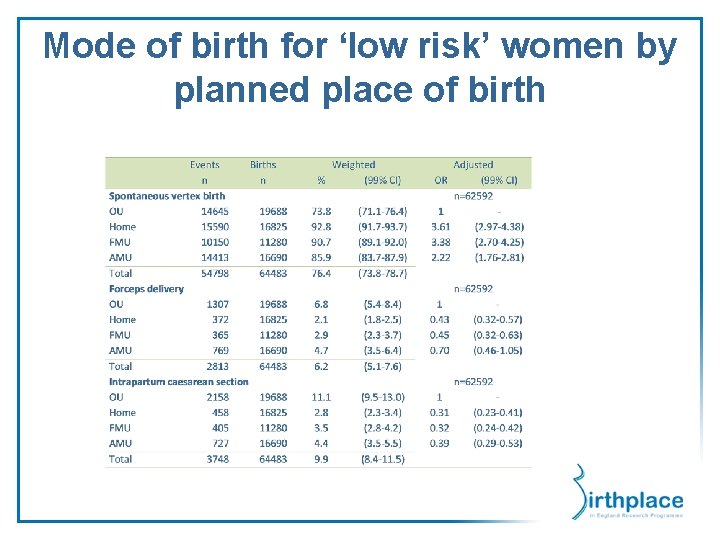
Mode of birth for ‘low risk’ women by planned place of birth
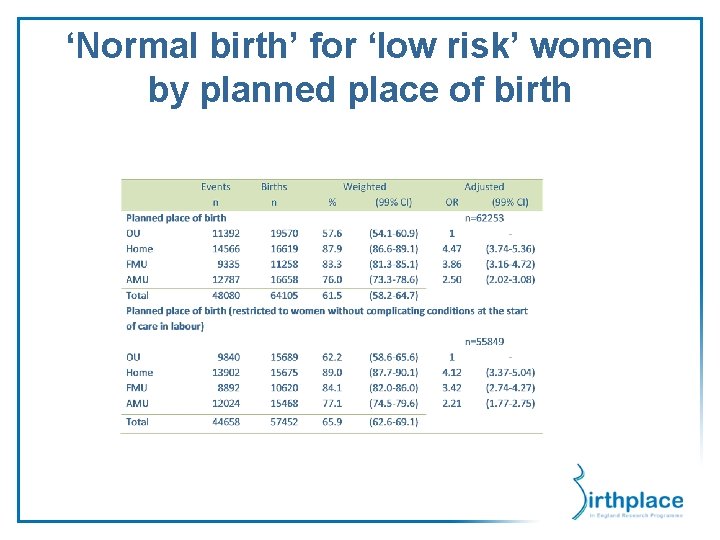
‘Normal birth’ for ‘low risk’ women by planned place of birth

Cost effectiveness analysis
Cost effectiveness analysis • Total costs captured – all resource use and the unit costs of intrapartum care and immediate postnatal period after birth, including any higher level care for the mother or baby
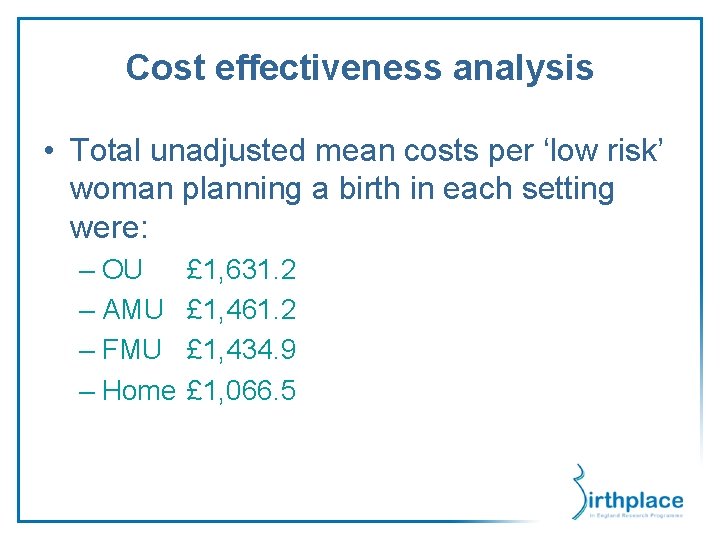
Cost effectiveness analysis • Total unadjusted mean costs per ‘low risk’ woman planning a birth in each setting were: – OU £ 1, 631. 2 – AMU £ 1, 461. 2 – FMU £ 1, 434. 9 – Home £ 1, 066. 5
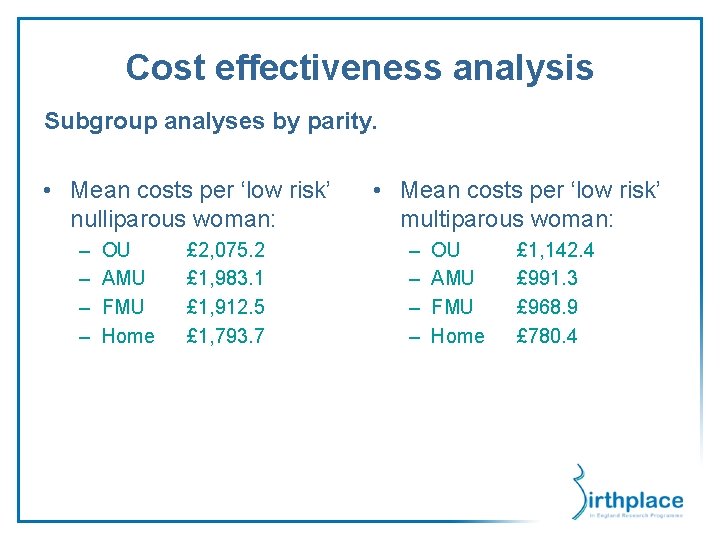
Cost effectiveness analysis Subgroup analyses by parity. • Mean costs per ‘low risk’ nulliparous woman: – – OU AMU FMU Home £ 2, 075. 2 £ 1, 983. 1 £ 1, 912. 5 £ 1, 793. 7 • Mean costs per ‘low risk’ multiparous woman: – – OU AMU FMU Home £ 1, 142. 4 £ 991. 3 £ 968. 9 £ 780. 4
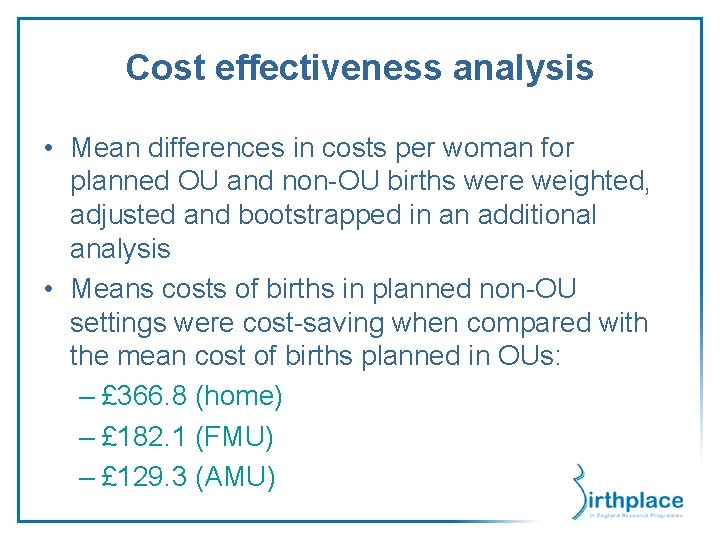
Cost effectiveness analysis • Mean differences in costs per woman for planned OU and non-OU births were weighted, adjusted and bootstrapped in an additional analysis • Means costs of births in planned non-OU settings were cost-saving when compared with the mean cost of births planned in OUs: – £ 366. 8 (home) – £ 182. 1 (FMU) – £ 129. 3 (AMU)
Cost effectiveness analysis • Three sets of cost-effectiveness analyses were conducted: – for the baby – the mother – the outcome of ‘normal birth’
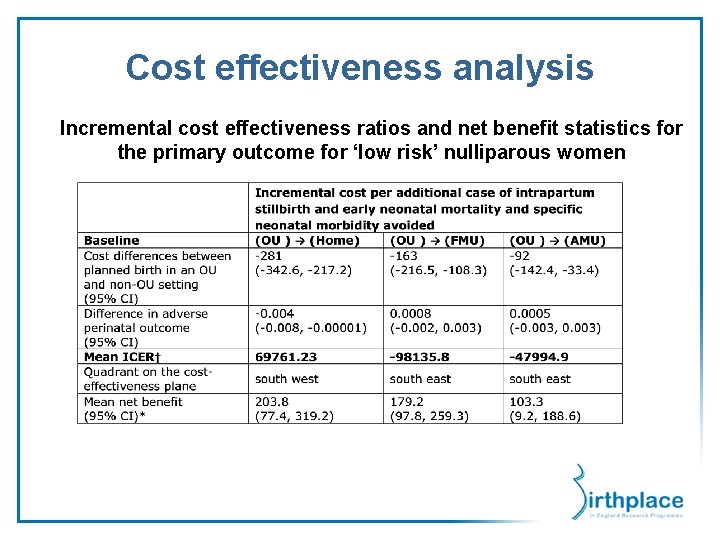
Cost effectiveness analysis Incremental cost effectiveness ratios and net benefit statistics for the primary outcome for ‘low risk’ nulliparous women
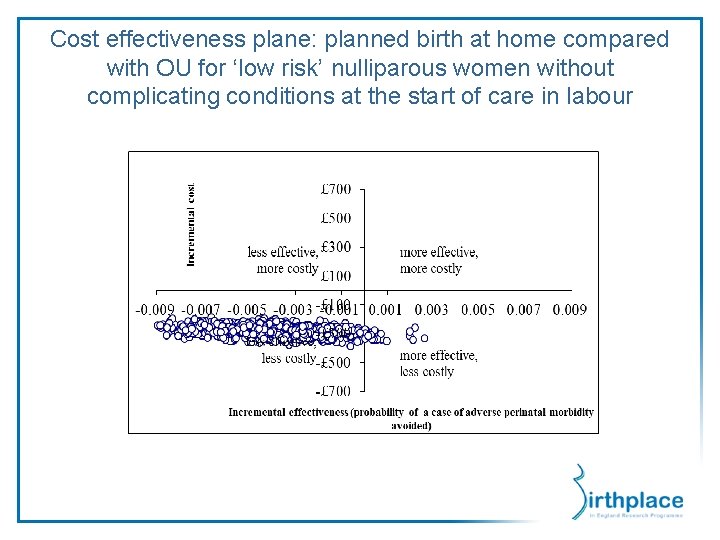
Cost effectiveness plane: planned birth at home compared with OU for ‘low risk’ nulliparous women without complicating conditions at the start of care in labour
Cost effectiveness analysis • Cost-effectiveness analysis on nulliparous women resulted in a less-costly intrapartum maternity option but with increased adverse perinatal outcomes • For multiparous women there were lower costs in planned non-OU settings accompanied by uncertainty surrounding changes to perinatal outcomes
Cost effectiveness analysis • The cost-effectiveness analyses for maternal outcomes showed that planned births in non-OU unit settings led to improvements in maternal outcomes and reductions in costs to the NHS when compared to planned birth in an OU • All planned births in non-OU settings led to significant increases in ‘normal birth’ and significant reductions in costs when compared to planned birth in an OU
Cost effectiveness analysis summary • For ‘low risk’ women, the cost to the NHS of intrapartum and related postnatal care, including costs associated with clinical complications, is lower for birth planned at home, in a FMU and in an AMU compared with planned birth in an OU

Qualitative organisational case studies Findings
Themes • Concerns around transfer distance meant that many women did not feel they had any realistic choice of place of birth • Travel distance to OUs was a concern for women living in more rural areas
Themes • Out-of hospital birth places functioned best when they were embedded into the system of maternity services, supported by all staff, and not just seen as a midwifery concern
Themes • Variations existed at Trust level in support given to out-of-hospital births, including training for safety and teamwork across the maternity workforce • The deployment and resourcing of community midwifery was especially variable across Trusts
Themes • Strong midwifery and obstetric leadership and a culture of mutually supportive professional teamwork appeared to be central features of Trusts where midwifery led and obstetric services functioned well
Issues that Birthplace is not able to address • Variation between trusts; regions; different models of service provision for home birth services, FMUs and AMUs • Health economics are limited to intrapartum care and the post-partum period • We do not know why planned home birth for women having their first baby appears to be more risky • The case studies are not necessarily generalisable
• There is an urgent need for routine data collection systems to collect data on planned place of birth at start of care in labour so that outcomes can be monitored by planned place of birth
Birthplace is funded by the NIHR Service Delivery and Organisation (SDO) Programme, and the Department of Health's Policy Research Programme The Birthplace in England Research Programme (Birthplace) www. npeu. ox. ac. uk/birthplace National Perinatal Epidemiology Unit University of Oxford This is an independent report commissioned and funded by the Policy Research Programme in the Department of Health. The views expressed are not necessarily those of the Department
- Slides: 55