
The Biopsychosocial Model of Obesity By Ayana Smith
The Biopsychosocial Model of Obesity By: Ayana Smith, Brian Summey & Jessica Bumgarner

http: //www. ncbi. nlm. nih. gov/p mc/articles/PMC 2771638/
Obesity ● Defined as being 20% over the normal range for a given height and weight. ○ 35. 5% of men and 35. 8% of women in U. S. are obese. ● Body mass index (BMI) used to measure obesity today. ● One of the world’s greatest public health challenges contributing to an increased risk for many chronic diseases. ● $190 billion a year in medical spending on obesity related problems. Buss, David M. (2011). Evolutionary psychology: The new science of the mind (5 th ed. ). Boston : Allyn & Bacon. Straub, R. (2014). Health psychology: A biopsychosocial approach (Fourth ed. ).
Negative effects of obesity Obesity has negative physiological and psychological effects. ○ social stigma in many parts of world indicating the importance that many societies place on physical appearance. ○ overweight women are more likely to be depressed, even suicidal compared to their thinner counterparts. Straub, R. (2014). Health psychology: A biopsychosocial approach (Fourth ed. ).
Biopsychosocial model ● Research shows that the view of obesity as a result of overeating is an oversimplification. o people who are overweight often don’t eat more than their thin counterparts. ● Obesity is a complex phenomenon involving biological, social, and psychological factors in its causes and consequences. Straub, R. (2014). Health psychology: A biopsychosocial approach (Fourth ed. ).
Biological Factors ● Heredity ● Destiny? Genetic vs. environmental factors ● our brains are wired to love fatty, salty, and sweet foods ❖ Epigenetics ➢ environmental triggers causing phenotypic variation. Straub, R. (2014). Health psychology: A biopsychosocial approach (Fourth ed. ). Youngson N. A. , Morris M. J. (2013). What obesity research tells us about epigenetic mechanisms. Phil Trans R Soc B 368: 20110337. doi. org/10. 1098/rstb. 2011. 0337.
Psychosocial Factors ● culture ● socioeconomic status ● gender Straub, R. (2014). Health psychology: A biopsychosocial approach (Fourth ed. ).
Psychological Factors ● Depression o suppressed motivation ● Stress o eating behavior during midterms and finals
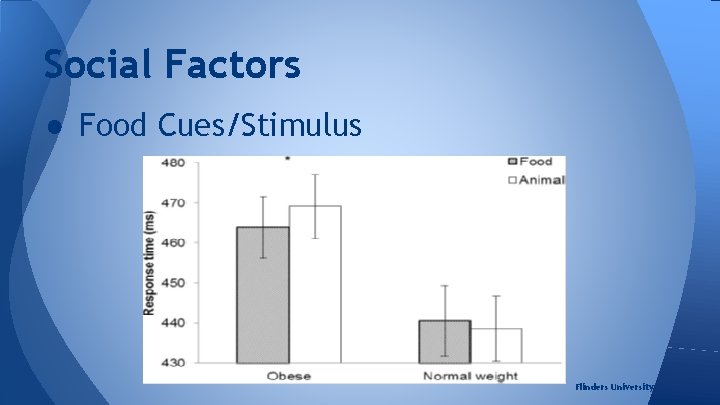
Social Factors ● Food Cues/Stimulus Flinders University

Social Factors
Why are less educated, lower SES people at risk for obesity? ● limited access to health care services ● less knowledge about the importance of healthy diet & hazards of obesity ● less exercise ● unhealthy food is much less expensive than the healthy alternative. Karnani, A. , Mc. Ferran, B. , & Mukhopadhyay, A. (2014). Leanwashing: A HIDDEN FACTOR IN THE OBESITY CRISIS. California Management Review, 56(4), 5 -30. doi: 10. 1525/cmr. 2014. 56. 4. 5
Statistics ● 500 million obese people worldwide (WHO) ● 43 million children under 5 worldwide overweight/obese (WHO) ● 900 million people malnourished ● 1 out of 3 Americans obese (36%) ● 66% American adults obese ● Worldwide adults obese 37% ● http: //www. worldometers. info/obesity/
Treatment and Prevention of Obesity ● Dieting o How effective are diets? o Why diets fail? ● Behavioral and Cognitive Therapy ● Fit Families, Fit Communities Fock, K. M. , & Khoo, J. (2013). Diet and exercise in management of obesity and overweight. Journal Of Gastroenterology & Hepatology, 2859 -63. doi: 10. 1111/jgh. 12407
References Buss, David M. (2011). Evolutionary psychology: The new science of the mind (5 th ed. ). Boston : Allyn & Bacon. Fock, K. M. , & Khoo, J. (2013). Diet and exercise in management of obesity and overweight. Journal Of Gastroenterology & Hepatology, 285963. doi: 10. 1111/jgh. 12407 Karnani, A. , Mc. Ferran, B. , & Mukhopadhyay, A. (2014). Leanwashing: A HIDDEN FACTOR IN THE OBESITY CRISIS. California Management Review, 56(4), 5 -30. doi: 10. 1525/cmr. 2014. 56. 4. 5 Straub, R. (2014). Health psychology: A biopsychosocial approach (Fourth ed. ). Skelton, J. , De. Mattia, L. , Miller, L. , & Olivier, M. (2009, November 2). Obesity and Its Therapy: From Genes to Community Action. Retrieved March 1, 2015 Power, M. (2011, October 3). Biopsychosocial Model for Obesity and Health Promotion and Prevention. Retrieved March 1, 2015. Just give me the FACTS! (2013, November 1). Retrieved March 1, 2015. Marker, L. (2014, June 3). Are We as Fat as We Think? Retrieved March 1, 2015. Youngson N. A. , Morris M. J. (2013). What obesity research tells us about epigenetic mechanisms. Phil Trans R Soc B 368: 20110337. doi. org/10. 1098/rstb. 2011. 0337.
- Slides: 14