
The Biology and Origins of Language Part 2

The Biology and Origins of Language Part 2
![Tonal Language Example Mandarin Tone Use Word Intonation Meaning ba [/] to uproot ba](http://slidetodoc.com/presentation_image/0393a358e79e0050f0e80c8144b64aef/image-2.jpg "Tonal Language Example Mandarin Tone Use Word Intonation Meaning ba [/] to uproot ba")
Tonal Language Example Mandarin Tone Use Word Intonation Meaning ba [/] to uproot ba [--] eight ba [/] to hold ba [] a harrow
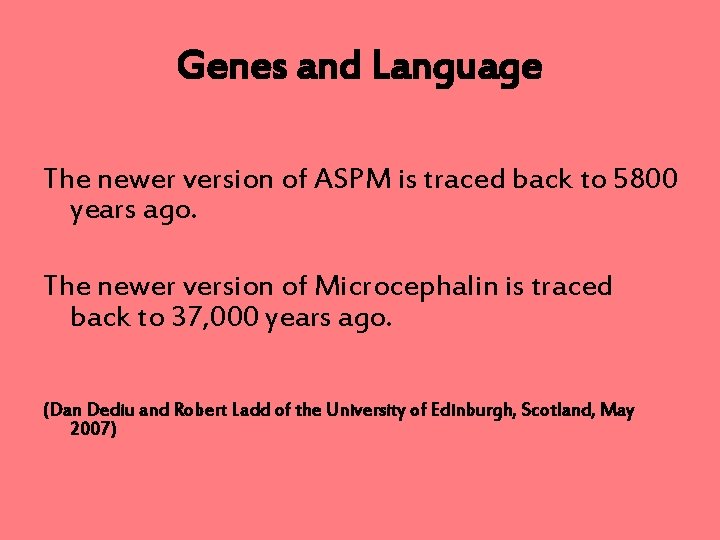
Genes and Language The newer version of ASPM is traced back to 5800 years ago. The newer version of Microcephalin is traced back to 37, 000 years ago. (Dan Dediu and Robert Ladd of the University of Edinburgh, Scotland, May 2007)

When did language first appear in humans? ? ? ? ?

Fossil Evidence for Language 1 Indicator Endocasts Fossil Australopithecus africanus/Taung Baby Age 3 MYA Feature Lunate sulcus farther back than in apes as in modern human brains (language present) Proponent Ralph Hollowell Oponent Dean Faulk

Australopithicines Australopithecines lived between 5 and 2 million years ago. (Artists rendition based on skeletal and muscular reconstruction. )
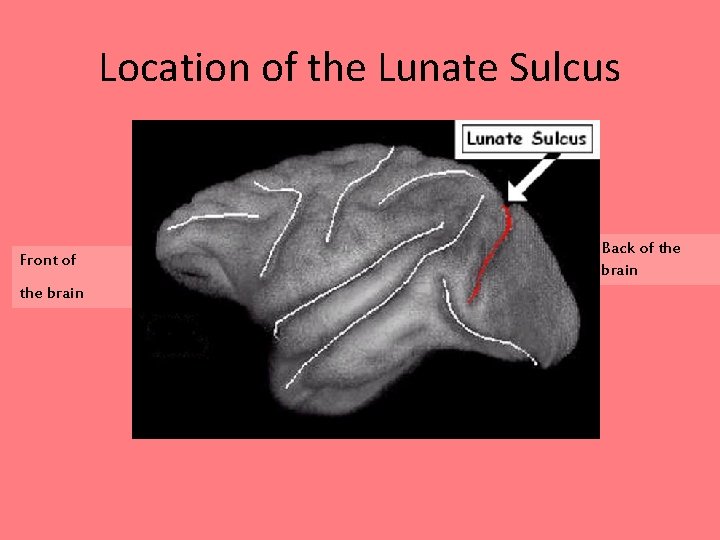
Location of the Lunate Sulcus Front of the brain Back of the brain
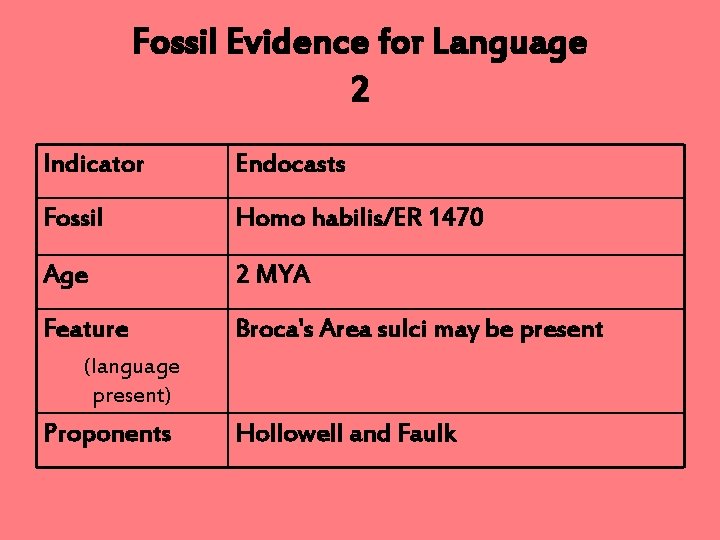
Fossil Evidence for Language 2 Indicator Endocasts Fossil Homo habilis/ER 1470 Age 2 MYA Feature Broca's Area sulci may be present (language present) Proponents Hollowell and Faulk
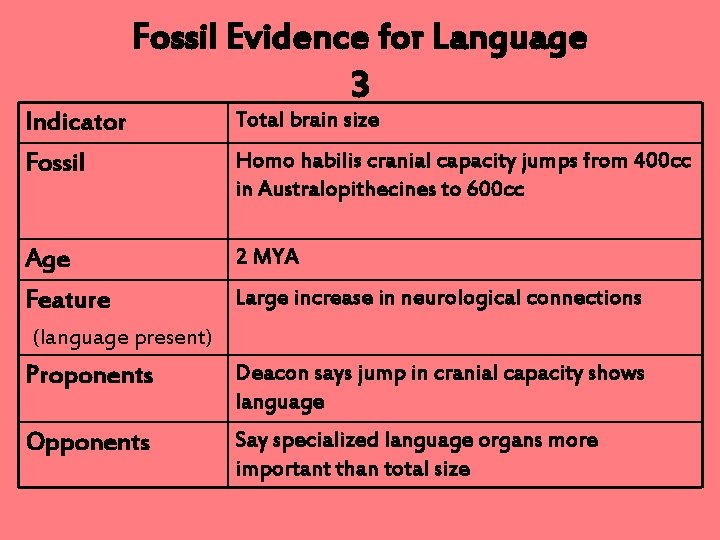
Indicator Fossil Evidence for Language 3 Age Feature Total brain size Homo habilis cranial capacity jumps from 400 cc in Australopithecines to 600 cc 2 MYA Large increase in neurological connections (language present) Proponents Deacon says jump in cranial capacity shows language Opponents Say specialized language organs more important than total size
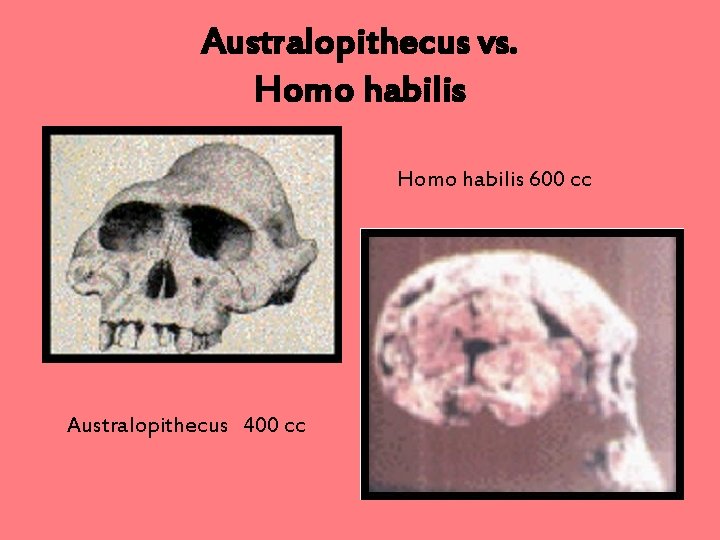
Australopithecus vs. Homo habilis 600 cc Australopithecus 400 cc
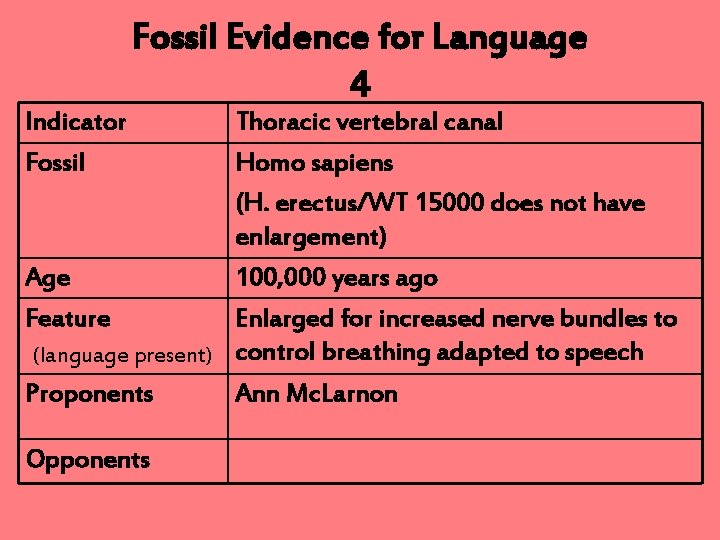
Indicator Fossil Evidence for Language 4 Thoracic vertebral canal Homo sapiens (H. erectus/WT 15000 does not have enlargement) Age 100, 000 years ago Feature Enlarged for increased nerve bundles to (language present) control breathing adapted to speech Proponents Ann Mc. Larnon Opponents
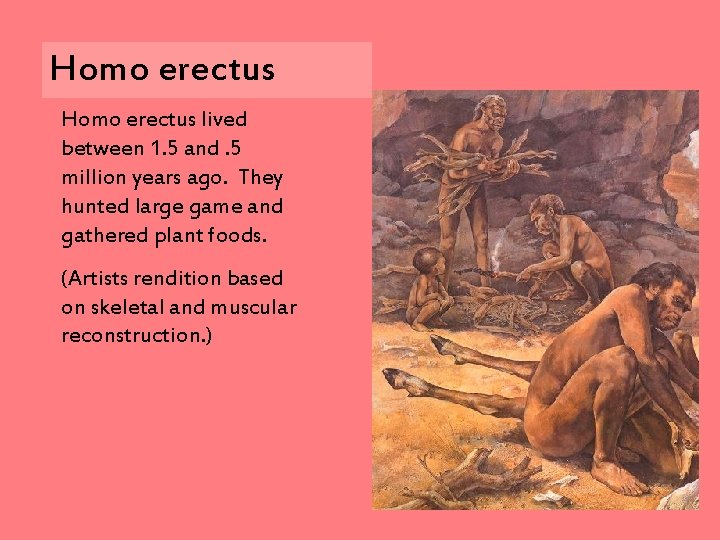
Homo erectus lived between 1. 5 and. 5 million years ago. They hunted large game and gathered plant foods. (Artists rendition based on skeletal and muscular reconstruction. )
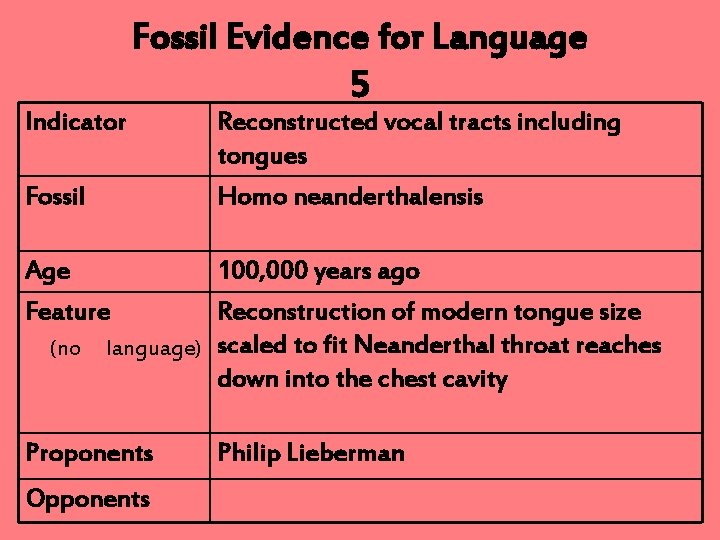
Indicator Fossil Evidence for Language 5 Fossil Reconstructed vocal tracts including tongues Homo neanderthalensis Age Feature 100, 000 years ago Reconstruction of modern tongue size (no language) scaled to fit Neanderthal throat reaches down into the chest cavity Proponents Opponents Philip Lieberman
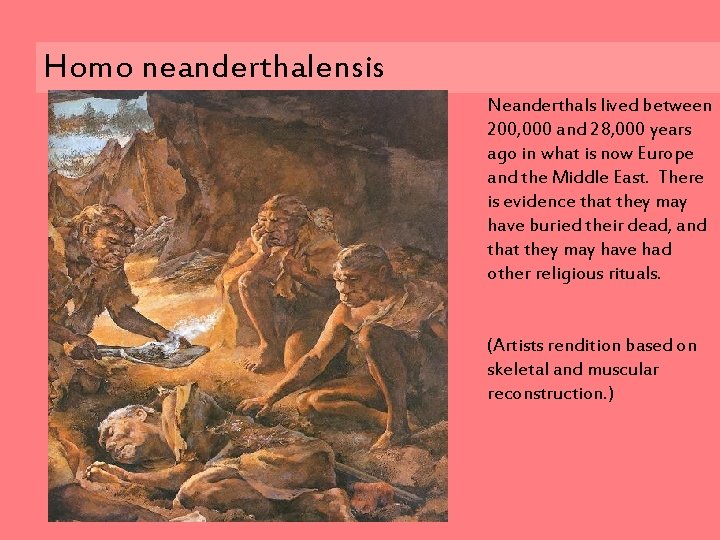
Homo neanderthalensis Neanderthals lived between 200, 000 and 28, 000 years ago in what is now Europe and the Middle East. There is evidence that they may have buried their dead, and that they may have had other religious rituals. (Artists rendition based on skeletal and muscular reconstruction. )
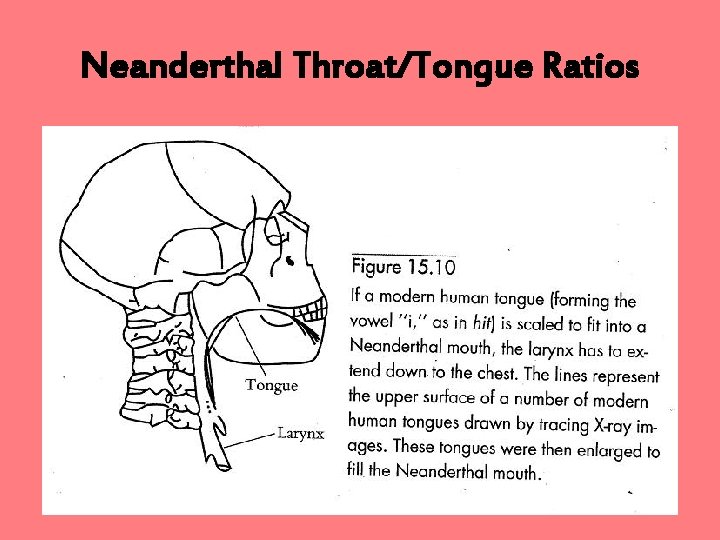
Neanderthal Throat/Tongue Ratios

Fossil Evidence for Language 6 Indicator Fossil Age Feature Basicranium shape Homo sapiens 100, 000 years ago Basicranial angle more pronounced in (language present) H. sapiens than other hominids indicating language Proponents Jeffrey Laitman Opponents
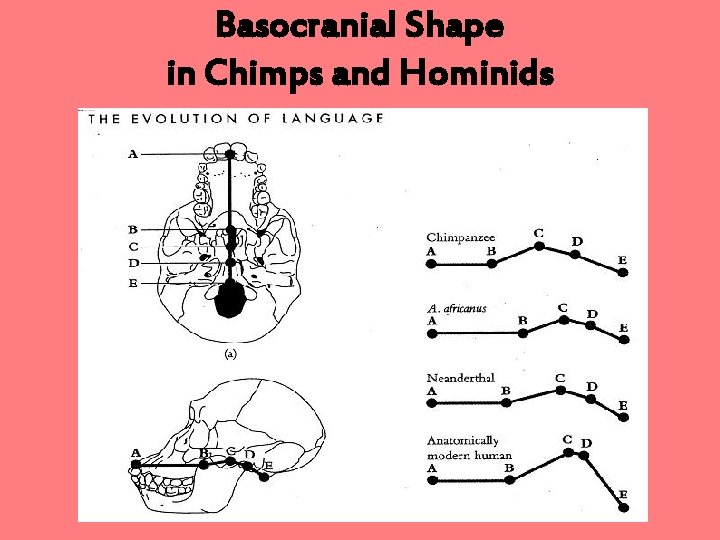
Basocranial Shape in Chimps and Hominids
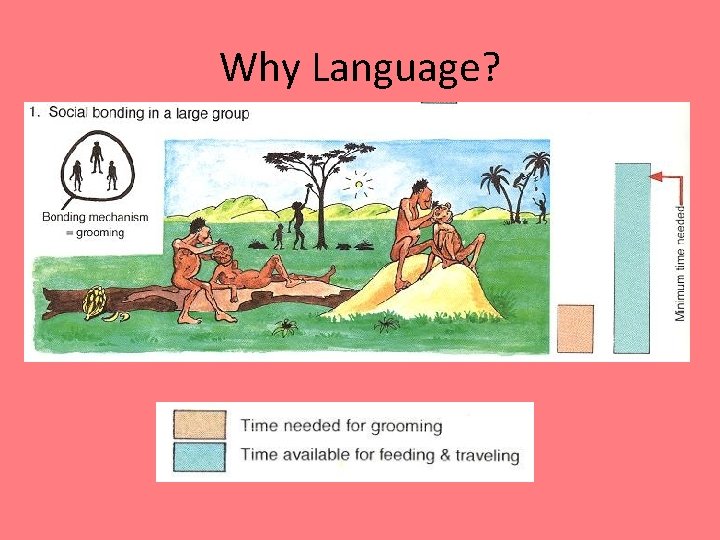
Why Language?
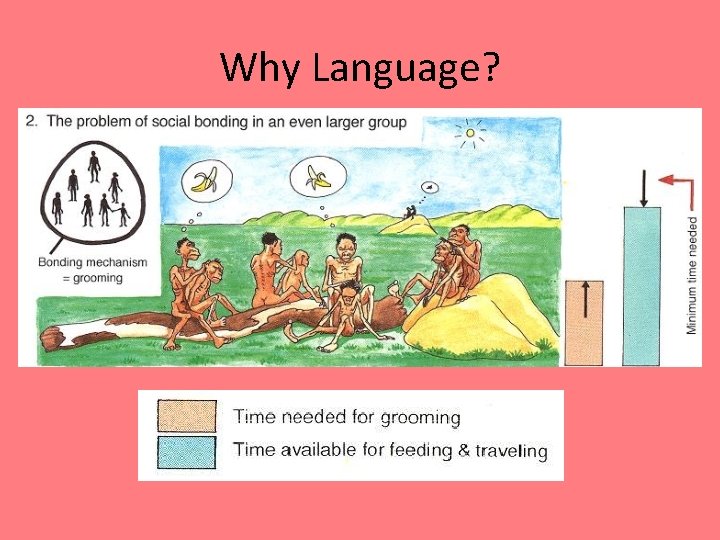
Why Language?
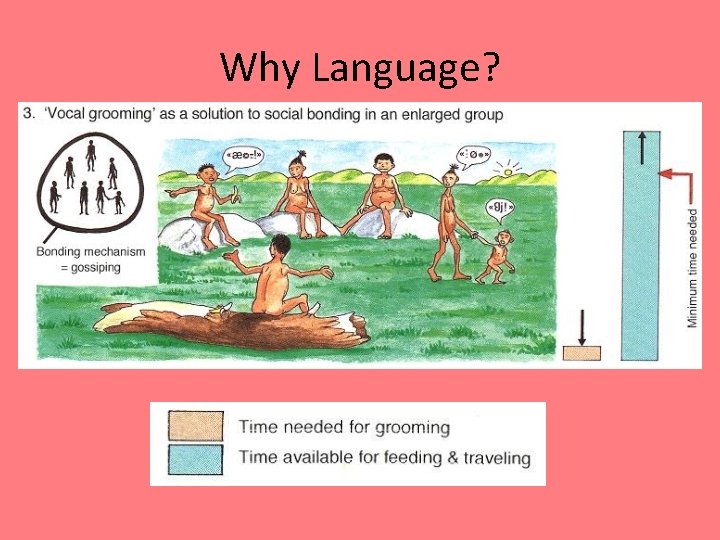
Why Language?

Powerpoint Study Guide Endocast Lunate sulcus Basocranial shape Australopithecus Homo habilis Homo erectus Neandertal Homo sapiens Social bonding Grooming Vocal grooming Body Size r Selection K selection Brain to Body Ratio Cortical Brain Non-Cortical Brain Lateralization Broca’s Area Wernicke’s Area Geschwind’s Territory Arcuate Fasiculus Aphasia FOXP 2 Gene ASPM Gene Microcephalin Gene Tonal Languages
- Slides: 21