
THE BILL OF RIGHTS Chapter 6 THE FIRST
THE BILL OF RIGHTS Chapter 6
THE FIRST AMENDMENT Lesson 1

“Congress shall make no law respecting an establishment of religion, or prohibiting the free exercise thereof; or abridging the freedom of speech, or of the press; or the right of the people peaceably to assemble, and to petition the Government for a redress of grievances. ”
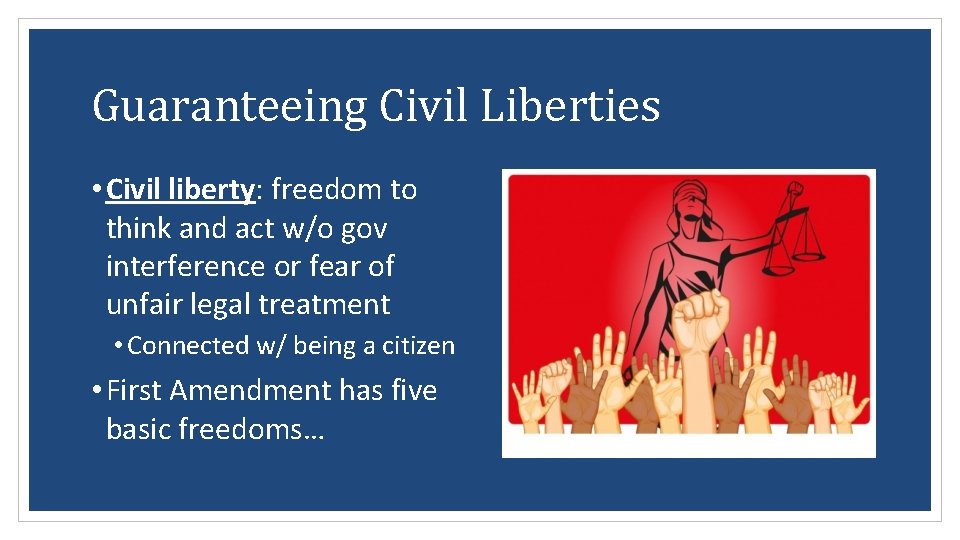
Guaranteeing Civil Liberties • Civil liberty: freedom to think and act w/o gov interference or fear of unfair legal treatment • Connected w/ being a citizen • First Amendment has five basic freedoms…
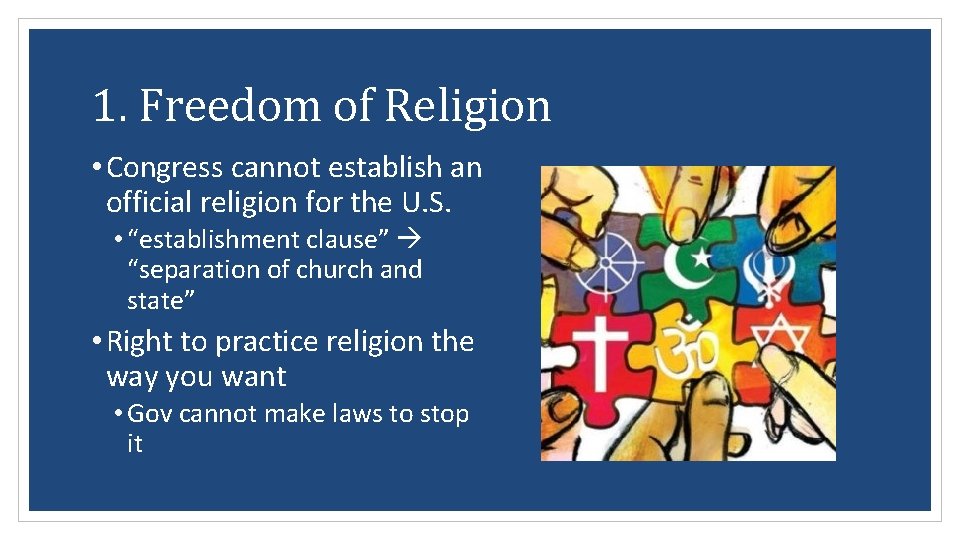
1. Freedom of Religion • Congress cannot establish an official religion for the U. S. • “establishment clause” “separation of church and state” • Right to practice religion the way you want • Gov cannot make laws to stop it
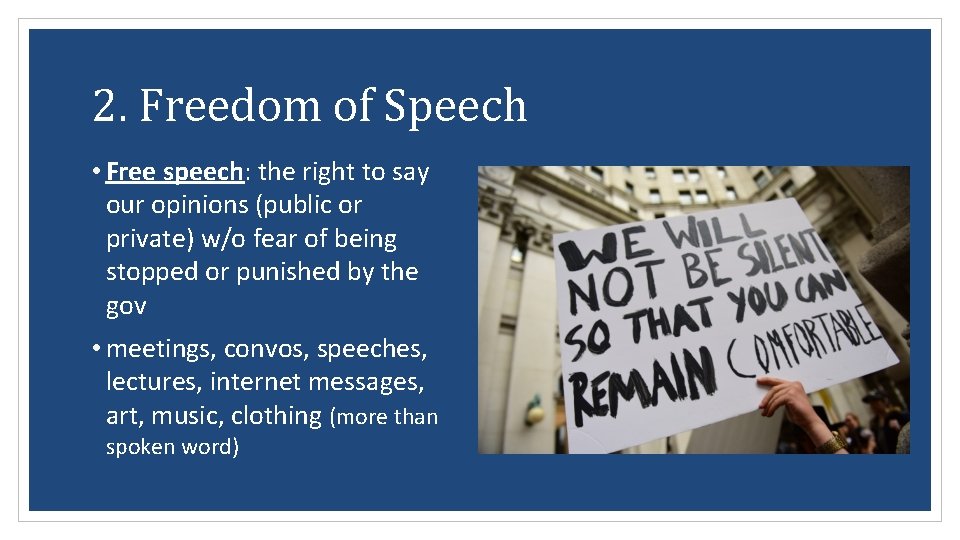
2. Freedom of Speech • Free speech: the right to say our opinions (public or private) w/o fear of being stopped or punished by the gov • meetings, convos, speeches, lectures, internet messages, art, music, clothing (more than spoken word)
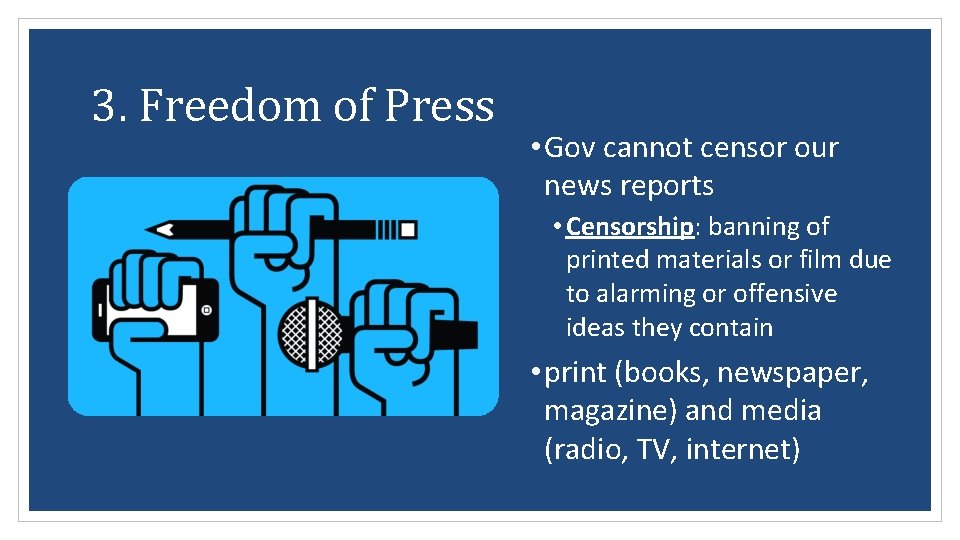
3. Freedom of Press • Gov cannot censor our news reports • Censorship: banning of printed materials or film due to alarming or offensive ideas they contain • print (books, newspaper, magazine) and media (radio, TV, internet)
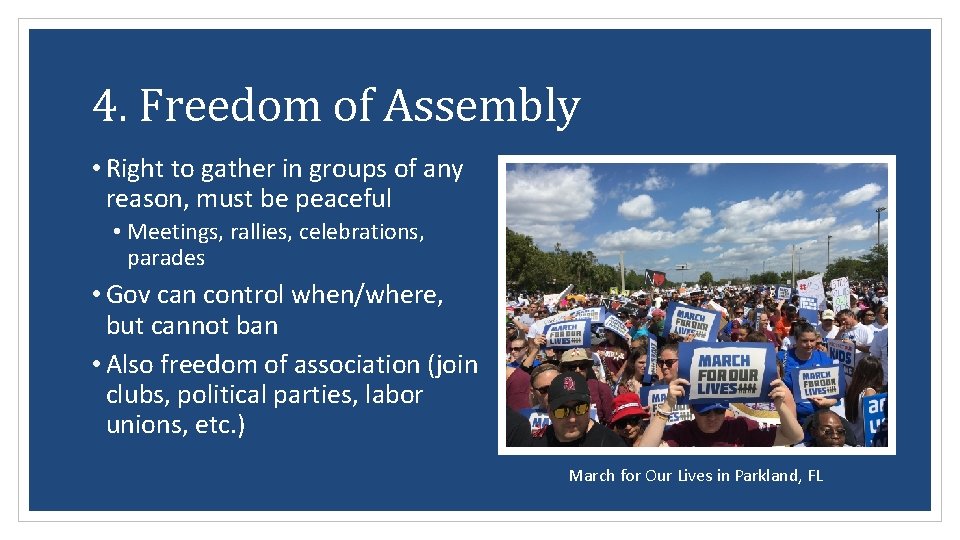
4. Freedom of Assembly • Right to gather in groups of any reason, must be peaceful • Meetings, rallies, celebrations, parades • Gov can control when/where, but cannot ban • Also freedom of association (join clubs, political parties, labor unions, etc. ) March for Our Lives in Parkland, FL
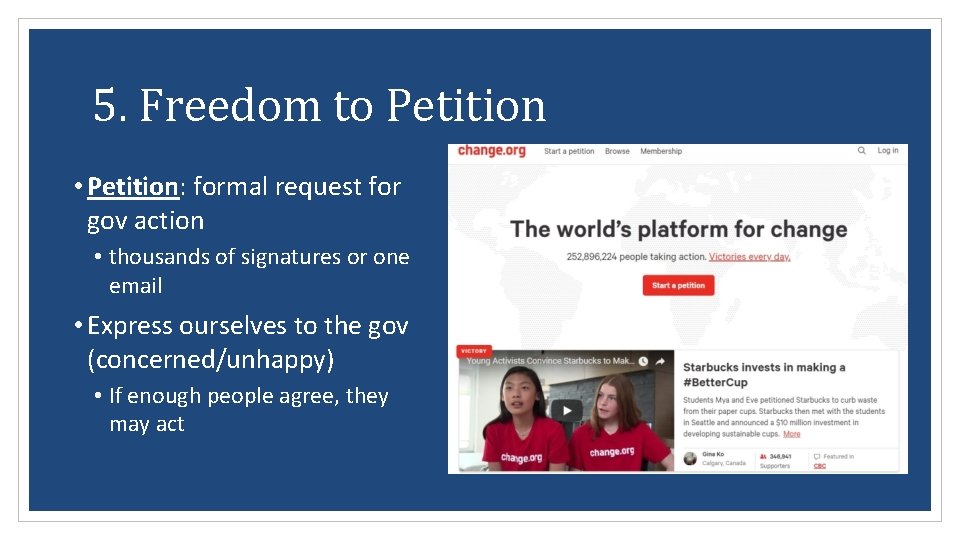
5. Freedom to Petition • Petition: formal request for gov action • thousands of signatures or one email • Express ourselves to the gov (concerned/unhappy) • If enough people agree, they may act
Limits on Civil Liberty • Use civil liberties responsibly don’t interfere with others’ rights • Rights of one person has to balance with another • Individual rights must balance with community rights • Restrictions on free speech • Slander: spoken untruths that are harmful to someone’s reputation • Libel: written/printed untruths that are harmful to someone’s reputation • Cannot speak/write in a way that could lead to criminal acts or to overthrow gov by force (illegal)
OTHER BILL OF RIGHTS PROTECTIONS Lesson 2
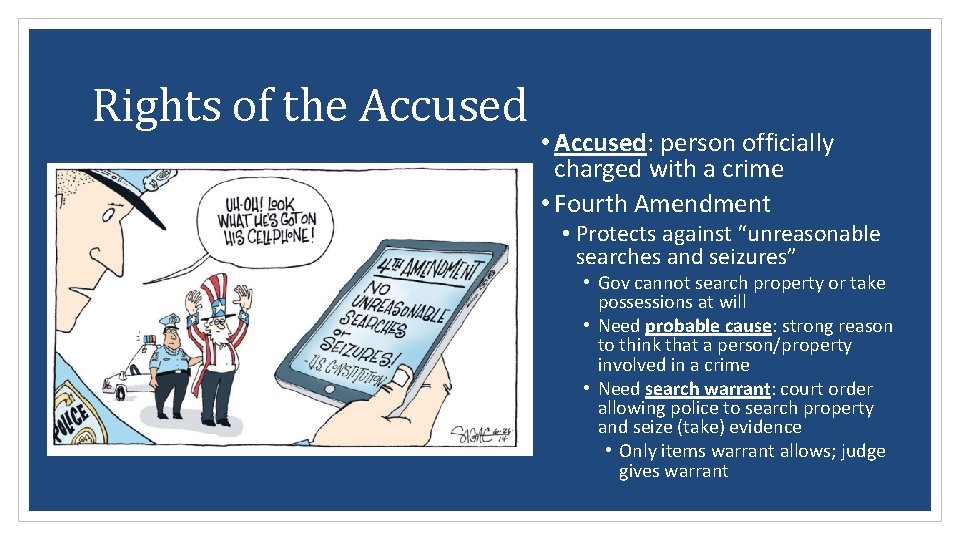
Rights of the Accused • Accused: person officially charged with a crime • Fourth Amendment • Protects against “unreasonable searches and seizures” • Gov cannot search property or take possessions at will • Need probable cause: strong reason to think that a person/property involved in a crime • Need search warrant: court order allowing police to search property and seize (take) evidence • Only items warrant allows; judge gives warrant
• Fifth Amendment • No one tried for serious crime w/o indictment: document issued by a grand jury to charge someone w/ a crime • Doesn’t mean guilty – grand jury thinks crime committed start trial • Prevents more than one trial for same crime • Double jeopardy: putting someone on trial for a crime of which he/she was previously found innocent • Protects an accused person to remain silent • Not forced to confess • Protects from self-incrimination: giving evidence about yourself that could lead to you being found guilty of a crime • No denial of life, liberty, property “w/o due process of law” • Due process: following established legal procedures • Protect property rights • Limits eminent domain: the right of the gov to take private property (ex: land) for public use (unless fair price)
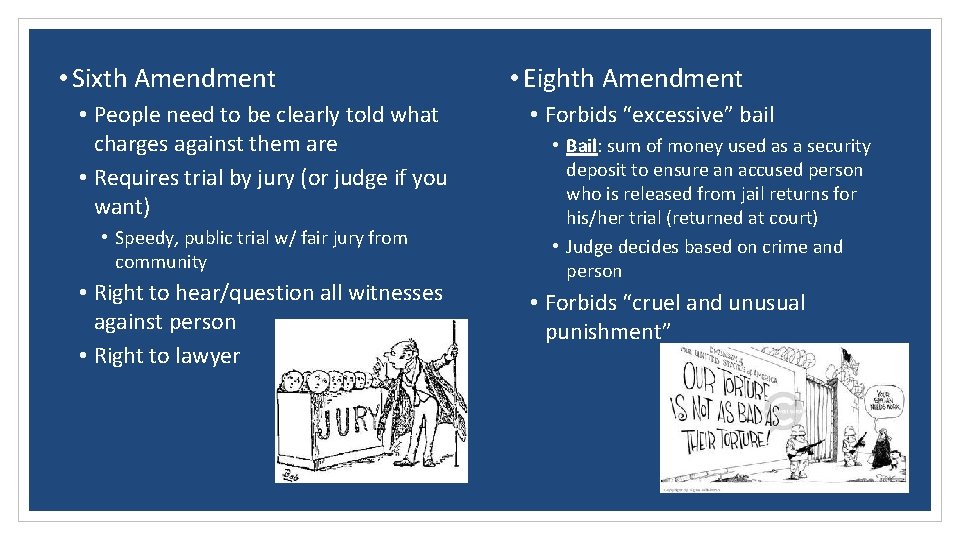
• Sixth Amendment • People need to be clearly told what charges against them are • Requires trial by jury (or judge if you want) • Speedy, public trial w/ fair jury from community • Right to hear/question all witnesses against person • Right to lawyer • Eighth Amendment • Forbids “excessive” bail • Bail: sum of money used as a security deposit to ensure an accused person who is released from jail returns for his/her trial (returned at court) • Judge decides based on crime and person • Forbids “cruel and unusual punishment”
Additional Protections • Second Amendment Right to keep firearms for personal safety • Third Amendment When there is no war, soldiers may not stay in people’s homes w/o permission • Seventh Amendment Right to jury trial in civil cases (when people’s rights are in conflict) concerning property worth more than $20 • Judge allows evidence, jury determines verdict • Ninth Amendment All other rights not spelled out in Constitution are retained (kept) by the people • Prevents gov from taking people’s rights • Tenth Amendment Any power not specifically given to fed gov belong to states and people (limited gov and popular sovereignty
FURTHERING CIVIL LIBERTIES Lesson 3
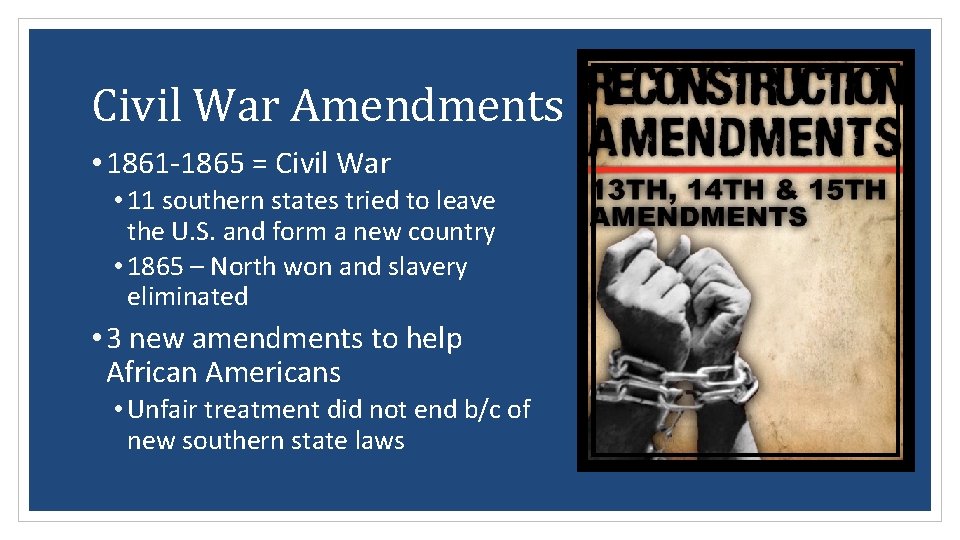
Civil War Amendments • 1861 -1865 = Civil War • 11 southern states tried to leave the U. S. and form a new country • 1865 – North won and slavery eliminated • 3 new amendments to help African Americans • Unfair treatment did not end b/c of new southern state laws
• Thirteenth Amendment (1865) • Outlawed slavery • Only forced labor = punishment for committing crime • Fourteenth Amendment (1868) • Defined citizen as anyone “born or naturalized in the U. S. ” • Every state must give all citizens “equal protection of the laws” • Forced states to end unfair laws • Ex: black codes: laws from after the Civil War that kept African Americans from holding certain jobs, gave them few property rights, and limited their rights in other ways • Also helped disabled and women • Forbade state govs from unreasonable action or interference w/ U. S. citizens • States cannot take “life, liberty, property” w/o due process of law • Due process now applied to states too
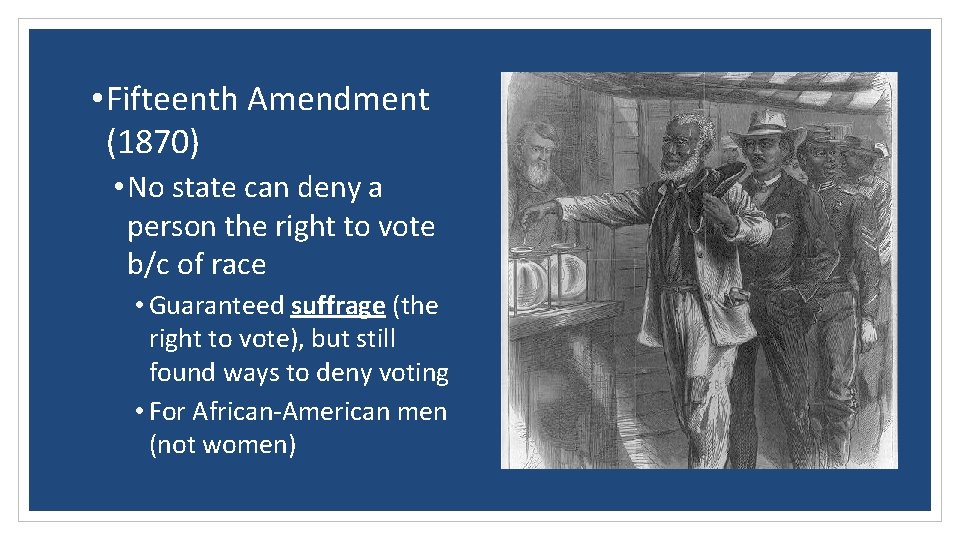
• Fifteenth Amendment (1870) • No state can deny a person the right to vote b/c of race • Guaranteed suffrage (the right to vote), but still found ways to deny voting • For African-American men (not women)
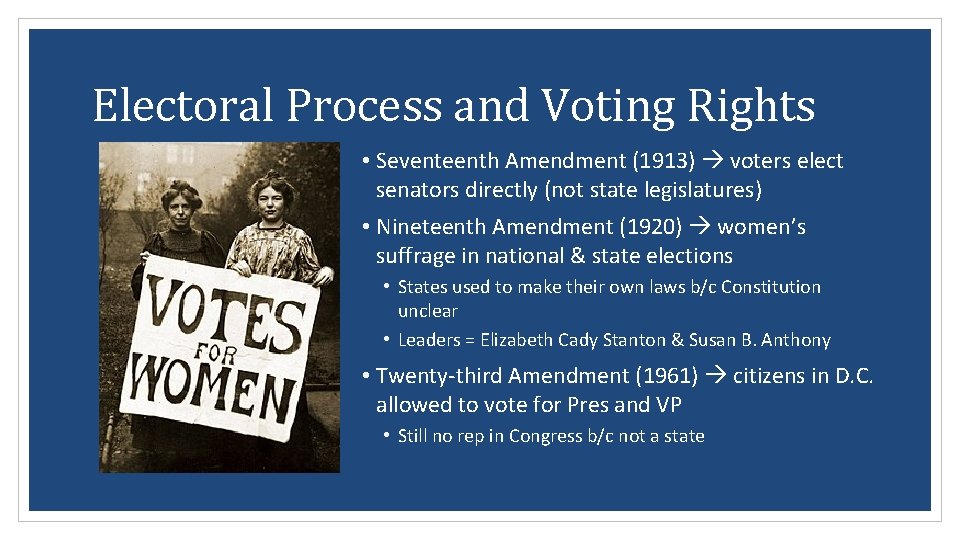
Electoral Process and Voting Rights • Seventeenth Amendment (1913) voters elect senators directly (not state legislatures) • Nineteenth Amendment (1920) women’s suffrage in national & state elections • States used to make their own laws b/c Constitution unclear • Leaders = Elizabeth Cady Stanton & Susan B. Anthony • Twenty-third Amendment (1961) citizens in D. C. allowed to vote for Pres and VP • Still no rep in Congress b/c not a state
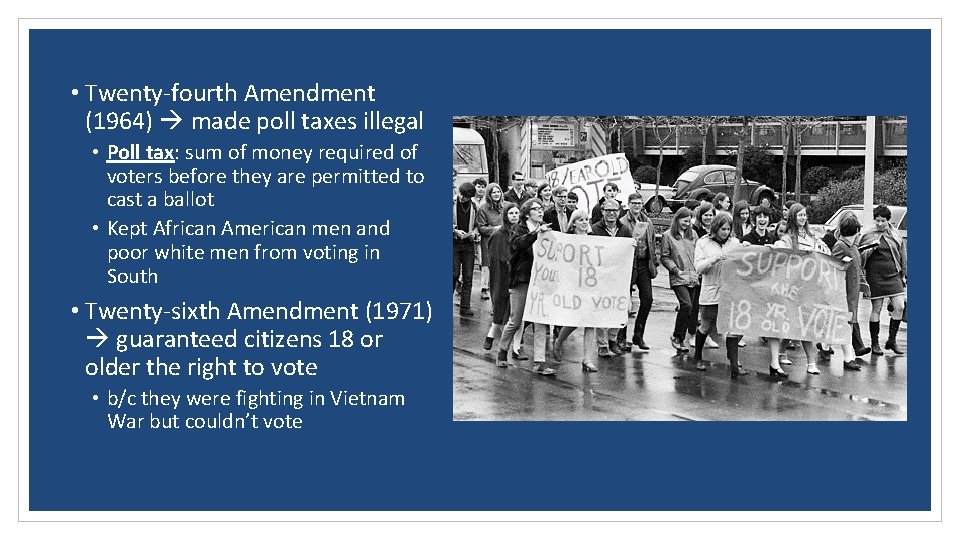
• Twenty-fourth Amendment (1964) made poll taxes illegal • Poll tax: sum of money required of voters before they are permitted to cast a ballot • Kept African American men and poor white men from voting in South • Twenty-sixth Amendment (1971) guaranteed citizens 18 or older the right to vote • b/c they were fighting in Vietnam War but couldn’t vote
- Slides: 21