
The Bill of Rights A Look at the
The Bill of Rights A Look at the First Ten Amendments
Overview • The first 10 constitutional amendments • Authored by James Madison – Proposed on September 25, 1789 – Ratified on December 15, 1791 • Limits the government • Details what the government can and cannot do regarding our personal liberties • Remember: The United States Constitution is the Supreme law of the land

The First Amendment • • • The Establishment Clause The Free Exercise Clause Freedom of speech Freedom of the press Freedom of assembly The Right to petition

The Second Amendment • A well regulated militia • The Right to keep and bear arms
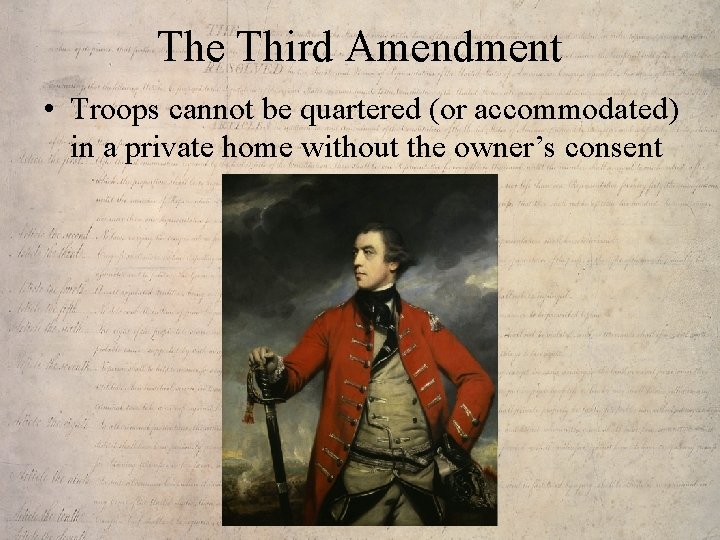
The Third Amendment • Troops cannot be quartered (or accommodated) in a private home without the owner’s consent

The Forth Amendment • The Right to be secure (in persons, houses, papers, and effects) • Law enforcement cannot search you or seize your property without a warrant
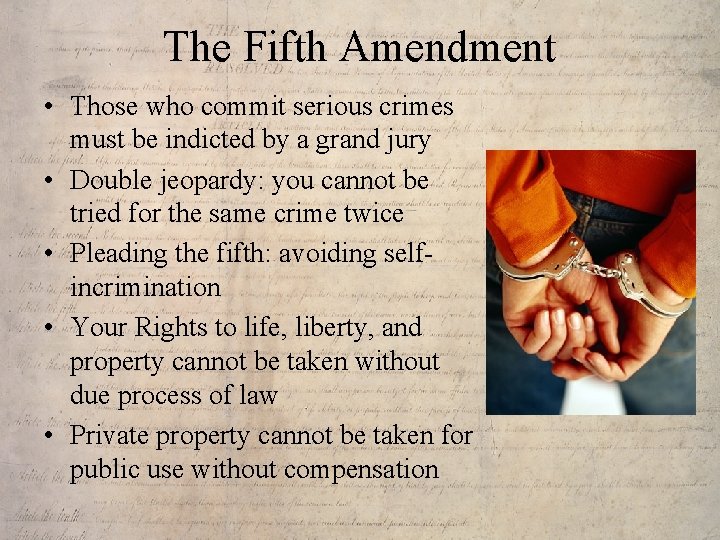
The Fifth Amendment • Those who commit serious crimes must be indicted by a grand jury • Double jeopardy: you cannot be tried for the same crime twice • Pleading the fifth: avoiding selfincrimination • Your Rights to life, liberty, and property cannot be taken without due process of law • Private property cannot be taken for public use without compensation
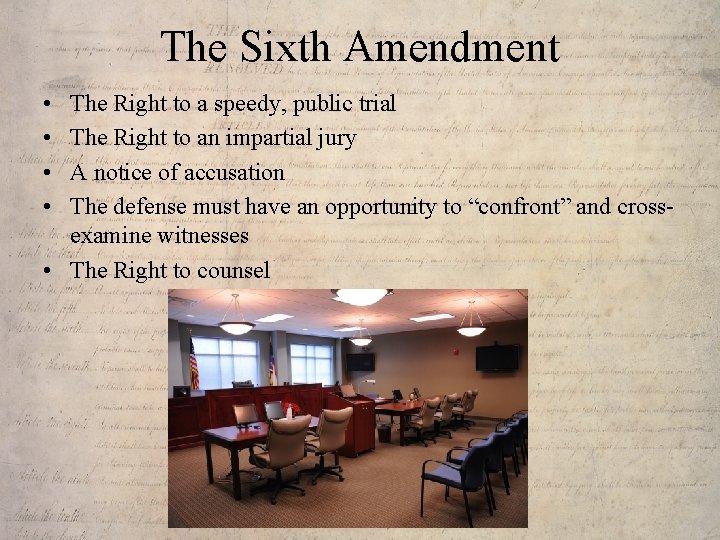
The Sixth Amendment • • The Right to a speedy, public trial The Right to an impartial jury A notice of accusation The defense must have an opportunity to “confront” and crossexamine witnesses • The Right to counsel

The Seventh Amendment • The Right to a trial by jury in suits of common law – “Common law” (and civil law) differs from criminal law – “Common law” refers to “case law” and “precedent”
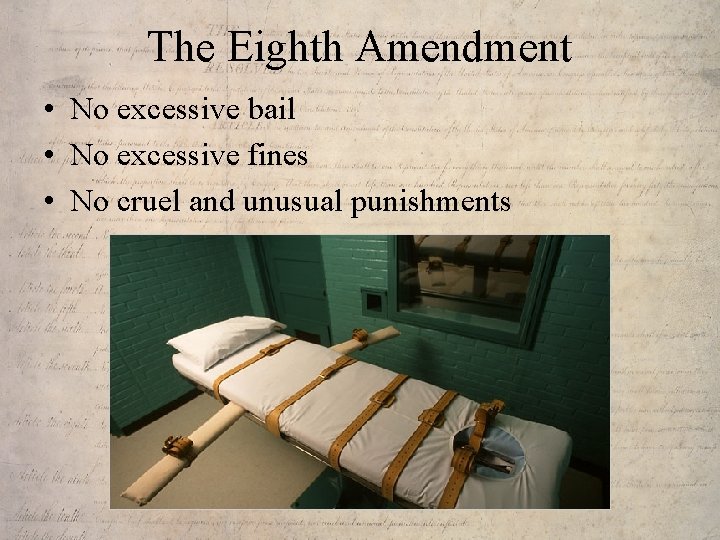
The Eighth Amendment • No excessive bail • No excessive fines • No cruel and unusual punishments
The Ninth Amendment • The Rights of the people are not specifically enumerated in The United States Constitution • Our Rights extend beyond The Bill of Rights
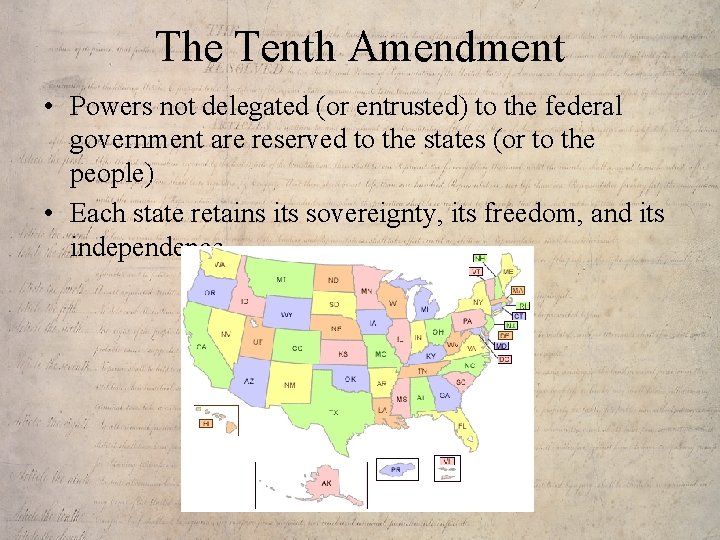
The Tenth Amendment • Powers not delegated (or entrusted) to the federal government are reserved to the states (or to the people) • Each state retains its sovereignty, its freedom, and its independence
- Slides: 12