
The BIG Question Does the colour of light
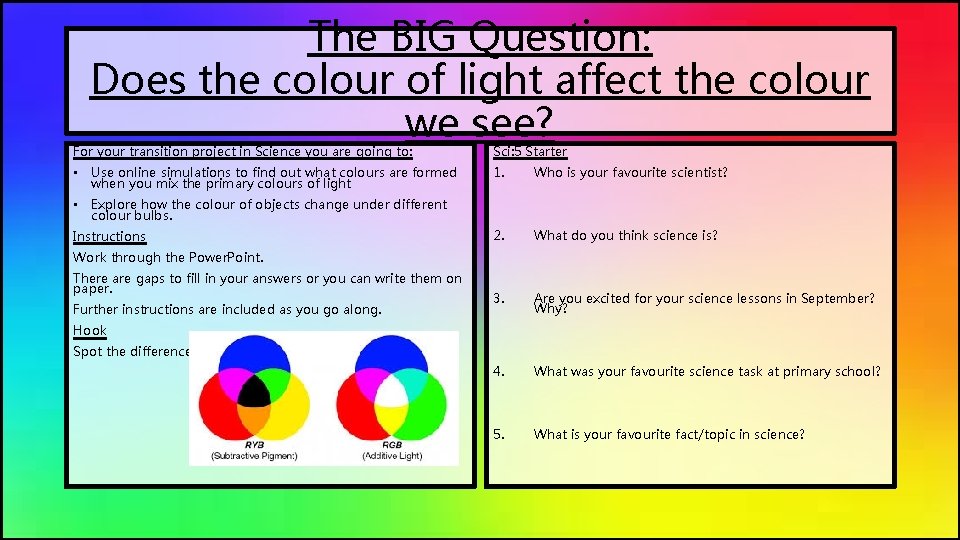
The BIG Question: Does the colour of light affect the colour we see? For your transition project in Science you are going to: Sci: 5 Starter • Use online simulations to find out what colours are formed when you mix the primary colours of light 1. Who is your favourite scientist? 2. What do you think science is? 3. Are you excited for your science lessons in September? Why? 4. What was your favourite science task at primary school? 5. What is your favourite fact/topic in science? • Explore how the colour of objects change under different colour bulbs. Instructions Work through the Power. Point. There are gaps to fill in your answers or you can write them on paper. Further instructions are included as you go along. Hook Spot the differences.
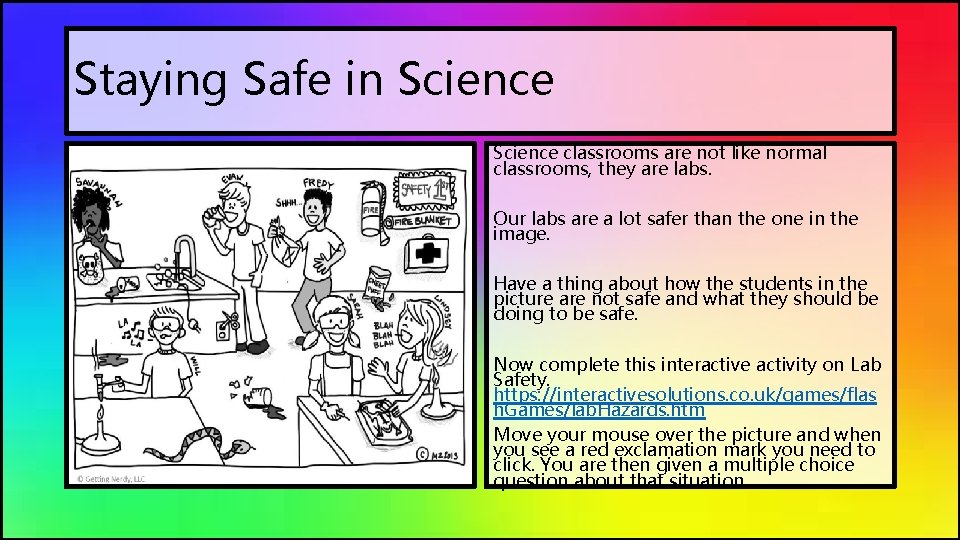
Staying Safe in Science classrooms are not like normal classrooms, they are labs. Our labs are a lot safer than the one in the image. Have a thing about how the students in the picture are not safe and what they should be doing to be safe. Now complete this interactive activity on Lab Safety. https: //interactivesolutions. co. uk/games/flas h. Games/lab. Hazards. htm Move your mouse over the picture and when you see a red exclamation mark you need to click. You are then given a multiple choice question about that situation.

The Primary Colours of Light • Watch this video: https: //www. youtube. com/watch? v=CPf. I 9 r. Ju 2 D 0 You should watch from 8 m 24 to 10 m 30. • Now use the simulator to explore these colour light mixes yourself. https: //javalab. org/en/three_primary_colors_e n/ Click on the coloured spotlights (not the lamps) and drag them around to see how coloured light mixes. Questions What are three primary colours of light? 1) 2) 3) Write down three word sums to show the secondary colours of light are made. (I have started the first one for you. ) 1) Red + blue = … 2) 3)
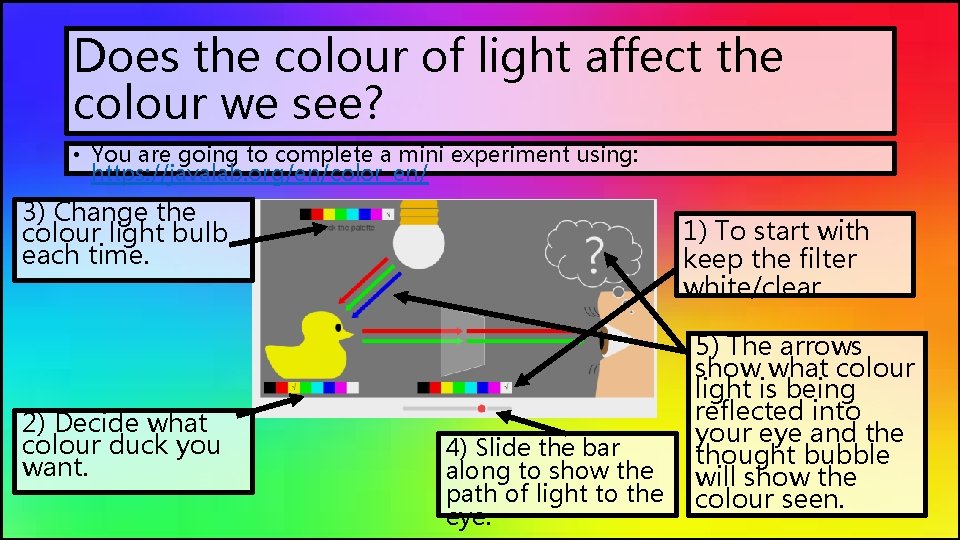
Does the colour of light affect the colour we see? • You are going to complete a mini experiment using: https: //javalab. org/en/color_en/ 3) Change the colour light bulb each time. 2) Decide what colour duck you want. 1) To start with keep the filter white/clear 4) Slide the bar along to show the path of light to the eye. 5) The arrows show what colour light is being reflected into your eye and the thought bubble will show the colour seen.
Experiment plan Prediction What do you think will happen? How do you think the colour bulb will affect the colour you see the duck? … In experiments we have things that can we investigate called variables. Can you identify the variables in this experiment. • Independent variable (The variable we intentionally change) … • Dependent variable (The variable we observe – what are we looking for? ) … • Control variables (All the things we keep the same to make sure we have a fair test. ) …
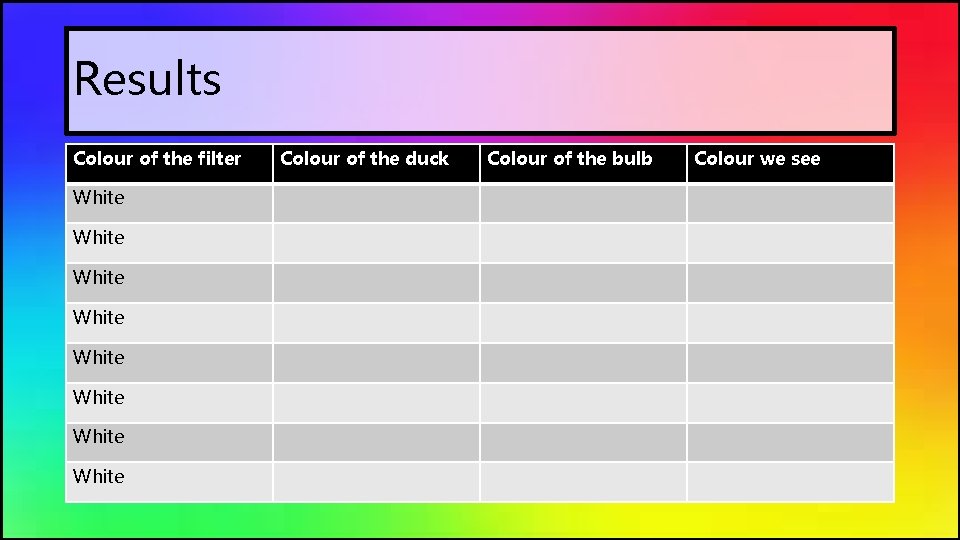
Results Colour of the filter White White Colour of the duck Colour of the bulb Colour we see

Conclusion P Make your POINT – What do you think your results show? E Give your EVIDENCE – Pick some of your results to prove the POINT you made. E EXPLAIN your evidence using scientific explanations. - You will need to think about the primary and secondary colours of light. Eg. White light is made of red, green and blue, the yellow duck only reflects red and green light as red and green light make yellow. The blue is absorbed. L LINK back to your prediction – Were you correct in your prediction? How do you know? P– E– E– L–
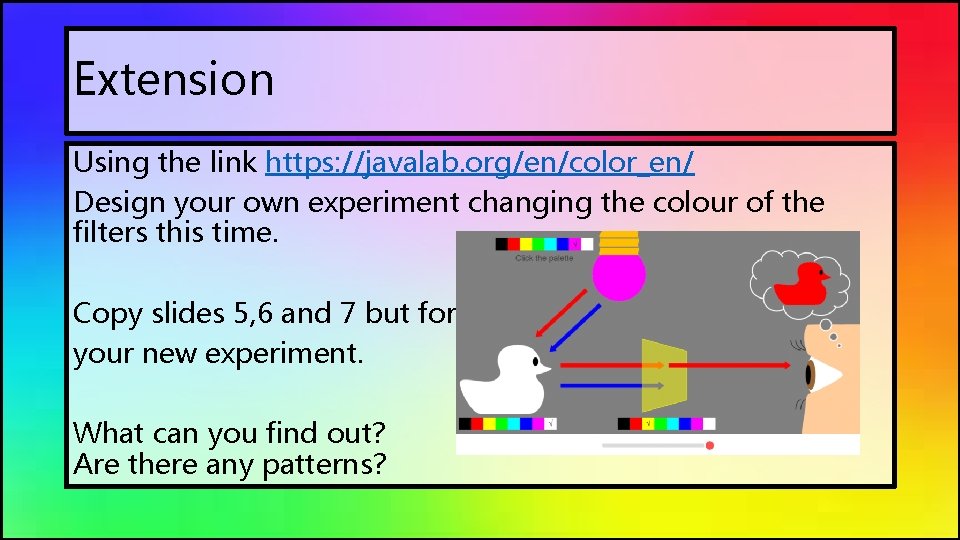
Extension Using the link https: //javalab. org/en/color_en/ Design your own experiment changing the colour of the filters this time. Copy slides 5, 6 and 7 but for your new experiment. What can you find out? Are there any patterns?
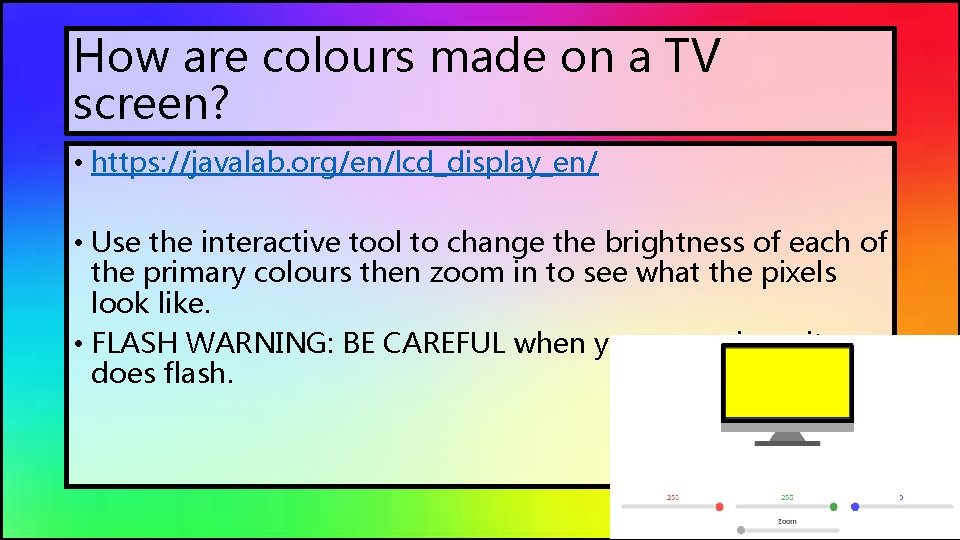
How are colours made on a TV screen? • https: //javalab. org/en/lcd_display_en/ • Use the interactive tool to change the brightness of each of the primary colours then zoom in to see what the pixels look like. • FLASH WARNING: BE CAREFUL when you zoom in as it does flash.
Experimenting with light at home. • Colour some pieces of sellotape with coloured pen. Carefully put it over a torch and see what you can see when you shine it on objects that are in the primary colours of light. • Save some clear foil wrappers eg. Babybel/sweet or colour in some clingfilm with pens. Pick some colourful cartoon pictures on a phone or tablet to look at and place the coloured filters (sweet wrappers or clingfilm) over the top. What do you notice?
Some experiments from a book called … Crisp Packet Fireworks Maverick Science to try at home By Chris Smith and Dave Ansell The Naked Scientists
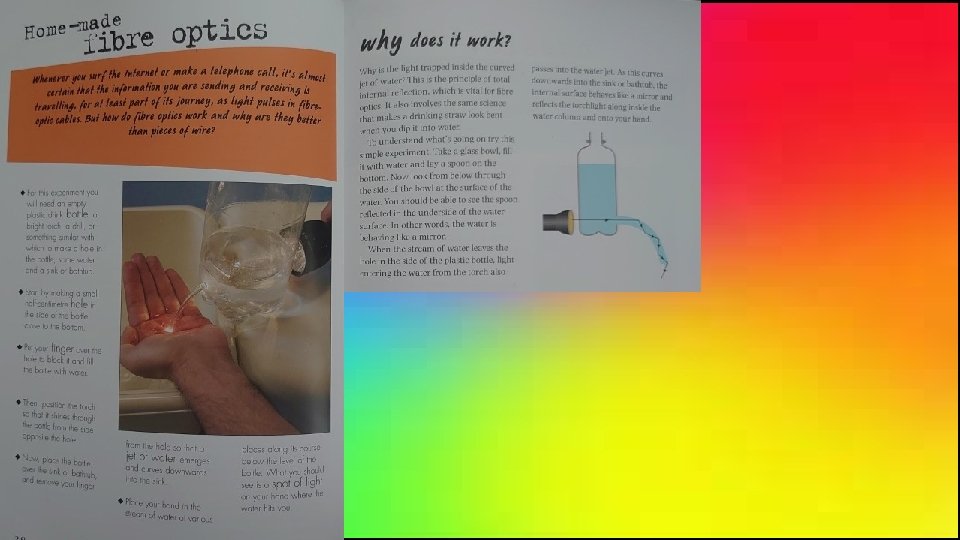
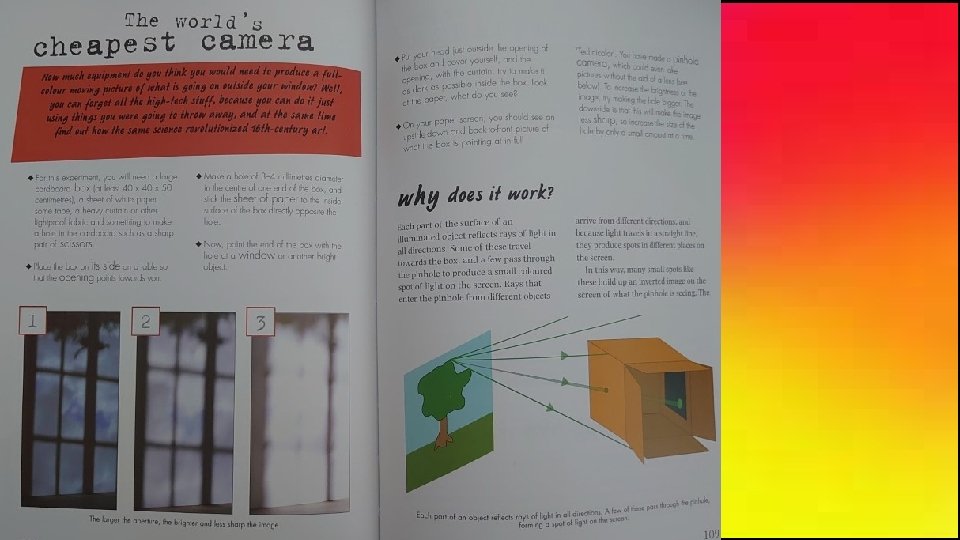
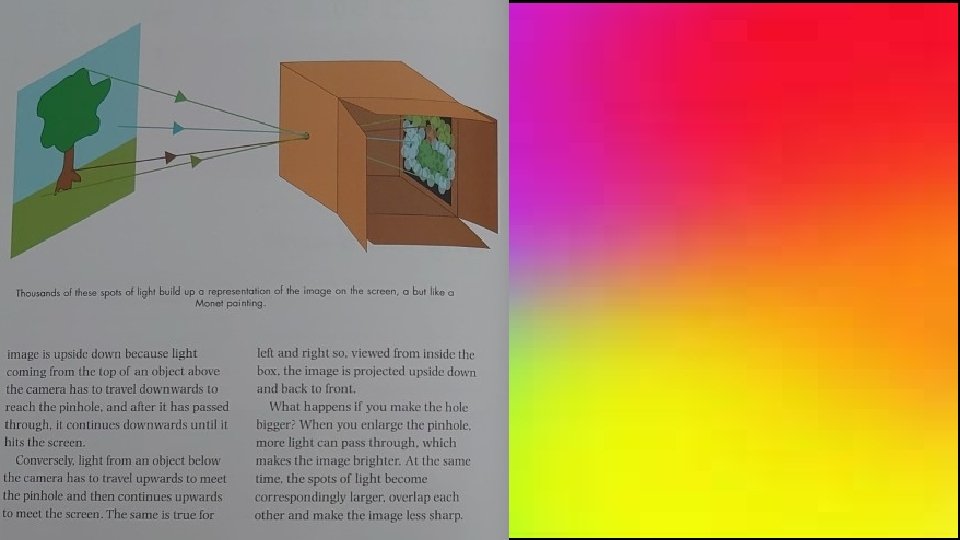
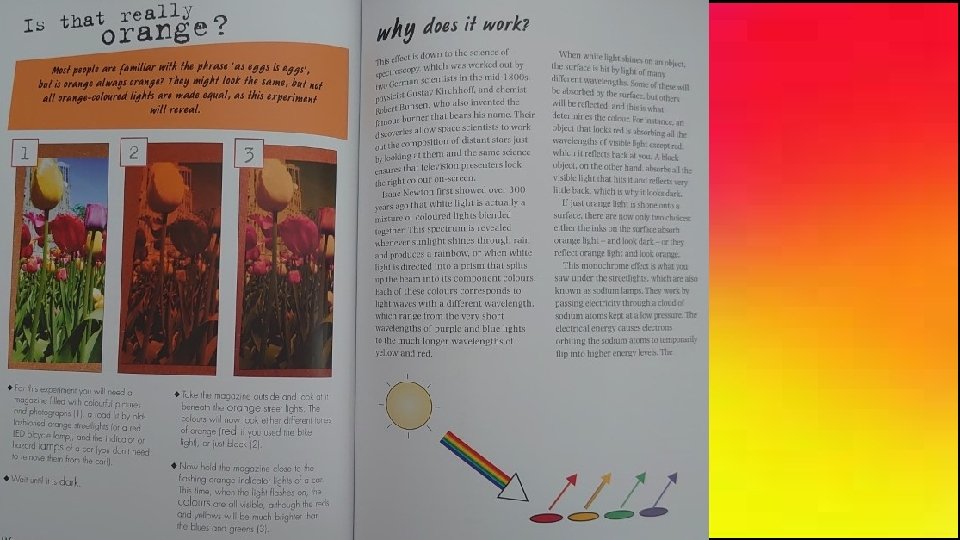
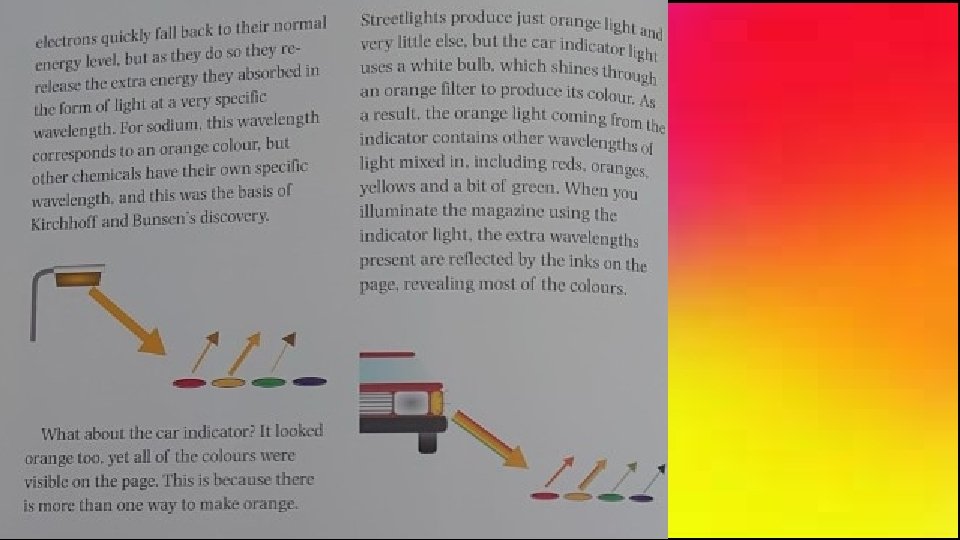
An experiment to try from a book called… How to Fossilise your Hamster And other amazing experiments for the armchair scientist. By Mick O’Hare New Scientist
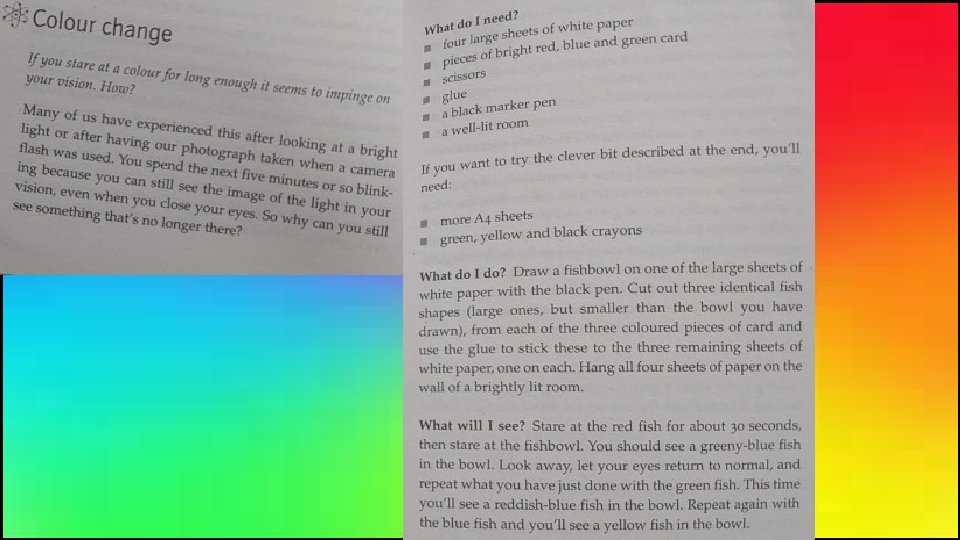
- Slides: 18