
The BIG picture our BIOSPHERE REDUCE REUSE RECYCLE
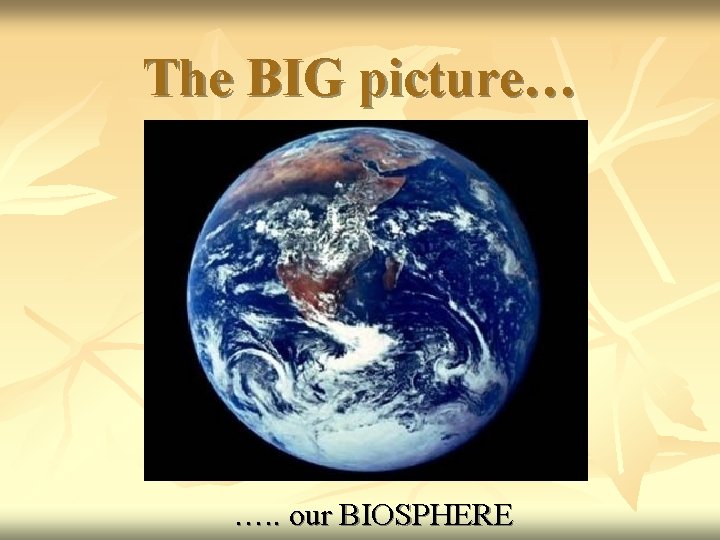
The BIG picture… …. . our BIOSPHERE

REDUCE, REUSE, RECYCLE
PRECYCLING n GIVING THOUGHT to what you NEED n Making CHOICES with the LEAST IMPACT n n If buying NEW is the best choice… CONSIDER PACKAGING and it’s IMPACT USE it up… WEAR it out… MAKE it do… …or DO WITHOUT !
WHY REDUCE our IMPACT on the EARTH? n n n The United States is 5% of the WORLD’S POPULATION, but… … the United States PRODUCES 25% of the WORLD’S WASTE!!! This is our BASIS for SUSTAINABILITY
The IMPORTANCE of SOILS n n “SOIL is the most COMPLEX ECOLOGICAL SYSTEM on the PLANET” IMPORTANT to CIVILIZATIONS n n n http: //www. youtube. com/watch? v=Nm. A 6 sw 5 ZSyk GROWING POPULATIONS, but LIMITED LANDS SOIL is an INTERFACE between CRUST and ATMOSPHERE
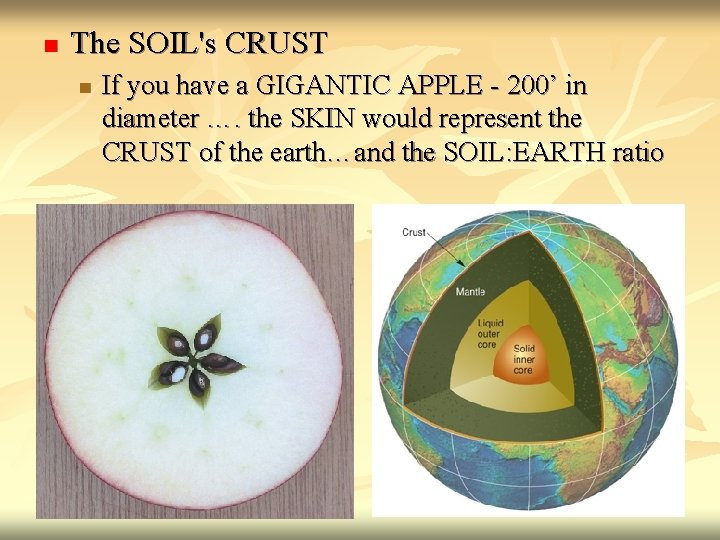
n The SOIL's CRUST n If you have a GIGANTIC APPLE - 200’ in diameter …. the SKIN would represent the CRUST of the earth…and the SOIL: EARTH ratio
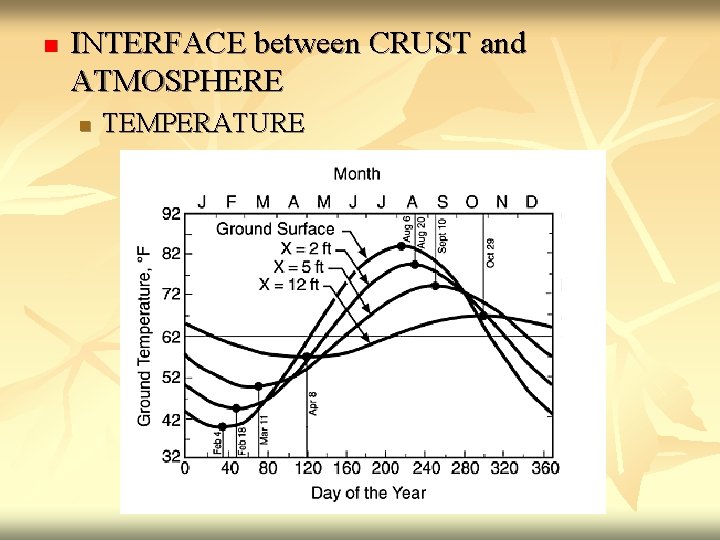
n INTERFACE between CRUST and ATMOSPHERE n TEMPERATURE
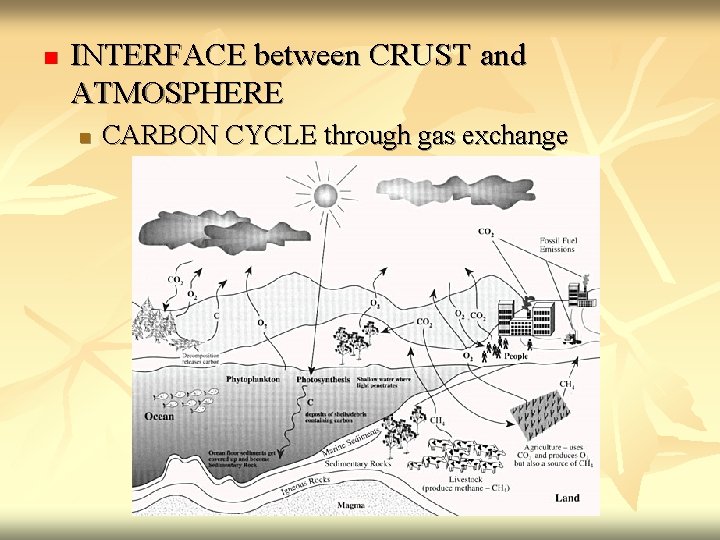
n INTERFACE between CRUST and ATMOSPHERE n CARBON CYCLE through gas exchange
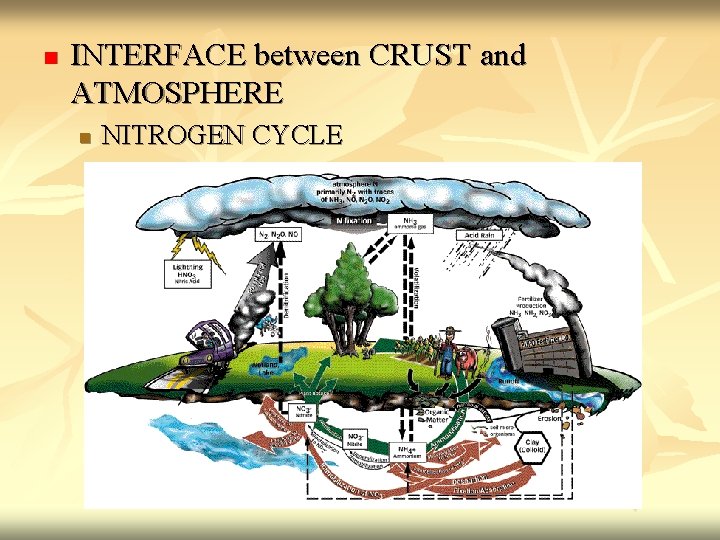
n INTERFACE between CRUST and ATMOSPHERE n NITROGEN CYCLE
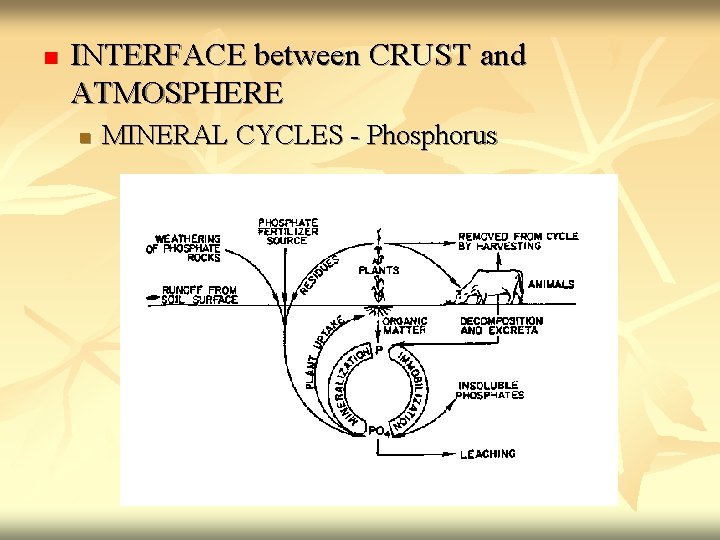
n INTERFACE between CRUST and ATMOSPHERE n MINERAL CYCLES - Phosphorus
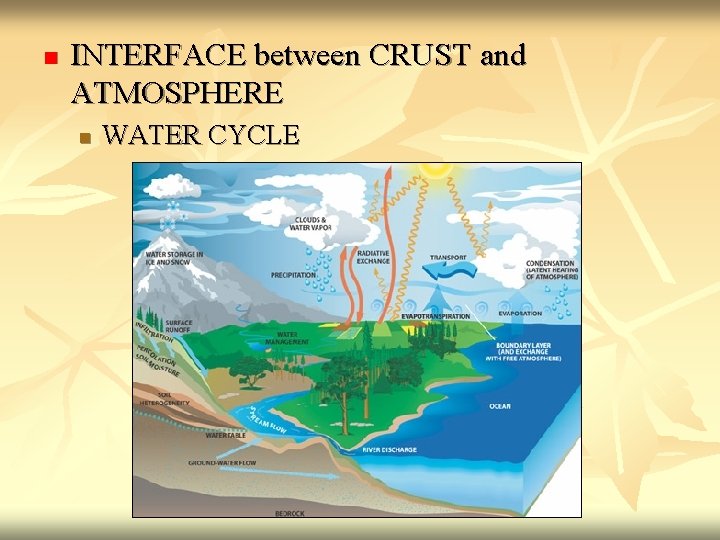
n INTERFACE between CRUST and ATMOSPHERE n WATER CYCLE
The IMPORTANCE of SOILS n n IMPORTANT to CIVILIZATIONS GROWING POPULATIONS, but LIMITED LANDS SOIL is an INTERFACE between CRUST and ATMOSPHERE SOIL is a MEDIUM for PLANT GROWTH
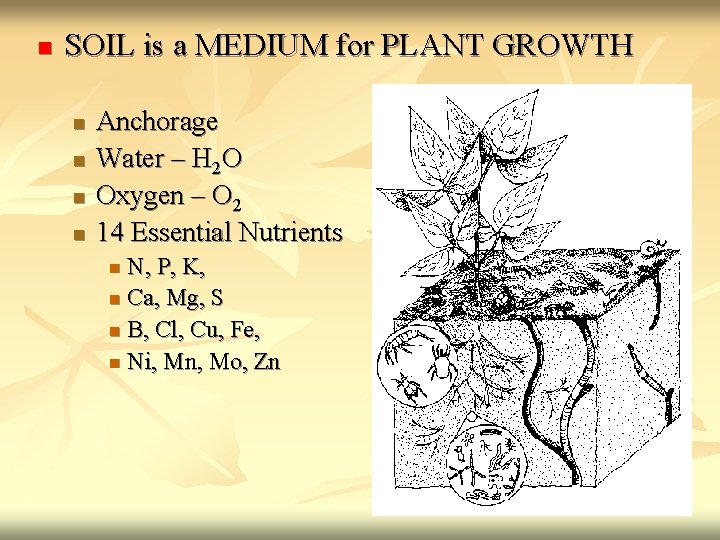
n SOIL is a MEDIUM for PLANT GROWTH n n Anchorage Water – H 2 O Oxygen – O 2 14 Essential Nutrients N, P, K, n Ca, Mg, S n B, Cl, Cu, Fe, n Ni, Mn, Mo, Zn n
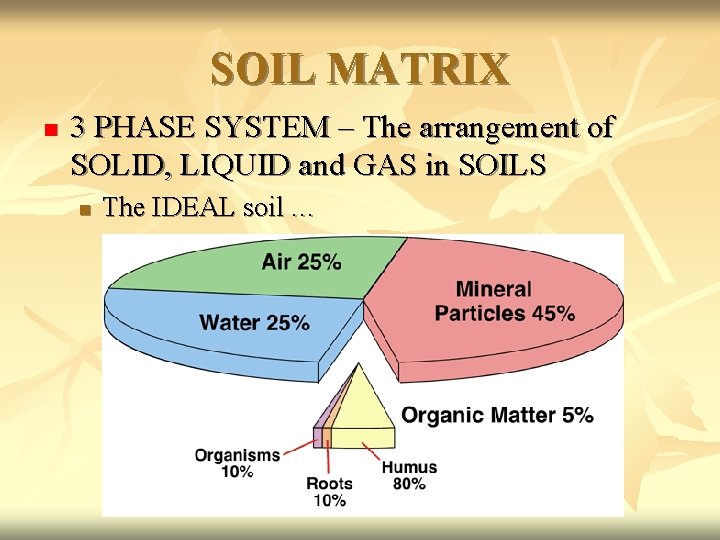
SOIL MATRIX n 3 PHASE SYSTEM – The arrangement of SOLID, LIQUID and GAS in SOILS n The IDEAL soil …
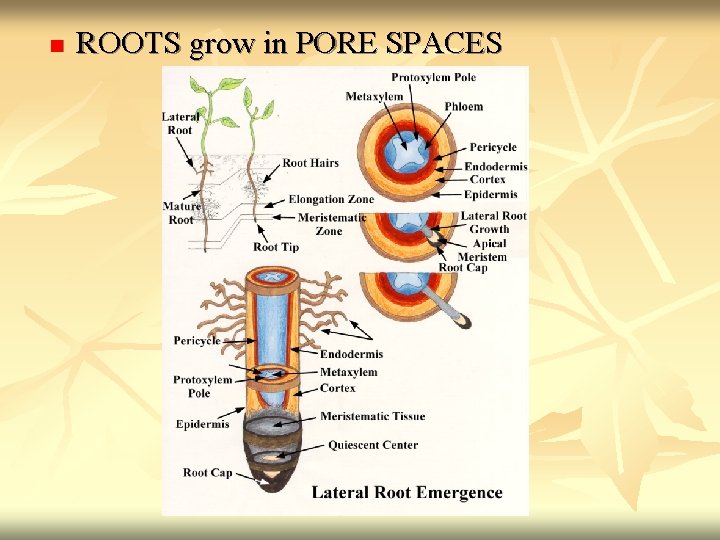
n ROOTS grow in PORE SPACES
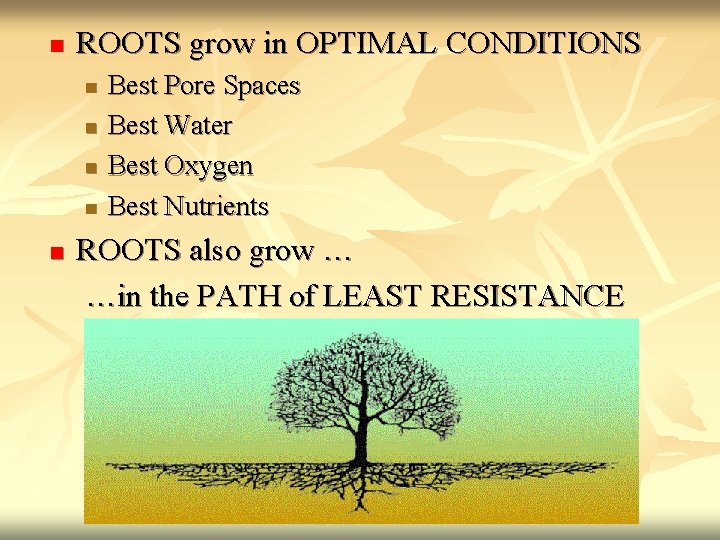
n ROOTS grow in OPTIMAL CONDITIONS n n n Best Pore Spaces Best Water Best Oxygen Best Nutrients ROOTS also grow … …in the PATH of LEAST RESISTANCE
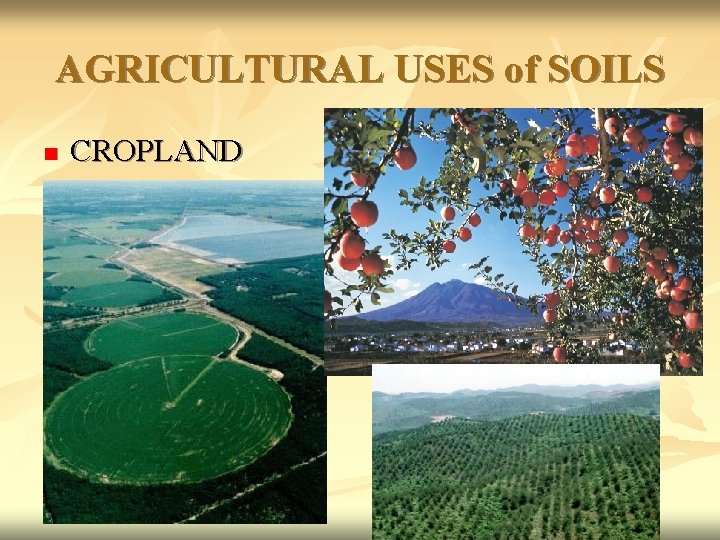
AGRICULTURAL USES of SOILS n CROPLAND
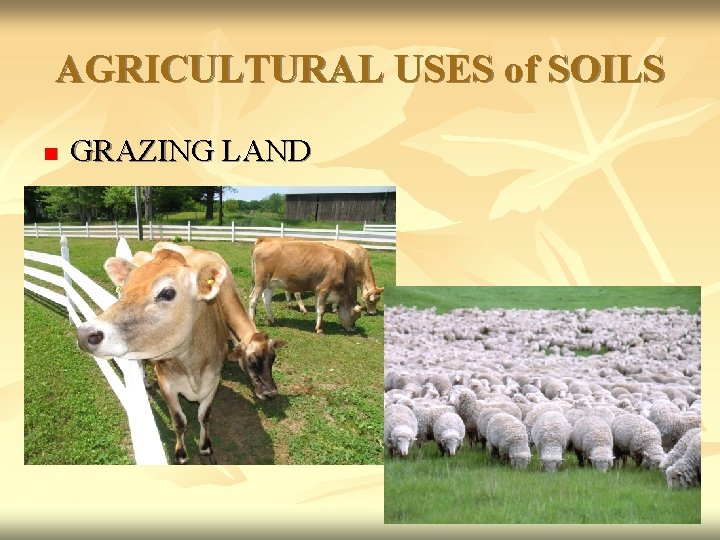
AGRICULTURAL USES of SOILS n GRAZING LAND
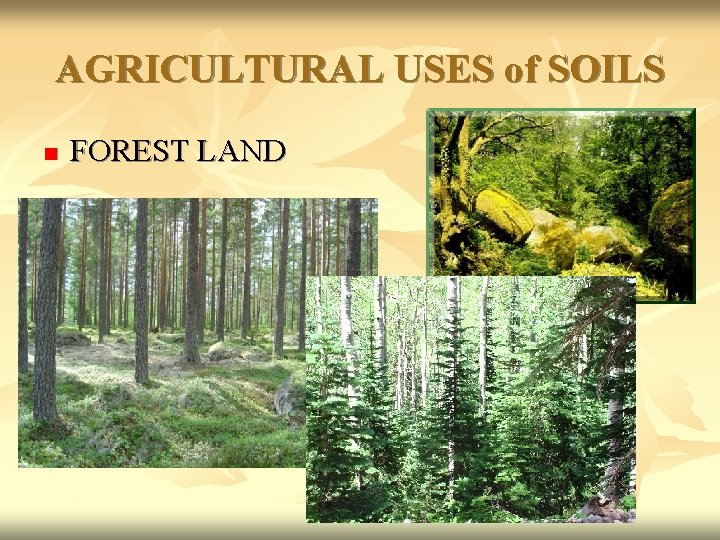
AGRICULTURAL USES of SOILS n FOREST LAND
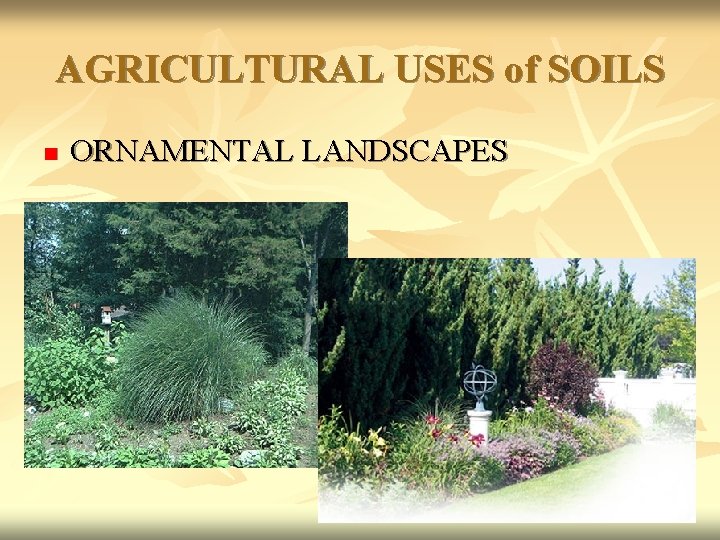
AGRICULTURAL USES of SOILS n ORNAMENTAL LANDSCAPES
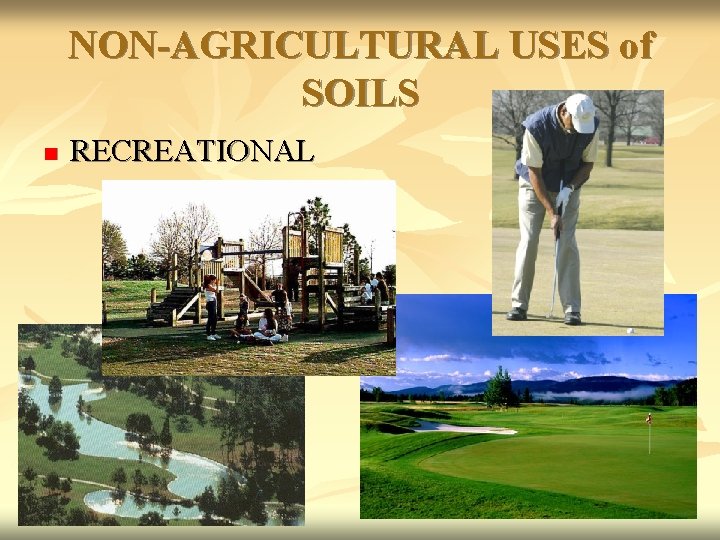
NON-AGRICULTURAL USES of SOILS n RECREATIONAL
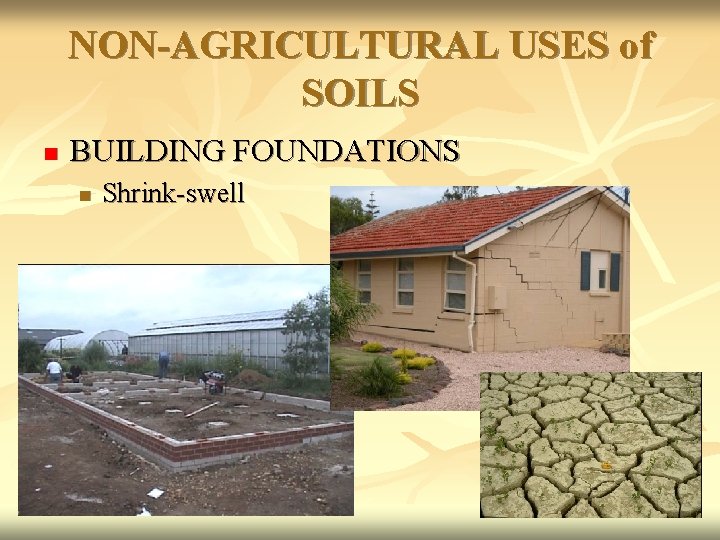
NON-AGRICULTURAL USES of SOILS n BUILDING FOUNDATIONS n Shrink-swell
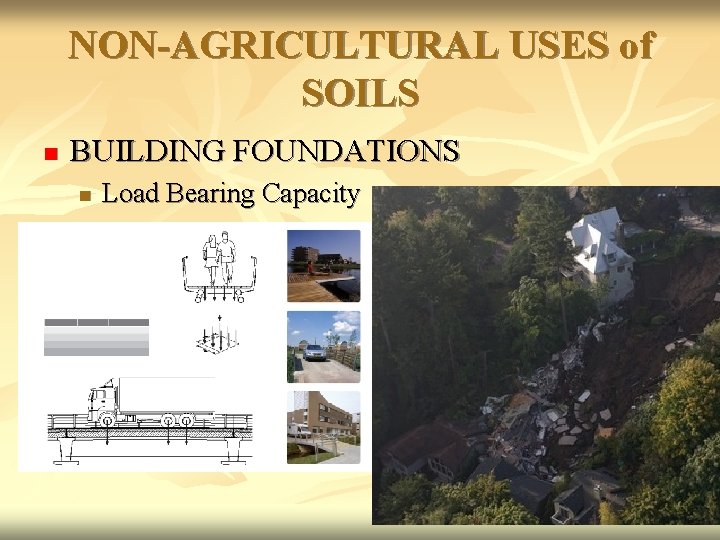
NON-AGRICULTURAL USES of SOILS n BUILDING FOUNDATIONS n Load Bearing Capacity
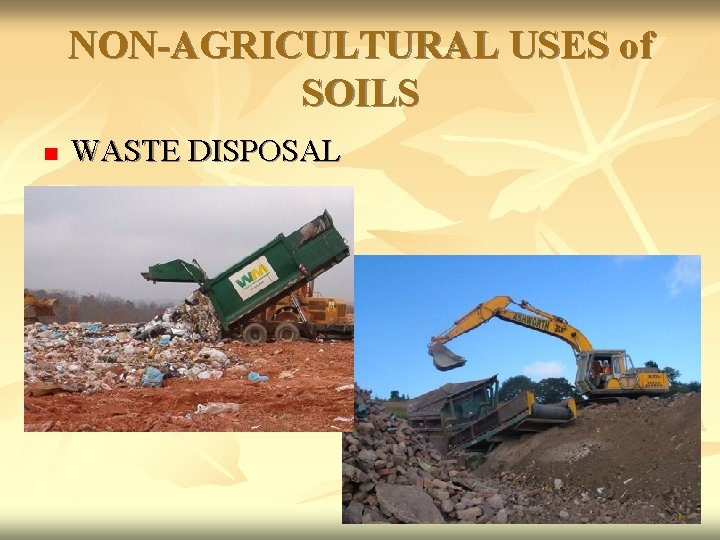
NON-AGRICULTURAL USES of SOILS n WASTE DISPOSAL
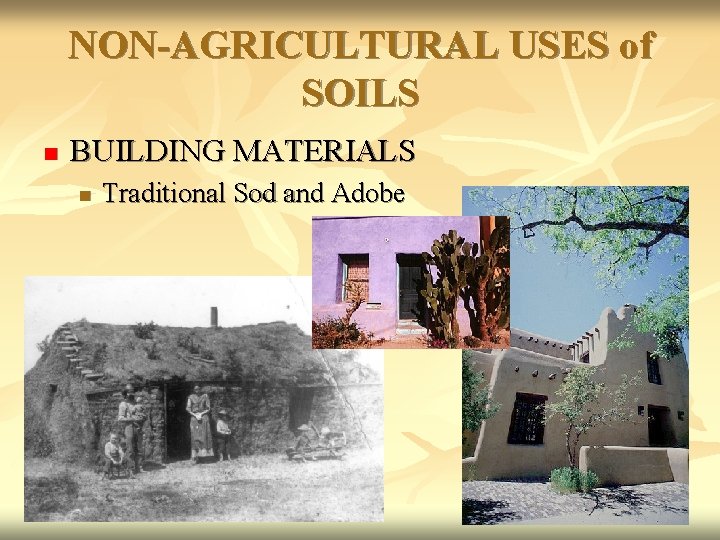
NON-AGRICULTURAL USES of SOILS n BUILDING MATERIALS n Traditional Sod and Adobe
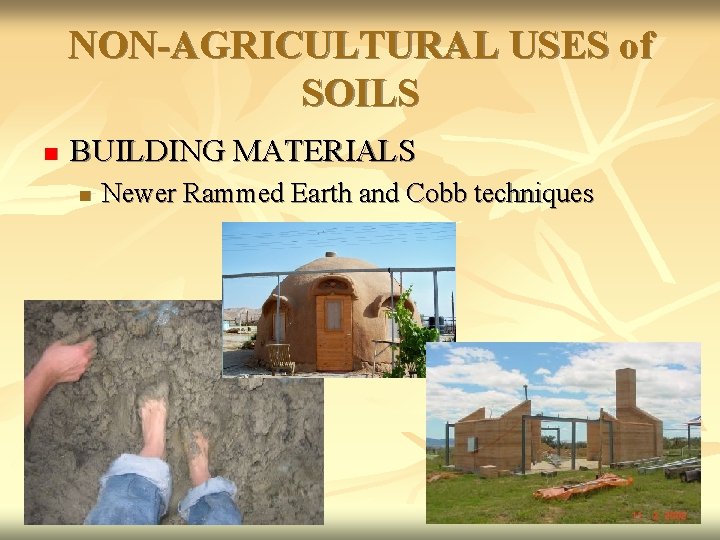
NON-AGRICULTURAL USES of SOILS n BUILDING MATERIALS n Newer Rammed Earth and Cobb techniques

NON-AGRICULTURAL USES of SOILS n LANDSCAPE BUILDING MATERIALS n Engineered Soils
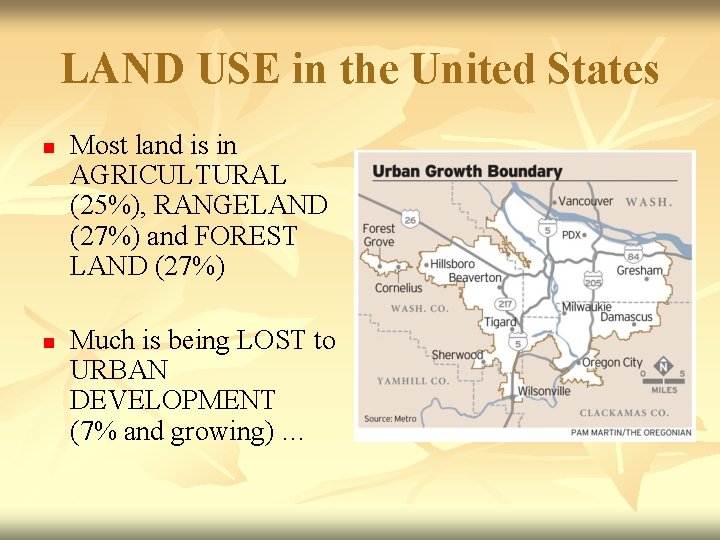
LAND USE in the United States n n Most land is in AGRICULTURAL (25%), RANGELAND (27%) and FOREST LAND (27%) Much is being LOST to URBAN DEVELOPMENT (7% and growing) …
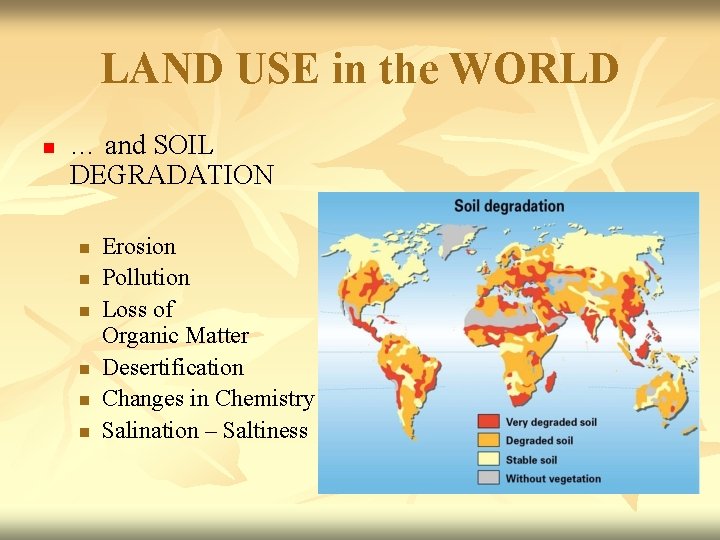
LAND USE in the WORLD n … and SOIL DEGRADATION n n n Erosion Pollution Loss of Organic Matter Desertification Changes in Chemistry Salination – Saltiness
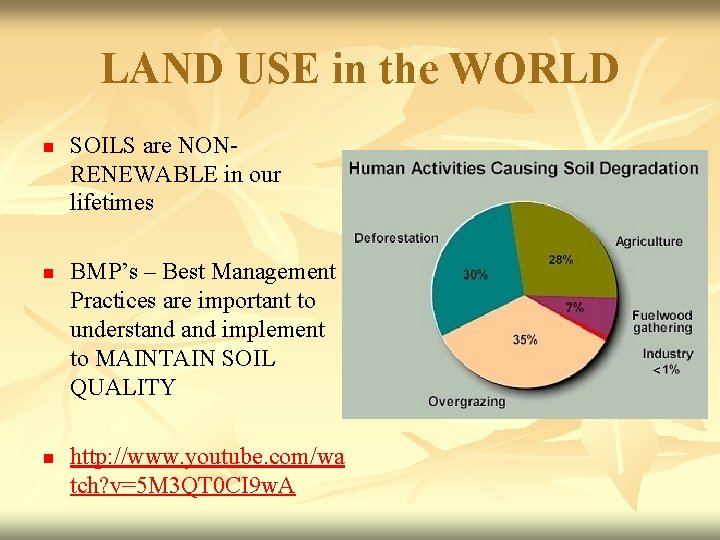
LAND USE in the WORLD n n n SOILS are NONRENEWABLE in our lifetimes BMP’s – Best Management Practices are important to understand implement to MAINTAIN SOIL QUALITY http: //www. youtube. com/wa tch? v=5 M 3 QT 0 CI 9 w. A
What Can You Do? n VALUE: Reduce Material Consumption n n I value longevity, quality over quantity, sharing and spacious simplicity VALUE: Conserve Energy and Natural Resources n I value the limited gifts and life forms of the natural world and will not waste them thoughtlessly n n From BE the CHANGE - ACTION GUIDE ACTIONS and IMPACT n What actions do I do, daily or regularly, to lessen my impact on the earth? (Big or small, it doesn’t matter…. baby steps count!)
- Slides: 31