
The Berlin Conference Carving Up Africa Napoleons Conquests
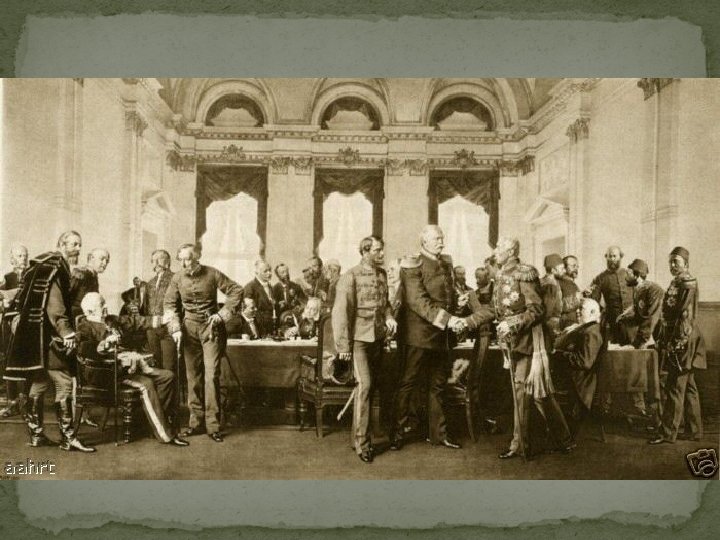
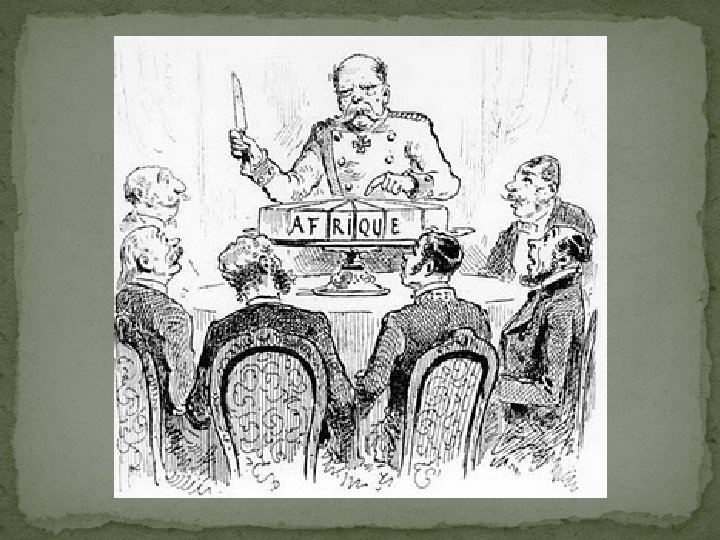
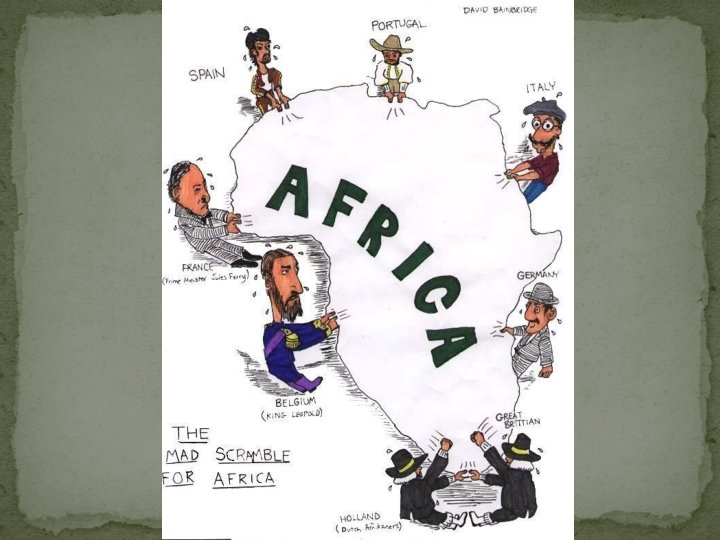
The Berlin Conference Carving Up Africa
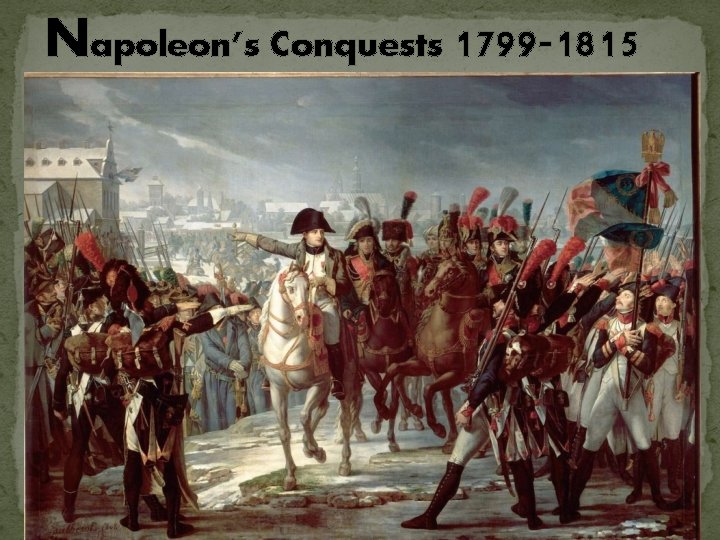
Napoleon’s Conquests 1799 -1815
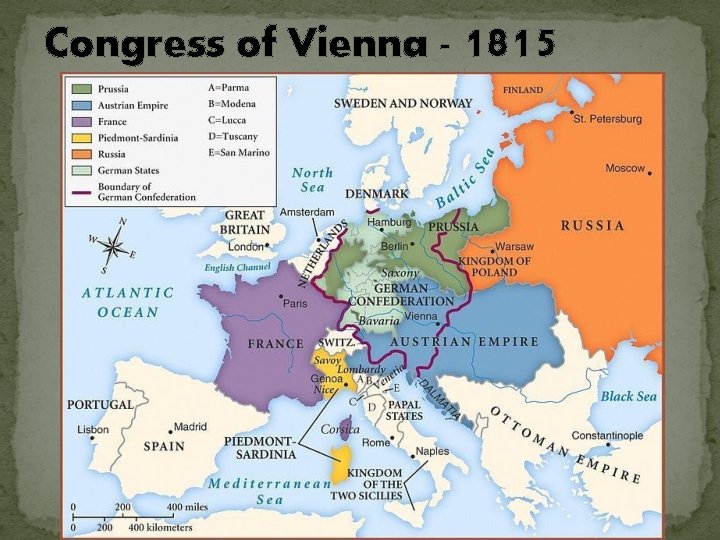
Congress of Vienna - 1815
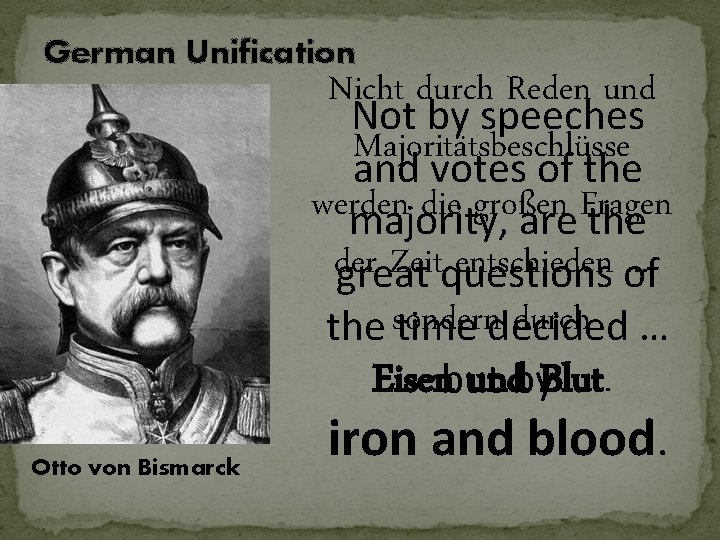
German Unification Nicht durch Reden und Not by speeches Majoritätsbeschlüsse and votes of the werden die großen Fragen majority, are the der Zeit entschieden. . . great questions of durch … the sondern time decided Eisenbut undby. Blut. Otto von Bismarck iron and blood.
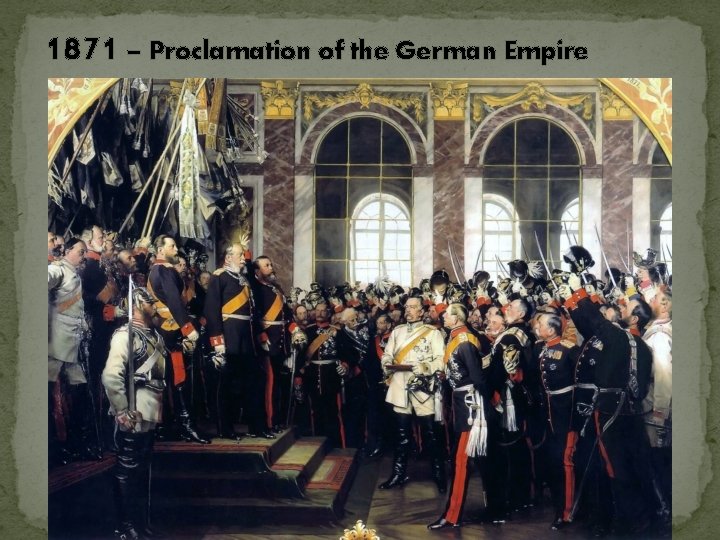
1871 – Proclamation of the German Empire
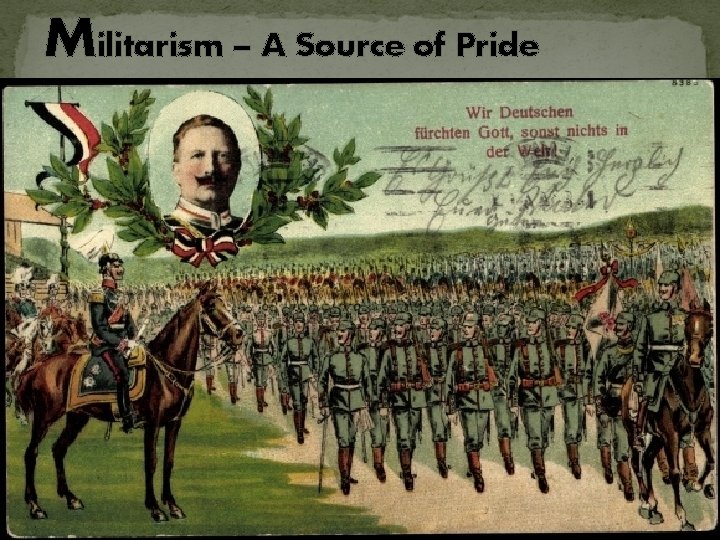
Militarism – A Source of Pride
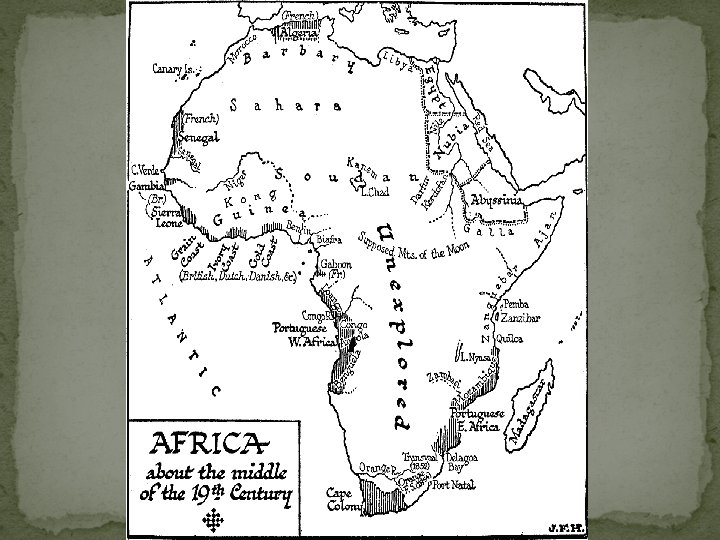
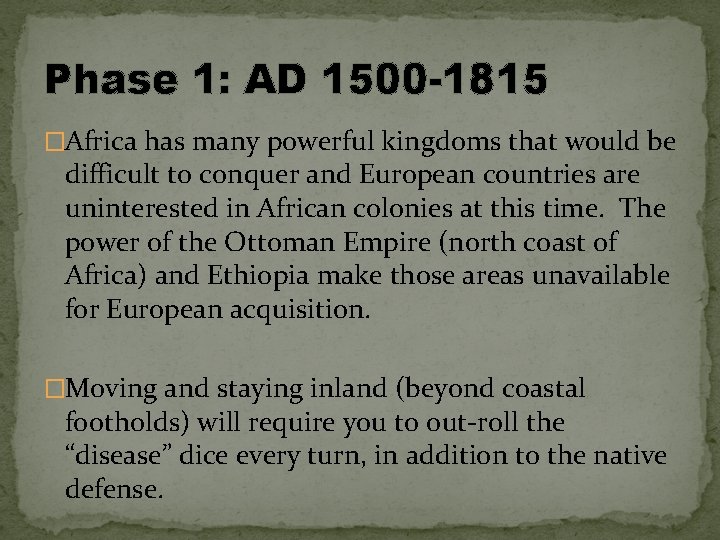
Phase 1: AD 1500 -1815 �Africa has many powerful kingdoms that would be difficult to conquer and European countries are uninterested in African colonies at this time. The power of the Ottoman Empire (north coast of Africa) and Ethiopia make those areas unavailable for European acquisition. �Moving and staying inland (beyond coastal footholds) will require you to out-roll the “disease” dice every turn, in addition to the native defense.
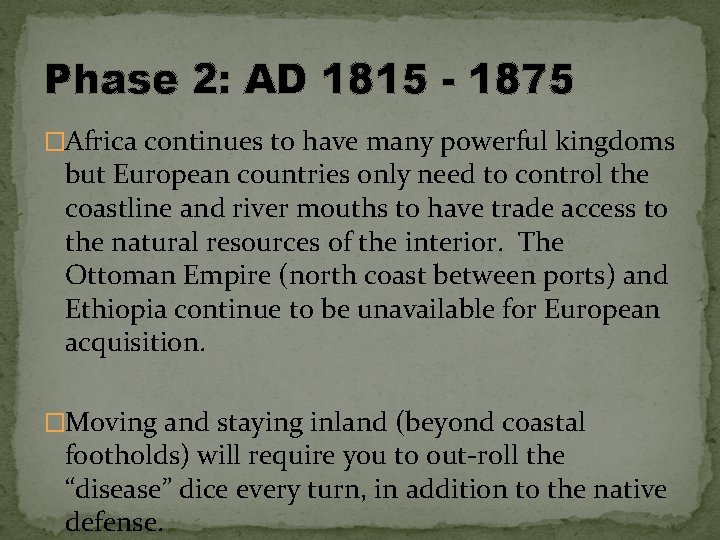
Phase 2: AD 1815 - 1875 �Africa continues to have many powerful kingdoms but European countries only need to control the coastline and river mouths to have trade access to the natural resources of the interior. The Ottoman Empire (north coast between ports) and Ethiopia continue to be unavailable for European acquisition. �Moving and staying inland (beyond coastal footholds) will require you to out-roll the “disease” dice every turn, in addition to the native defense.
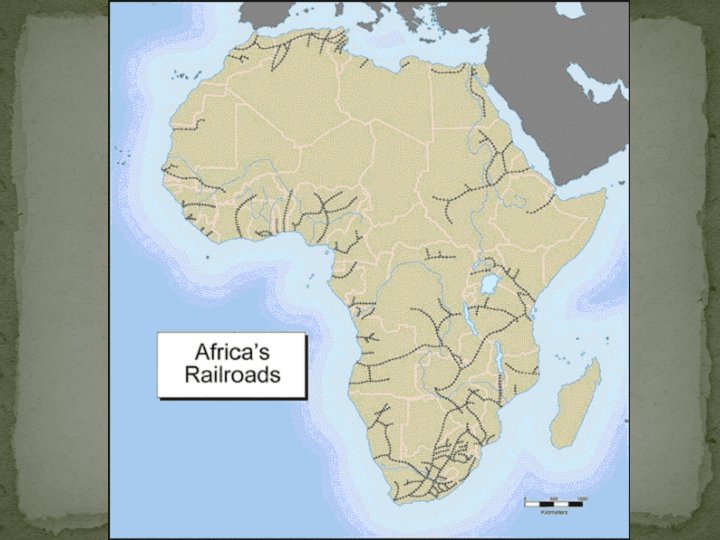
Phase 3: AD 1875 - 1900 �Technological advancement facilitated overseas expansionism. Industrialization brought about rapid advancements in transportation and communication, especially in the forms of steam navigation, railways, and telegraphs. Medical advances also were important, especially medicines for tropical diseases. The development of quinine, an effective treatment for malaria, enabled vast expanses of the tropics to be accessed by Europeans. �No restrictions on available territory. Colonial claims must have a port or coast to start from or be extensions of territories already controlled.
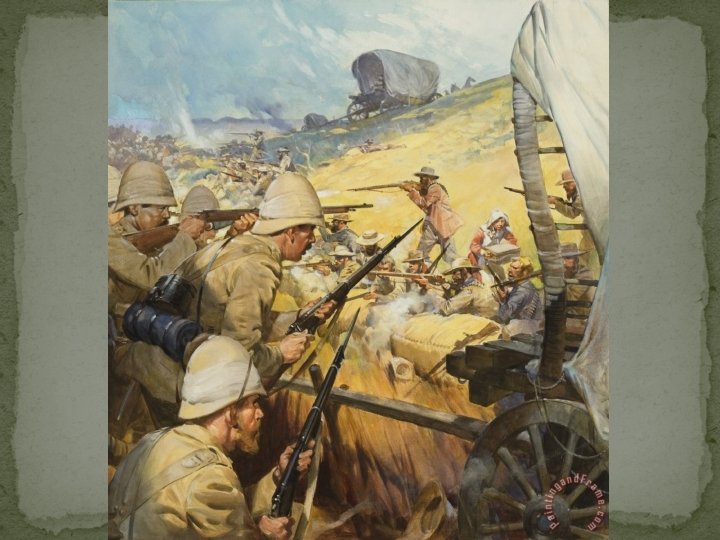
Phase 3: AD 1875 - 1900 �Belgium enters the game late, and picks up leftover territory in the middle of the continent. �Italy’s attempts at colonization of Ethiopia fail, due to strong native resistance. �Britain wins the conflict with the Boer republics, but at an extremely high cost, having pulled in resources from many other colonies and resorting to brutal tactics.
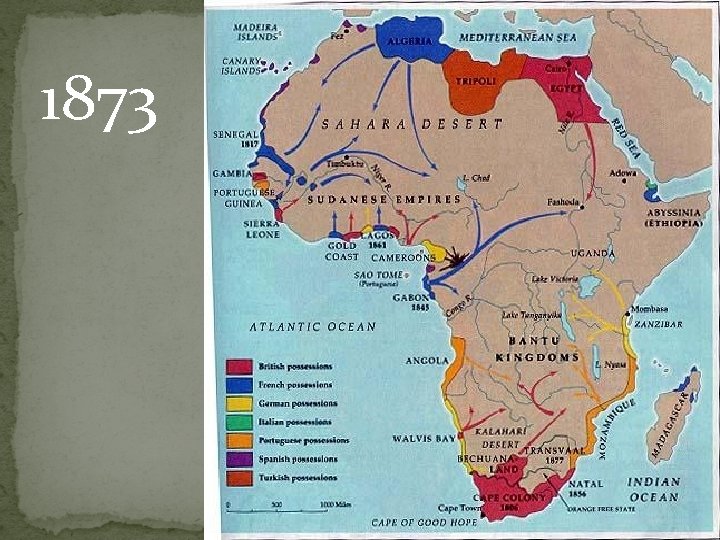
1873
CONCLUSIONS �What factor(s) did you consider in acquiring territories? �What factor(s) were totally ignored in your decisions? �Your decisions created colonial boundaries that will eventually become the borders of African countries. What problems have you created in these African countries by dividing up Africa based on European needs and concerns rather than African ones?
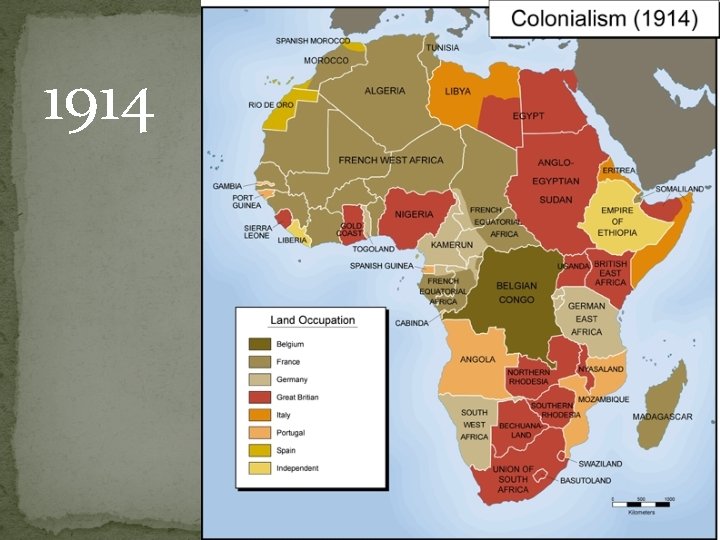
1914
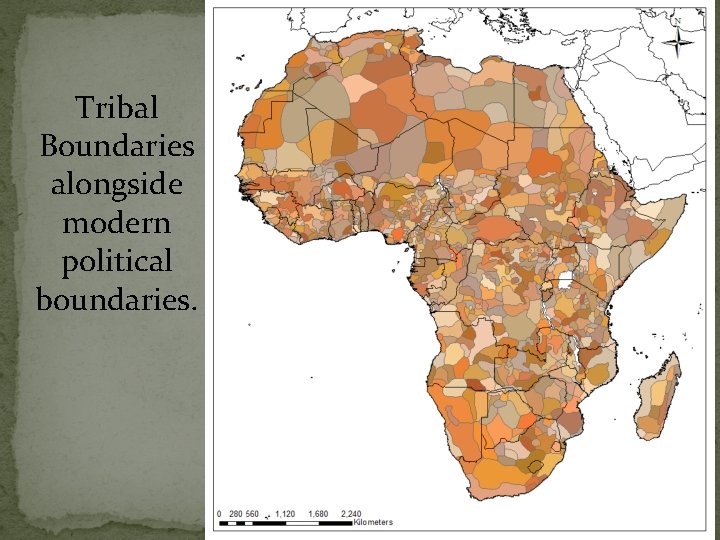
Tribal Boundaries alongside modern political boundaries.
- Slides: 21