
The Benefits of Active Learning Active learning shifts
The Benefits of Active Learning Active learning shifts library instruction from lecturing to guiding/coaching students: ü Engage students in the learning process ü Elicit student discovery ü Capture their attention ü Address multiple learning styles ü Create an experience they can relate to and replicate ü Receive immediate feedback as an instructor Claire Clemens (clemensc@tcnj. edu) & Jacqui Da. Costa (dacosta@tcnj. edu)
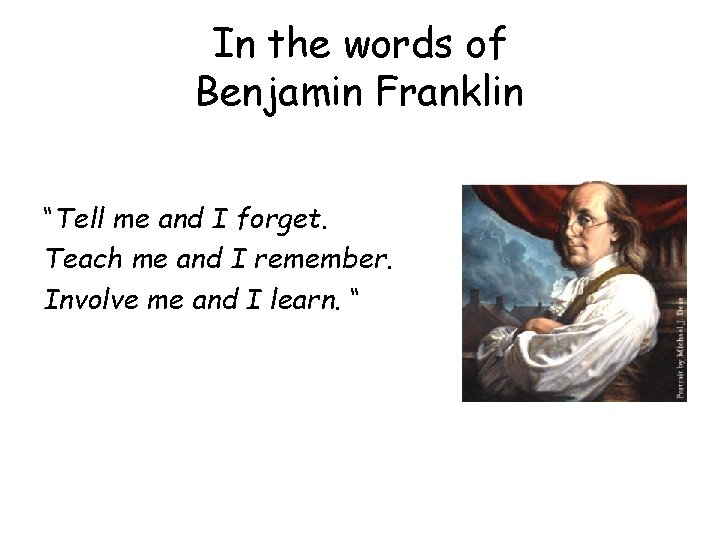
In the words of Benjamin Franklin “Tell me and I forget. Teach me and I remember. Involve me and I learn. “
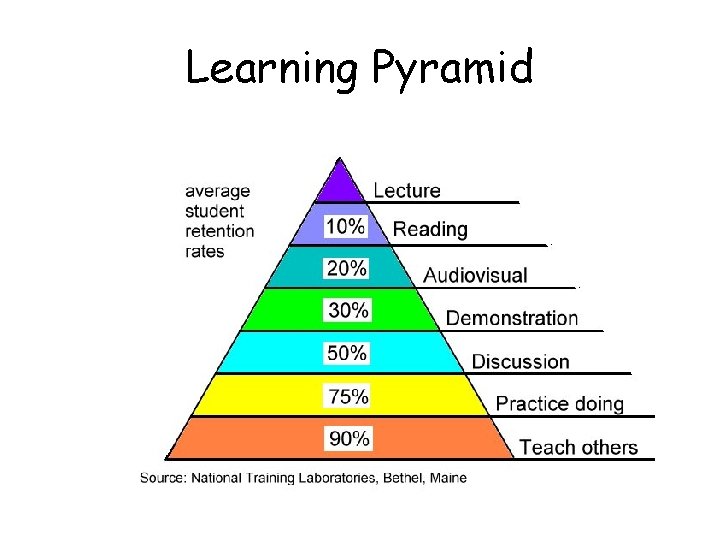
Learning Pyramid
Active learning - requires more preparation • • • Collaboration with faculty Planning activities If using Powerpoint, make it look good! Handouts/Lib. Guides Confidence level of instructor
Active learning - is more fun! Collaborative learning Social interaction Hands-on Trial and error Engagement through challenge and involvement • Encourages questioning • • •
References Bicknell-Holmes, T. & Hoffman, P. S. (2000) Elicit, engage, experience, explore: discovery learning in library instruction. Reference Services Review, 28 (4), pp 313 -322. Borg, M. & Stretton, E. (2009) My students and other animals. Or a vulture, an orb weaver spider, a giant panda and 900 undergraduate business students… Journal of Information Literacy, 3(1), pp. 19 -30. Available at: http: //ojs. lboro. ac. uk/ojs/index. php/JIL/article/view/PRA-V 3 -I 12009 -2 Sittler, R. & Cook, D. , eds. (2009) The library instruction cookbook. Chicago: Association of College and Research Libraries. Cooperstein, S. E. & Kocevar-Weidinger, E. (2004) Beyond active learning: a constructivist approach to learning. Reference Services Review, 32 (2), pp 141 -148. Heinich, R. , Molenda, M. & Russell, J. (1989) Instructional media and the new technologies of instruction. New York: Macmillan. Keyser, M. W. (2000) Active learning and cooperative learning: understanding the difference and using both styles effectively. Research Strategies, 17, pp 35 -44.
- Slides: 6