
The Benefits of a FacetoFace Support Mathematics Class
The Benefits of a Face-to-Face Support Mathematics Class for Project IDEAL PCC Advanced-level Adult ESL Students Enrolled in Skills. Tutor Online Kimberlee Raper East Carolina University TALGS Conference 16 February 2013
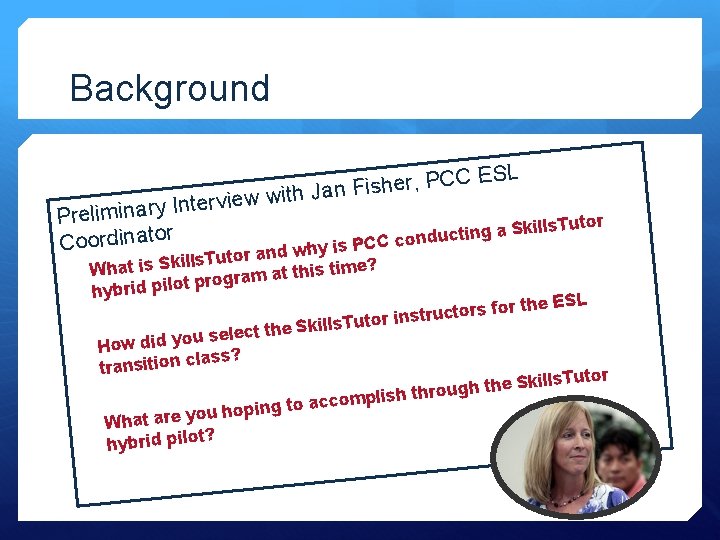
Background C ESL C P , r e h is F w with Jan vie r e t n I y r a in Prelim Coordinator Tutor ls il k S a g in C conduct hy is PC w d n a r o t u ls. T time? What is Skil is h t t a m a r prog hybrid pilot the ESL r o f s r o t c u tor instr u T ls il k S e h u select t o y id d w o H lass? transition c kills. Tutor S e h t h g u plish thro m o c c a o t u hoping o y e r a t a h W ? hybrid pilot
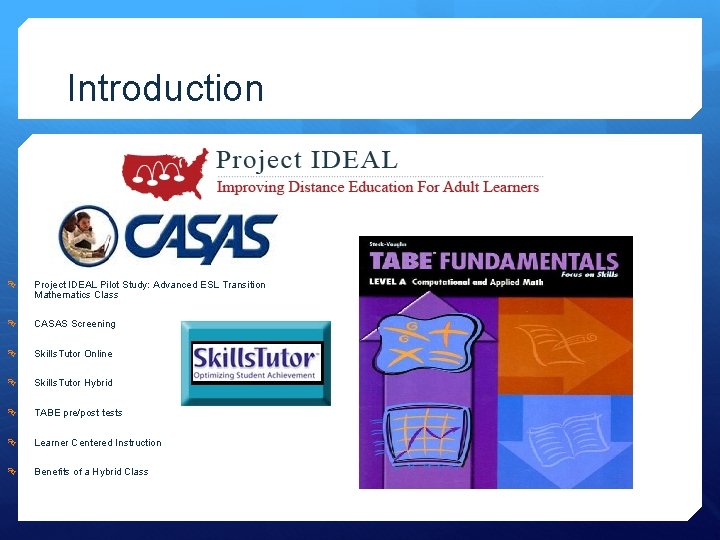
Introduction Project IDEAL Pilot Study: Advanced ESL Transition Mathematics Class CASAS Screening Skills. Tutor Online Skills. Tutor Hybrid TABE pre/post tests Learner Centered Instruction Benefits of a Hybrid Class
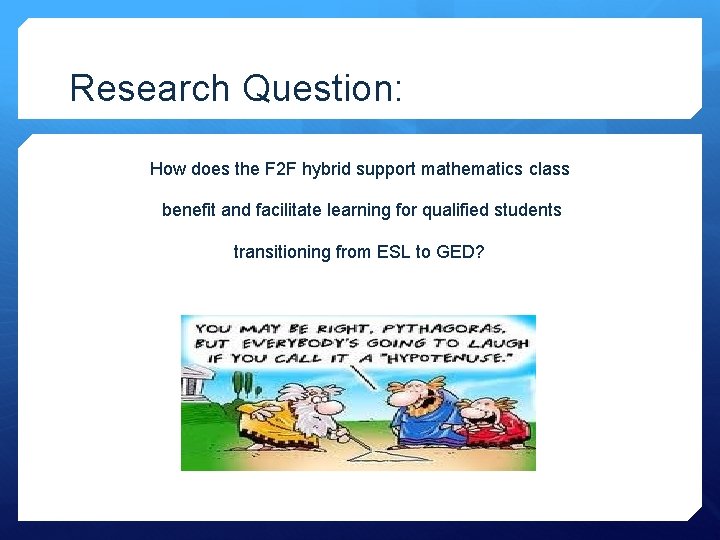
Research Question: How does the F 2 F hybrid support mathematics class benefit and facilitate learning for qualified students transitioning from ESL to GED?
Research Objectives TO DETERMINE: Why students enrolled in the hybrid class Student weaknesses in mathematics How the hybrid class helped students learn/relearn concepts. Whether or not students’ English language proficiency impacted mathematics performance The most helpful aspects of the hybrid class

Sample TABE Scores: Class Average Mastery of Computation Concepts: Pre-test: 44. 8 Mid-semester: 67. 2 50% Increase in Class Average
Literature Review Case Study: Using Skills. Tutor math for Adult Basic Education programs (Strumminger, 2011) Case Study: Successful math programming for migrant students (Reyes & Fletcher, 2003) Investigative: The relationship between English language and mathematics learning (Barton, 2003) Assessment: Linguistic complexity and graphic representations for English language learners in math tests (Martiniello, 2009) Technical Report: Language proficiency and mathematics performance (Abedi, et al. , 2006)
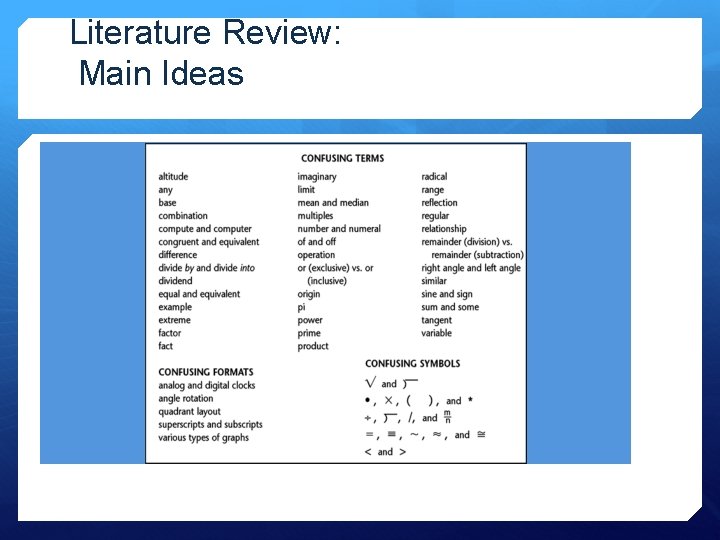
Literature Review: Main Ideas
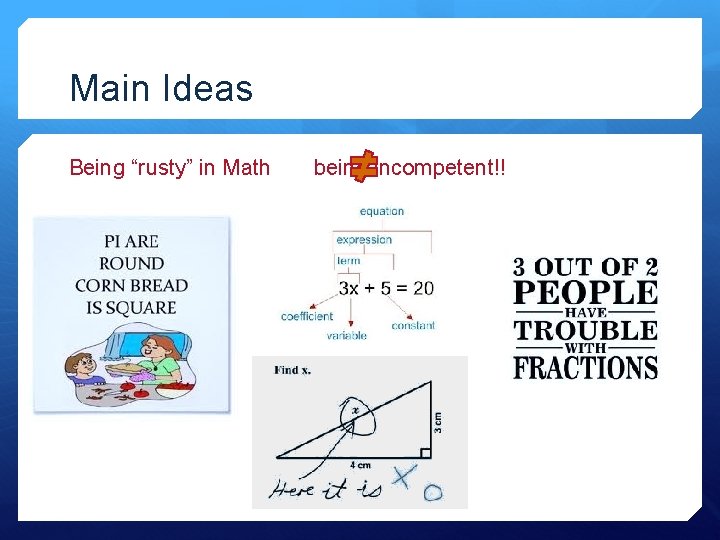
Main Ideas Being “rusty” in Math being incompetent!!
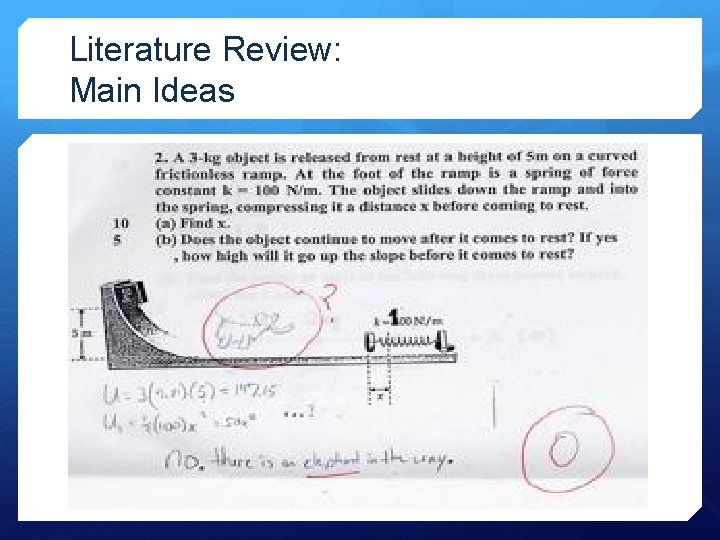
Literature Review: Main Ideas Word problems with graphs or illustrations Better understood by ELLs even if the text is more linguistically complex Learning/Relearning math concepts Prior math education, at any level in the L 1, significantly impacts mathematical performance in the L 2 Learning/relearning math: Being “rusty” does not mean being “incompetent”
Main Ideas and Research Findings Organizational Culture A major factor in ESL student success in mathematics: Respect Constant reinforcement of concepts Peer tutoring and collaboration Belief that ALL students can learn Teachers genuinely concerned about students Student-centered instruction
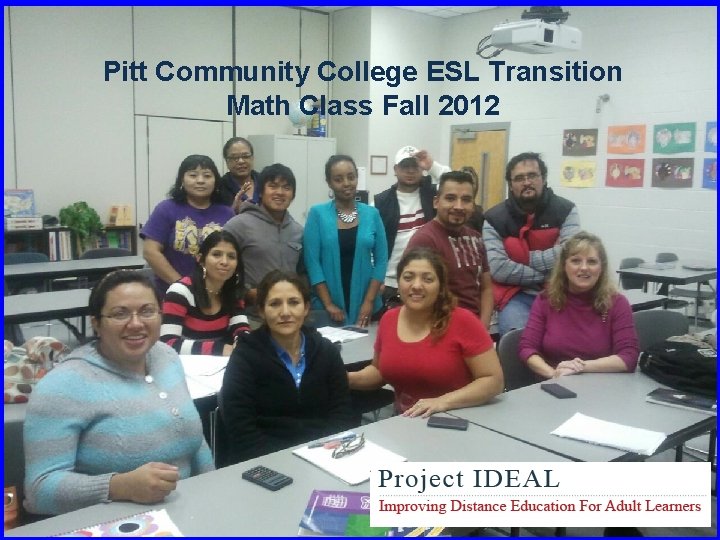
Pitt Community College ESL Transition Math Class Fall 2012
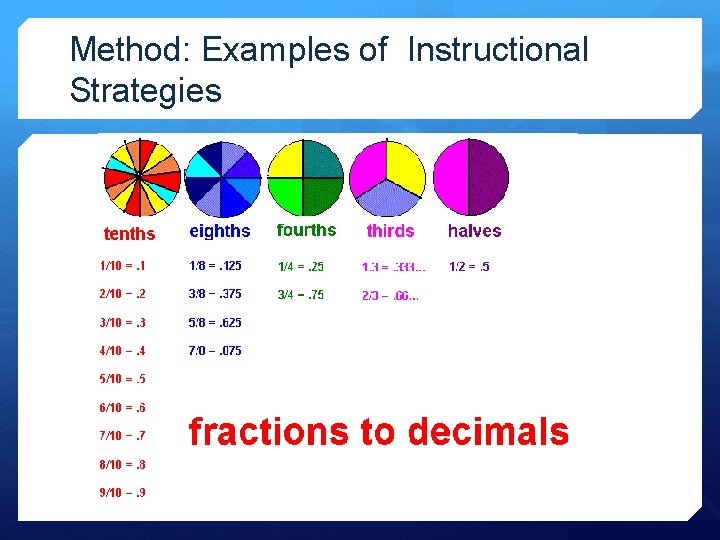
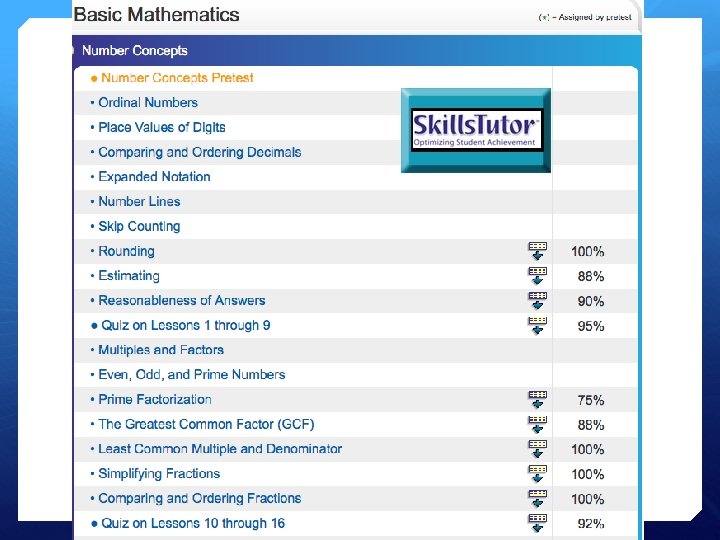
Method: Examples of Instructional Strategies
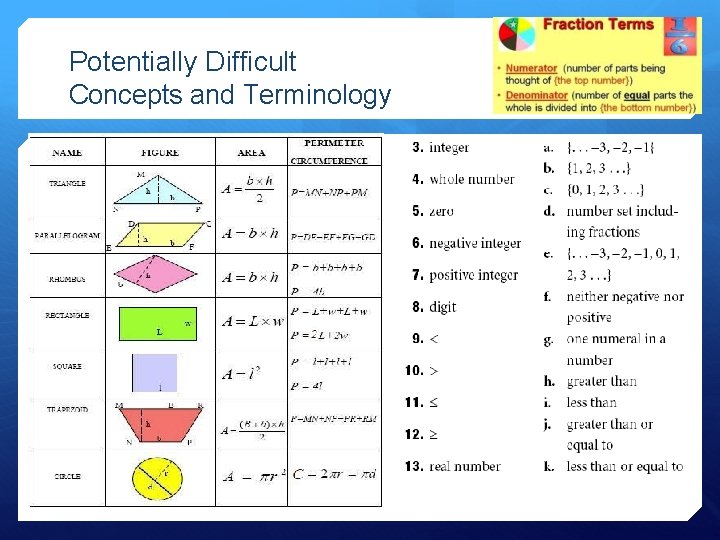
Potentially Difficult Concepts and Terminology
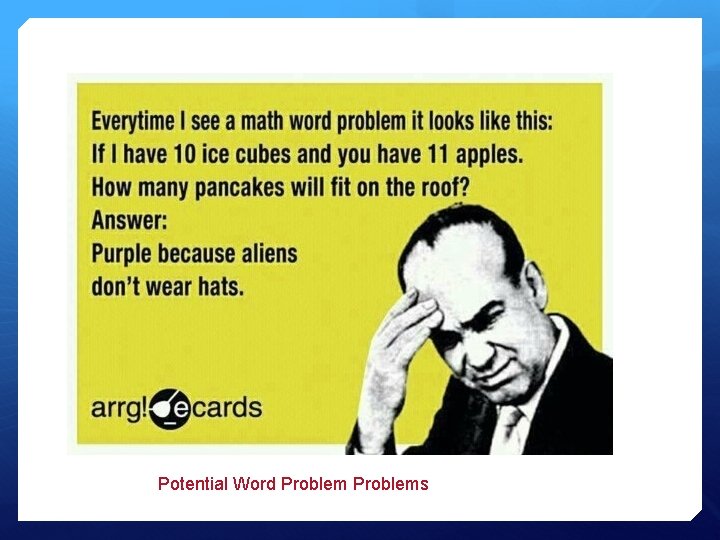
Potential Word Problems
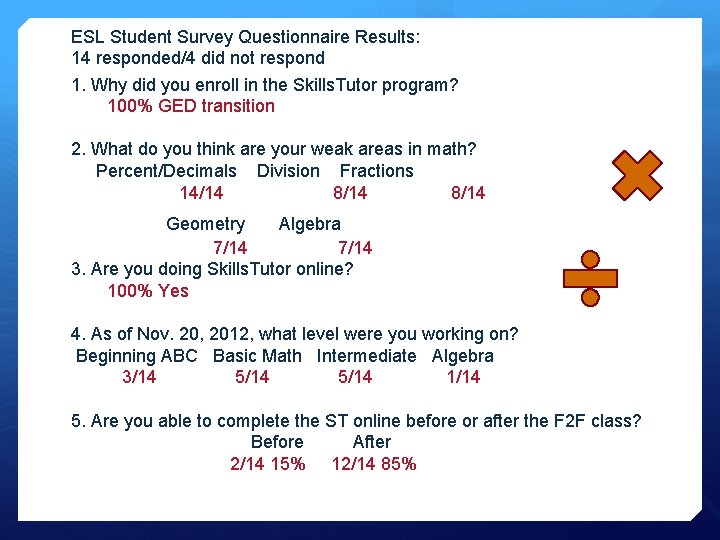
ESL Student Survey Questionnaire Results: 14 responded/4 did not respond 1. Why did you enroll in the Skills. Tutor program? 100% GED transition 2. What do you think are your weak areas in math? Percent/Decimals Division Fractions 14/14 8/14 Geometry Algebra 7/14 3. Are you doing Skills. Tutor online? 100% Yes 4. As of Nov. 20, 2012, what level were you working on? Beginning ABC Basic Math Intermediate Algebra 3/14 5/14 1/14 5. Are you able to complete the ST online before or after the F 2 F class? Before After 2/14 15% 12/14 85%
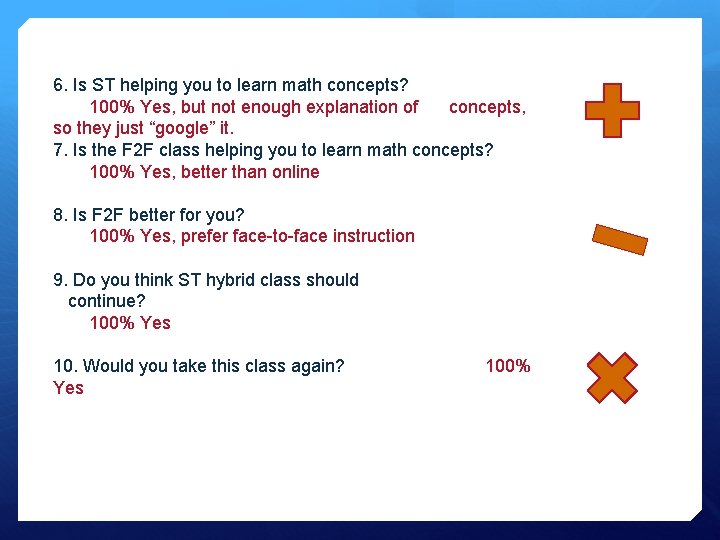
6. Is ST helping you to learn math concepts? 100% Yes, but not enough explanation of concepts, so they just “google” it. 7. Is the F 2 F class helping you to learn math concepts? 100% Yes, better than online 8. Is F 2 F better for you? 100% Yes, prefer face-to-face instruction 9. Do you think ST hybrid class should continue? 100% Yes 10. Would you take this class again? Yes 100%
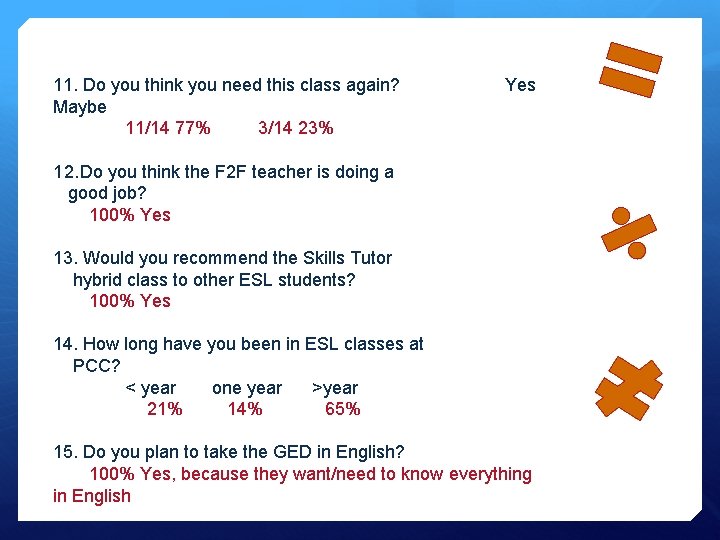
11. Do you think you need this class again? Maybe 11/14 77% 3/14 23% Yes 12. Do you think the F 2 F teacher is doing a good job? 100% Yes 13. Would you recommend the Skills Tutor hybrid class to other ESL students? 100% Yes 14. How long have you been in ESL classes at PCC? < year one year >year 21% 14% 65% 15. Do you plan to take the GED in English? 100% Yes, because they want/need to know everything in English
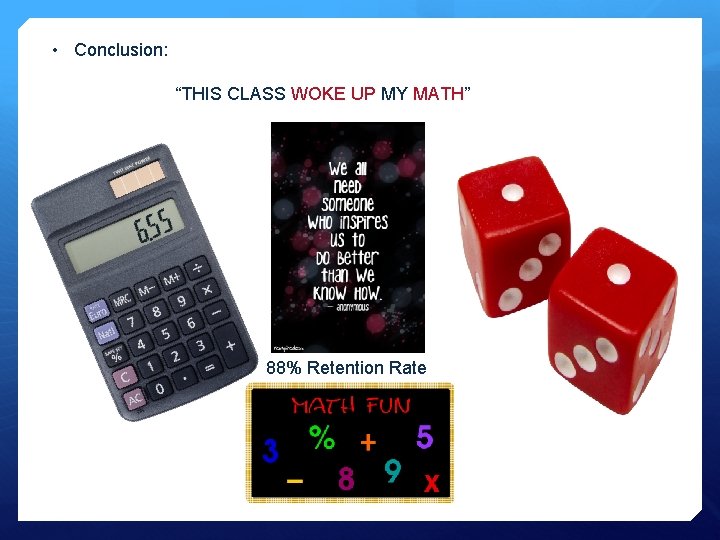
• Conclusion: “THIS CLASS WOKE UP MY MATH” 88% Retention Rate
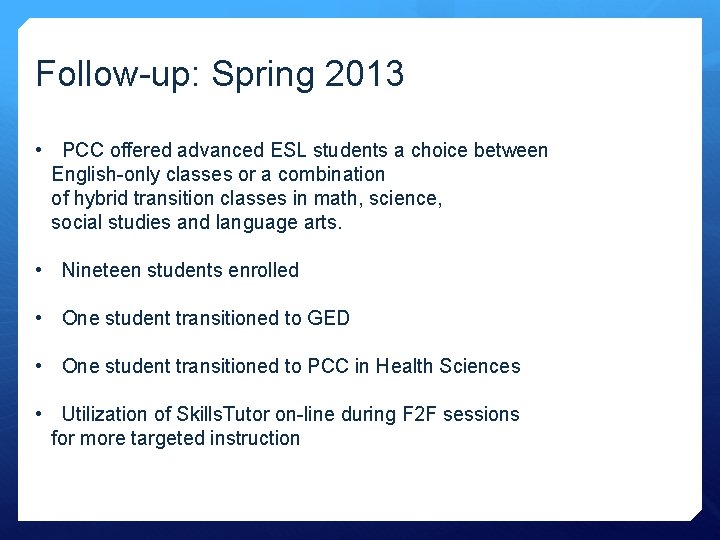
Follow-up: Spring 2013 • PCC offered advanced ESL students a choice between English-only classes or a combination of hybrid transition classes in math, science, social studies and language arts. • Nineteen students enrolled • One student transitioned to GED • One student transitioned to PCC in Health Sciences • Utilization of Skills. Tutor on-line during F 2 F sessions for more targeted instruction
References Abedi, J. , Courtney, M. , Leon, S. , Kao, J. , & Azzam, T. (2006). English language learners and math achievement: A study of opportunity to learn and language accommodation (Technical Report 702), 1 -94. Barton, B. , & Neville-Barton, P. (2003). Investigating the relationship between English language and mathematics learning. European Research in Mathematics III, 1 -10. Martiniello, M. (2009). Linguistic complexity, schematic representations, and differential item functioning for English language learners in math tests. Educational Assessment, 14, 160 -179. Reyes, P. , & Fletcher, C. (2003, June). Successful migrant students: The case of mathematics. Journal of Curriculum and Supervision, 18(4), 306 -333. Schmitt, N. (2010). An Introduction to Applied Linguistics (2 nd ed. , pp. 252 -253). London, England: Hodder & Stroughton, Ltd. Strumminger, R. (2011, August 3). Skills Tutor Case Study: Using Skills Tutor for Adult Basic Education in Minnesota. Skills. Tutor. Boston: Houghton Mifflin Harcourt. www. skillstutor. com
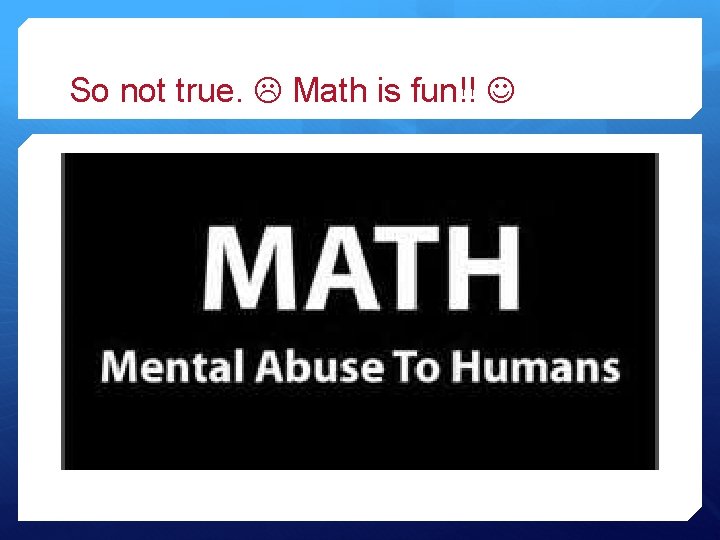
So not true. Math is fun!!
- Slides: 23