
THE BEGINNINGS OF SLOVAK HISTORY Stone Age The
THE BEGINNINGS OF SLOVAK HISTORY
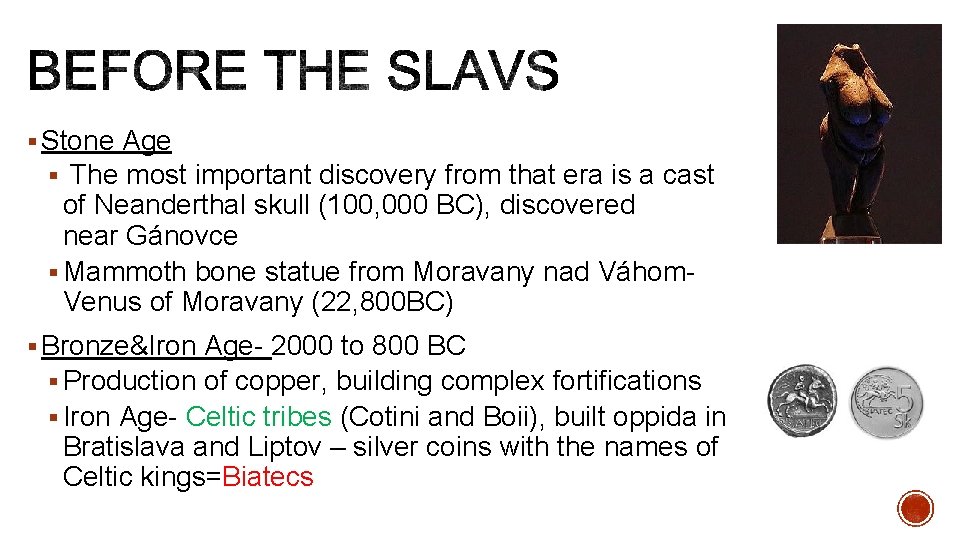
§ Stone Age § The most important discovery from that era is a cast of Neanderthal skull (100, 000 BC), discovered near Gánovce § Mammoth bone statue from Moravany nad Váhom. Venus of Moravany (22, 800 BC) § Bronze&Iron Age- 2000 to 800 BC § Production of copper, building complex fortifications § Iron Age- Celtic tribes (Cotini and Boii), built oppida in Bratislava and Liptov – silver coins with the names of Celtic kings=Biatecs

§ Roman Era § The Roman epoch began with the arrival of Roman legions on this territory that led to a war against the Marcomanni and Quadi tribes(Germanic tribes) § Roman military camps- Gerulata(Rusovce) § 2 nd century- Marcus Aurelius § On the banks of the Hron he wrote his philosophical work Meditations § In 179 AD, a Roman legion engraved on the rock of the Trenčín Castle the ancient name of Trenčín (Laugaritio), marking the furthest northern point of their presence in the Central Europe § The Kingdom of Vannius § a barbarian kingdom founded by the Quadi, existed in western and central Slovakia from 20 to 50 AD § It was the first political unit in the area that is now Slovakia § Later other Germanic tribes and Avars


§ The Slavic autonym is usually considered a derivation from slovo ("word"), originally denoting "people who speak (the same language), " i. e. people who understand each other, in contrast to the Slavic word denoting "foreign people" – němci, meaning "silent, mute people„ § The Slavs under name of the Antes and the Sclaveni make their first appearance in Byzantine records in the early 6 th century. § Present-day Slavic people are classified into West Slavs, East Slavs and South Slavs § Slovaks? § The name Slovak is derived from *Slověninъ, plural *Slověně, the old name of the Slavs § Nowdays there an estimated 360 million Slavs worldwide.
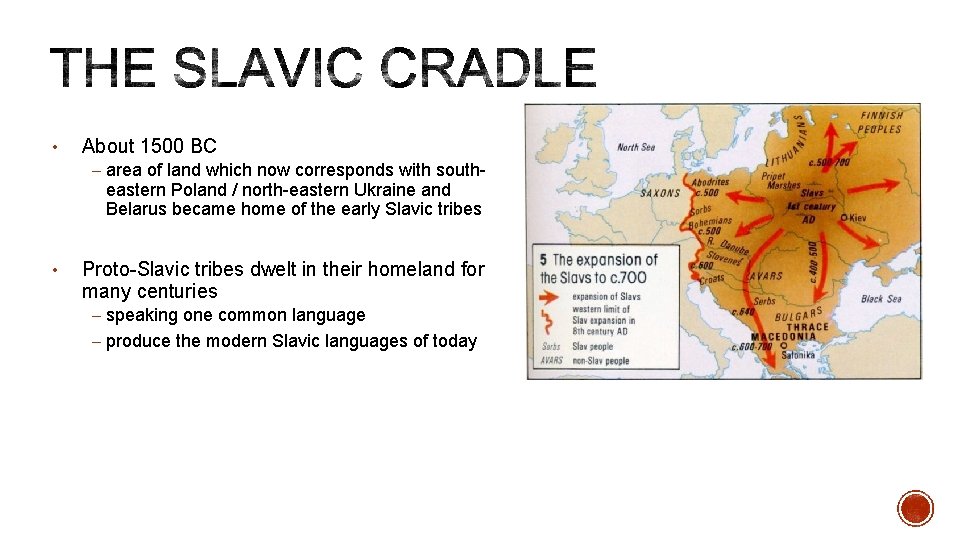
• About 1500 BC – area of land which now corresponds with south- eastern Poland / north-eastern Ukraine and Belarus became home of the early Slavic tribes • Proto-Slavic tribes dwelt in their homeland for many centuries – speaking one common language – produce the modern Slavic languages of today
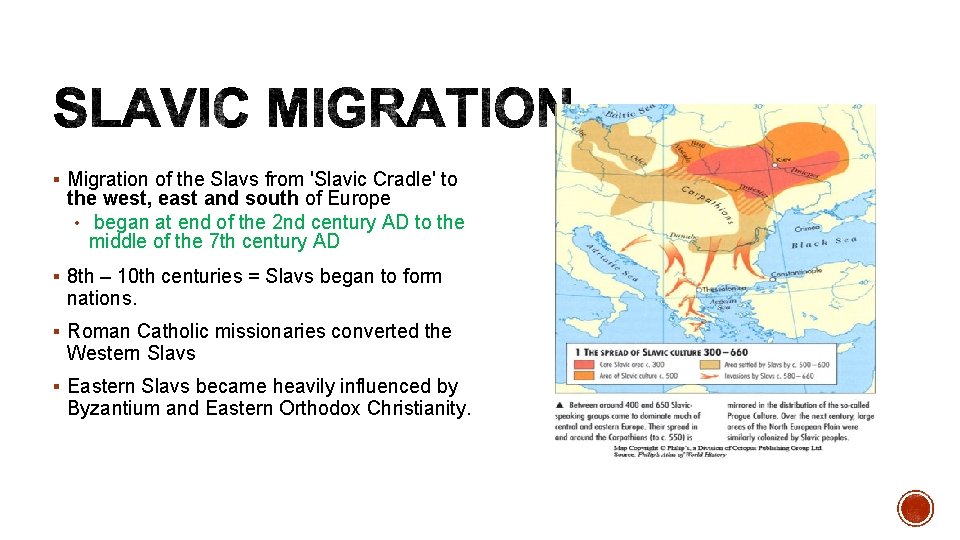
§ Migration of the Slavs from 'Slavic Cradle' to the west, east and south of Europe • began at end of the 2 nd century AD to the middle of the 7 th century AD § 8 th – 10 th centuries = Slavs began to form nations. § Roman Catholic missionaries converted the Western Slavs § Eastern Slavs became heavily influenced by Byzantium and Eastern Orthodox Christianity.
- Slides: 8