
The Beginnings of Civilization 3 700 000 to
The Beginnings of Civilization 3, 700, 000 to 587 B. C.
Exploration of Prehistory
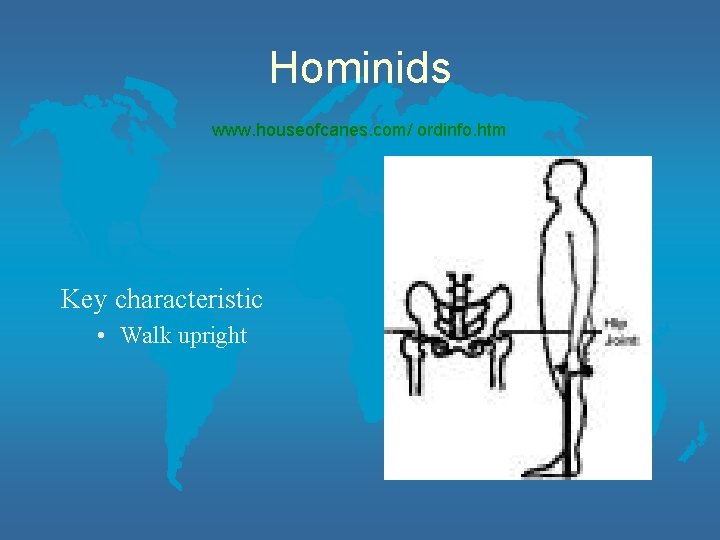
Hominids www. houseofcanes. com/ ordinfo. htm Key characteristic • Walk upright
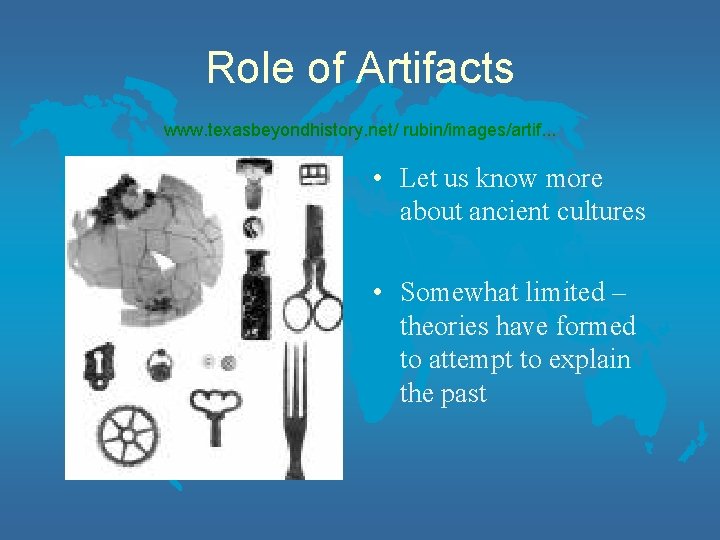
Role of Artifacts www. texasbeyondhistory. net/ rubin/images/artif. . . • Let us know more about ancient cultures • Somewhat limited – theories have formed to attempt to explain the past
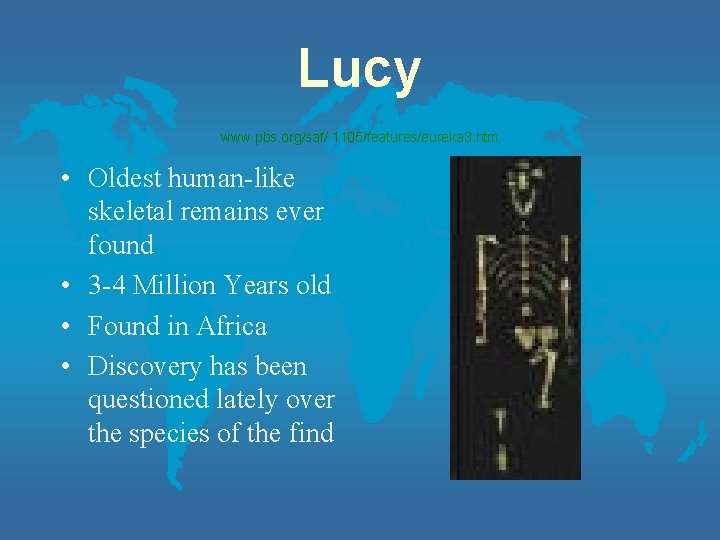
Lucy www. pbs. org/saf/ 1105/features/eureka 3. htm • Oldest human-like skeletal remains ever found • 3 -4 Million Years old • Found in Africa • Discovery has been questioned lately over the species of the find
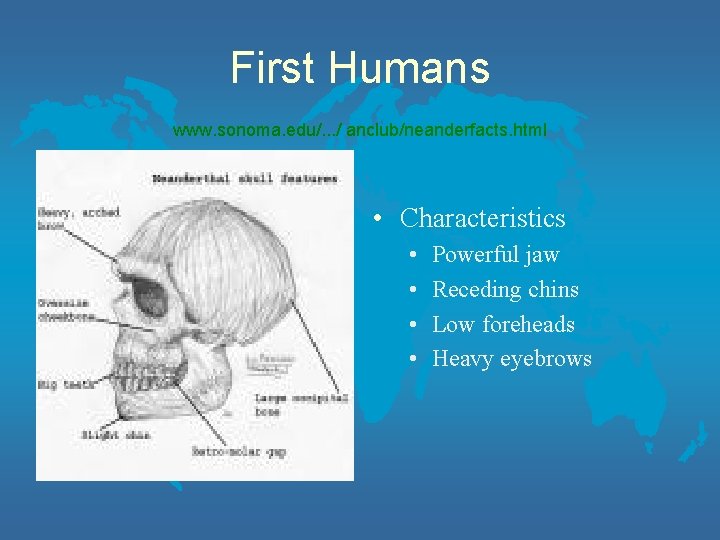
First Humans www. sonoma. edu/. . . / anclub/neanderfacts. html • Characteristics • • Powerful jaw Receding chins Low foreheads Heavy eyebrows
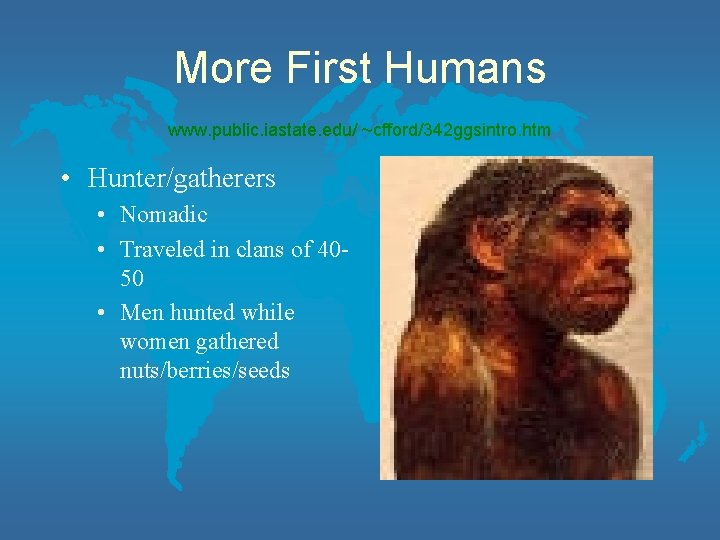
More First Humans www. public. iastate. edu/ ~cfford/342 ggsintro. htm • Hunter/gatherers • Nomadic • Traveled in clans of 4050 • Men hunted while women gathered nuts/berries/seeds
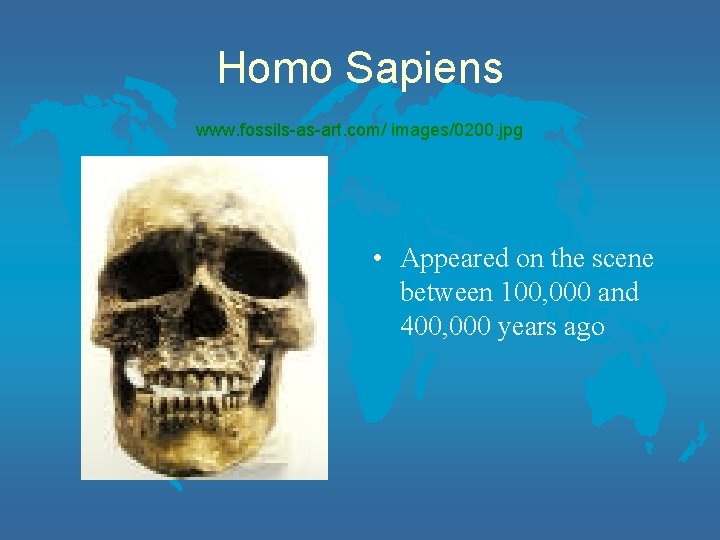
Homo Sapiens www. fossils-as-art. com/ images/0200. jpg • Appeared on the scene between 100, 000 and 400, 000 years ago
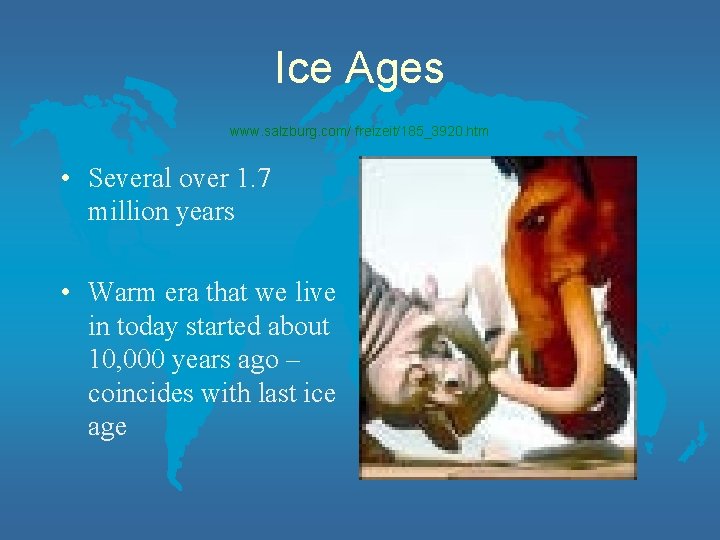
Ice Ages www. salzburg. com/ freizeit/185_3920. htm • Several over 1. 7 million years • Warm era that we live in today started about 10, 000 years ago – coincides with last ice age
First Homo Sapiens Neanderthals • Appeared 35, 000130, 000 years ago (Old Stone Age) • Wore animal skins • Used fire • Buried their dead Cro-Magnons • Appeared about 35, 000 years ago • Better tools • Cave Art • Textbook • History lessons • Religious
Three Stone Ages Old Middle New
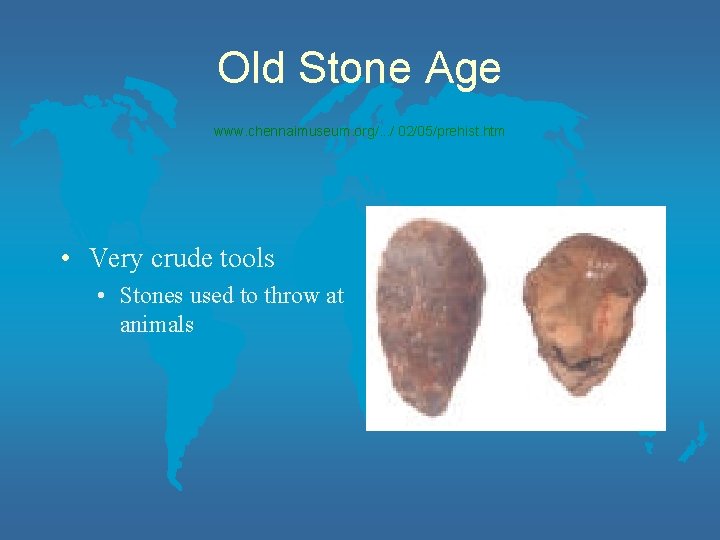
Old Stone Age www. chennaimuseum. org/. . . / 02/05/prehist. htm • Very crude tools • Stones used to throw at animals
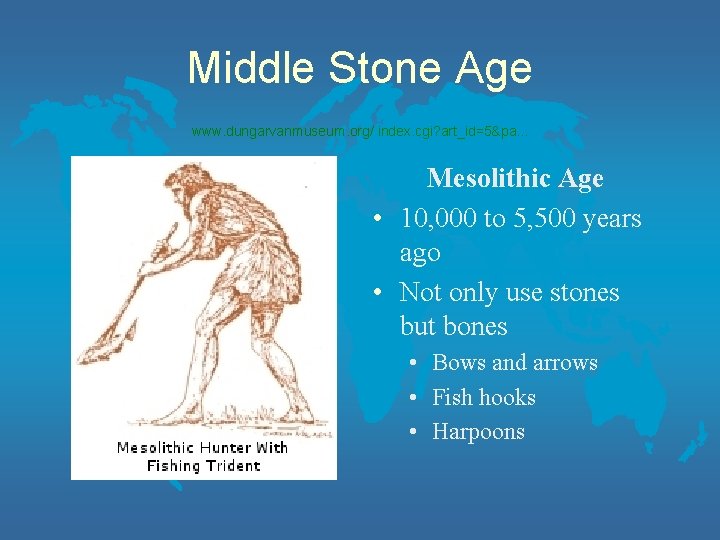
Middle Stone Age www. dungarvanmuseum. org/ index. cgi? art_id=5&pa. . . Mesolithic Age • 10, 000 to 5, 500 years ago • Not only use stones but bones • Bows and arrows • Fish hooks • Harpoons
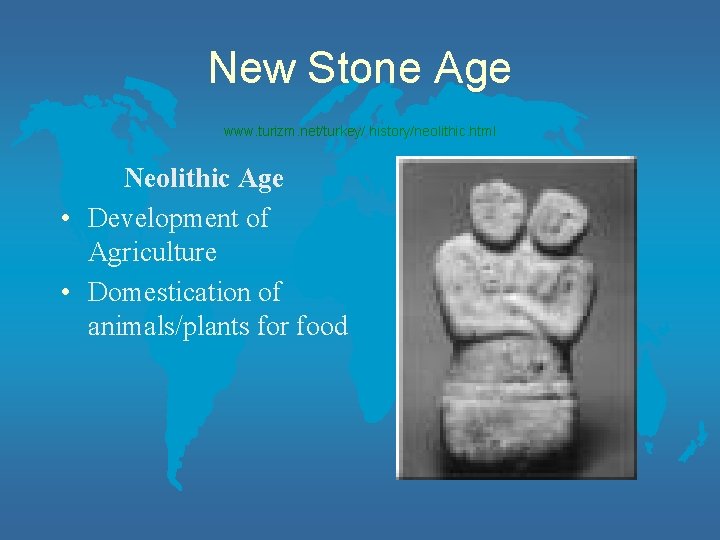
New Stone Age www. turizm. net/turkey/ history/neolithic. html Neolithic Age • Development of Agriculture • Domestication of animals/plants for food
Characteristics of the Evolution of Civilization
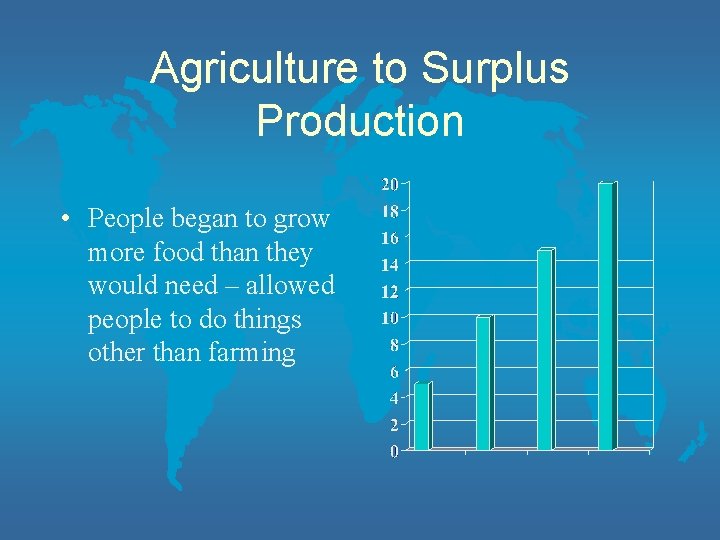
Agriculture to Surplus Production • People began to grow more food than they would need – allowed people to do things other than farming
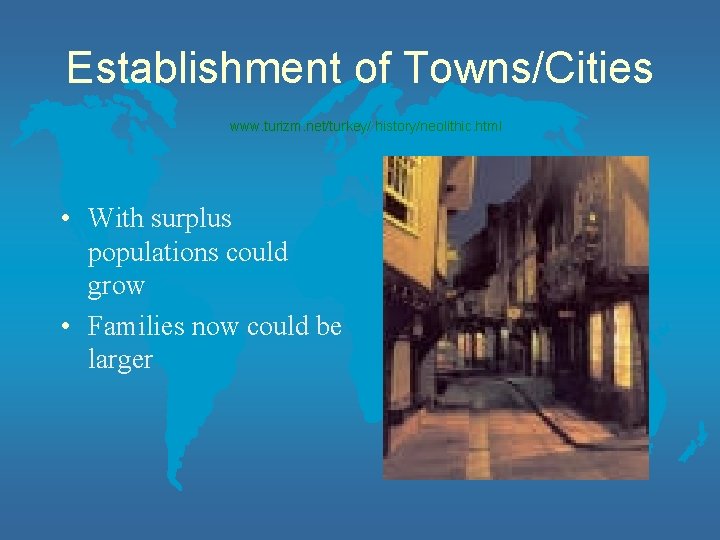
Establishment of Towns/Cities www. turizm. net/turkey/ history/neolithic. html • With surplus populations could grow • Families now could be larger
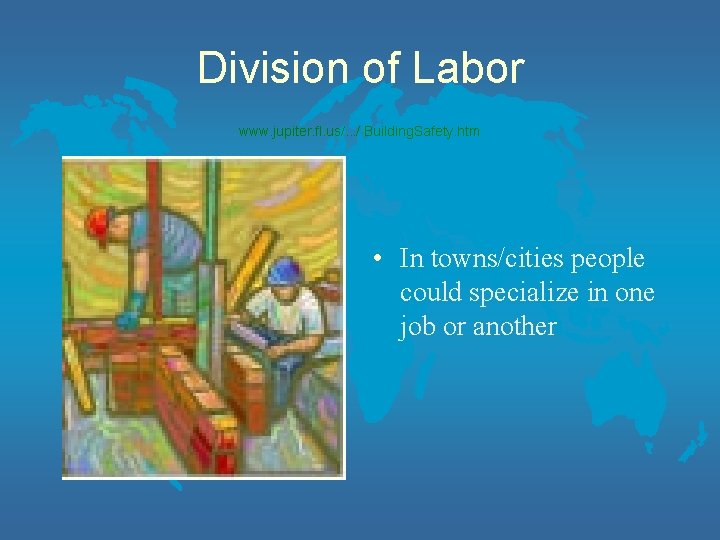
Division of Labor www. jupiter. fl. us/. . . / Building. Safety. htm • In towns/cities people could specialize in one job or another
Evolution of Civilization Lesser Characteristics
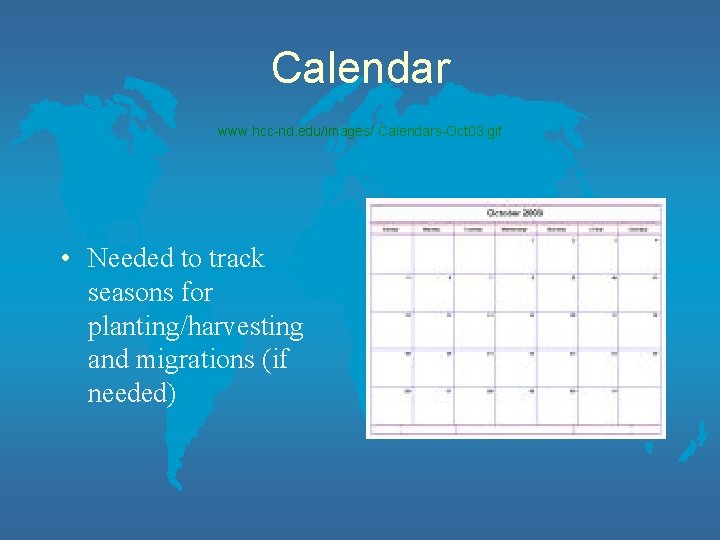
Calendar www. hcc-nd. edu/images/ Calendars-Oct 03. gif • Needed to track seasons for planting/harvesting and migrations (if needed)
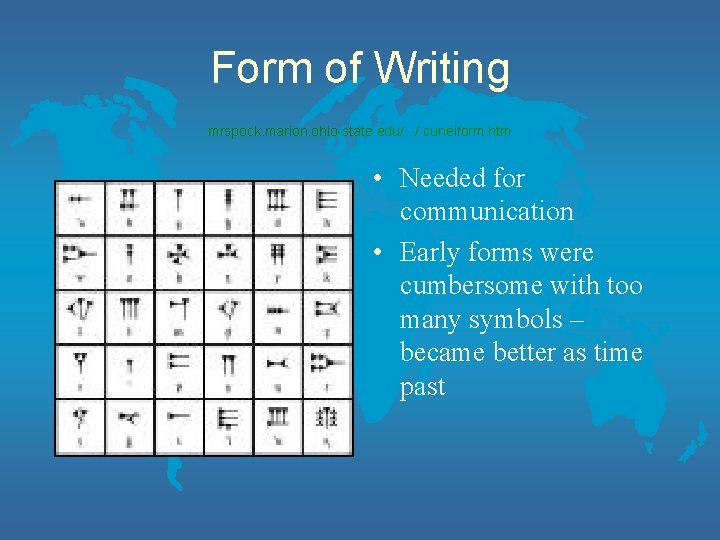
Form of Writing mrspock. marion. ohio-state. edu/. . . / cuneiform. htm • Needed for communication • Early forms were cumbersome with too many symbols – became better as time past
Early Civilizations Chapter 2
Peoples of the Fertile Crescent Section 1
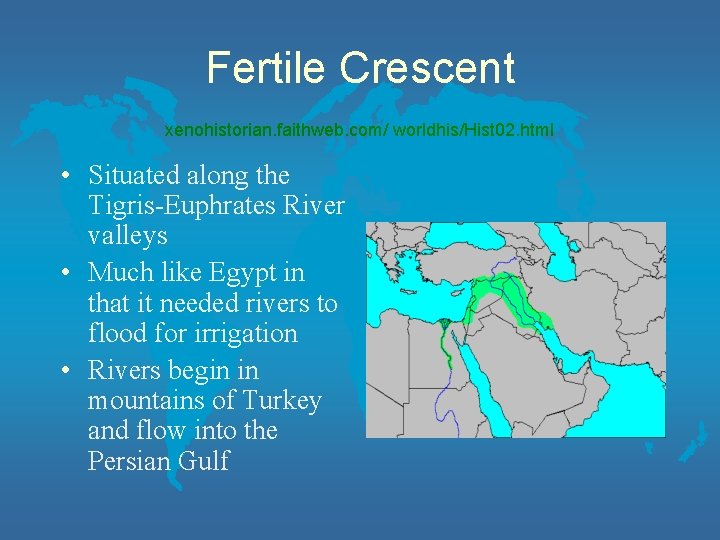
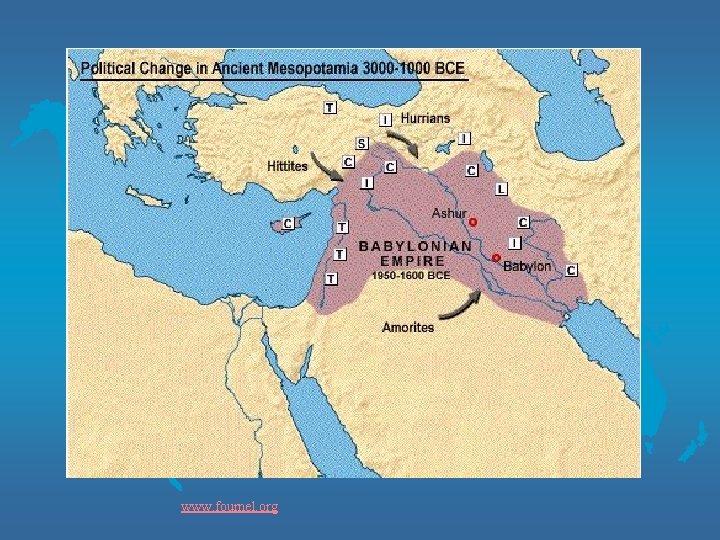
Fertile Crescent xenohistorian. faithweb. com/ worldhis/Hist 02. html • Situated along the Tigris-Euphrates River valleys • Much like Egypt in that it needed rivers to flood for irrigation • Rivers begin in mountains of Turkey and flow into the Persian Gulf
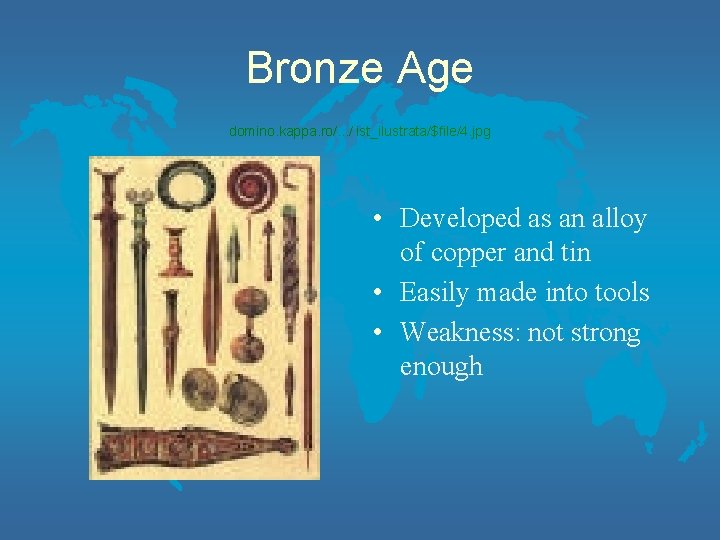
Bronze Age domino. kappa. ro/. . . / ist_ilustrata/$file/4. jpg • Developed as an alloy of copper and tin • Easily made into tools • Weakness: not strong enough
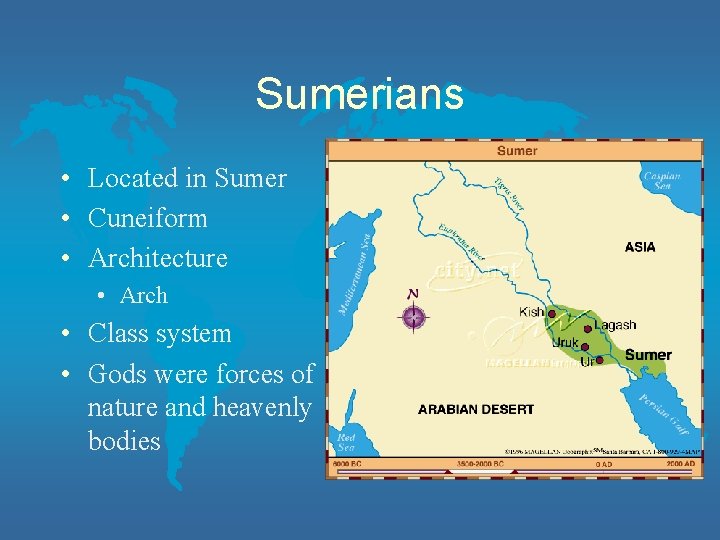
Sumerians • Located in Sumer • Cuneiform • Architecture • Arch • Class system • Gods were forces of nature and heavenly bodies
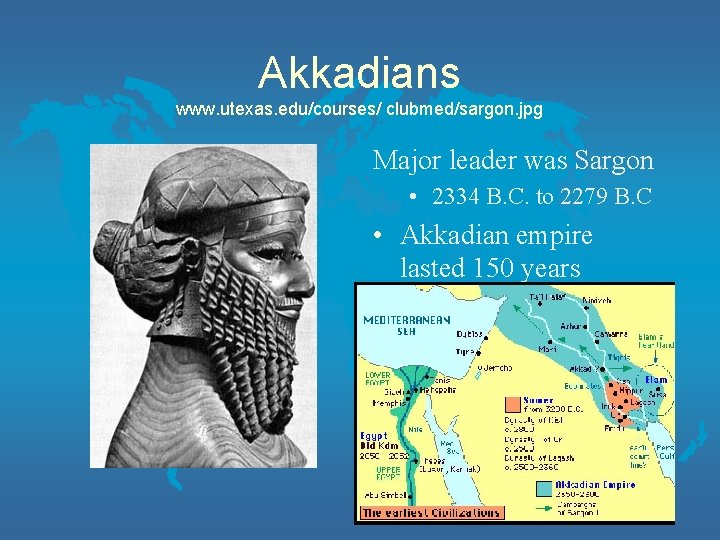
Akkadians www. utexas. edu/courses/ clubmed/sargon. jpg Major leader was Sargon • 2334 B. C. to 2279 B. C • Akkadian empire lasted 150 years
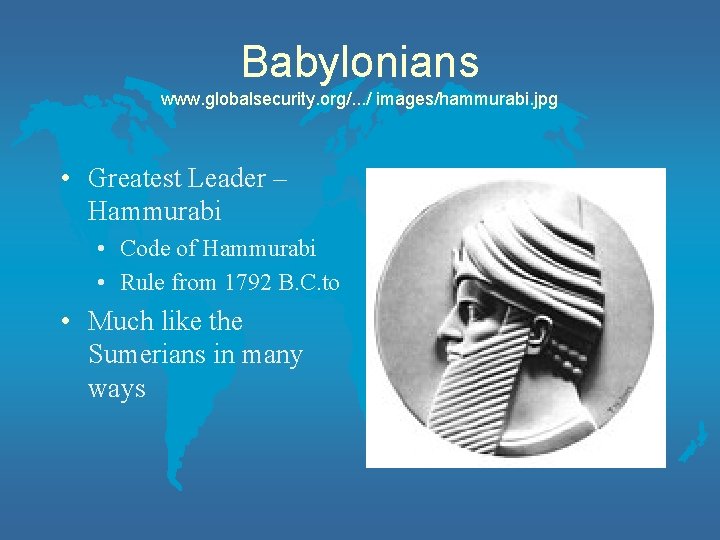
Babylonians www. globalsecurity. org/. . . / images/hammurabi. jpg • Greatest Leader – Hammurabi • Code of Hammurabi • Rule from 1792 B. C. to • Much like the Sumerians in many ways
www. fournel. org
Egyptians Section 2
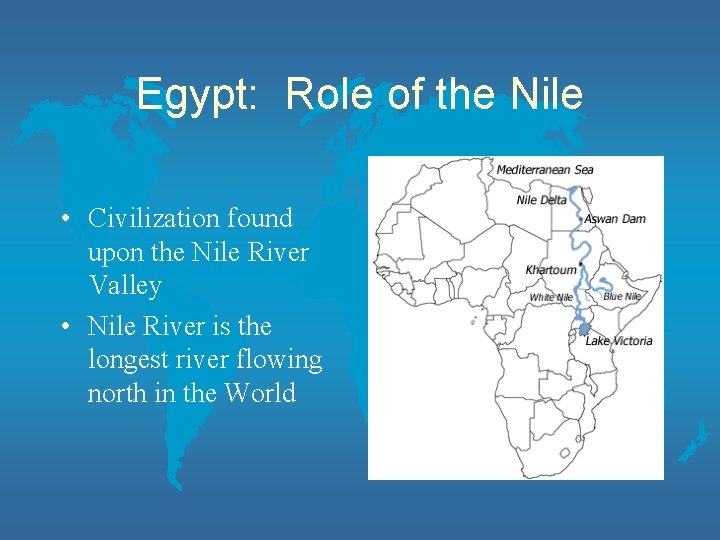
Egypt: Role of the Nile • Civilization found upon the Nile River Valley • Nile River is the longest river flowing north in the World
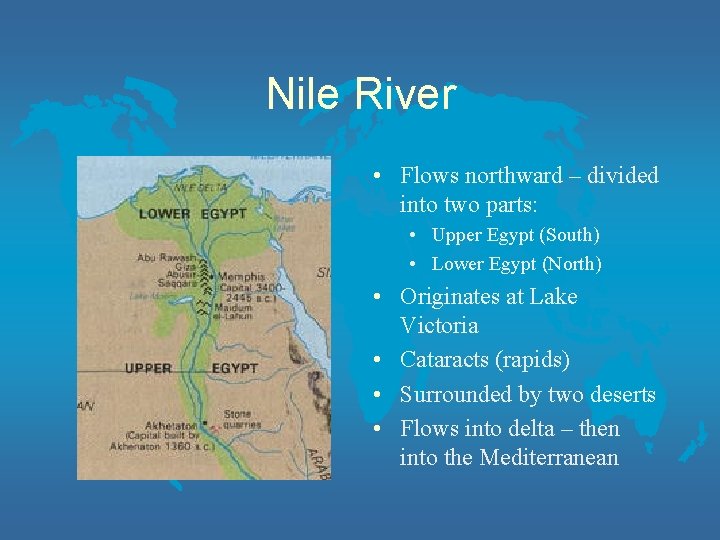
Nile River • Flows northward – divided into two parts: • Upper Egypt (South) • Lower Egypt (North) • Originates at Lake Victoria • Cataracts (rapids) • Surrounded by two deserts • Flows into delta – then into the Mediterranean
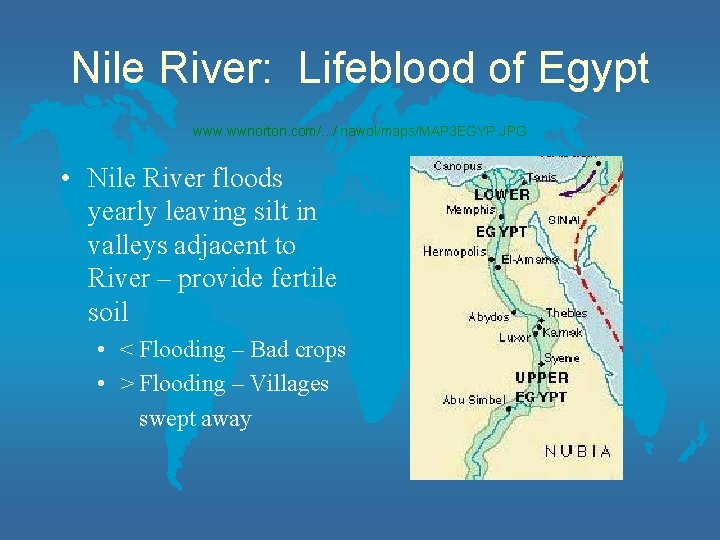
Nile River: Lifeblood of Egypt www. wwnorton. com/. . . / nawol/maps/MAP 3 EGYP. JPG • Nile River floods yearly leaving silt in valleys adjacent to River – provide fertile soil • < Flooding – Bad crops • > Flooding – Villages swept away
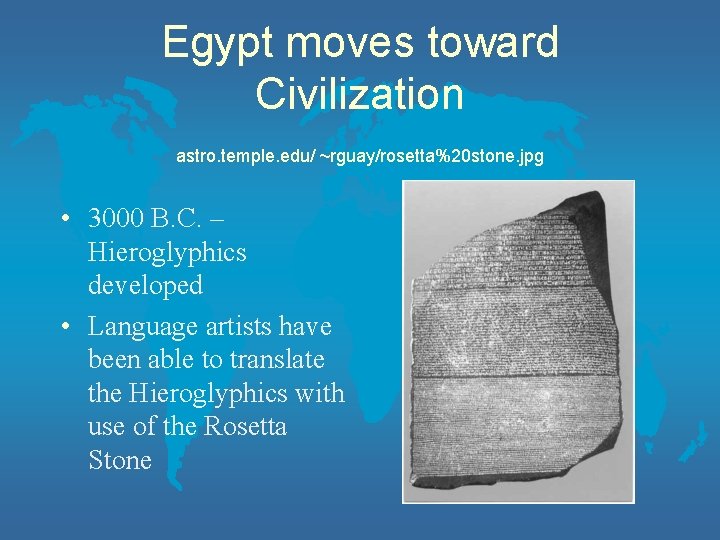
Egypt moves toward Civilization astro. temple. edu/ ~rguay/rosetta%20 stone. jpg • 3000 B. C. – Hieroglyphics developed • Language artists have been able to translate the Hieroglyphics with use of the Rosetta Stone
Egyptian Kingdoms
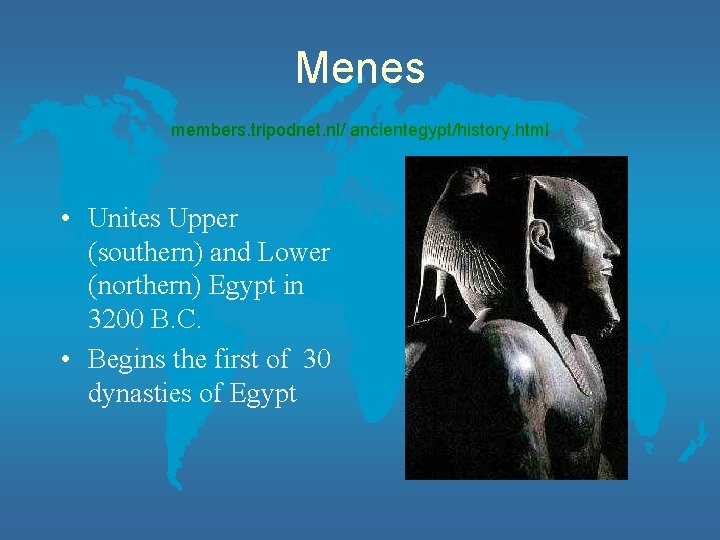
Menes members. tripodnet. nl/ ancientegypt/history. html • Unites Upper (southern) and Lower (northern) Egypt in 3200 B. C. • Begins the first of 30 dynasties of Egypt
Old Kingdom 2680 B. C. to 2180 B. C.
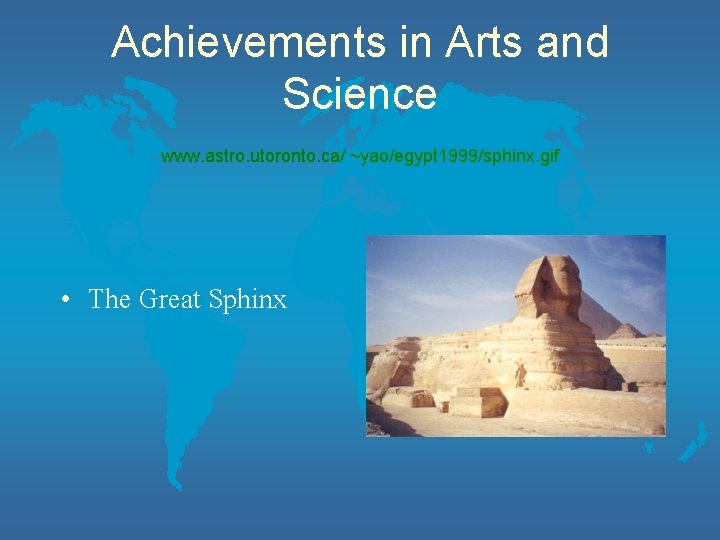
Achievements in Arts and Science www. astro. utoronto. ca/ ~yao/egypt 1999/sphinx. gif • The Great Sphinx
The Old Kingdom • Class society • Lower: Peasants and Farmers • Upper: Pharaoh, the Royal Family, Priests, Scribes, and Government Officials • At end of dynasty the pharaohs became weaker and the nobles grew stronger • Revolutions began probably because of famine and lack of food
First Intermediate Period • Lasted from 2180 B. C. to 2050 B. C. • Time period marked by many civil wars • Period ends as new line of pharaoh comes to power
The Middle Kingdom 2050 B. C. to 1650 B. C.
Middle Kingdom • Considered the “golden age” of Egypt • Noble and Priests begin to challenge the power of the Pharaoh – led to instability • Period also marked by invasions of Hyksos • Disputes arise over how devastating the Hyksos invasion was on the Egyptians • Hyksos did bring in new tools of warfare: the chariot and compound bow
Second Intermediate Period • Begins as Hyksos gain control of all of Egypt – probably because of the weakness of Egypt • Period ends as new line of rulers come to power
The New Kingdom 1570 B. C. to 1080 B. C.
New Kingdom • Kingdom centered around their capital, Thebes • Drove the Hyksos out of Egypt with use of a strong army • Begin to build an empire • The strongest of the rulers were….
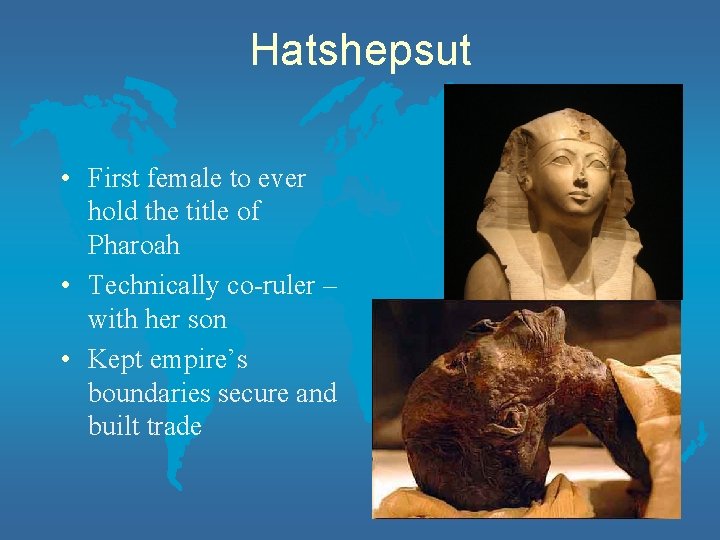
Hatshepsut • First female to ever hold the title of Pharoah • Technically co-ruler – with her son • Kept empire’s boundaries secure and built trade
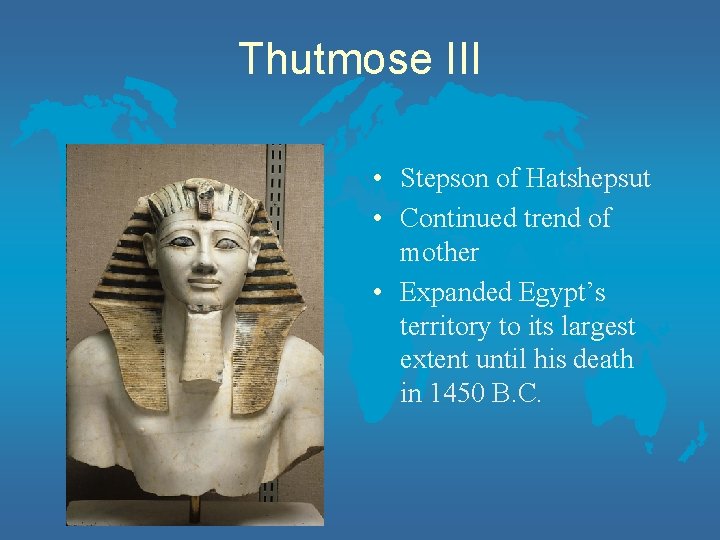
Thutmose III • Stepson of Hatshepsut • Continued trend of mother • Expanded Egypt’s territory to its largest extent until his death in 1450 B. C.
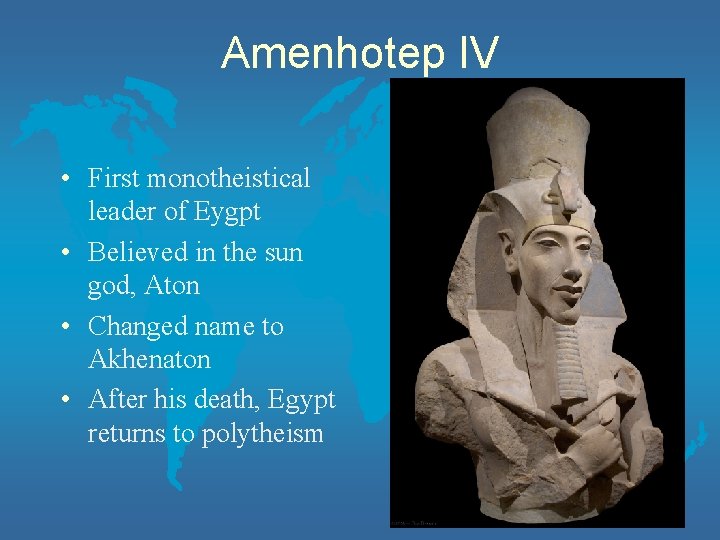
Amenhotep IV • First monotheistical leader of Eygpt • Believed in the sun god, Aton • Changed name to Akhenaton • After his death, Egypt returns to polytheism
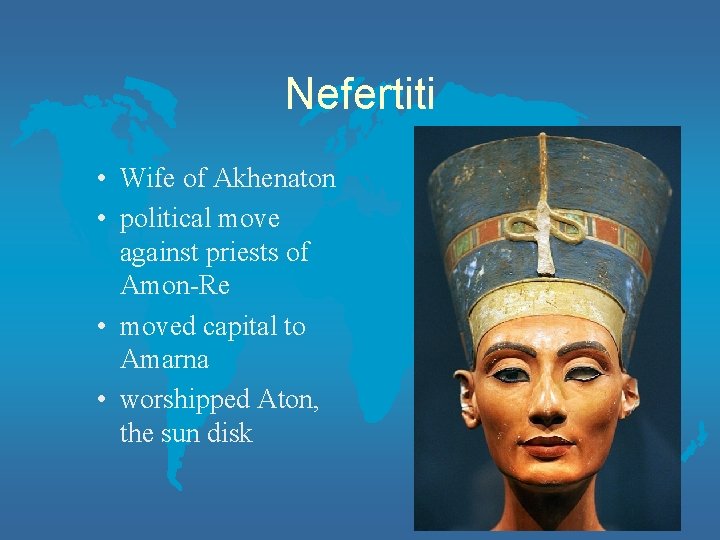
Nefertiti • Wife of Akhenaton • political move against priests of Amon-Re • moved capital to Amarna • worshipped Aton, the sun disk
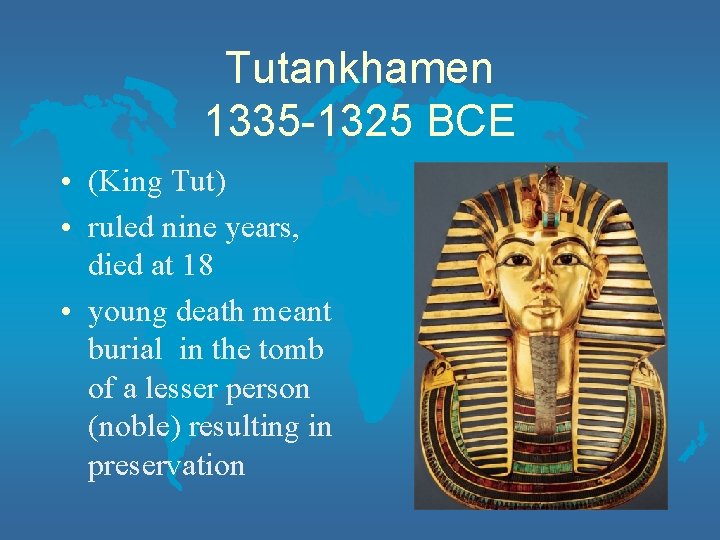
Tutankhamen 1335 -1325 BCE • (King Tut) • ruled nine years, died at 18 • young death meant burial in the tomb of a lesser person (noble) resulting in preservation
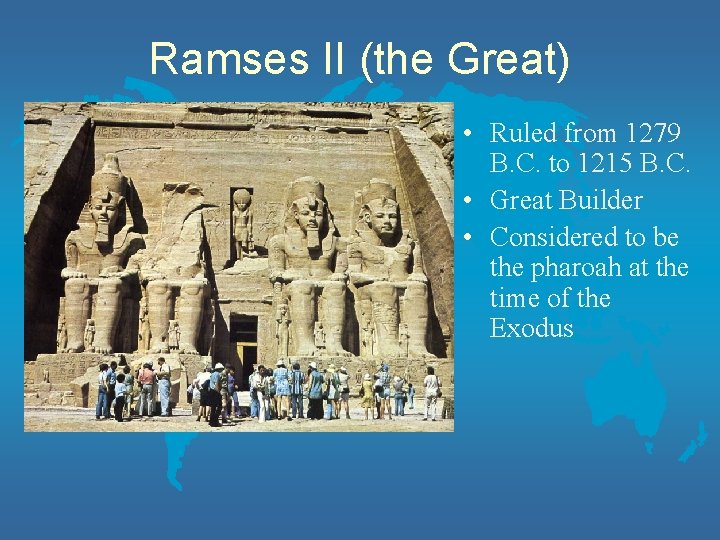
Ramses II (the Great) • Ruled from 1279 B. C. to 1215 B. C. • Great Builder • Considered to be the pharoah at the time of the Exodus
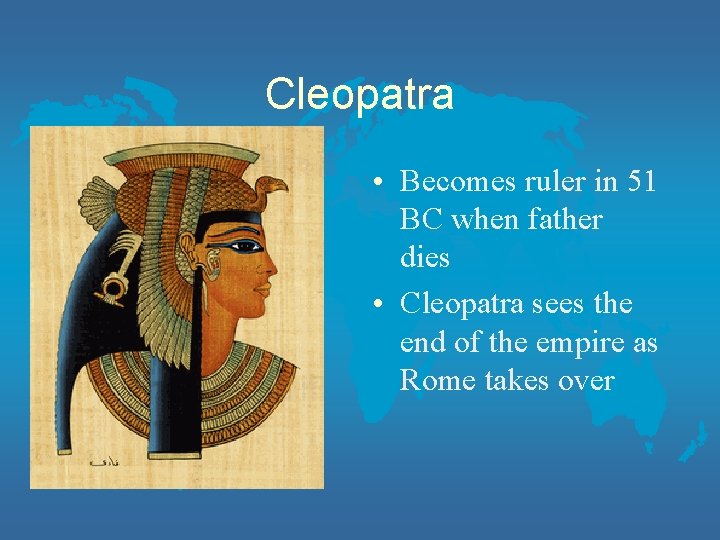
Cleopatra • Becomes ruler in 51 BC when father dies • Cleopatra sees the end of the empire as Rome takes over
Egyptian Achievements
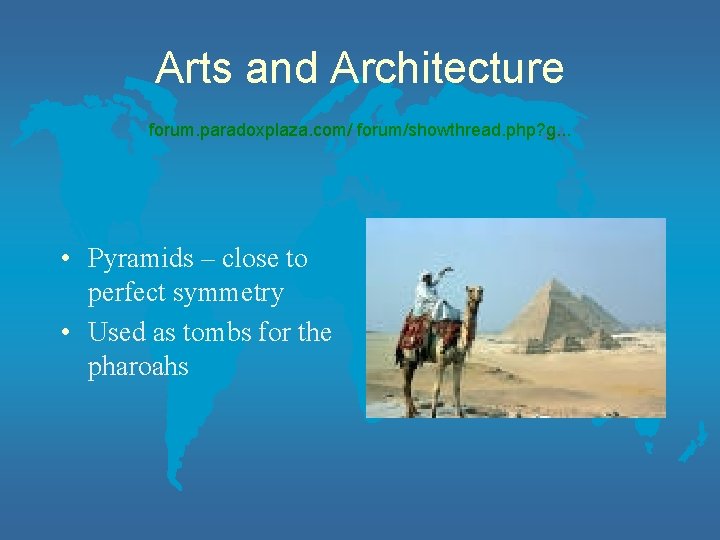
Arts and Architecture forum. paradoxplaza. com/ forum/showthread. php? g. . . • Pyramids – close to perfect symmetry • Used as tombs for the pharoahs
Science, Math, and Medicine • • Devised a 365 day calendar Used numbering system based on 10 Used herbs for medicinal purpose Mummification – preservation of dead
New Centers of Civilization Sections 3 and 4
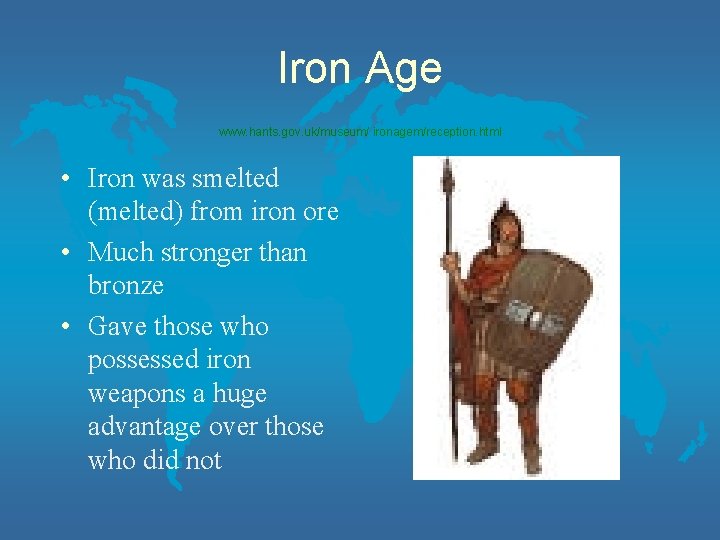
Iron Age www. hants. gov. uk/museum/ ironagem/reception. html • Iron was smelted (melted) from iron ore • Much stronger than bronze • Gave those who possessed iron weapons a huge advantage over those who did not
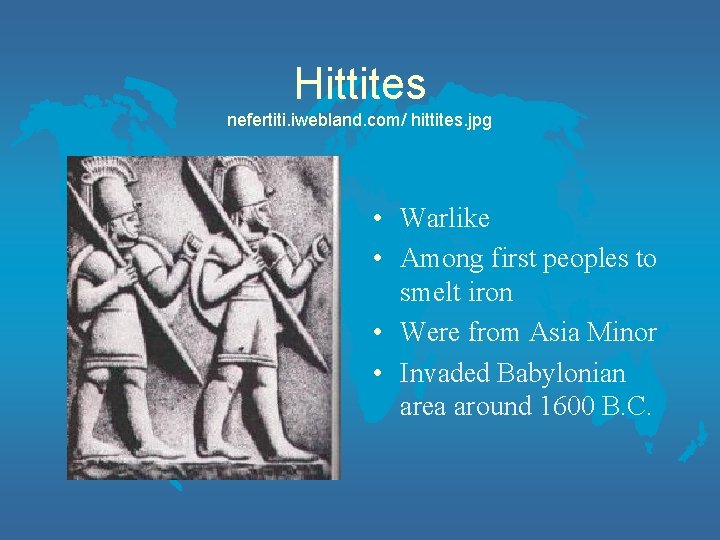
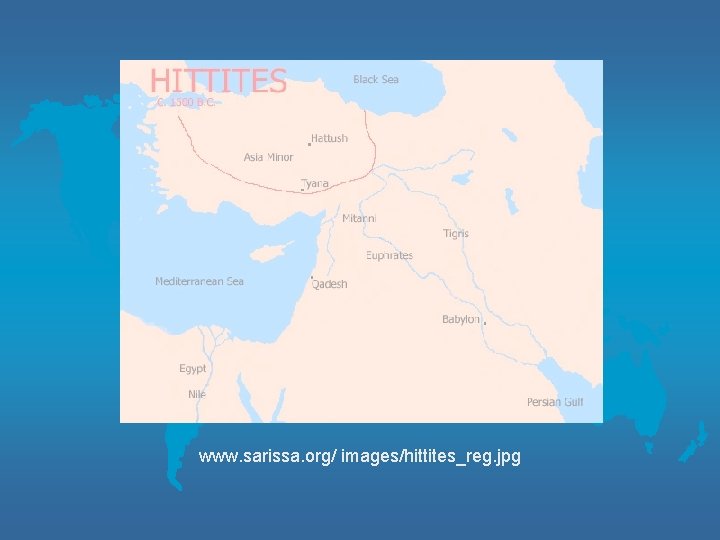
Hittites nefertiti. iwebland. com/ hittites. jpg • Warlike • Among first peoples to smelt iron • Were from Asia Minor • Invaded Babylonian area around 1600 B. C.
www. sarissa. org/ images/hittites_reg. jpg
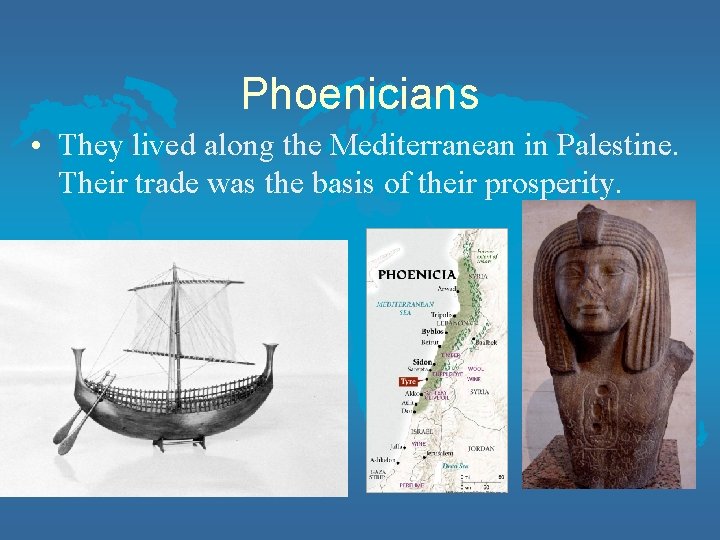
Phoenicians • They lived along the Mediterranean in Palestine. Their trade was the basis of their prosperity.
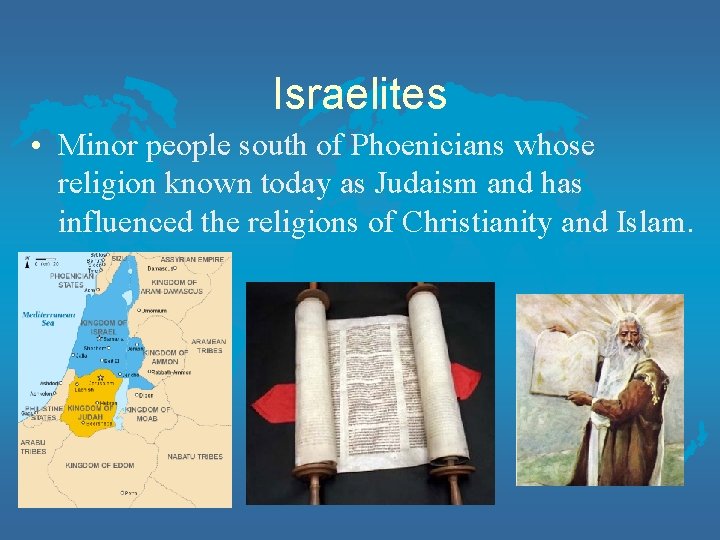
Israelites • Minor people south of Phoenicians whose religion known today as Judaism and has influenced the religions of Christianity and Islam.
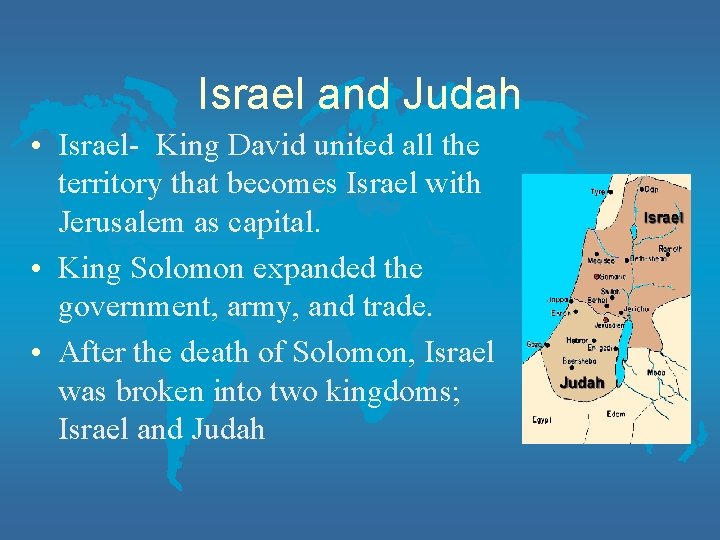
Israel and Judah • Israel- King David united all the territory that becomes Israel with Jerusalem as capital. • King Solomon expanded the government, army, and trade. • After the death of Solomon, Israel was broken into two kingdoms; Israel and Judah
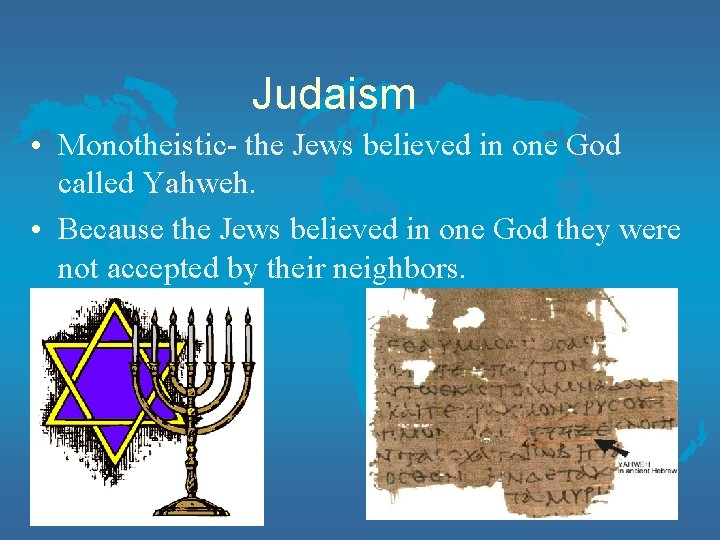
Judaism • Monotheistic- the Jews believed in one God called Yahweh. • Because the Jews believed in one God they were not accepted by their neighbors.
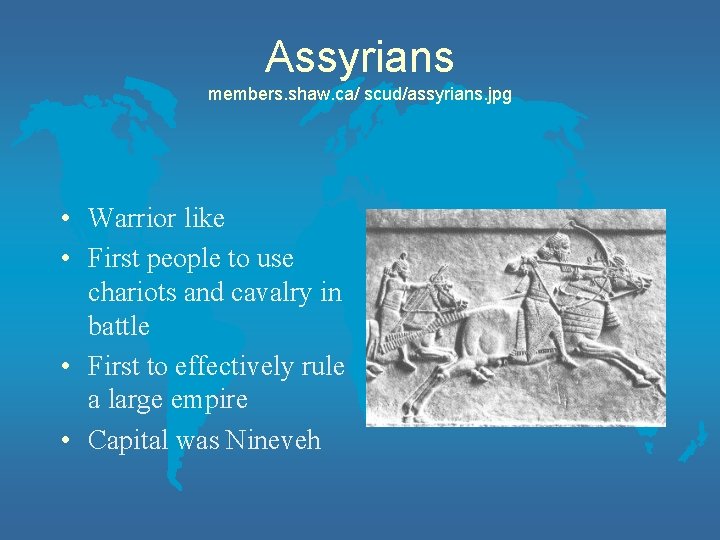
Assyrians members. shaw. ca/ scud/assyrians. jpg • Warrior like • First people to use chariots and cavalry in battle • First to effectively rule a large empire • Capital was Nineveh
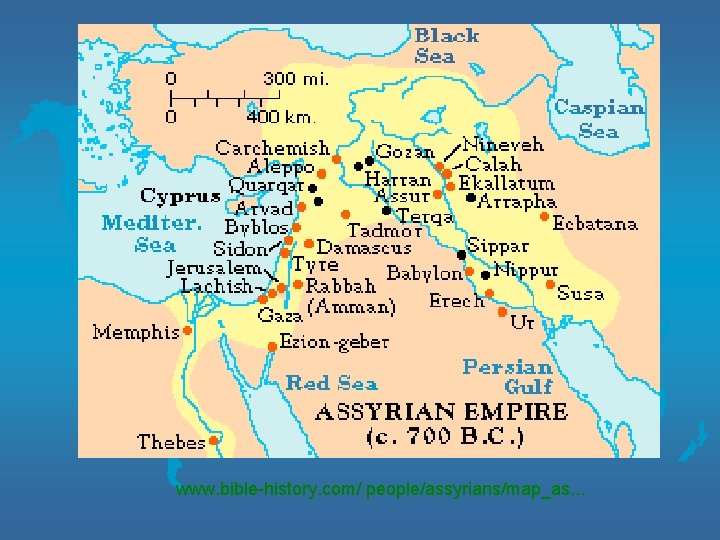
www. bible-history. com/ people/assyrians/map_as. . .
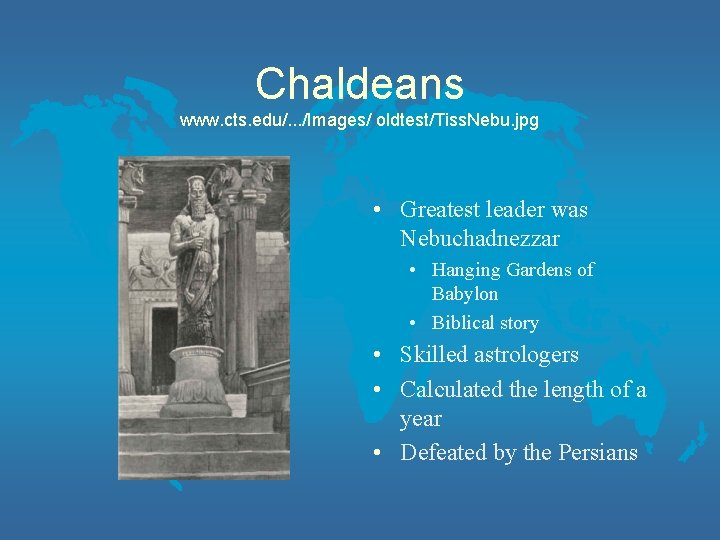
Chaldeans www. cts. edu/. . . /Images/ oldtest/Tiss. Nebu. jpg • Greatest leader was Nebuchadnezzar • Hanging Gardens of Babylon • Biblical story • Skilled astrologers • Calculated the length of a year • Defeated by the Persians
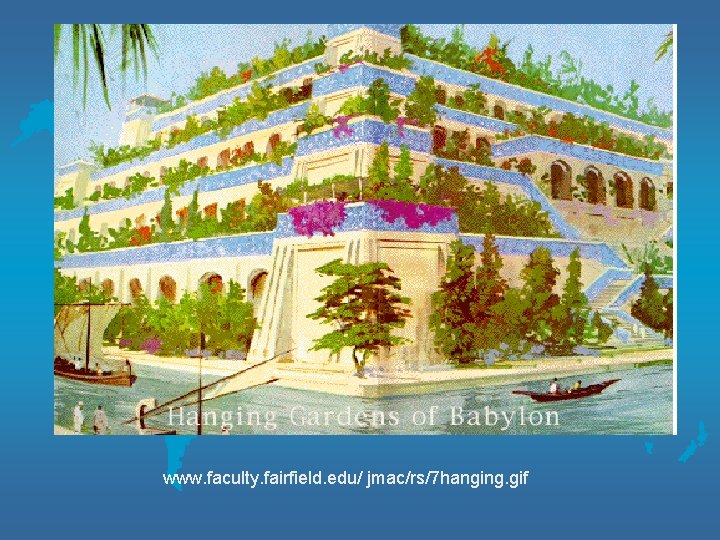
www. faculty. fairfield. edu/ jmac/rs/7 hanging. gif
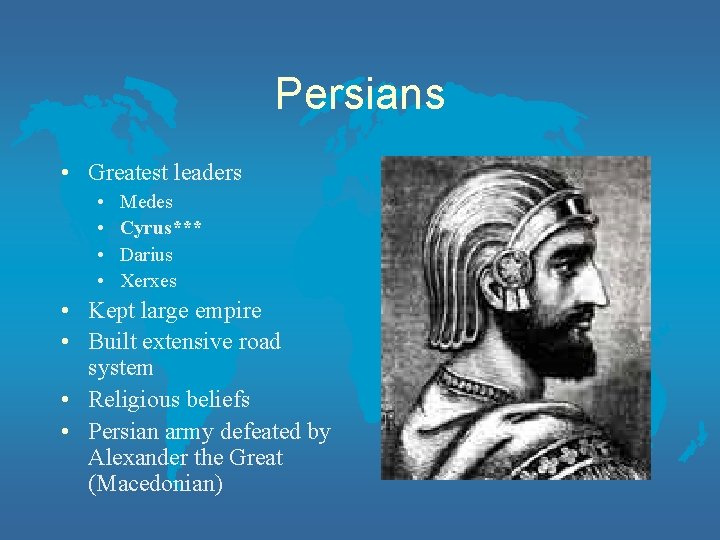
Persians • Greatest leaders • • Medes Cyrus*** Darius Xerxes • Kept large empire • Built extensive road system • Religious beliefs • Persian army defeated by Alexander the Great (Macedonian)
- Slides: 68