
The Beginning of the Life Cycle Mrs Scott

The Beginning of the Life Cycle Mrs. Scott
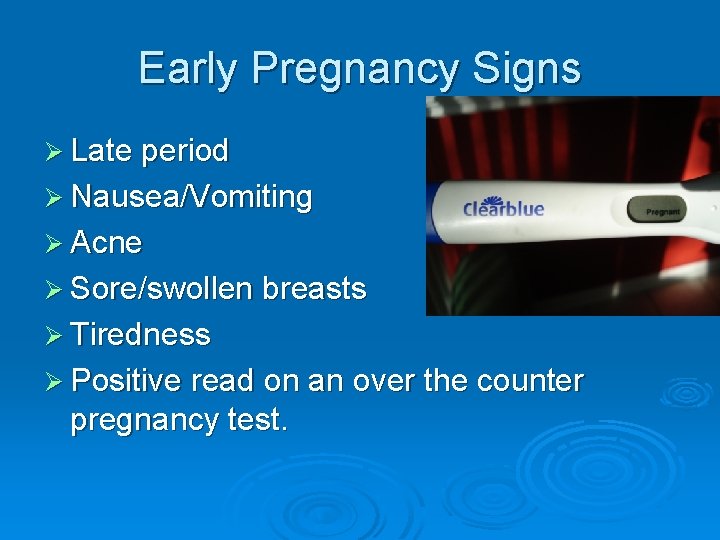
Early Pregnancy Signs Ø Late period Ø Nausea/Vomiting Ø Acne Ø Sore/swollen breasts Ø Tiredness Ø Positive read on an over the counter pregnancy test.
Important! Ø It is very important to see a doctor as soon as you find out you are pregnant. (usually at 8 weeks) l l l Prenatal Vitamins Diet (500 extra cal/day from good food sources) and those to avoid (caffeine, certain fish, meats, cheeses, eggs) Exercise What medicines can be taken (obviously ALL recreational drugs are a NO including tobacco, alcohol and of course marijuana!). You should care more about your child. Many prescription medications should not be taken as well. Answer Questions • He or she will also teach you to how to recognize the signs of possible problems during pregnancy (called complications). This is especially important because teens are more at risk for certain complications such as anemia, high blood pressure, miscarriage, and delivering a baby earlier than usual (called premature delivery). l At first you’ll go once a month, then later on it’s once every couple weeks, then once a week.
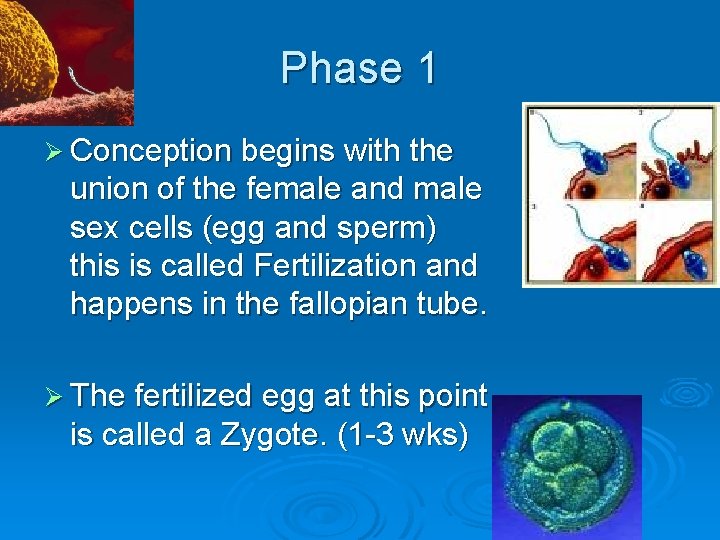
Phase 1 Ø Conception begins with the union of the female and male sex cells (egg and sperm) this is called Fertilization and happens in the fallopian tube. Ø The fertilized egg at this point is called a Zygote. (1 -3 wks)

Phase 2 Ø The zygote then keeps traveling down the fallopian tube. Ø During this time the zygote has divided itself many times to create a cluster of cells with a hollow space in the center. Ø Within a few days the zygote attaches itself to a spot on the wall of the uterus, this is called implantation.
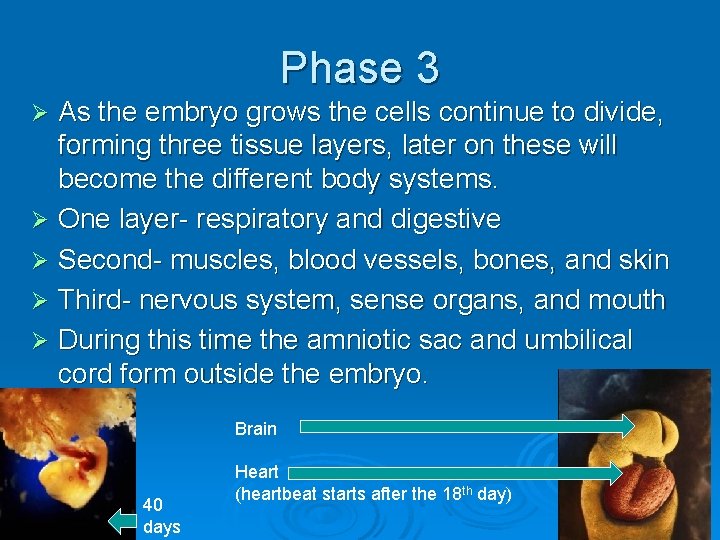
Phase 3 As the embryo grows the cells continue to divide, forming three tissue layers, later on these will become the different body systems. Ø One layer- respiratory and digestive Ø Second- muscles, blood vessels, bones, and skin Ø Third- nervous system, sense organs, and mouth Ø During this time the amniotic sac and umbilical cord form outside the embryo. Ø Brain 40 days Heart (heartbeat starts after the 18 th day)
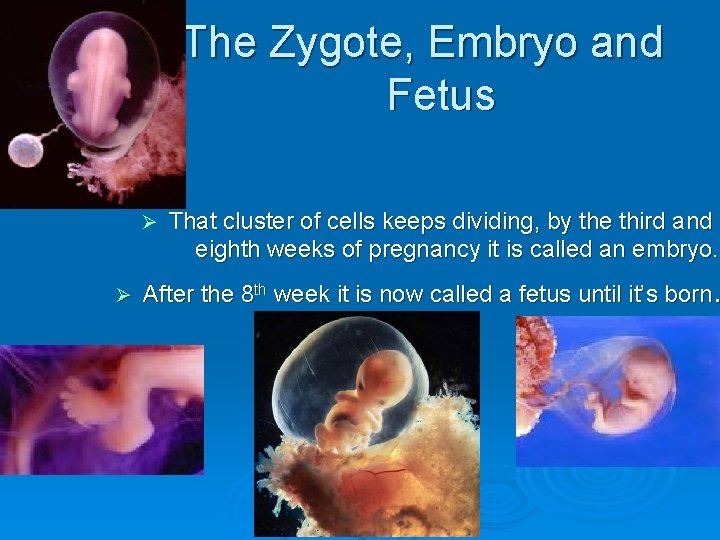
The Zygote, Embryo and Fetus Ø Ø That cluster of cells keeps dividing, by the third and eighth weeks of pregnancy it is called an embryo. After the 8 th week it is now called a fetus until it’s born.
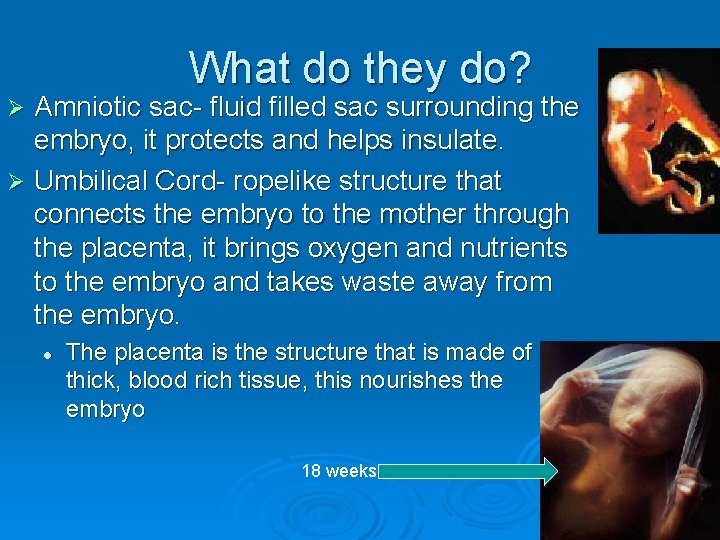
What do they do? Amniotic sac- fluid filled sac surrounding the embryo, it protects and helps insulate. Ø Umbilical Cord- ropelike structure that connects the embryo to the mother through the placenta, it brings oxygen and nutrients to the embryo and takes waste away from the embryo. Ø l The placenta is the structure that is made of thick, blood rich tissue, this nourishes the embryo 18 weeks
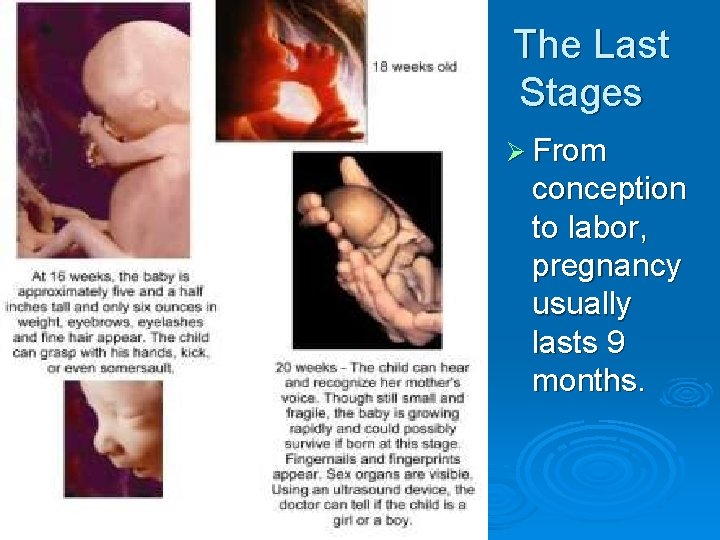
The Last Stages Ø From conception to labor, pregnancy usually lasts 9 months.

Ultrasound Pics Week 20
Where does pregnancy weight gain go? Let's say your baby weighs in at 7 or 8 pounds. That accounts for some of your pregnancy weight gain. But what about the rest? Here's a sample breakdown: Ø Baby: 7 to 8 pounds Ø Larger breasts: 1 to 3 pounds Ø Larger uterus: 2 pounds Ø Placenta: 1 1/2 pounds Ø Amniotic fluid: 2 pounds Ø Increased blood volume: 3 to 4 pounds Ø Increased fluid volume: 3 to 4 pounds Ø Fat stores: 6 to 8 pounds Normal Amount of Weight to Gain: 25 -35 lbs.
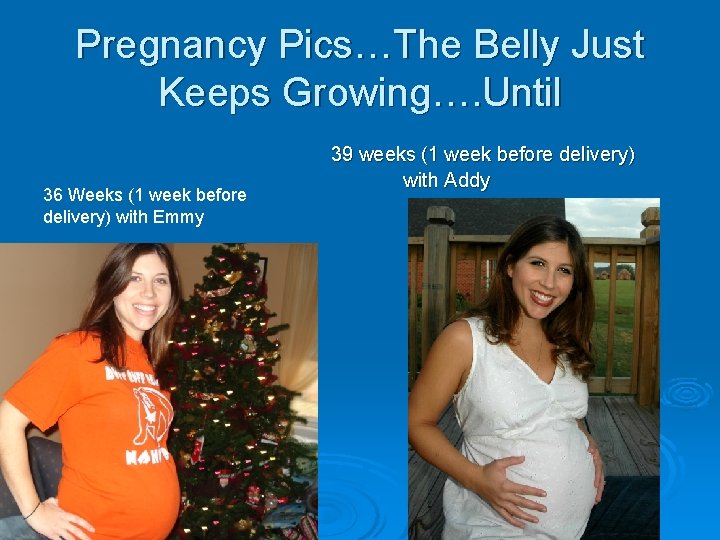
Pregnancy Pics…The Belly Just Keeps Growing…. Until 36 Weeks (1 week before delivery) with Emmy 39 weeks (1 week before delivery) with Addy
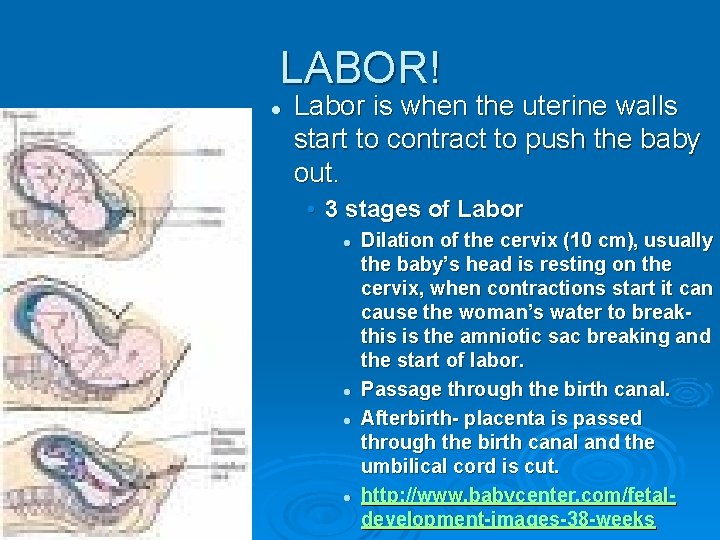
LABOR! l Labor is when the uterine walls start to contract to push the baby out. • 3 stages of Labor l l Dilation of the cervix (10 cm), usually the baby’s head is resting on the cervix, when contractions start it can cause the woman’s water to breakthis is the amniotic sac breaking and the start of labor. Passage through the birth canal. Afterbirth- placenta is passed through the birth canal and the umbilical cord is cut. http: //www. babycenter. com/fetaldevelopment-images-38 -weeks
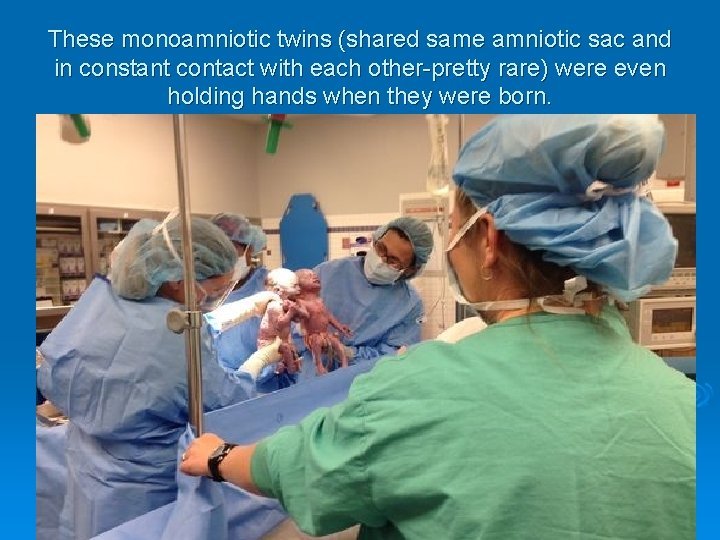
These monoamniotic twins (shared same amniotic sac and in constant contact with each other-pretty rare) were even holding hands when they were born.
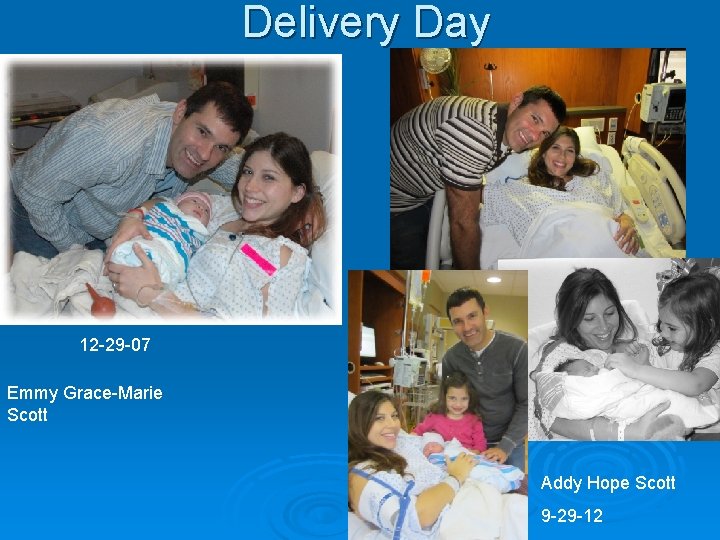
Delivery Day 12 -29 -07 Emmy Grace-Marie Scott Addy Hope Scott 9 -29 -12

And After…I LOVE My Family

Keep in Mind (these are the stats): Having a baby is a life changing experience. It will be the hardest job you’ll ever do. You will want to wait until you are mentally and financially capable of caring for and providing for a child. Statistics about teen parents: Ø Teen pregnancy costs the United States at least $7 billion annually. Ø Every year around 750, 000 teenagers will get pregnant. Ø Unmarried teenagers having children account for 24 percent of all unmarried expectant mothers. Ø More than 2/3 of all teenagers who have a baby will not graduate from high school, hence the correlation with teenage pregnancy and education. Ø Billions of dollars are spent taking care of teenage mothers and their children and they are more likely to be in the poverty bracket.
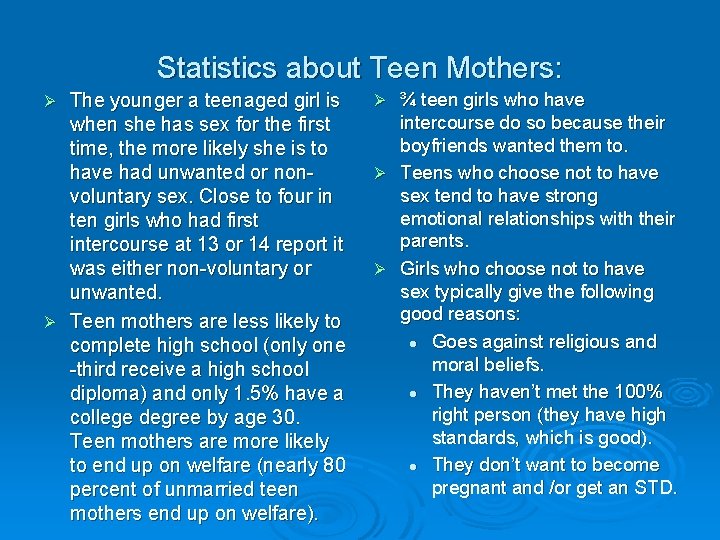
Statistics about Teen Mothers: The younger a teenaged girl is when she has sex for the first time, the more likely she is to have had unwanted or nonvoluntary sex. Close to four in ten girls who had first intercourse at 13 or 14 report it was either non-voluntary or unwanted. Ø Teen mothers are less likely to complete high school (only one -third receive a high school diploma) and only 1. 5% have a college degree by age 30. Teen mothers are more likely to end up on welfare (nearly 80 percent of unmarried teen mothers end up on welfare). Ø ¾ teen girls who have intercourse do so because their boyfriends wanted them to. Ø Teens who choose not to have sex tend to have strong emotional relationships with their parents. Ø Girls who choose not to have sex typically give the following good reasons: l Goes against religious and moral beliefs. l They haven’t met the 100% right person (they have high standards, which is good). l They don’t want to become pregnant and /or get an STD. Ø
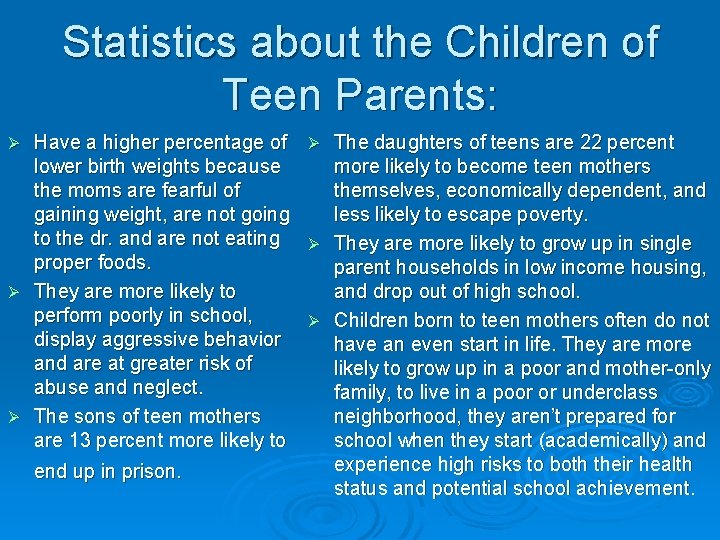
Statistics about the Children of Teen Parents: Have a higher percentage of Ø The daughters of teens are 22 percent lower birth weights because more likely to become teen mothers the moms are fearful of themselves, economically dependent, and gaining weight, are not going less likely to escape poverty. to the dr. and are not eating Ø They are more likely to grow up in single proper foods. parent households in low income housing, Ø They are more likely to and drop out of high school. perform poorly in school, Ø Children born to teen mothers often do not display aggressive behavior have an even start in life. They are more and are at greater risk of likely to grow up in a poor and mother-only abuse and neglect. family, to live in a poor or underclass Ø The sons of teen mothers neighborhood, they aren’t prepared for are 13 percent more likely to school when they start (academically) and experience high risks to both their health end up in prison. status and potential school achievement. Ø

Things to think about as a 9 th grader: -Who would watch my baby when I’m at school? -How will I pay for child care, diapers, wipes, food, formula, clothing, medical expenses, toiletries, etc. -What will I do when my baby gets sick, I can’t drive? -If I don’t finish high school, how will I be able to financially support myself and my child? -Where will my child and I live? (Most of you probably don’t want to live at home with their parents now, let alone forever) -What if there is something really medically wrong with my child, can I handle that? -Most teen couples who become pregnant do not stay together. Think about 3 things that you could no longer do if you found out that you were going to be a mom or a dad today Is sex really worth giving that up? ? People respect you more if you don’t have sex than if you do.

Words of advice: Ø You want to be with the right person and 100% excited when you find out that you’re/your wife is pregnant, not panicking. What’s really the negative in waiting? If you think about it, there are way more pros to waiting than there are pros to not waiting. Ø So, finish high school, go to college, get married, then have children. You’ll be more prepared, you won’t have to parent on your own, you’ll be more knowledgeable, you’ll be able to provide good medical/child care, and you’ll be financially stable. You want the best possible life for your child, waiting will ensure this of happening. You want to be able to provide for your child, not relying on others to do it for you. Sex can wait until you’re 110% ready for everything that might come with it. ~Mrs. Scott Ø
- Slides: 21