
The Beginning of the Industrial Revolution Industrial Revolution
The Beginning of the Industrial Revolution
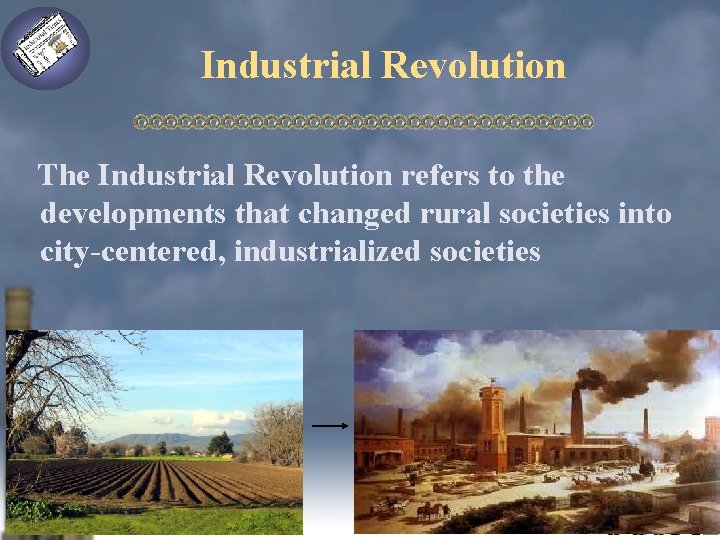
Industrial Revolution The Industrial Revolution refers to the developments that changed rural societies into city-centered, industrialized societies
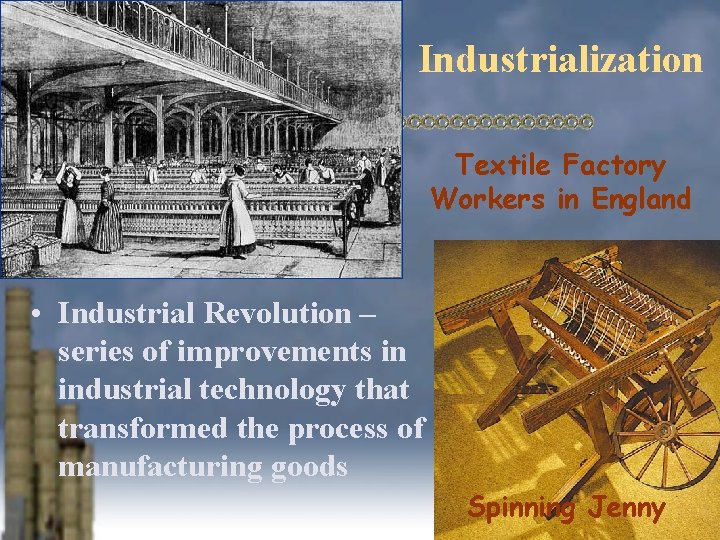
Industrialization Textile Factory Workers in England • Industrial Revolution – series of improvements in industrial technology that transformed the process of manufacturing goods Spinning Jenny
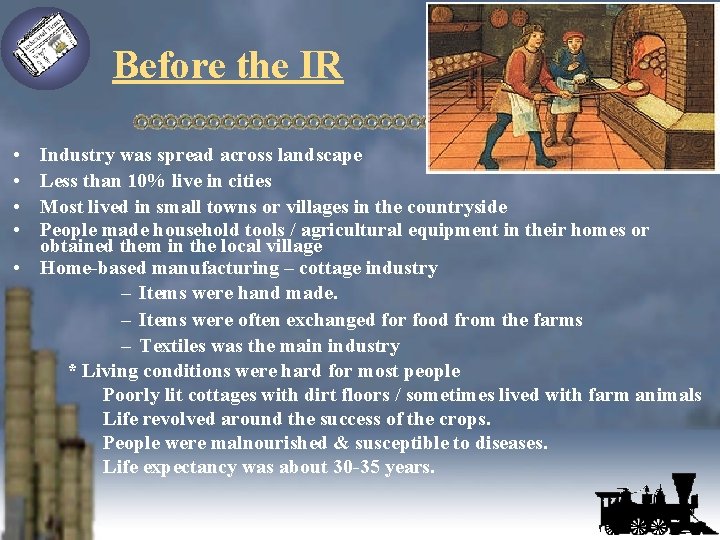
Before the IR • • Industry was spread across landscape Less than 10% live in cities Most lived in small towns or villages in the countryside People made household tools / agricultural equipment in their homes or obtained them in the local village • Home-based manufacturing – cottage industry – Items were hand made. – Items were often exchanged for food from the farms – Textiles was the main industry * Living conditions were hard for most people Poorly lit cottages with dirt floors / sometimes lived with farm animals Life revolved around the success of the crops. People were malnourished & susceptible to diseases. Life expectancy was about 30 -35 years.
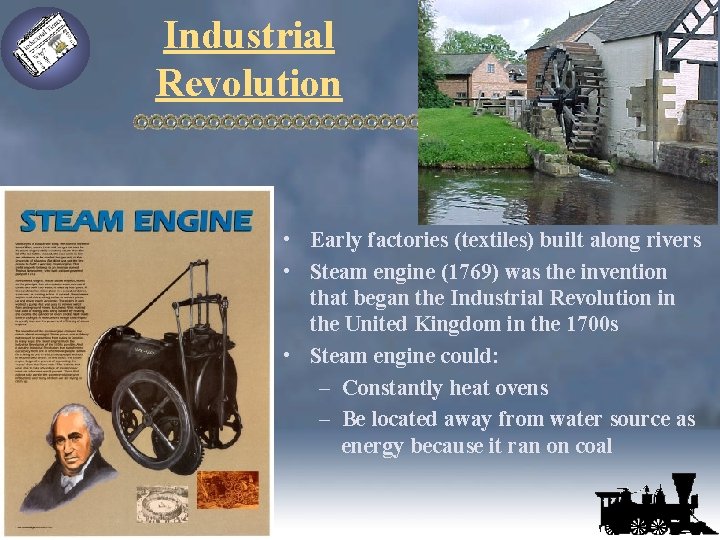
Industrial Revolution • Early factories (textiles) built along rivers • Steam engine (1769) was the invention that began the Industrial Revolution in the United Kingdom in the 1700 s • Steam engine could: – Constantly heat ovens – Be located away from water source as energy because it ran on coal
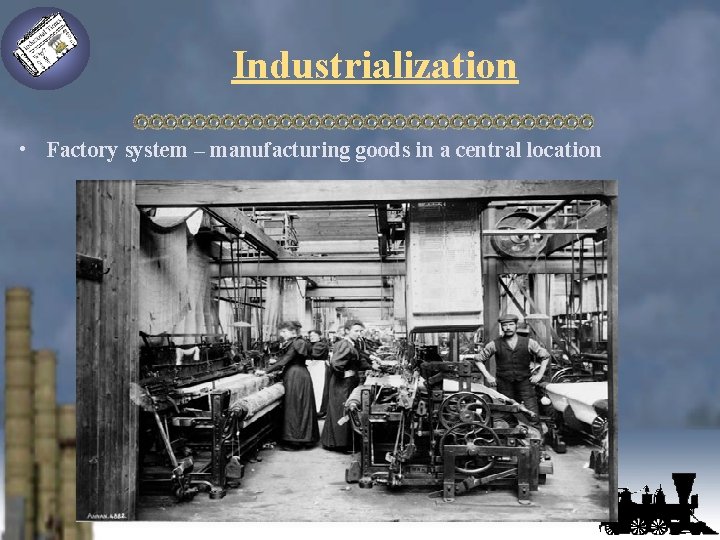
Industrialization • Factory system – manufacturing goods in a central location
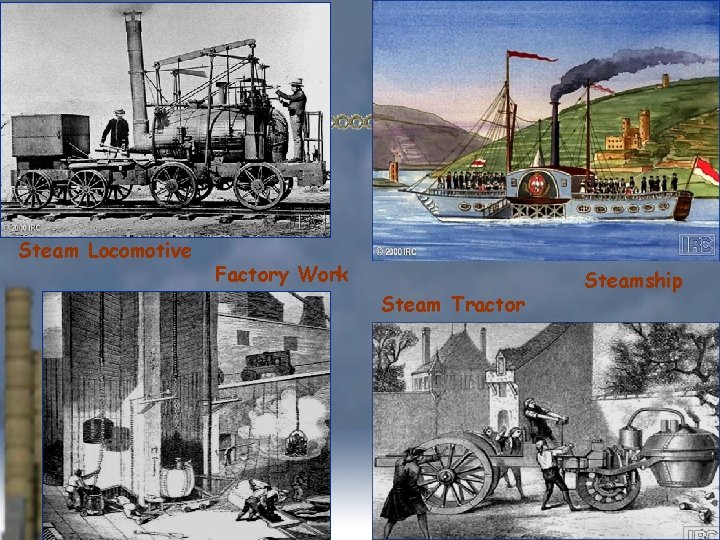
Steam Locomotive Factory Work Steam Tractor Steamship
Effects of the Revolution • Produce goods faster and cheaper / more can afford them • Raised the standard of living – Healthier diets – Better housing (Eventually) – Expanded Education (Eventually) – Increased life expectancy (eventually) • New jobs • Technology Advancements • Principal cause of population growth in Stage 2 of DTM
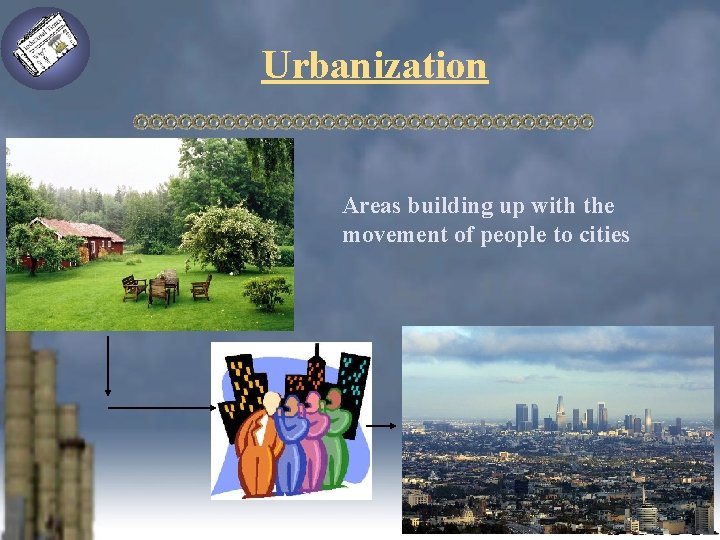
Urbanization Areas building up with the movement of people to cities
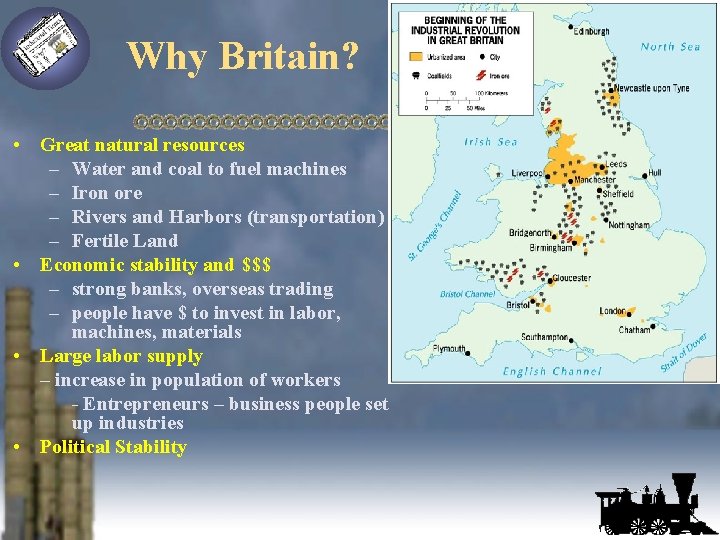
Why Britain? • Great natural resources – Water and coal to fuel machines – Iron ore – Rivers and Harbors (transportation) – Fertile Land • Economic stability and $$$ – strong banks, overseas trading – people have $ to invest in labor, machines, materials • Large labor supply – increase in population of workers - Entrepreneurs – business people set up industries • Political Stability
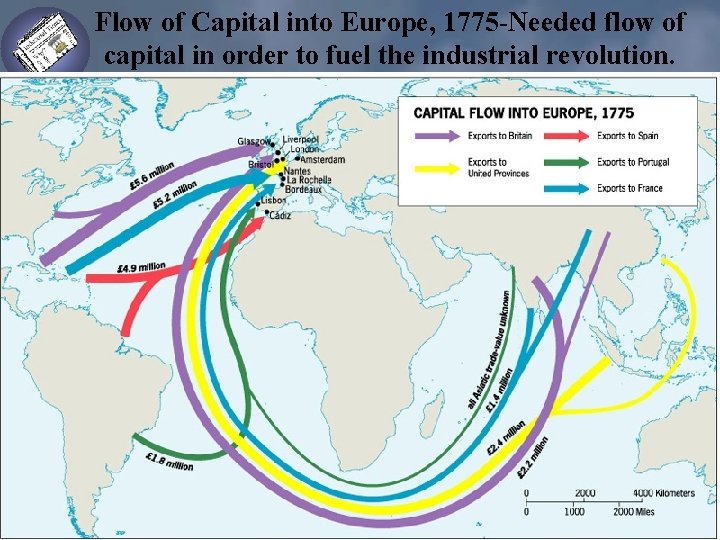
Flow of Capital into Europe, 1775 -Needed flow of capital in order to fuel the industrial revolution.
Industrial Revolution Phases 1730 s to 1860 s First Phase -Textiles, Iron Production, Steam Power 1860 s to 1914 Second Phase - Steel, Chemicals, Railroads, Gasoline Engine, assembly line. Post WWII Third Phase -high technology-computerization, automation
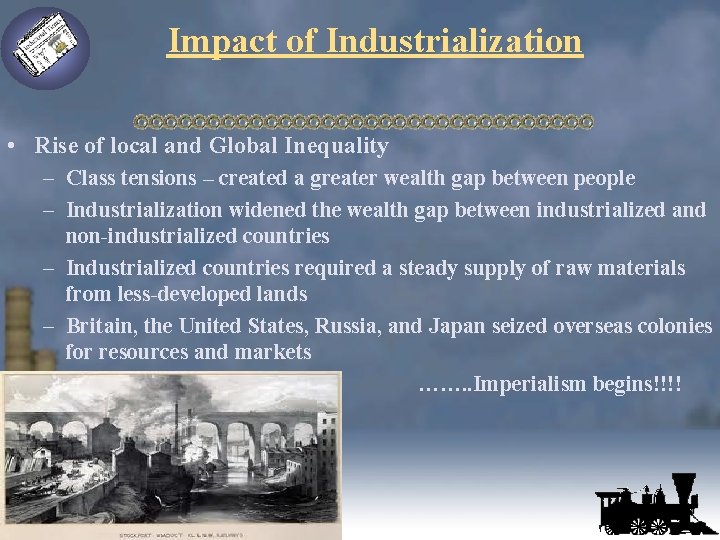
Impact of Industrialization • Rise of local and Global Inequality – Class tensions – created a greater wealth gap between people – Industrialization widened the wealth gap between industrialized and non-industrialized countries – Industrialized countries required a steady supply of raw materials from less-developed lands – Britain, the United States, Russia, and Japan seized overseas colonies for resources and markets – ……. . Imperialism begins!!!!
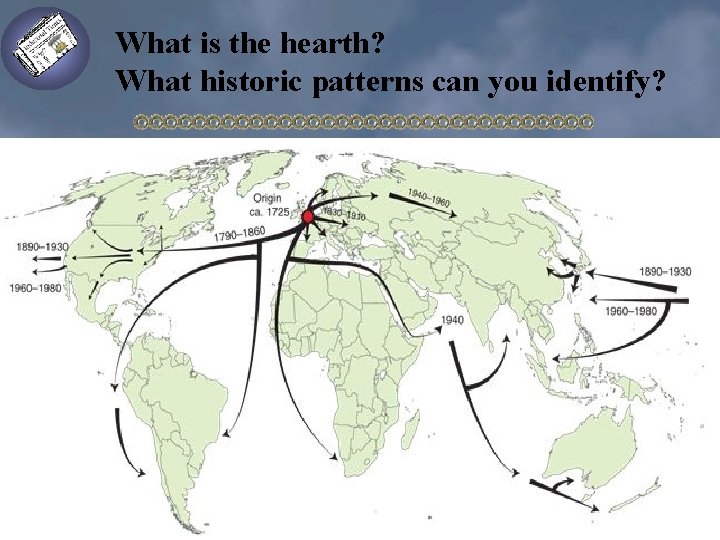
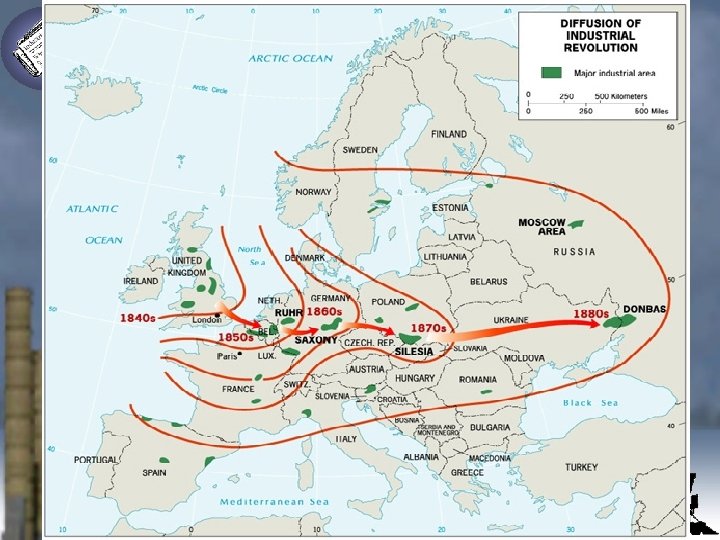
What is the hearth? What historic patterns can you identify?
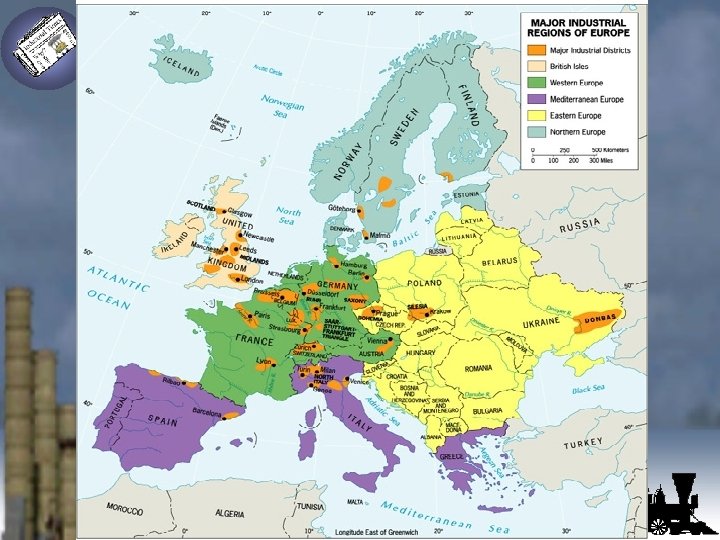
What are the four Major Industrial Regions today? • West and Central Europe – UK, Germany, Spain • North America – Northeast, Middle Atlantic, Pittsburgh, Western Great Lakes, Southern California • Former Soviet Union - Russia • East Asia • Japan, South Korea, China
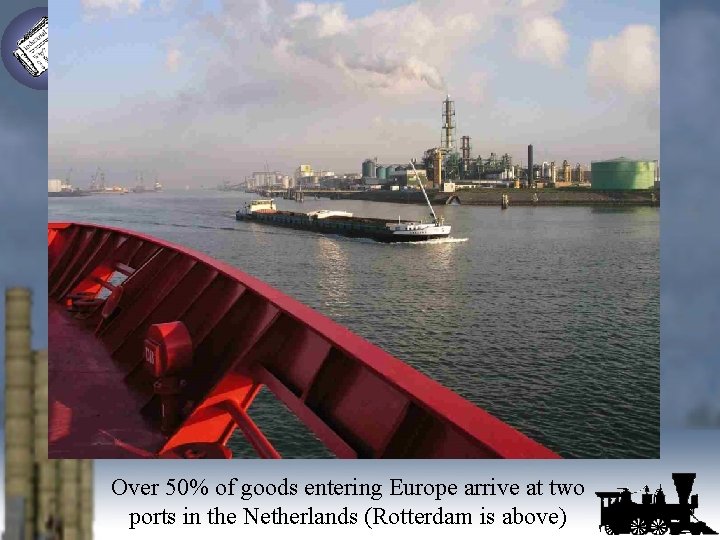
Over 50% of goods entering Europe arrive at two ports in the Netherlands (Rotterdam is above)
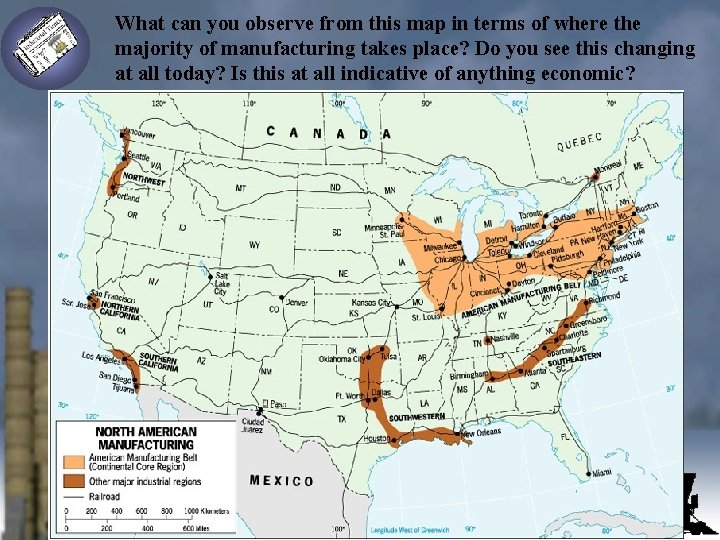
What can you observe from this map in terms of where the majority of manufacturing takes place? Do you see this changing at all today? Is this at all indicative of anything economic?
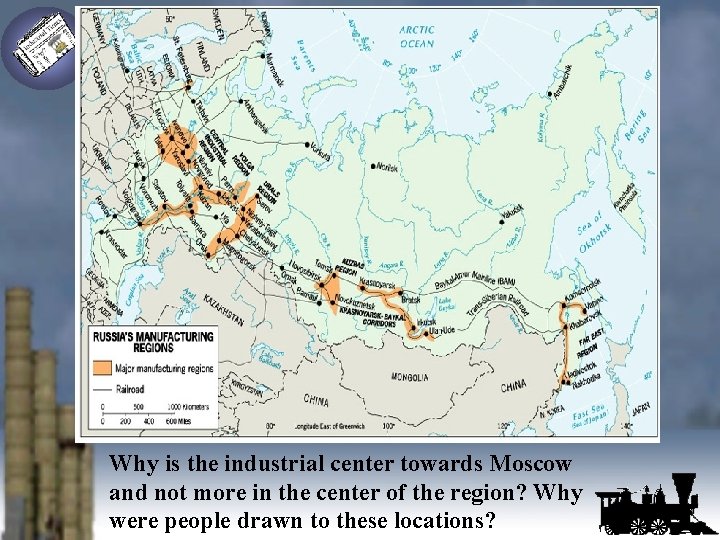
Why is the industrial center towards Moscow and not more in the center of the region? Why were people drawn to these locations?
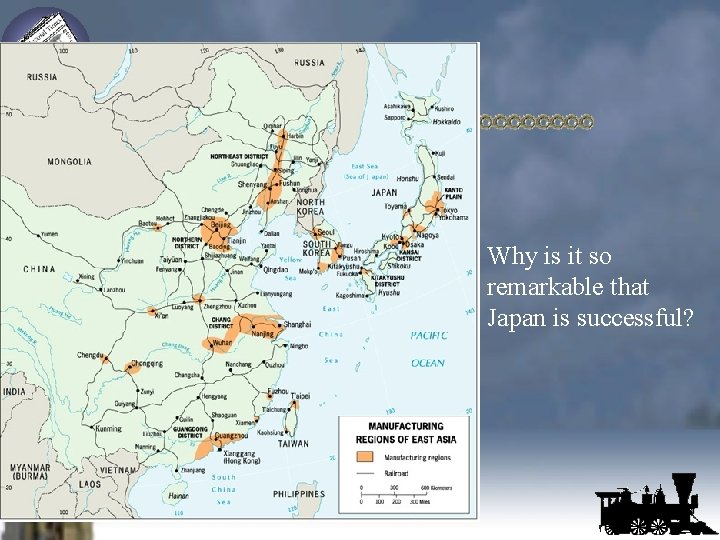
Why is it so remarkable that Japan is successful?
- Slides: 21