
The Battle Against Disease 4 H Veterinary Science
The Battle Against Disease 4 -H Veterinary Science Extension Veterinary Medicine Texas Agri. Life Extension Service College of Veterinary Medicine and Biomedical Sciences Texas A&M System http: //aevm. tamu. edu
Objectives n Discuss the history of disease control n Discuss infectious disease control n Discuss non-infectious disease control n Describe the roles of the government agencies that deal with disease control n Discuss practices to foster health and wellbeing of animals
History n Problems change with time n Brucellosis n Tuberculosis n Foot and mouth disease n Types of disease n Emerging diseases n Endemic diseases n Foreign diseases
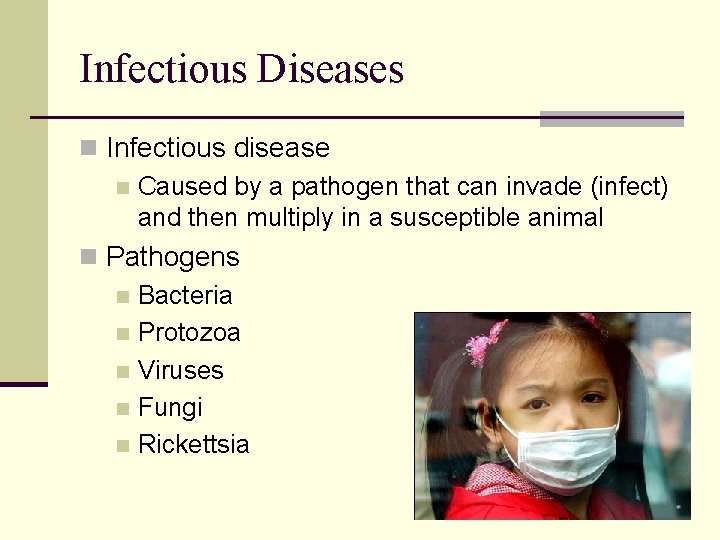
Infectious Diseases n Infectious disease n Caused by a pathogen that can invade (infect) and then multiply in a susceptible animal n Pathogens n Bacteria n Protozoa n Viruses n Fungi n Rickettsia
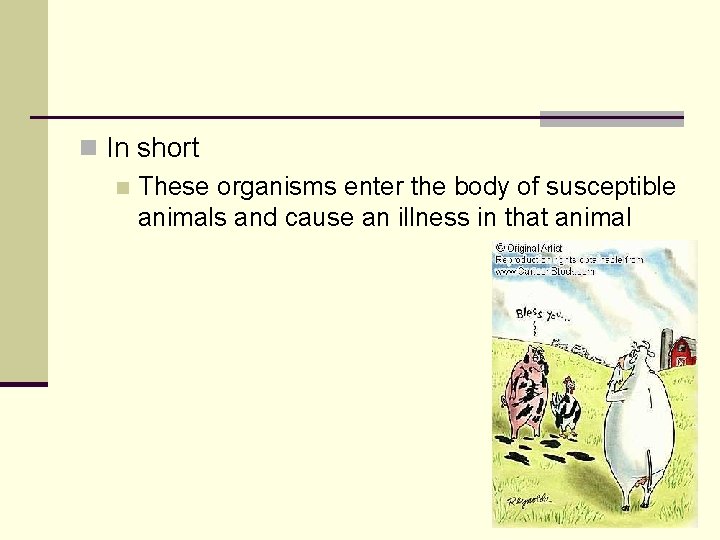
n In short n These organisms enter the body of susceptible animals and cause an illness in that animal
n Concern n Movement of animals introduces these pathogens into susceptible populations n US constantly on look out n TAHC n USDA-APHIS n USDA-VS
Non-Infectious Diseases n Non-infectious disease n Caused by toxins (chemical poisoning) or by malfunctioning of the body (as nutritional disorders) n Result of environmental or behavioral changes
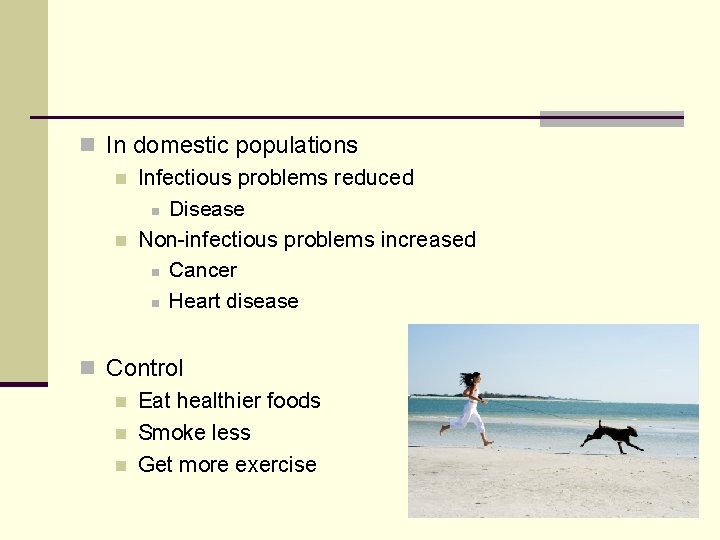
n In domestic populations n Infectious problems reduced n Disease n Non-infectious problems increased n Cancer n Heart disease n Control n Eat healthier foods n Smoke less n Get more exercise
Agency Roles n Both state and federal agencies involved n Animals n State n Texas Animal Health Commission (TAHC) n Federal n USDA-APHIS n People n State n Texas Department of State Health Services n Federal n United States Department of Health and Human Services
n Zoonotic n Disease that is shared between animals and people n n Rabies West nile virus Anthrax Animal and human agencies work together in disease outbreaks
n Sentinel animals n See problems in these animals before see in people
Health and Well-Being n Preventive health management n Vaccinate n Biosecurity n Cooperation between state and federal agencies
n Preventive measures n Identify reservoirs through surveillance n Prevent exposure n Develop immunity n Provide good nutrition n Provide adequate physical activity n Develop optimum environmental conditions n Develop selection and breeding programs
- Slides: 13