
The Basics of Economics Chapter 1 0 Billions
The Basics of Economics (Chapter 1) 0
“Billions of people could benefit from better economic policies. Millions are dying because of bad ones. Sometimes the logic of economics is so compelling that it’s impossible for economists not to take a stand. ” • Tim Hartford (author of The Undercover Economist) 1
Economics § The study of how society manages its scarce resources by making decisions. 2
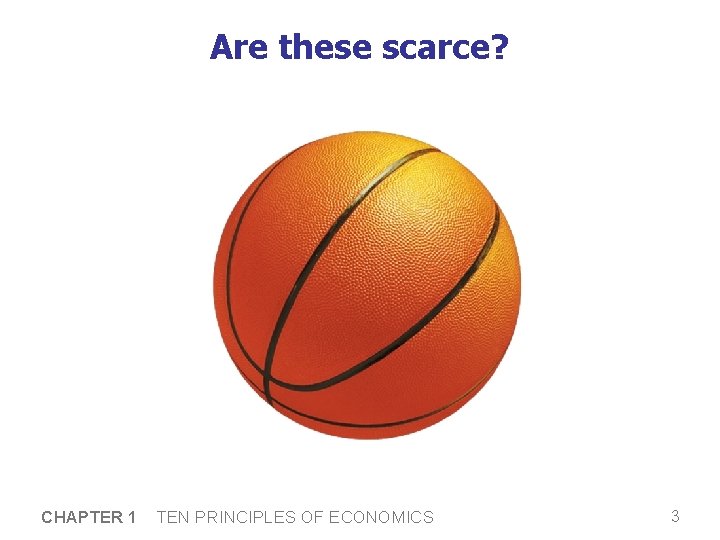
Are these scarce? CHAPTER 1 TEN PRINCIPLES OF ECONOMICS 3
Yes! All goods and services are scarce!!! CHAPTER 1 TEN PRINCIPLES OF ECONOMICS 4
Scarcity § Since all resources in the world are limited, we are limited into how much we can produce. CHAPTER 1 TEN PRINCIPLES OF ECONOMICS 5
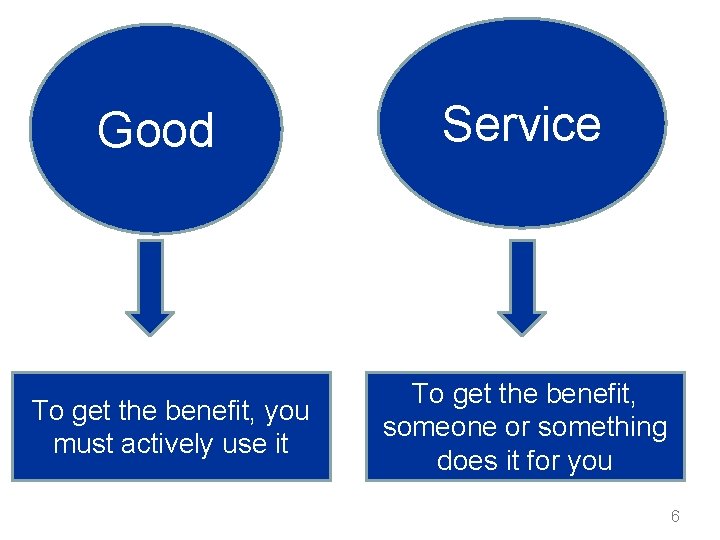
Good To get the benefit, you must actively use it Service To get the benefit, someone or something does it for you 6
So back to what economics is… CHAPTER 1 TEN PRINCIPLES OF ECONOMICS 7

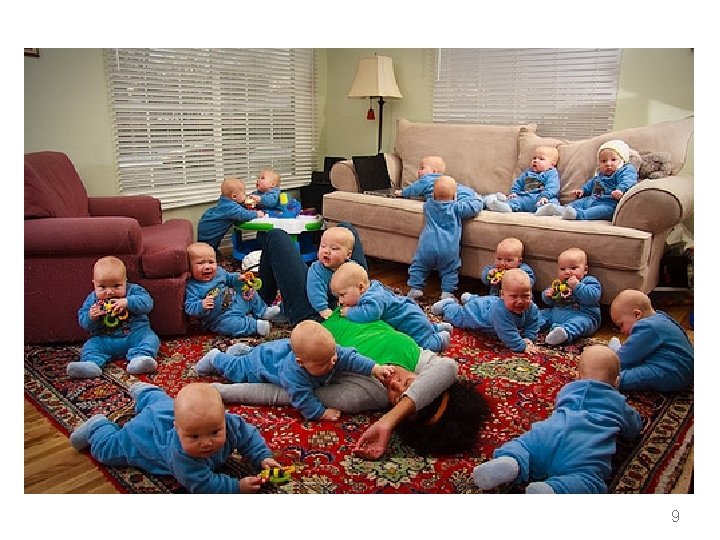
Lets pretend you have found a new tropical island that is inhabited by strange individuals. . . These people need so much help that they gave you the power to make all of their societal decisions. Currently, the society relies on themselves and their surroundings. Based on all of this info, what are three questions to ask yourself when deciding what is best for society? 8
9
MICROECONOMICS is based on the same concept but the decisions that are made are on a much smaller scale…(Individual, Firms, etc). CHAPTER 1 TEN PRINCIPLES OF ECONOMICS 10
1. Key Economic Questions Society faces many decisions: § What goods and services will be produced? § Who will produce the goods and services? § Who will consume the goods and services? © 2007 Thomson South-Western
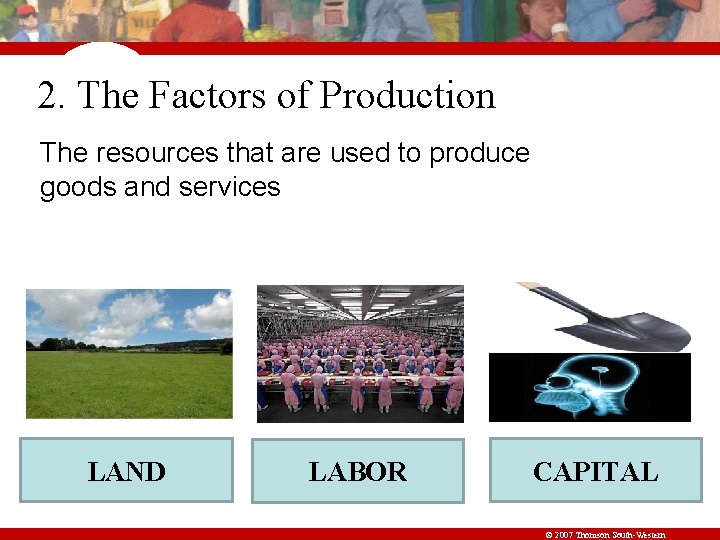
2. The Factors of Production The resources that are used to produce goods and services LAND LABOR CAPITAL © 2007 Thomson South-Western
3. Physical vs. Human Capital • Physical Capital are the man made assets that are used in production. • Ex. shovel, nail, plastic, etc. • Human Capital is the knowledge that is needed in production. • Ex. a doctor administering an X-Ray, Mr. Barber teaching the most awe-inspiring lessons in the history of education. © 2007 Thomson South-Western
4. Market • A group of buyers (consumers) and sellers (producers) of a particular good or service © 2007 Thomson South-Western
5. The People Who Make Up A Market • Households • Consumer of goods and services. • They ARE the factors of production. • Firms • Producers of goods and services. • They USE the factors of production. © 2007 Thomson South-Western
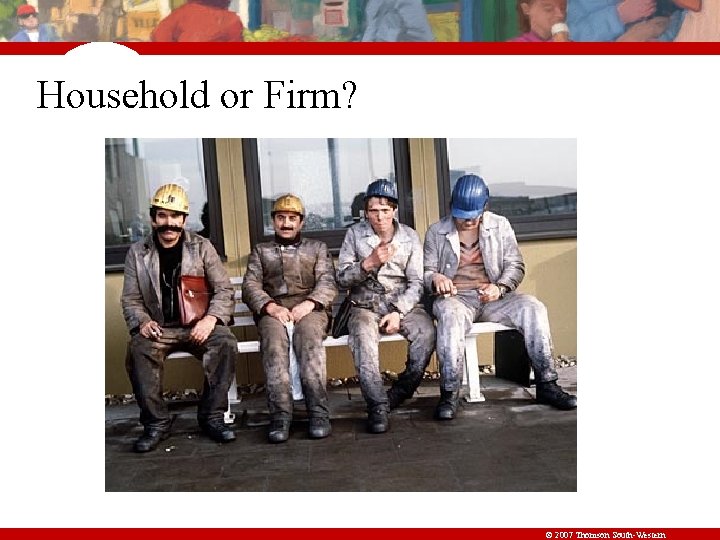
Household or Firm? © 2007 Thomson South-Western
Household or Firm? © 2007 Thomson South-Western
6. Society and Scarce Resources • The management of society’s resources is important because resources are scarce. • Scarcity. . . means that society has limited resources and therefore cannot produce all the goods and services people wish to have. © 2007 Thomson South-Western
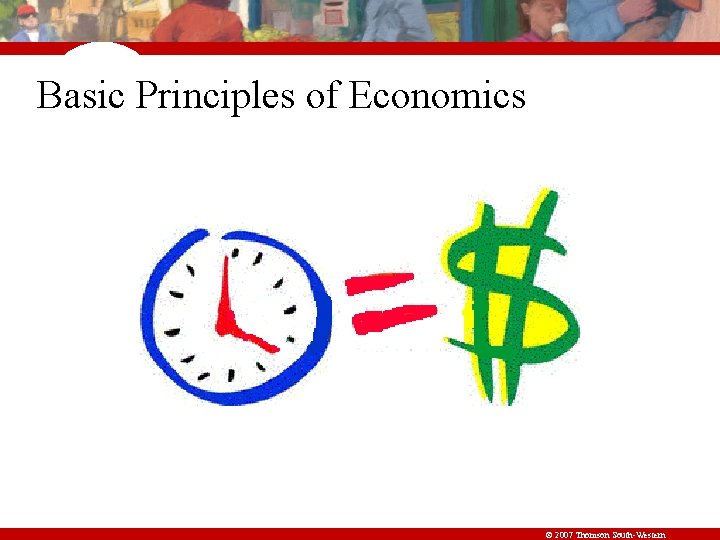
Basic Principles of Economics © 2007 Thomson South-Western
Principle #1: People Face Trade-offs • Also known as costs • What you give up because of a decision Brain Drain! • Efficiency v. Equity • Efficiency meansdecides societytogets the most that it can If society be more equitable, whatresources. will happen to efficiency? from its scarce • Equity means the benefits of those resources are distributed evenly among the members of society. © 2007 Thomson South-Western
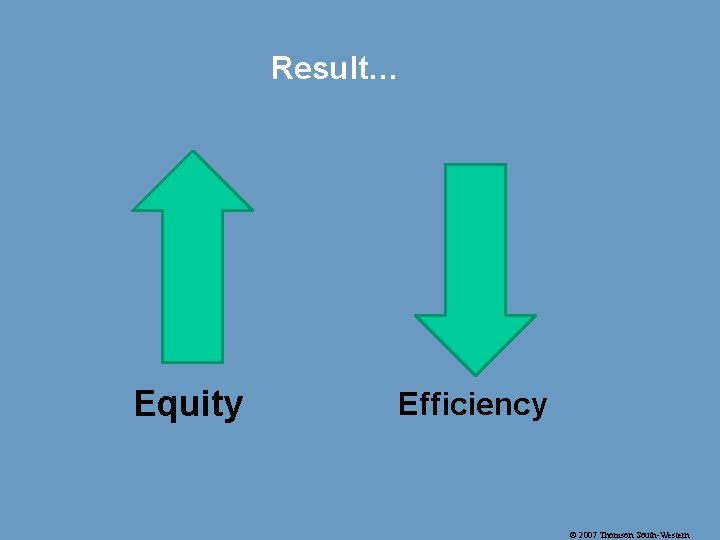
Result… Equity Efficiency © 2007 Thomson South-Western
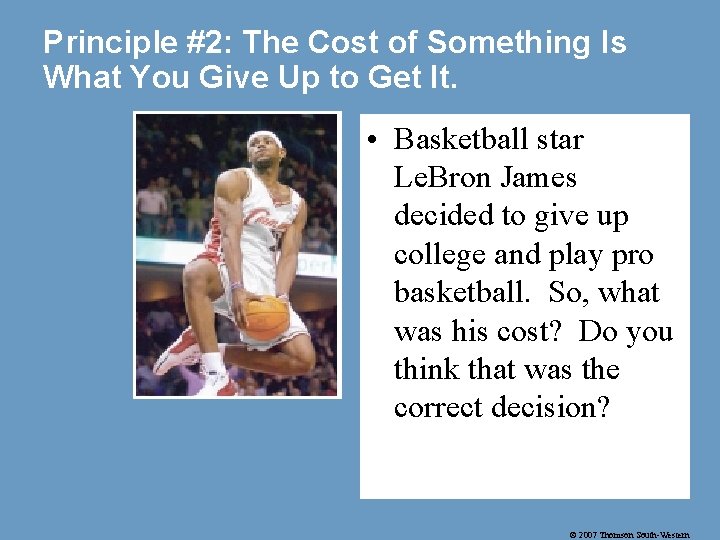
Principle #2: The Cost of Something Is What You Give Up to Get It. • Basketball star Le. Bron James decided to give up college and play pro basketball. So, what was his cost? Do you think that was the correct decision? © 2007 Thomson South-Western
Opportunity Cost The MOST desirable alternative that is given up because of a decision © 2007 Thomson South-Western
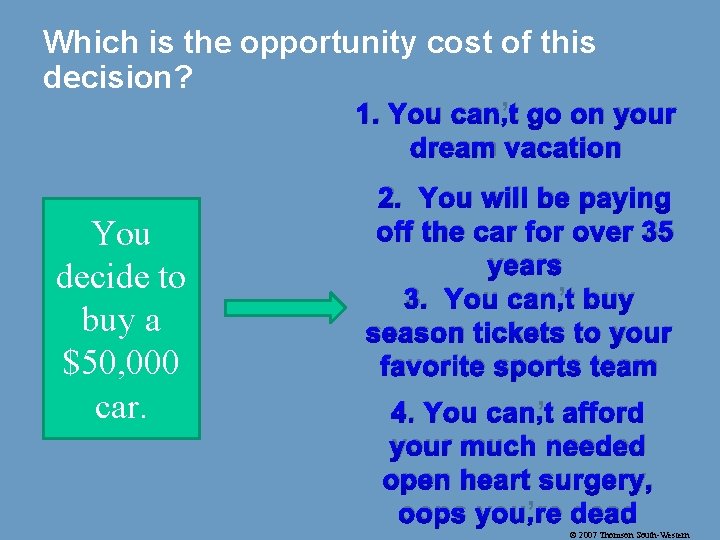
Which is the opportunity cost of this decision? 1. You can’t go on your dream vacation You decide to buy a $50, 000 car. 2. You will be paying off the car for over 35 years 3. You can’t buy season tickets to your favorite sports team 4. You can’t afford your much needed open heart surgery, oops you’re dead © 2007 Thomson South-Western
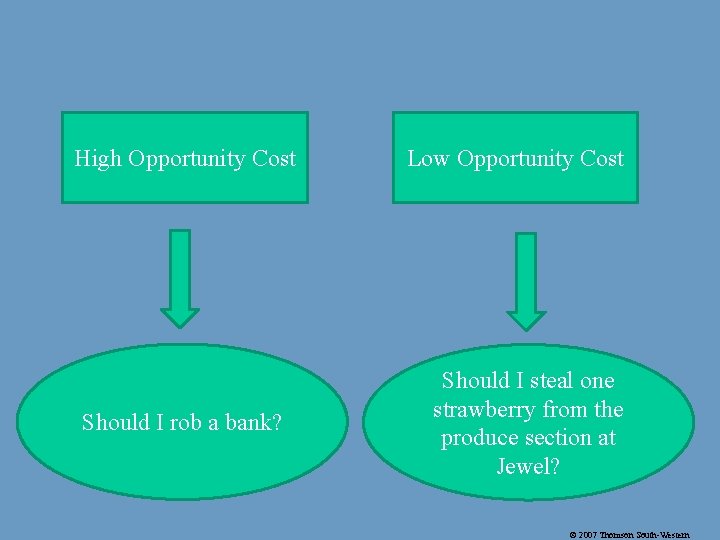
High Opportunity Cost Should I rob a bank? Low Opportunity Cost Should I steal one strawberry from the produce section at Jewel? © 2007 Thomson South-Western
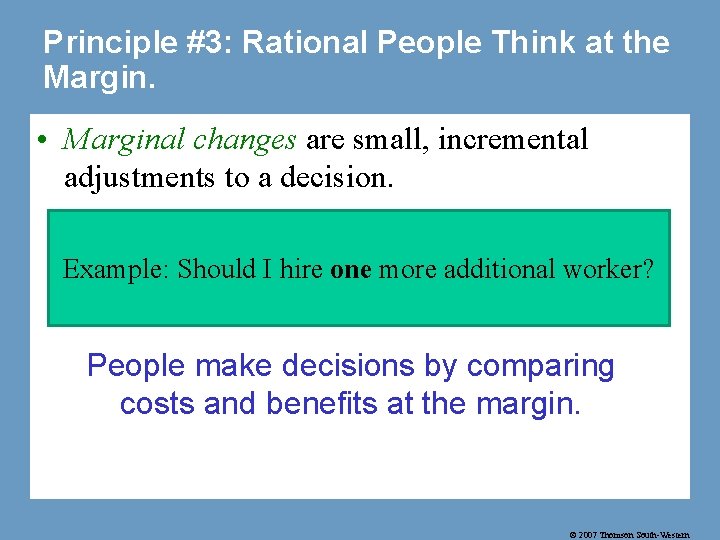
Principle #3: Rational People Think at the Margin. • Marginal changes are small, incremental adjustments to a decision. Example: Should I hire one more additional worker? People make decisions by comparing costs and benefits at the margin. © 2007 Thomson South-Western
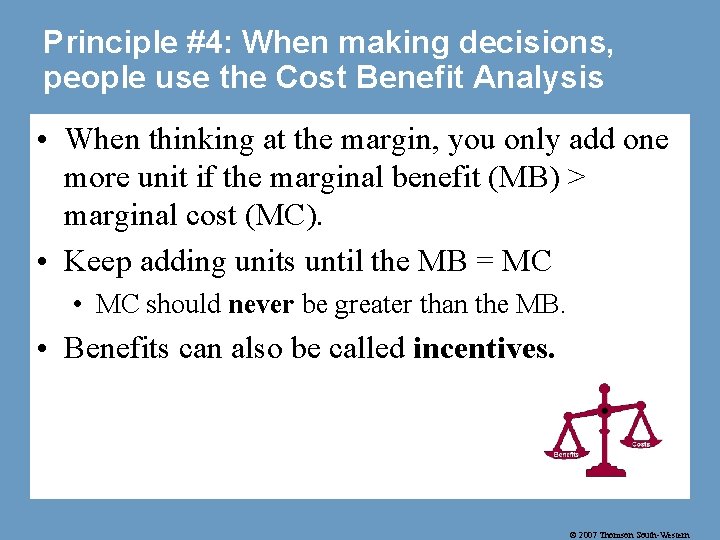
Principle #4: When making decisions, people use the Cost Benefit Analysis • When thinking at the margin, you only add one more unit if the marginal benefit (MB) > marginal cost (MC). • Keep adding units until the MB = MC • MC should never be greater than the MB. • Benefits can also be called incentives. © 2007 Thomson South-Western
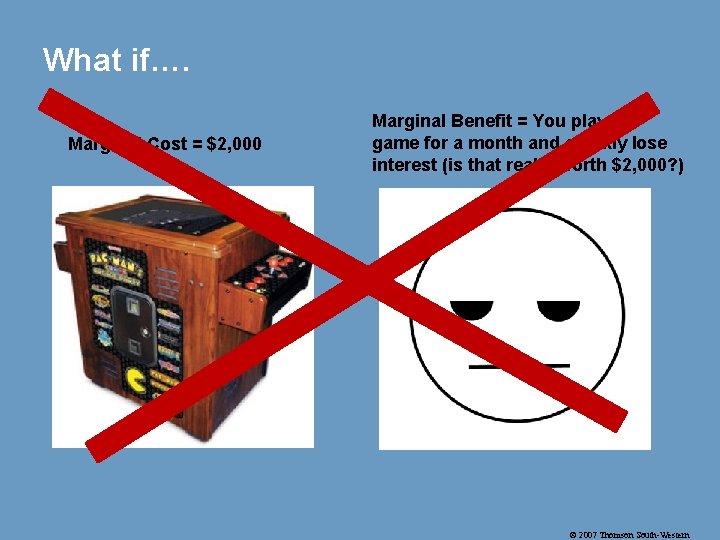
What if…. Marginal Cost = $2, 000 Marginal Benefit = You play the game for a month and quickly lose interest (is that really worth $2, 000? ) © 2007 Thomson South-Western
Principle #5: Trade Can Make Everyone Better Off. • Trade allows people to specialize in what they do best. © 2007 Thomson South-Western
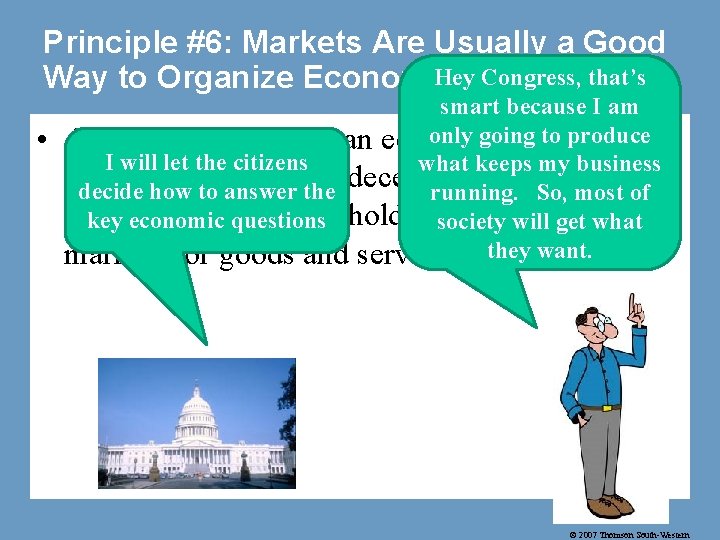
Principle #6: Markets Are Usually a Good Hey. Activity. Congress, that’s Way to Organize Economic • smart because I am only going produce A market economy is an economy thatto allocates I will let the citizens what keeps my business resources through the decentralized decisions of decide how to answer the running. So, most of many firms and households associety theywill interact in key economic questions get what markets for goods and services. they want. © 2007 Thomson South-Western
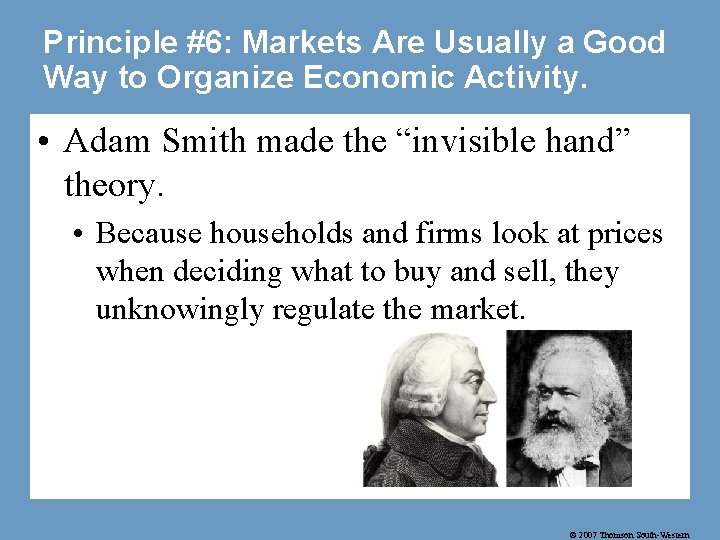
Principle #6: Markets Are Usually a Good Way to Organize Economic Activity. • Adam Smith made the “invisible hand” theory. • Because households and firms look at prices when deciding what to buy and sell, they unknowingly regulate the market. © 2007 Thomson South-Western
Principle #7: Governments Can Sometimes Improve Market Outcomes. • Markets work only if property rights are enforced. • Property rights are the ability of an individual to own and exercise control over a scarce resource • Market failure occurs when the market fails to allocate resources efficiently. • When the market fails (breaks down) government can intervene to promote efficiency and equity. © 2007 Thomson South-Western
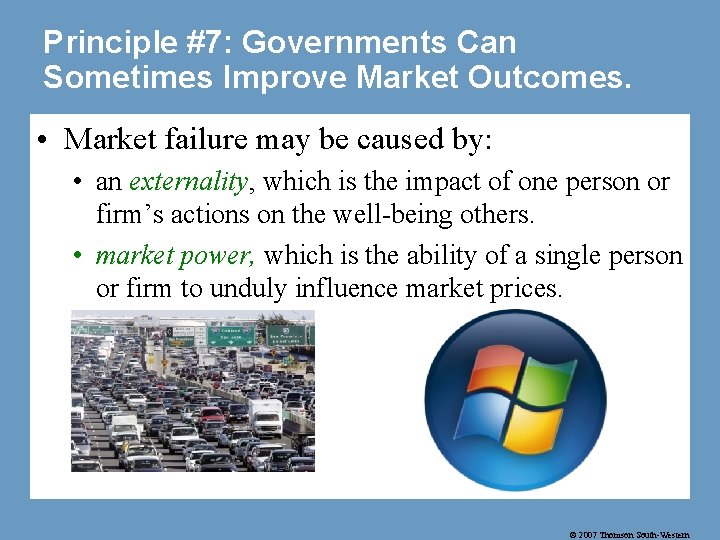
Principle #7: Governments Can Sometimes Improve Market Outcomes. • Market failure may be caused by: • an externality, which is the impact of one person or firm’s actions on the well-being others. • market power, which is the ability of a single person or firm to unduly influence market prices. © 2007 Thomson South-Western
- Slides: 34