
The basics of acoustic principles OWEN MELLOR WAVE
The basics of acoustic principles OWEN MELLOR
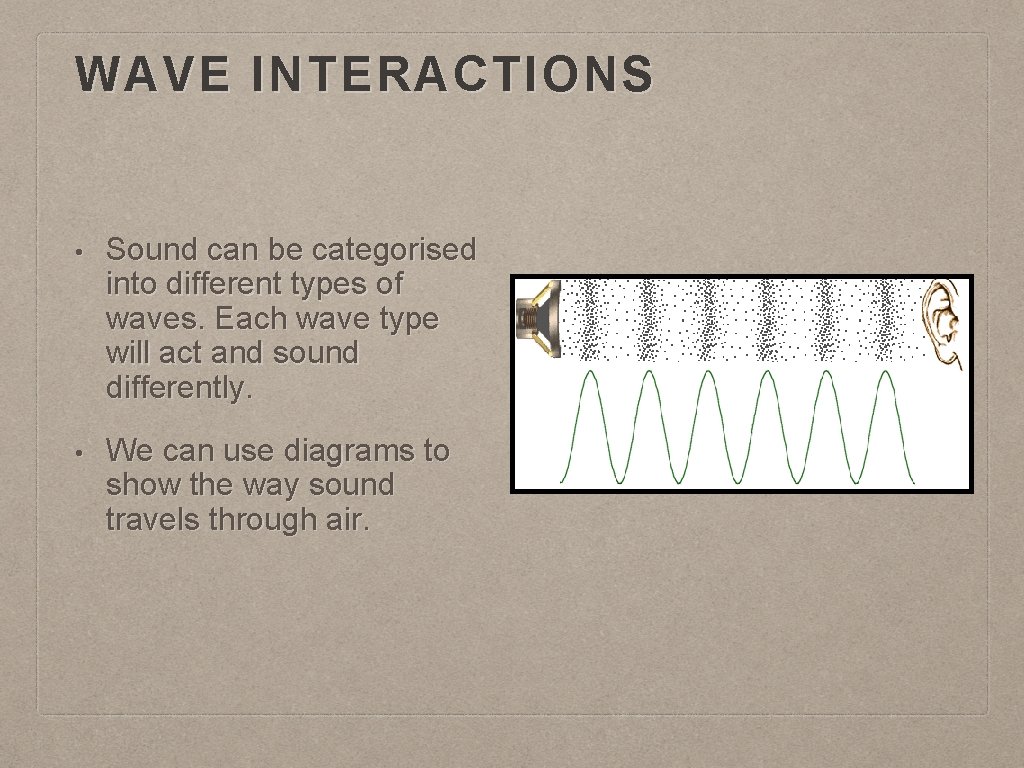
WAVE INTERACTIONS • Sound can be categorised into different types of waves. Each wave type will act and sound differently. • We can use diagrams to show the way sound travels through air.
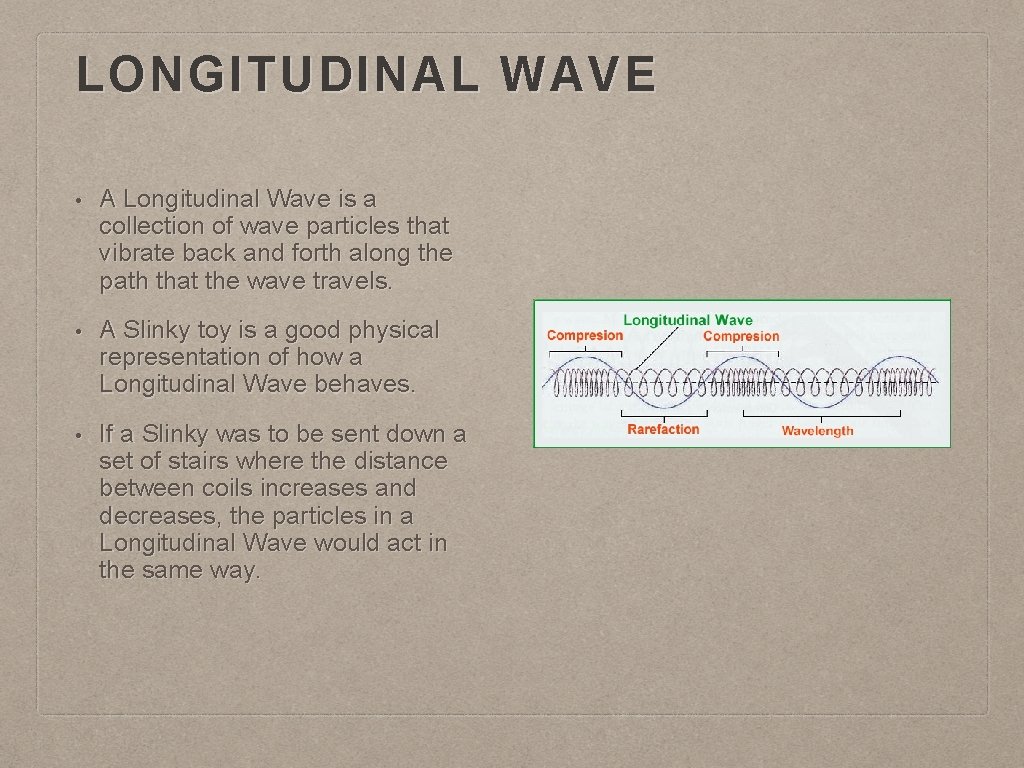
LONGITUDINAL WAVE • A Longitudinal Wave is a collection of wave particles that vibrate back and forth along the path that the wave travels. • A Slinky toy is a good physical representation of how a Longitudinal Wave behaves. • If a Slinky was to be sent down a set of stairs where the distance between coils increases and decreases, the particles in a Longitudinal Wave would act in the same way.
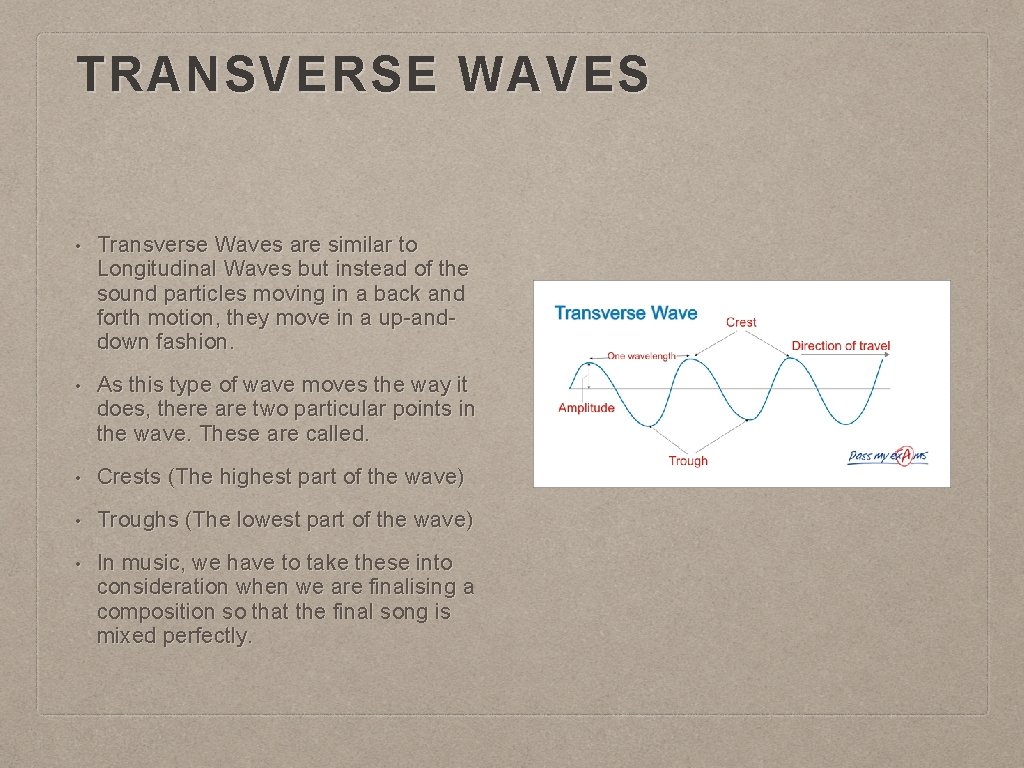
TRANSVERSE WAVES • Transverse Waves are similar to Longitudinal Waves but instead of the sound particles moving in a back and forth motion, they move in a up-anddown fashion. • As this type of wave moves the way it does, there are two particular points in the wave. These are called. • Crests (The highest part of the wave) • Troughs (The lowest part of the wave) • In music, we have to take these into consideration when we are finalising a composition so that the final song is mixed perfectly.
https: //www. youtube. com/watch? v=7 c. DAYFTXq 3 E A short video describing how Longitudinal Waves and Transverse Waves travel through air.
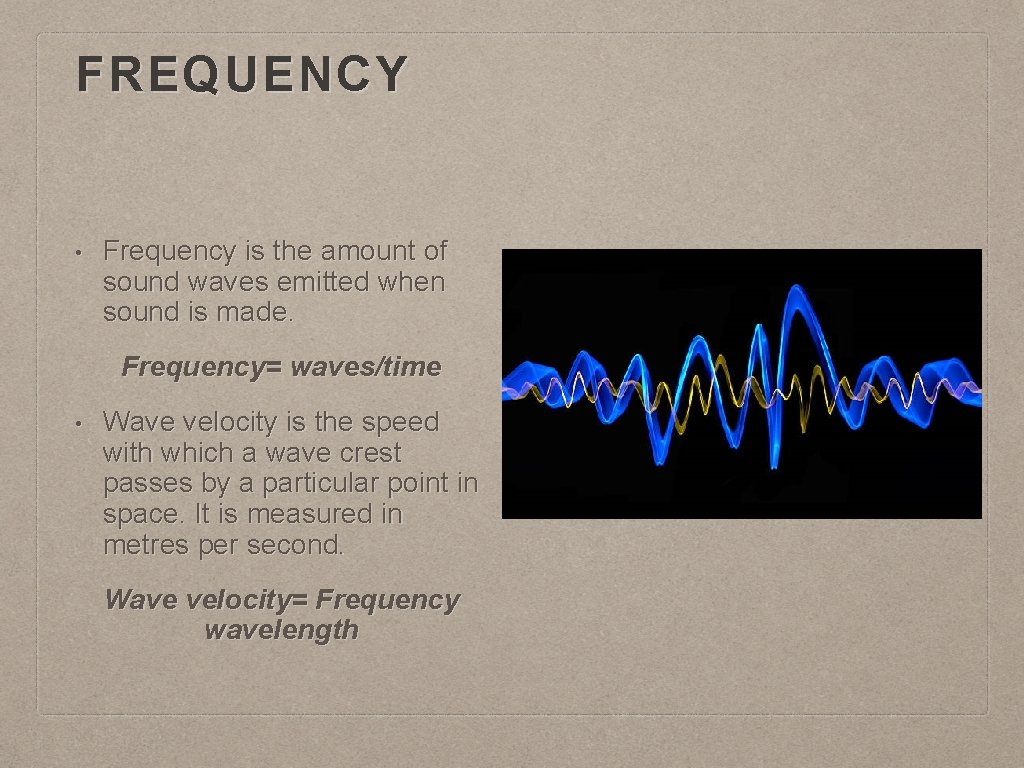
FREQUENCY • Frequency is the amount of sound waves emitted when sound is made. Frequency= waves/time • Wave velocity is the speed with which a wave crest passes by a particular point in space. It is measured in metres per second. Wave velocity= Frequency wavelength
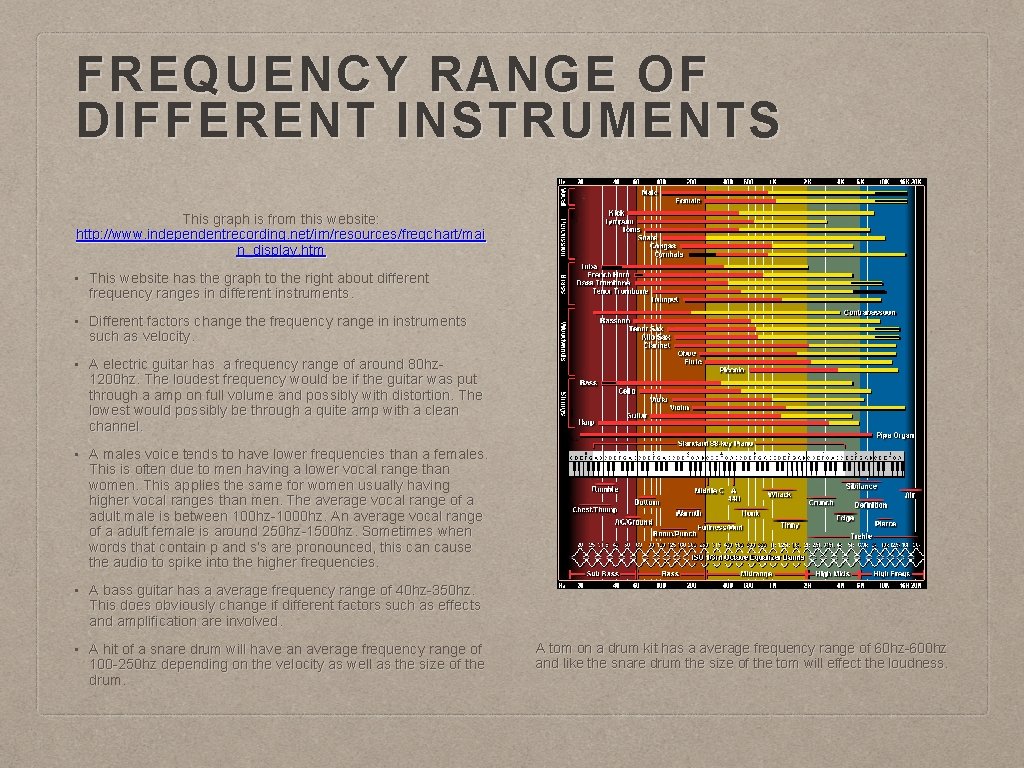
FREQUENCY RANGE OF DIFFERENT INSTRUMENTS This graph is from this website: http: //www. independentrecording. net/irn/resources/freqchart/mai n_display. htm • This website has the graph to the right about different frequency ranges in different instruments. • Different factors change the frequency range in instruments such as velocity. • A electric guitar has a frequency range of around 80 hz 1200 hz. The loudest frequency would be if the guitar was put through a amp on full volume and possibly with distortion. The lowest would possibly be through a quite amp with a clean channel. • A males voice tends to have lower frequencies than a females. This is often due to men having a lower vocal range than women. This applies the same for women usually having higher vocal ranges than men. The average vocal range of a adult male is between 100 hz-1000 hz. An average vocal range of a adult female is around 250 hz-1500 hz. Sometimes when words that contain p and s’s are pronounced, this can cause the audio to spike into the higher frequencies. • A bass guitar has a average frequency range of 40 hz-350 hz. This does obviously change if different factors such as effects and amplification are involved. • A hit of a snare drum will have an average frequency range of 100 -250 hz depending on the velocity as well as the size of the drum. A tom on a drum kit has a average frequency range of 60 hz-600 hz and like the snare drum the size of the tom will effect the loudness.
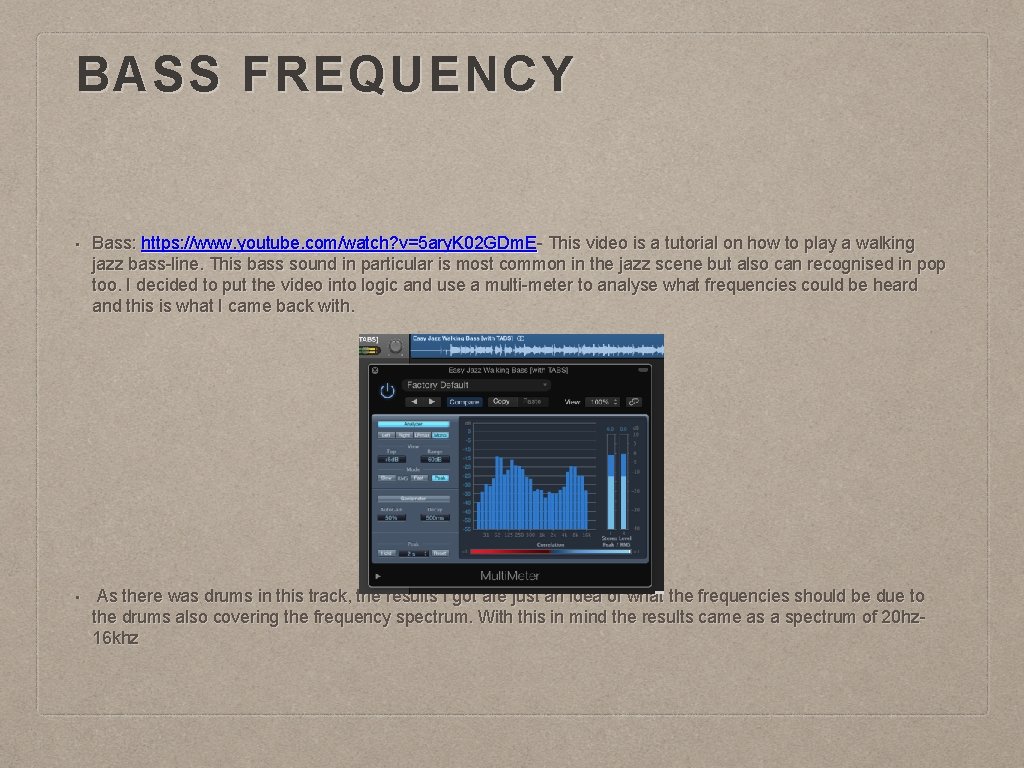
BASS FREQUENCY • Bass: https: //www. youtube. com/watch? v=5 ary. K 02 GDm. E- This video is a tutorial on how to play a walking jazz bass-line. This bass sound in particular is most common in the jazz scene but also can recognised in pop too. I decided to put the video into logic and use a multi-meter to analyse what frequencies could be heard and this is what I came back with. • As there was drums in this track, the results I got are just an idea of what the frequencies should be due to the drums also covering the frequency spectrum. With this in mind the results came as a spectrum of 20 hz 16 khz
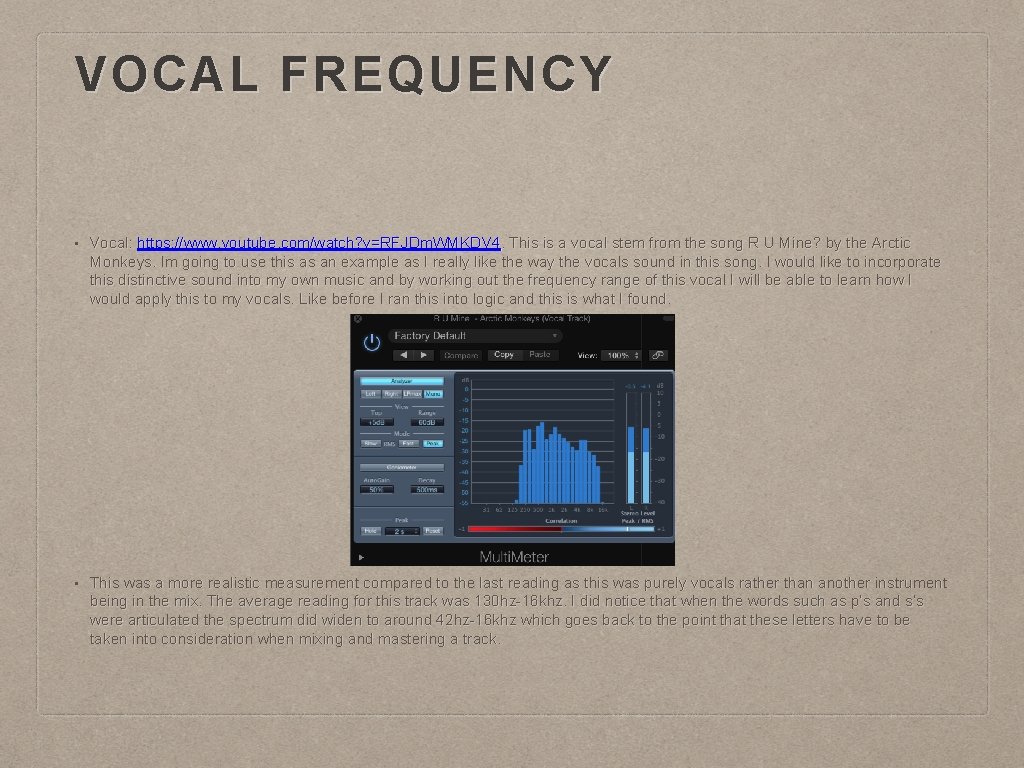
VOCAL FREQUENCY • Vocal: https: //www. youtube. com/watch? v=RFJDm. WMKDV 4. This is a vocal stem from the song R U Mine? by the Arctic Monkeys. Im going to use this as an example as I really like the way the vocals sound in this song. I would like to incorporate this distinctive sound into my own music and by working out the frequency range of this vocal I will be able to learn how I would apply this to my vocals. Like before I ran this into logic and this is what I found. • This was a more realistic measurement compared to the last reading as this was purely vocals rather than another instrument being in the mix. The average reading for this track was 130 hz-16 khz. I did notice that when the words such as p’s and s’s were articulated the spectrum did widen to around 42 hz-16 khz which goes back to the point that these letters have to be taken into consideration when mixing and mastering a track.
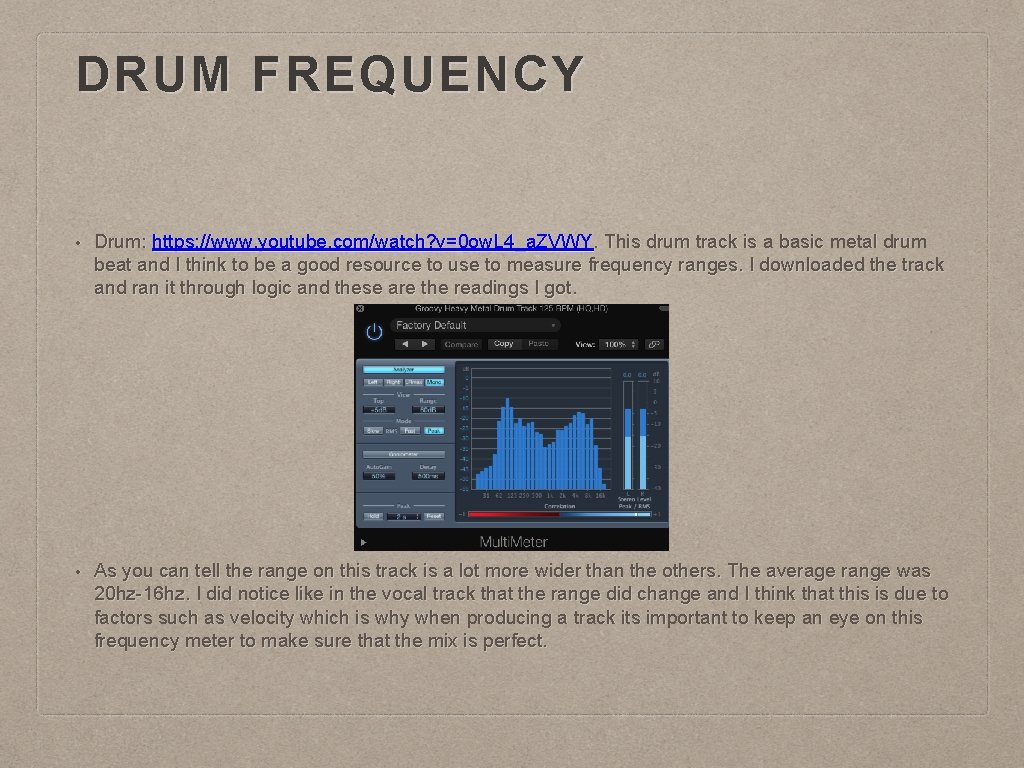
DRUM FREQUENCY • Drum: https: //www. youtube. com/watch? v=0 ow. L 4_a. ZVWY. This drum track is a basic metal drum beat and I think to be a good resource to use to measure frequency ranges. I downloaded the track and ran it through logic and these are the readings I got. • As you can tell the range on this track is a lot more wider than the others. The average range was 20 hz-16 hz. I did notice like in the vocal track that the range did change and I think that this is due to factors such as velocity which is why when producing a track its important to keep an eye on this frequency meter to make sure that the mix is perfect.
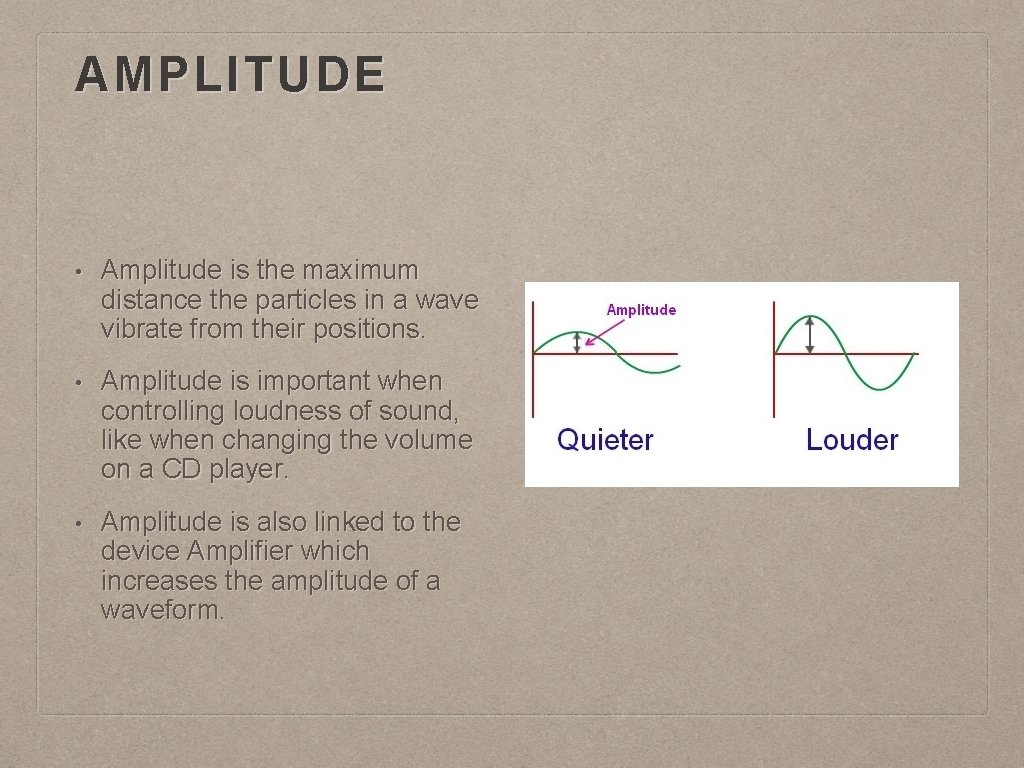
AMPLITUDE • Amplitude is the maximum distance the particles in a wave vibrate from their positions. • Amplitude is important when controlling loudness of sound, like when changing the volume on a CD player. • Amplitude is also linked to the device Amplifier which increases the amplitude of a waveform.
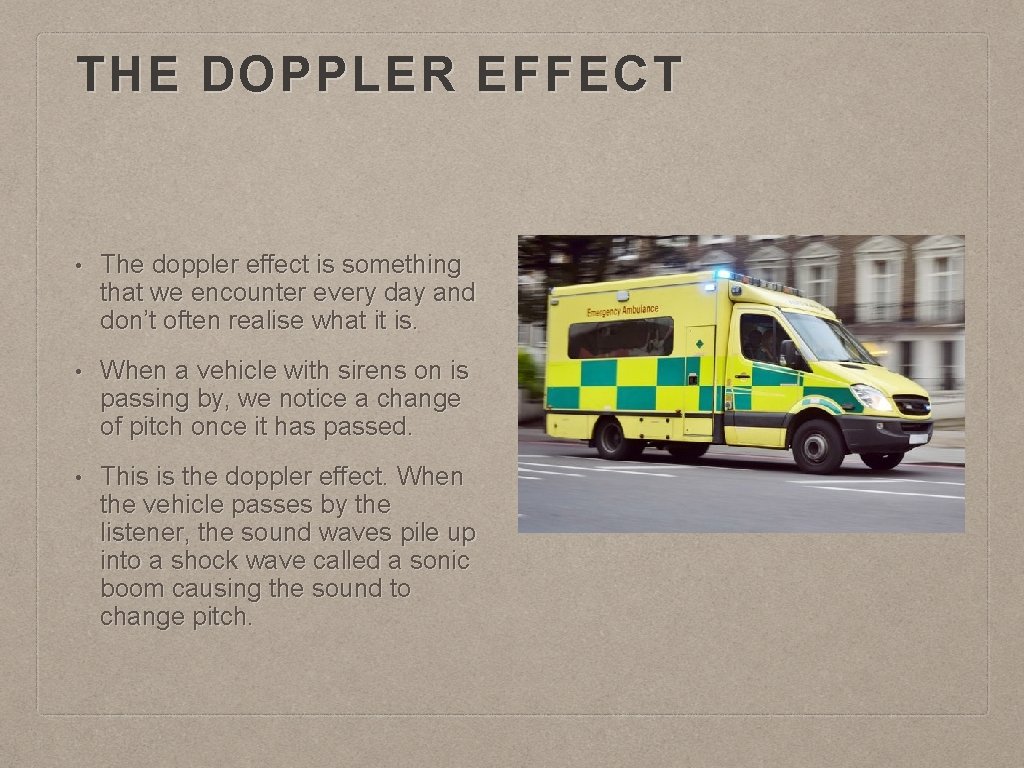
THE DOPPLER EFFECT • The doppler effect is something that we encounter every day and don’t often realise what it is. • When a vehicle with sirens on is passing by, we notice a change of pitch once it has passed. • This is the doppler effect. When the vehicle passes by the listener, the sound waves pile up into a shock wave called a sonic boom causing the sound to change pitch.
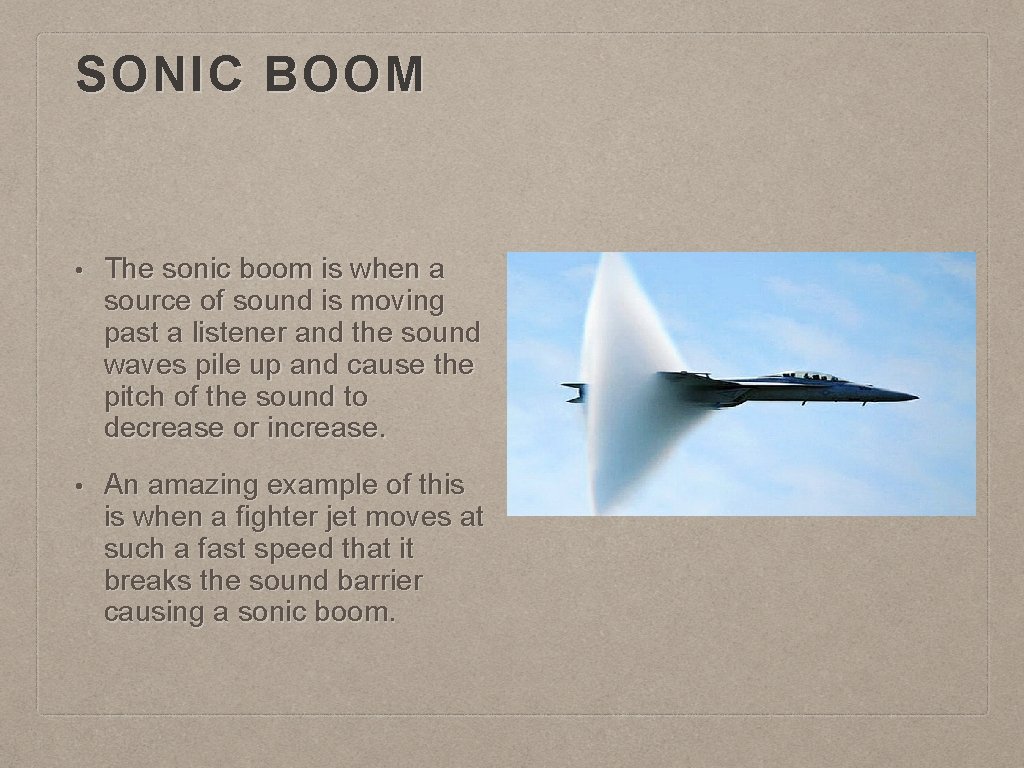
SONIC BOOM • The sonic boom is when a source of sound is moving past a listener and the sound waves pile up and cause the pitch of the sound to decrease or increase. • An amazing example of this is when a fighter jet moves at such a fast speed that it breaks the sound barrier causing a sonic boom.
Sonic Boom Video https: //www. youtube. com/watch? v=4 BOLN 2 ak. ROk
SPEED OF SOUND • The speed in which sound particles travel is referred to as the speed of sound. • Sound travels faster through liquids and solids than through air. This is because liquids and solids are more dense than air and the molecules in gases are much further apart than solids and liquids. • To measure the speed of sound through air would require the formulae: Distance traveled/time taken. • As different factors such as temperature can effect the results this formulae is a estimate and would not be relied on if a sound engineer was sound-proofing a room. • If exact results were needed, using a electronic timer or a data logger would be the most appropriate approach.
PROPERTIES OF SOUND • Pitch- the definition of how high or low a sound seems to a person. • Loudness- how loud or soft a sound made out to be by someone • Ultrasound- sound waves that have frequencies much higher above than the average human hearing range. These are sounds are usually between 20 -100 khz • Infrasound- sound waves that contain frequencies below the average human hearing range. These sounds are usually between 20 -200 hz
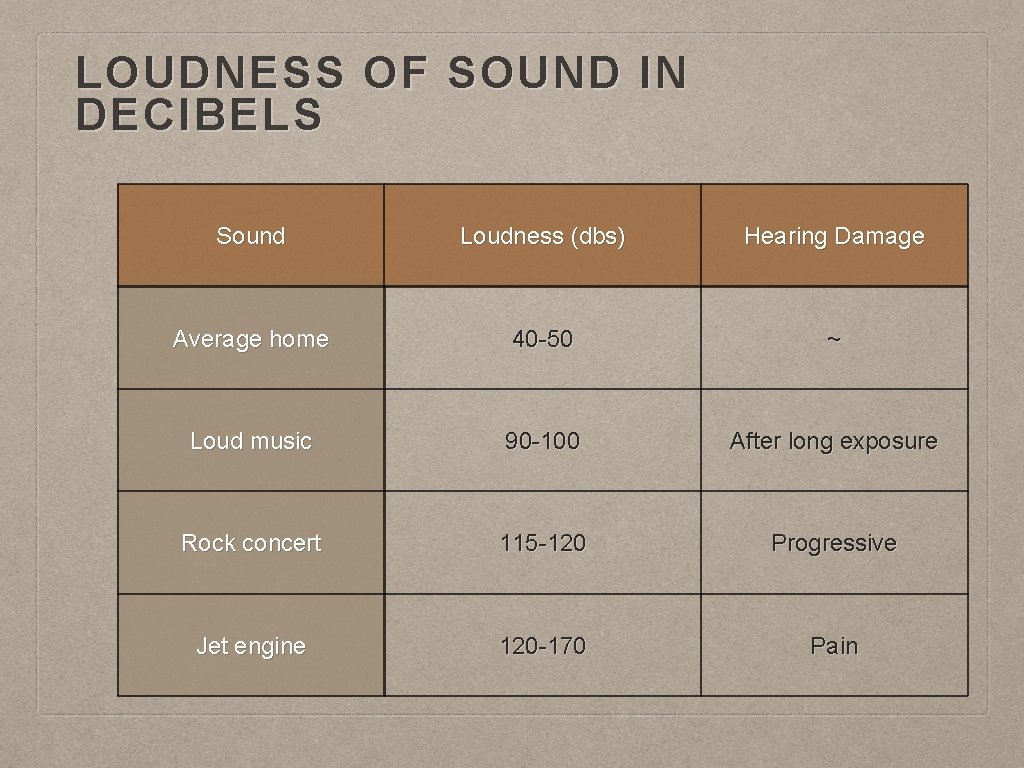
LOUDNESS OF SOUND IN DECIBELS Sound Loudness (dbs) Hearing Damage Average home 40 -50 ~ Loud music 90 -100 After long exposure Rock concert 115 -120 Progressive Jet engine 120 -170 Pain
Sources https: //en. wikipedia. org/wiki/Longitudinal_wave http: //hyperphysics. phyastr. gsu. edu/hbase/Sound/tralon. html
- Slides: 18