
The Basics Mise en Place Mise en Place
The Basics Mise en Place
Mise en Place Ø Common term used in professional kitchens Ø French phrase meaning “Put in Place” l l Referring to having all foods and equipment ready for a specific preparation before beginning it. Also refers to mental readiness
Mise en Place Cont. Ø What is included for mise en place? l l l Reading and understanding a recipe Chopping herbs, and onions (prepping items if needed) Assembling all the ingredients necessary for a recipe Verifying all necessary pieces of equipment are available and working Setting up your station prior to service
Why Mise en Place Ø It ensures that kitchen work is orderly and carried out efficiently. Ø Many basic skills are frequently part of mise en place
Kitchens Ø 1. Go to your kitchen. Ø 2. Find out where items & equipment are located. Ø 3. Look to see what looks or feels dirty, dusty, etc. (write it down). Ø 4. REMEMBER…. Everything in the kitchen is used to create a food product therefore it MUST be maintained & in good working order.
Knives Ø Knife is the chef’s most important tool. Ø Kitchen knives are made from one of three types of metals: l l l Carbon Steel Stainless Steel High- Carbon Stainless Steel
Carbon Steel Knives Carbon steel has been used to make knives for hundreds of years. Ø A blade made from carbon steel is the easiest to sharpen to a finely honed edge, but loses its shine and discolors quickly after its first use. Ø Will rust if left wet or in a damp place. Ø Sometimes transfers a metallic flavor to food. (especially acidic foods) Ø Causes foods such as lettuce and avocados to discolor more rapidly Ø
Stainless Steel Ø Does not pit, rust, or discolor. Ø Does not affect flavor of foods Ø Much harder metal than carbon steel l Making sharpening difficult • Hard to keep sharp
High- Carbon Stainless Steel Ø Combination of carbon and stainless steels Ø Most knives today are made with high- carbon stainless steel Ø Easier to sharpen and maintain Ø Do not rust or discolor
Buying Knives Tang- the portion of the knife blade that extends into the handle of the knife. Ø Full Tang- Best! Extends all the way to the end of the handle Ø Rattail Tang- a thin piece of metal, like the handle of a rattail comb, that extends into the handle of the knife. Ø Always choose a knife with a tang of at least 3/4 th the length of the handle. Ø l l Cheaper Blade and handle often come loose with wear.
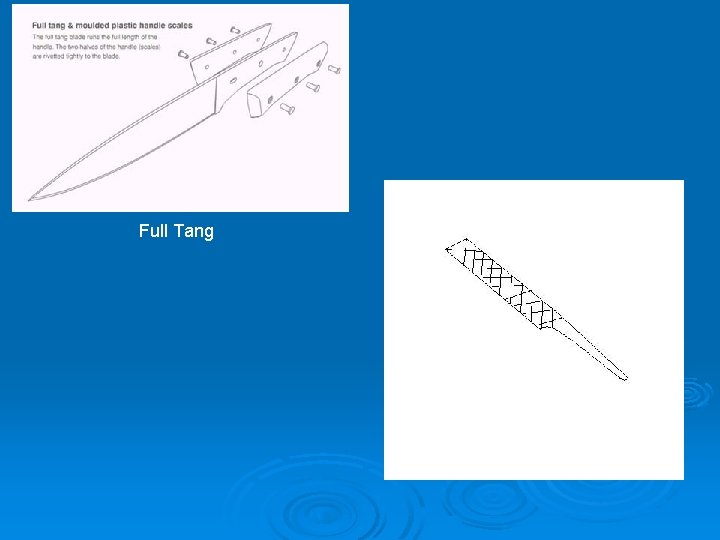
Full Tang Rattail Tang
Knife Care Ø Always wash by hand Ø Store in a designated place for safety and to preserve edge. Ø Don’t use a knife with a loose blade
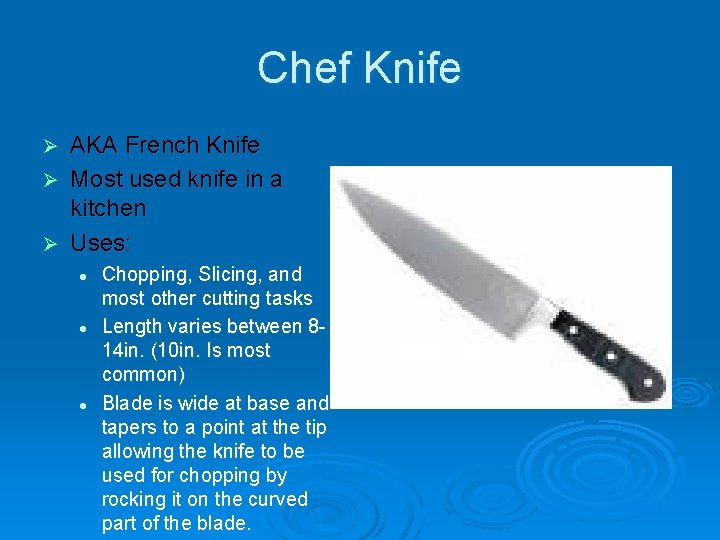
Chef Knife AKA French Knife Ø Most used knife in a kitchen Ø Uses: Ø l l l Chopping, Slicing, and most other cutting tasks Length varies between 814 in. (10 in. Is most common) Blade is wide at base and tapers to a point at the tip allowing the knife to be used for chopping by rocking it on the curved part of the blade.
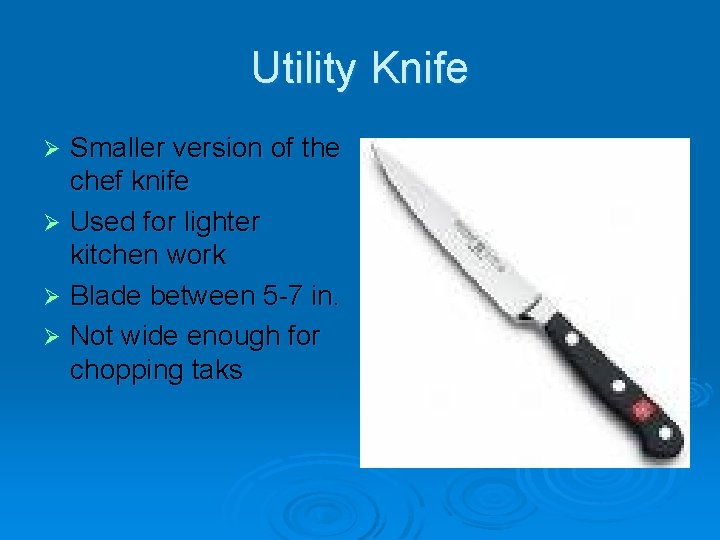
Utility Knife Smaller version of the chef knife Ø Used for lighter kitchen work Ø Blade between 5 -7 in. Ø Not wide enough for chopping taks Ø
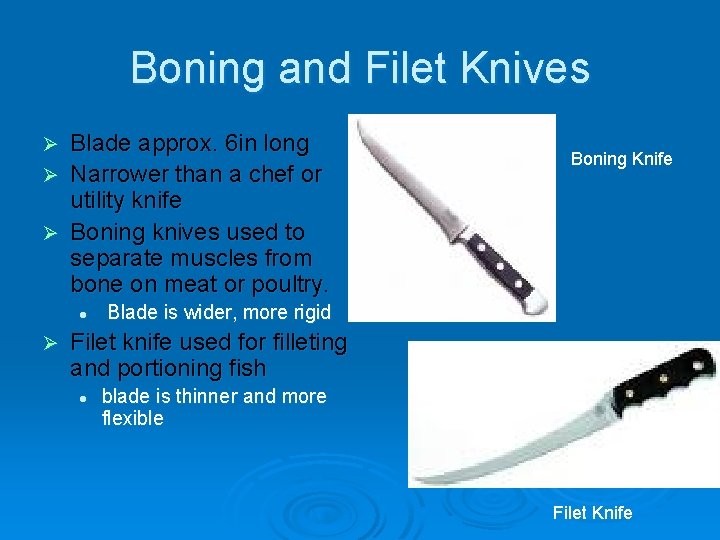
Boning and Filet Knives Blade approx. 6 in long Ø Narrower than a chef or utility knife Ø Boning knives used to separate muscles from bone on meat or poultry. Ø l Ø Boning Knife Blade is wider, more rigid Filet knife used for filleting and portioning fish l blade is thinner and more flexible Filet Knife
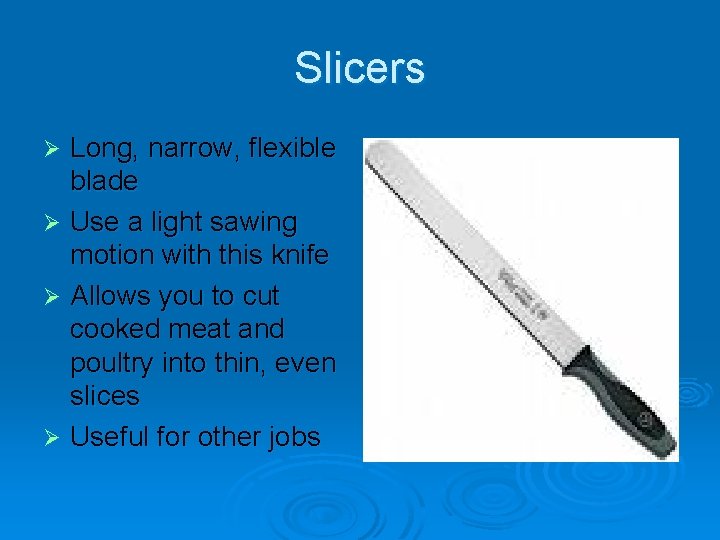
Slicers Long, narrow, flexible blade Ø Use a light sawing motion with this knife Ø Allows you to cut cooked meat and poultry into thin, even slices Ø Useful for other jobs Ø
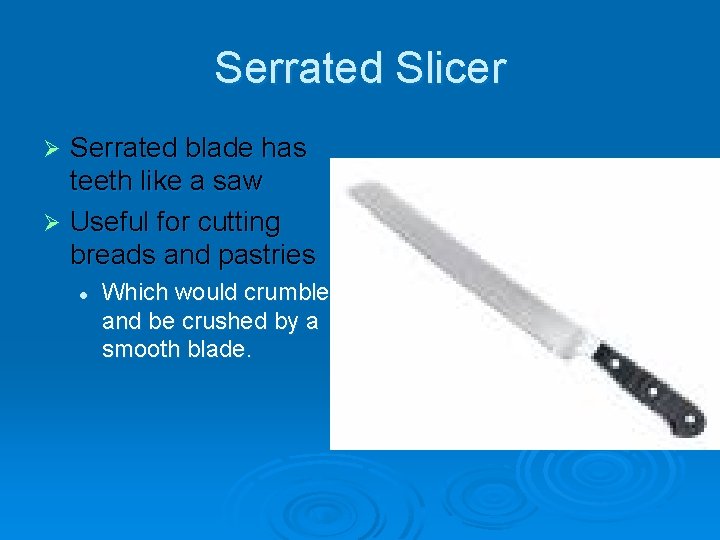
Serrated Slicer Serrated blade has teeth like a saw Ø Useful for cutting breads and pastries Ø l Which would crumble and be crushed by a smooth blade.
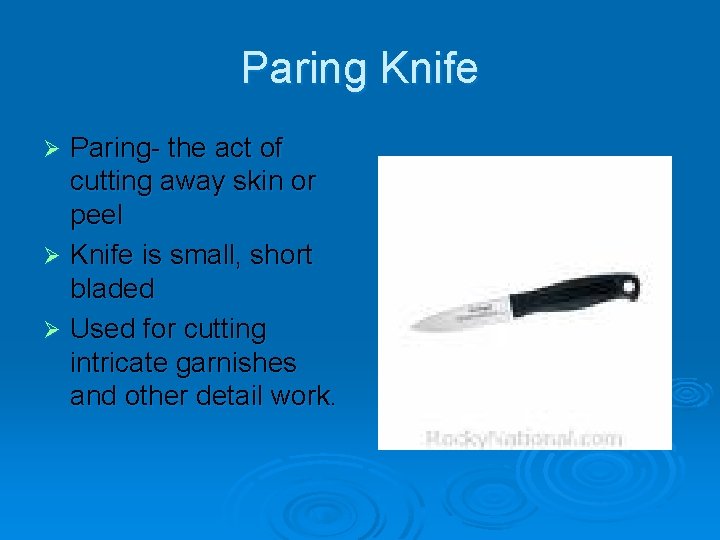
Paring Knife Paring- the act of cutting away skin or peel Ø Knife is small, short bladed Ø Used for cutting intricate garnishes and other detail work. Ø
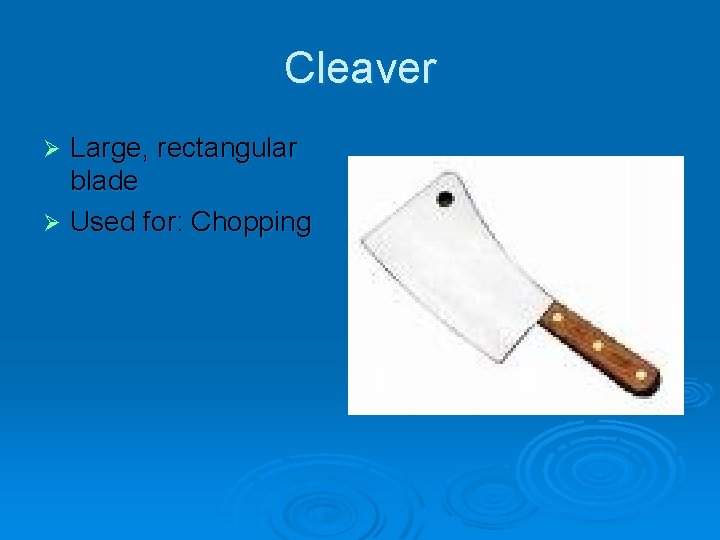
Cleaver Large, rectangular blade Ø Used for: Chopping Ø
- Slides: 19