
The Basic Units of Life Living things are
The Basic Units of Life
Living things are different from nonliving things… • You are surrounded by life, but how would you define a living thing? DDoes it use energy? DDoes it move? DDoes it consume food and water? • Organism- any individual form of life that uses energy to carry out its activities.
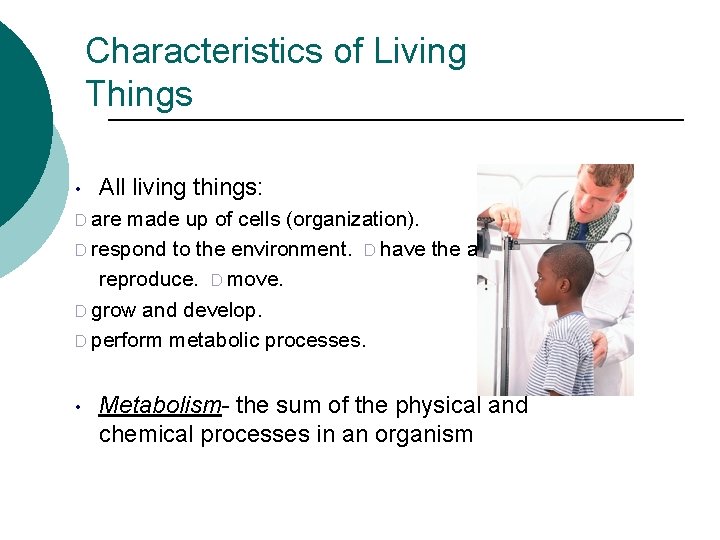
Characteristics of Living Things • All living things: D are made up of cells (organization). D respond to the environment. D have the ability to reproduce. D move. D grow and develop. D perform metabolic processes. • Metabolism- the sum of the physical and chemical processes in an organism
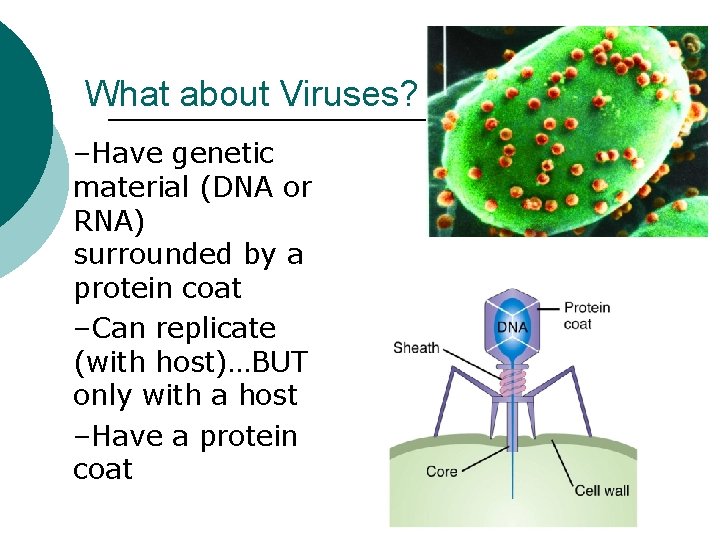
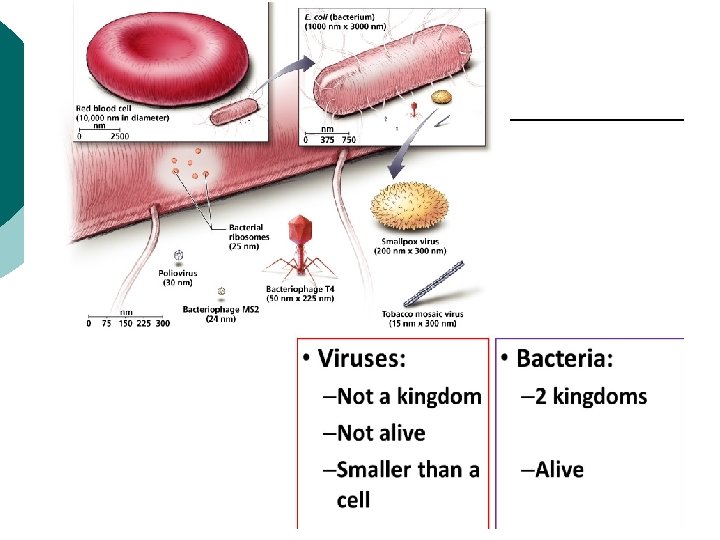
What about Viruses? –Have genetic material (DNA or RNA) surrounded by a protein coat –Can replicate (with host)…BUT only with a host –Have a protein coat

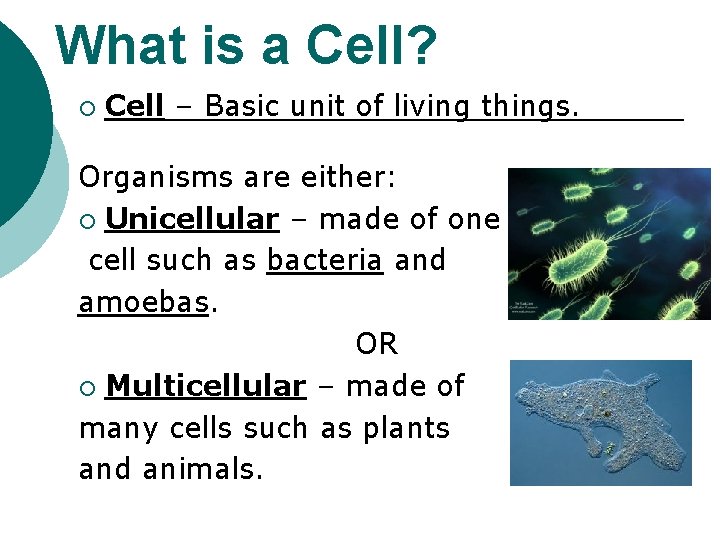
What is a Cell? ¡ Cell – Basic unit of living things. Organisms are either: ¡ Unicellular – made of one cell such as bacteria and amoebas. OR ¡ Multicellular – made of many cells such as plants and animals.
Why Cells are Important What happens inside cells causes us to be who we are. (Genes) ¡ All diseases start at the level of the cell. ¡ All growth and life starts from a single cell. ¡
The microscope led to the discovery of cells. • 1660’s – Robert Hooke discovered the cell D He looked at cork under the microscope (30 x) D He noticed little compartments, which he named after the little rooms that monks lived in…”Cells” • 1670’s – Anton von Leeuwenhoek described microorganisms in pond water D He looked at pond water under the microscope (300 x) D He noticed that the water was full of moving living things
Cell Theory ¡ Confirmed discoveries that all scientists believe to be true about cells: l 1. Cells are the basic unit of life. l 2. All living things are made of cells. l 3. New cells are produced from existing cells.
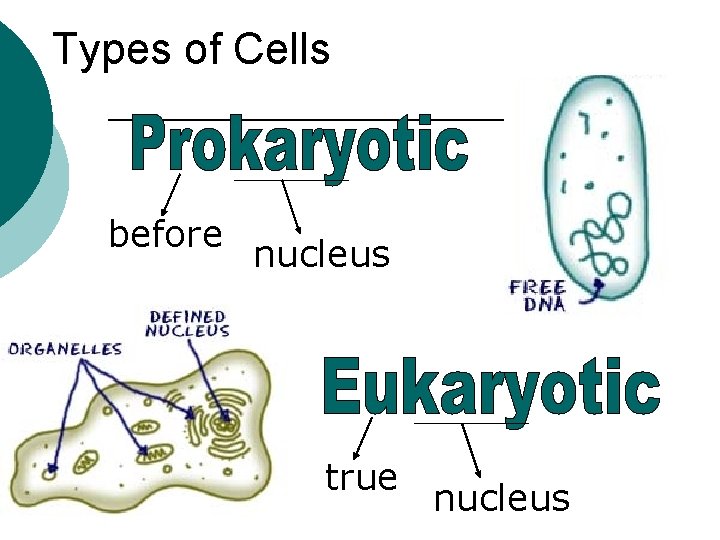
Types of Cells before nucleus true nucleus
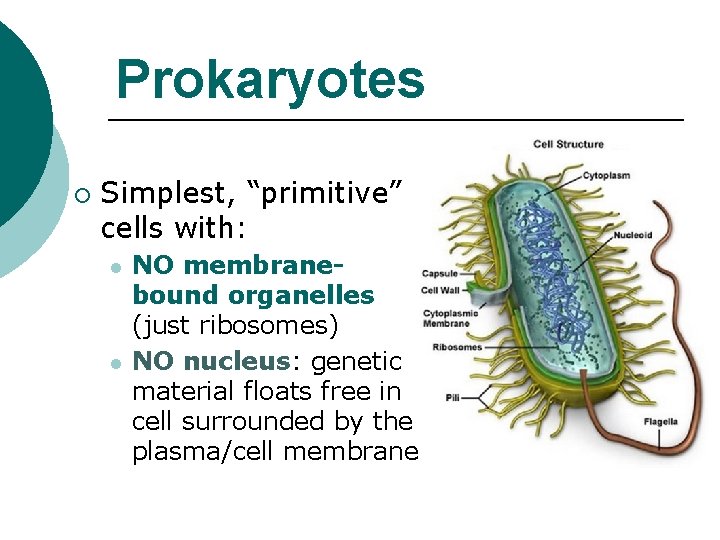
Prokaryotes ¡ Simplest, “primitive” cells with: l l NO membranebound organelles (just ribosomes) NO nucleus: genetic material floats free in cell surrounded by the plasma/cell membrane
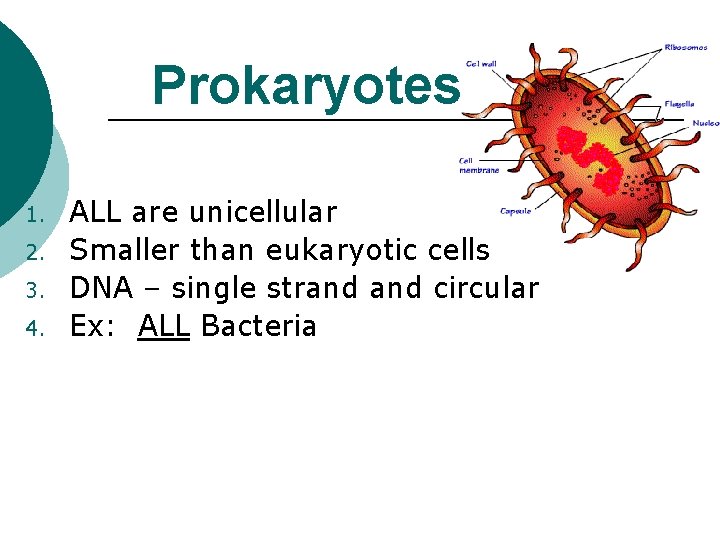
Prokaryotes 1. 2. 3. 4. ALL are unicellular Smaller than eukaryotic cells DNA – single strand circular Ex: ALL Bacteria
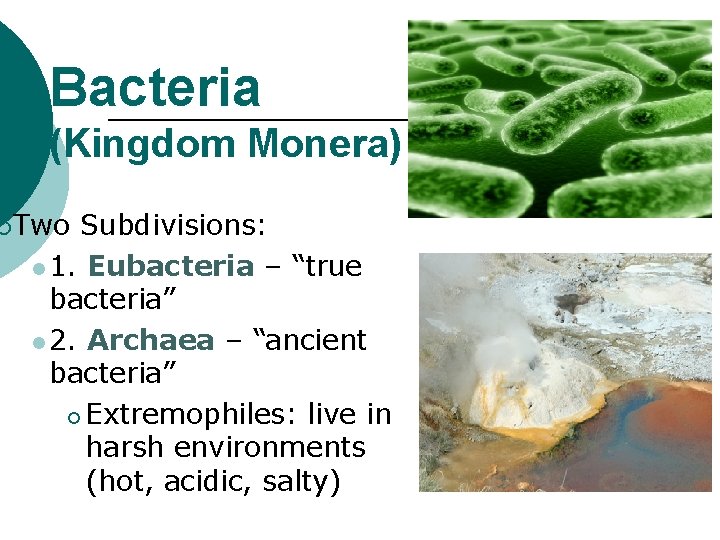
Bacteria (Kingdom Monera) ¡ Two Subdivisions: l 1. Eubacteria – “true bacteria” l 2. Archaea – “ancient bacteria” ¡ Extremophiles: live in harsh environments (hot, acidic, salty)
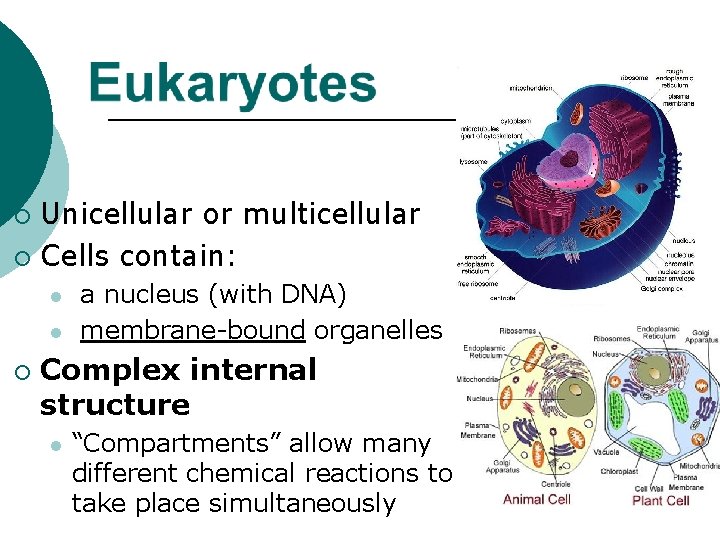
Unicellular or multicellular ¡ Cells contain: ¡ l l ¡ a nucleus (with DNA) membrane-bound organelles Complex internal structure l “Compartments” allow many different chemical reactions to take place simultaneously
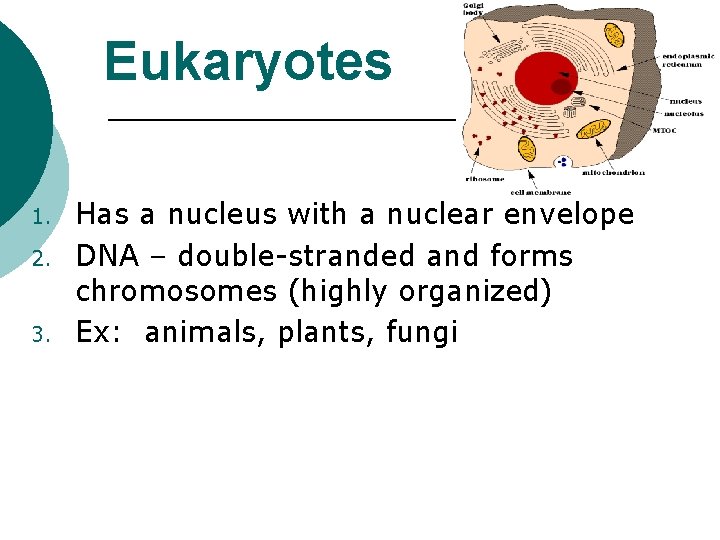
Eukaryotes 1. 2. 3. Has a nucleus with a nuclear envelope DNA – double-stranded and forms chromosomes (highly organized) Ex: animals, plants, fungi
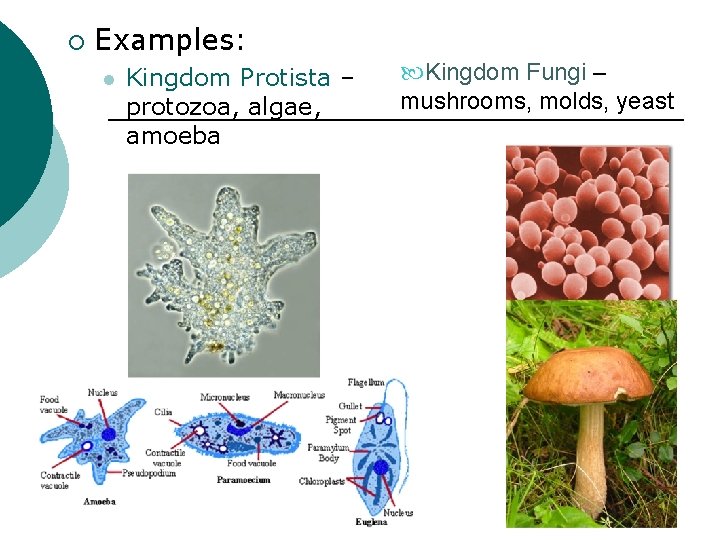
¡ Examples: l Kingdom Protista – protozoa, algae, amoeba Kingdom Fungi – mushrooms, molds, yeast
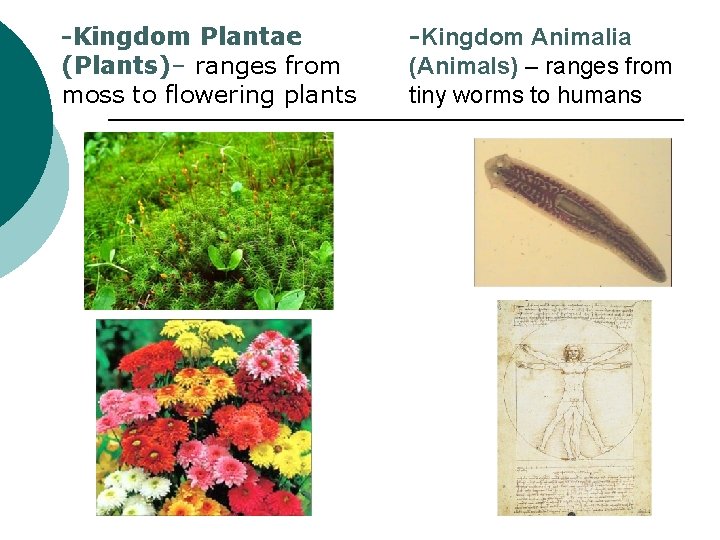
-Kingdom Plantae (Plants)– ranges from moss to flowering plants -Kingdom Animalia (Animals) – ranges from tiny worms to humans
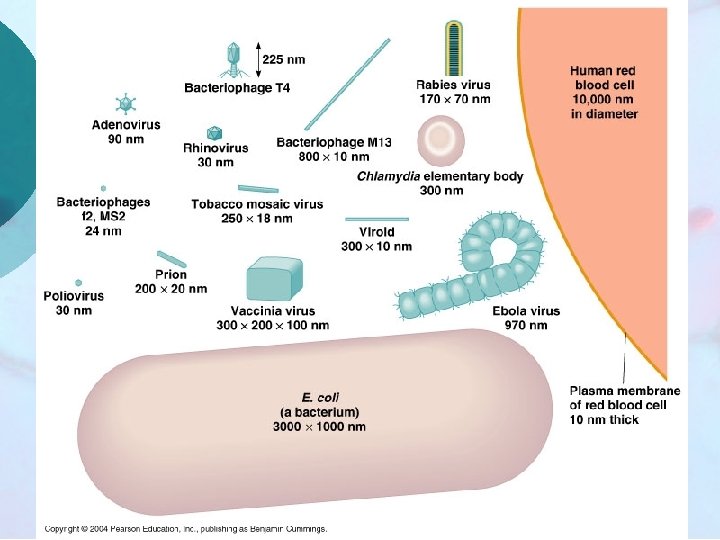
Viruses are extremely small!
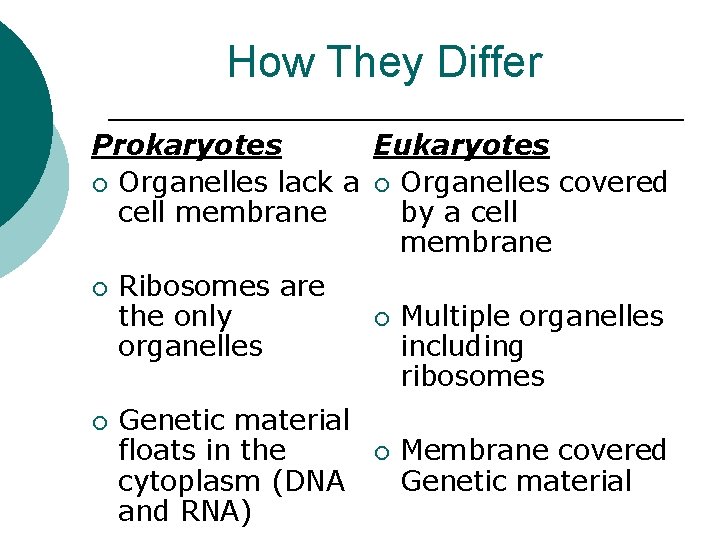
How They Differ Prokaryotes Eukaryotes ¡ Organelles lack a ¡ Organelles covered cell membrane by a cell membrane ¡ ¡ Ribosomes are the only organelles Genetic material floats in the cytoplasm (DNA and RNA) ¡ ¡ Multiple organelles including ribosomes Membrane covered Genetic material
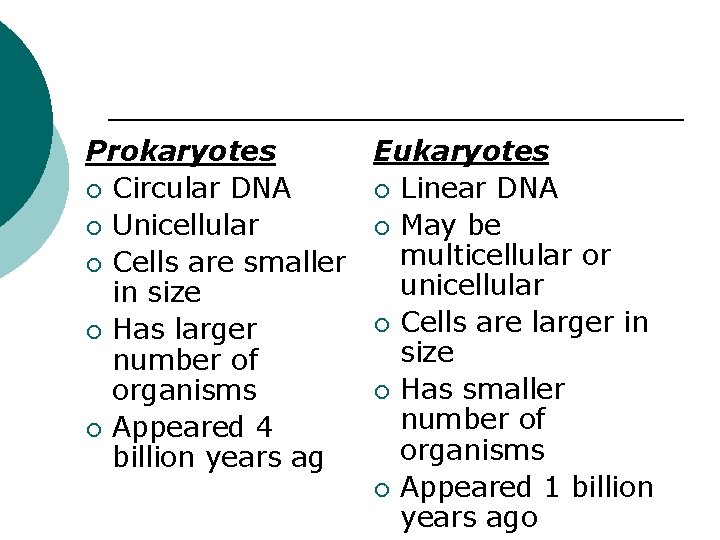
Eukaryotes Prokaryotes ¡ Linear DNA ¡ Circular DNA ¡ May be ¡ Unicellular multicellular or ¡ Cells are smaller unicellular in size ¡ Cells are larger in ¡ Has larger size number of ¡ Has smaller organisms number of ¡ Appeared 4 organisms billion years ag ¡ Appeared 1 billion years ago
Similarities 1. Contain all four biomolecules (lipids, carbs, proteins, and nucleic acids) 1. Have ribosomes 2. Have DNA 3. Similar Metabolism 4. Can be unicellular 5. Have cell/plasma membranes or cell wall
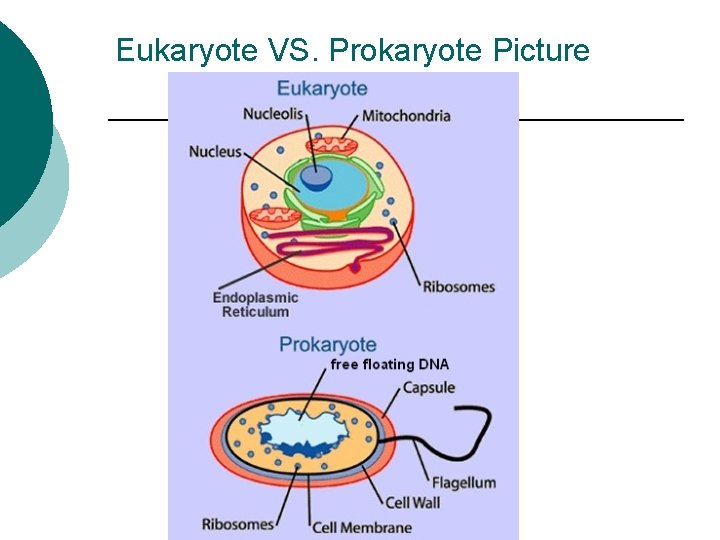
Eukaryote VS. Prokaryote Picture
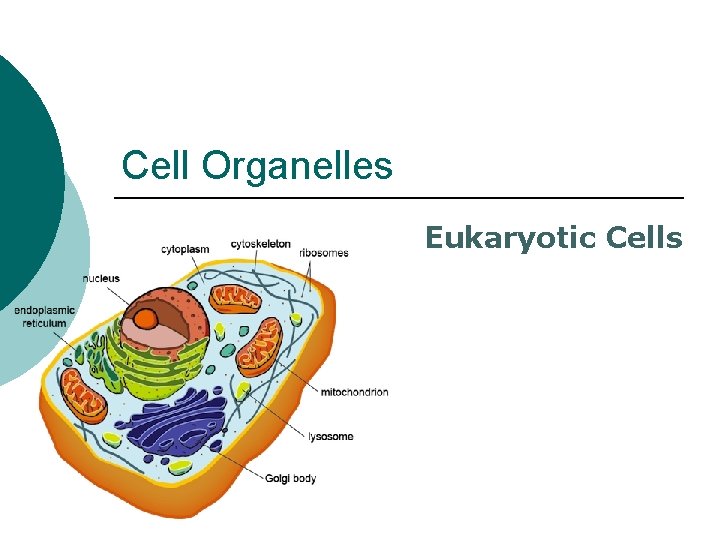
Cell Organelles Eukaryotic Cells
Cell Organelles are responsible for working together to make up the cell, while the cell is responsible for making up the tissue which are responsible for making up the organ which is responsible for making up the organ system.
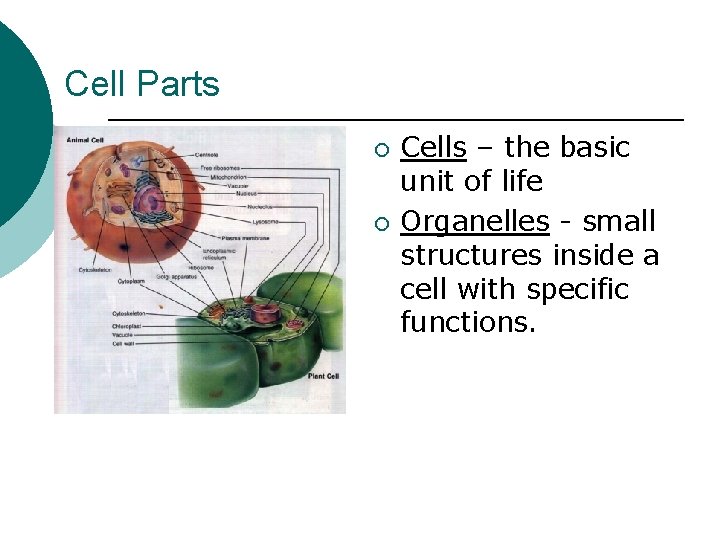
Cell Parts ¡ ¡ Cells – the basic unit of life Organelles - small structures inside a cell with specific functions.
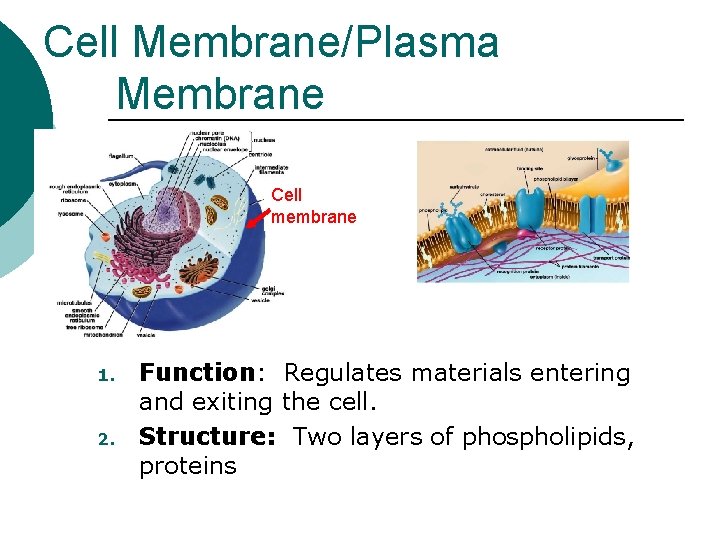
Cell Membrane/Plasma Membrane Cell membrane 1. 2. Function: Regulates materials entering and exiting the cell. Structure: Two layers of phospholipids, proteins
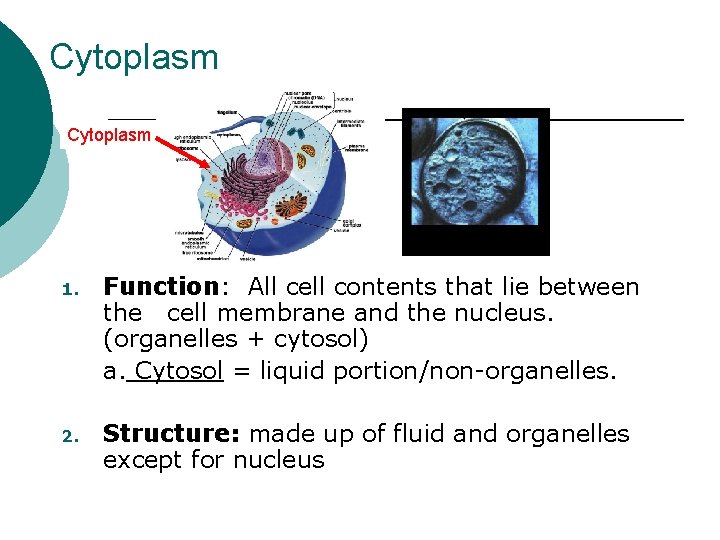
Cytoplasm 1. Function: All cell contents that lie between the cell membrane and the nucleus. (organelles + cytosol) a. Cytosol = liquid portion/non-organelles. 2. Structure: made up of fluid and organelles except for nucleus
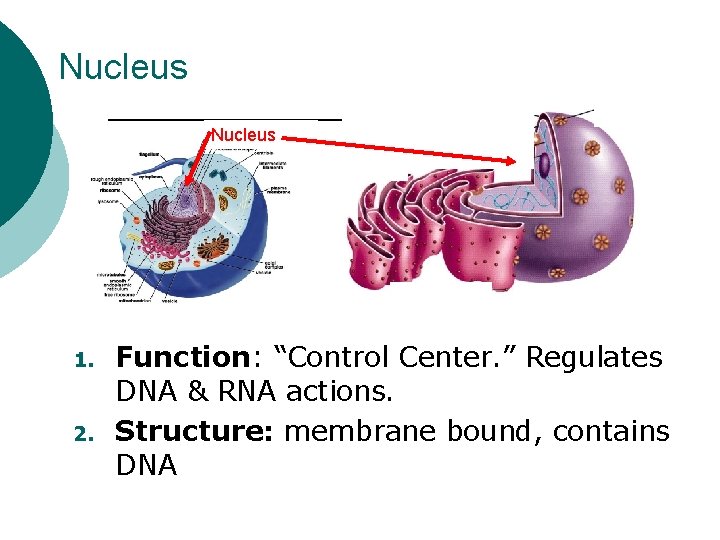
Nucleus 1. 2. Function: “Control Center. ” Regulates DNA & RNA actions. Structure: membrane bound, contains DNA
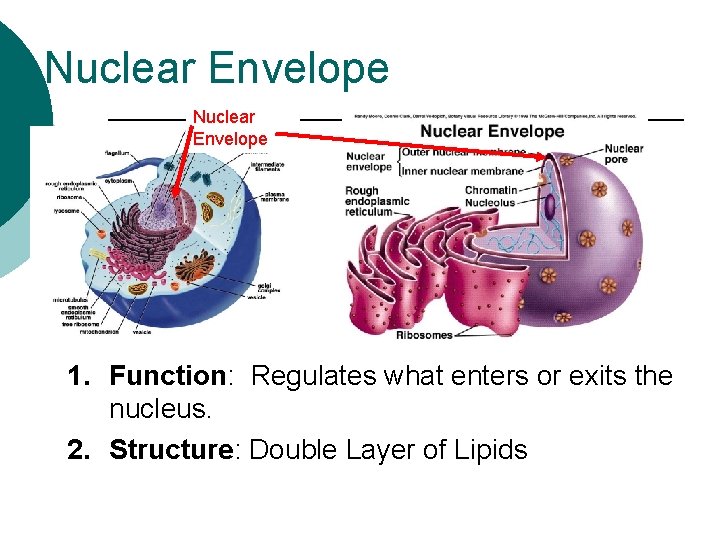
Nuclear Envelope 1. Function: Regulates what enters or exits the nucleus. 2. Structure: Double Layer of Lipids
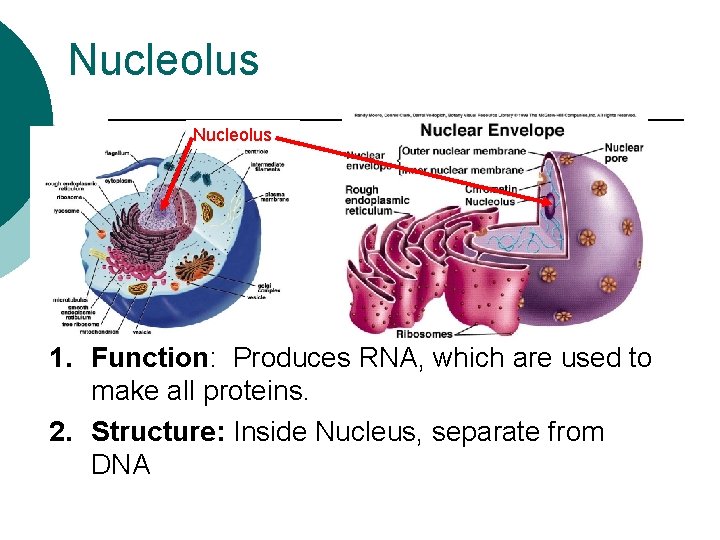
Nucleolus 1. Function: Produces RNA, which are used to make all proteins. 2. Structure: Inside Nucleus, separate from DNA
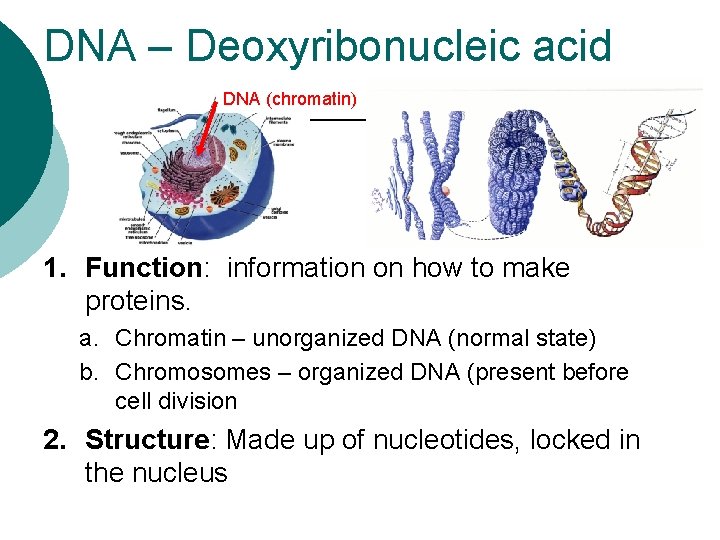
DNA – Deoxyribonucleic acid DNA (chromatin) 1. Function: information on how to make proteins. a. Chromatin – unorganized DNA (normal state) b. Chromosomes – organized DNA (present before cell division 2. Structure: Made up of nucleotides, locked in the nucleus
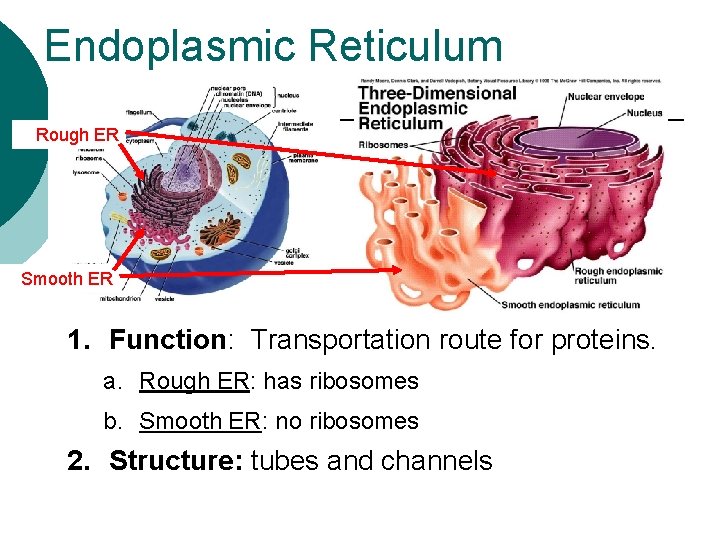
Endoplasmic Reticulum Rough ER Smooth ER 1. Function: Transportation route for proteins. a. Rough ER: has ribosomes b. Smooth ER: no ribosomes 2. Structure: tubes and channels
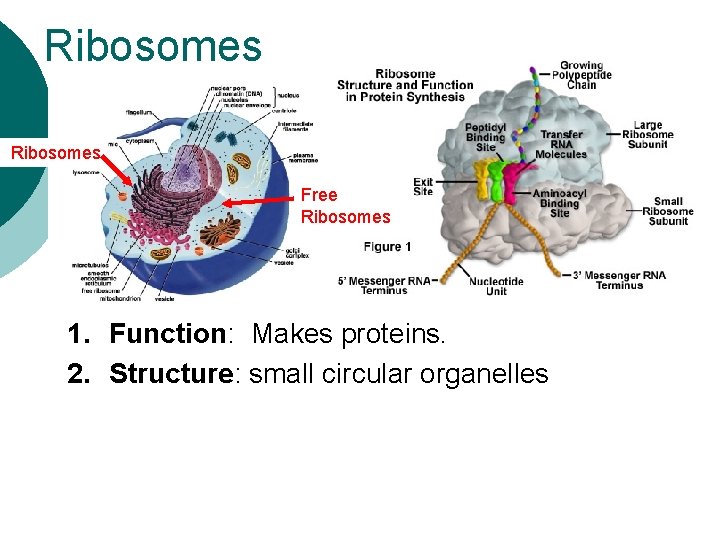
Ribosomes Free Ribosomes 1. Function: Makes proteins. 2. Structure: small circular organelles
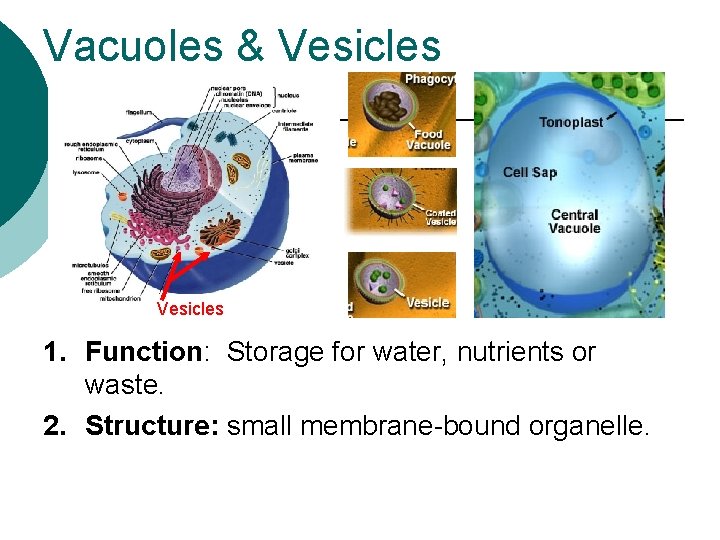
Vacuoles & Vesicles 1. Function: Storage for water, nutrients or waste. 2. Structure: small membrane-bound organelle.
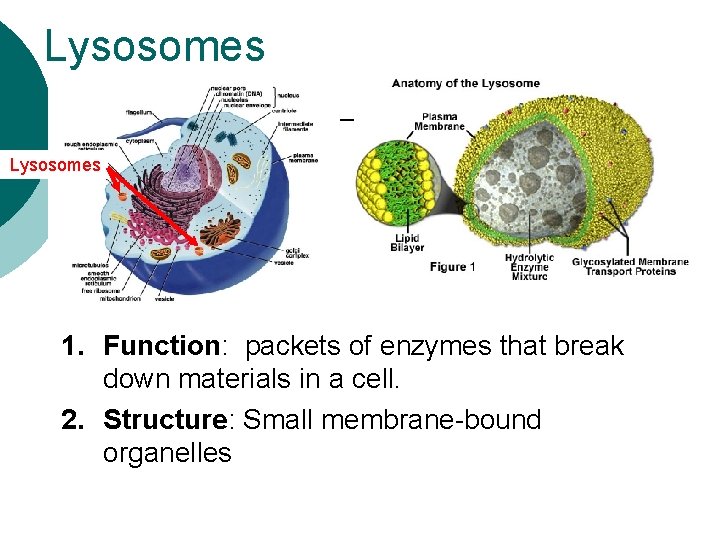
Lysosomes 1. Function: packets of enzymes that break down materials in a cell. 2. Structure: Small membrane-bound organelles
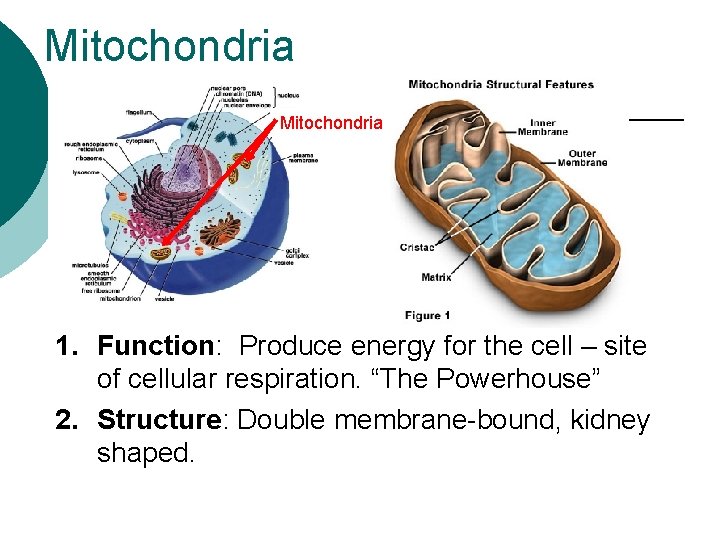
Mitochondria 1. Function: Produce energy for the cell – site of cellular respiration. “The Powerhouse” 2. Structure: Double membrane-bound, kidney shaped.
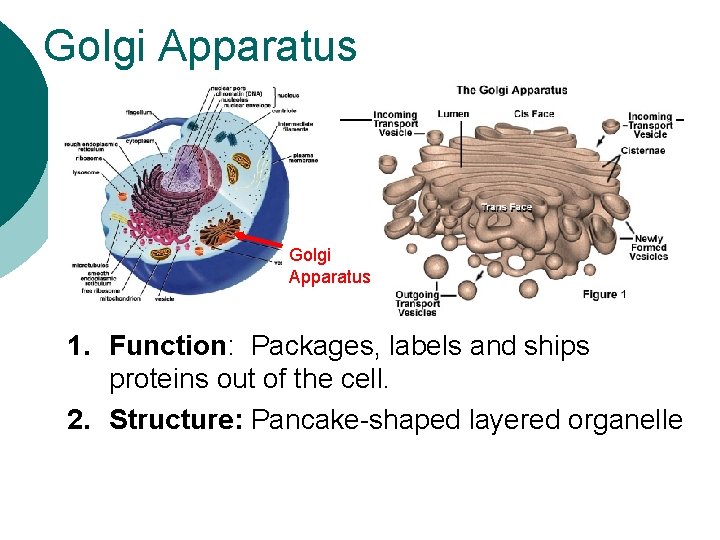
Golgi Apparatus 1. Function: Packages, labels and ships proteins out of the cell. 2. Structure: Pancake-shaped layered organelle
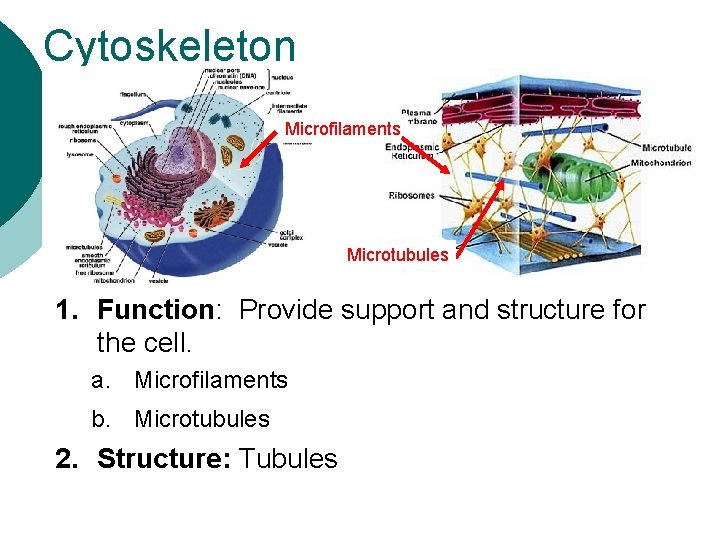
Cytoskeleton Microfilaments Microtubules 1. Function: Provide support and structure for the cell. a. Microfilaments b. Microtubules 2. Structure: Tubules
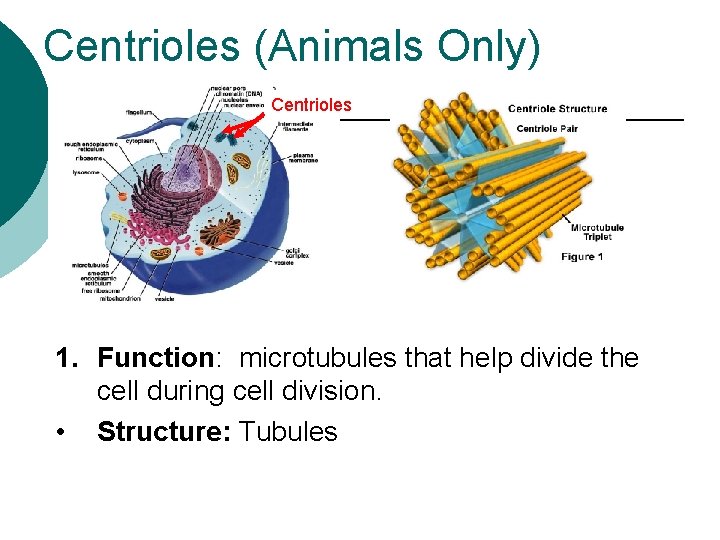
Centrioles (Animals Only) Centrioles 1. Function: microtubules that help divide the cell during cell division. • Structure: Tubules
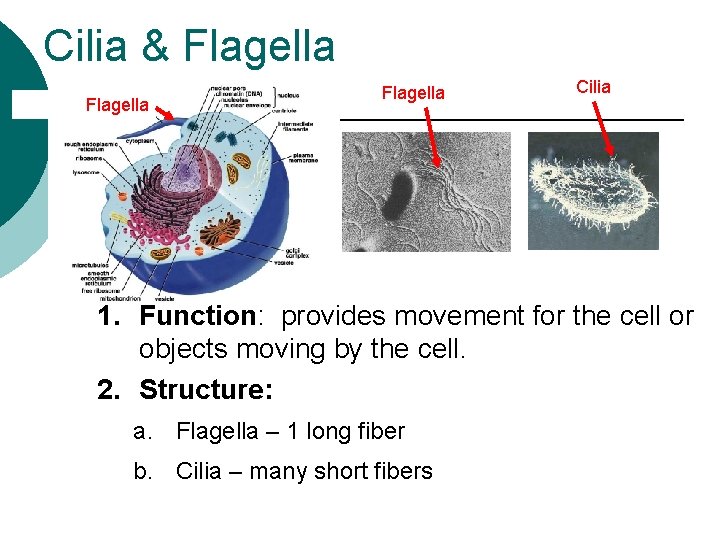
Cilia & Flagella Cilia 1. Function: provides movement for the cell or objects moving by the cell. 2. Structure: a. Flagella – 1 long fiber b. Cilia – many short fibers
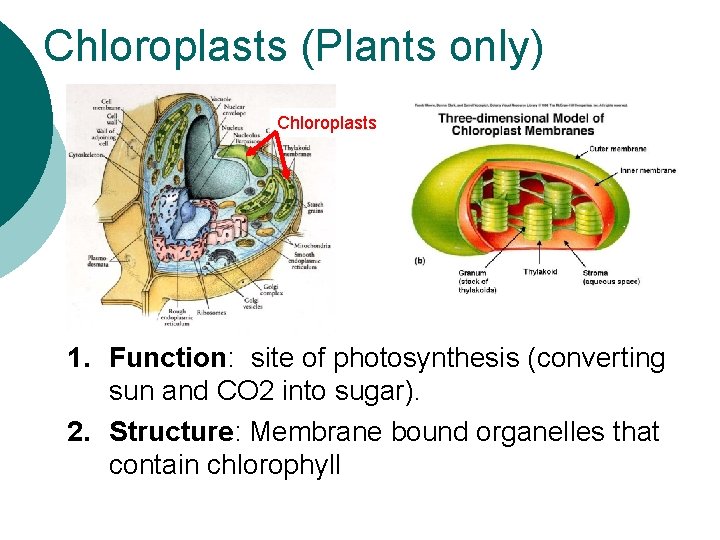
Chloroplasts (Plants only) Chloroplasts 1. Function: site of photosynthesis (converting sun and CO 2 into sugar). 2. Structure: Membrane bound organelles that contain chlorophyll
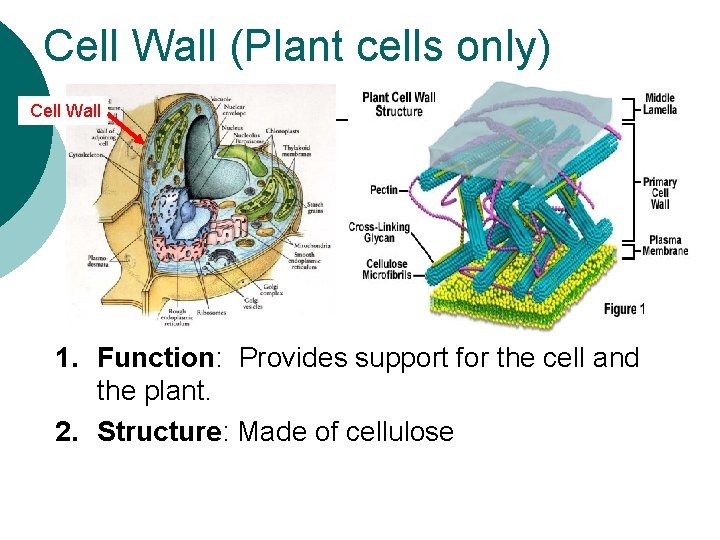
Cell Wall (Plant cells only) Cell Wall 1. Function: Provides support for the cell and the plant. 2. Structure: Made of cellulose
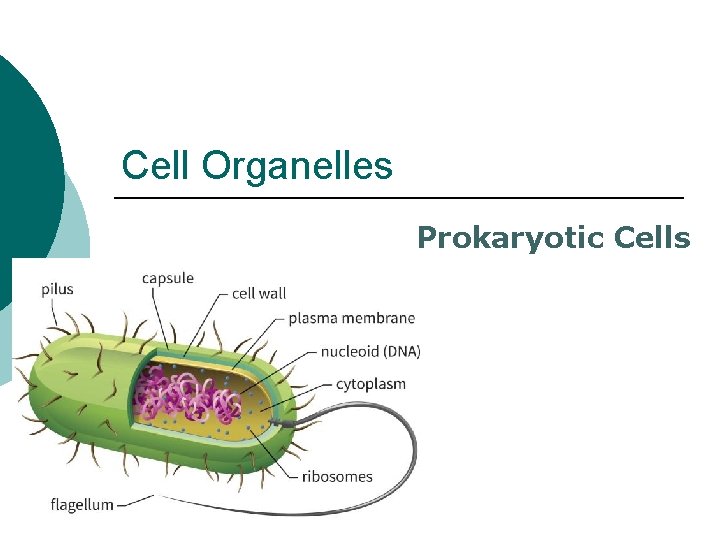
Cell Organelles Prokaryotic Cells
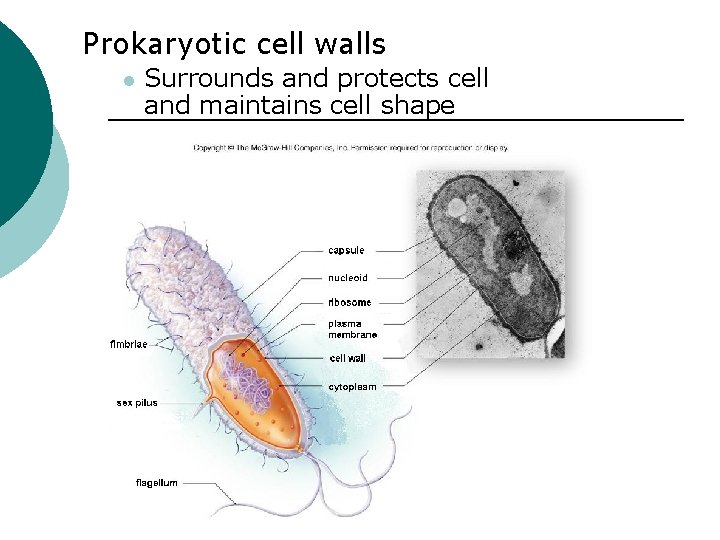
Prokaryotic cell walls l Surrounds and protects cell and maintains cell shape
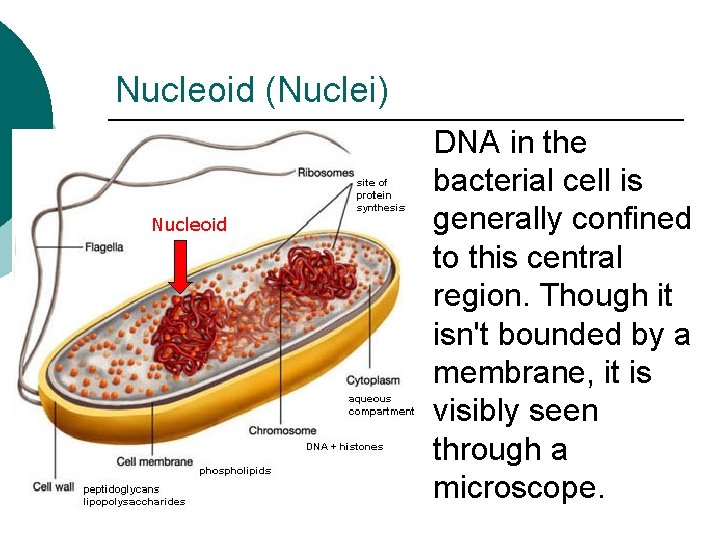
Nucleoid (Nuclei) Nucleoid DNA in the bacterial cell is generally confined to this central region. Though it isn't bounded by a membrane, it is visibly seen through a microscope.
Flagella, Pili ¡ Whip-like proteins attached to cell wall used for locomotion ¡ Present in some prokaryotic cells - one to several flagella on a single cell ¡ Rotary motion of flagellum propels the cell through fluid environment ¡ Flagella powered by protein motors - uses energy of a proton gradient
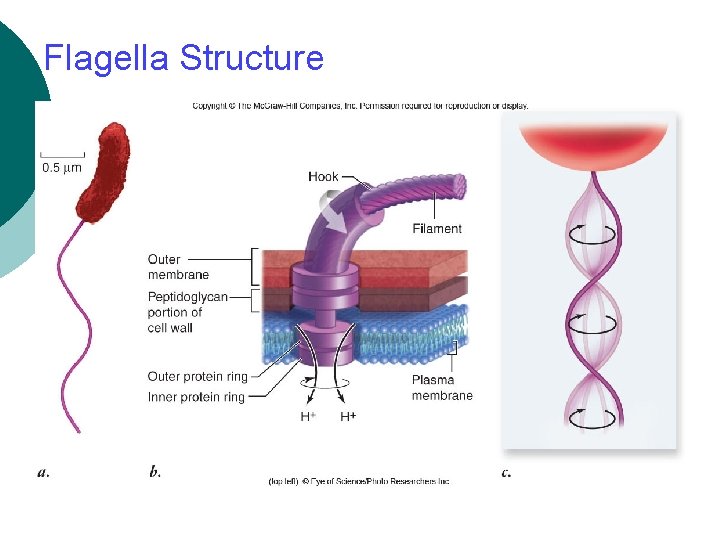
Flagella Structure
- Slides: 48