
The Basic Surgical Instruments A Cutting B Grasping
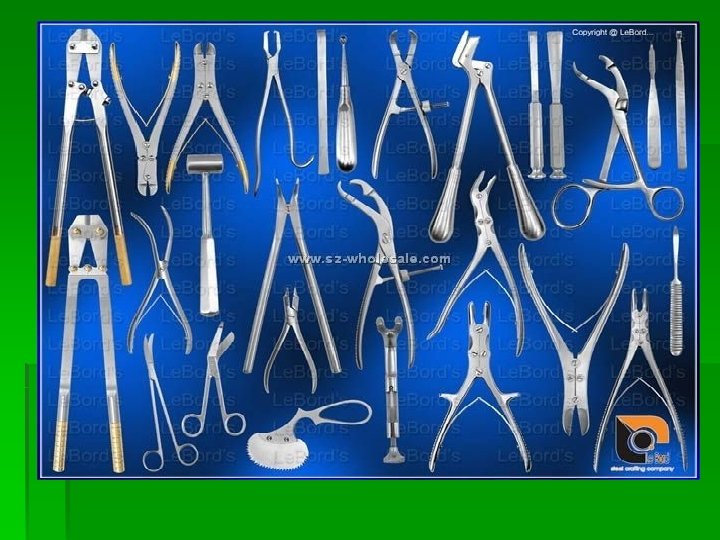
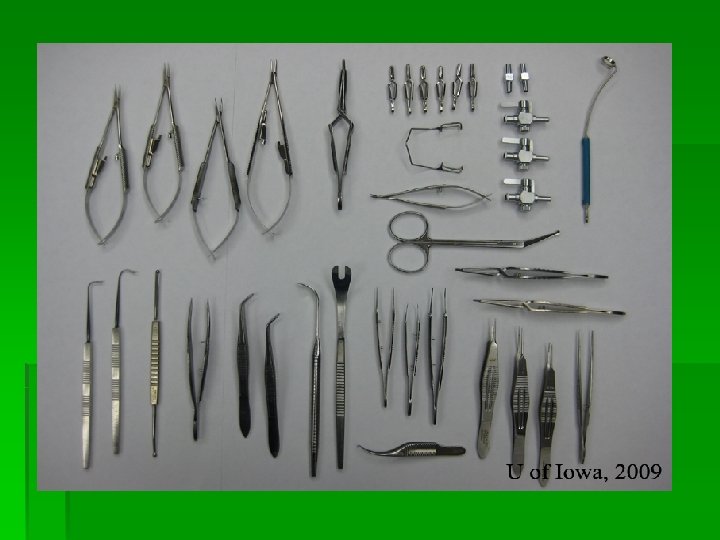
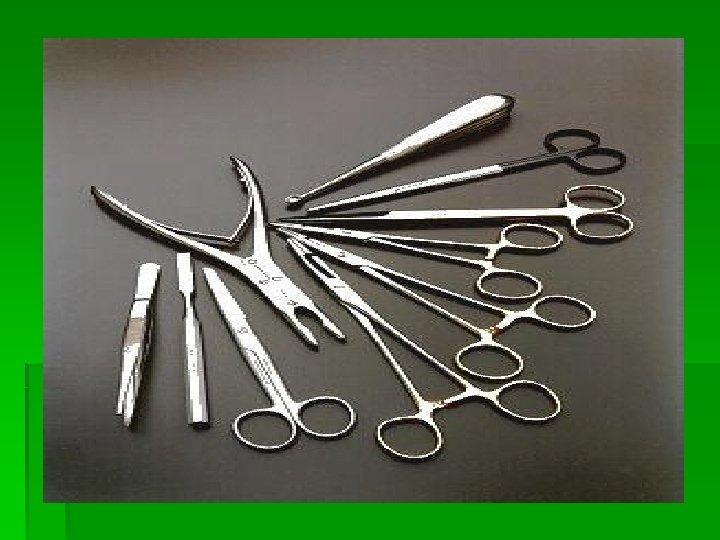
The Basic Surgical Instruments: A- Cutting B- Grasping C- Retracting D-Suturing E-Miscellaneous
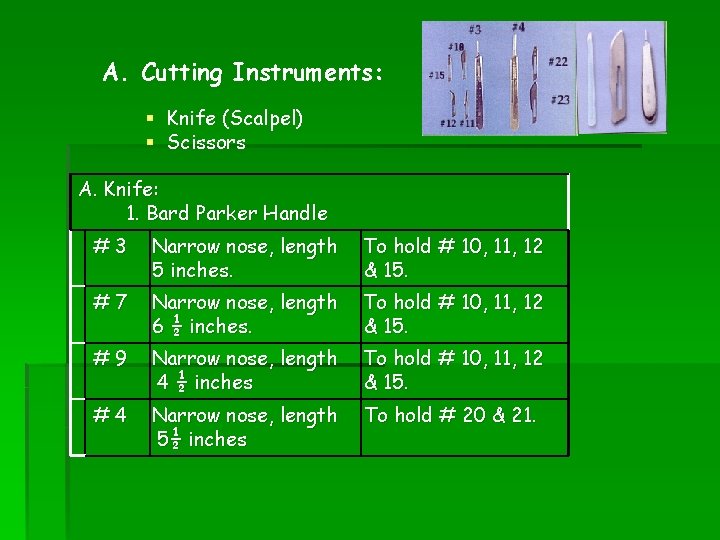
A. Cutting Instruments: § Knife (Scalpel) § Scissors A. Knife: 1. Bard Parker Handle #3 Narrow nose, length 5 inches. To hold # 10, 11, 12 & 15. #7 Narrow nose, length 6 ½ inches. To hold # 10, 11, 12 & 15. #9 Narrow nose, length 4 ½ inches To hold # 10, 11, 12 & 15. #4 Narrow nose, length 5½ inches To hold # 20 & 21.
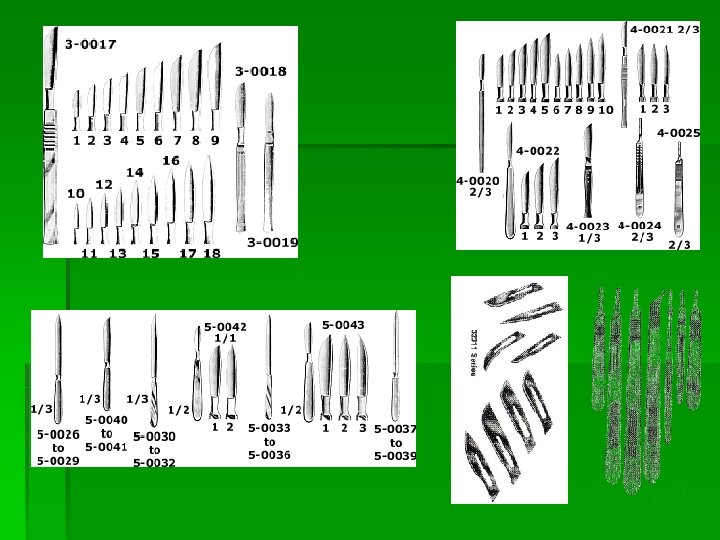
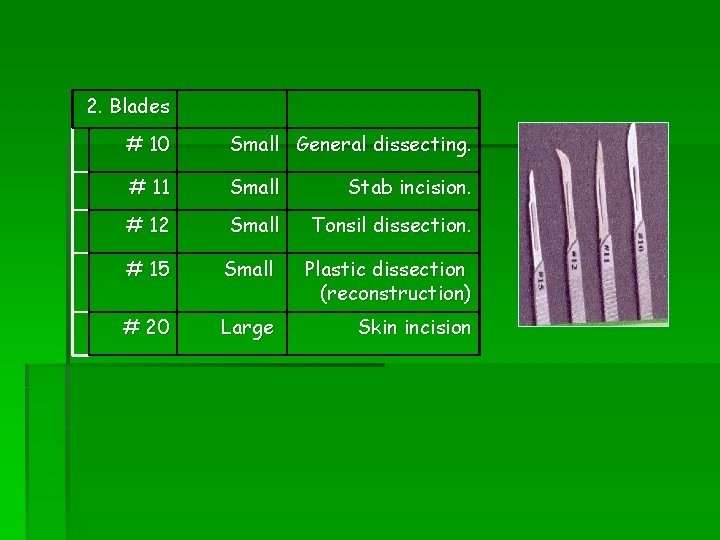
2. Blades # 10 Small General dissecting. # 11 Small Stab incision. # 12 Small Tonsil dissection. # 15 Small Plastic dissection (reconstruction) # 20 Large Skin incision
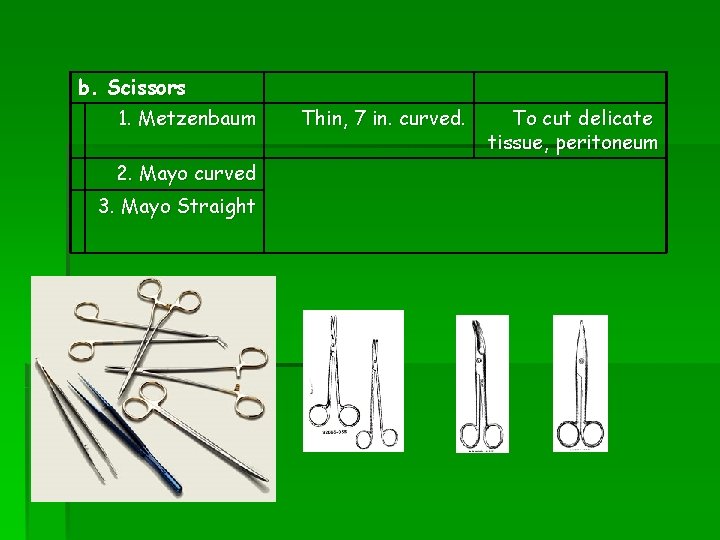
b. Scissors 1. Metzenbaum 2. Mayo curved 3. Mayo Straight Thin, 7 in. curved. To cut delicate tissue, peritoneum
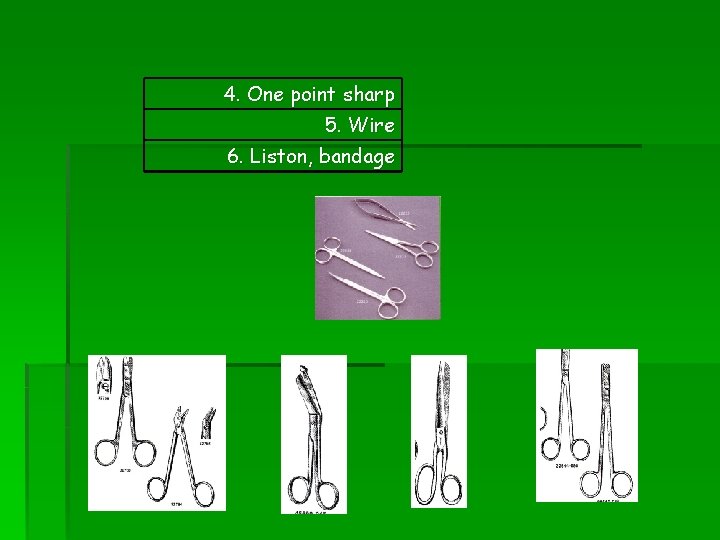
4. One point sharp 5. Wire 6. Liston, bandage
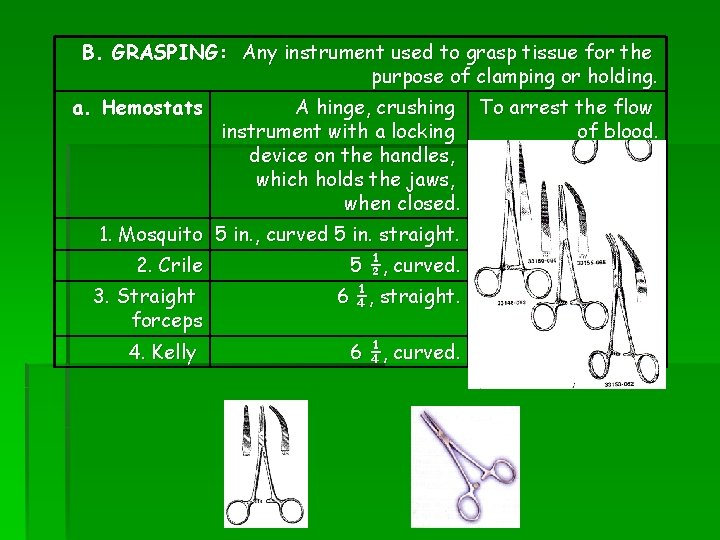
B. GRASPING: Any instrument used to grasp tissue for the purpose of clamping or holding. a. Hemostats A hinge, crushing To arrest the flow instrument with a locking of blood. device on the handles, which holds the jaws, when closed. 1. Mosquito 5 in. , curved 5 in. straight. 2. Crile 5 ½, curved. 3. Straight forceps 6 ¼, straight. 4. Kelly 6 ¼, curved.
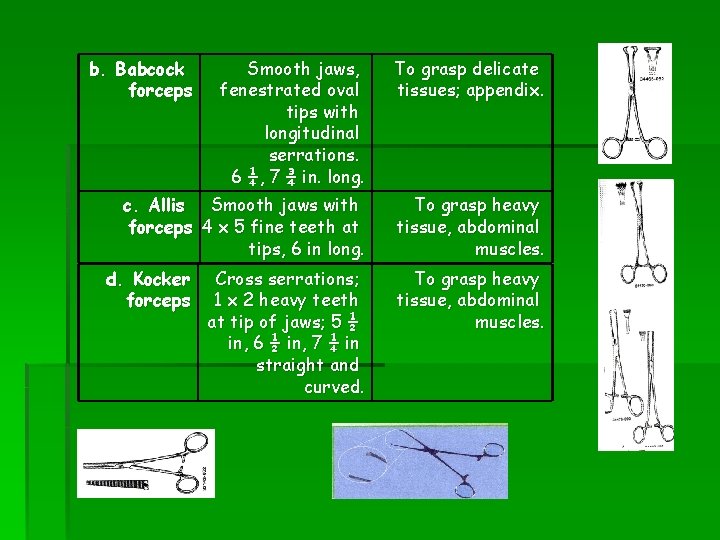
b. Babcock forceps Smooth jaws, fenestrated oval tips with longitudinal serrations. 6 ¼, 7 ¾ in. long. To grasp delicate tissues; appendix. c. Allis Smooth jaws with forceps 4 x 5 fine teeth at tips, 6 in long. To grasp heavy tissue, abdominal muscles. d. Kocker forceps Cross serrations; 1 x 2 heavy teeth at tip of jaws; 5 ½ in, 6 ½ in, 7 ¼ in straight and curved. To grasp heavy tissue, abdominal muscles.
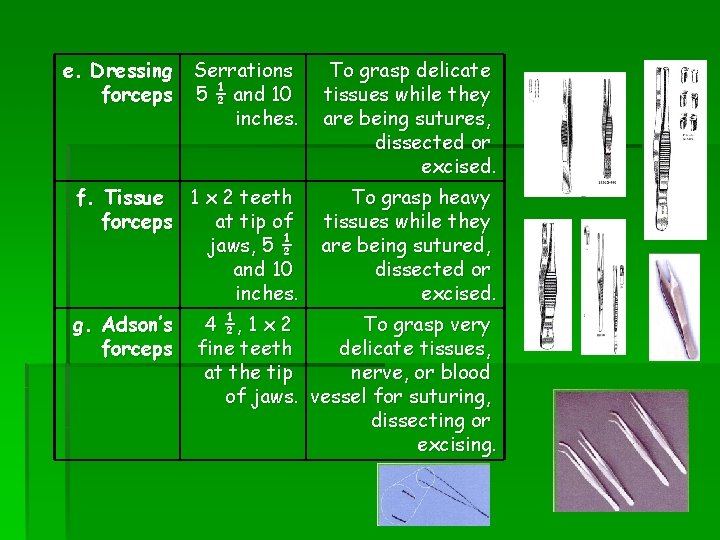
e. Dressing Serrations forceps 5 ½ and 10 inches. To grasp delicate tissues while they are being sutures, dissected or excised. f. Tissue 1 x 2 teeth forceps at tip of jaws, 5 ½ and 10 inches. To grasp heavy tissues while they are being sutured, dissected or excised. g. Adson’s forceps 4 ½, 1 x 2 To grasp very fine teeth delicate tissues, at the tip nerve, or blood of jaws. vessel for suturing, dissecting or excising.
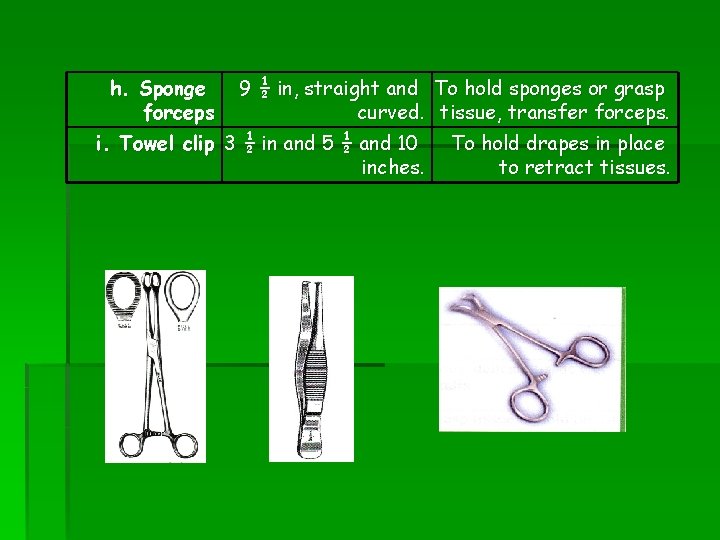
h. Sponge forceps 9 ½ in, straight and To hold sponges or grasp curved. tissue, transfer forceps. i. Towel clip 3 ½ in and 5 ½ and 10 inches. To hold drapes in place to retract tissues.
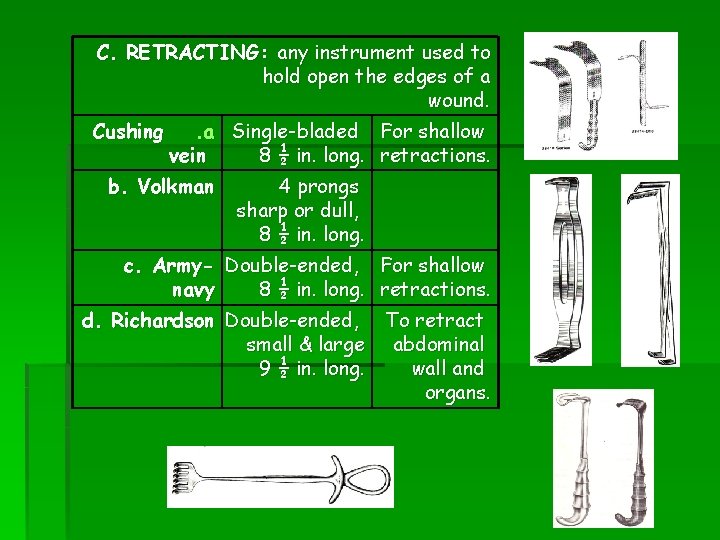
C. RETRACTING: any instrument used to hold open the edges of a wound. . a Single-bladed vein 8 ½ in. long. b. Volkman 4 prongs sharp or dull, 8 ½ in. long. c. Army- Double-ended, navy 8 ½ in. long. d. Richardson Double-ended, small & large 9 ½ in. long. Cushing For shallow retractions. To retract abdominal wall and organs.
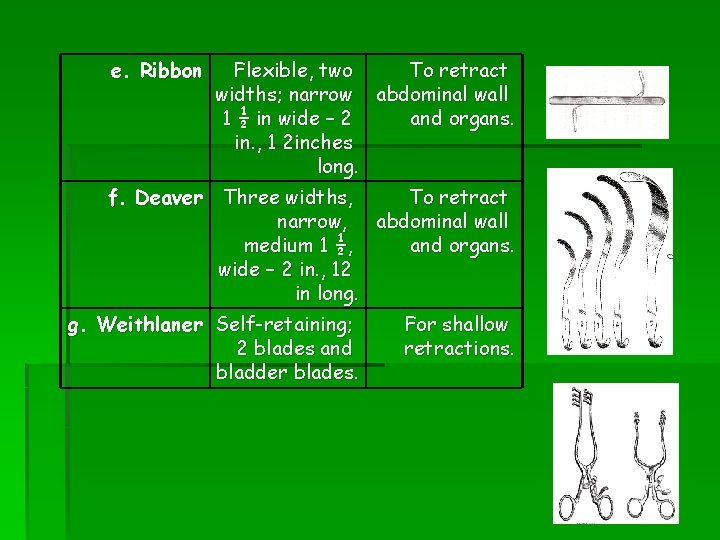
e. Ribbon Flexible, two To retract widths; narrow abdominal wall 1 ½ in wide – 2 and organs. in. , 1 2 inches long. f. Deaver Three widths, To retract narrow, abdominal wall medium 1 ½, and organs. wide – 2 in. , 12 in long. g. Weithlaner Self-retaining; 2 blades and bladder blades. For shallow retractions.
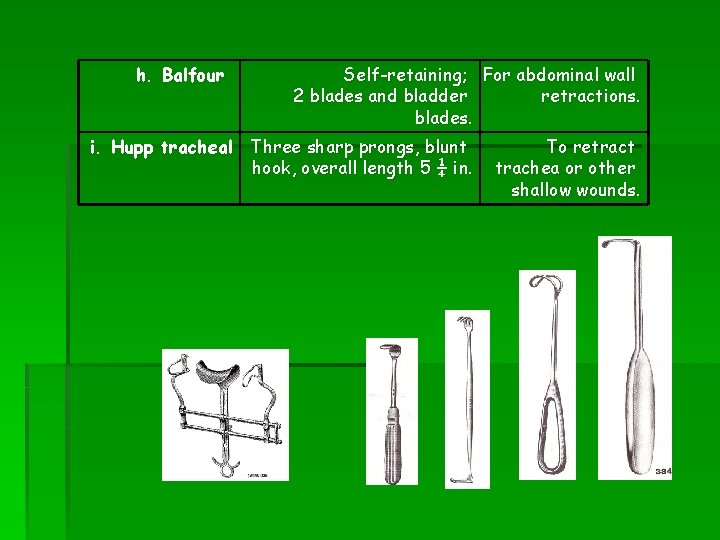
h. Balfour Self-retaining; For abdominal wall 2 blades and bladder retractions. blades. i. Hupp tracheal Three sharp prongs, blunt hook, overall length 5 ¼ in. To retract trachea or other shallow wounds.
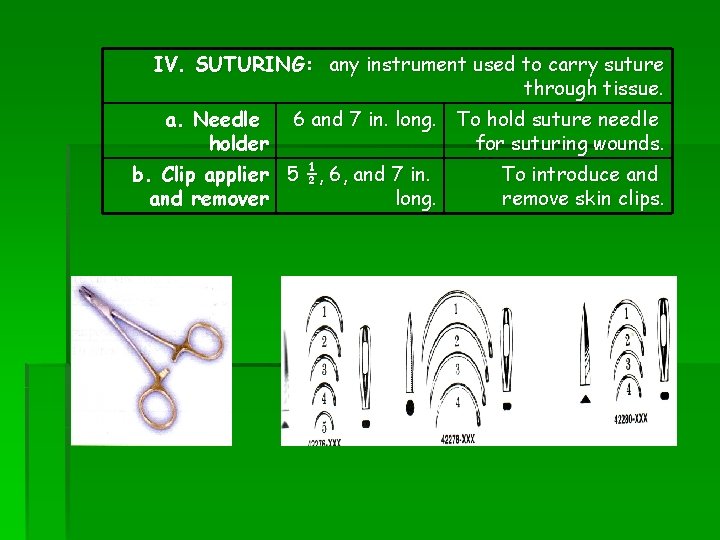
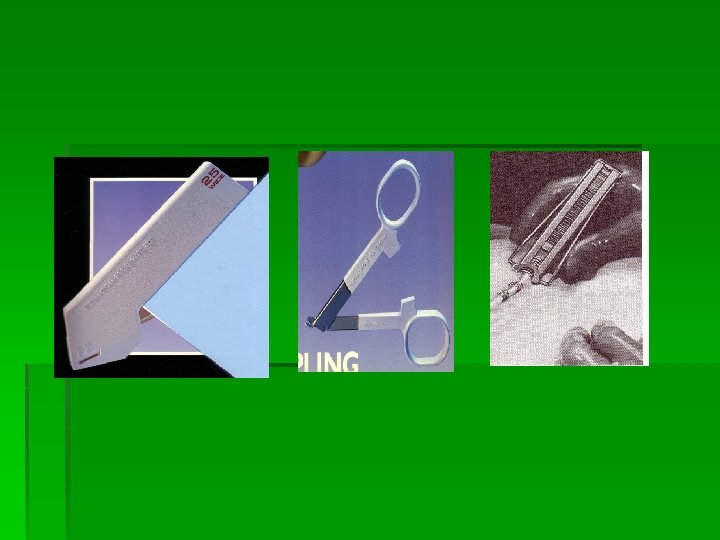
IV. SUTURING: any instrument used to carry suture through tissue. a. Needle holder 6 and 7 in. long. To hold suture needle for suturing wounds. b. Clip applier 5 ½, 6, and 7 in. and remover long. To introduce and remove skin clips.
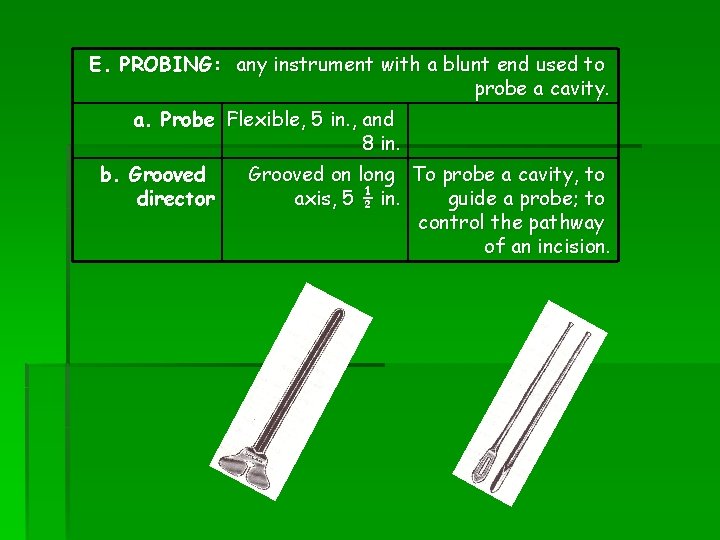
E. PROBING: any instrument with a blunt end used to probe a cavity. a. Probe Flexible, 5 in. , and 8 in. b. Grooved director Grooved on long To probe a cavity, to axis, 5 ½ in. guide a probe; to control the pathway of an incision.
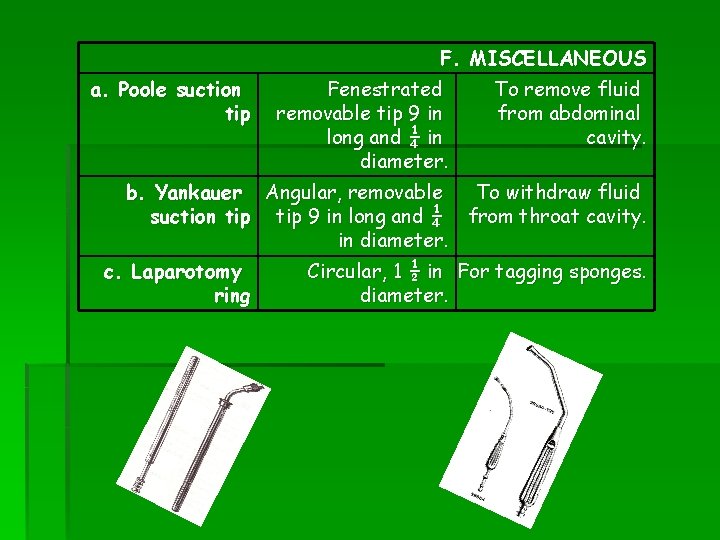
F. MISCELLANEOUS a. Poole suction tip Fenestrated removable tip 9 in long and ¼ in diameter. To remove fluid from abdominal cavity. b. Yankauer Angular, removable To withdraw fluid suction tip 9 in long and ¼ from throat cavity. in diameter. c. Laparotomy ring Circular, 1 ½ in For tagging sponges. diameter.
- Slides: 24