
THE BASIC FIRST AID Basic first aid ho
THE BASIC FIRST AID Basic first aid ho has been injured or is in physiological distress due to choking, a heart attack, allergic reactions, drugs or other medical emergencies. Basic first aid allows you to quickly determine a person's physical condition and the correct course of treatment. You should always seek professional medical help as soon as you are able, but following correct first aid procedures can be the difference between life and death. refers to the initial process of assessing and addressing the needs of someone. Daniel Tremblay Tye Poirier
Check surroundings � Check the surroundings. Evaluate the situation. Are there things that might put you at risk of harm? Are you or the victim threatened by fire, toxic smoke or gasses, an unstable building, live electrical wires or other dangerous scenario? Do not rush into a situation where you could end up as a victim yourself Call for help.
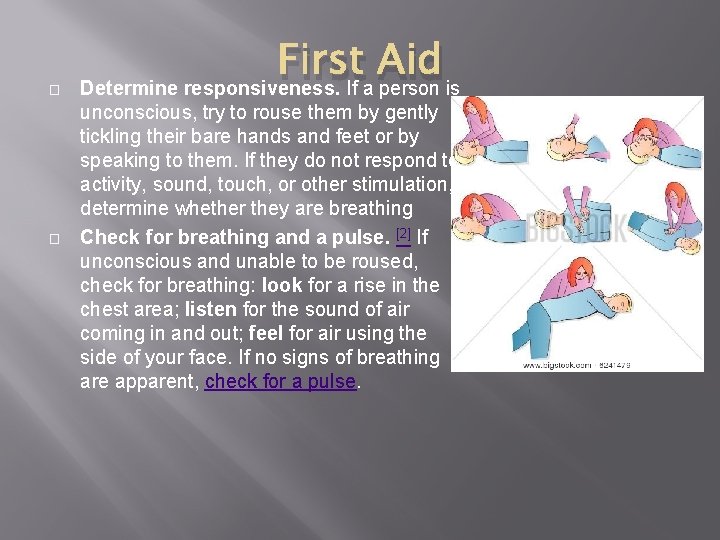
� � First Aid Determine responsiveness. If a person is unconscious, try to rouse them by gently tickling their bare hands and feet or by speaking to them. If they do not respond to activity, sound, touch, or other stimulation, determine whether they are breathing Check for breathing and a pulse. [2] If unconscious and unable to be roused, check for breathing: look for a rise in the chest area; listen for the sound of air coming in and out; feel for air using the side of your face. If no signs of breathing are apparent, check for a pulse.
Broken bone � � Provide first aid for a broken bone. A broken bone, however common, can be treated with the following steps: � Immobilize the area. Make sure that the broken bone doesn't have to move or support any other body parts. � Numb the pain. Often, this can be done with an ice-pack covered by a towel. � Make a splint. A bundle of newspapers and sturdy tape will do just the trick. A broken finger, for example, can also use another finger as a stabilizing splint. � Make a sling, if necessary. Tie a shirt or a pillowcase around a broken arm and then around the shoulder.
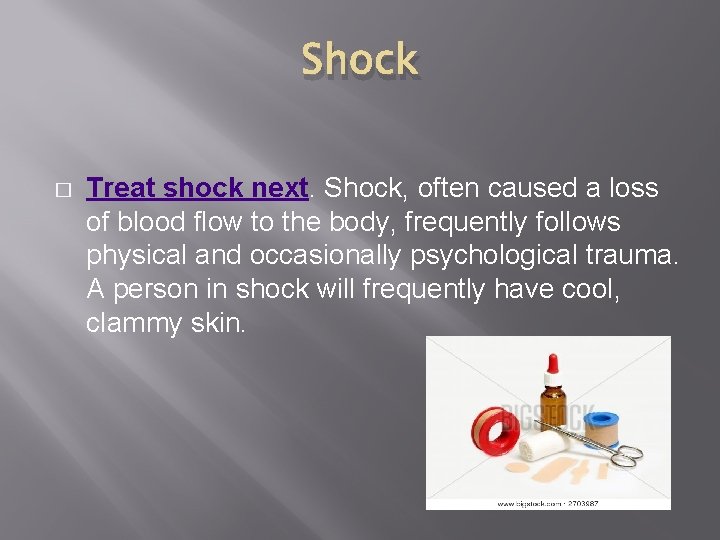
Shock � Treat shock next. Shock, often caused a loss of blood flow to the body, frequently follows physical and occasionally psychological trauma. A person in shock will frequently have cool, clammy skin.
Bleeding � Stop the bleeding first. After you have established that the victim is breathing and has a pulse, your next priority should be to control any bleeding. Control of bleeding is one of the most important things you can do to save a trauma victim. Use direct pressure on a wound before trying any other method of managing bleeding. Read the linked article for more detailed steps you can take.
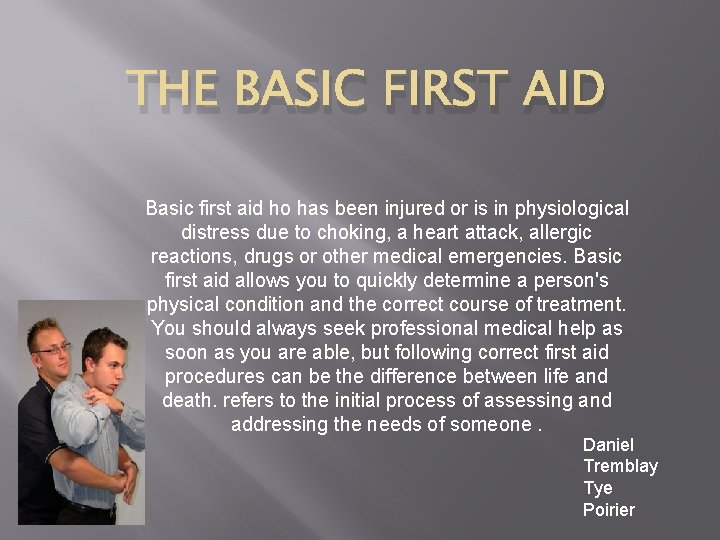
Choking � Help a choking victim. Choking can cause death or permanent brain damage within minutes. Read this article for ways to help a choking victim. The article addresses helping both children and adult choking victims. � One of the ways to help a choking victim is the Heimlich maneuver. The Heimlich maneuver is performed by straddling the victim from behind and bear-hugging them with your hands interlocked above their belly-button.
Burns � Learn how to treat a burn. Treat first- and second-degree burns by immersing or flushing with cool water (no ice). Don't use creams, butter or other ointments, and do not pop blisters. Third degree burns should be covered with a damp cloth. Remove clothing and jewelry from the burn, but do not try to remove charred clothing that is stuck to burns.
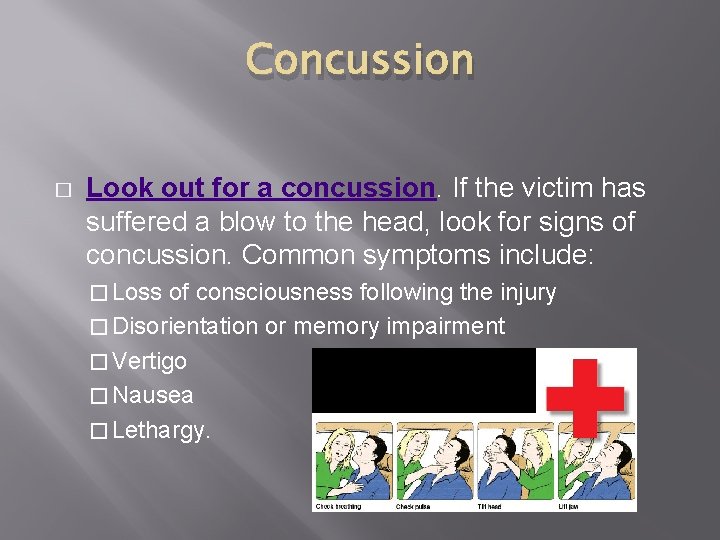
Concussion � Look out for a concussion. If the victim has suffered a blow to the head, look for signs of concussion. Common symptoms include: � Loss of consciousness following the injury � Disorientation or memory impairment � Vertigo � Nausea � Lethargy.
The First Aid Course � Can be done at Dexter institute in the labrador city industrial park � There is a two day and one day course that you can take As of June 1, 2006, amendments to the Newfoundland Labrador Occupational Health and Safety Regulations. the Commission the mandate to establish standards authorizing training providers to deliver first-aid training in the province.
Daiel Tremblay Tye Poirier
- Slides: 11