
The Basic Concepts Behind Neural Nets Mohsen Ghafoorian
The Basic Concepts Behind Neural Nets Mohsen Ghafoorian Jan 10, 2017 Materials partly taken from Stanford’s Convolutional Neural Networks for Visual Recognition course Geoffrey Hinton’s Neural networks course on Coursera
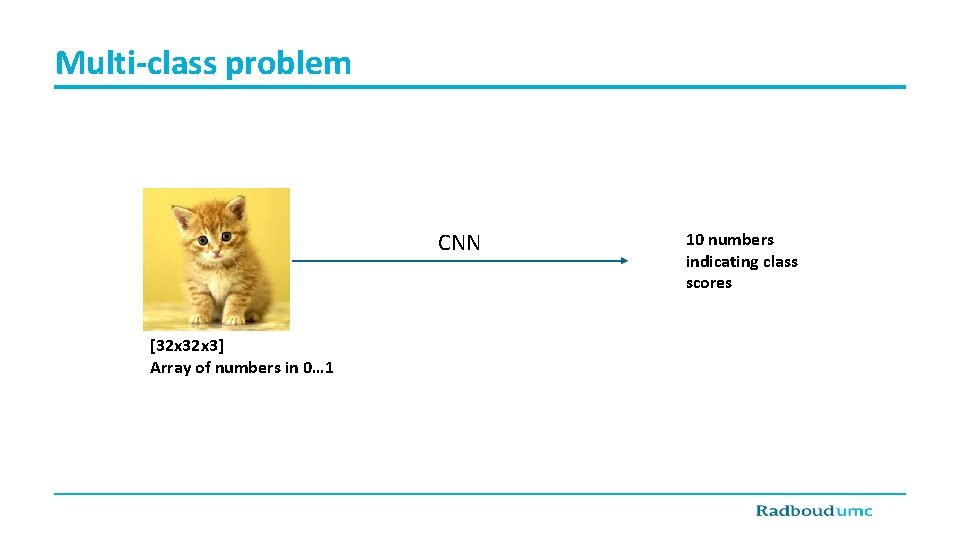
Multi-class problem CNN [32 x 3] Array of numbers in 0… 1 10 numbers indicating class scores
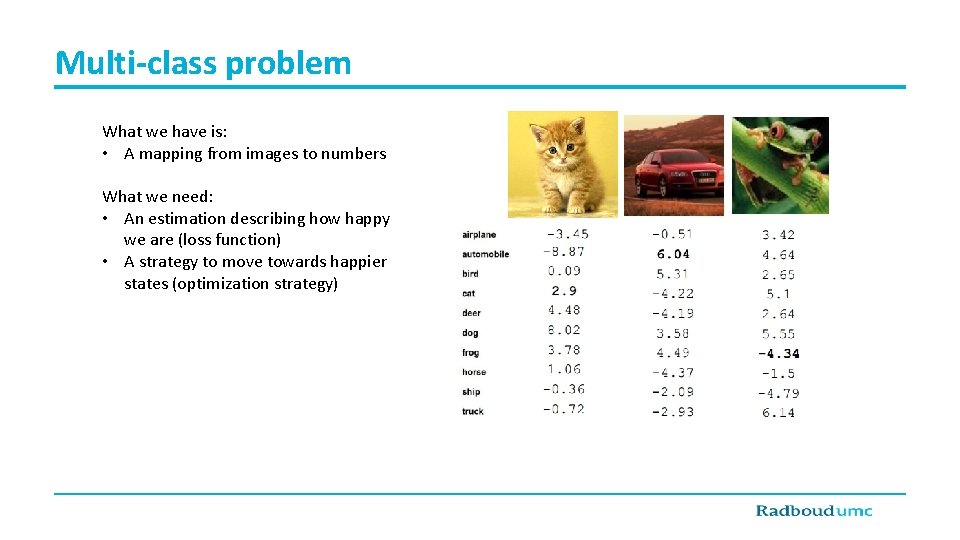
Multi-class problem What we have is: • A mapping from images to numbers What we need: • An estimation describing how happy we are (loss function) • A strategy to move towards happier states (optimization strategy)
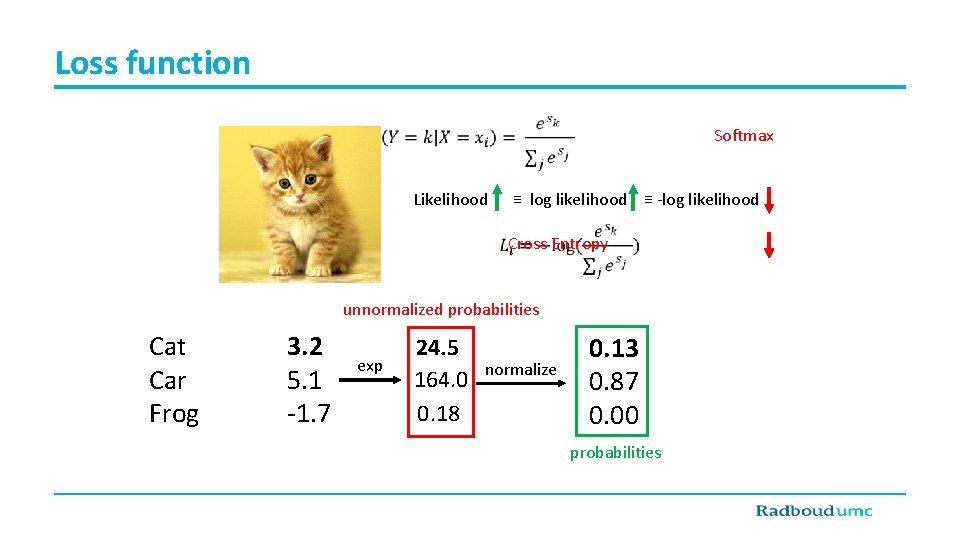
Loss function Softmax Likelihood ≡ log likelihood ≡ -log likelihood Cross Entropy unnormalized probabilities Cat Car Frog 3. 2 5. 1 -1. 7 exp 24. 5 164. 0 0. 18 normalize 0. 13 0. 87 0. 00 probabilities
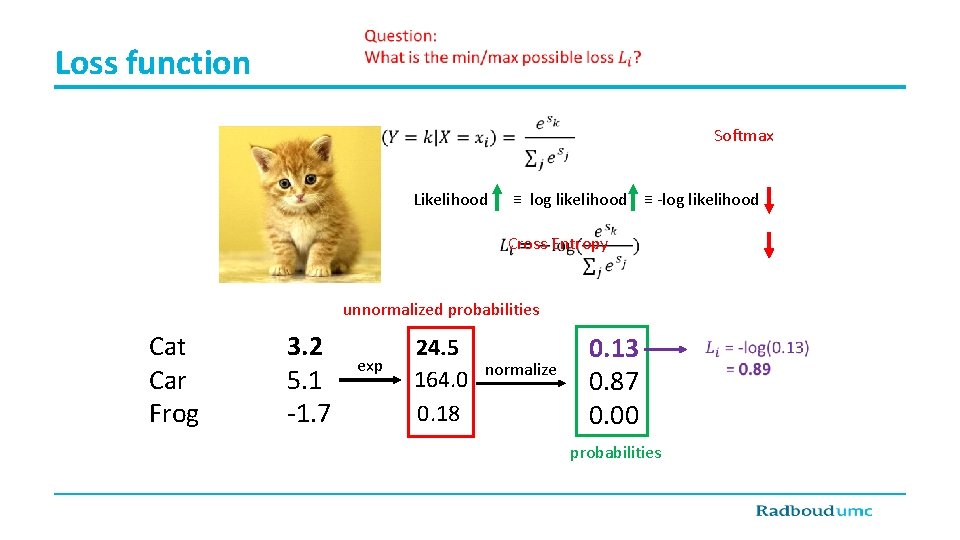
Loss function Softmax Likelihood ≡ log likelihood ≡ -log likelihood Cross Entropy unnormalized probabilities Cat Car Frog 3. 2 5. 1 -1. 7 exp 24. 5 164. 0 0. 18 normalize 0. 13 0. 87 0. 00 probabilities
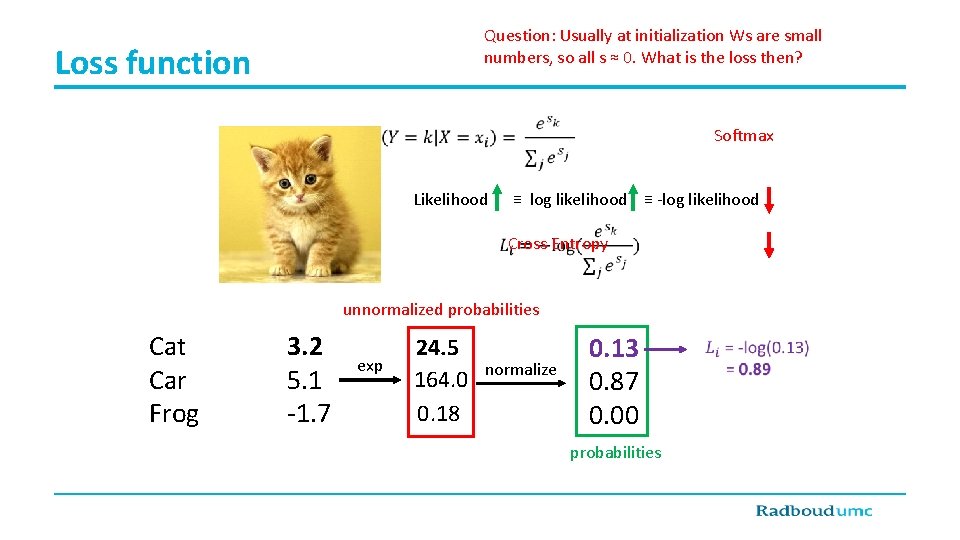
Question: Usually at initialization Ws are small numbers, so all s ≈ 0. What is the loss then? Loss function Softmax Likelihood ≡ log likelihood ≡ -log likelihood Cross Entropy unnormalized probabilities Cat Car Frog 3. 2 5. 1 -1. 7 exp 24. 5 164. 0 0. 18 normalize 0. 13 0. 87 0. 00 probabilities
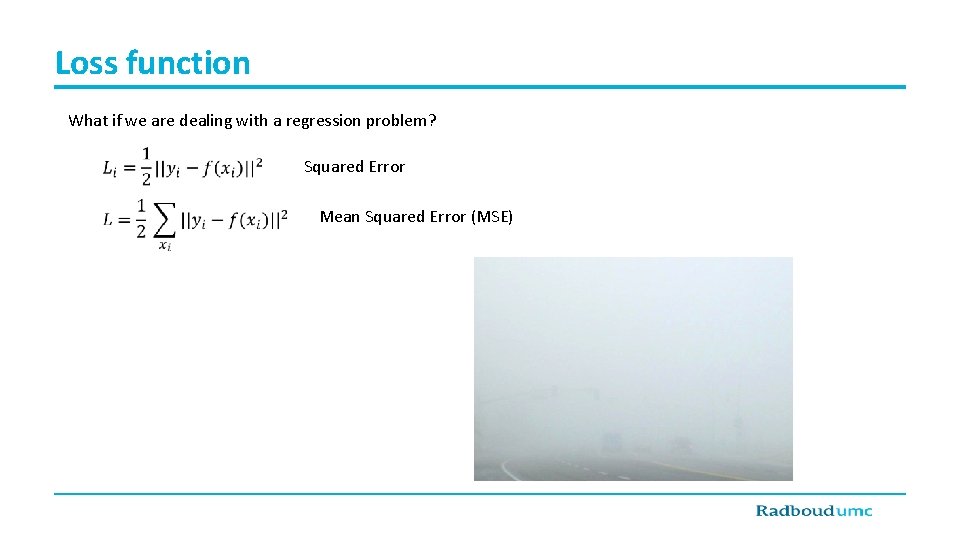
Loss function What if we are dealing with a regression problem? Squared Error Mean Squared Error (MSE)

Optimization

Optimization
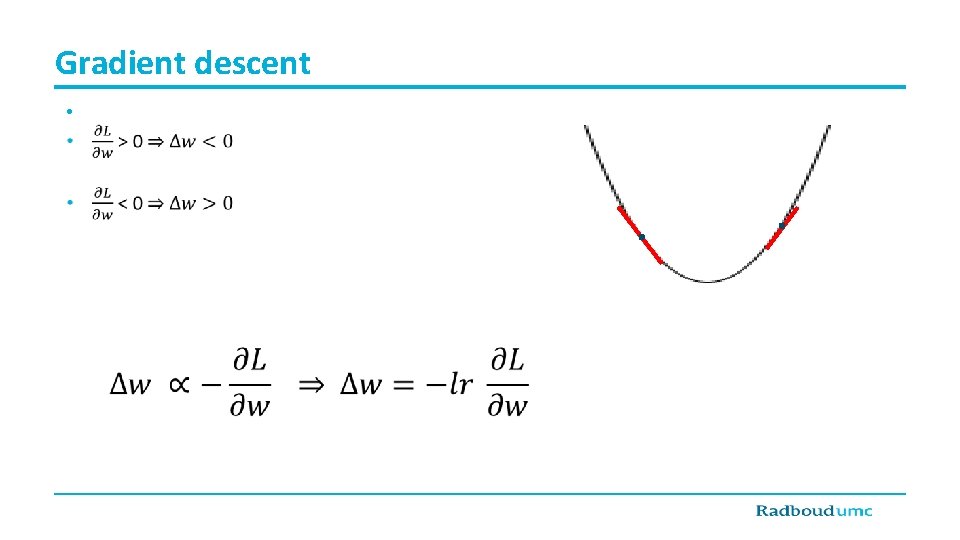
Gradient descent •
Full-batch vs Mini-batch Gradient Descent • Full-batch: • Compute the gradient on the full batch of samples for each update • Mini-batch: (stochastic gradient descent) • Motivation: datasets are often highly redundant. • Compute the gradient on a small mini-batch of samples (e. g 64) • Much faster computationally • Online (mini-batch size=1) • Not as common as mini-batch learning • Too noisy gradients • No computational advantage over mini-batch • Parallel computation of whole mini-batch gradients using GPUs
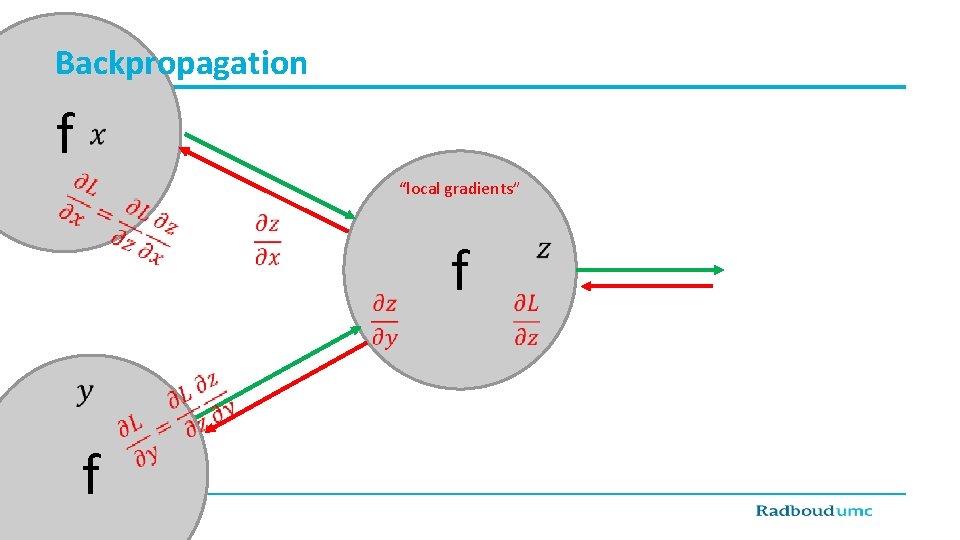
Backpropagation f “local gradients” f f
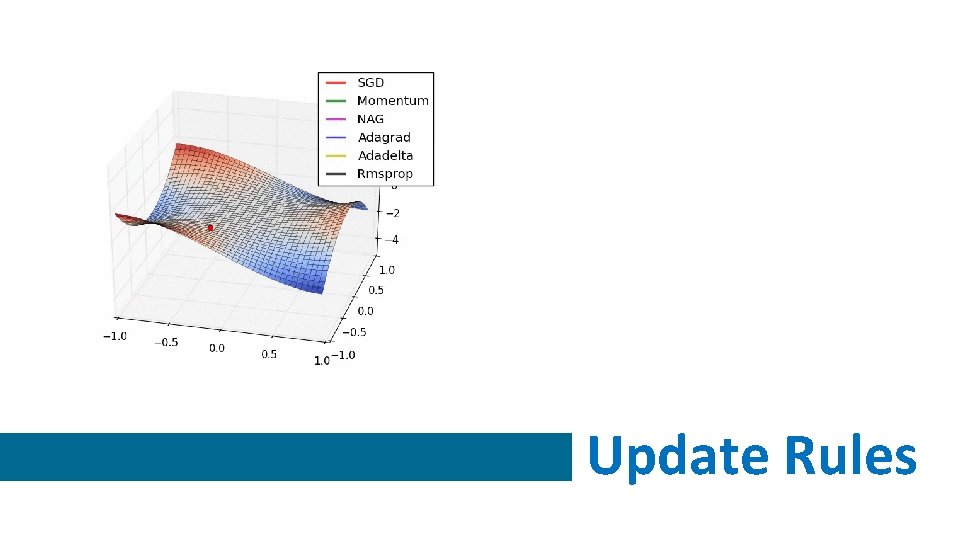
Update Rules
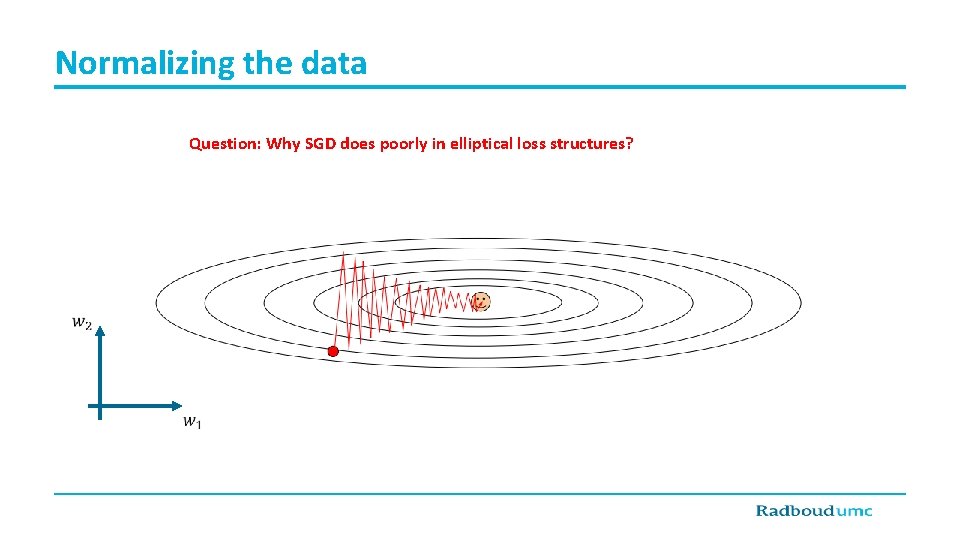
Normalizing the data Question: Why SGD does poorly in elliptical loss structures?
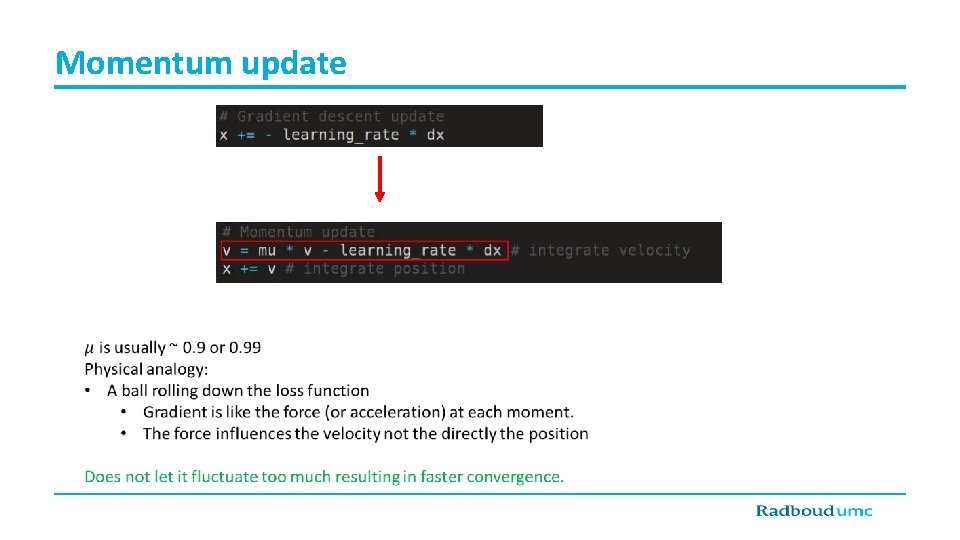
Momentum update
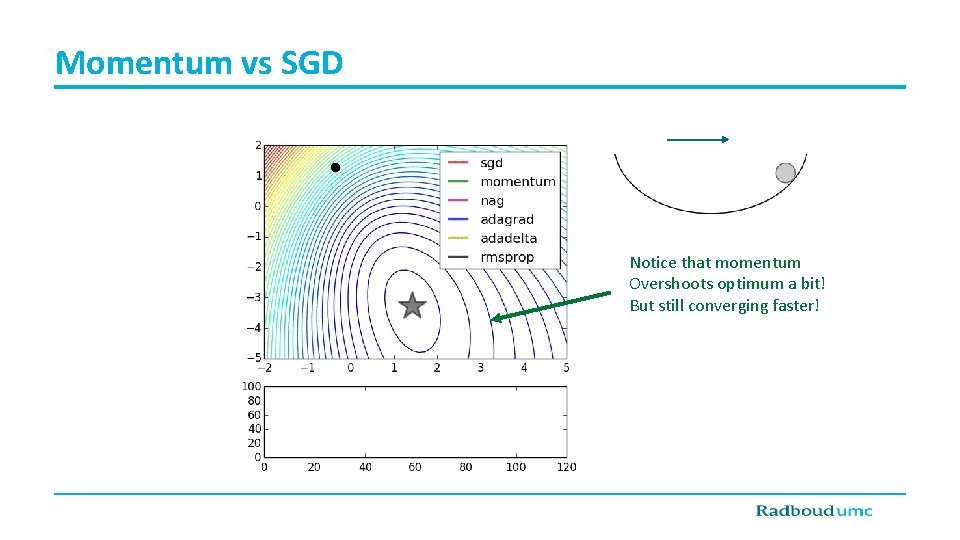
Momentum vs SGD Notice that momentum Overshoots optimum a bit! But still converging faster!
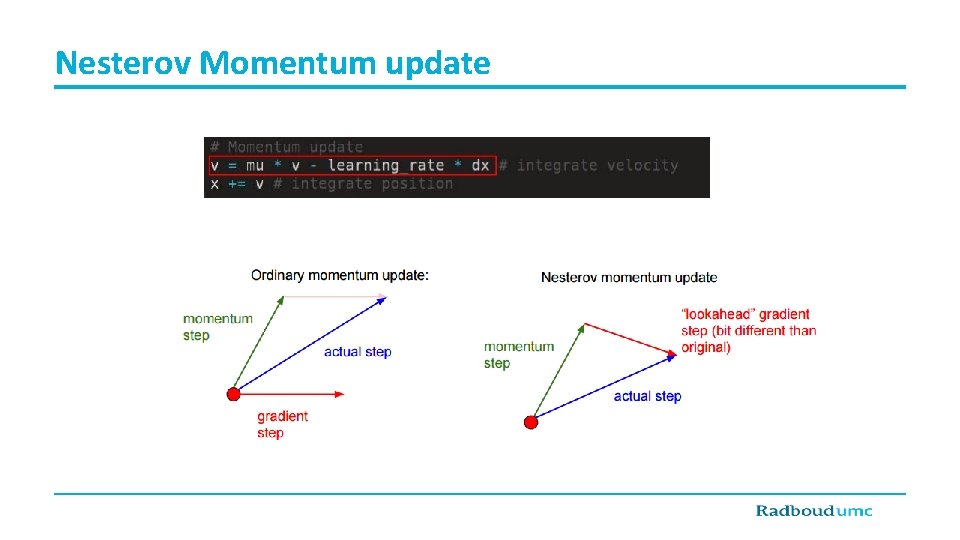
Nesterov Momentum update
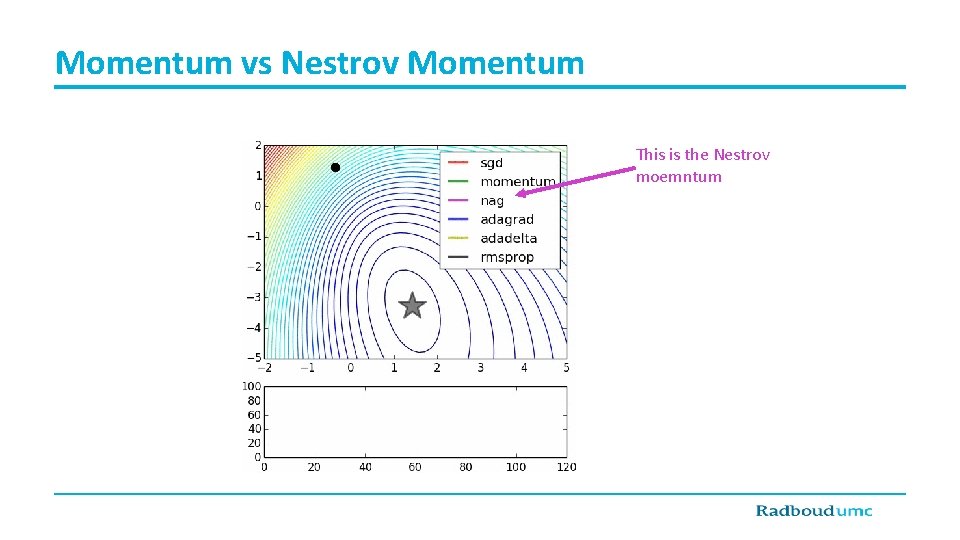
Momentum vs Nestrov Momentum This is the Nestrov moemntum
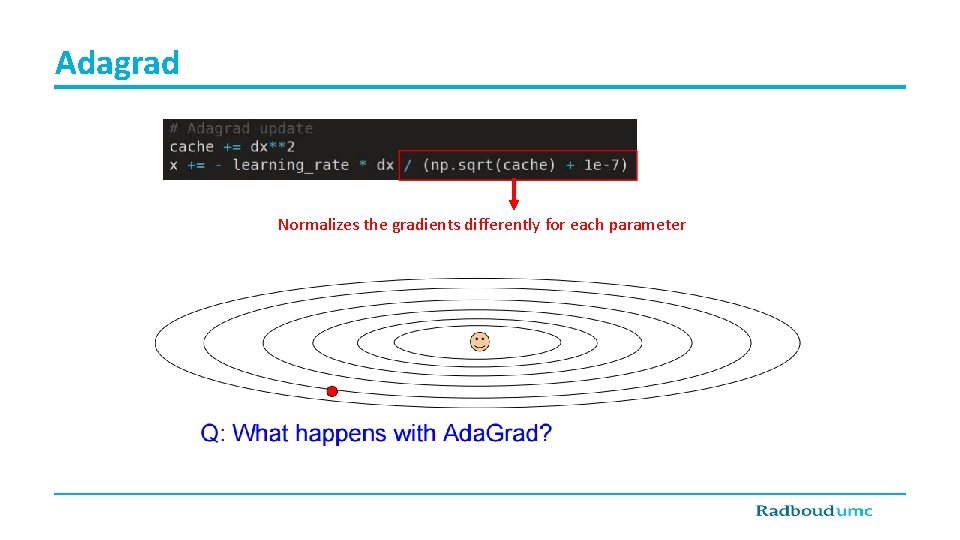
Adagrad Normalizes the gradients differently for each parameter
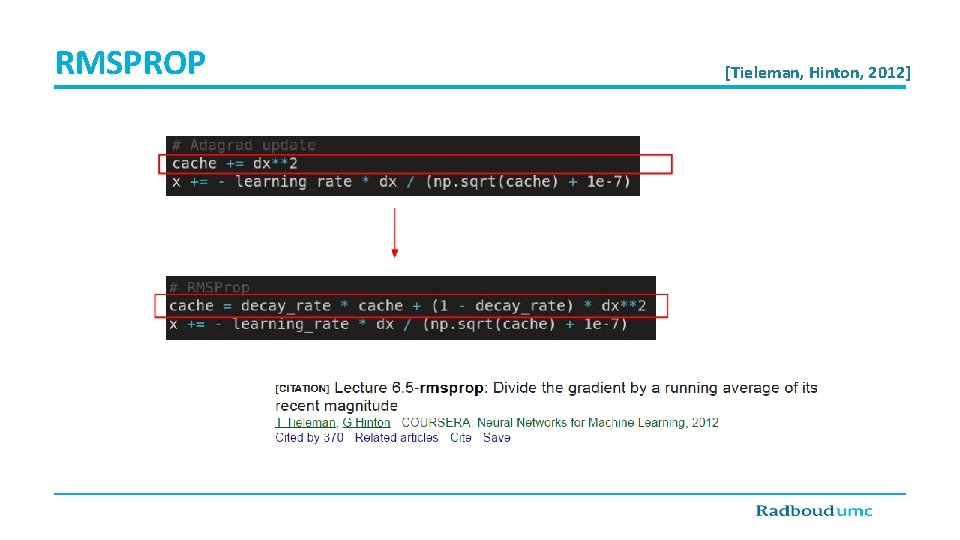
RMSPROP [Tieleman, Hinton, 2012]
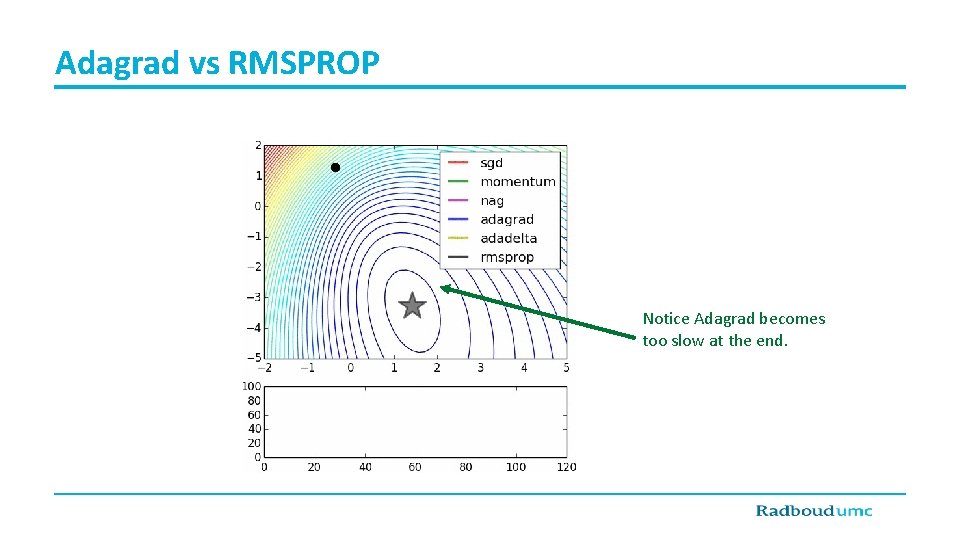
Adagrad vs RMSPROP Notice Adagrad becomes too slow at the end.
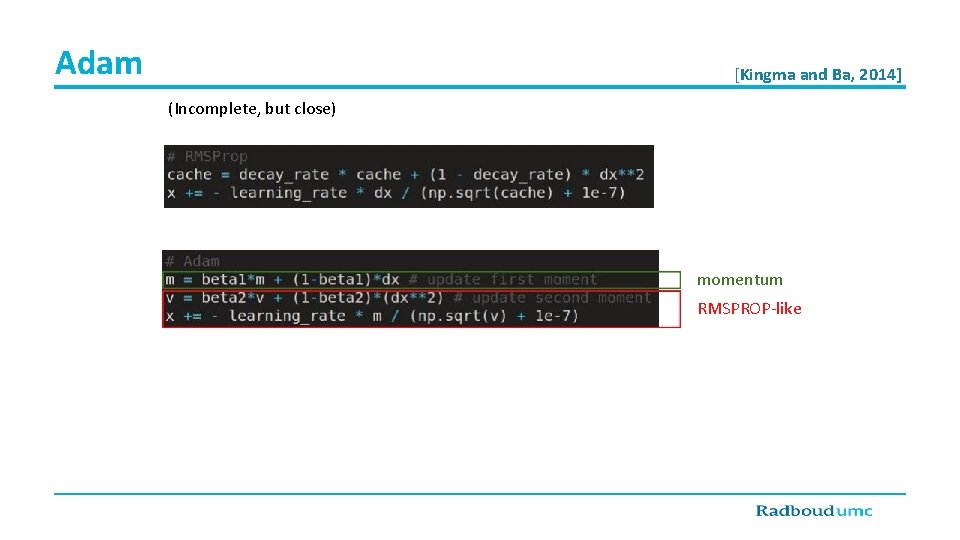
Adam [Kingma and Ba, 2014] (Incomplete, but close) momentum RMSPROP-like
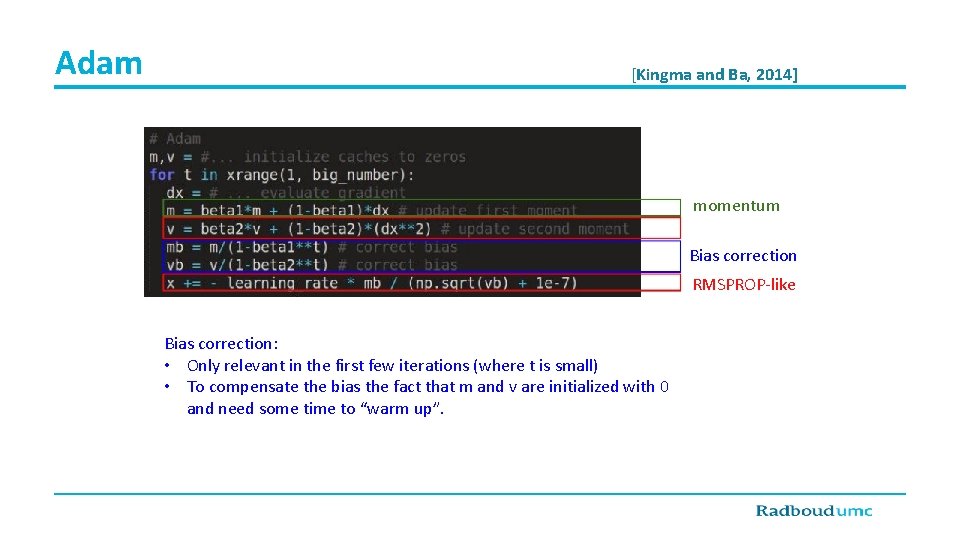
Adam [Kingma and Ba, 2014] momentum Bias correction RMSPROP-like Bias correction: • Only relevant in the first few iterations (where t is small) • To compensate the bias the fact that m and v are initialized with 0 and need some time to “warm up”.
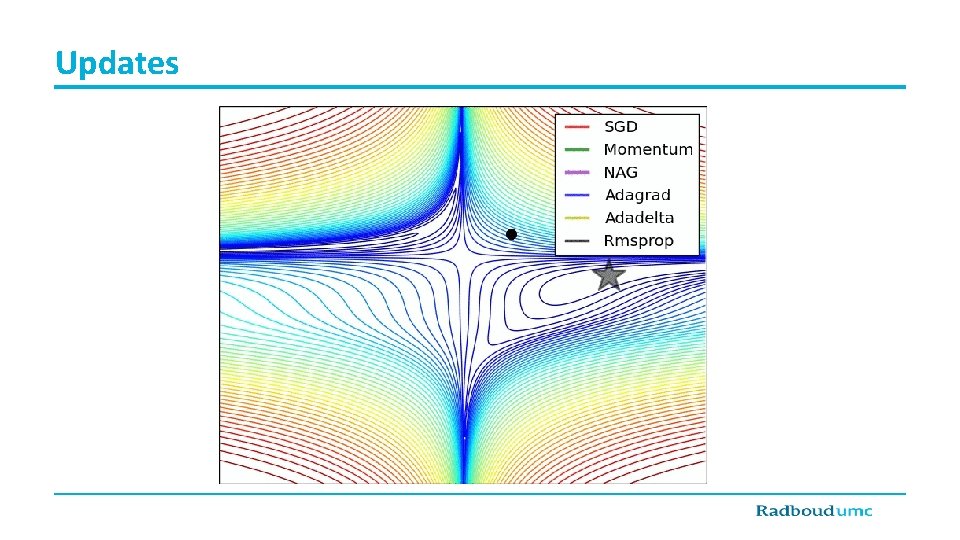
Updates

Non-Linearities
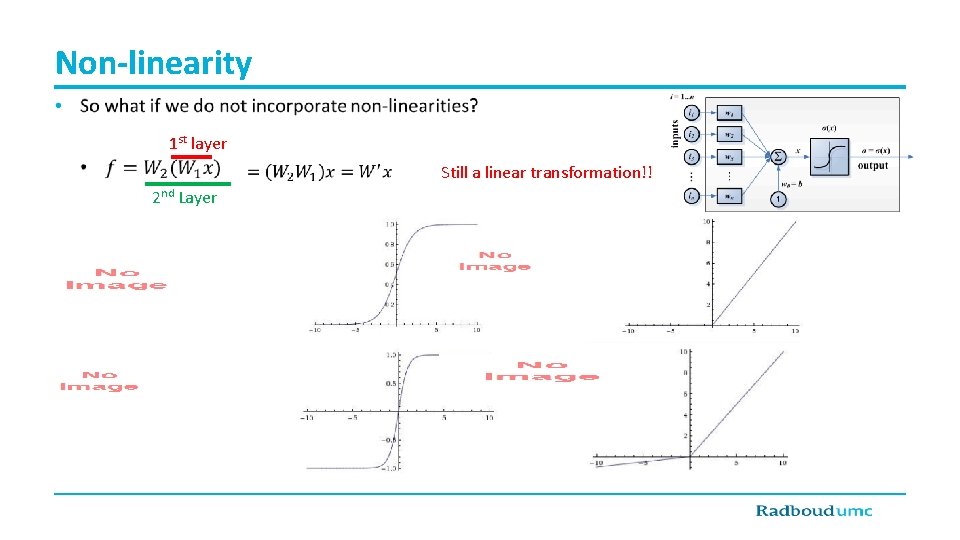
Non-linearity • 1 st layer Still a linear transformation!! 2 nd Layer
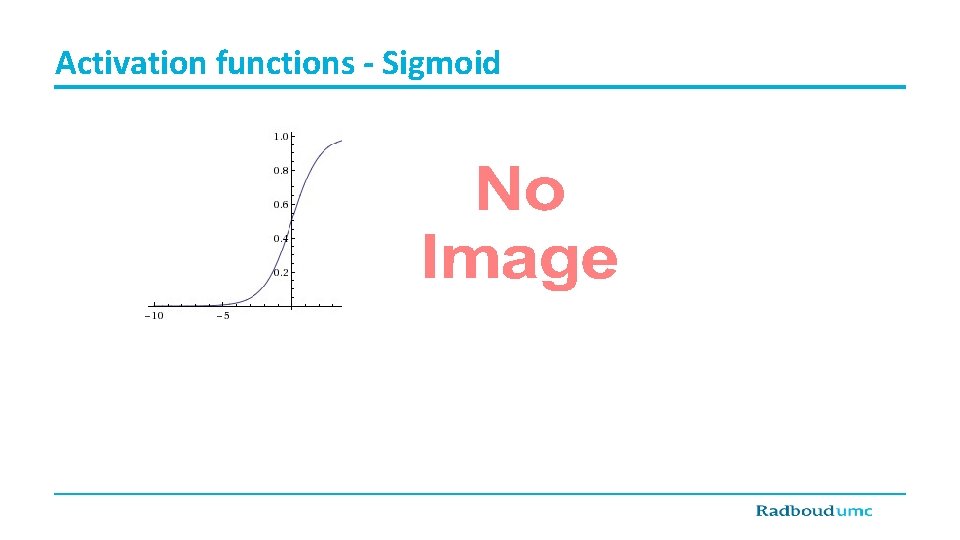
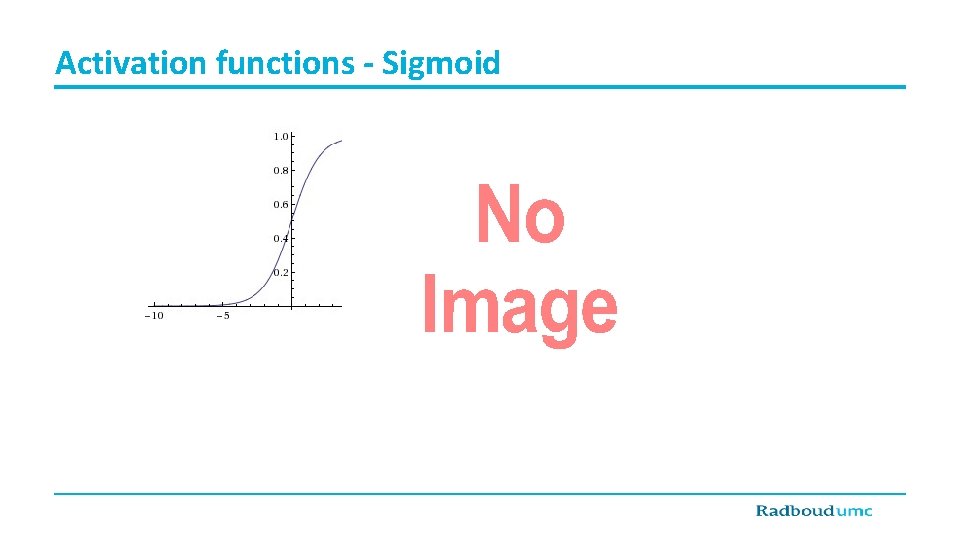
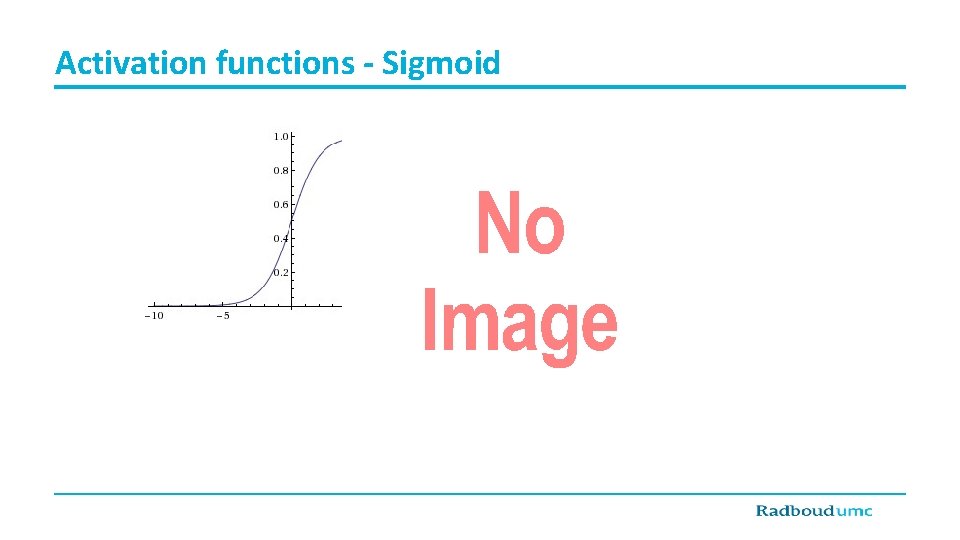
Activation functions - Sigmoid
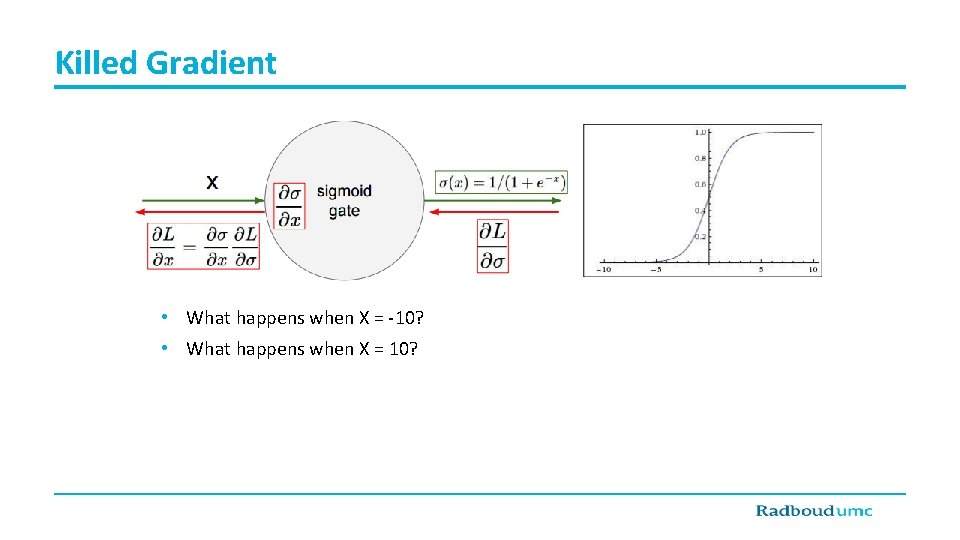
Killed Gradient • What happens when X = -10? • What happens when X = 10?
Activation functions - Sigmoid
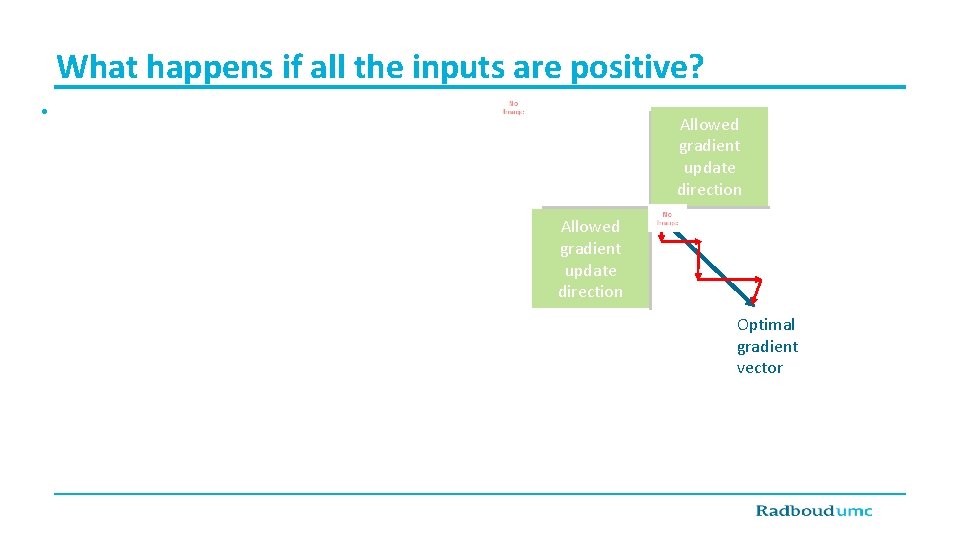
What happens if all the inputs are positive? • Allowed gradient update direction Optimal gradient vector
Activation functions - Sigmoid
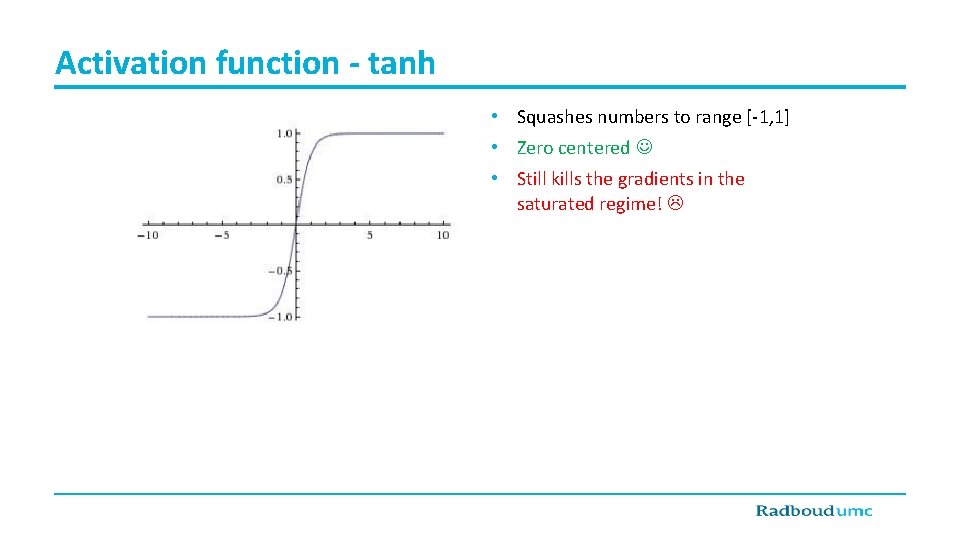
Activation function - tanh • Squashes numbers to range [-1, 1] • Zero centered • Still kills the gradients in the saturated regime!
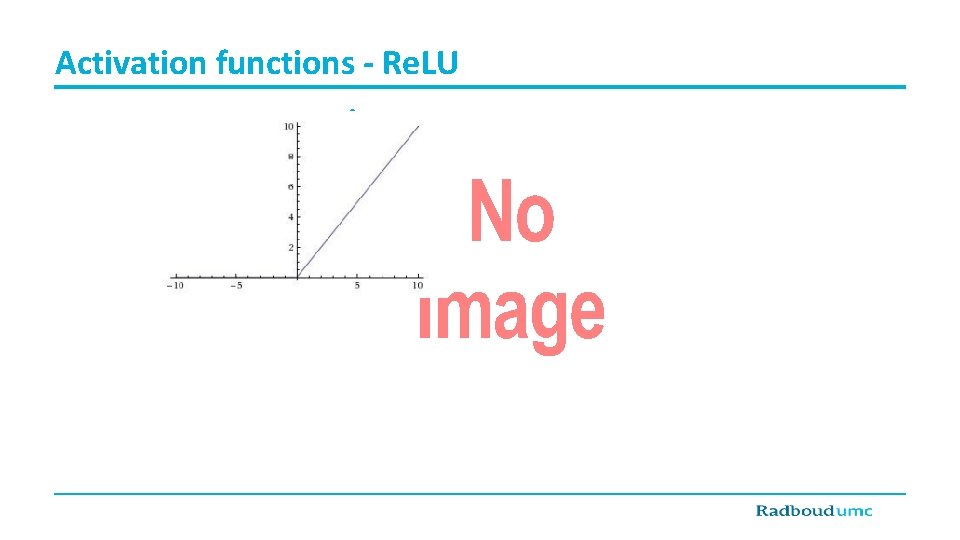
Activation functions - Re. LU •
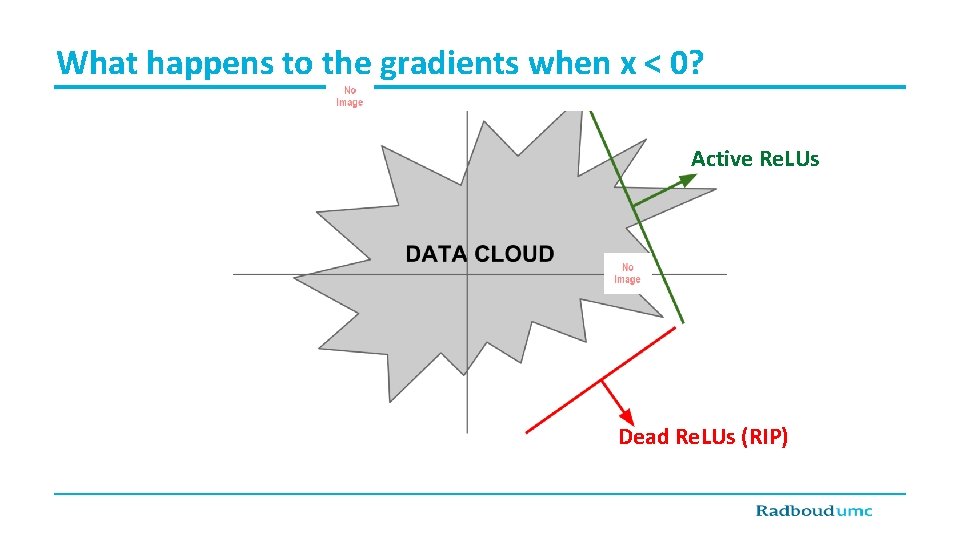
What happens to the gradients when x < 0? Active Re. LUs Dead Re. LUs (RIP)
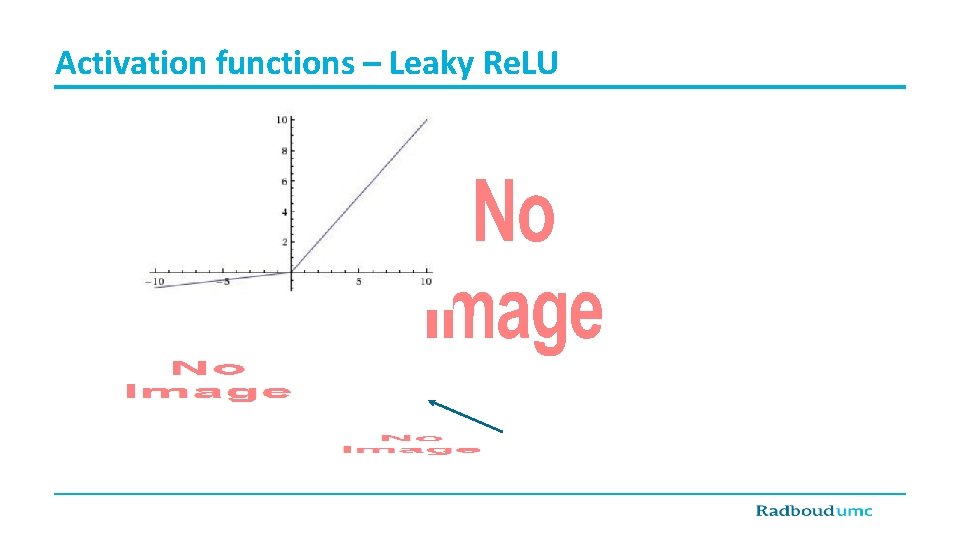
Activation functions – Leaky Re. LU •
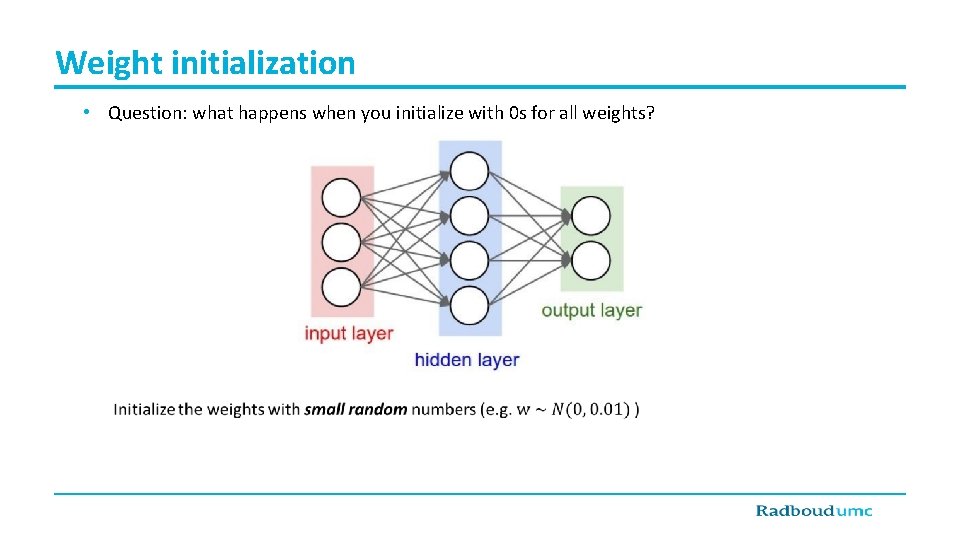
Weight initialization • Question: what happens when you initialize with 0 s for all weights?
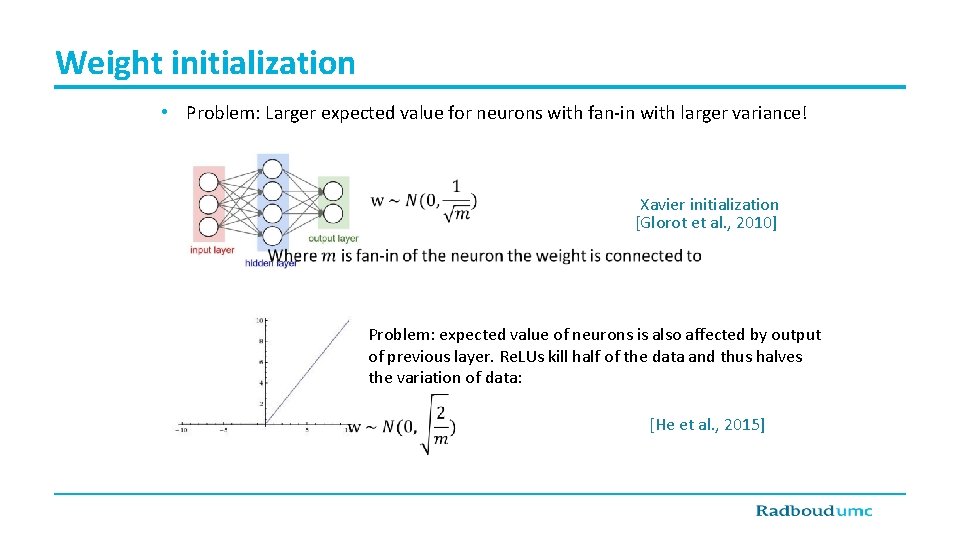
Weight initialization • Problem: Larger expected value for neurons with fan-in with larger variance! Xavier initialization [Glorot et al. , 2010] Problem: expected value of neurons is also affected by output of previous layer. Re. LUs kill half of the data and thus halves the variation of data: [He et al. , 2015]
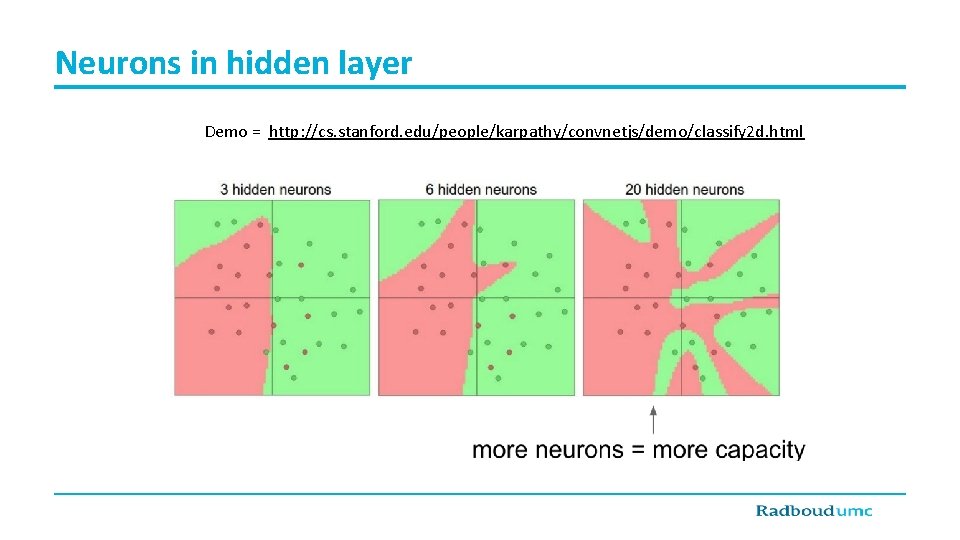
Neurons in hidden layer Demo = http: //cs. stanford. edu/people/karpathy/convnetjs/demo/classify 2 d. html
Regularization
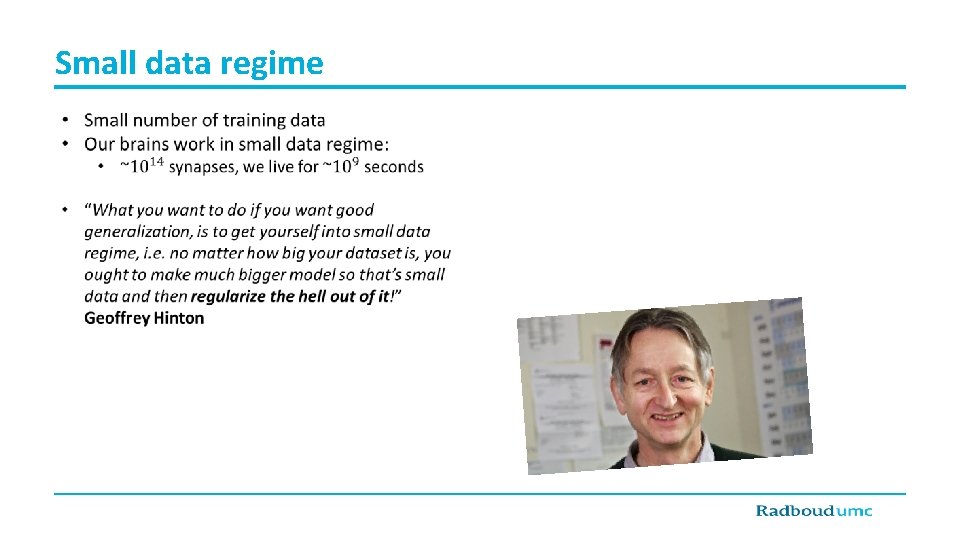
Small data regime
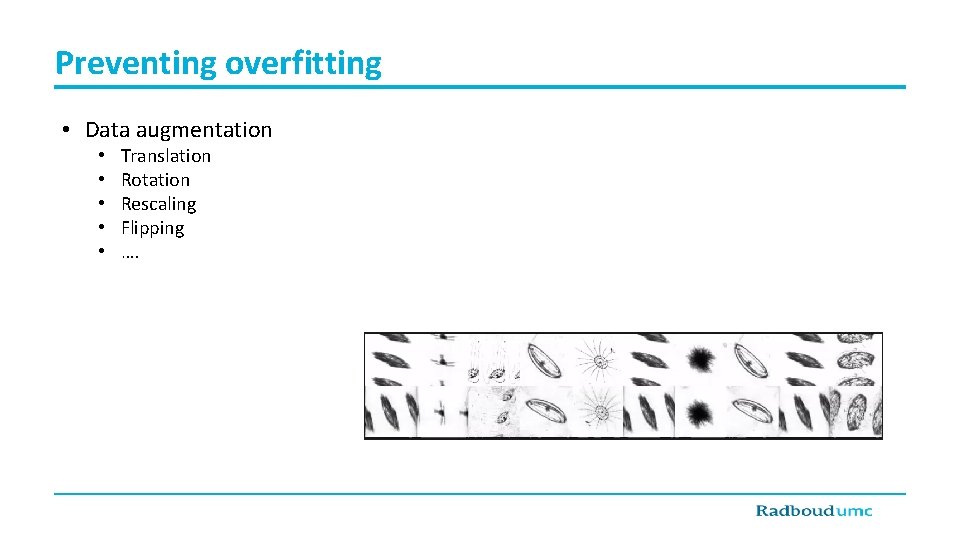
Preventing overfitting • Data augmentation • • • Translation Rotation Rescaling Flipping ….
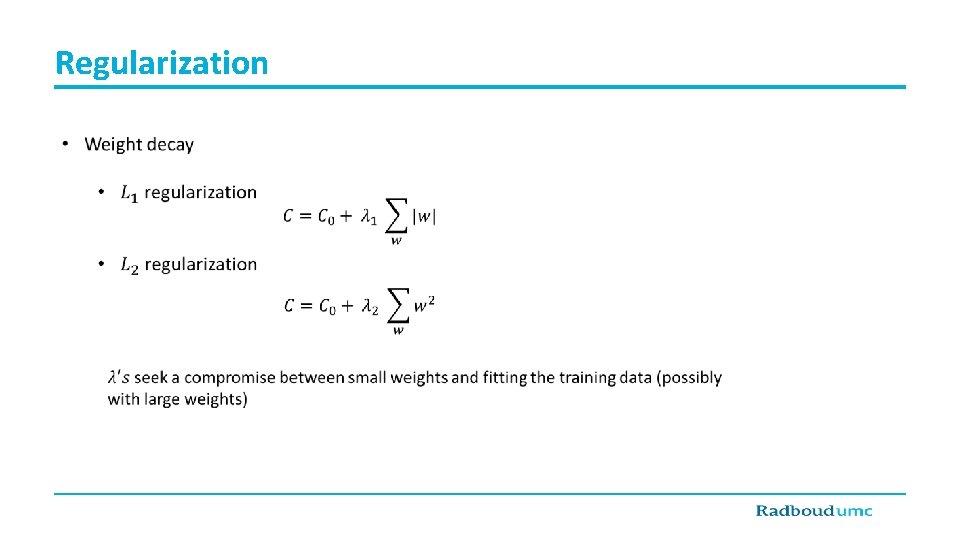
Regularization
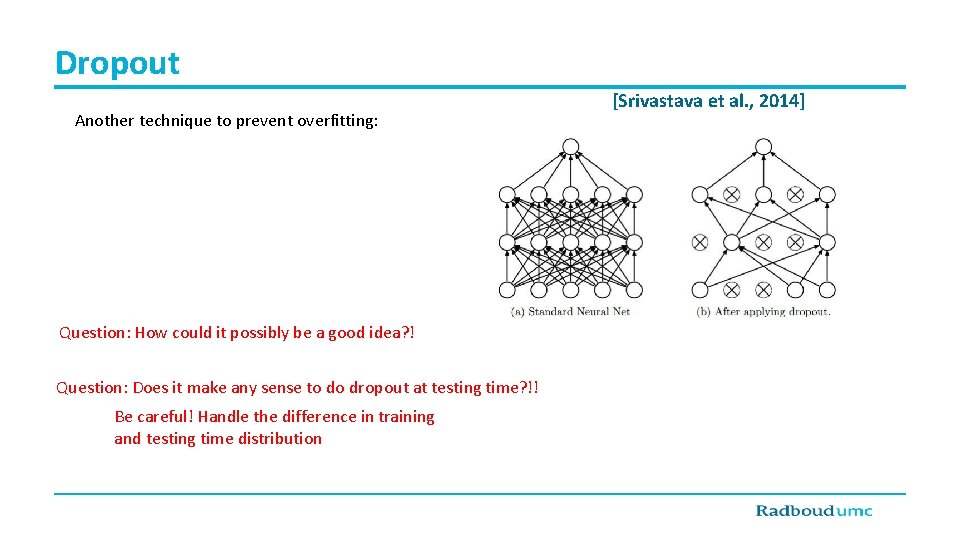
Dropout Another technique to prevent overfitting: Question: How could it possibly be a good idea? ! Question: Does it make any sense to do dropout at testing time? !! Be careful! Handle the difference in training and testing time distribution [Srivastava et al. , 2014]
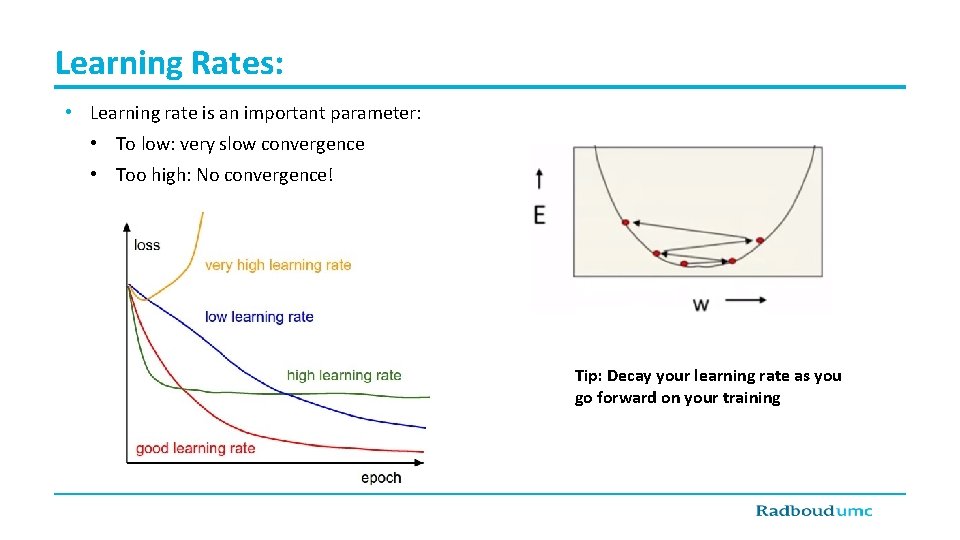
Learning Rates: • Learning rate is an important parameter: • To low: very slow convergence • Too high: No convergence! Tip: Decay your learning rate as you go forward on your training
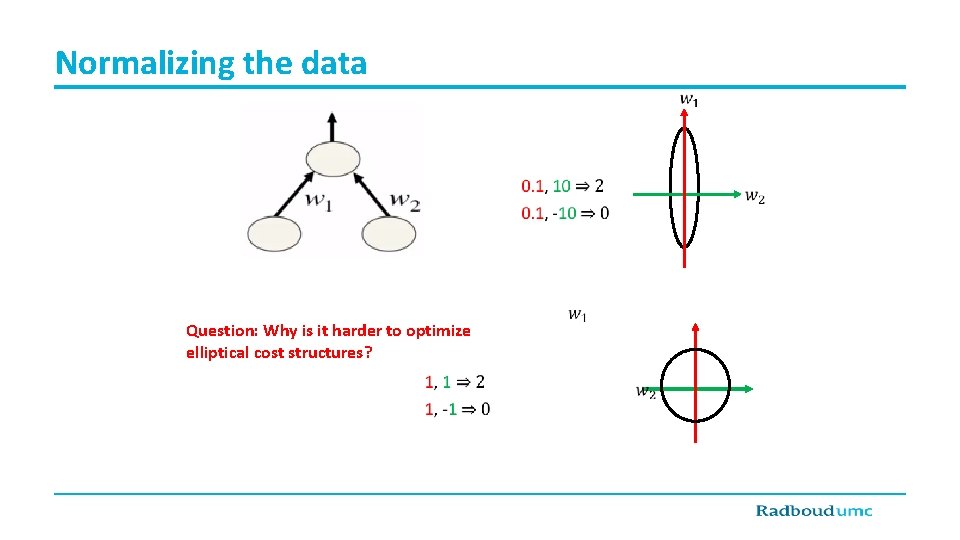
Normalizing the data c Question: Why is it harder to optimize elliptical cost structures?
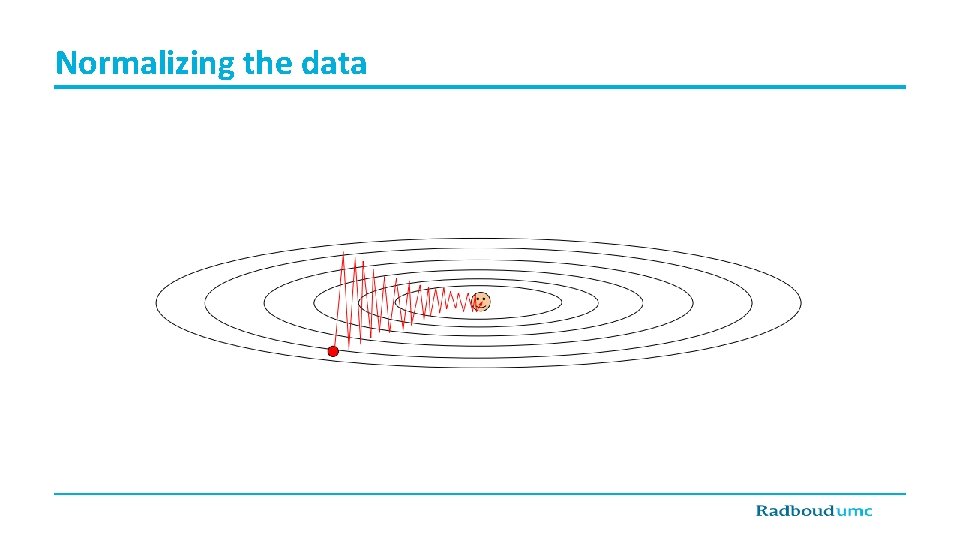
Normalizing the data
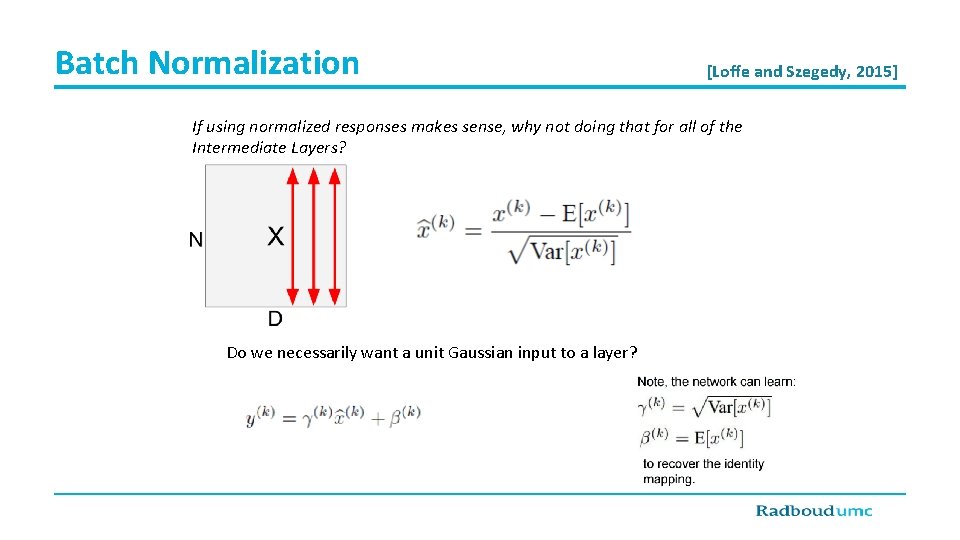
Batch Normalization [Loffe and Szegedy, 2015] If using normalized responses makes sense, why not doing that for all of the Intermediate Layers? Do we necessarily want a unit Gaussian input to a layer?
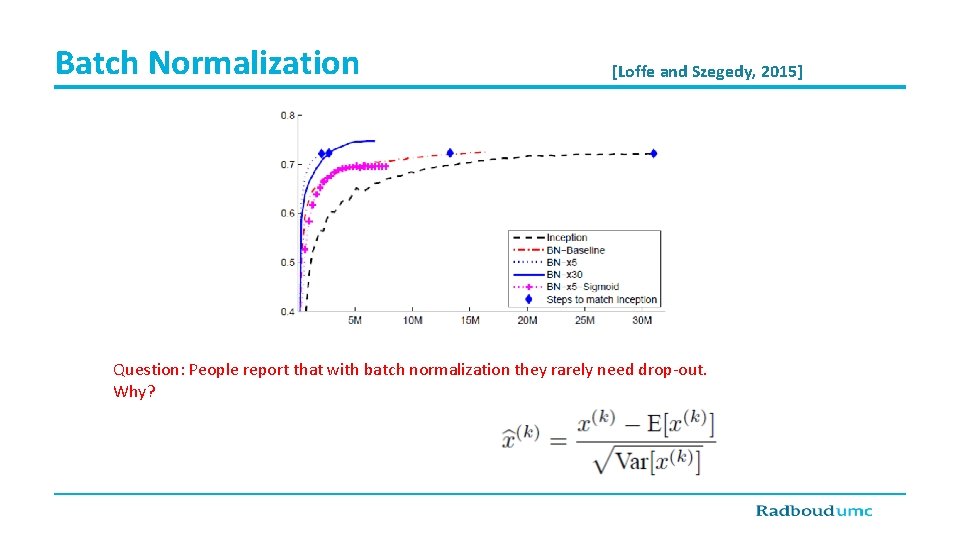
Batch Normalization [Loffe and Szegedy, 2015] Question: People report that with batch normalization they rarely need drop-out. Why?
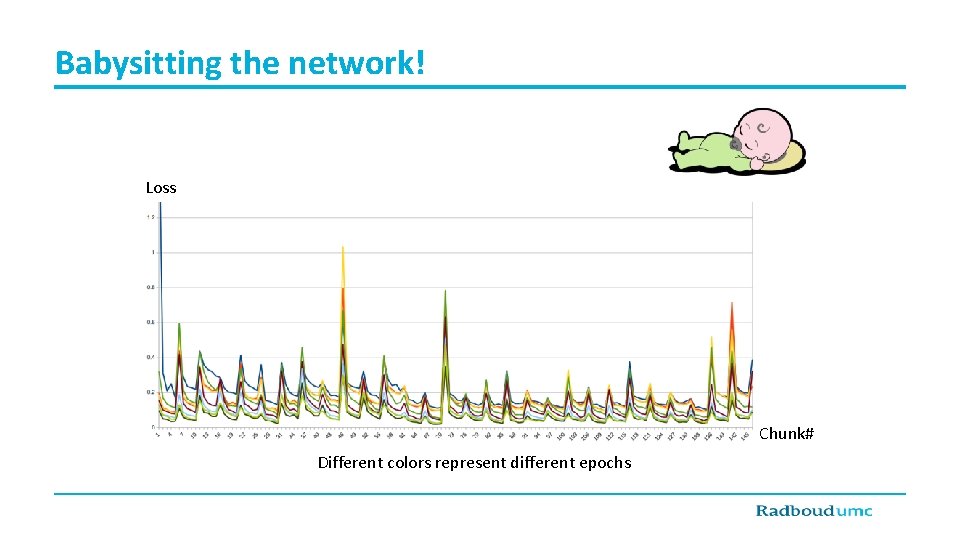
Babysitting the network! Loss Chunk# Different colors represent different epochs
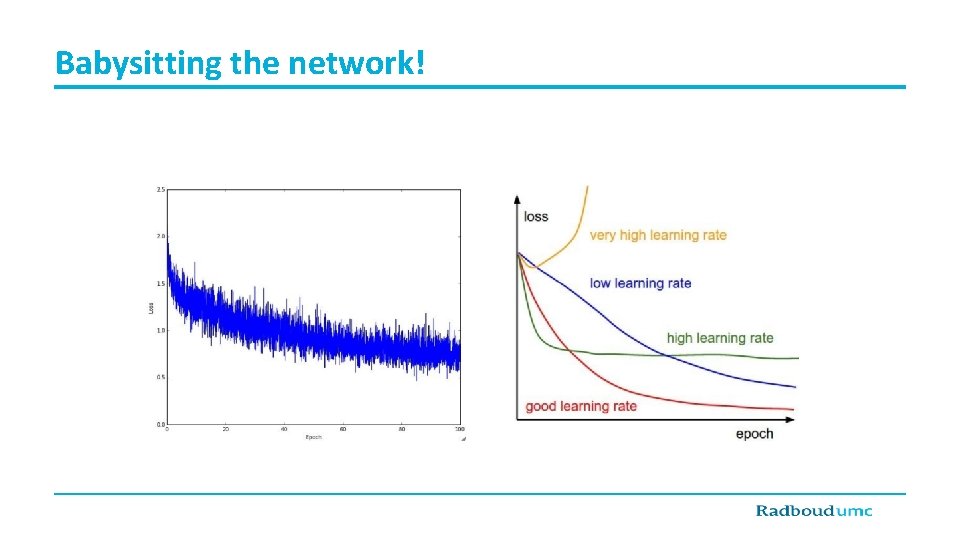
Babysitting the network!
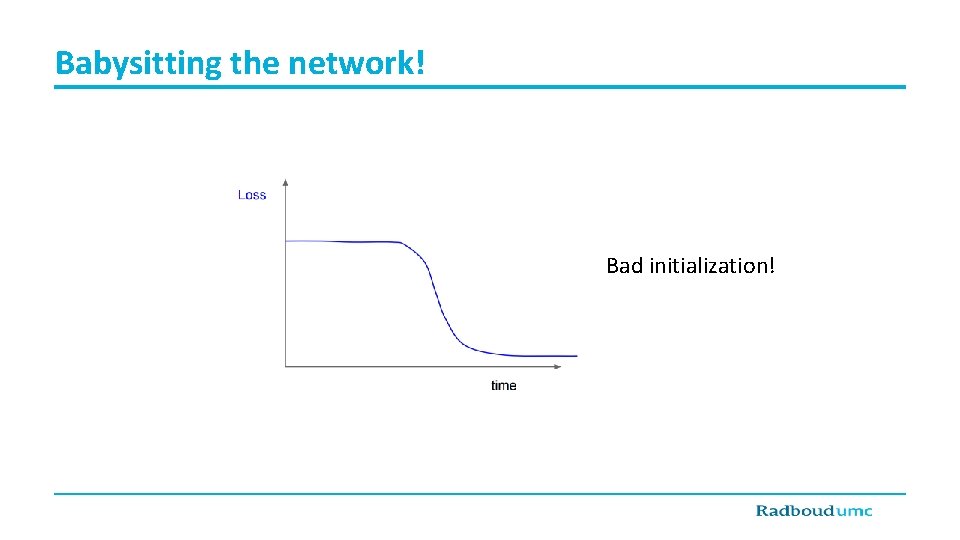
Babysitting the network! Bad initialization!
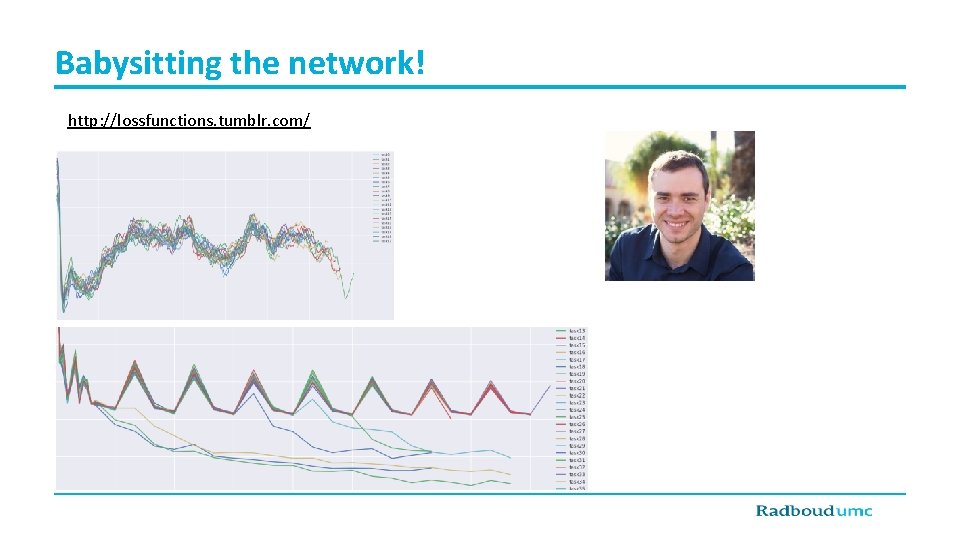
Babysitting the network! http: //lossfunctions. tumblr. com/
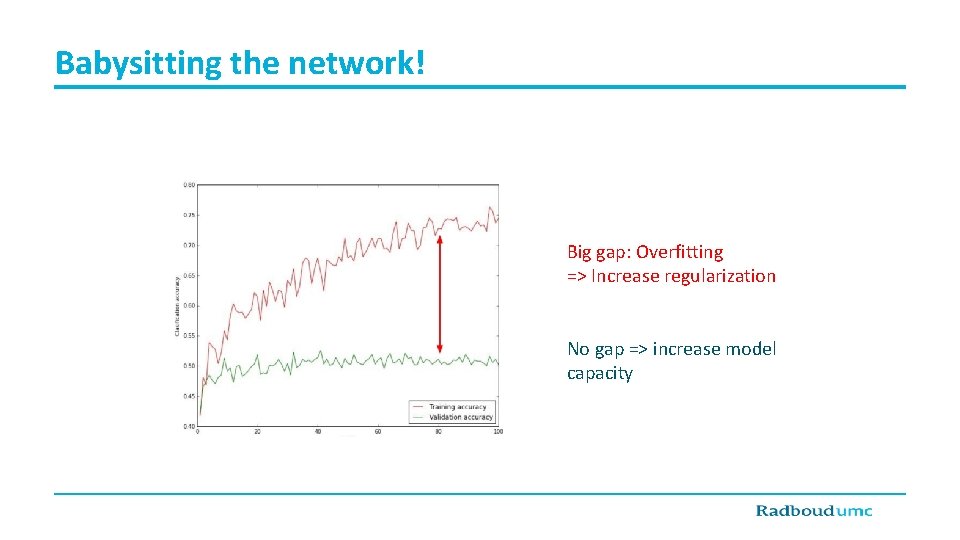
Babysitting the network! Big gap: Overfitting => Increase regularization No gap => increase model capacity
- Slides: 53