
The Barany Chair Gregory L Vogt Ed D
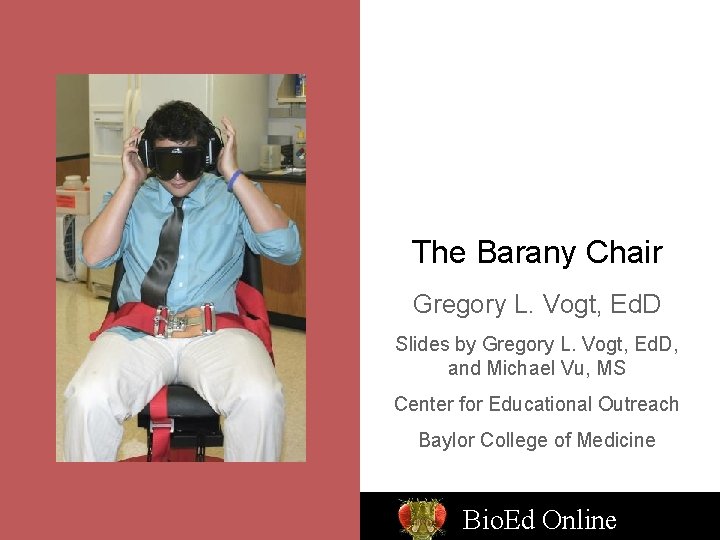
The Barany Chair Gregory L. Vogt, Ed. D Slides by Gregory L. Vogt, Ed. D, and Michael Vu, MS Center for Educational Outreach Baylor College of Medicine Bio. Ed Online
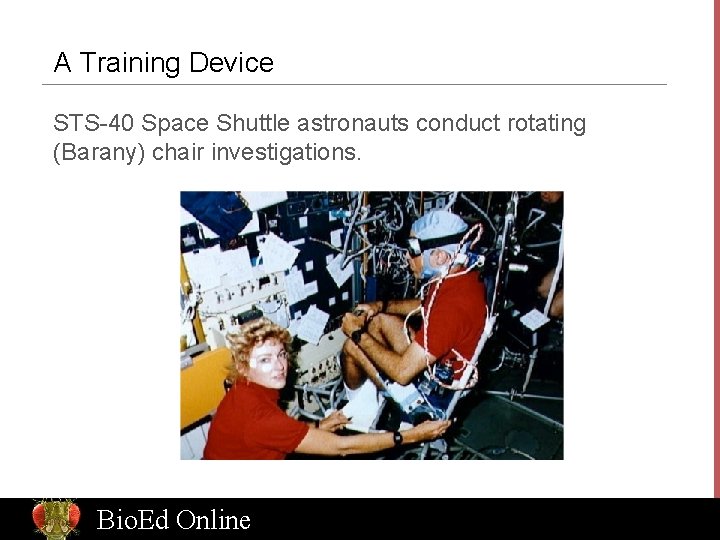
A Training Device STS-40 Space Shuttle astronauts conduct rotating (Barany) chair investigations. Bio. Ed Online www. Bio. Ed. Online. org
Our Senses n n How many senses do humans have? n The common answer is “five” (sight, taste, hearing, touch, smell). n In fact, there are other senses, such as the ability to sense your body’s movement or a change in motion. Senses sometimes can send false information, which can affect decision making while operating aircraft or other vehicles, or while carrying out other activities. Bio. Ed Online www. Bio. Ed. Online. org
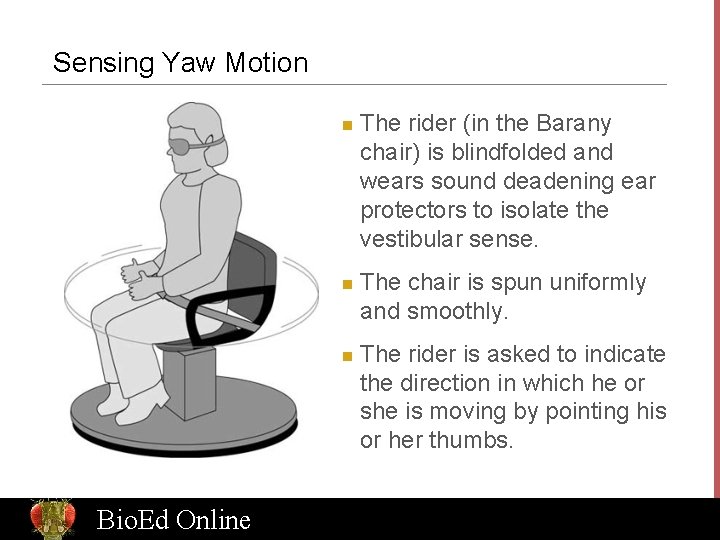
Sensing Yaw Motion n Bio. Ed Online The rider (in the Barany chair) is blindfolded and wears sound deadening ear protectors to isolate the vestibular sense. The chair is spun uniformly and smoothly. The rider is asked to indicate the direction in which he or she is moving by pointing his or her thumbs. www. Bio. Ed. Online. org
What Happened? Occular Nystagmus n n n Rhythmic, oscillating motions of the eye caused by a sudden stop in angular motion. The continued motion of the endolymph fluid in the semicircular canal “tricks” the brain into believing that the body is still moving. The rider’s eyes shift to track objects in the room, even though the motion has stopped. Bio. Ed Online www. Bio. Ed. Online. org
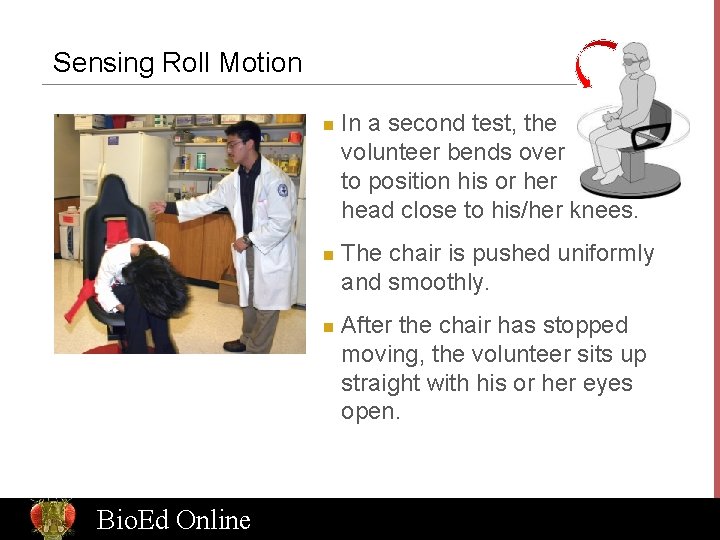
Sensing Roll Motion n Bio. Ed Online In a second test, the volunteer bends over to position his or head close to his/her knees. The chair is pushed uniformly and smoothly. After the chair has stopped moving, the volunteer sits up straight with his or her eyes open. www. Bio. Ed. Online. org
What Happened? n n When the person in the Barany chair sits straight up, he or she experiences a powerful cartwheeling sensation to the left or right. Because the person’s head was tilted forward, the roll axis in the semicircular canal was brought into the same plane of rotation as the chair. When the chair stopped and the head was returned to a vertical position, the fluid in the canal continued to move, which caused a sensation of tumbling. Bio. Ed Online www. Bio. Ed. Online. org
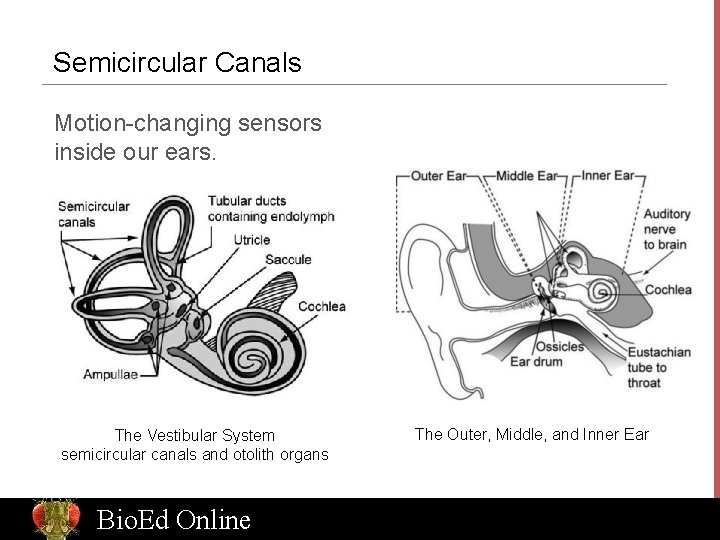
Semicircular Canals Motion-changing sensors inside our ears. The Vestibular System semicircular canals and otolith organs Bio. Ed Online The Outer, Middle, and Inner Ear www. Bio. Ed. Online. org
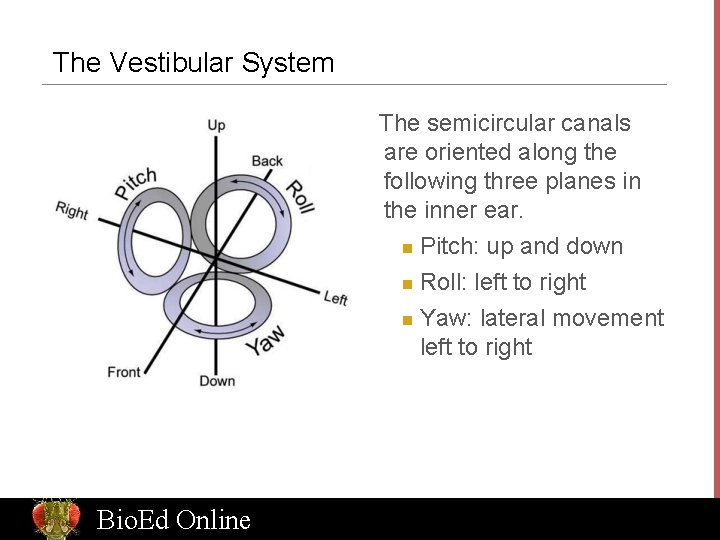
The Vestibular System The semicircular canals are oriented along the following three planes in the inner ear. n Pitch: up and down n Roll: left to right n Yaw: lateral movement left to right Bio. Ed Online www. Bio. Ed. Online. org
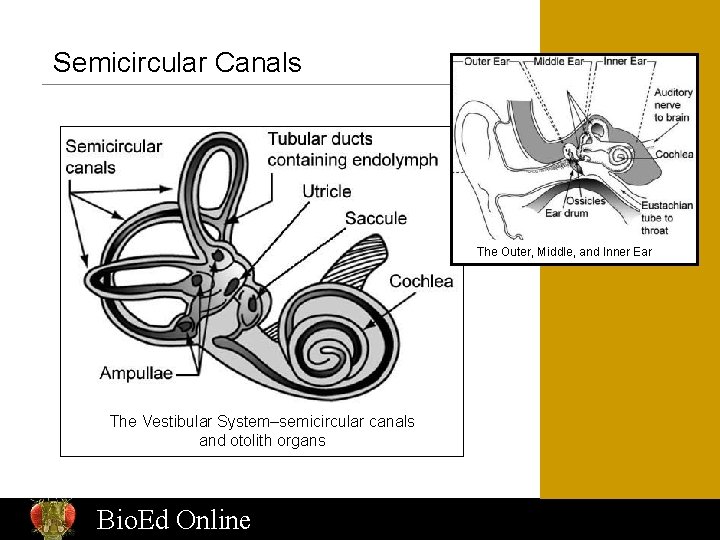
Semicircular Canals The Outer, Middle, and Inner Ear The Vestibular System–semicircular canals and otolith organs Bio. Ed Online www. Bio. Ed. Online. org
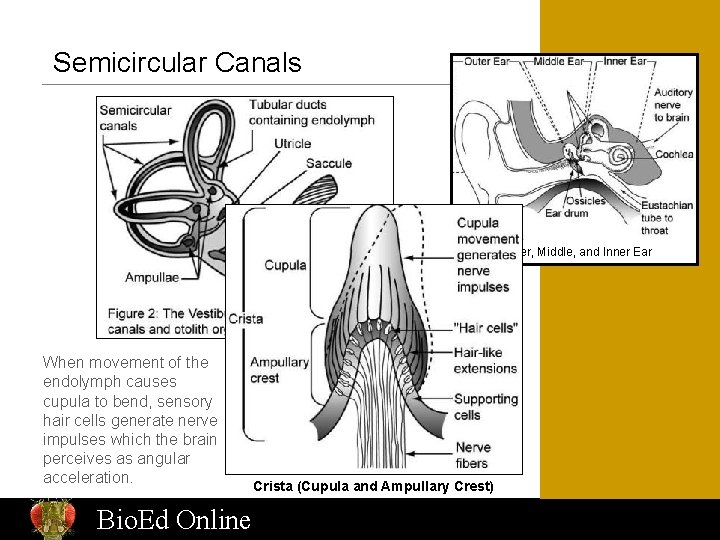
Semicircular Canals The Outer, Middle, and Inner Ear When movement of the endolymph causes cupula to bend, sensory hair cells generate nerve impulses which the brain perceives as angular acceleration. Bio. Ed Online Crista (Cupula and Ampullary Crest) www. Bio. Ed. Online. org
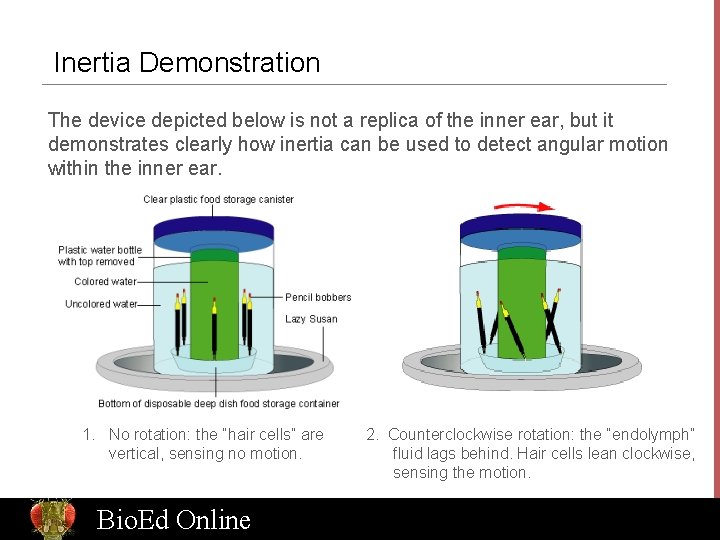
Inertia Demonstration The device depicted below is not a replica of the inner ear, but it demonstrates clearly how inertia can be used to detect angular motion within the inner ear. 1. No rotation: the “hair cells” are vertical, sensing no motion. Bio. Ed Online 2. Counterclockwise rotation: the “endolymph” fluid lags behind. Hair cells lean clockwise, sensing the motion. www. Bio. Ed. Online. org
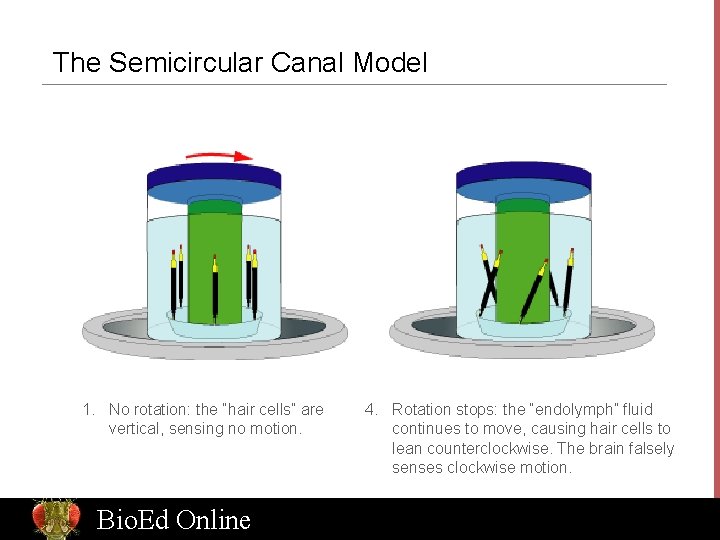
The Semicircular Canal Model 1. No rotation: the “hair cells” are vertical, sensing no motion. Bio. Ed Online 4. Rotation stops: the “endolymph” fluid continues to move, causing hair cells to lean counterclockwise. The brain falsely senses clockwise motion. www. Bio. Ed. Online. org
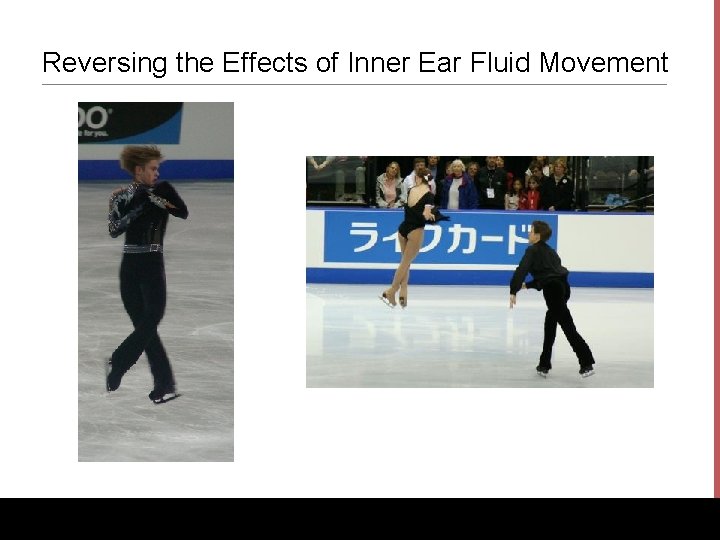
Reversing the Effects of Inner Ear Fluid Movement www. Bio. Ed. Online. org
- Slides: 14