
The Bank of England the European Central Bank
The Bank of England the European Central Bank FNCE 4070 Financial Markets and Institutions
Bank of England • King William and Queen Mary founded the bank in 1688. • The bank started with an initial loan of 1. 2 m GBP to the government – Thus it was privately owned and operated until 1946 when it was nationalized • It managed the government’s accounts and finances • It was a commercial bank
Bank of England • Prior to 1997 the bank was one of the least independent of central banks • In May 1997 a Labour government came to power. – The inflation fighting credentials of the labour party were less than those of the conservative party.
Instrument Independence • The Chancellor of the Exchequer, Gordon Brown, made a surprise announcement – The Bank of England would be given the power to set interest rates. – The government can still overrule the Bank and set rates in • Extreme economic circumstances and • For limited period
Core Purposes • Monetary stability – This means stable prices and confidence in the currency. Stable prices are defined by the Government’s inflation target – The current inflation target is 2% • Financial stability – detecting and reducing threats to the financial system as a whole. • lender of last resort, • oversight of key infrastructure and • surveillance and policy roles
Monetary Policy Committee (MPC) • Chaired by the Governor of the Bank of England – Sir Mervyn King (2003 -present) • Includes 5 full-time Bank executives • Includes 4 external members who are appointed by the Chancellor of the Exchequer for 3 year terms.
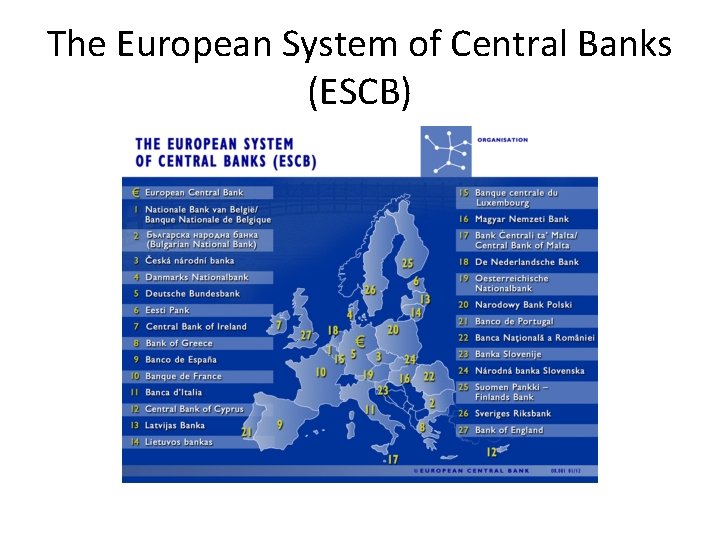
The European System of Central Banks (ESCB)
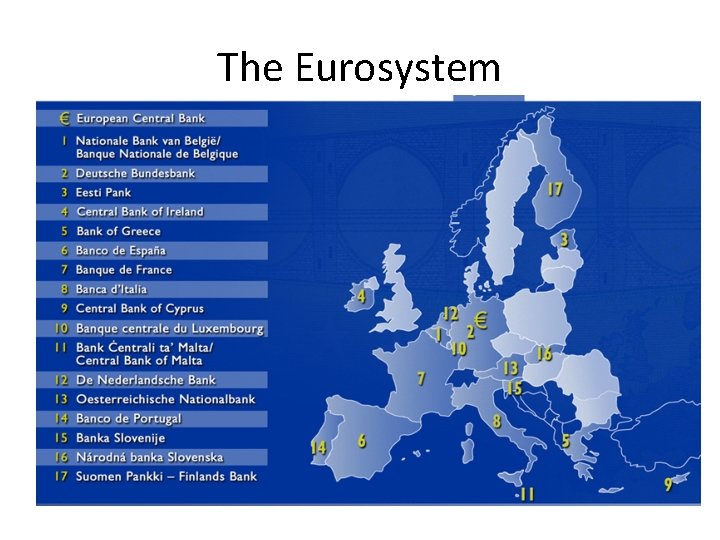
The Eurosystem
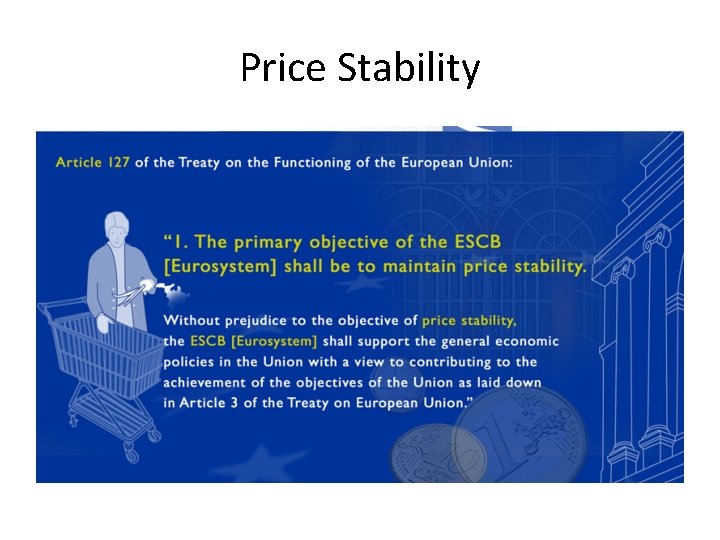
Price Stability
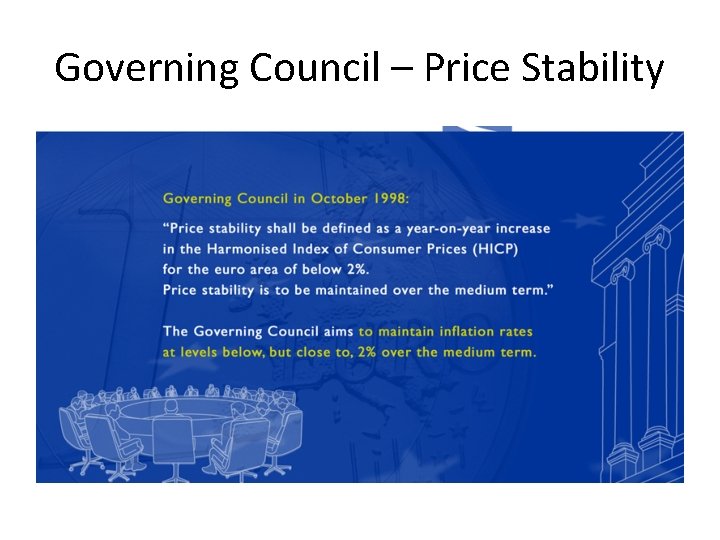
Governing Council – Price Stability
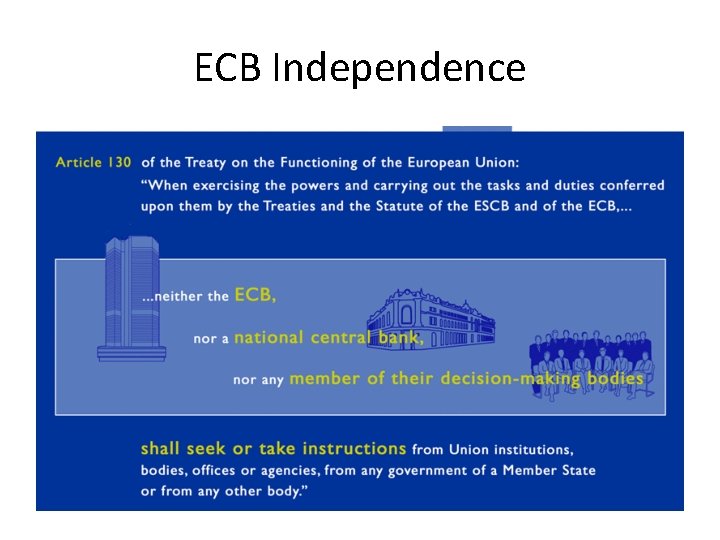
ECB Independence
- Slides: 11