
The Banff Classification of AcuteActive Antibody Mediated Rejection
The Banff Classification of Acute/Active Antibody. Mediated Rejection (ABMR) in Kidney Allografts: Comparison of Predictive Performance for Allograft Failure in Previous and Current Editions Heleen Ameye, Jasper Callemeyn, Maarten Coemans, Aleksandar Senev, Evelyne Lerut, Ben Sprangers, Dirk Kuypers, Marie-Paule Emonds, Maarten Naesens
The Banff Classification 2

The Banff Classification of Acute/Active Antibody-Mediated Rejection in Kidney Allografts: Comparison of Predictive Performance for Allograft Failure in Previous and Current Editions 1. Introduction: Banff Classification of ABMR 2. Methods - Study population and data collection - Clinicopathological assessment - Detection of circulating anti-HLA donor-specific antibodies - Statistical analysis 3. Results and discussion - Evolution of s. ABMR and ABMR diagnosis between Banff editions - Comparison of predictive performance for allograft survival between Banff editions 4. Conclusion 3

The Banff Classification of Acute/Active Antibody-Mediated Rejection in Kidney Allografts: Comparison of Predictive Performance for Allograft Failure in Previous and Current Editions 1. Introduction: Banff Classification of ABMR 2. Methods - Study population and data collection - Clinicopathological assessment - Detection of circulating anti-HLA donor-specific antibodies - Statistical analysis 3. Results and discussion - Evolution of s. ABMR and ABMR diagnosis between Banff editions - Comparison of predictive performance for allograft survival between Banff editions 4. Conclusion 4
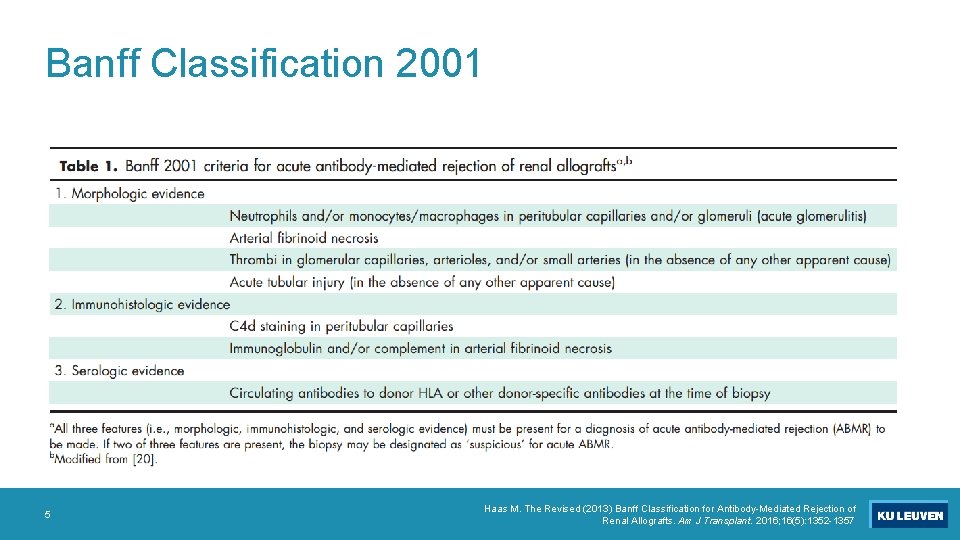
Banff Classification 2001 5 Haas M. The Revised (2013) Banff Classification for Antibody-Mediated Rejection of Renal Allografts. Am J Transplant. 2016; 16(5): 1352 -1357
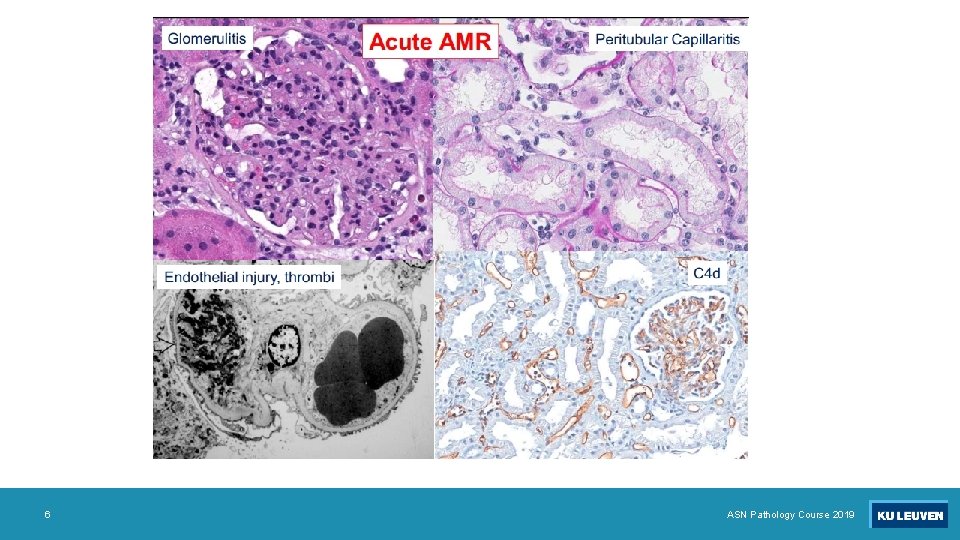
6 ASN Pathology Course 2019
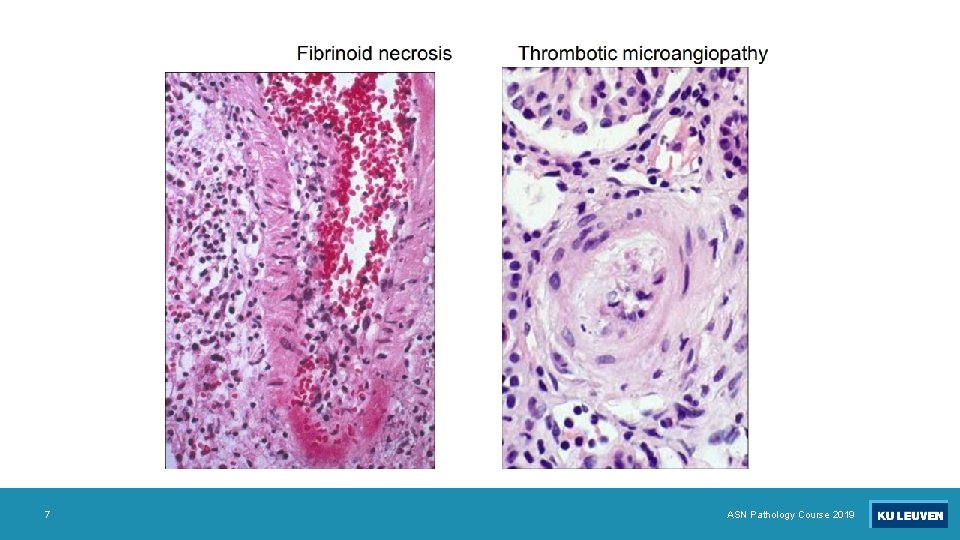
7 ASN Pathology Course 2019
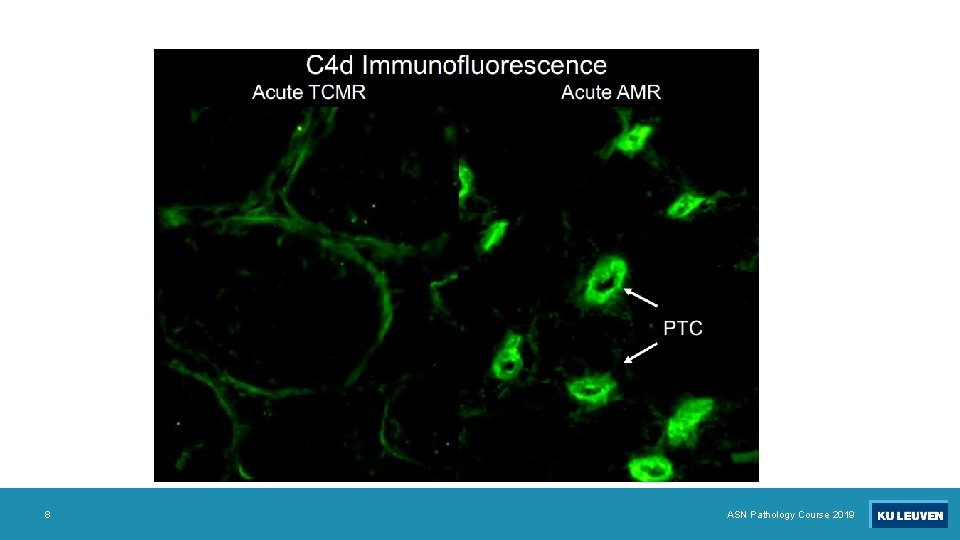
8 ASN Pathology Course 2019
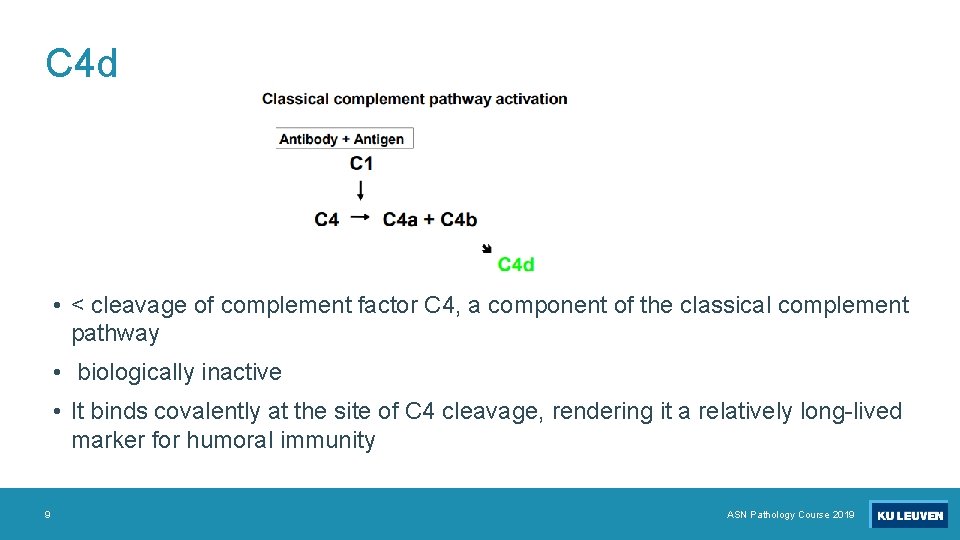
C 4 d • < cleavage of complement factor C 4, a component of the classical complement pathway • biologically inactive • It binds covalently at the site of C 4 cleavage, rendering it a relatively long-lived marker for humoral immunity 9 ASN Pathology Course 2019
Suspicous for ABMR (s. ABMR) = if morphologic evidence (1) was present with C 4 d staining (2) or DSA (3), but not both. 10 Haas M. An updated Banff schema for diagnosis of antibody-mediated rejection in renal allografts. Curr Opin Organ Transplant. 2014; 19(3): 315 -322.
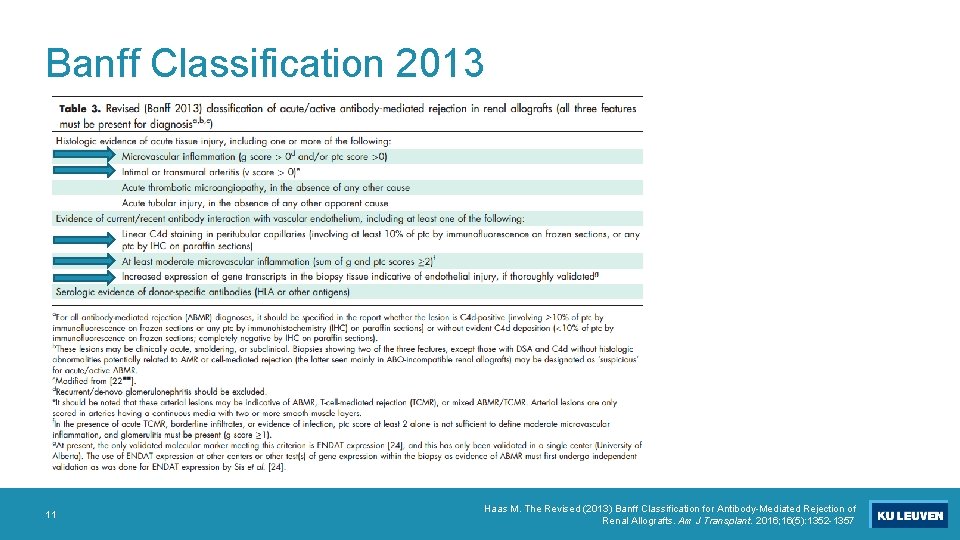
Banff Classification 2013 11 Haas M. The Revised (2013) Banff Classification for Antibody-Mediated Rejection of Renal Allografts. Am J Transplant. 2016; 16(5): 1352 -1357
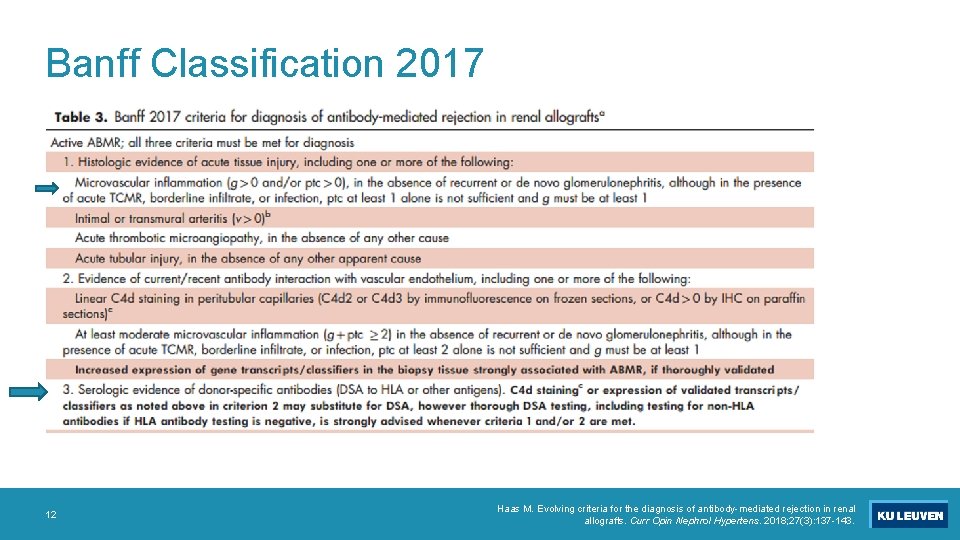
Banff Classification 2017 12 Haas M. Evolving criteria for the diagnosis of antibody-mediated rejection in renal allografts. Curr Opin Nephrol Hypertens. 2018; 27(3): 137 -143.

The Banff Classification of Acute/Active Antibody-Mediated Rejection in Kidney Allografts: Comparison of Predictive Performance for Allograft Failure in Previous and Current Editions 1. Introduction: Banff Classification of ABMR 2. Methods - Study population and data collection - Clinicopathological assessment - Detection of circulating anti-HLA donor-specific antibodies - Statistical analysis 3. Results and discussion - Evolution of s. ABMR and ABMR diagnosis between Banff editions - Comparison of predictive performance for allograft survival between Banff editions 4. Conclusion 13

2. Methods Study population and data collection: § All kidney transplants between 03/2004 - 02/2013 § Exclusion: combined Tx, Tx after another solid organ, Tx without biopsy follow-up § Biopsies performed at 3, 12, 24, and sometimes at 60 months after transplantation + indication biopsies Detection of circulating anti-HLA donor-specific antibodies § Pre‐ and posttransplant anti‐HLA antibodies § Using a sensitive Luminex-based assay § Positive result: MFI > 500 § No testing for non-HLA Ab For C 4 d deposition: an immunohistochemical staining on frozen tissue was performed Statistical analysis § Sankey diagram: plotting of the biopsies reclassified following the classifications § Allograft survival: - Landmark analysis after the first post-transplant year - Stratification based on the most severe ABMR category within the first year - Death censored graft failure - HR for allograft failure - Kaplan-Meier survival curves – log-ranking test C 4 d 0 -no staining (0%) C 4 d 1 -minimal staining (>0%<25% of PTCs) C 4 d 2 -focal staining (25 -75% of PTCs) C 4 d 3 -diffuse staining (>75% of PTCs). A cut-off value of C 4 d ≥ 2 was used 14

The Banff Classification of Acute/Active Antibody-Mediated Rejection in Kidney Allografts: Comparison of Predictive Performance for Allograft Failure in Previous and Current Editions 1. Introduction: Banff Classification of ABMR 2. Methods - Study population and data collection - Clinicopathological assessment - Detection of circulating anti-HLA donor-specific antibodies - Statistical analysis 3. Results and discussion - Evolution of s. ABMR and ABMR diagnosis between Banff editions - Comparison of predictive performance for allograft survival between Banff editions 4. Conclusion 15

Changes in diagnostic category of kidney allograft biopsies according to the Banff 2001, 2013 and 2017 classification for antibody-mediated rejection. 3662 biopsies 491 biopsies 3171 biopsies with no ABMR 16
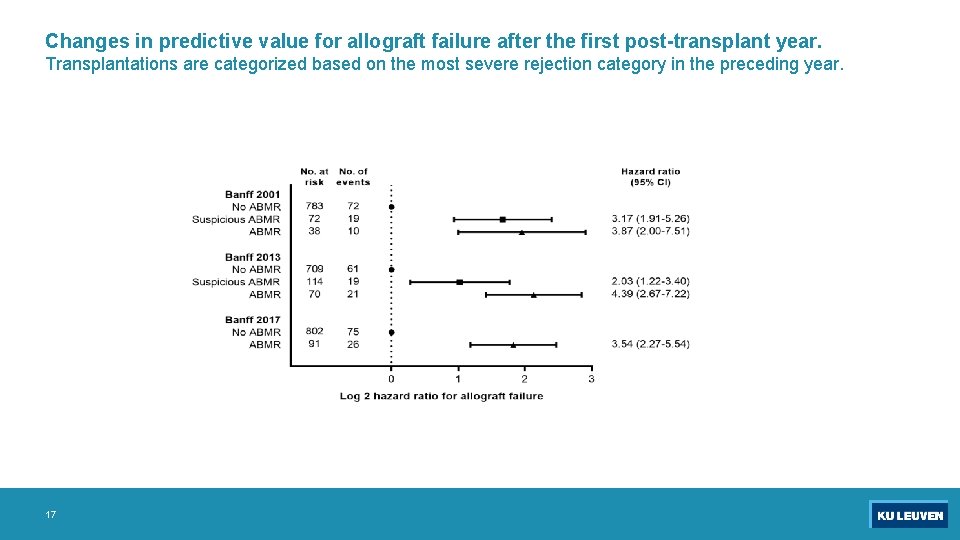
Changes in predictive value for allograft failure after the first post-transplant year. Transplantations are categorized based on the most severe rejection category in the preceding year. 17
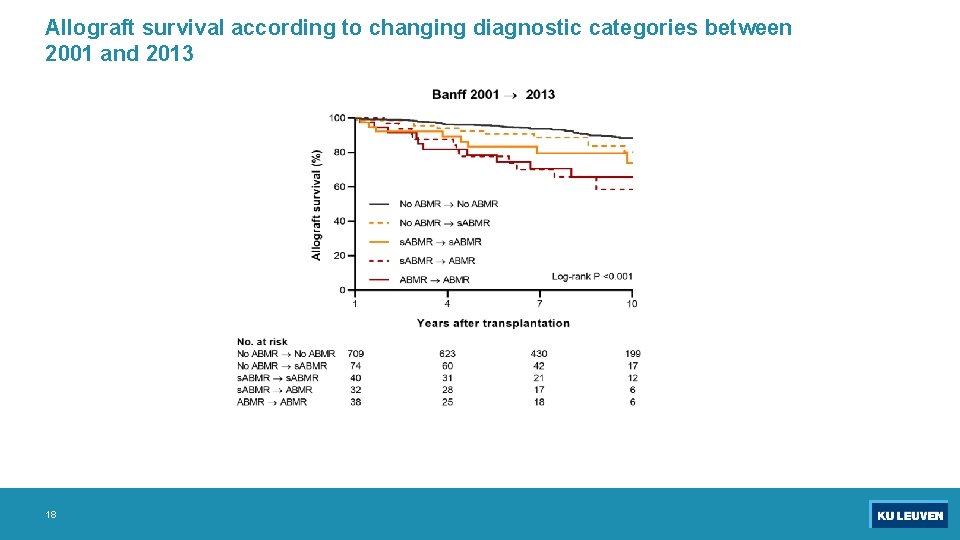
Allograft survival according to changing diagnostic categories between 2001 and 2013 18

Allograft survival according to changing diagnostic categories between 2013 and 2017 19
The Banff Classification of Acute/Active Antibody-Mediated Rejection in Kidney Allografts: Comparison of Predictive Performance for Allograft Failure in Previous and Current Editions 1. Introduction: Banff Classification of ABMR 2. Methods - Study population and data collection - Clinicopathological assessment - Detection of circulating anti-HLA donor-specific antibodies - Statistical analysis 3. Results and discussion - Evolution of s. ABMR and ABMR diagnosis between Banff editions - Comparison of predictive performance for allograft survival between Banff editions 4. Conclusion 20
4. Conclusion • Inclusion of C 4 d-negative ABMR in the 2013 Banff revision increased numbers of ABMR and its prognostic performance regarding allograft outcome. • Suspension of the suspicious category in 2017 reallocated biopsies to ABMR (DSAnegative ABMR) or No AMBR, which is associated with respectively better and worse survival than the target groups. • These data demonstrate the clinical relevance of an intermediate ABMR category, of which the reintroduction should be considered in future Banff updates. 21
- Slides: 21