
THE AUTOMOBILE CULTURE OF 1950 S AMERICA AUTOMANIA
THE AUTOMOBILE CULTURE OF 1950 S AMERICA AUTOMANIA and the INTERSTATE HIGHWAY SYSTEM
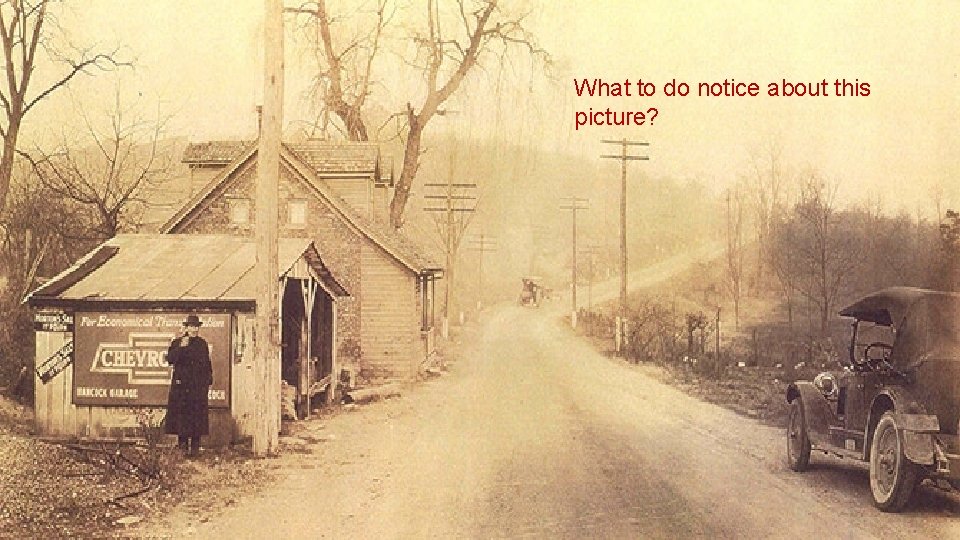
What to do notice about this picture?
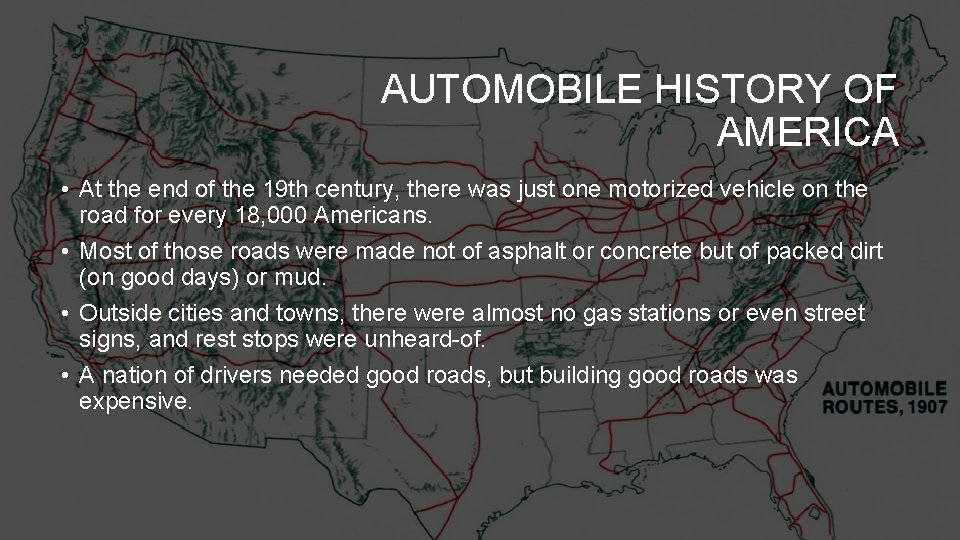
AUTOMOBILE HISTORY OF AMERICA • At the end of the 19 th century, there was just one motorized vehicle on the road for every 18, 000 Americans. • Most of those roads were made not of asphalt or concrete but of packed dirt (on good days) or mud. • Outside cities and towns, there were almost no gas stations or even street signs, and rest stops were unheard-of. • A nation of drivers needed good roads, but building good roads was expensive.

THE FEDERAL-AID HIGHWAY ACT OF 1956 • During World War II, Eisenhower had been stationed in Germany, where he had been impressed by the network of high-speed roads known as the Reichsautobahnen. • After Eisenhower became president in 1953, he was determined to build the highways that lawmakers had been talking about for years. • A new Federal-Aid Highway Act passed in June 1956. • It also allocated $26 billion to pay for this new interstate highway system.
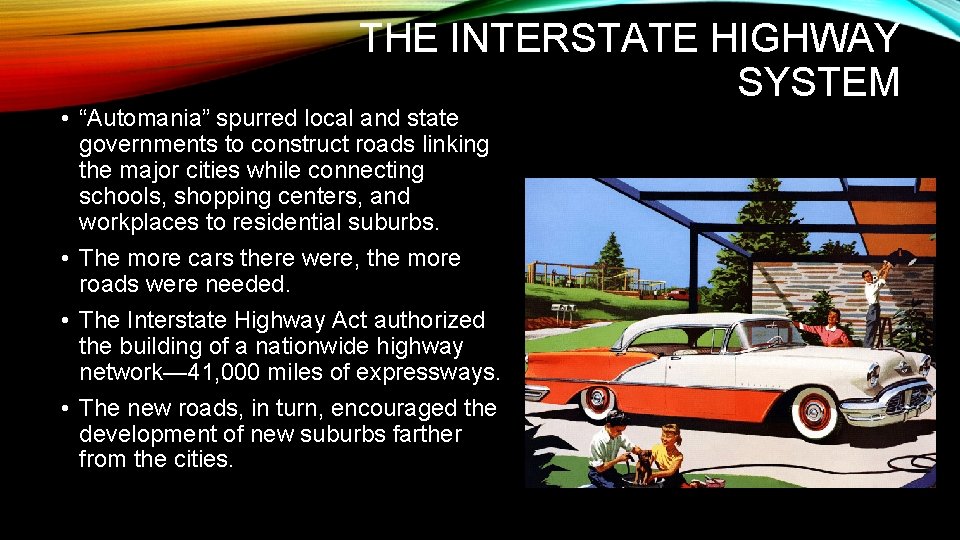
THE INTERSTATE HIGHWAY SYSTEM • “Automania” spurred local and state governments to construct roads linking the major cities while connecting schools, shopping centers, and workplaces to residential suburbs. • The more cars there were, the more roads were needed. • The Interstate Highway Act authorized the building of a nationwide highway network— 41, 000 miles of expressways. • The new roads, in turn, encouraged the development of new suburbs farther from the cities.
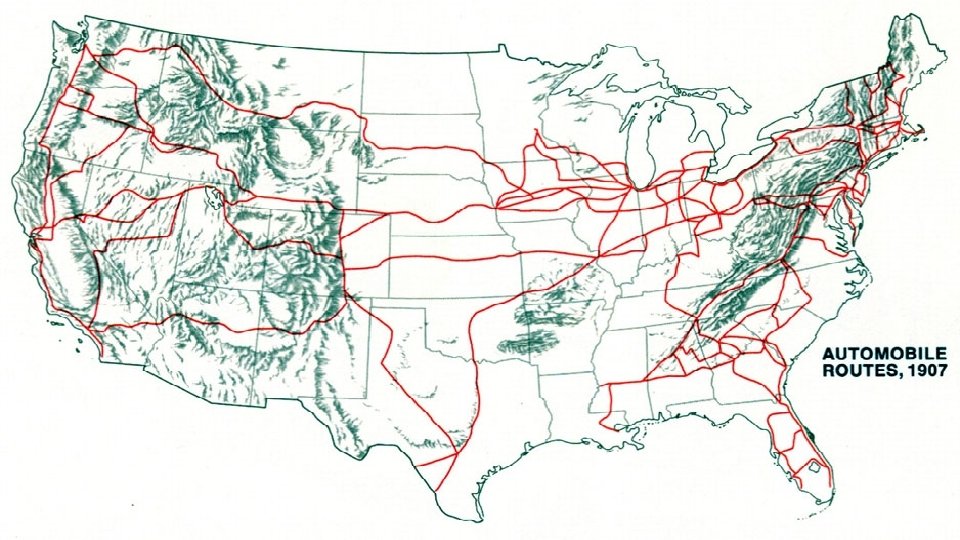
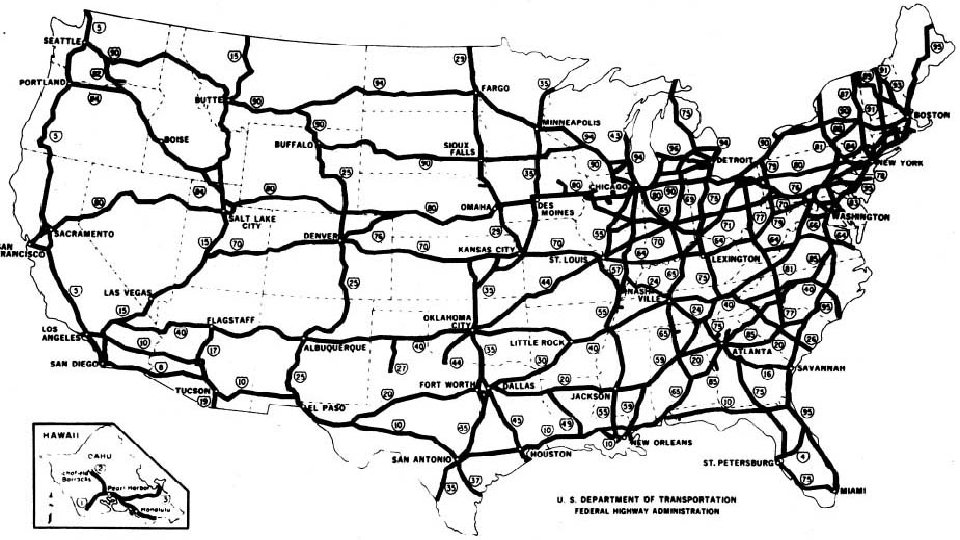

COMPARE AND CONTRAST • What differences do you notice between these two images?
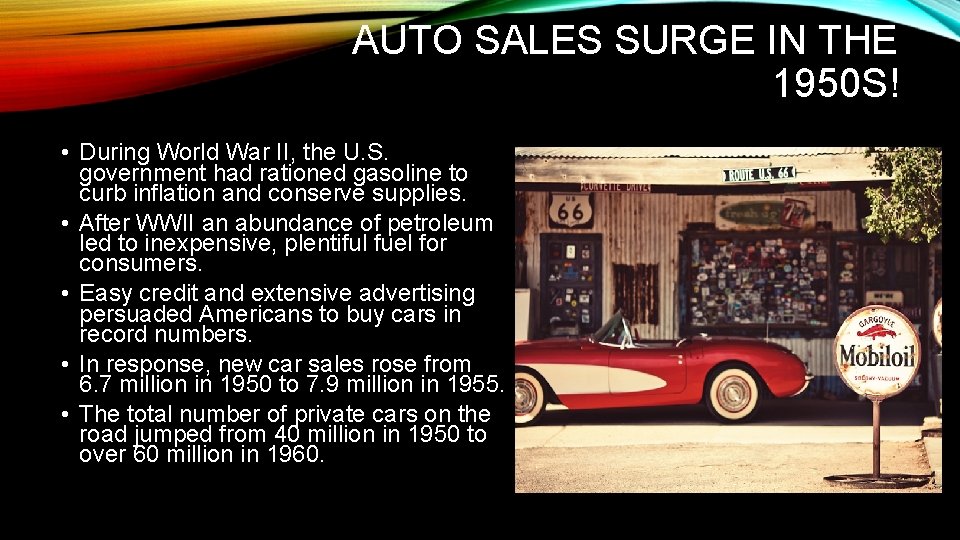
AUTO SALES SURGE IN THE 1950 S! • During World War II, the U. S. government had rationed gasoline to curb inflation and conserve supplies. • After WWII an abundance of petroleum led to inexpensive, plentiful fuel for consumers. • Easy credit and extensive advertising persuaded Americans to buy cars in record numbers. • In response, new car sales rose from 6. 7 million in 1950 to 7. 9 million in 1955. • The total number of private cars on the road jumped from 40 million in 1950 to over 60 million in 1960.
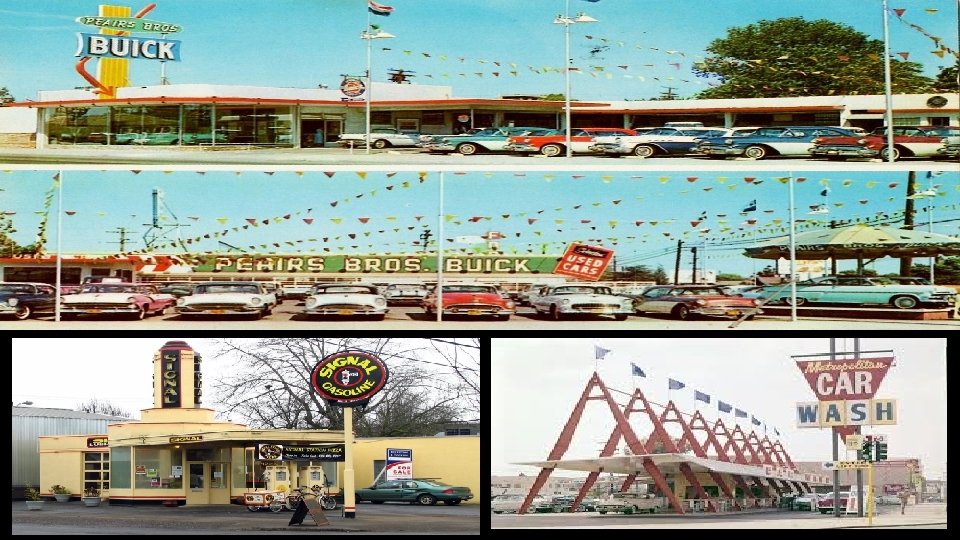
1950 S CAR COMERCIALS • Actual Commercials from the 1950 s…
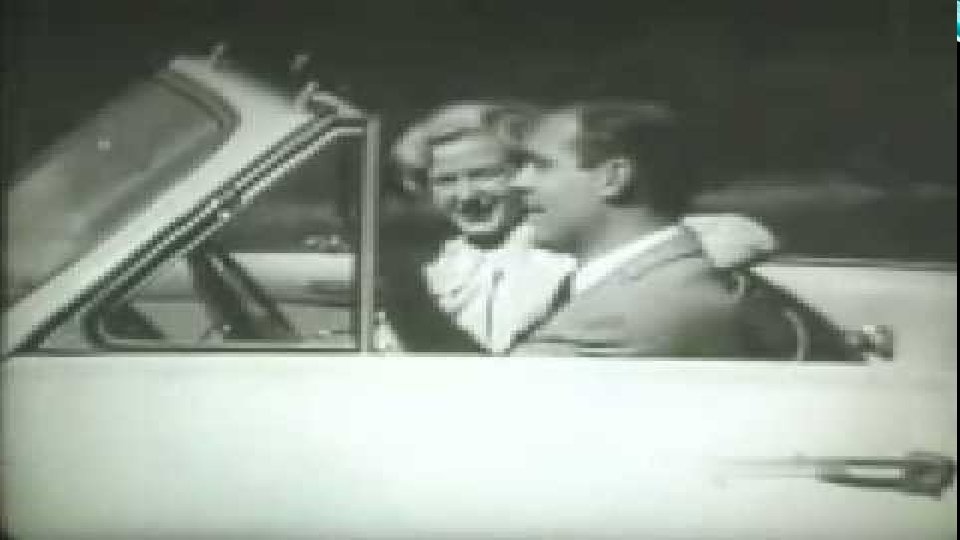
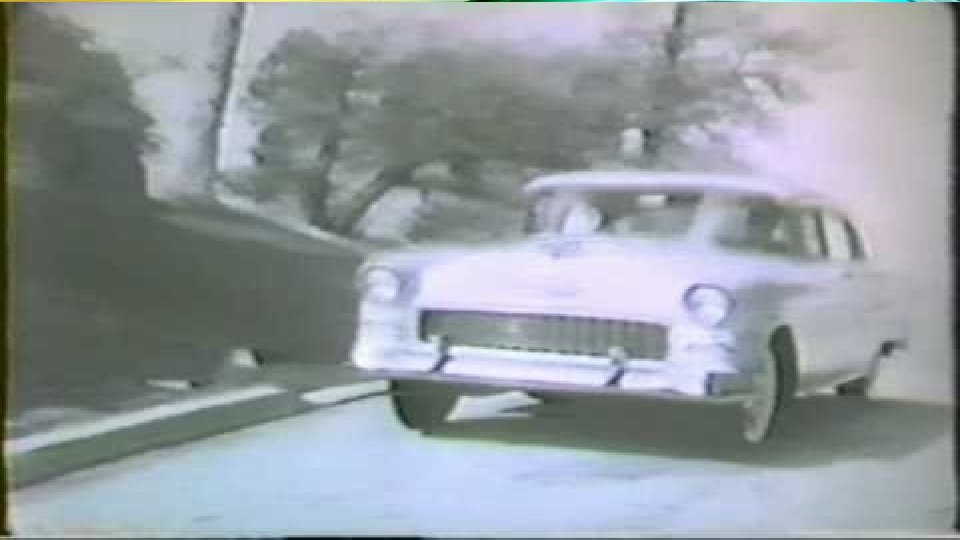
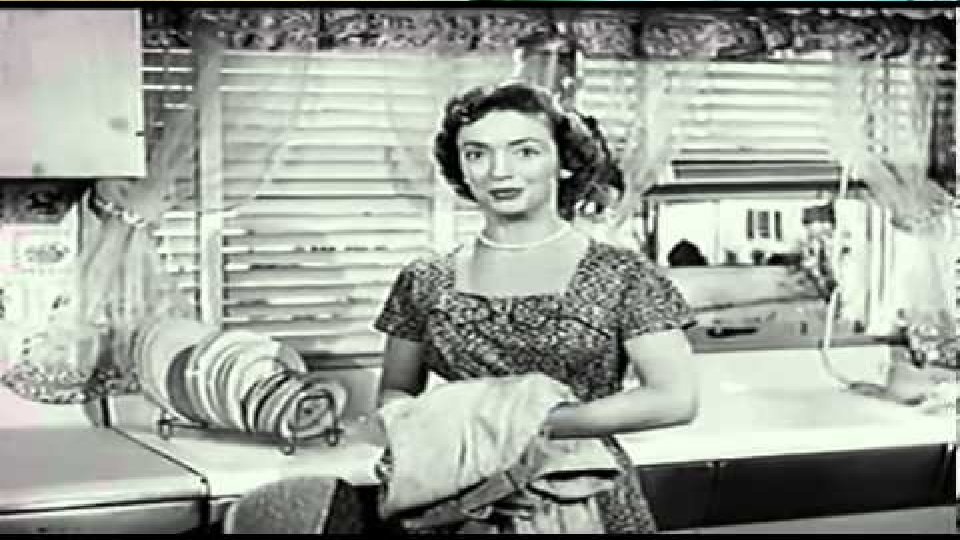
THINGS TO THINK ABOUT… • Who do these commercials appeal to? • Do these commercials reinforce gender stereotypes?
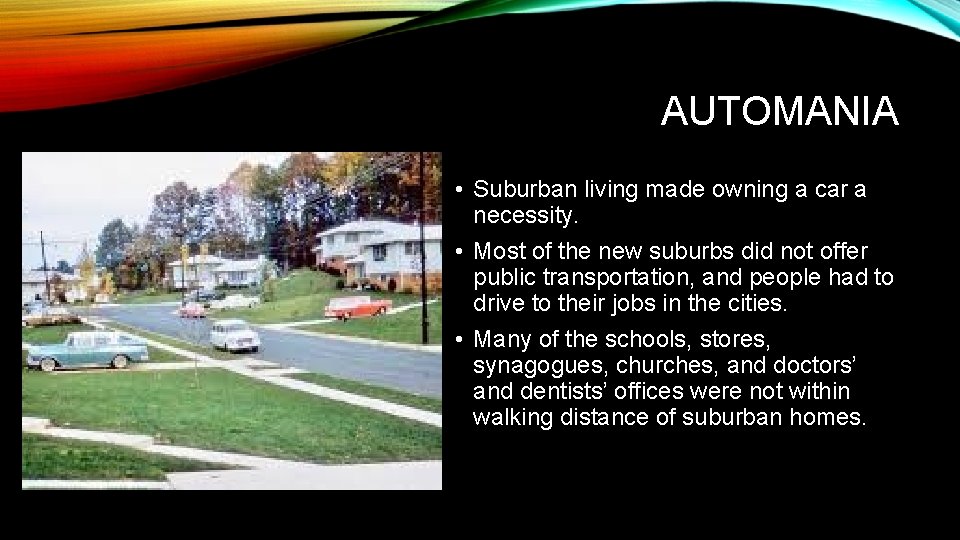
AUTOMANIA • Suburban living made owning a car a necessity. • Most of the new suburbs did not offer public transportation, and people had to drive to their jobs in the cities. • Many of the schools, stores, synagogues, churches, and doctors’ and dentists’ offices were not within walking distance of suburban homes.
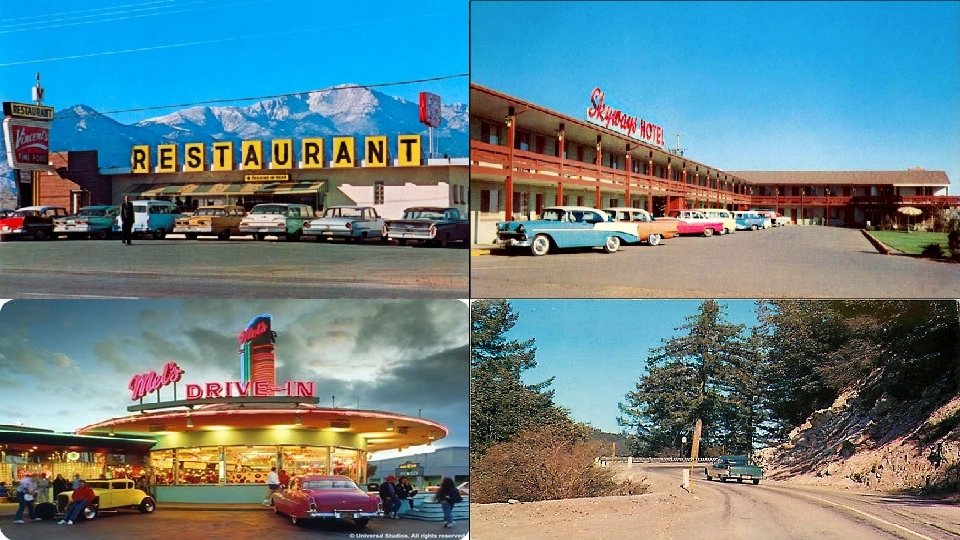
LINKING THE COUNTRY FROM COAST TO COAST • Interstate highways also made high-speed, long-haul trucking possible, which contributed to a decline in the commercial use of railroads. • Towns along the new highways prospered, while towns along the older, smaller roads experienced hard times. • The system of highways also helped unify and homogenize the nation. • homogenize: to make the same or similar • “Our new roads, with their ancillaries, the motels, filling stations, and restaurants advertising Eats, have made it possible for you to drive from Brooklyn to Los Angeles without a change of diet, scenery, or culture. ” • The Insolent Chariots, John Keats 1958
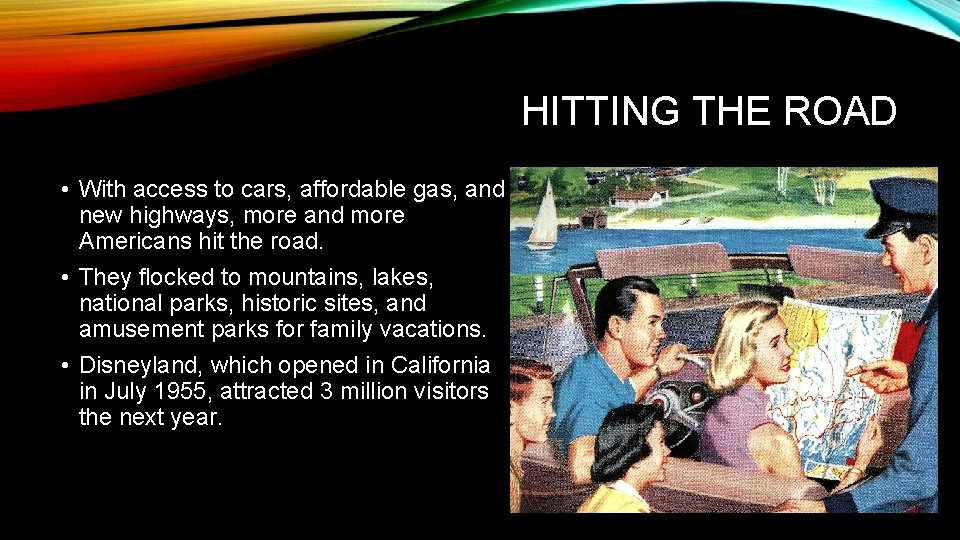
HITTING THE ROAD • With access to cars, affordable gas, and new highways, more and more Americans hit the road. • They flocked to mountains, lakes, national parks, historic sites, and amusement parks for family vacations. • Disneyland, which opened in California in July 1955, attracted 3 million visitors the next year.
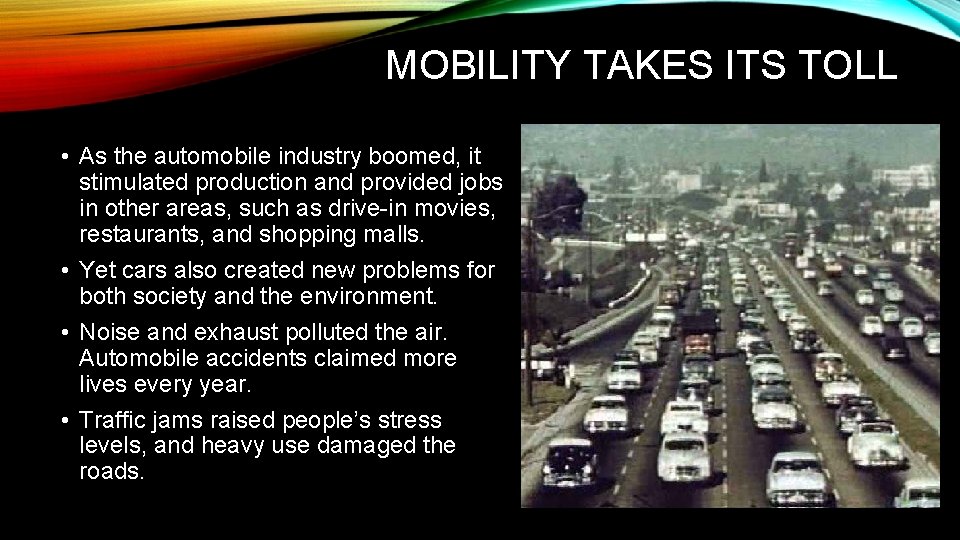
MOBILITY TAKES ITS TOLL • As the automobile industry boomed, it stimulated production and provided jobs in other areas, such as drive-in movies, restaurants, and shopping malls. • Yet cars also created new problems for both society and the environment. • Noise and exhaust polluted the air. Automobile accidents claimed more lives every year. • Traffic jams raised people’s stress levels, and heavy use damaged the roads.
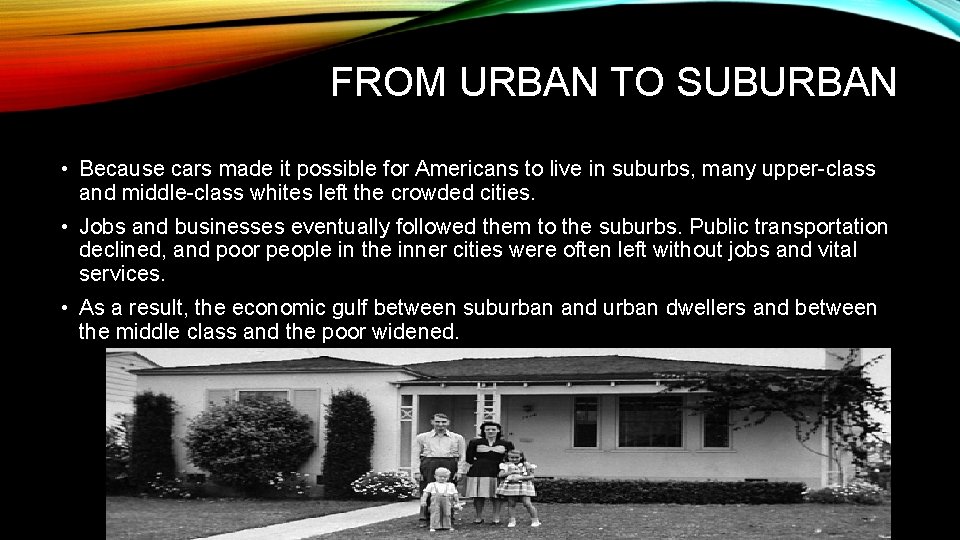
FROM URBAN TO SUBURBAN • Because cars made it possible for Americans to live in suburbs, many upper-class and middle-class whites left the crowded cities. • Jobs and businesses eventually followed them to the suburbs. Public transportation declined, and poor people in the inner cities were often left without jobs and vital services. • As a result, the economic gulf between suburban and urban dwellers and between the middle class and the poor widened.
- Slides: 21