
THE ATMOSPHERE The Atmosphere Air is a MIXTURE
- Slides: 20
THE ATMOSPHERE
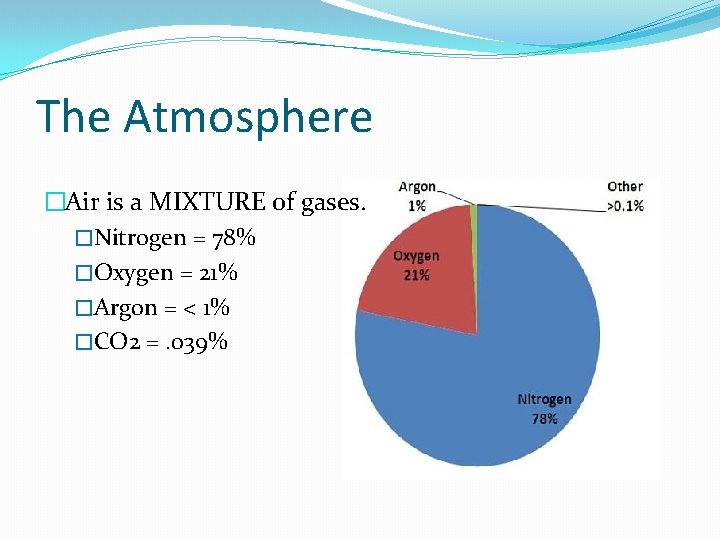
The Atmosphere �Air is a MIXTURE of gases. �Nitrogen = 78% �Oxygen = 21% �Argon = < 1% �CO 2 =. 039%
The Atmosphere �Components of Air 1. Gases 2. Water vapor a. b. Varies 0 – 4% Depends on location and weather pattern 3. Aerosols (solids and liquids suspended in air) 4. Ozone a. b. 3 atoms of oxygen bonded together. O 3 Ozone layer located at the top of the Stratosphere
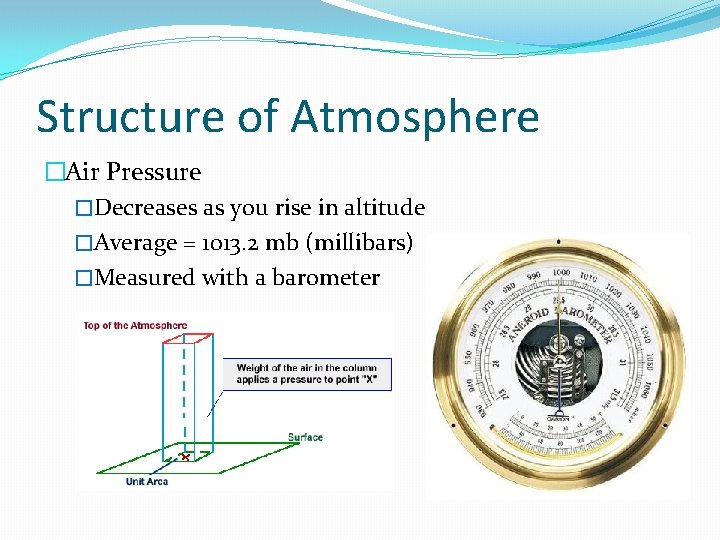
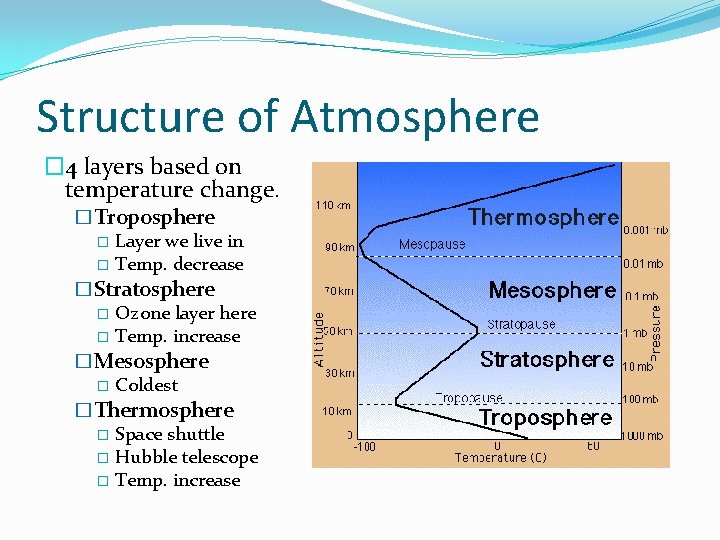
Structure of Atmosphere �Air Pressure �Decreases as you rise in altitude �Average = 1013. 2 mb (millibars) �Measured with a barometer
Structure of Atmosphere � 4 layers based on temperature change. �Troposphere � Layer we live in � Temp. decrease �Stratosphere � Ozone layer here � Temp. increase �Mesosphere � Coldest �Thermosphere � Space shuttle � Hubble telescope � Temp. increase
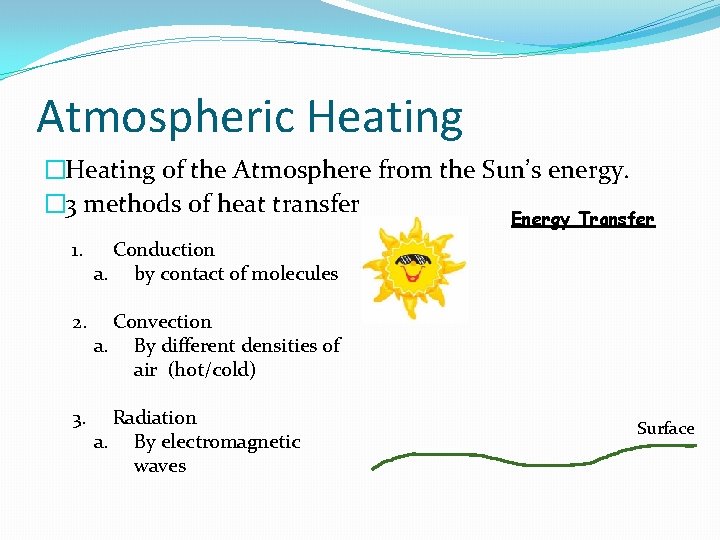
Atmospheric Heating �Heating of the Atmosphere from the Sun’s energy. � 3 methods of heat transfer Energy Transfer 1. Conduction a. by contact of molecules 2. Convection a. By different densities of air (hot/cold) 3. Radiation a. By electromagnetic waves Surface
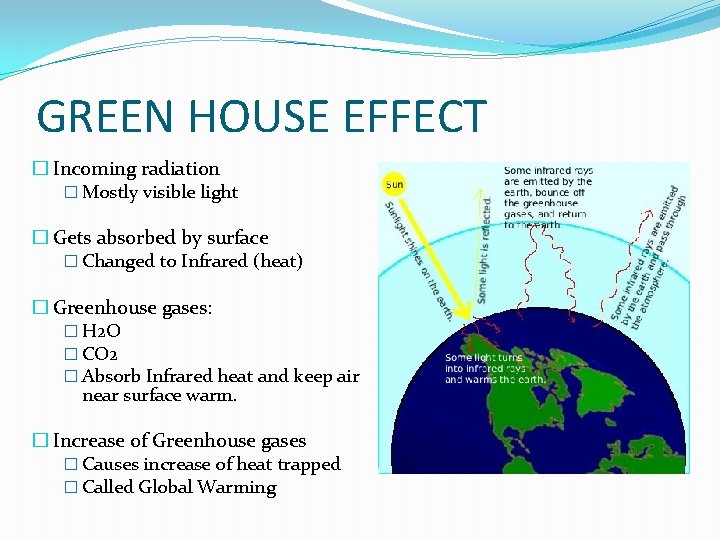
GREEN HOUSE EFFECT � Incoming radiation � Mostly visible light � Gets absorbed by surface � Changed to Infrared (heat) � Greenhouse gases: � H 2 O � CO 2 � Absorb Infrared heat and keep air near surface warm. � Increase of Greenhouse gases � Causes increase of heat trapped � Called Global Warming
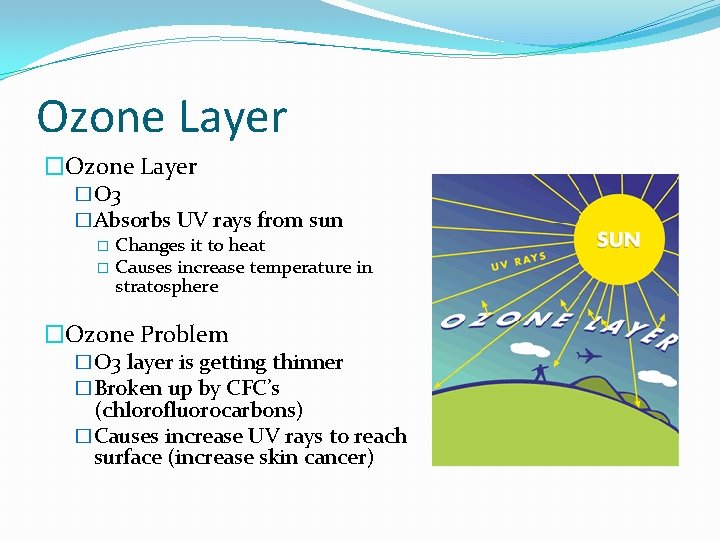
Ozone Layer �O 3 �Absorbs UV rays from sun � Changes it to heat � Causes increase temperature in stratosphere �Ozone Problem �O 3 layer is getting thinner �Broken up by CFC’s (chlorofluorocarbons) �Causes increase UV rays to reach surface (increase skin cancer)
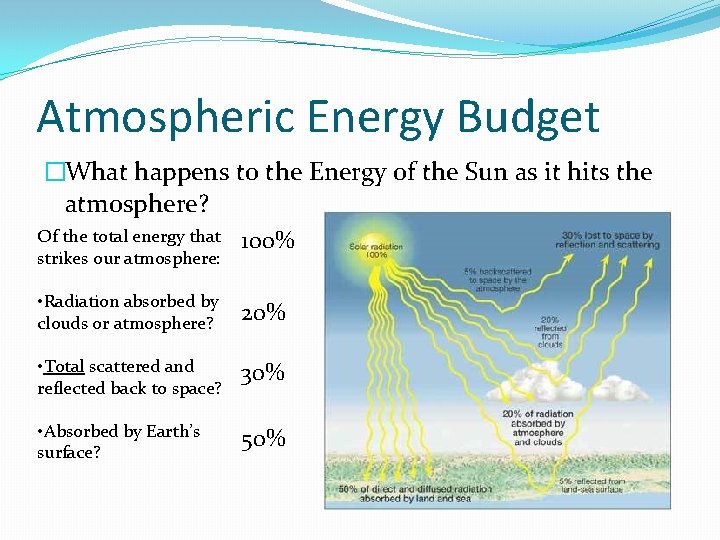
Atmospheric Energy Budget �What happens to the Energy of the Sun as it hits the atmosphere? Of the total energy that 100% strikes our atmosphere: • Radiation absorbed by clouds or atmosphere? 20% • Total scattered and reflected back to space? 30% • Absorbed by Earth’s surface? 50%
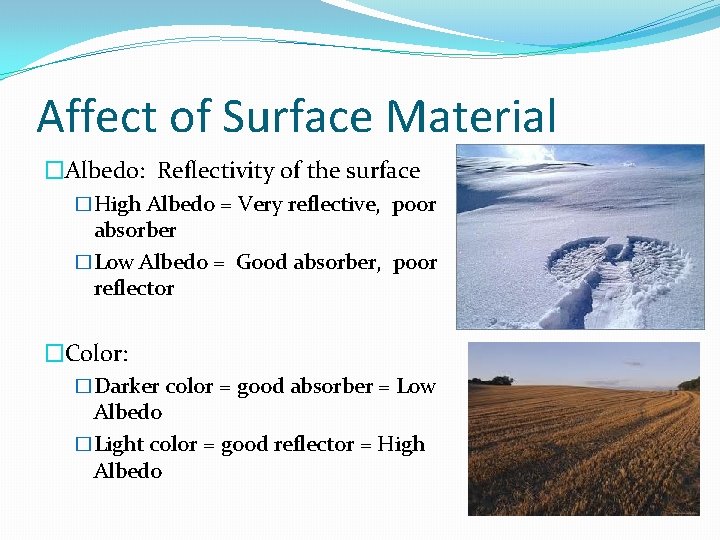
Affect of Surface Material �Albedo: Reflectivity of the surface �High Albedo = Very reflective, poor absorber �Low Albedo = Good absorber, poor reflector �Color: �Darker color = good absorber = Low Albedo �Light color = good reflector = High Albedo
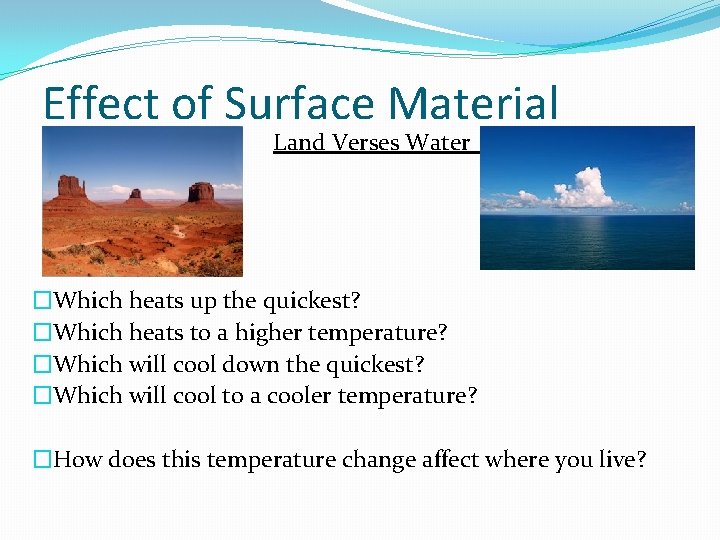
Effect of Surface Material Land Verses Water �Which heats up the quickest? �Which heats to a higher temperature? �Which will cool down the quickest? �Which will cool to a cooler temperature? �How does this temperature change affect where you live?
Effect of Surface Material How does living near the ocean affect the air temperature? �Winter? �Summer? How does living inland affect the air temperature? �Winter? �Summer? Which location would have a greater change of temperature during the year?
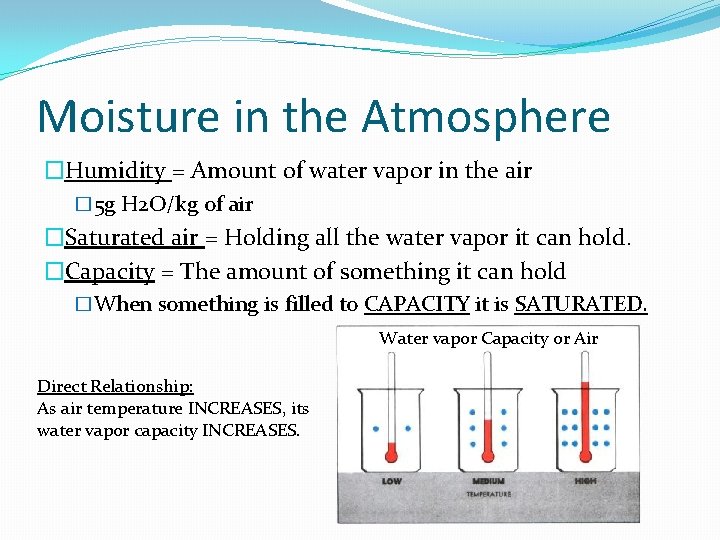
Moisture in the Atmosphere �Humidity = Amount of water vapor in the air � 5 g H 2 O/kg of air �Saturated air = Holding all the water vapor it can hold. �Capacity = The amount of something it can hold �When something is filled to CAPACITY it is SATURATED. Water vapor Capacity or Air Direct Relationship: As air temperature INCREASES, its water vapor capacity INCREASES.
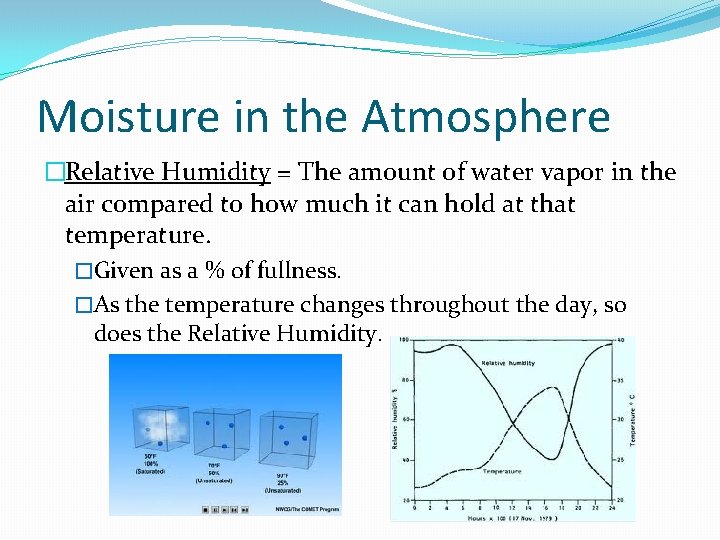
Moisture in the Atmosphere �Relative Humidity = The amount of water vapor in the air compared to how much it can hold at that temperature. �Given as a % of fullness. �As the temperature changes throughout the day, so does the Relative Humidity.
Moisture in the Atmosphere �Dew-point Temperature: The temperature the air must cool down to for the water-vapor in the air to condense as liquid onto objects. �Usually occurs in the evening as the temperature decreases. �Relative humidity = �Air is % (holding all the water-vapor it can hold) �More humid air = higher dew-point temperature �What do you call it when the dew-point is below freezing?
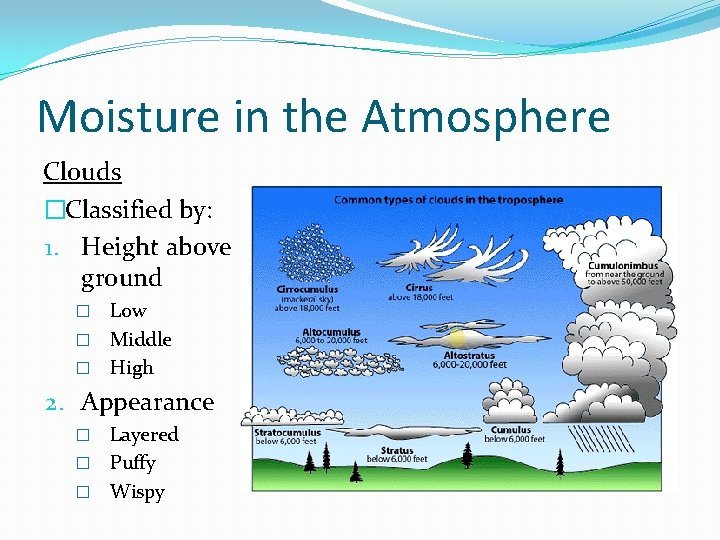
Moisture in the Atmosphere Clouds �Classified by: 1. Height above ground Low � Middle � High � 2. Appearance Layered � Puffy � Wispy �
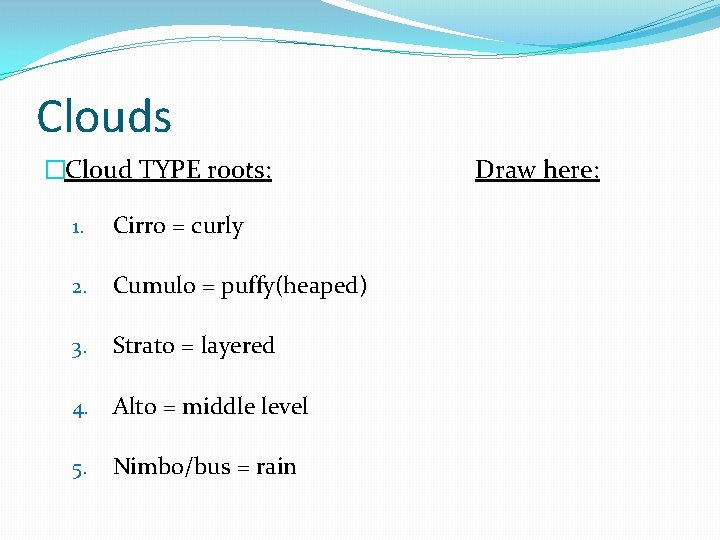
Clouds �Cloud TYPE roots: 1. Cirro = curly 2. Cumulo = puffy(heaped) 3. Strato = layered 4. Alto = middle level 5. Nimbo/bus = rain Draw here:
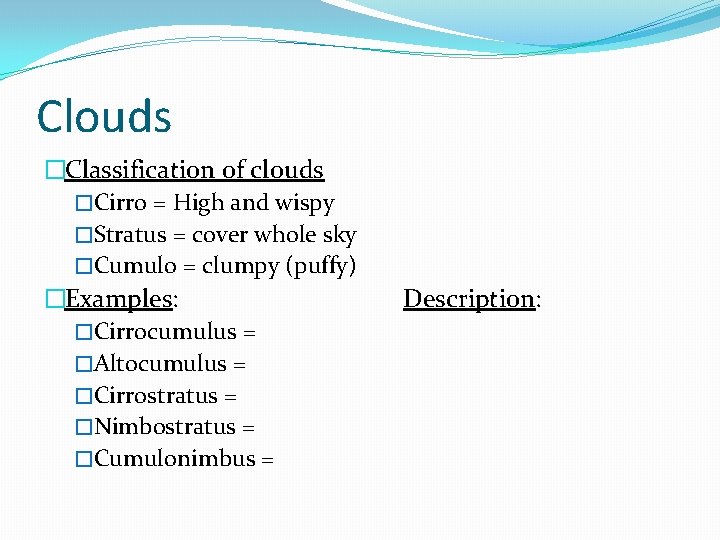
Clouds �Classification of clouds �Cirro = High and wispy �Stratus = cover whole sky �Cumulo = clumpy (puffy) �Examples: �Cirrocumulus = �Altocumulus = �Cirrostratus = �Nimbostratus = �Cumulonimbus = Description:
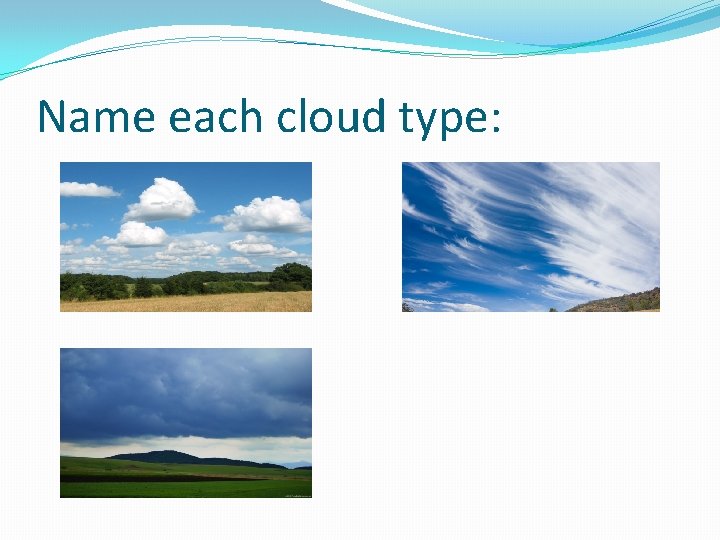
Name each cloud type:
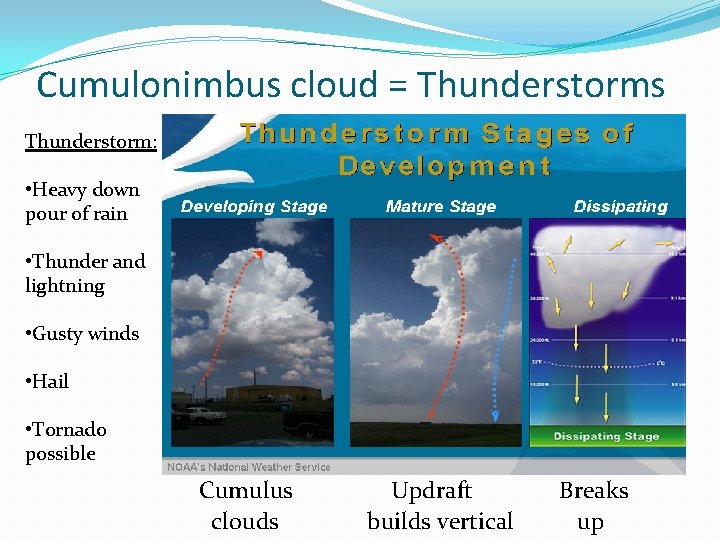
Cumulonimbus cloud = Thunderstorms Thunderstorm: • Heavy down pour of rain • Thunder and lightning • Gusty winds • Hail • Tornado possible Cumulus clouds Updraft builds vertical Breaks up