
The Atmosphere Layers Composition Composition of air Whats

- Slides: 16
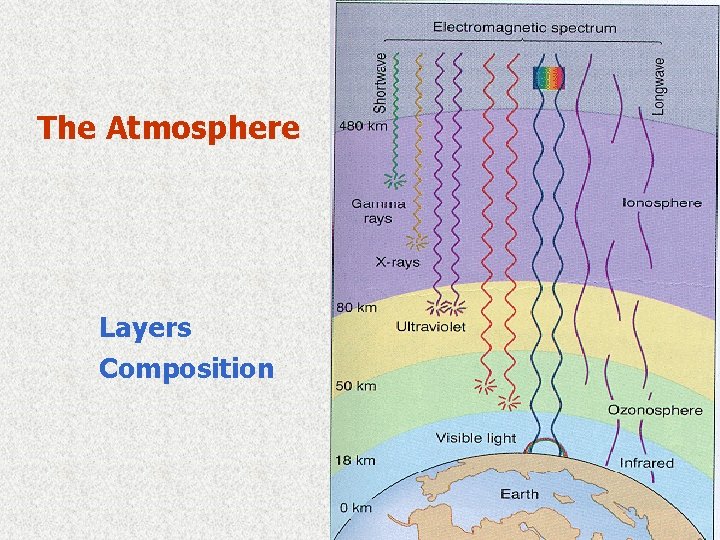
The Atmosphere Layers Composition
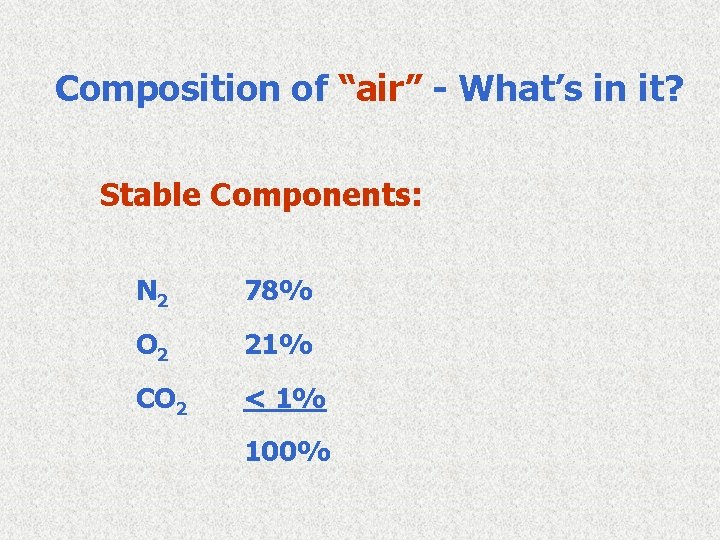
Composition of “air” - What’s in it? Stable Components: N 2 78% O 2 21% CO 2 < 1% 100%
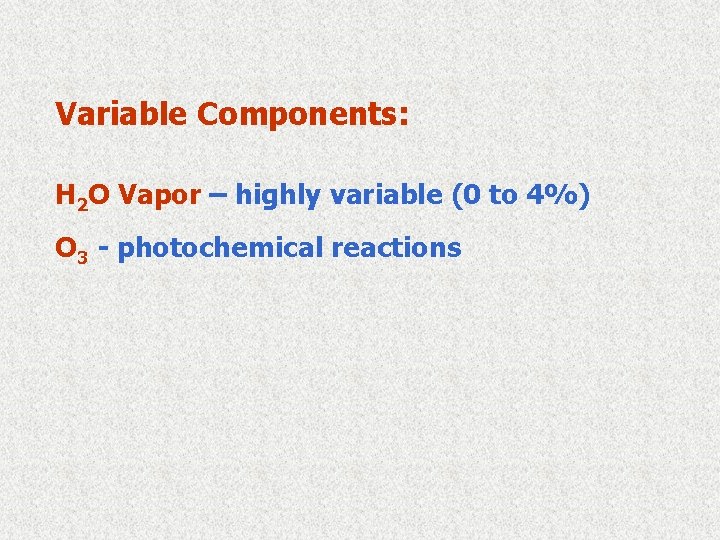
Variable Components: H 2 O Vapor – highly variable (0 to 4%) O 3 - photochemical reactions
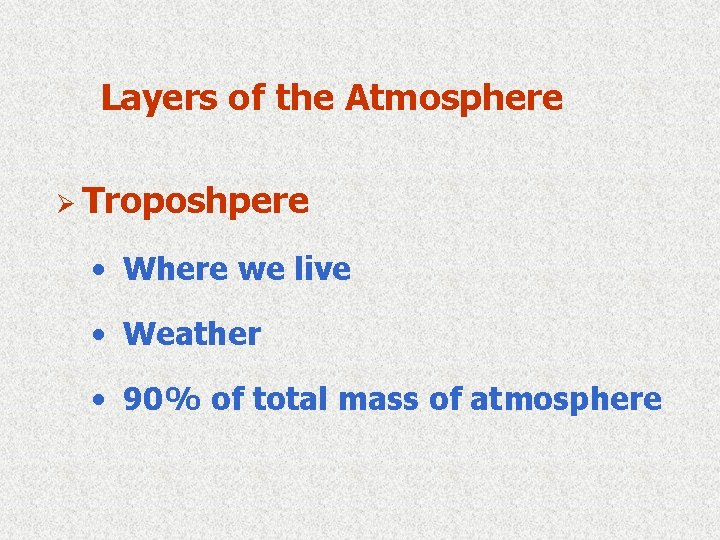
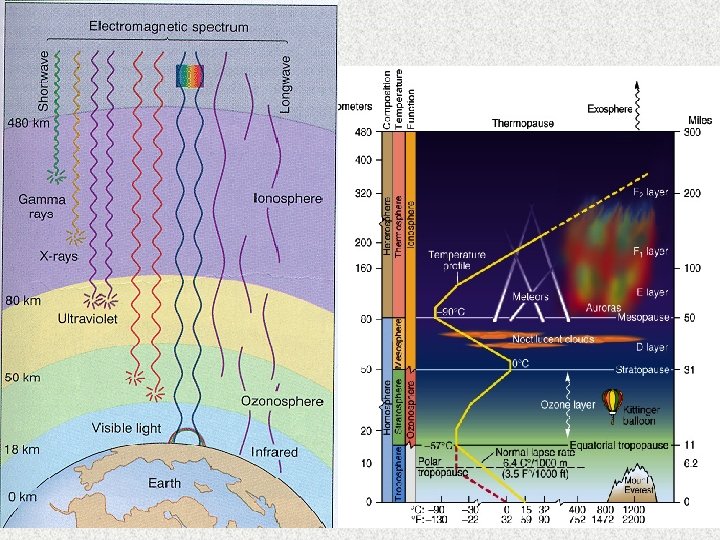
Layers of the Atmosphere Ø Troposhpere • Where we live • Weather • 90% of total mass of atmosphere
Ø Stratosphere • Contains O 3 • Absorbs ____? ?
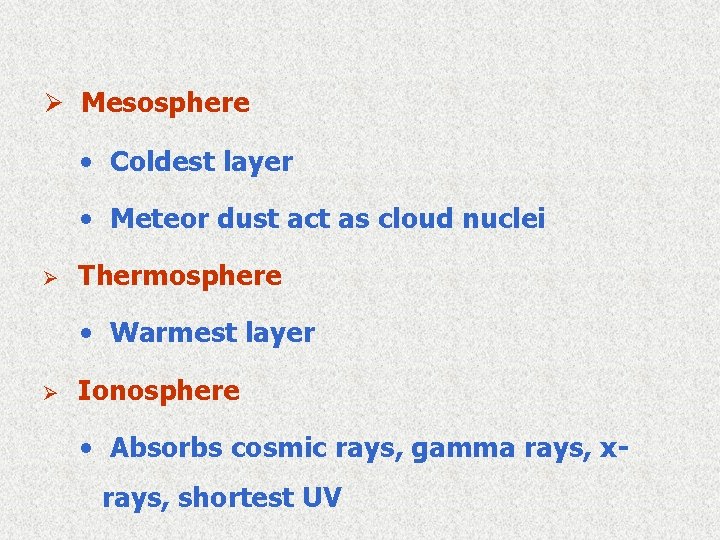
Ø Mesosphere • Coldest layer • Meteor dust act as cloud nuclei Ø Thermosphere • Warmest layer Ø Ionosphere • Absorbs cosmic rays, gamma rays, xrays, shortest UV
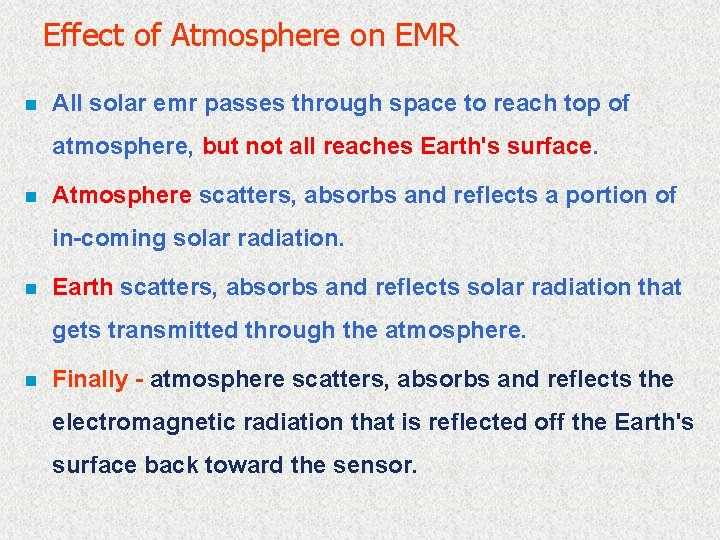
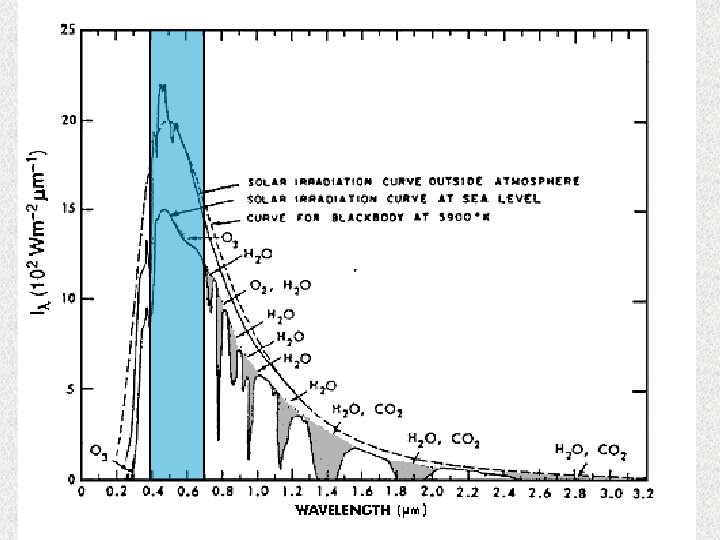
Effect of Atmosphere on EMR n All solar emr passes through space to reach top of atmosphere, but not all reaches Earth's surface. n Atmosphere scatters, absorbs and reflects a portion of in-coming solar radiation. n Earth scatters, absorbs and reflects solar radiation that gets transmitted through the atmosphere. n Finally - atmosphere scatters, absorbs and reflects the electromagnetic radiation that is reflected off the Earth's surface back toward the sensor.
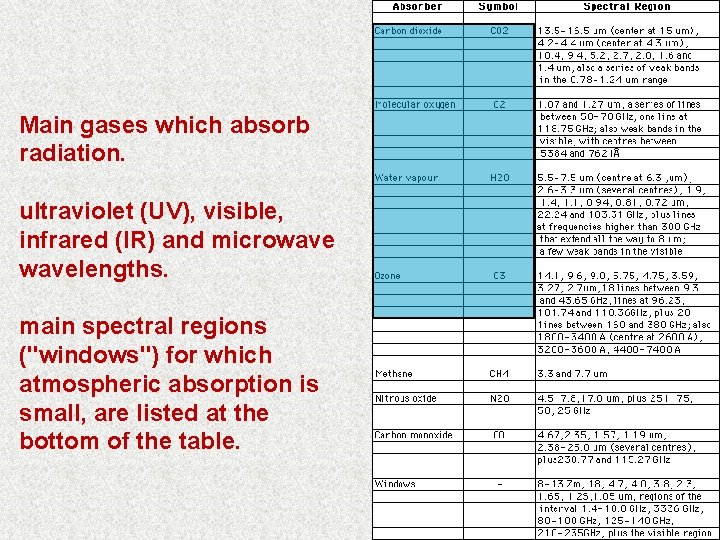
n Atm. Gases; – Critical to earth's energy balance through absorption and emission. – Determines solar radiation reaching surface n "windows" – atm. effects are minimal – allows ground-based measurements of celestial objects, and satellite-based measurements of earth's surface/atm.
n Signal reaching the sensor may include reflection off Earth's surface that contains information, but it also includes in-coming and reflected EMR that has been scattered by the atmosphere. n This can result in a loss of detail in the resulting images, making interpretation more difficult.
Challenges of Remote Sensing n 4% of in-coming solar radiation is reflected back from Earth's surface. n 5% re-radiated after absorption as thermal IR. n These two components are the focus of most terrestrial remote sensing.
Challenges of Remote Sensing n Only selected wavelengths are able to penetrate Earth's atmosphere and be reflected back to sensor. n Thus, only some wavelengths are available for analysis and some objects of interest may not have unique spectral signatures within the set of available wavelengths.
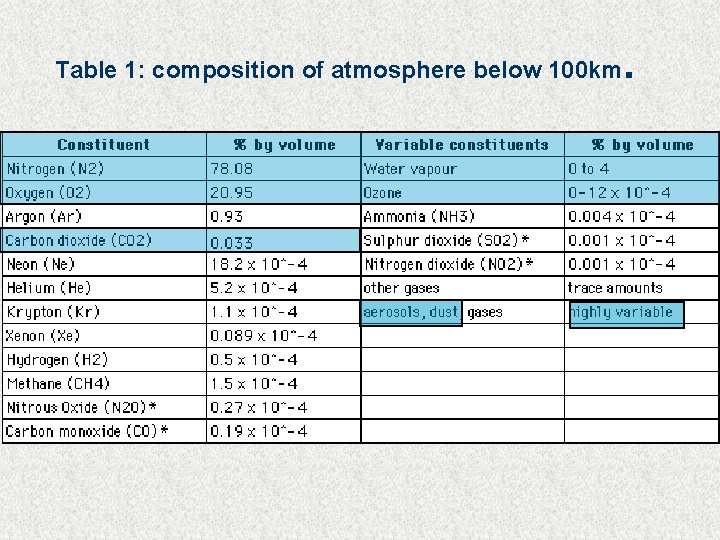
n Composition of atmosphere is important in understanding the role it plays in remote sensing and in interactions with electromagnetic radiation. – largely a mixture of gases – some with fairly constant concentrations – others are variable in space and time. – In addition - suspended particles (e. g. aerosol, smoke, ash etc. ) and hydrometeors (e. g. cloud droplets, raindrops, snow, ice crystals, etc). n About 99% of the mass lies below an altitude of 30 km.
Table 1: composition of atmosphere below 100 km .
Main gases which absorb radiation. ultraviolet (UV), visible, infrared (IR) and microwavelengths. main spectral regions ("windows") for which atmospheric absorption is small, are listed at the bottom of the table.