
The Atmosphere and Air Quality Composition of the

- Slides: 20
The Atmosphere and Air Quality
Composition of the Earth’s Atmosphere v The Earth’s atmosphere is made up of: v 78% nitrogen, N 2(g) v 21% oxygen, O 2(g) v The remaining 1% of gases are trace amounts of: v argon, Ar(g) v carbon dioxide, CO 2(g) v water vapour, H 2 O(g) v other trace gases
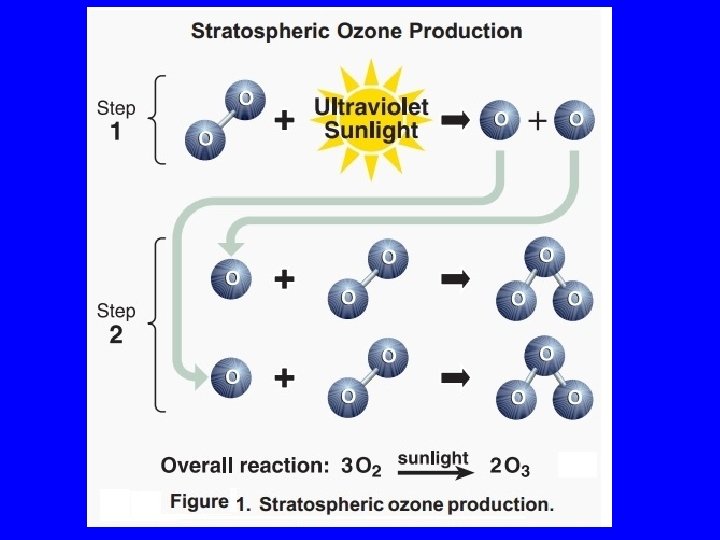
The Ozone Layer v Another important gas in the Earth’s atmosphere is ozone, O 3(g). v Ozone is a molecule formed when an oxygen atom reacts with an oxygen molecule. v The ozone layer is found in the stratosphere about 10 -50 km above the Earth’s surface. v The purpose of the ozone layer is to protect the Earth from harmful Ultraviolet
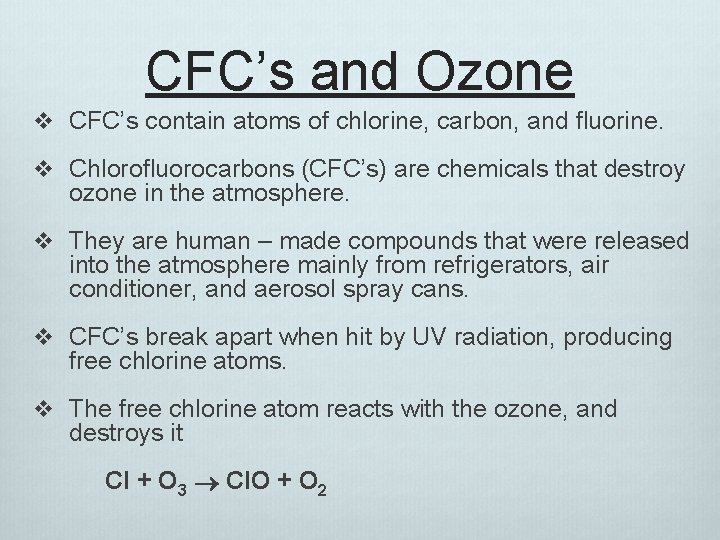
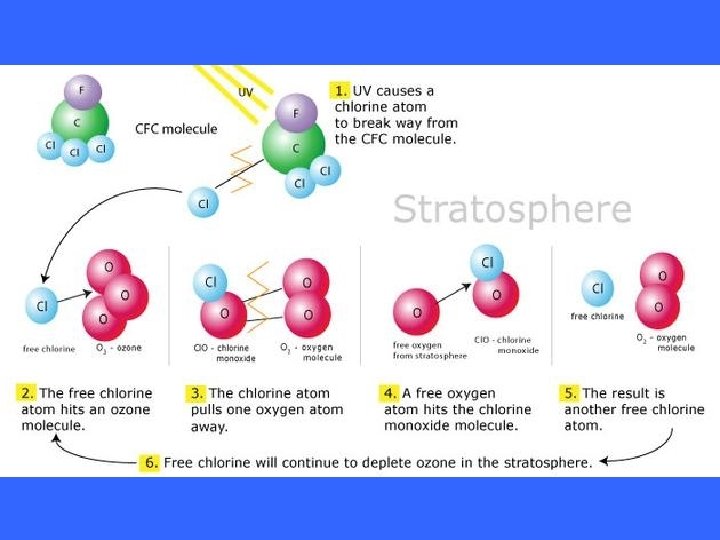
CFC’s and Ozone v CFC’s contain atoms of chlorine, carbon, and fluorine. v Chlorofluorocarbons (CFC’s) are chemicals that destroy ozone in the atmosphere. v They are human – made compounds that were released into the atmosphere mainly from refrigerators, air conditioner, and aerosol spray cans. v CFC’s break apart when hit by UV radiation, producing free chlorine atoms. v The free chlorine atom reacts with the ozone, and destroys it Cl + O 3 Cl. O + O 2
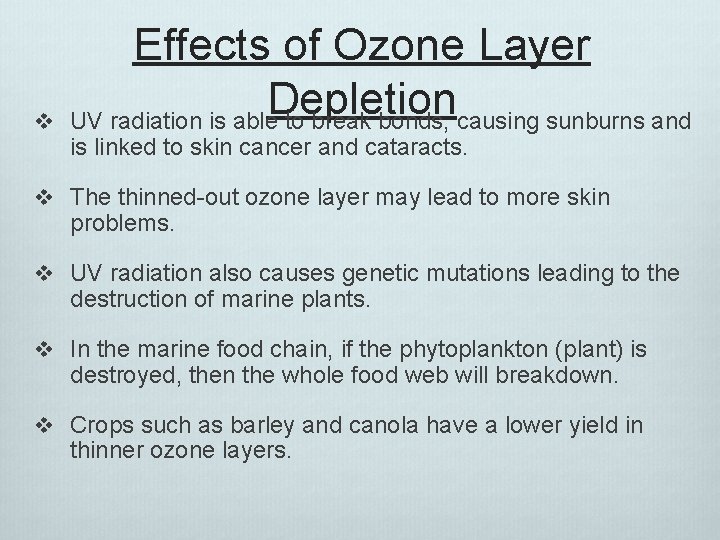
v Effects of Ozone Layer Depletion UV radiation is able to break bonds, causing sunburns and is linked to skin cancer and cataracts. v The thinned-out ozone layer may lead to more skin problems. v UV radiation also causes genetic mutations leading to the destruction of marine plants. v In the marine food chain, if the phytoplankton (plant) is destroyed, then the whole food web will breakdown. v Crops such as barley and canola have a lower yield in thinner ozone layers.
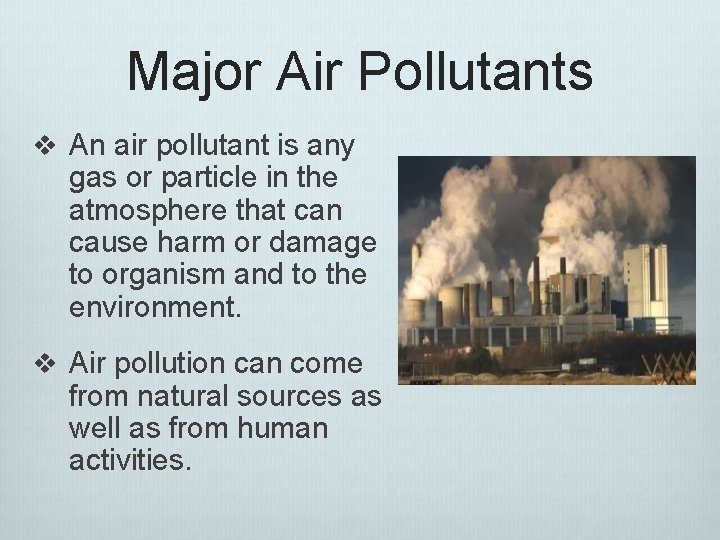
Major Air Pollutants v An air pollutant is any gas or particle in the atmosphere that can cause harm or damage to organism and to the environment. v Air pollution can come from natural sources as well as from human activities.
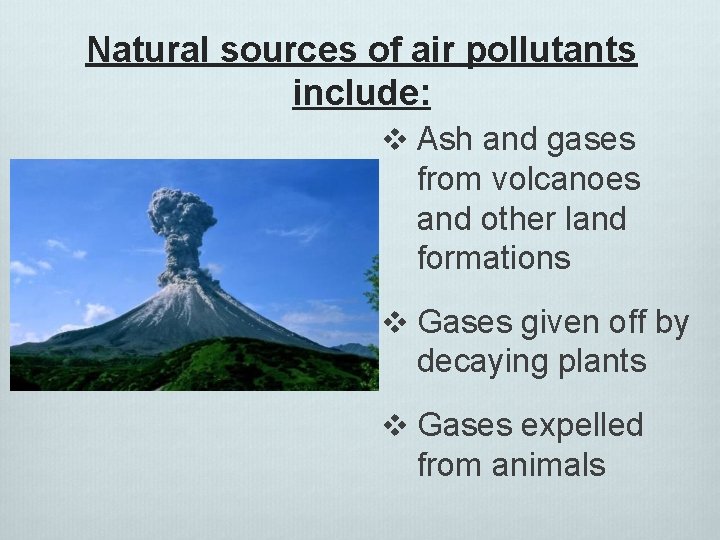
Natural sources of air pollutants include: v Ash and gases from volcanoes and other land formations v Gases given off by decaying plants v Gases expelled from animals
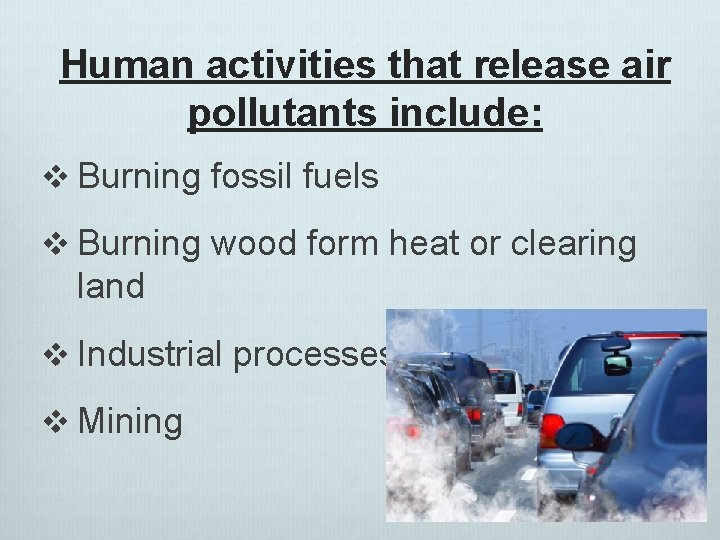
Human activities that release air pollutants include: v Burning fossil fuels v Burning wood form heat or clearing land v Industrial processes v Mining
Health problems associated with air pollution include: v Eye, nose, throat, and lung irritations v Can worsen and increase respiratory infections v Some types can cause damage to lungs, liver, and brain v Some may also increase the risk of cancer
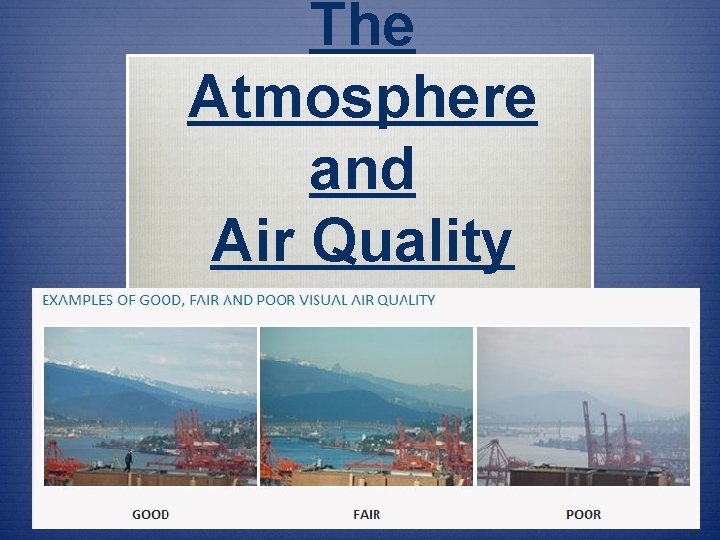
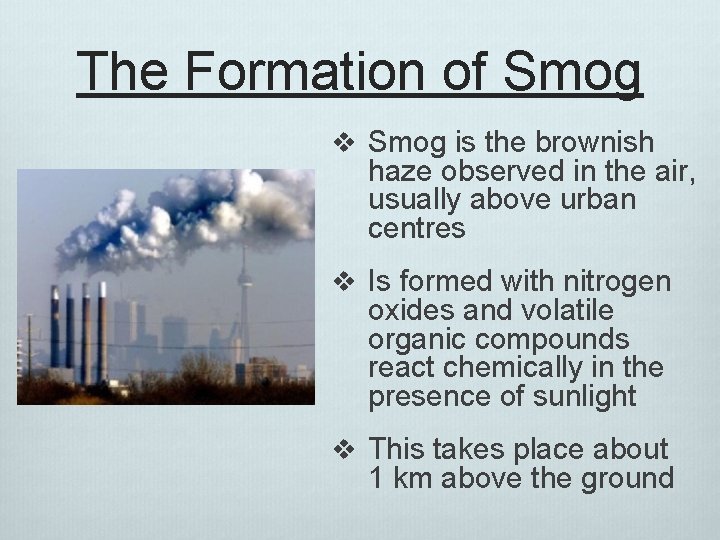
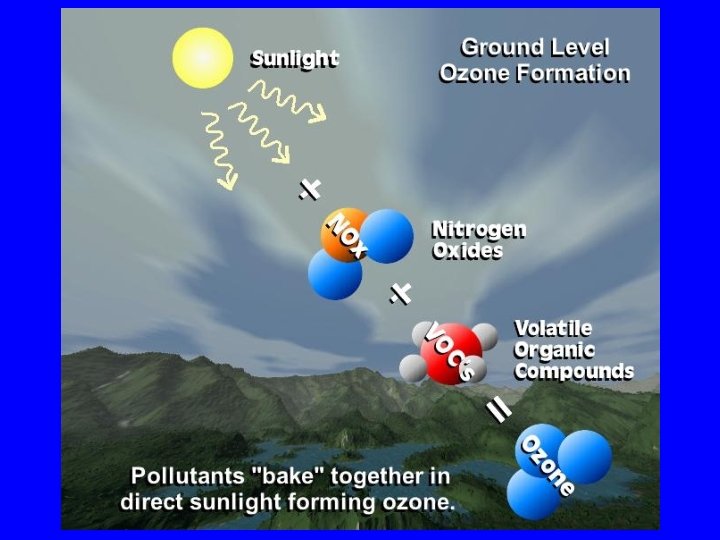
The Formation of Smog v Smog is the brownish haze observed in the air, usually above urban centres v Is formed with nitrogen oxides and volatile organic compounds react chemically in the presence of sunlight v This takes place about 1 km above the ground
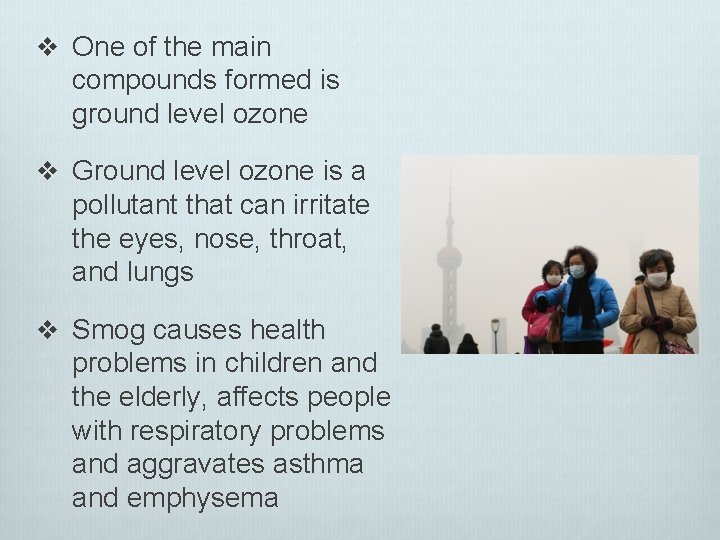
v One of the main compounds formed is ground level ozone v Ground level ozone is a pollutant that can irritate the eyes, nose, throat, and lungs v Smog causes health problems in children and the elderly, affects people with respiratory problems and aggravates asthma and emphysema
Air Pollutants and Their Sources
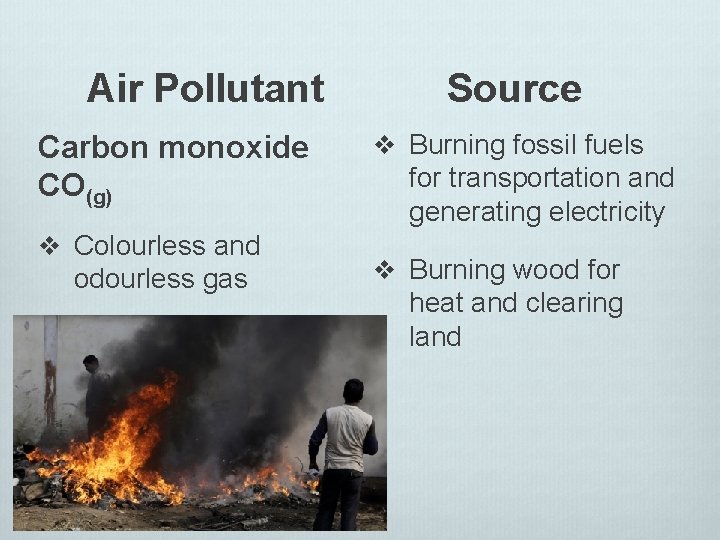
Air Pollutant Carbon monoxide CO(g) v Colourless and odourless gas Source v Burning fossil fuels for transportation and generating electricity v Burning wood for heat and clearing land
Air Pollutant Nitrogen dioxide NO 2(g) and nitrogen oxides NOX(g) v Reddish - brown gas Sources v Motor vehicle exhaust v Burning fossil fuels and biomass v Forest fires
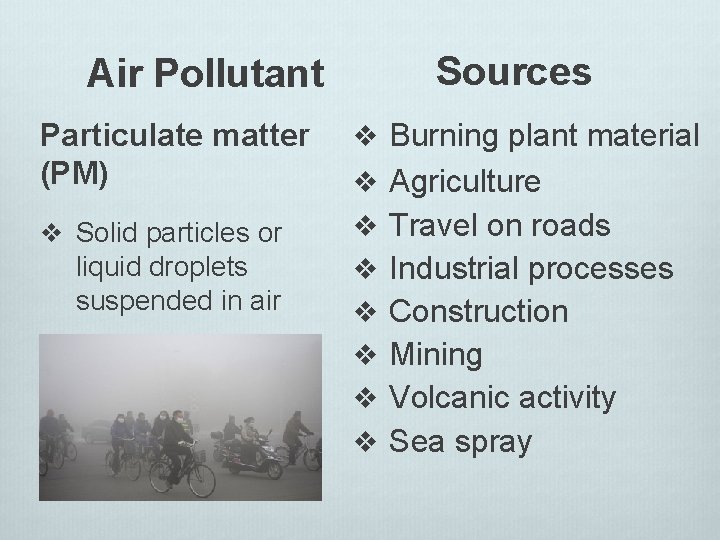
Sources Air Pollutant Particulate matter (PM) v Solid particles or liquid droplets suspended in air v Burning plant material v v v v Agriculture Travel on roads Industrial processes Construction Mining Volcanic activity Sea spray
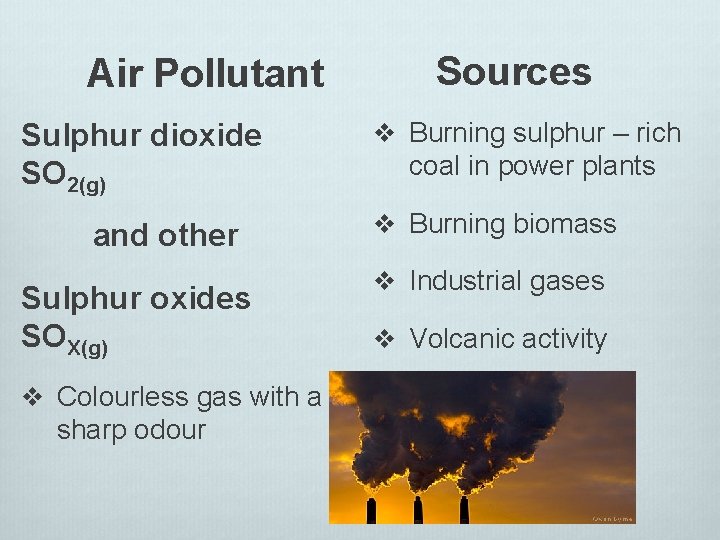
Air Pollutant Sulphur dioxide SO 2(g) and other Sulphur oxides SOX(g) v Colourless gas with a sharp odour Sources v Burning sulphur – rich coal in power plants v Burning biomass v Industrial gases v Volcanic activity
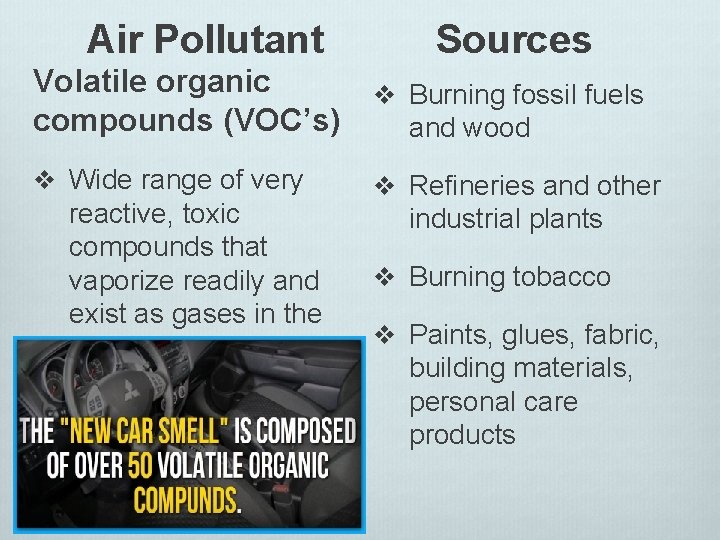
Air Pollutant Sources Volatile organic compounds (VOC’s) v Burning fossil fuels v Wide range of very v Refineries and other reactive, toxic compounds that vaporize readily and exist as gases in the air and wood industrial plants v Burning tobacco v Paints, glues, fabric, building materials, personal care products