
The Atlantic Slave Trade Population of the New
- Slides: 17
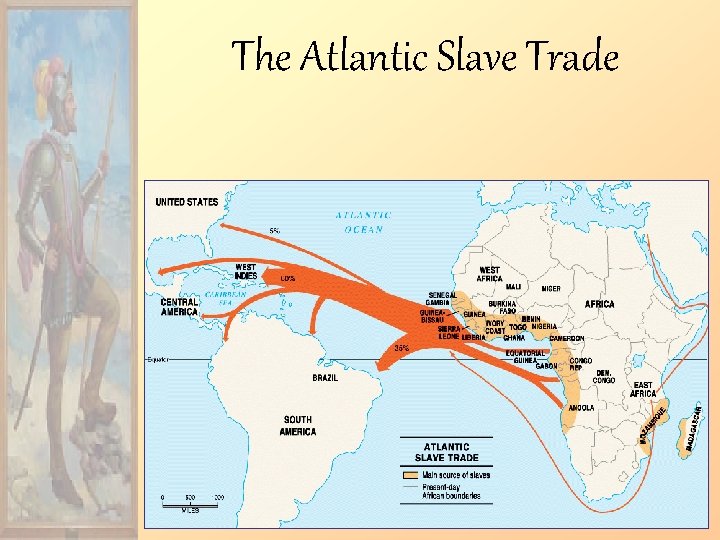
The Atlantic Slave Trade
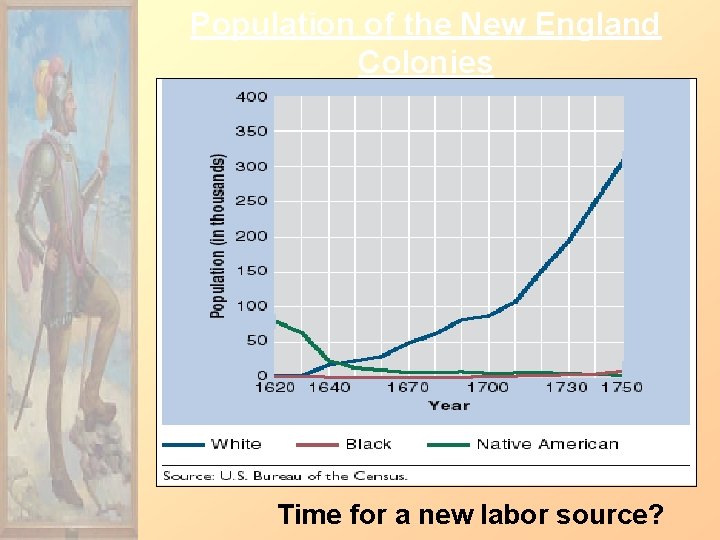
Population of the New England Colonies Time for a new labor source?
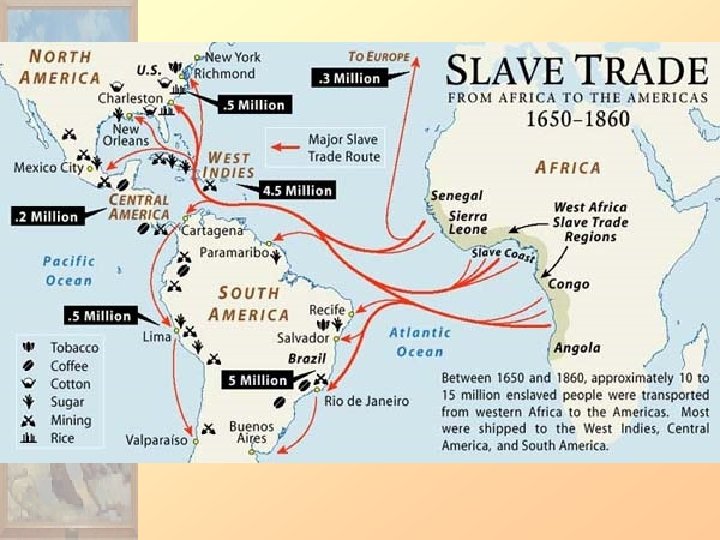
Chapters in Brief Slavery has a long history in Africa and in the world. For most of that history in Africa, though, no large numbers of people were enslaved. That changed in the 600 s, when Muslim traders started to take large numbers of slaves. Between 650 and 1600, Muslims took about 17 million Africans to North Arica and Southwest Asia. Most did have certain rights. The European slave trade that began in the 1500 s was larger. Also, the enslaved Africans were treated far more harshly. In the Americas, when the natives began dying from disease, the Europeans brought in Africans, for three reasons. Africans had resistance to European diseases, so they would not get sick and die. Also, many Africans knew about farming so they would be accustomed to the work involved. Third, Africans were strangers to the Americas and would know no places to hide from slavery. Fro 1500 to 1870, when the slave trade in the Americas finally ended, about 9. 5 million Africans had been imported as slaves.
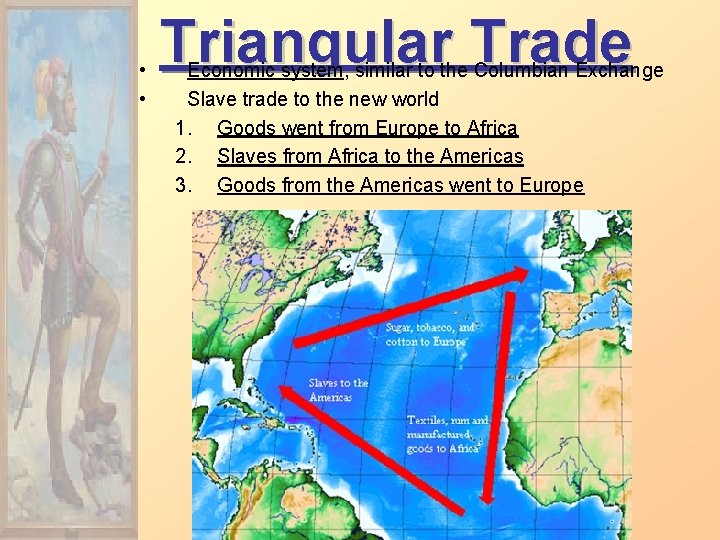
Chapters in Brief The Spanish first began the practice of bringing Africans to the Americas. However, the Portuguese – looking for workers for sugar plantations in Brazil – increased the demand for slaves. During the 1600 s, Brazil received more than 40 percent of all the Africans sent to the Americas. Other European colonies also brought slaves to work on tobacco, sugar, and coffee plantations. About 400, 000 slaves were brought to the English colonies in North America. Their population increased over time, though, to number about 2 million in 1830. Many African rulers joined in the slave trade. They moved inland to capture people and brought them to the coast to sell to European traders. This trade was part of a triangular trade that linked Europe, Africa, and the Americas. European shops brought manufactured goods to Africa, trading them for people. They carried Africans across the Atlantic to the Americas, where they were sold into slavery. The traders then bought sugar, coffee, and tobacco, which they carried back to Europe. Another triangle involved ships sailing from the northern English colonies in North America. They carried rum to Africa, people to the West Indies, and sugar and molasses back to the colonies to make more rum.
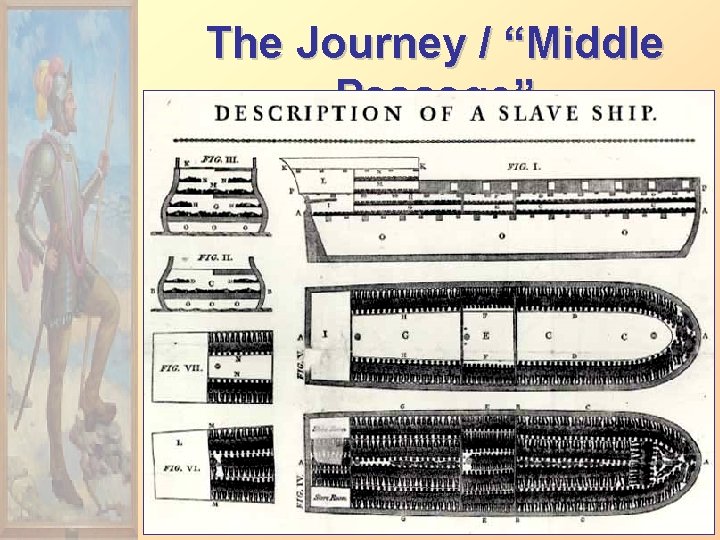
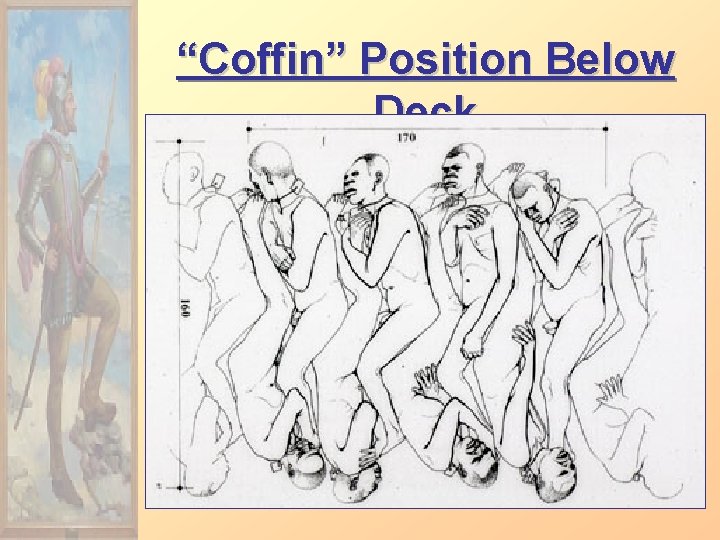
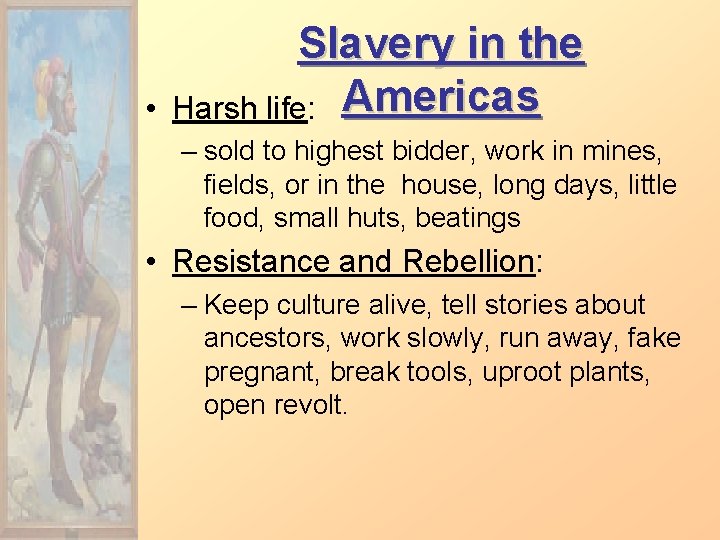
Chapters in Brief The part of the voyage that brought people to the Americas was called the middle passage. It was harsh and cruel. People were crammed into ships, beaten, and given little food. Many died, and many others simply jumped overboard trying to escape. About 20 percent of the people on these ships died. Life on the plantations was harsh as well. People were sold to the highest bidder and then worked from dawn to dusk in the fields of the plantations. They were given little food and lived in small huts. Africans kept alive their traditional music and beliefs to try to maintain their spirits. Sometimes they arose in rebellion. From North America to Brazil, from 1522 to the 1800 s, there were small –scale slave revolts.
1. 2. Causes of African Existed for centuries in Africa for centuries Slavery Spread of Islam in North Africa causes an increase in slavery - Muslim belief said that prisoners of war could be bought & sold as slaves - between the years 650 -1600 Muslims brought African slaves to their lands of North Africa and Southwest Asia 3. The Portuguese were the 1 st Europeans to explore Africa and used slaves for their sugarcane plantations. 4. First boatload of African slaves brought by the Spanish in 1518.
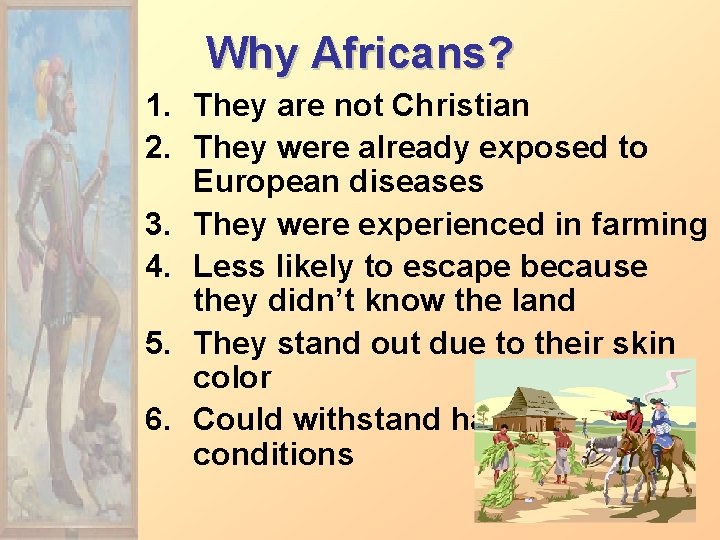
Why Africans? 1. They are not Christian 2. They were already exposed to European diseases 3. They were experienced in farming 4. Less likely to escape because they didn’t know the land 5. They stand out due to their skin color 6. Could withstand harsh working conditions
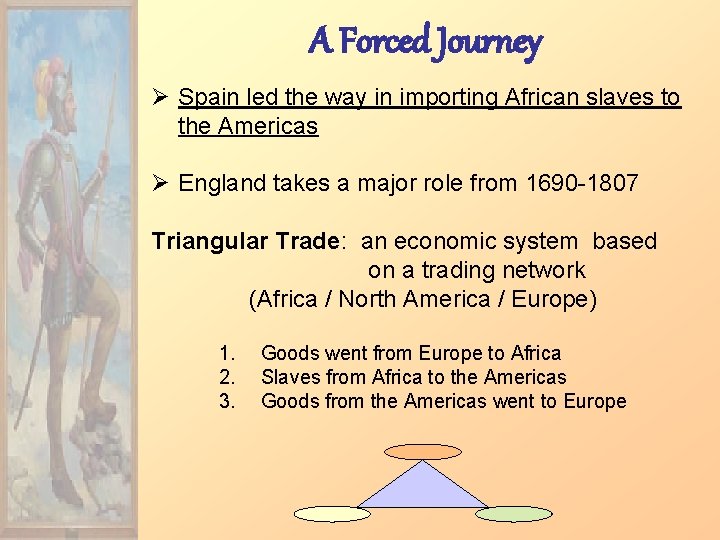
A Forced Journey Ø Spain led the way in importing African slaves to the Americas Ø England takes a major role from 1690 -1807 Triangular Trade: an economic system based on a trading network (Africa / North America / Europe) 1. 2. 3. Goods went from Europe to Africa Slaves from Africa to the Americas Goods from the Americas went to Europe
• • Triangular Trade Economic system, similar to the Columbian Exchange Slave trade to the new world 1. Goods went from Europe to Africa 2. Slaves from Africa to the Americas 3. Goods from the Americas went to Europe
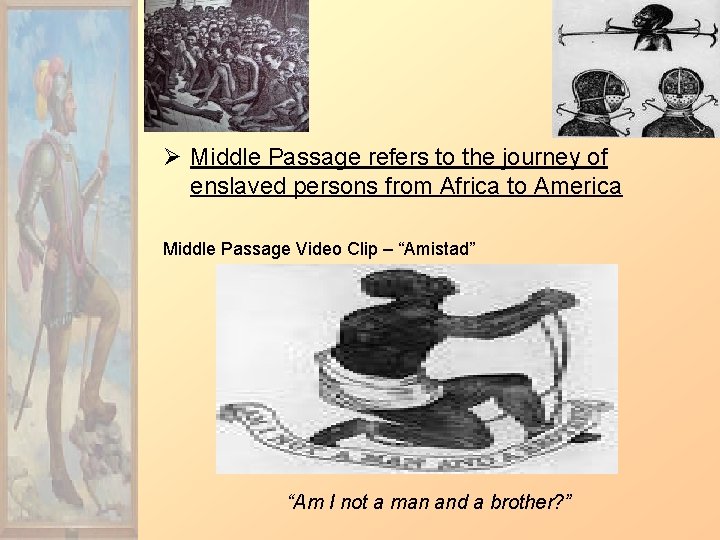
The Journey / “Middle Passage”
“Coffin” Position Below Deck
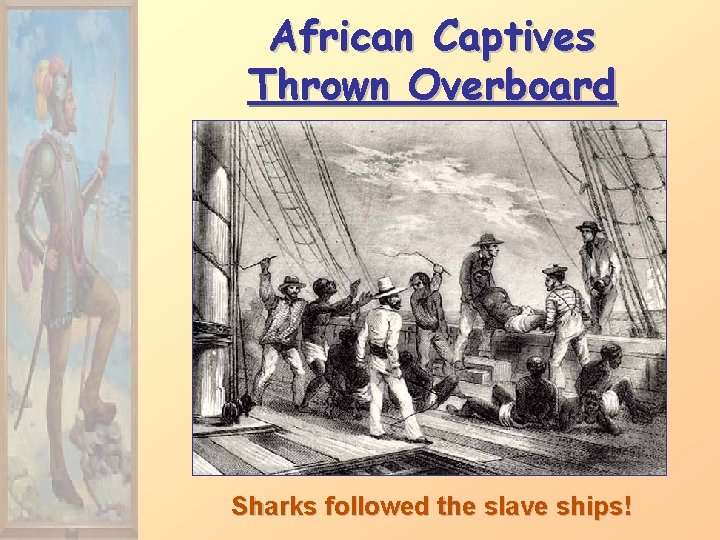
Ø Middle Passage refers to the journey of enslaved persons from Africa to America Middle Passage Video Clip – “Amistad” “Am I not a man and a brother? ”
African Captives Thrown Overboard Sharks followed the slave ships!
• Slavery in the Harsh life: Americas – sold to highest bidder, work in mines, fields, or in the house, long days, little food, small huts, beatings • Resistance and Rebellion: – Keep culture alive, tell stories about ancestors, work slowly, run away, fake pregnant, break tools, uproot plants, open revolt.
Impact of the Slave Trade Lost culture and families torn apart • • Contributed greatly to the colonies – Economic and cultural development – Brought agricultural expertise – Art, music, religion, food – Population growth • England takes a major role from 1690 -1807 – British outlaw slavery in 1807
Amistad Clip • What do you think the voyage from Africa to the Americas was like? • Make a prediction of what you will see in the clip. • How does your prediction compare to what you saw in the clip? • What is your reaction to the clip?