
The Atlantic Slave Trade 1500 1800 I The
- Slides: 8
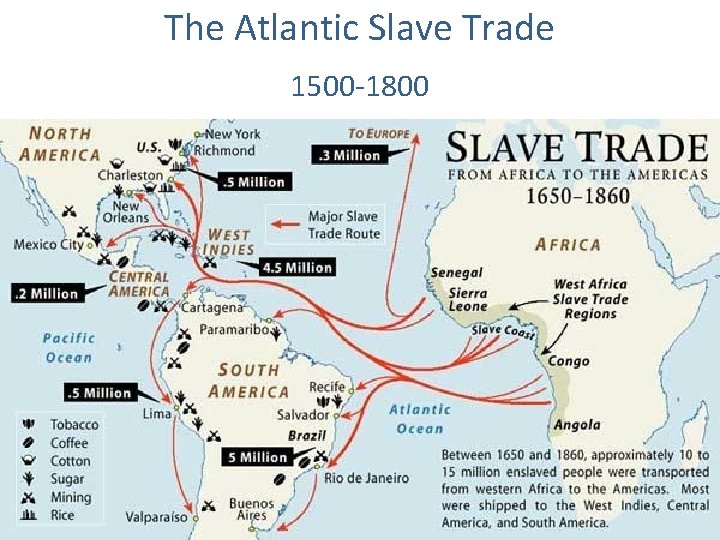
The Atlantic Slave Trade 1500 -1800
I. The New World • Columbus discovered the Americas in 1492 • New World was suitable for growing sugar, tobacco & coffee (cash crops) • To meet high demand, labor was needed to produce these crops • Spain, Portugal, England, France and the Netherlands all used slave labor
II. Motives for Slavery • Economic ($)- worldwide demand for sugar, tobacco, coffee • Social- Europeans felt superior to non. Europeans (racism)
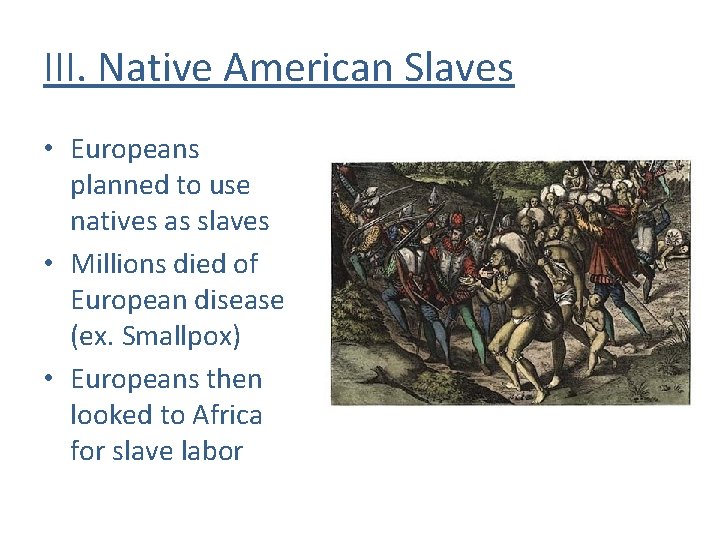
III. Native American Slaves • Europeans planned to use natives as slaves • Millions died of European disease (ex. Smallpox) • Europeans then looked to Africa for slave labor
IV. African Slaves • Africans had built up some immunity to European disease & were familiar with farming techniques • African prisoners of war (POWs) were sold to Europeans by other Africans • In all 9. 5 - 12 million Africans brought to the Americas as slaves
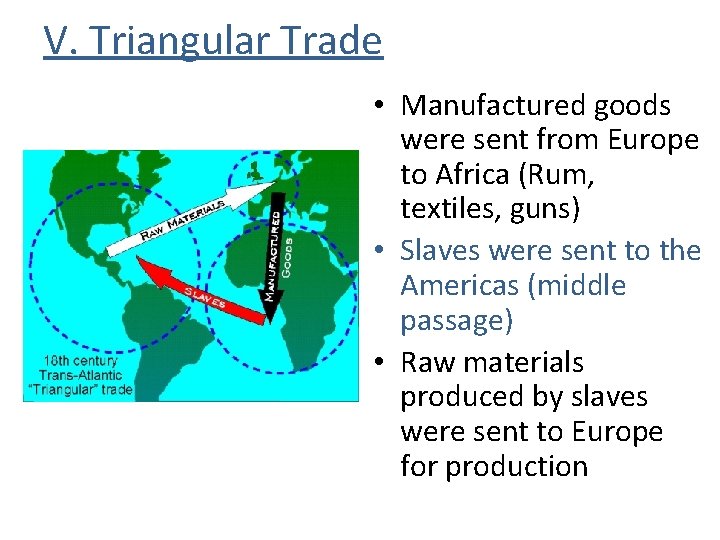
V. Triangular Trade • Manufactured goods were sent from Europe to Africa (Rum, textiles, guns) • Slaves were sent to the Americas (middle passage) • Raw materials produced by slaves were sent to Europe for production
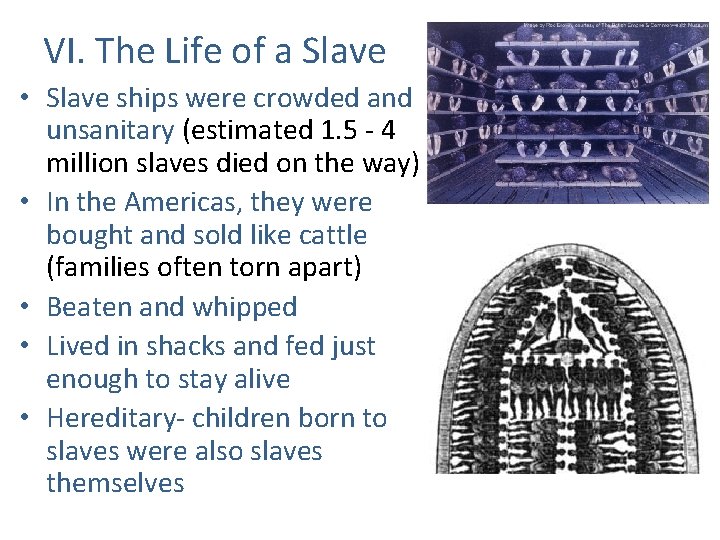
VI. The Life of a Slave • Slave ships were crowded and unsanitary (estimated 1. 5 - 4 million slaves died on the way) • In the Americas, they were bought and sold like cattle (families often torn apart) • Beaten and whipped • Lived in shacks and fed just enough to stay alive • Hereditary- children born to slaves were also slaves themselves
VII. Impact of Slavery • Africa lost generations of its youngest, fittest members • Guns in Africa led to increased warfare • Large African-American population in western countries; cultural influence (music, art, food) • American slaves freed by Abraham Lincoln in 1863 (Emancipation Proclamation)