
The Atacama Desert Animals Animal Adaptations Behavior Stay

The Atacama Desert Animals
Animal Adaptations Behavior: Stay in the shade or burrow underground Nocturnal: Rest during the day/ Hunt at night Get moisture from insects, plants and seeds that they eat Physical: Do not have sweat glands Pass small amounts of urine Concentrate the body’s fat in one place, not all over
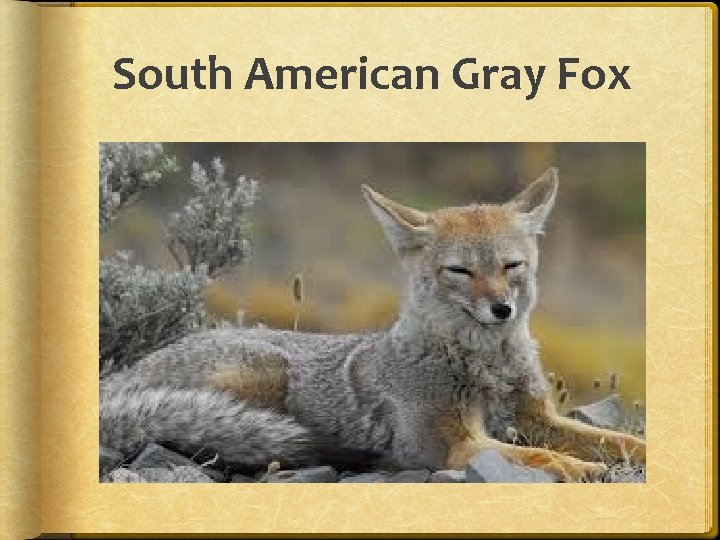
South American Gray Fox
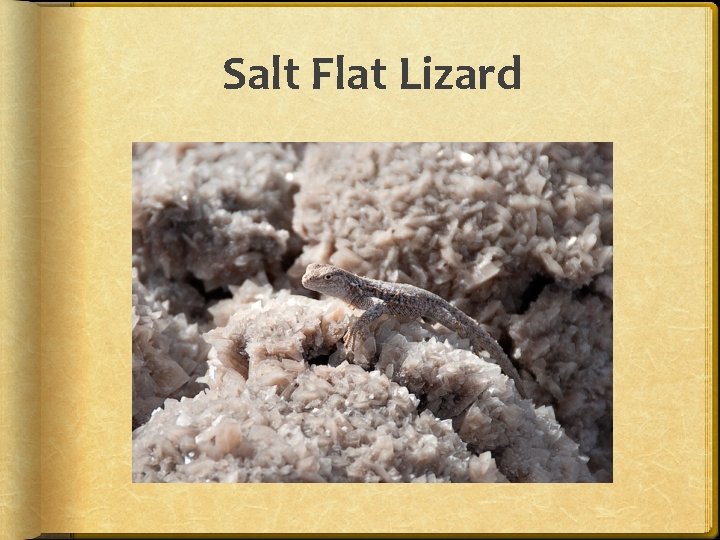
Salt Flat Lizard
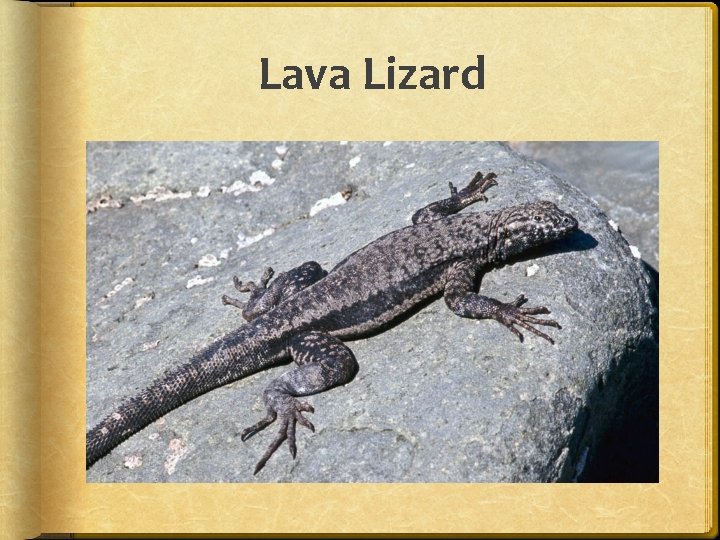
Lava Lizard
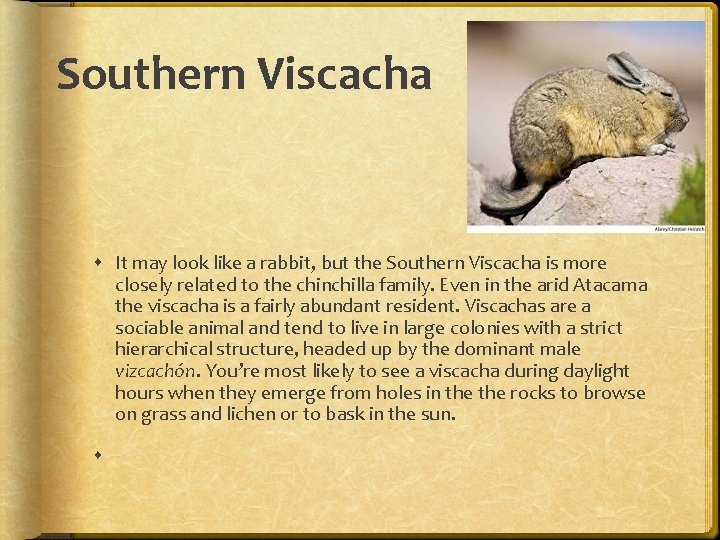
Southern Viscacha It may look like a rabbit, but the Southern Viscacha is more closely related to the chinchilla family. Even in the arid Atacama the viscacha is a fairly abundant resident. Viscachas are a sociable animal and tend to live in large colonies with a strict hierarchical structure, headed up by the dominant male vizcachón. You’re most likely to see a viscacha during daylight hours when they emerge from holes in the rocks to browse on grass and lichen or to bask in the sun.
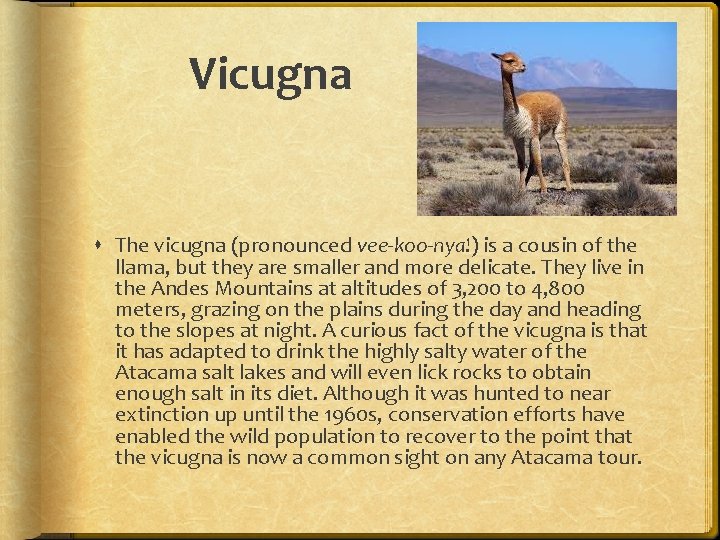
Vicugna The vicugna (pronounced vee-koo-nya!) is a cousin of the llama, but they are smaller and more delicate. They live in the Andes Mountains at altitudes of 3, 200 to 4, 800 meters, grazing on the plains during the day and heading to the slopes at night. A curious fact of the vicugna is that it has adapted to drink the highly salty water of the Atacama salt lakes and will even lick rocks to obtain enough salt in its diet. Although it was hunted to near extinction up until the 1960 s, conservation efforts have enabled the wild population to recover to the point that the vicugna is now a common sight on any Atacama tour.
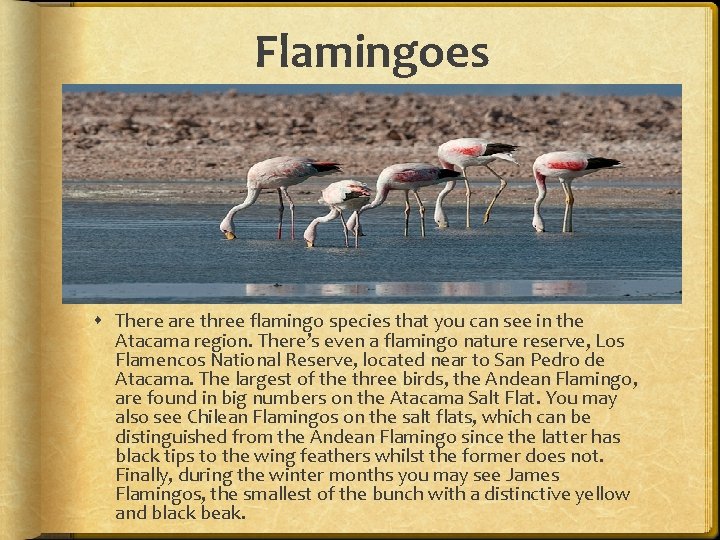
Flamingoes There are three flamingo species that you can see in the Atacama region. There’s even a flamingo nature reserve, Los Flamencos National Reserve, located near to San Pedro de Atacama. The largest of the three birds, the Andean Flamingo, are found in big numbers on the Atacama Salt Flat. You may also see Chilean Flamingos on the salt flats, which can be distinguished from the Andean Flamingo since the latter has black tips to the wing feathers whilst the former does not. Finally, during the winter months you may see James Flamingos, the smallest of the bunch with a distinctive yellow and black beak.

Humbolt Penguins
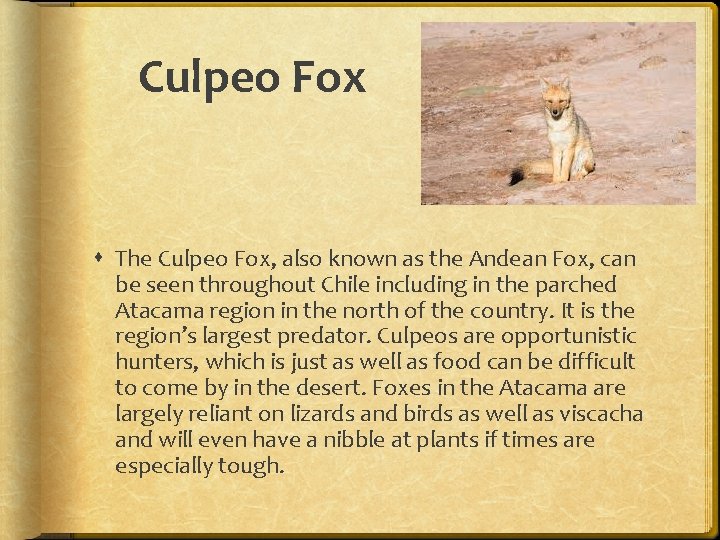
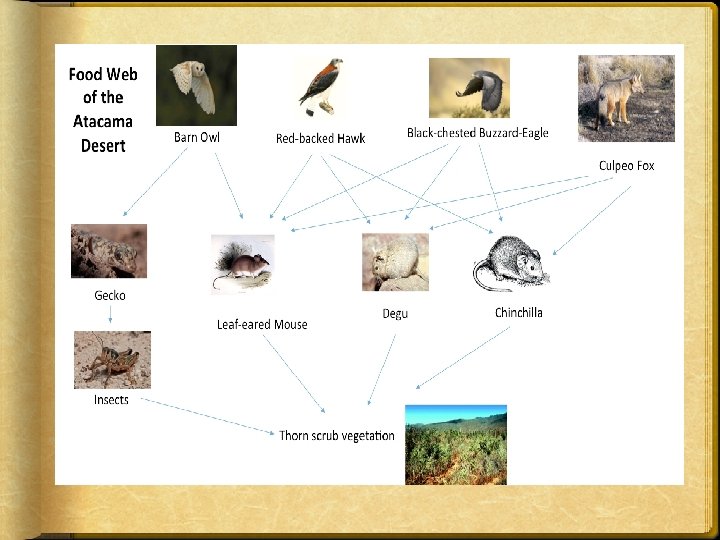
Culpeo Fox The Culpeo Fox, also known as the Andean Fox, can be seen throughout Chile including in the parched Atacama region in the north of the country. It is the region’s largest predator. Culpeos are opportunistic hunters, which is just as well as food can be difficult to come by in the desert. Foxes in the Atacama are largely reliant on lizards and birds as well as viscacha and will even have a nibble at plants if times are especially tough.
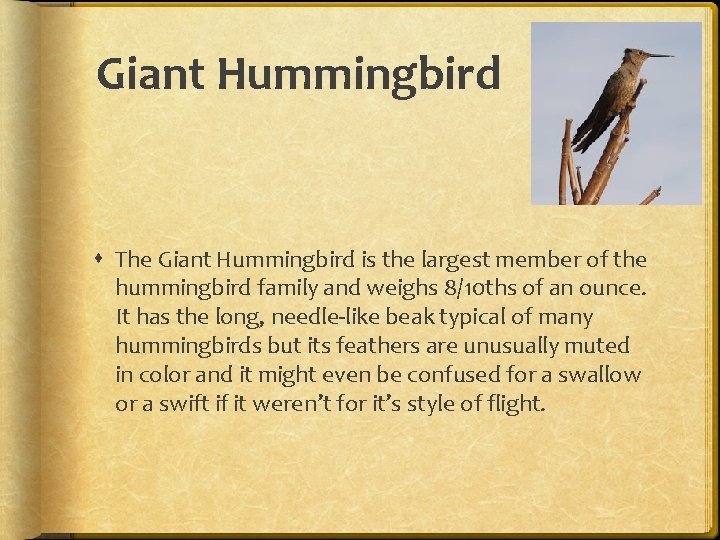
Giant Hummingbird The Giant Hummingbird is the largest member of the hummingbird family and weighs 8/10 ths of an ounce. It has the long, needle-like beak typical of many hummingbirds but its feathers are unusually muted in color and it might even be confused for a swallow or a swift if it weren’t for it’s style of flight.
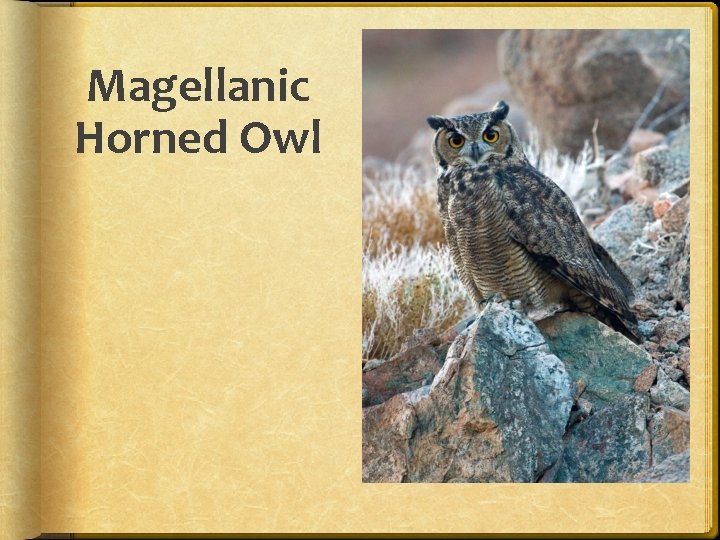
Magellanic Horned Owl
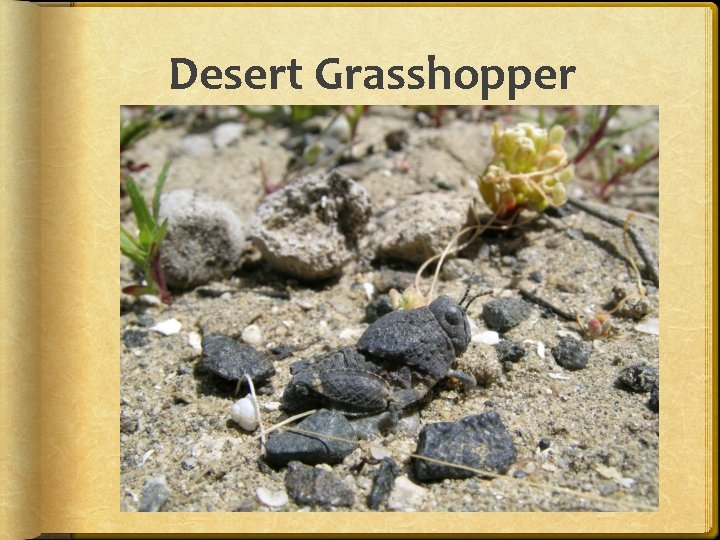
Desert Grasshopper

Atacama Desert Butterfly

South American Fur Seals
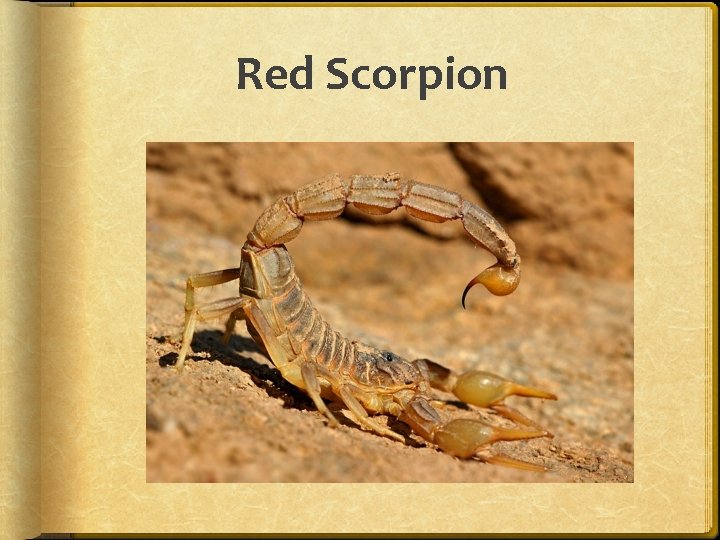
Red Scorpion
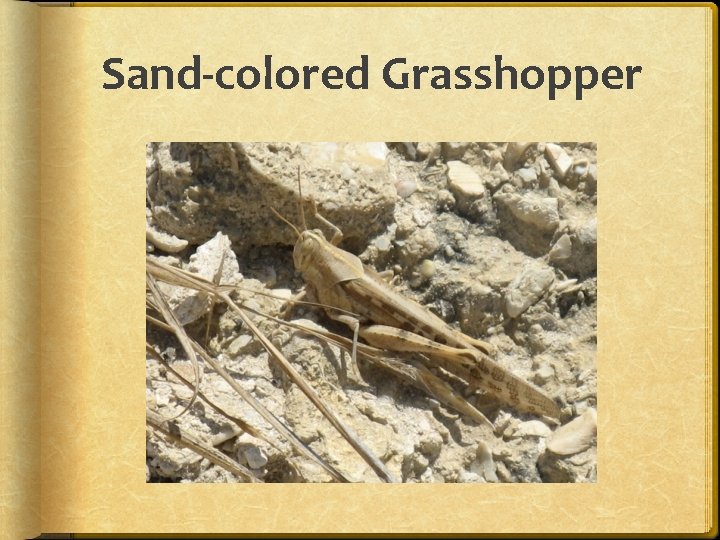
Sand-colored Grasshopper
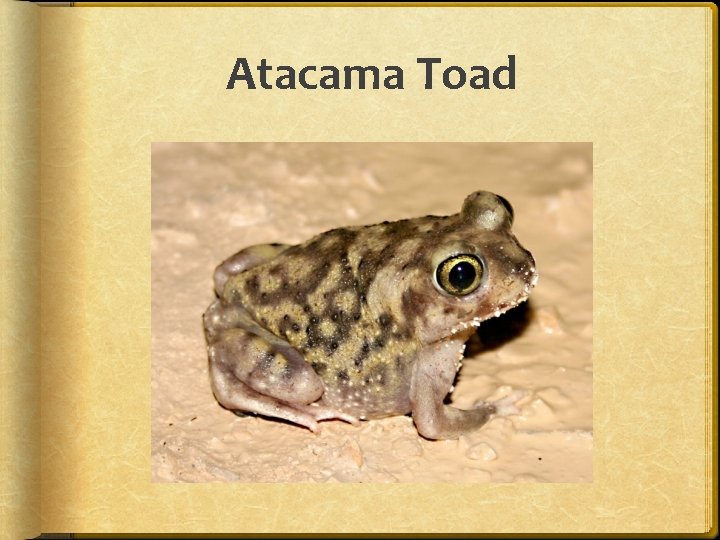
Atacama Toad

Elegant Fat-tailed Opossum
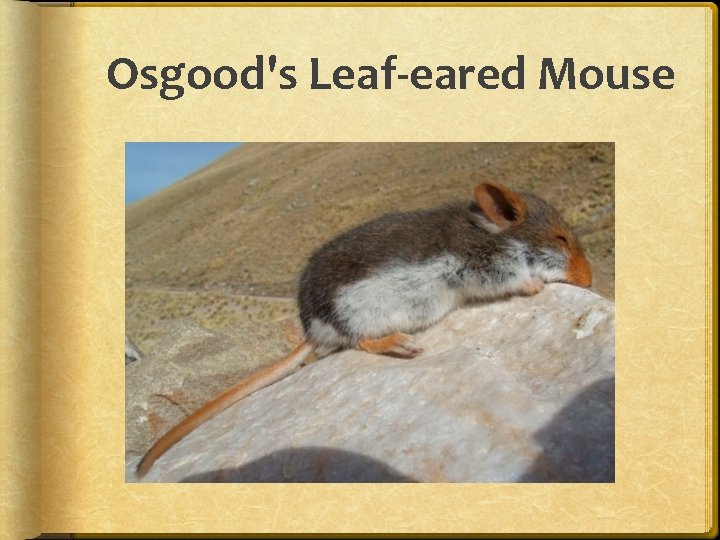
Osgood's Leaf-eared Mouse
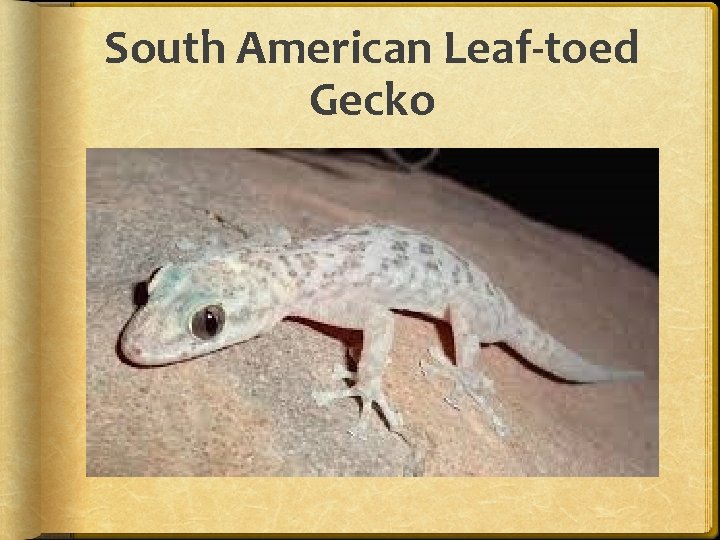
South American Leaf-toed Gecko

Hogan, C. , & Fund, W. (2014). Atacama Desert. Retrieved from http: //www. eoearth. org/view/article/150268
- Slides: 23