
The Asterid Clade Very large group not as
- Slides: 27
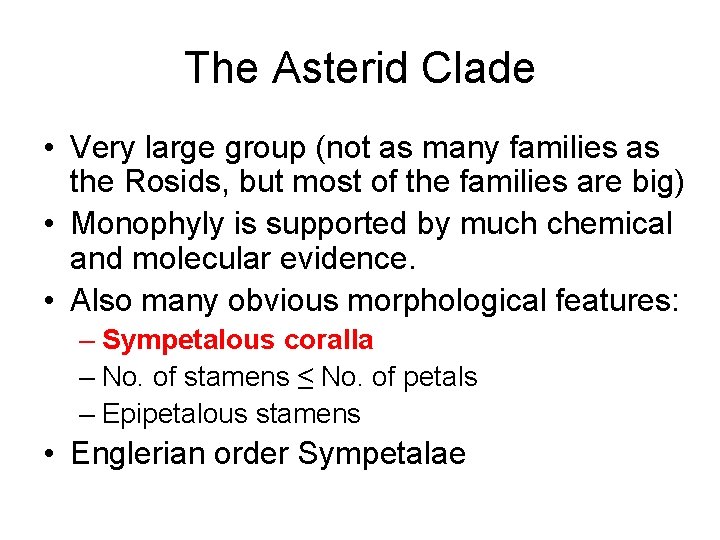
The Asterid Clade • Very large group (not as many families as the Rosids, but most of the families are big) • Monophyly is supported by much chemical and molecular evidence. • Also many obvious morphological features: – Sympetalous coralla – No. of stamens ≤ No. of petals – Epipetalous stamens • Englerian order Sympetalae
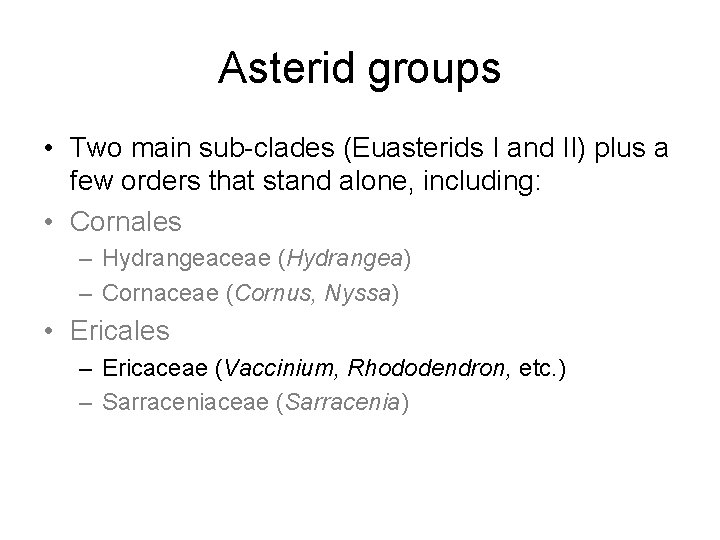
Asterid groups • Two main sub-clades (Euasterids I and II) plus a few orders that stand alone, including: • Cornales – Hydrangeaceae (Hydrangea) – Cornaceae (Cornus, Nyssa) • Ericales – Ericaceae (Vaccinium, Rhododendron, etc. ) – Sarraceniaceae (Sarracenia)
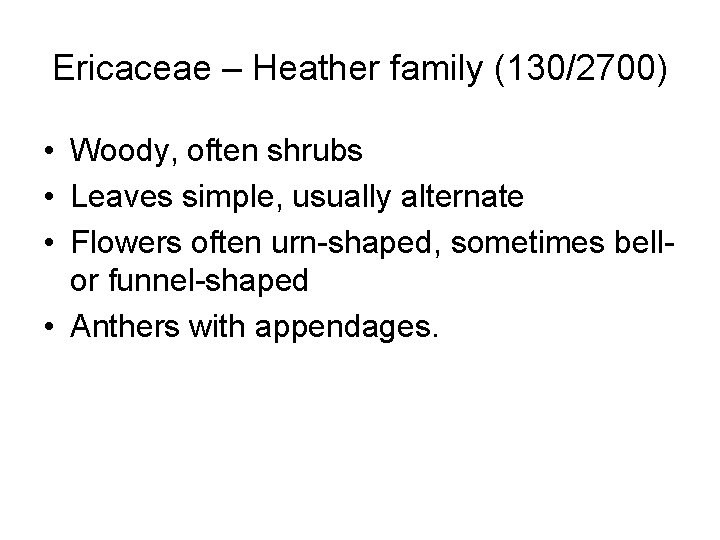
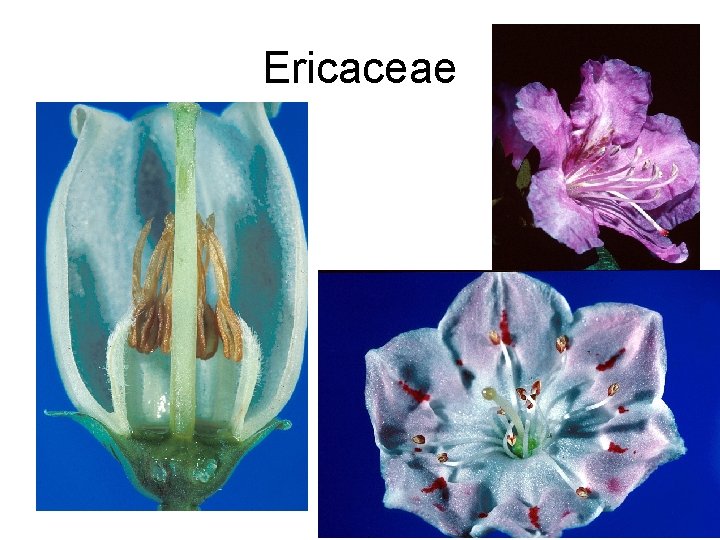
Ericaceae – Heather family (130/2700) • Woody, often shrubs • Leaves simple, usually alternate • Flowers often urn-shaped, sometimes bellor funnel-shaped • Anthers with appendages.
Ericaceae
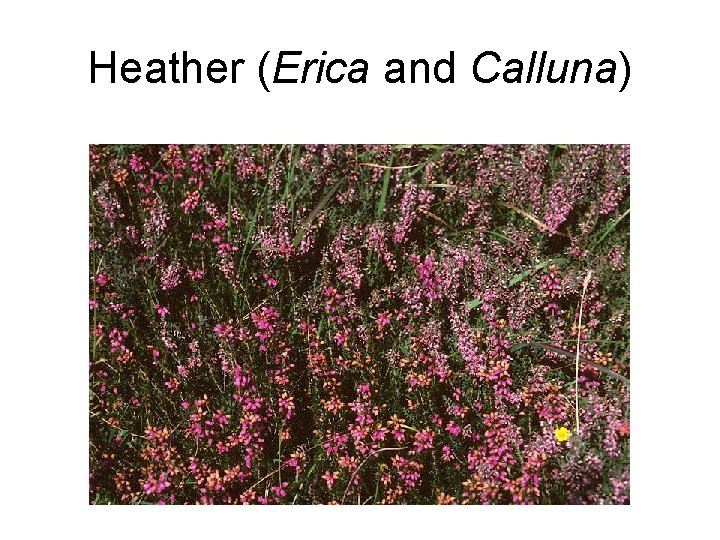
Heather (Erica and Calluna)
Euasterids I • • • Solanaceae Boraginaceae Rubiaceae Plantaginaceae Scrophulariaceae Lamiaceae
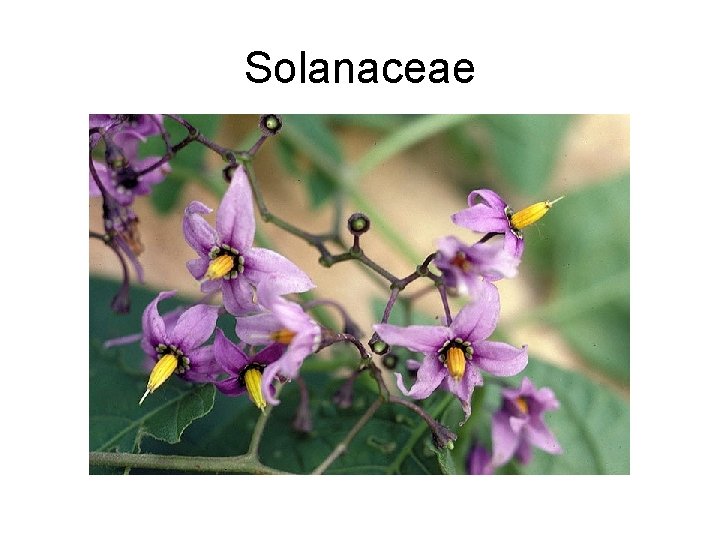
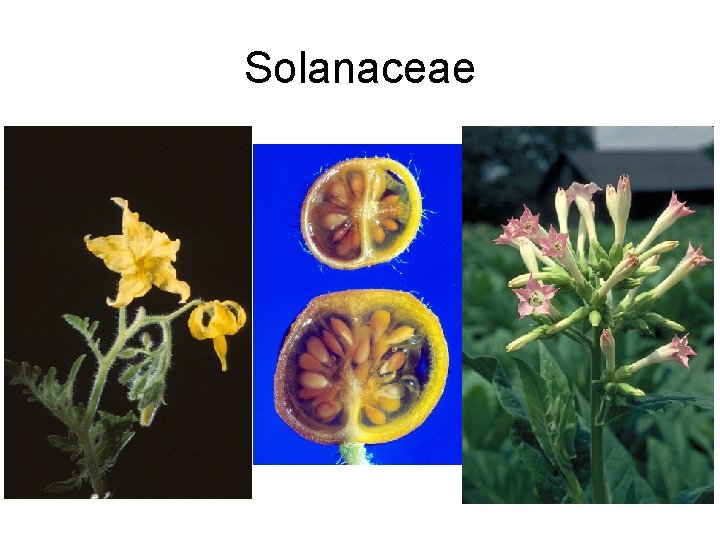
Solanaceae – Nightshade family (147/2930) • • • Alkaloids present (e. g. nicotine, atropine) Connate petals, often funnel-shaped Ovary superior Fruit 2 carpellate: berry or capsule Examples include tomato, potato, Capsicum peppers (red/green/chili/etc. ), tobacco, deadly nightshade, petunia
Solanaceae
Solanaceae
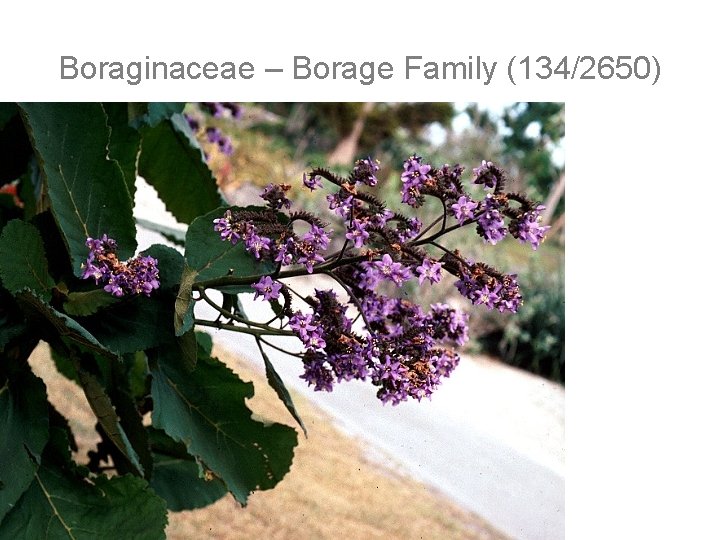
Boraginaceae – Borage Family (134/2650)
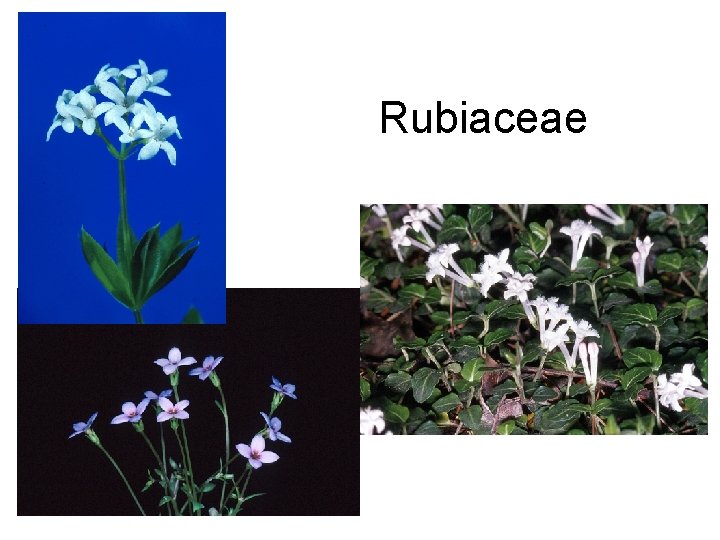
Rubiaceae – Madder family 550/9000 • • • Leaves opposite or whorled, stipulate Petals 4 or 5, connate Ovary inferior (or half-inferior) Often contain alkaloids (caffeine, quinine) Examples include Houstonia, Mitchella, Coffea (coffee), Cinchona (quinine), Gardenia, several other ornamentals
Rubiaceae
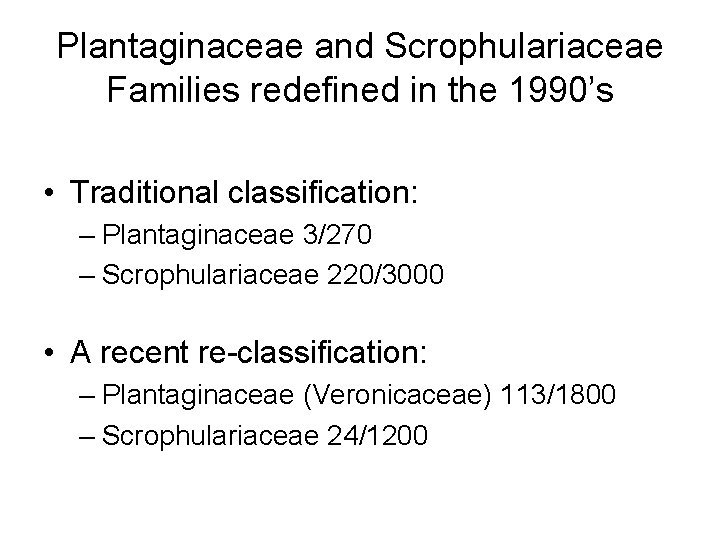
Plantaginaceae and Scrophulariaceae Families redefined in the 1990’s • Traditional classification: – Plantaginaceae 3/270 – Scrophulariaceae 220/3000 • A recent re-classification: – Plantaginaceae (Veronicaceae) 113/1800 – Scrophulariaceae 24/1200
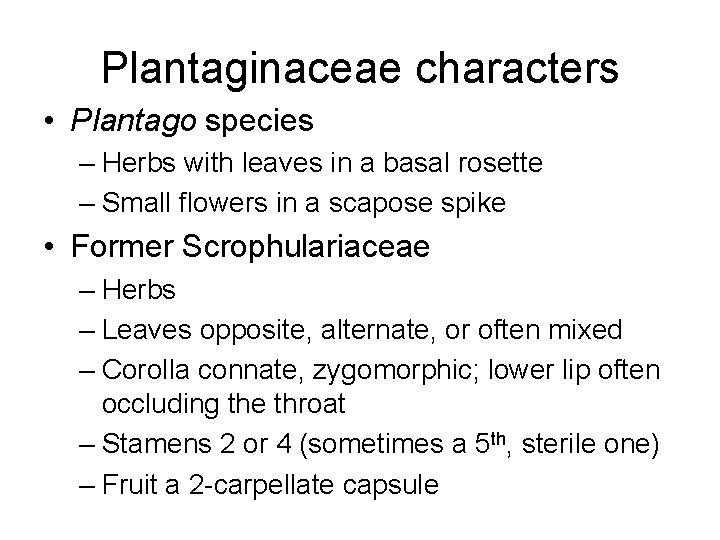
Plantaginaceae characters • Plantago species – Herbs with leaves in a basal rosette – Small flowers in a scapose spike • Former Scrophulariaceae – Herbs – Leaves opposite, alternate, or often mixed – Corolla connate, zygomorphic; lower lip often occluding the throat – Stamens 2 or 4 (sometimes a 5 th, sterile one) – Fruit a 2 -carpellate capsule
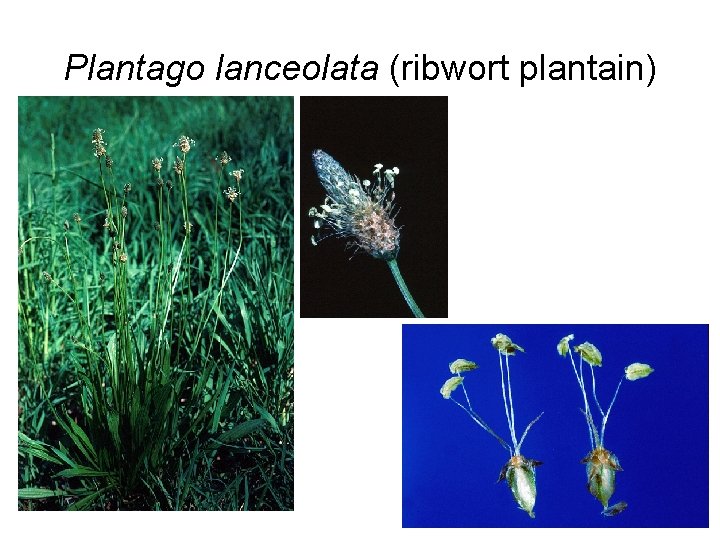
Plantago lanceolata (ribwort plantain)
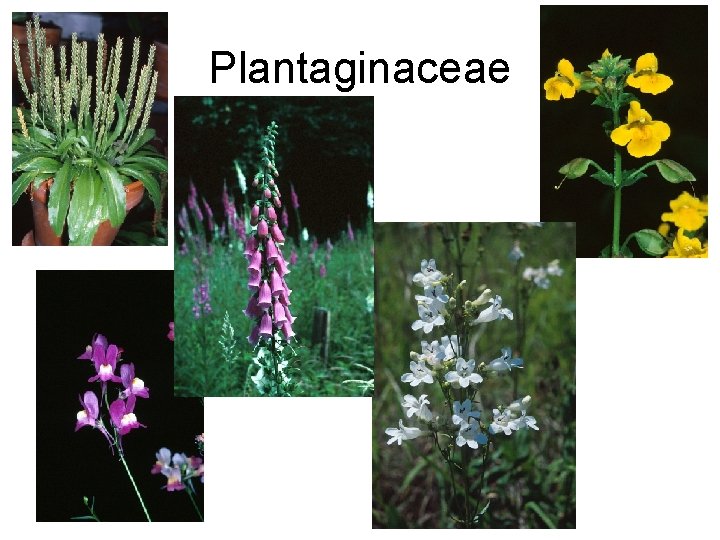
Plantaginaceae
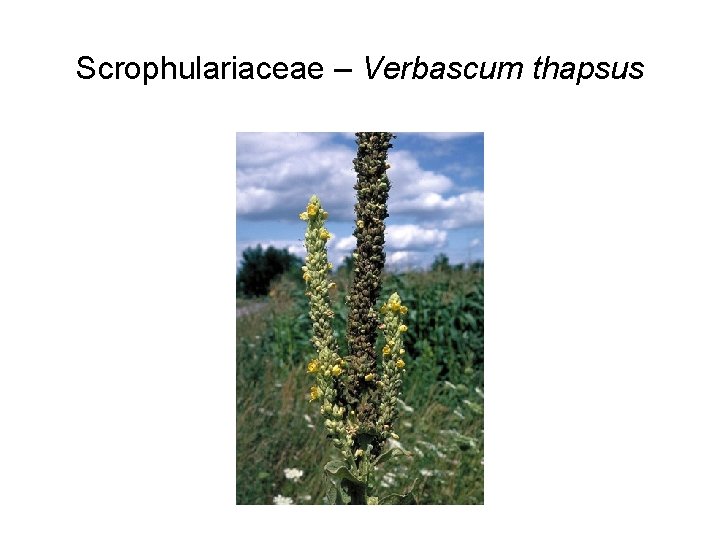
Scrophulariaceae – Verbascum thapsus
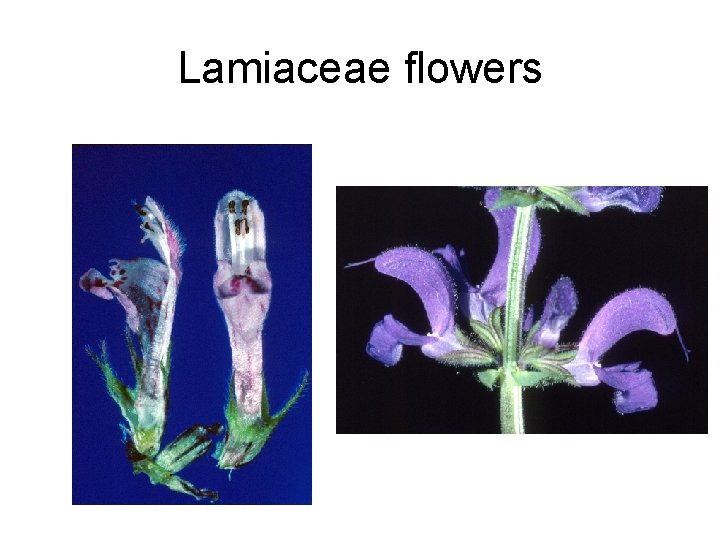
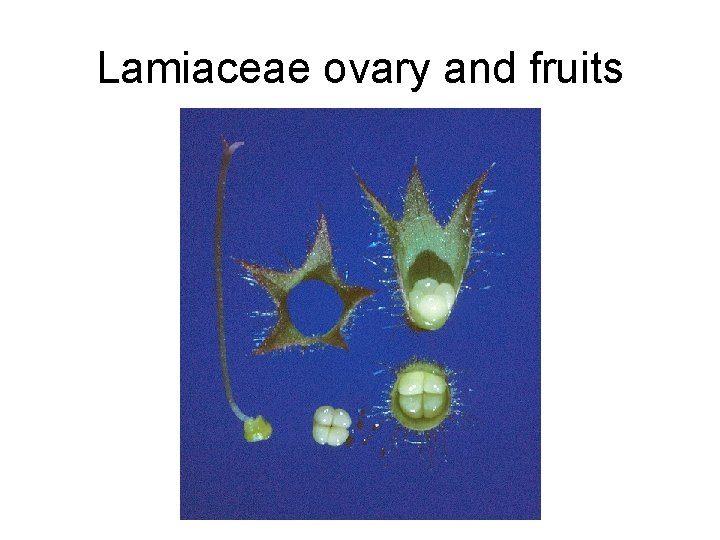
Lamiaceae / Labiatae – Mint Family (258/6970) • • • Mostly herbs; stems often square Leaves opposite, often aromatic (terpenoids) Corolla connate, usually zygomorphic Stamens 2 or 4 Ovary 4 -lobed with style attached in the “valley” between the lobes • Fruit schizocarpic – four 1 -seeded nutlets • Mint, sage, thyme, rosemary, basil, oregano, catnip
Lamiaceae flowers
Lamiaceae ovary and fruits
Euasterids II • Apiaceae • Asteraceae
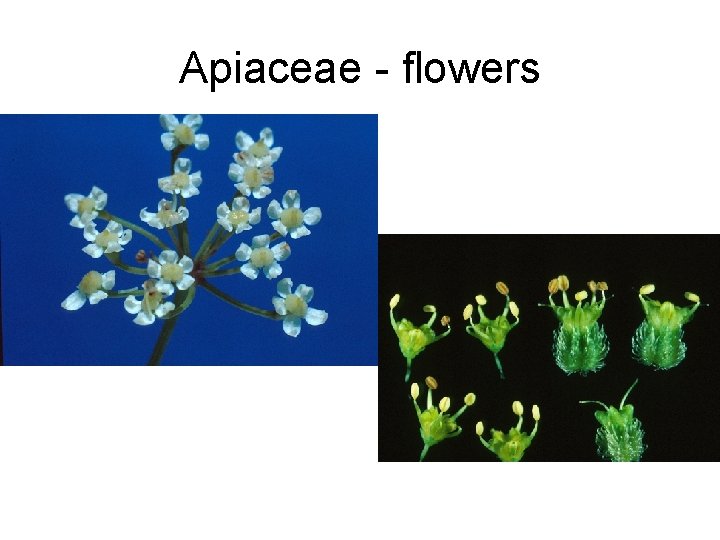
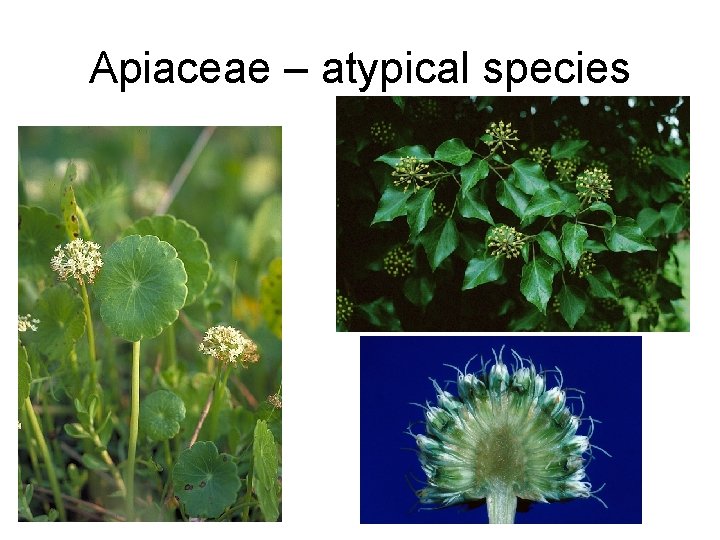
Apiaceae / Umbelliferae Carrot or Parsley family (460/4250) • • • Alternate leaves, often divided or compound Sheathing leaf bases (like buttercups) Flowers usually small, 5 sepals/petals/stamens Ovary inferior Fruit a 2 -parted schizocarp Inflorescence usually a compound umbel, often with an involucre of bracts (sometimes simple umbels or heads) • Carrot, celery, parsley, coriander (cilantro), dill, anise, caraway, cumin; ginseng; poison hemlock
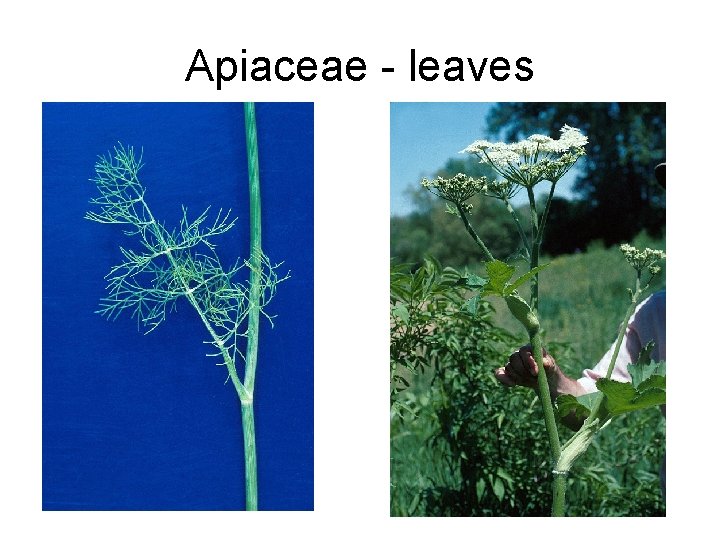
Apiaceae - leaves
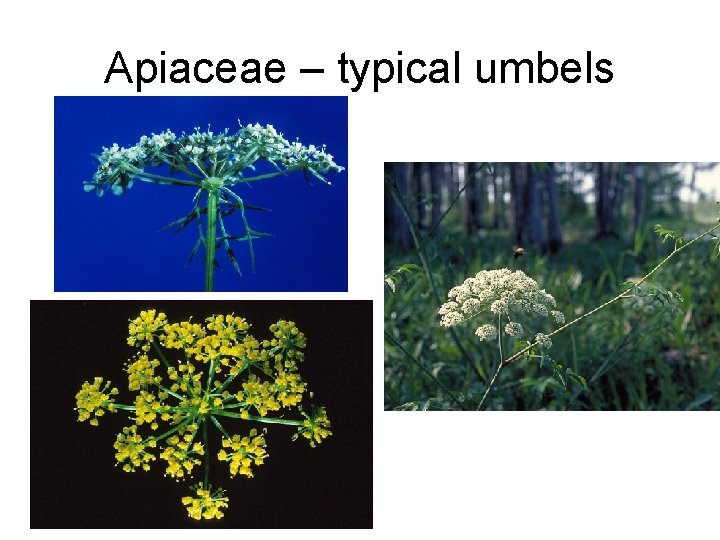
Apiaceae – typical umbels
Apiaceae - flowers
Apiaceae – atypical species
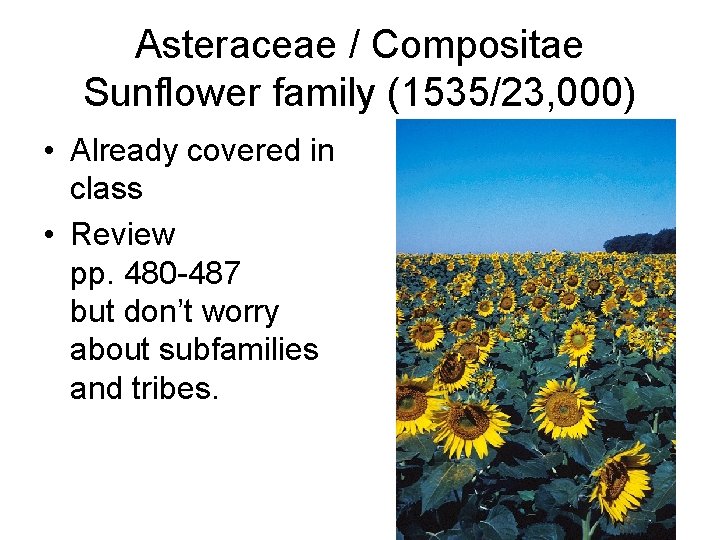
Asteraceae / Compositae Sunflower family (1535/23, 000) • Already covered in class • Review pp. 480 -487 but don’t worry about subfamilies and tribes.