
THE ASSESSMENT UNDER THE K TO 12 Enhanced

- Slides: 36
THE ASSESSMENT UNDER THE K TO 12 Enhanced Basic Education Curriculum Program
A. Philosophy Assessment shall be used primarily as quality assurance tool to track student progress in the attainment of standards, promote self reflection and personal accountability for one’s learning, and provide a basis for the profiling of student performance
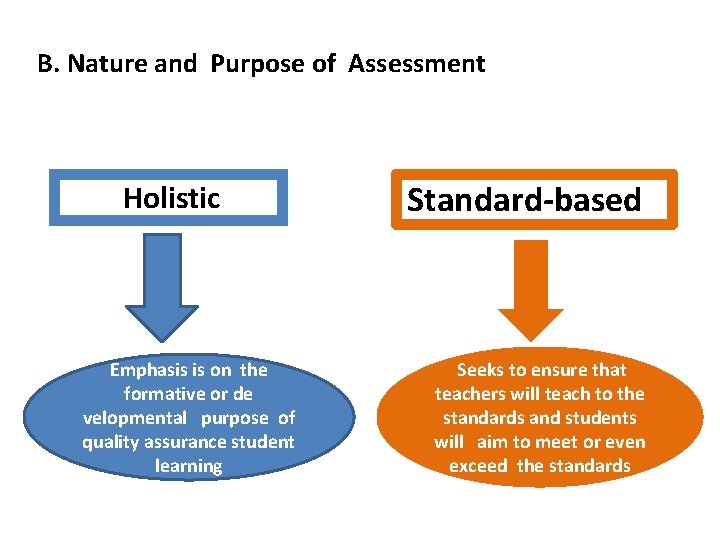
B. Nature and Purpose of Assessment Holistic Emphasis is on the formative or de velopmental purpose of quality assurance student learning Standard-based Seeks to ensure that teachers will teach to the standards and students will aim to meet or even exceed the standards
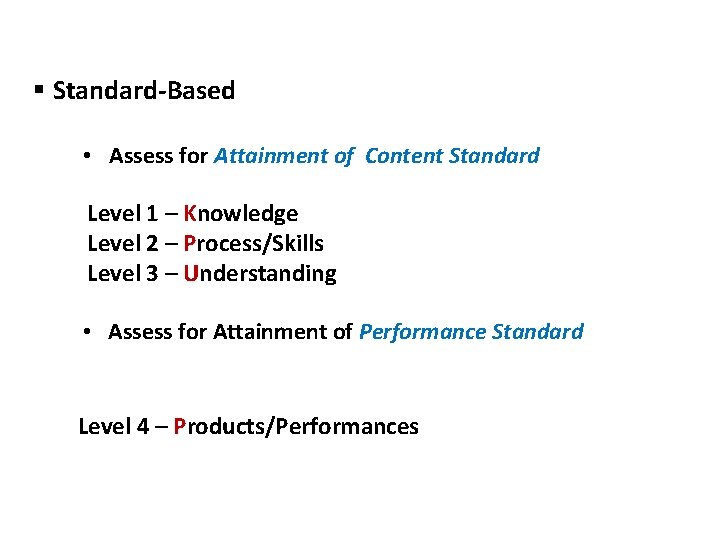
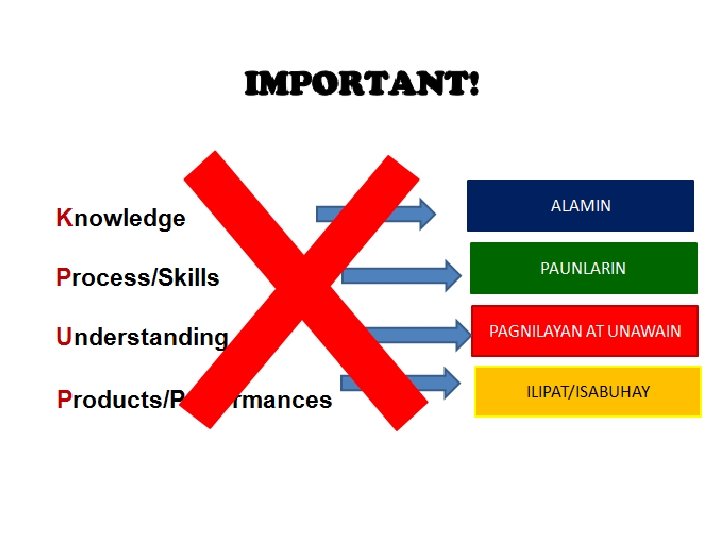
§ Standard-Based • Assess for Attainment of Content Standard Level 1 – Knowledge Level 2 – Process/Skills Level 3 – Understanding • Assess for Attainment of Performance Standard Level 4 – Products/Performances
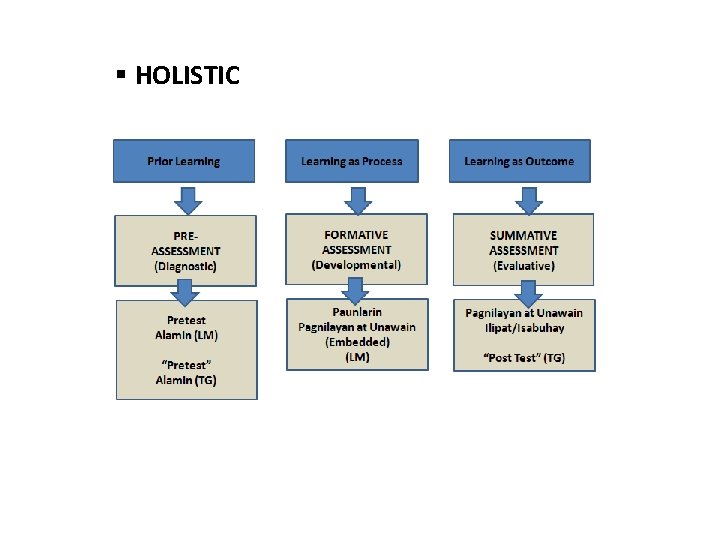
§ HOLISTIC
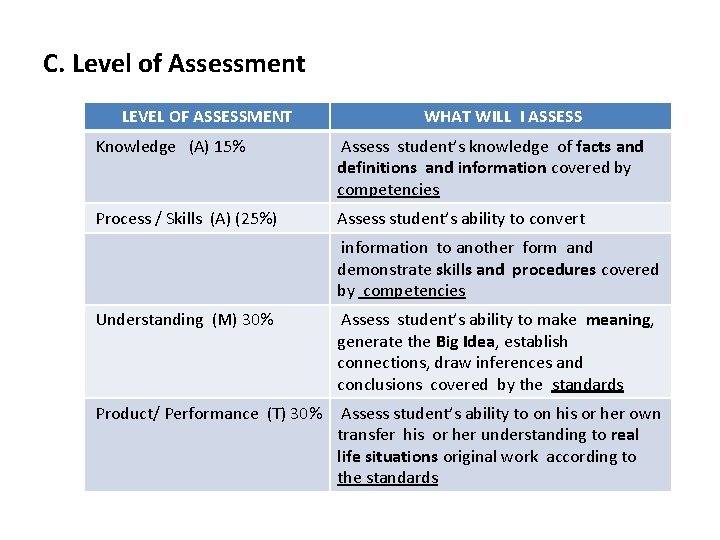
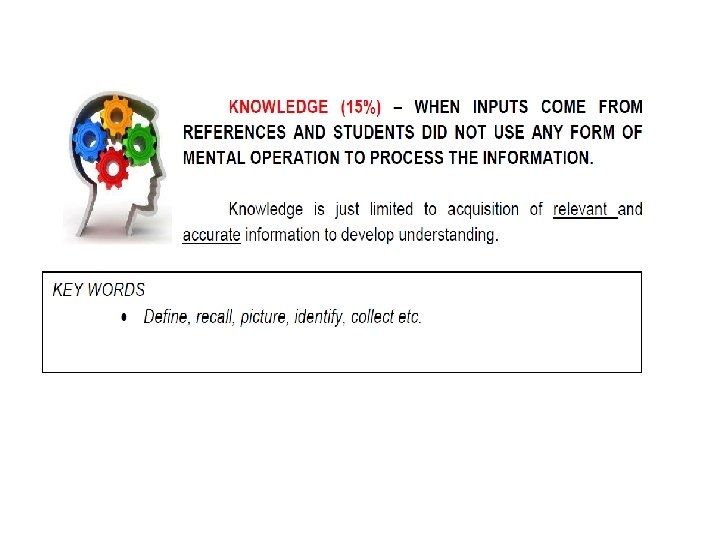
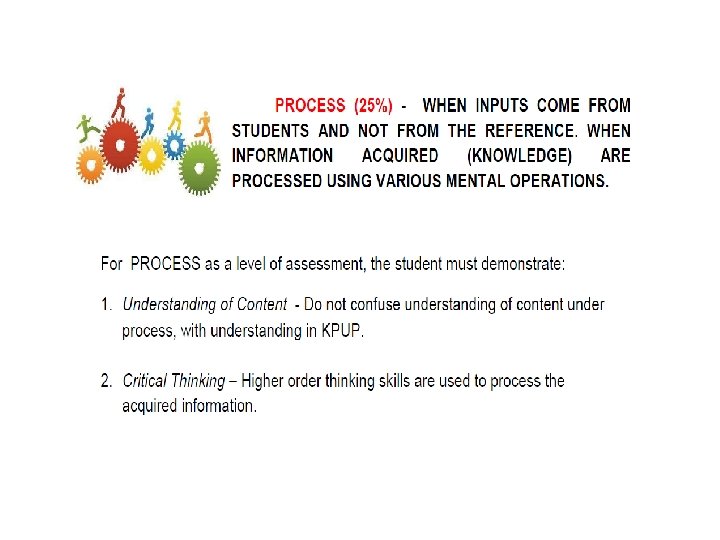
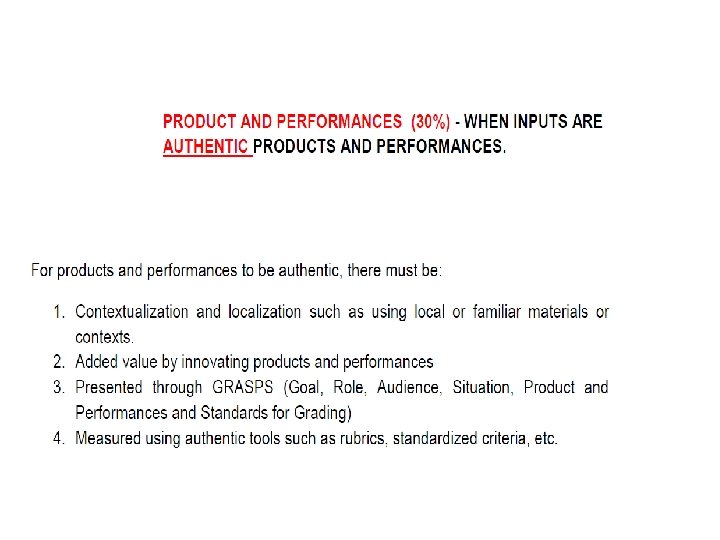
C. Level of Assessment LEVEL OF ASSESSMENT WHAT WILL I ASSESS Knowledge (A) 15% Assess student’s knowledge of facts and definitions and information covered by competencies Process / Skills (A) (25%) Assess student’s ability to convert information to another form and demonstrate skills and procedures covered by competencies Understanding (M) 30% Assess student’s ability to make meaning, generate the Big Idea, establish connections, draw inferences and conclusions covered by the standards Product/ Performance (T) 30% Assess student’s ability to on his or her own transfer his or her understanding to real life situations original work according to the standards
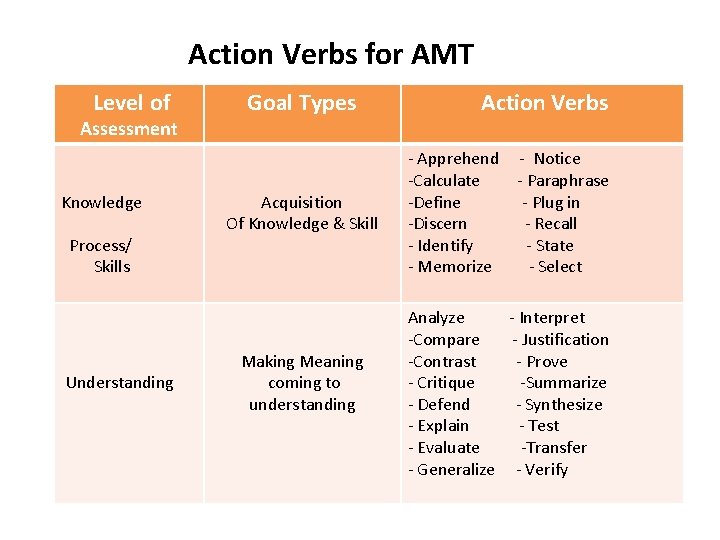
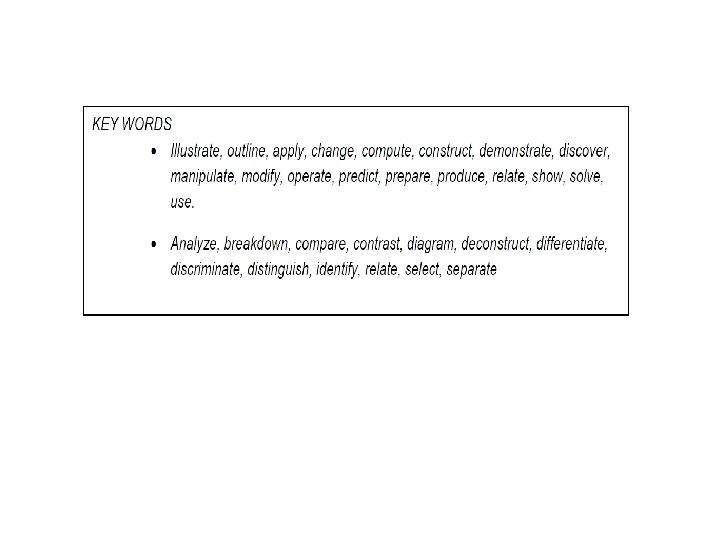
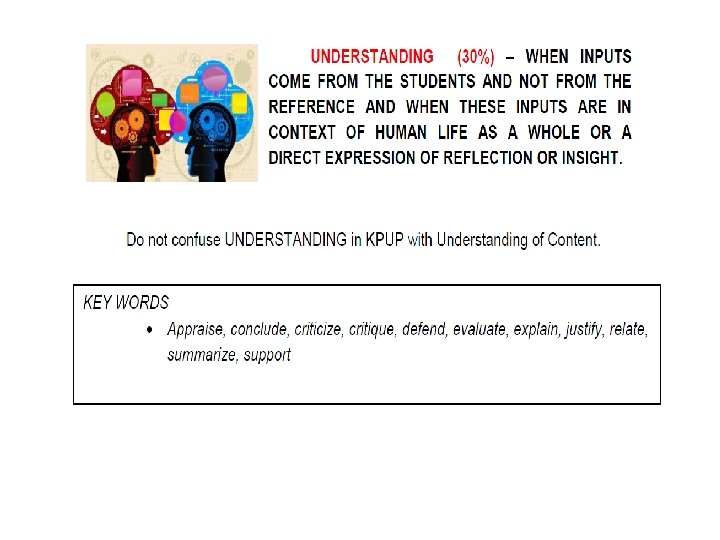
Action Verbs for AMT Level of Assessment Knowledge Process/ Skills Understanding Goal Types Acquisition Of Knowledge & Skill Making Meaning coming to understanding Action Verbs - Apprehend - Notice -Calculate - Paraphrase -Define - Plug in -Discern - Recall - Identify - State - Memorize - Select Analyze - Interpret -Compare - Justification -Contrast - Prove - Critique -Summarize - Defend - Synthesize - Explain - Test - Evaluate -Transfer - Generalize - Verify
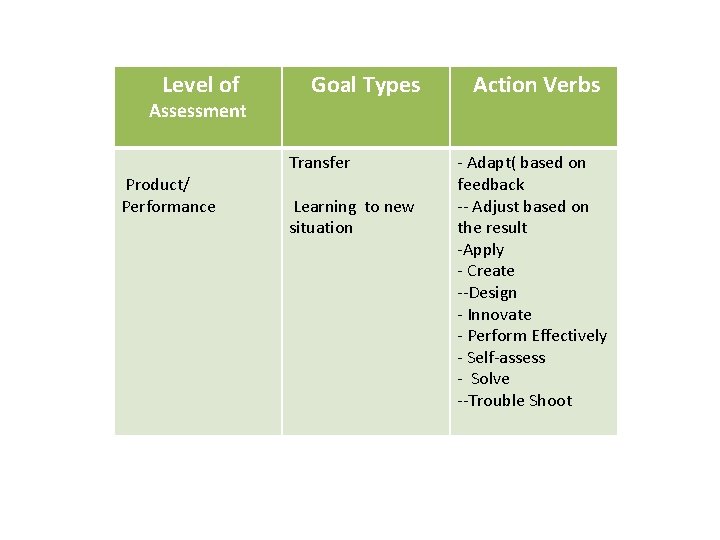
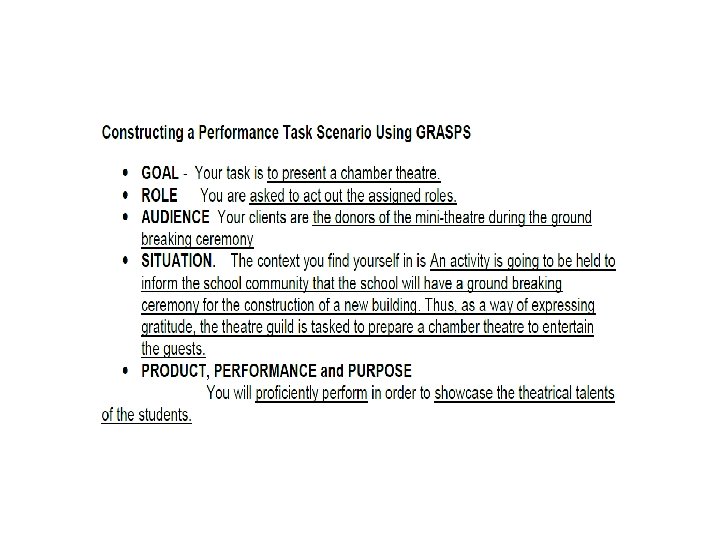
Level of Assessment Product/ Performance Goal Types Transfer Learning to new situation Action Verbs - Adapt( based on feedback -- Adjust based on the result -Apply - Create --Design - Innovate - Perform Effectively - Self-assess - Solve --Trouble Shoot
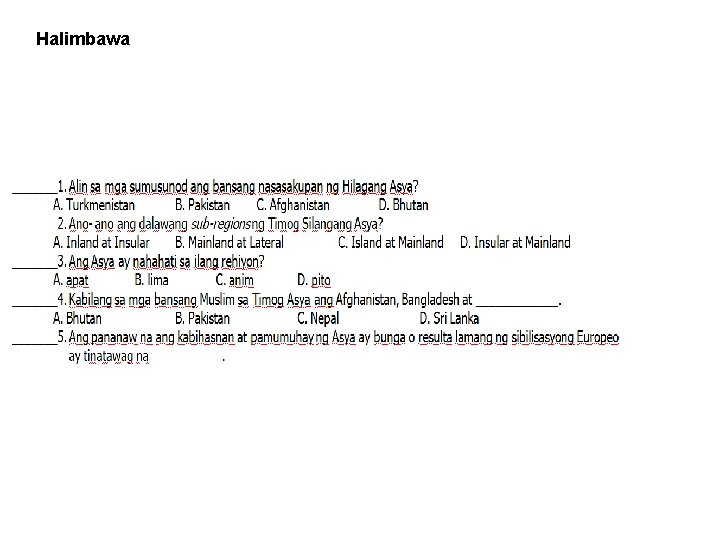
Halimbawa
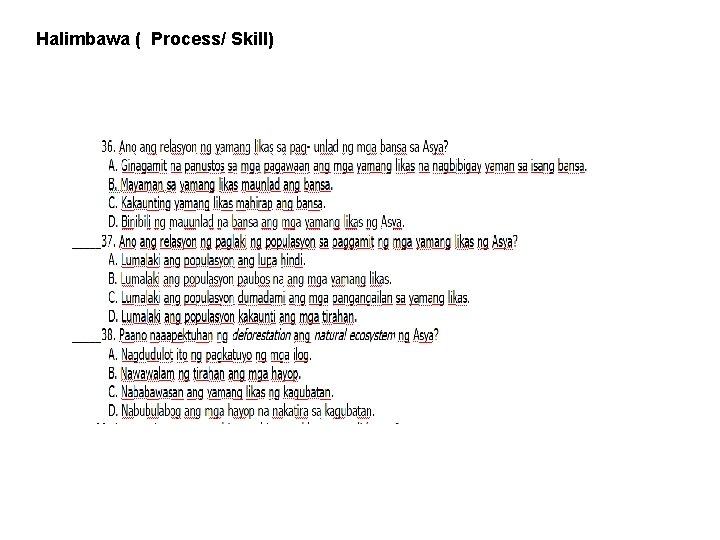
Halimbawa ( Process/ Skill)
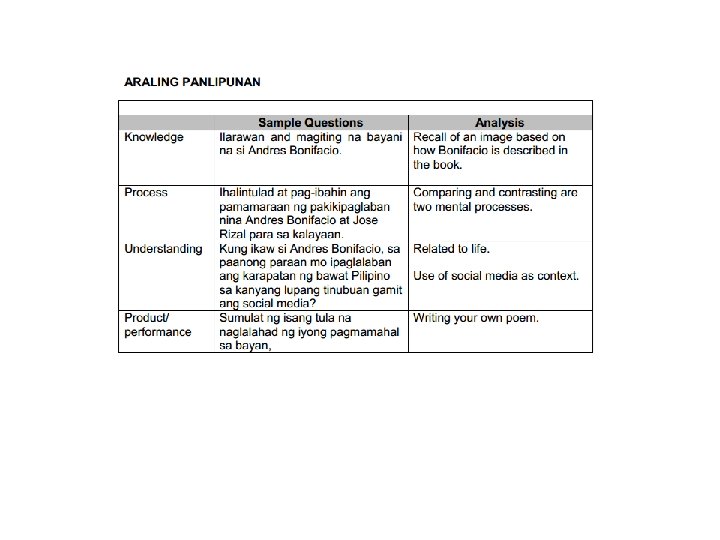
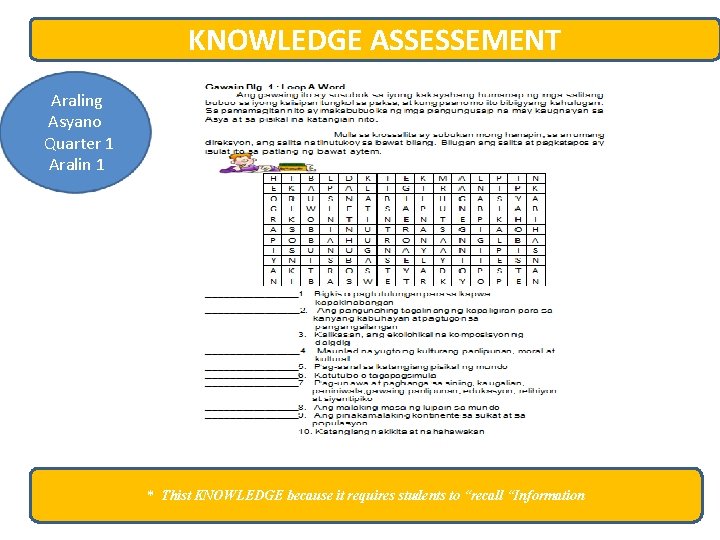
KNOWLEDGE ASSESSEMENT Araling Asyano Quarter 1 Aralin 1 * Thist KNOWLEDGE because it requires students to “recall “Information
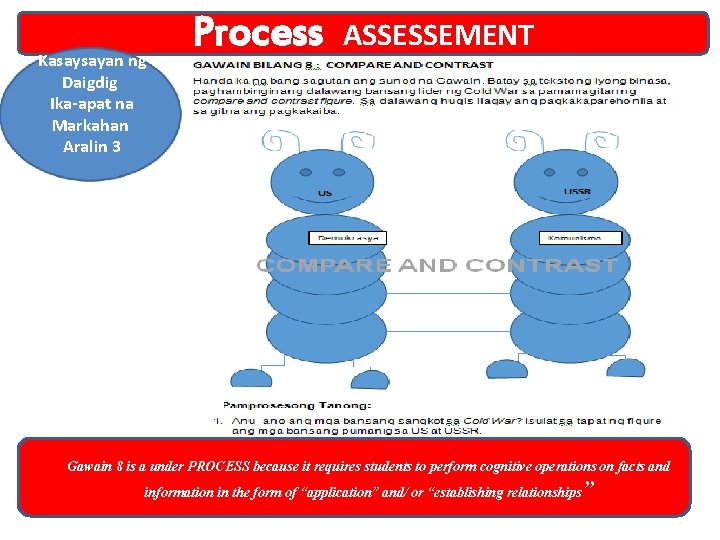
Kasaysayan ng Daigdig Ika-apat na Markahan Aralin 3 Process ASSESSEMENT Gawain 8 is a under PROCESS because it requires students to perform cognitive operations on facts and information in the form of “application” and/ or “establishing relationships ”
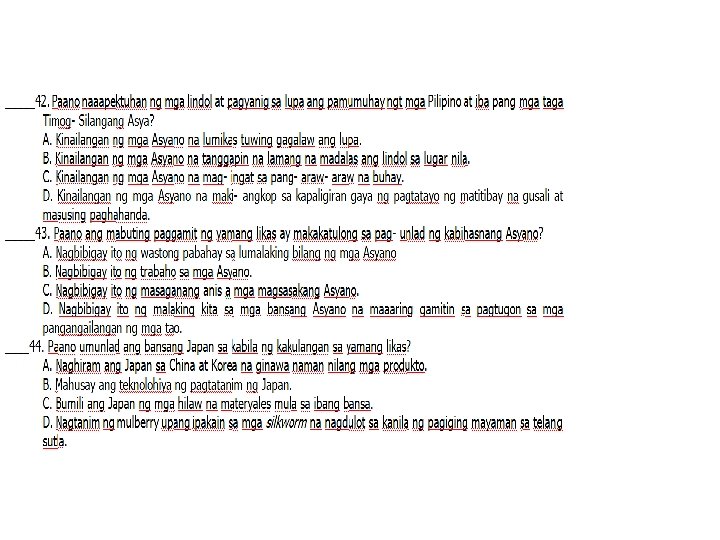
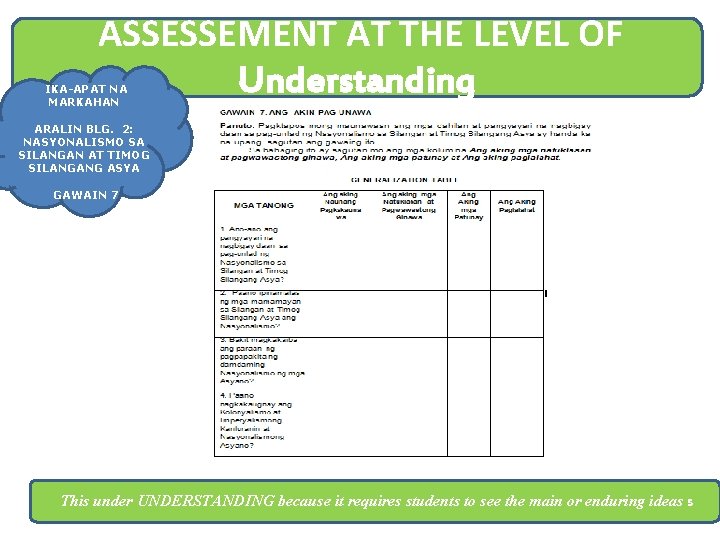
ASSESSEMENT AT THE LEVEL OF Understanding IKA-APAT NA MARKAHAN ARALIN BLG. 2: NASYONALISMO SA SILANGAN AT TIMOG SILANGANG ASYA GAWAIN 7 This under UNDERSTANDING because it requires students to see the main or enduring ideas s
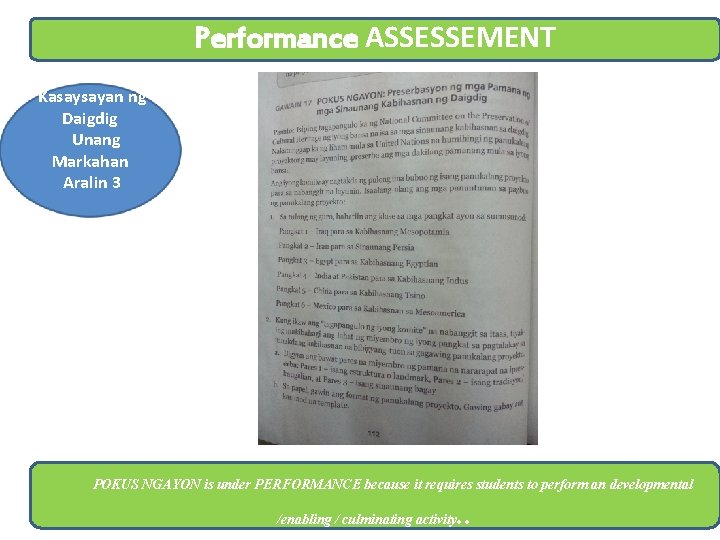
Performance ASSESSEMENT Kasaysayan ng Daigdig Unang Markahan Aralin 3 POKUS NGAYON is under PERFORMANCE because it requires students to perform an developmental /enabling / culminating activity . .
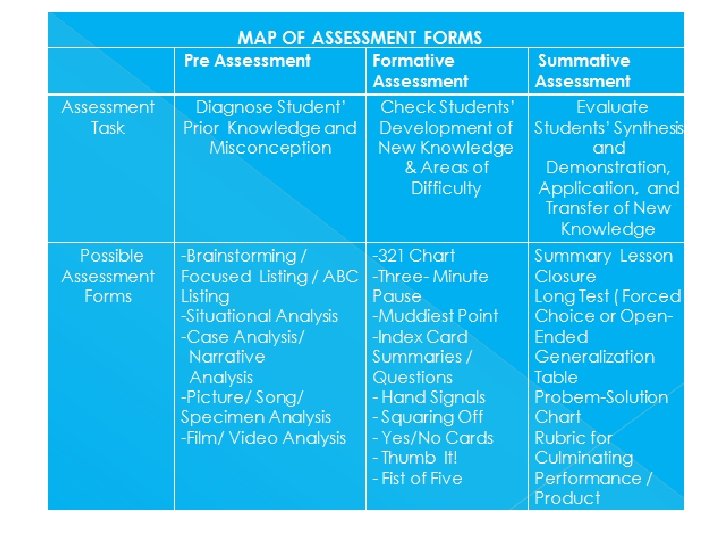
Holistic Assessment PRE-ASSESSMENT (Diagnostic: Prior Learning)
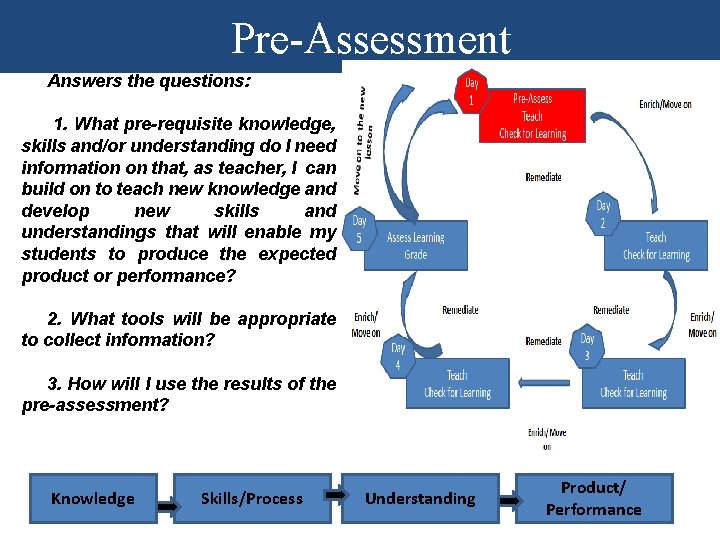
Pre-Assessment Answers the questions: 1. What pre-requisite knowledge, skills and/or understanding do I need information on that, as teacher, I can build on to teach new knowledge and develop new skills and understandings that will enable my students to produce the expected product or performance? 2. What tools will be appropriate to collect information? 3. How will I use the results of the pre-assessment? Knowledge Skills/Process Understanding Product/ Performance
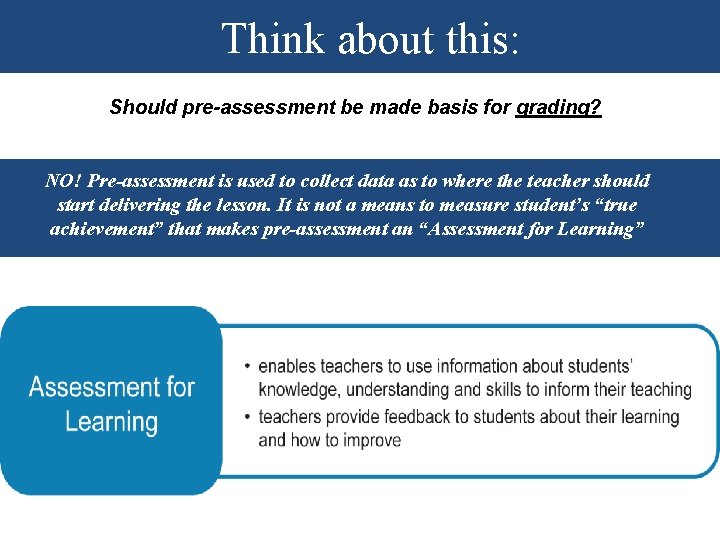
Think about this: Should pre-assessment be made basis for grading? NO! Pre-assessment is used to collect data as to where the teacher should start delivering the lesson. It is not a means to measure student’s “true achievement” that makes pre-assessment an “Assessment for Learning”
Holistic Assessment FORMATIVE ASSESSMENT (Developmental: Assessment of Learning as Process)
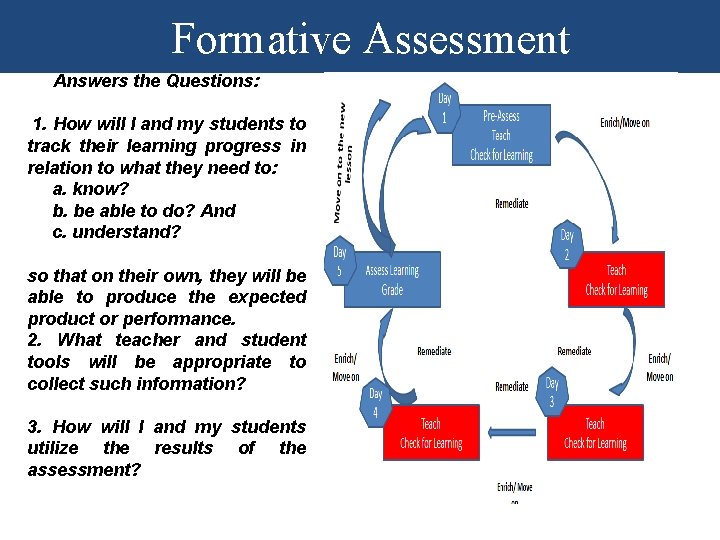
Formative Assessment Answers the Questions: 1. How will I and my students to track their learning progress in relation to what they need to: a. know? b. be able to do? And c. understand? so that on their own, they will be able to produce the expected product or performance. 2. What teacher and student tools will be appropriate to collect such information? 3. How will I and my students utilize the results of the assessment?
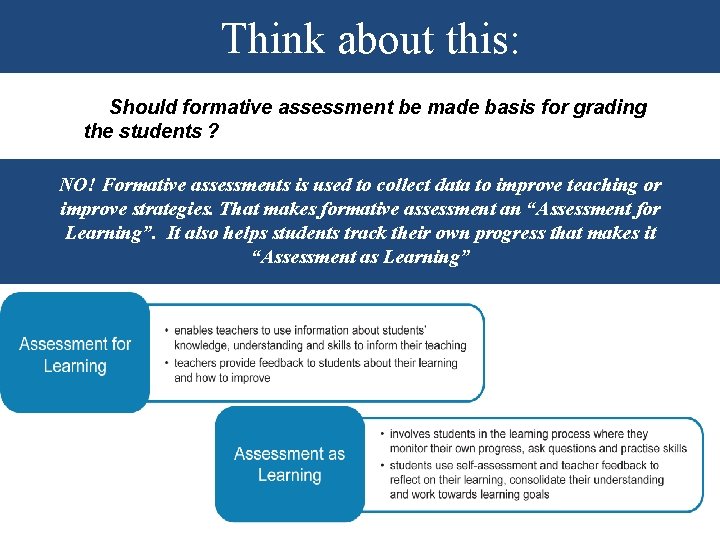
Think about this: Should formative assessment be made basis for grading the students ? NO! Formative assessments is used to collect data to improve teaching or improve strategies. That makes formative assessment an “Assessment for Learning”. It also helps students track their own progress that makes it “Assessment as Learning”
Holistic Assessment SUMMATIVE ASSESSMENT (Evaluative: Assessment of Learning as Outcome)
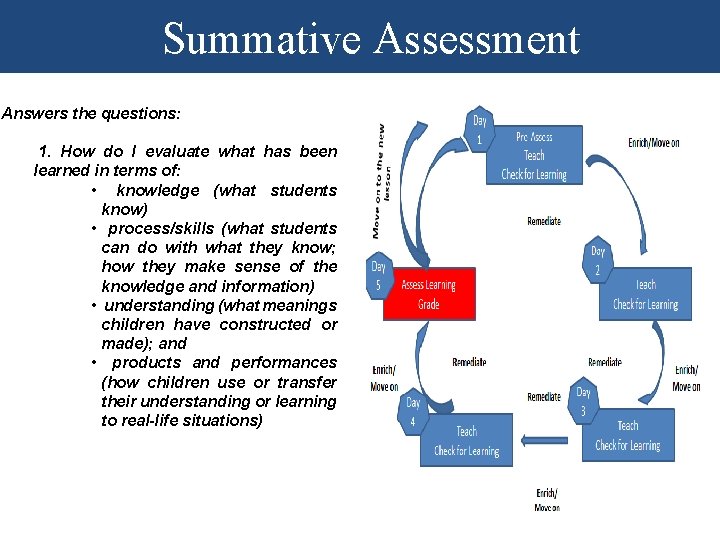
Summative Assessment Answers the questions: 1. How do I evaluate what has been learned in terms of: • knowledge (what students know) • process/skills (what students can do with what they know; how they make sense of the knowledge and information) • understanding (what meanings children have constructed or made); and • products and performances (how children use or transfer their understanding or learning to real-life situations)
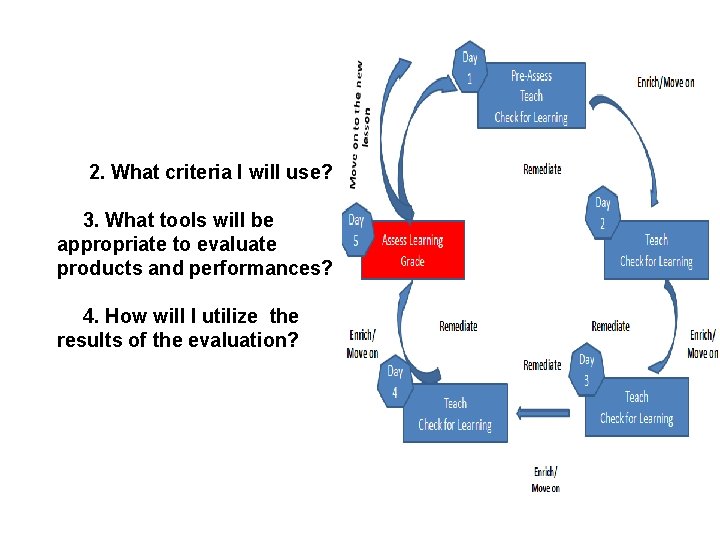
2. What criteria I will use? 3. What tools will be appropriate to evaluate products and performances? 4. How will I utilize the results of the evaluation?
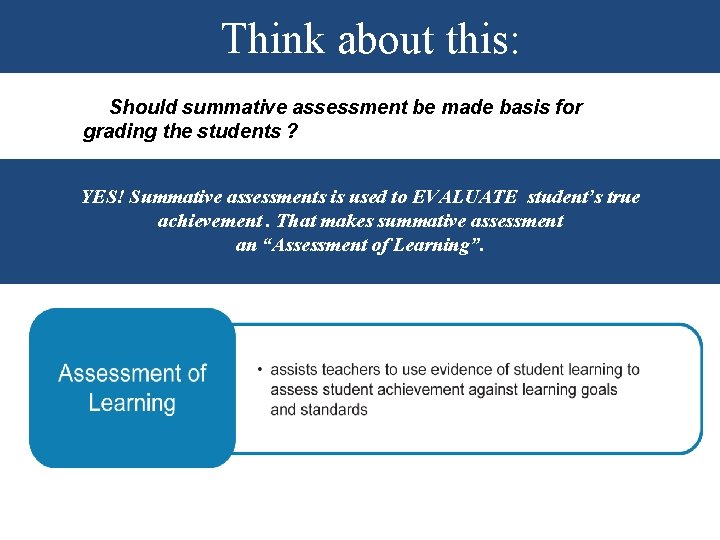
Think about this: Should summative assessment be made basis for grading the students ? YES! Summative assessments is used to EVALUATE student’s true achievement. That makes summative assessment an “Assessment of Learning”.