
The assessment of Ratalix ERP and Supply Chain



- Slides: 44
The assessment of Ratalix ERP and Supply Chain “ The Case Study of Bravo” An-Najah National University Engineering & IT Faculty Industrial & System Engineering Department Prepared By: Essam Qadri Supervised By: Dr. Mohammed Othman 1
Project Outline Introduction Constraints Methodology Key Performance Indicators “KPIs” Summary And Recommendations 2
INTRODUCTION Retailing & Bravo Background Objectives Retalix Implementation in bravo Problem Statement Project Significance SWOT Analysis Assessment Policy 3
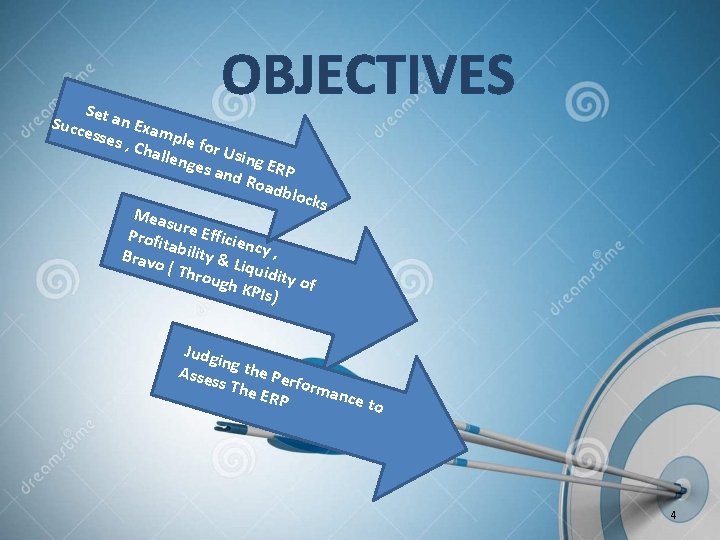
OBJECTIVES Set a n esse Example s , Ch allen for Using ges a E nd R R P oadb locks Mea su Profi re Efficie ta n Brav bility & L cy , o ( Th i roug quidity o h KPI f s) Succ Judg in Asse g the Pe r ss Th e ERP formance to 4
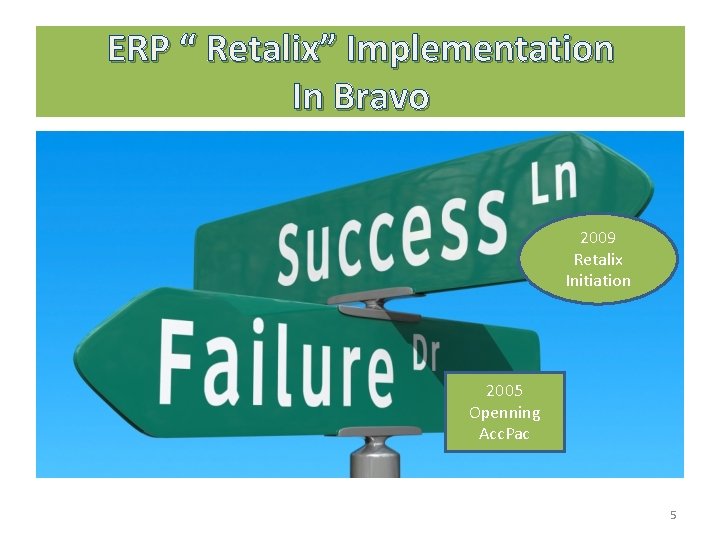
ERP “ Retalix” Implementation In Bravo o 2009 Retalix Initiation 2005 Openning Acc. Pac 5
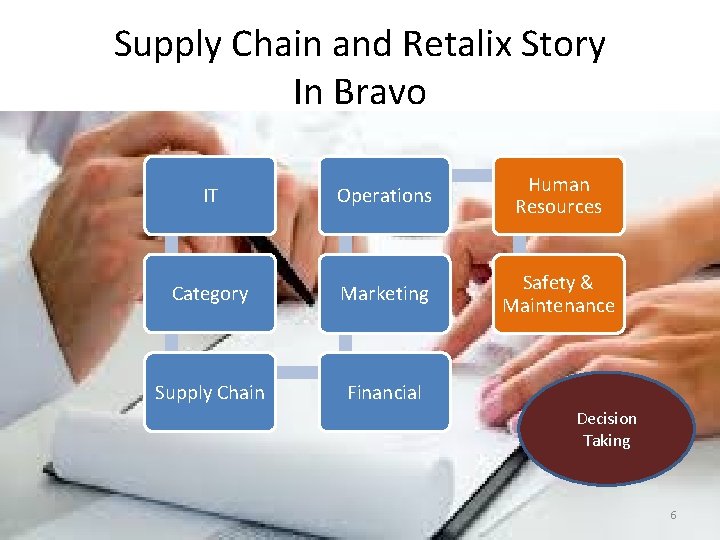
Supply Chain and Retalix Story In Bravo IT Operations Human Resources Category Marketing Safety & Maintenance Supply Chain Financial Decision Taking 6
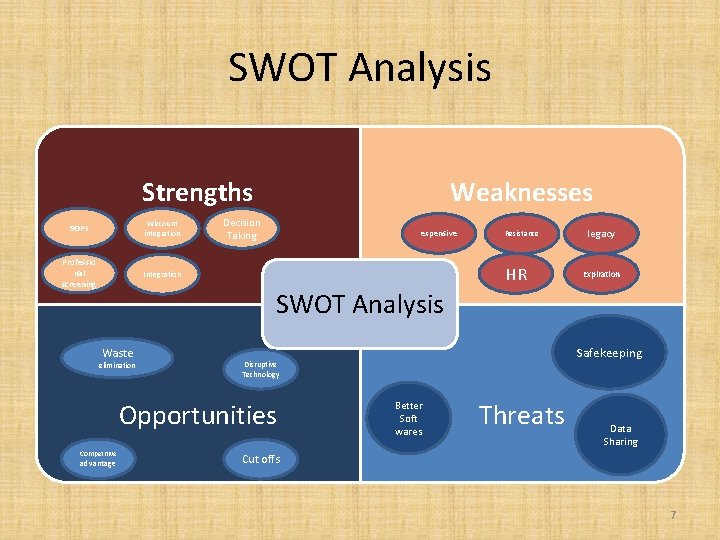
SWOT Analysis Weaknesses Strengths SOPs Wizcount integration Professio nal screening Integration Decision Taking expensive Resistance HR legacy Expiration SWOT Analysis Waste elimination Opportunities Competitive advantage Safekeeping Disruptive Technology Better Soft wares Threats Data Sharing Cut offs 7
Introducing the Assessment Policy Setting Performance & Financial KPIs Lack of Data Accessibility Adopt the Time Series Theory ( The Phases) Conduct An internal Comparative Study (PEX) Results, Analysis & Interpretation 8
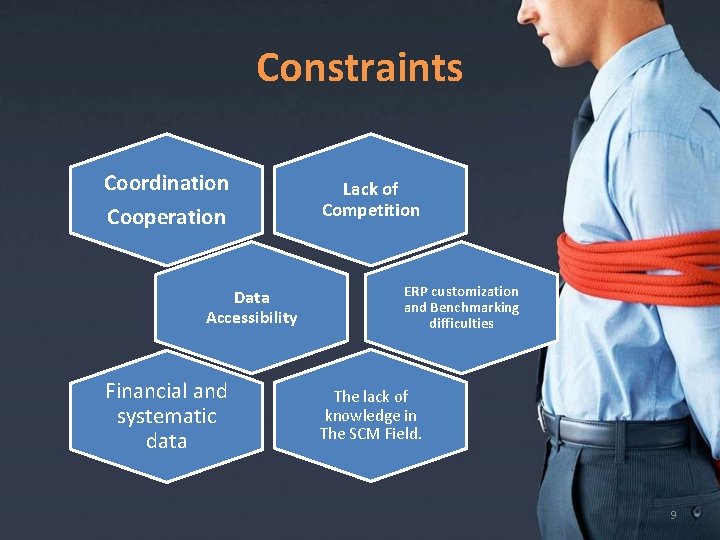
Constraints Coordination Cooperation Data Accessibility Financial and systematic data Lack of Competition ERP customization and Benchmarking difficulties The lack of knowledge in The SCM Field. 9
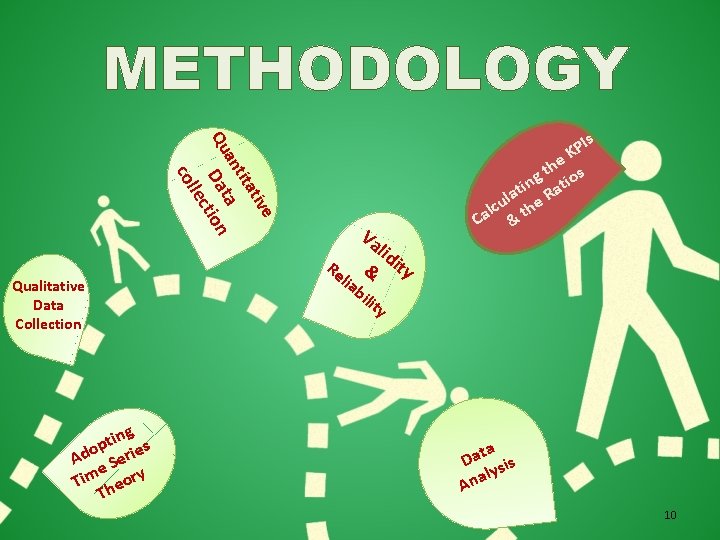
METHODOLOGY ive tat ing s t p o Ad Serie e ry m i T heo T nti a a Qu Dat tion c lle co Qualitative Data Collection PIs K he s t ng atio i t ula he R c l Ca & t Va lid ity & lia Re bi lit y a Dat sis ly Ana 10
Qualitative Data Collection 11
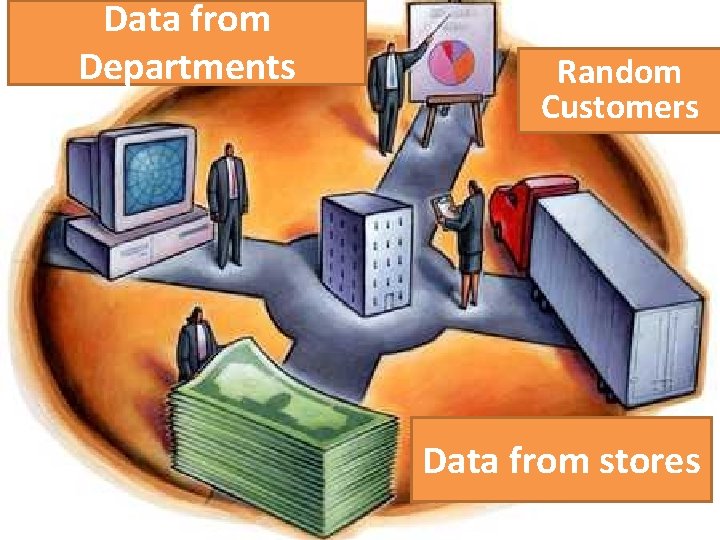
Data from Departments Random Customers Data from stores 12
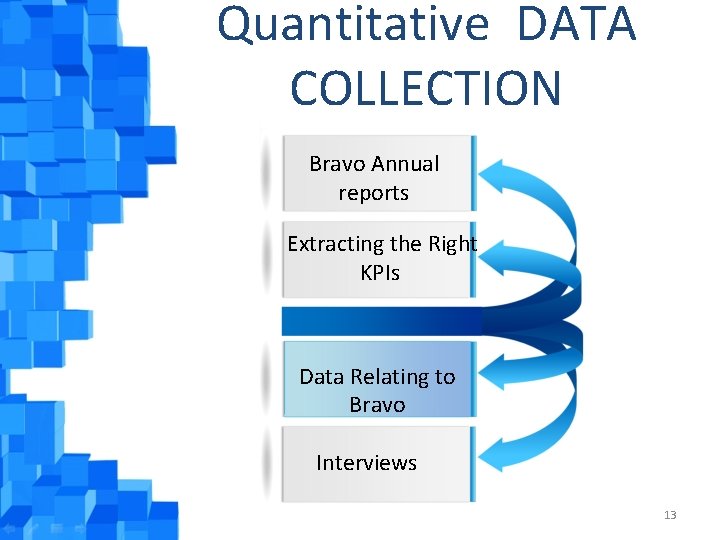
Quantitative DATA COLLECTION Bravo Annual reports Extracting the Right KPIs Data Relating to Bravo Interviews 13
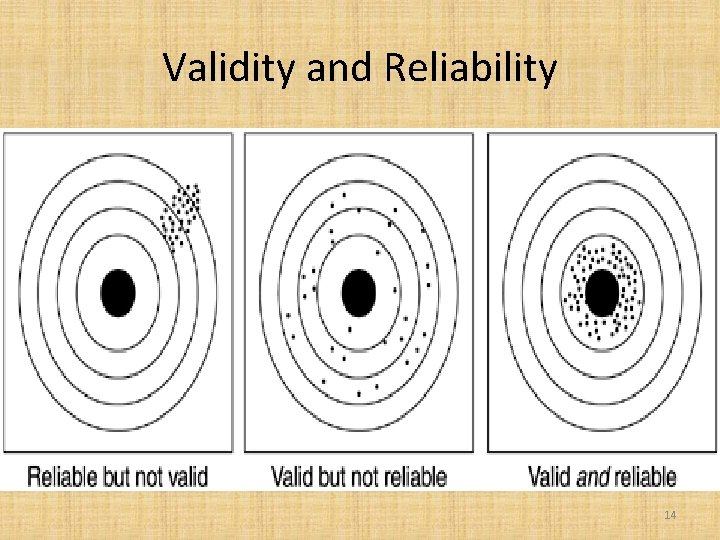
Validity and Reliability 14
DATA ANALYSIS Detailed Excel sheets Summary excel sheets 15
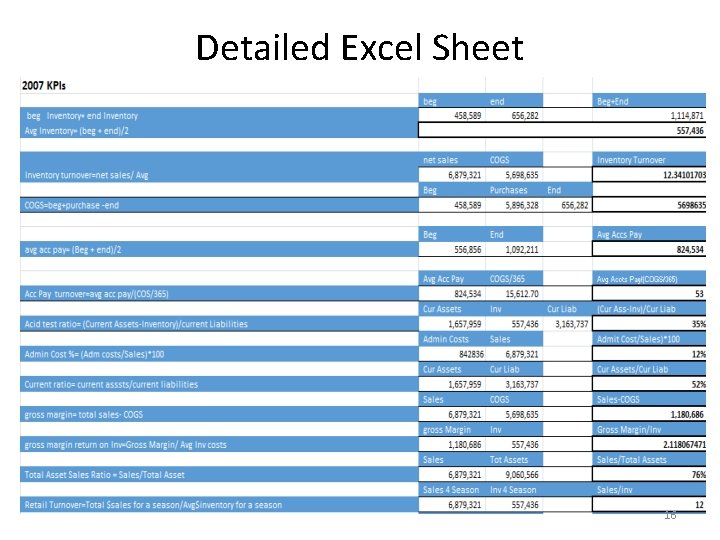
Detailed Excel Sheet 16
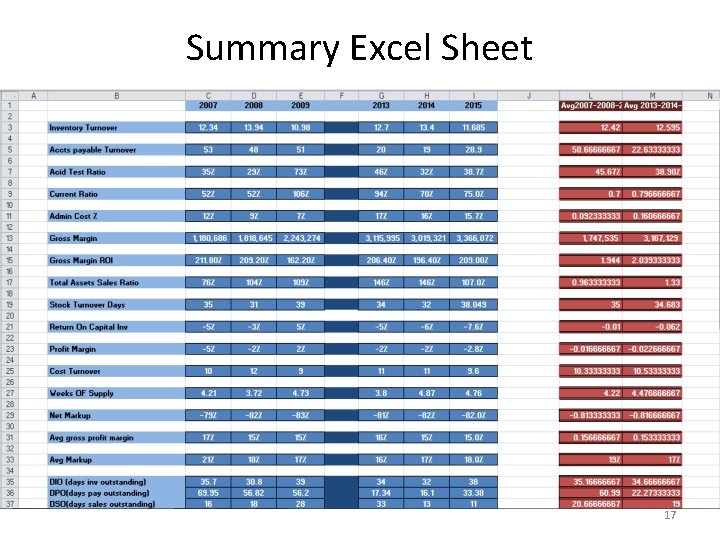
Summary Excel Sheet 17
Key Performance Indicator “KPI” • KPI is the Value that shows and measures how effectively a company is achieving key business objectives 18
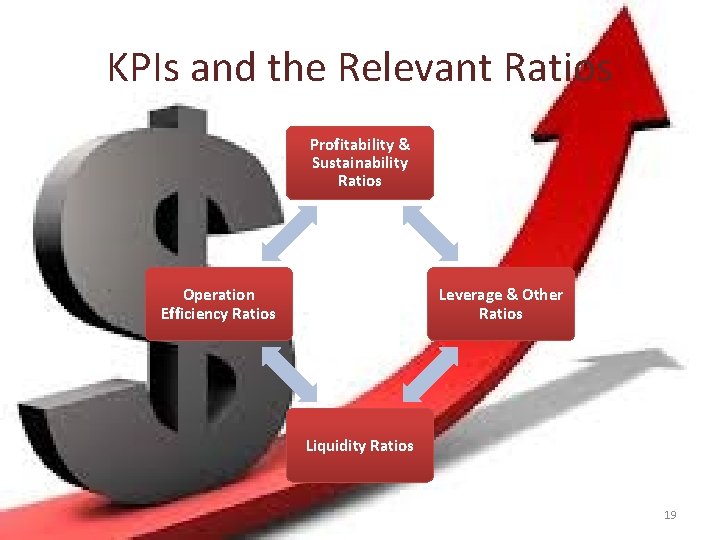
KPIs and the Relevant Ratios Profitability & Sustainability Ratios Operation Efficiency Ratios Leverage & Other Ratios Liquidity Ratios 19
The comparative Study 20
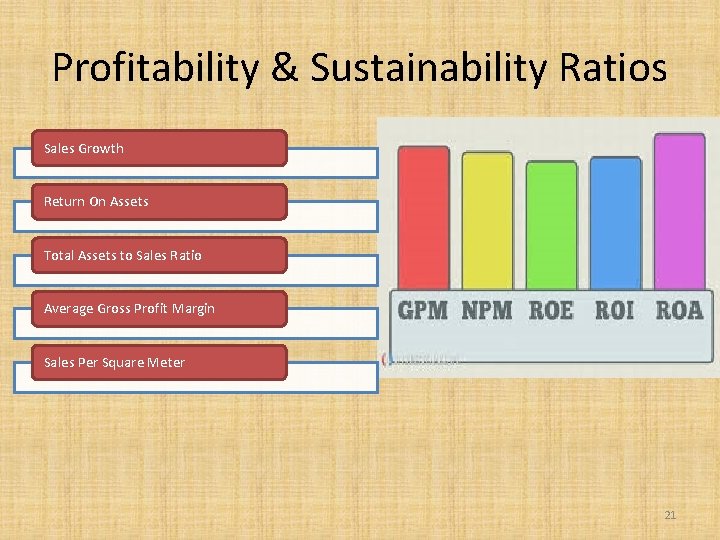
Profitability & Sustainability Ratios Sales Growth Return On Assets Total Assets to Sales Ratio Average Gross Profit Margin Sales Per Square Meter 21
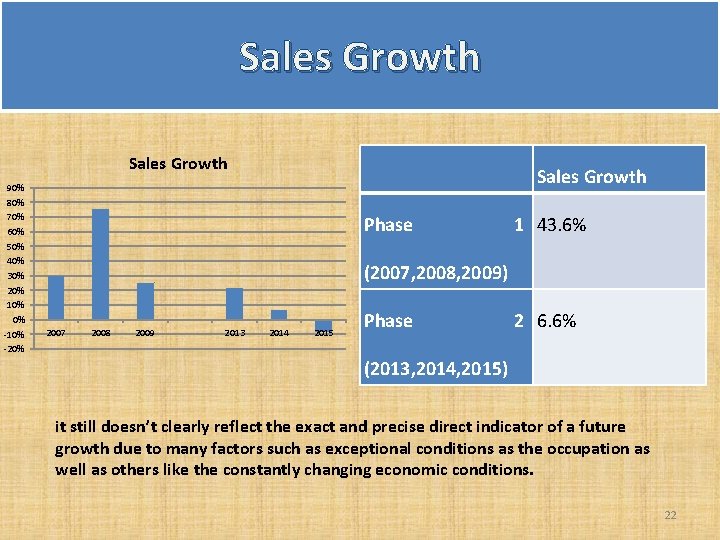
Sales Growth 90% 80% 70% 60% 50% 40% 30% 20% 10% 0% -10% -20% Sales Growth Phase 1 43. 6% (2007, 2008, 2009) 2007 2008 2009 2013 2014 2015 Phase 2 6. 6% (2013, 2014, 2015) it still doesn’t clearly reflect the exact and precise direct indicator of a future growth due to many factors such as exceptional conditions as the occupation as well as others like the constantly changing economic conditions. 22
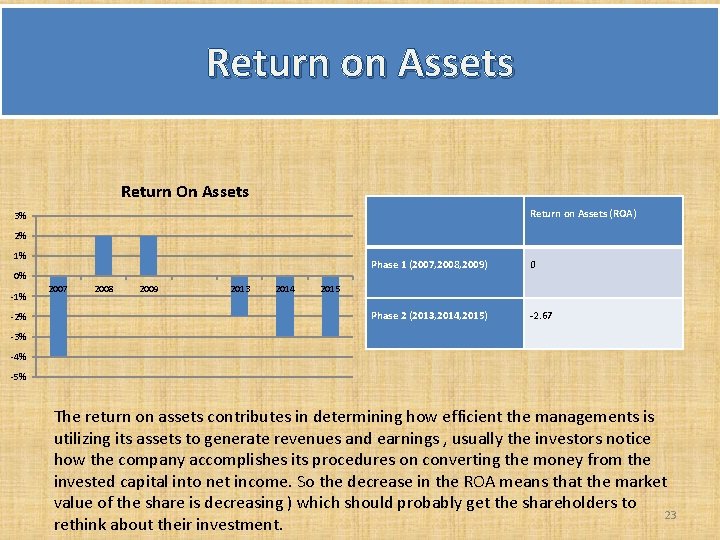
Return on Assets Return On Assets Return on Assets (ROA) 3% 2% 1% 0% -1% -2% 2007 2008 2009 2013 2014 Phase 1 (2007, 2008, 2009) 0 Phase 2 (2013, 2014, 2015) -2. 67 2015 -3% -4% -5% The return on assets contributes in determining how efficient the managements is utilizing its assets to generate revenues and earnings , usually the investors notice how the company accomplishes its procedures on converting the money from the invested capital into net income. So the decrease in the ROA means that the market value of the share is decreasing ) which should probably get the shareholders to 23 rethink about their investment.
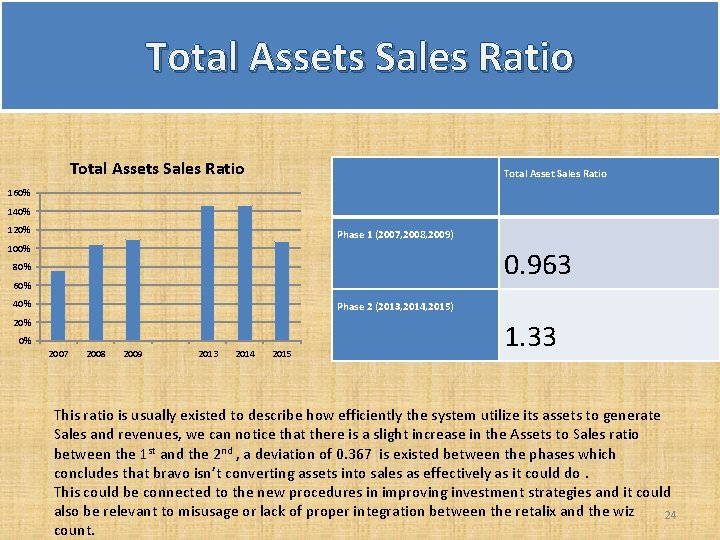
Total Assets Sales Ratio Total Asset Sales Ratio 160% 140% 120% Phase 1 (2007, 2008, 2009) 100% 0. 963 80% 60% 40% Phase 2 (2013, 2014, 2015) 20% 0% 2007 2008 2009 2013 2014 2015 1. 33 This ratio is usually existed to describe how efficiently the system utilize its assets to generate Sales and revenues, we can notice that there is a slight increase in the Assets to Sales ratio between the 1 st and the 2 nd , a deviation of 0. 367 is existed between the phases which concludes that bravo isn’t converting assets into sales as effectively as it could do. This could be connected to the new procedures in improving investment strategies and it could also be relevant to misusage or lack of proper integration between the retalix and the wiz 24 count.
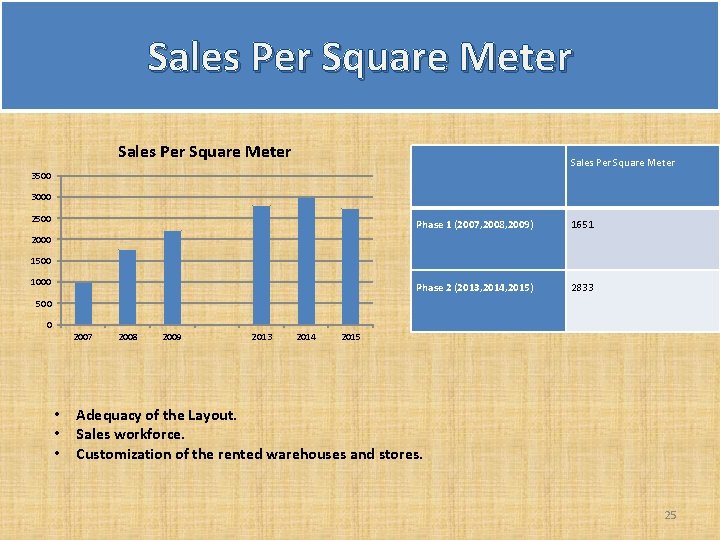
Sales Per Square Meter 3500 3000 2500 Phase 1 (2007, 2008, 2009) 1651 Phase 2 (2013, 2014, 2015) 2833 2000 1500 1000 500 0 2007 • • • 2008 2009 2013 2014 2015 Adequacy of the Layout. Sales workforce. Customization of the rented warehouses and stores. 25
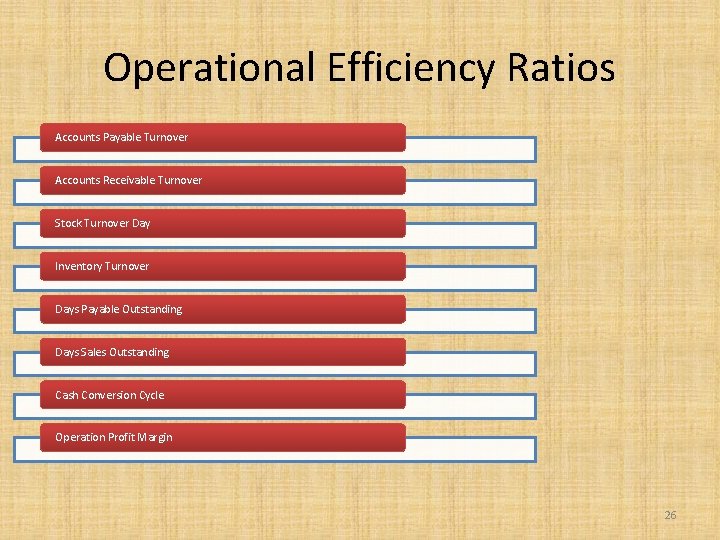
Operational Efficiency Ratios Accounts Payable Turnover Accounts Receivable Turnover Stock Turnover Day Inventory Turnover Days Payable Outstanding Days Sales Outstanding Cash Conversion Cycle Operation Profit Margin 26
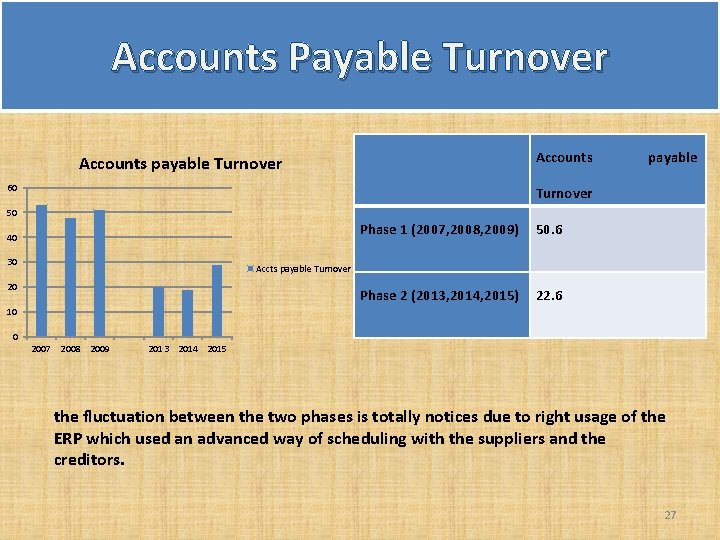
Accounts Payable Turnover Accounts payable Turnover 60 payable Turnover 50 40 30 Phase 1 (2007, 2008, 2009) 50. 6 Phase 2 (2013, 2014, 2015) 22. 6 Accts payable Turnover 20 10 0 2007 2008 2009 2013 2014 2015 the fluctuation between the two phases is totally notices due to right usage of the ERP which used an advanced way of scheduling with the suppliers and the creditors. 27
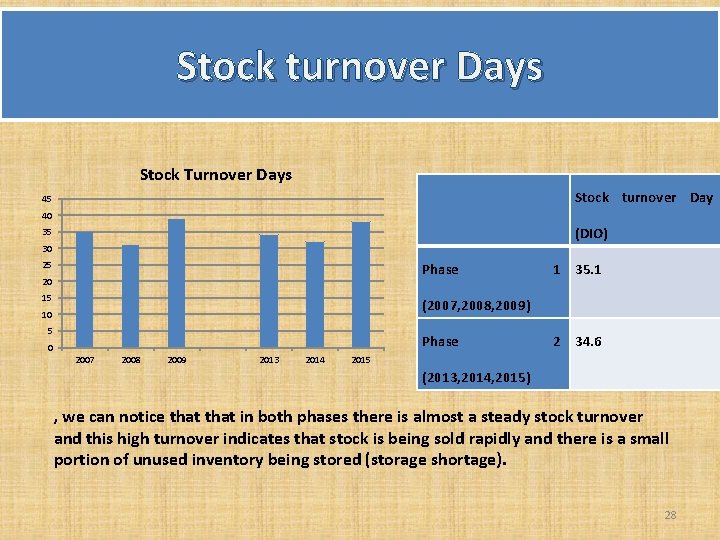
Stock turnover Days Stock Turnover Days Stock turnover Day 45 40 (DIO) 35 30 25 Phase 20 15 1 35. 1 (2007, 2008, 2009) 10 5 Phase 0 2007 2008 2009 2013 2014 2 34. 6 2015 (2013, 2014, 2015) , we can notice that in both phases there is almost a steady stock turnover and this high turnover indicates that stock is being sold rapidly and there is a small portion of unused inventory being stored (storage shortage). 28
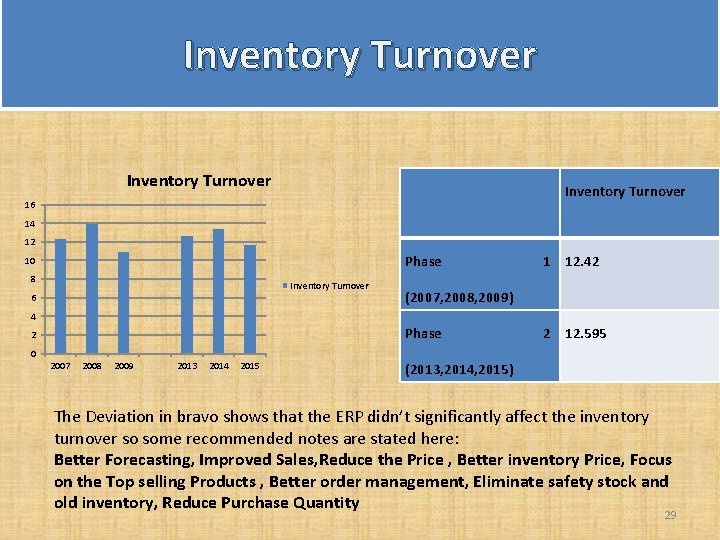
Inventory Turnover 16 14 12 Phase 10 8 Inventory Turnover 6 1 12. 42 (2007, 2008, 2009) 4 Phase 2 2 12. 595 0 2007 2008 2009 2013 2014 2015 (2013, 2014, 2015) The Deviation in bravo shows that the ERP didn’t significantly affect the inventory turnover so some recommended notes are stated here: Better Forecasting, Improved Sales, Reduce the Price , Better inventory Price, Focus on the Top selling Products , Better order management, Eliminate safety stock and old inventory, Reduce Purchase Quantity 29
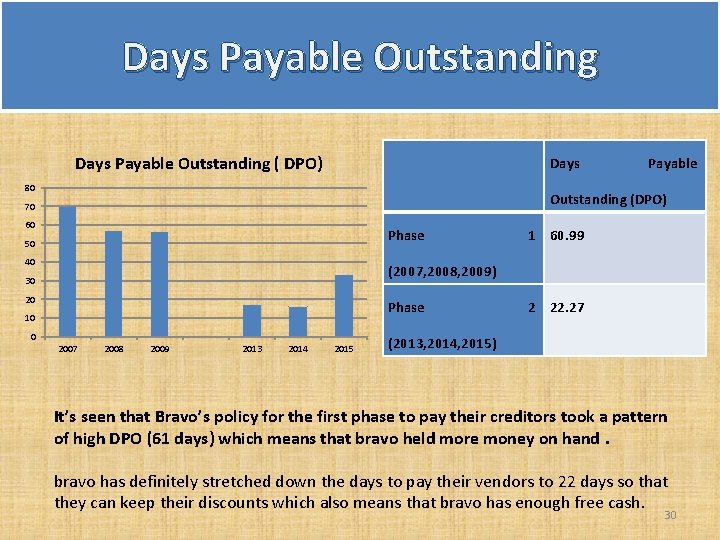
Days Payable Outstanding ( DPO) Days 80 Payable Outstanding (DPO) 70 60 Phase 50 40 1 60. 99 (2007, 2008, 2009) 30 20 Phase 10 0 2007 2008 2009 2013 2014 2015 2 22. 27 (2013, 2014, 2015) It’s seen that Bravo’s policy for the first phase to pay their creditors took a pattern of high DPO (61 days) which means that bravo held more money on hand. bravo has definitely stretched down the days to pay their vendors to 22 days so that they can keep their discounts which also means that bravo has enough free cash. 30
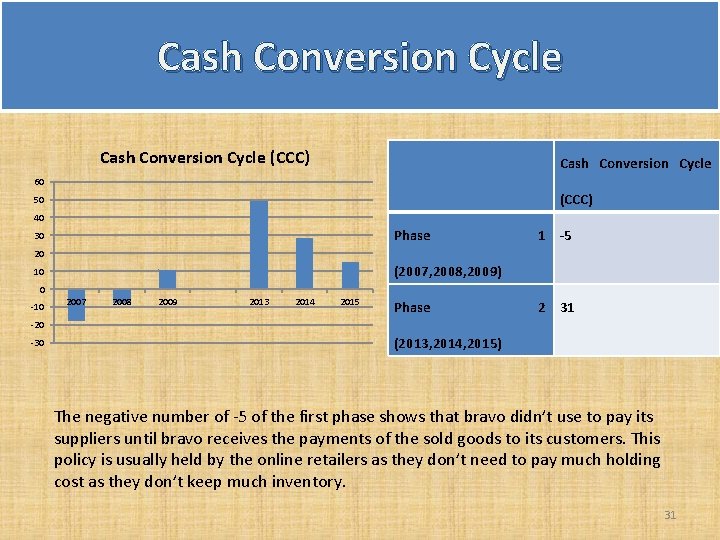
Cash Conversion Cycle (CCC) Cash Conversion Cycle 60 (CCC) 50 40 Phase 30 1 -5 20 (2007, 2008, 2009) 10 0 -10 2007 2008 2009 2013 2014 2015 Phase 2 31 -20 -30 (2013, 2014, 2015) The negative number of -5 of the first phase shows that bravo didn’t use to pay its suppliers until bravo receives the payments of the sold goods to its customers. This policy is usually held by the online retailers as they don’t need to pay much holding cost as they don’t keep much inventory. 31
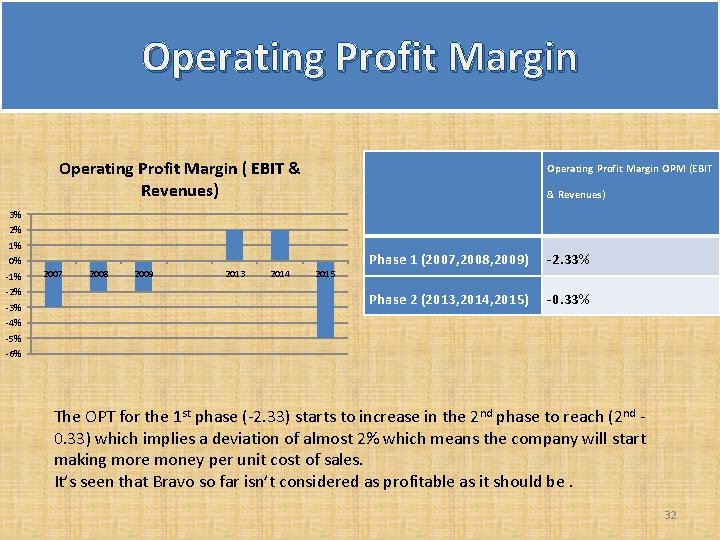
Operating Profit Margin ( EBIT & Revenues) Operating Profit Margin OPM (EBIT & Revenues) 3% 2% 1% 0% -1% -2% -3% 2007 2008 2009 2013 2014 2015 Phase 1 (2007, 2008, 2009) -2. 33% Phase 2 (2013, 2014, 2015) -0. 33% -4% -5% -6% The OPT for the 1 st phase (-2. 33) starts to increase in the 2 nd phase to reach (2 nd 0. 33) which implies a deviation of almost 2% which means the company will start making more money per unit cost of sales. It’s seen that Bravo so far isn’t considered as profitable as it should be. 32
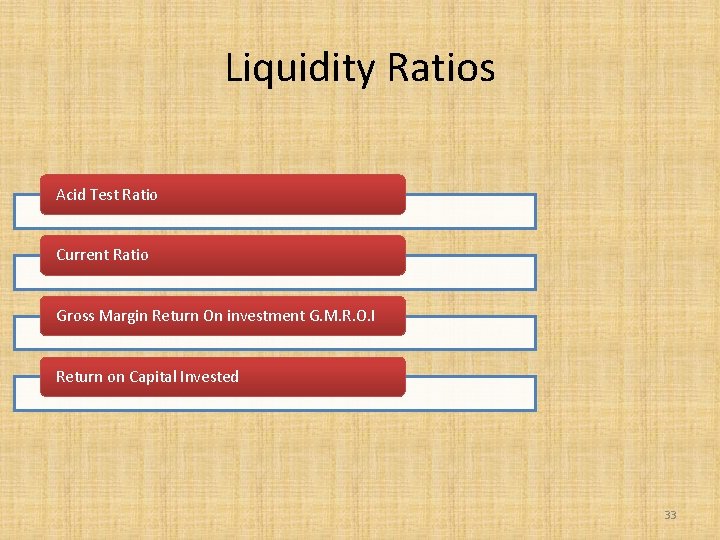
Liquidity Ratios Acid Test Ratio Current Ratio Gross Margin Return On investment G. M. R. O. I Return on Capital Invested 33
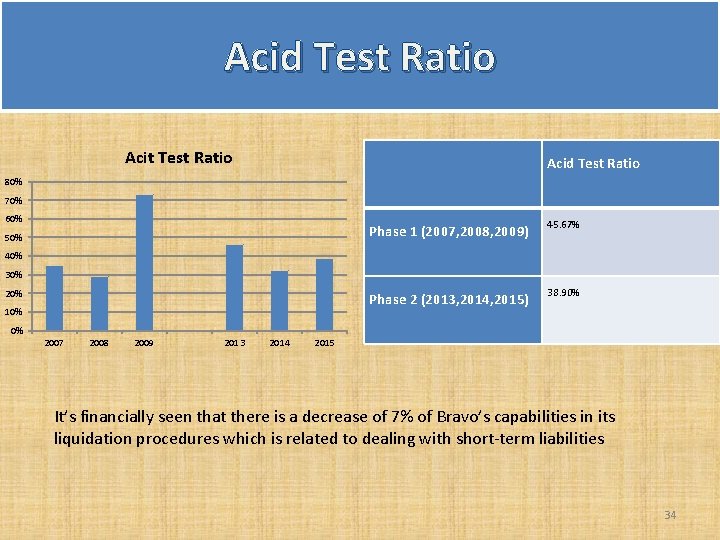
Acid Test Ratio Acit Test Ratio Acid Test Ratio 80% 70% 60% 50% Phase 1 (2007, 2008, 2009) 45. 67% Phase 2 (2013, 2014, 2015) 38. 90% 40% 30% 20% 10% 0% 2007 2008 2009 2013 2014 2015 It’s financially seen that there is a decrease of 7% of Bravo’s capabilities in its liquidation procedures which is related to dealing with short-term liabilities 34
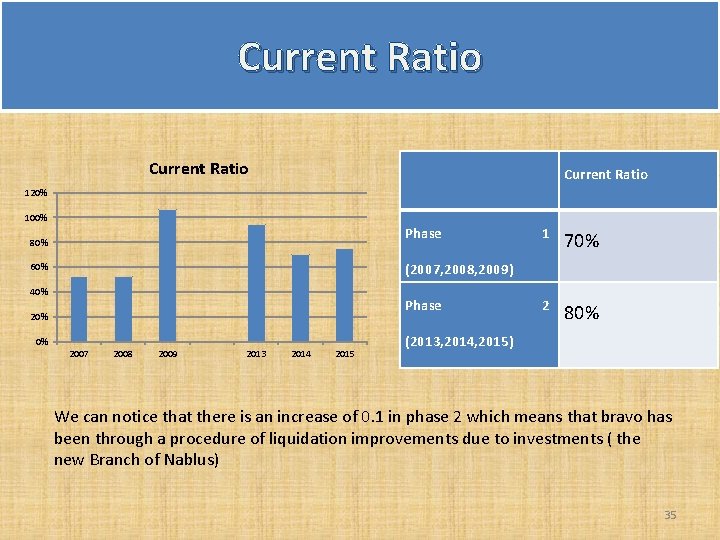
Current Ratio 120% 100% Phase 80% 1 70% 2 80% (2007, 2008, 2009) 60% 40% Phase 20% 0% 2007 2008 2009 2013 2014 2015 (2013, 2014, 2015) We can notice that there is an increase of 0. 1 in phase 2 which means that bravo has been through a procedure of liquidation improvements due to investments ( the new Branch of Nablus) 35
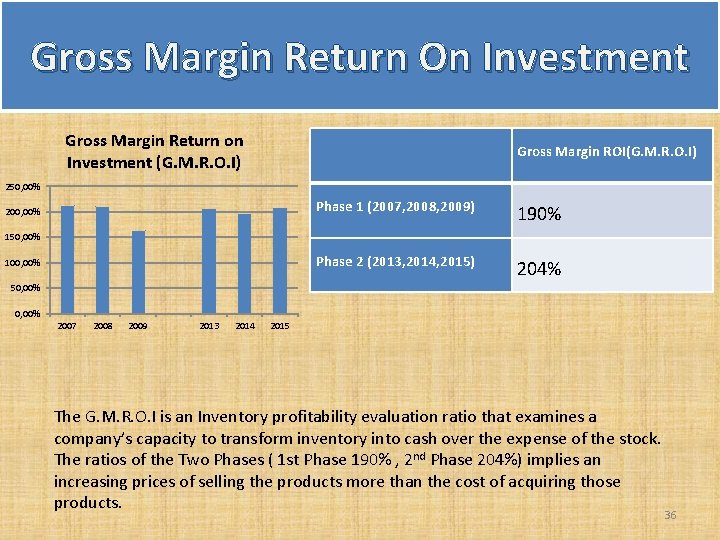
Gross Margin Return On Investment Gross Margin Return on Investment (G. M. R. O. I) Gross Margin ROI(G. M. R. O. I) 250, 00% 200, 00% Phase 1 (2007, 2008, 2009) 190% Phase 2 (2013, 2014, 2015) 204% 150, 00% 100, 00% 50, 00% 2007 2008 2009 2013 2014 2015 The G. M. R. O. I is an Inventory profitability evaluation ratio that examines a company’s capacity to transform inventory into cash over the expense of the stock. The ratios of the Two Phases ( 1 st Phase 190% , 2 nd Phase 204%) implies an increasing prices of selling the products more than the cost of acquiring those products. 36
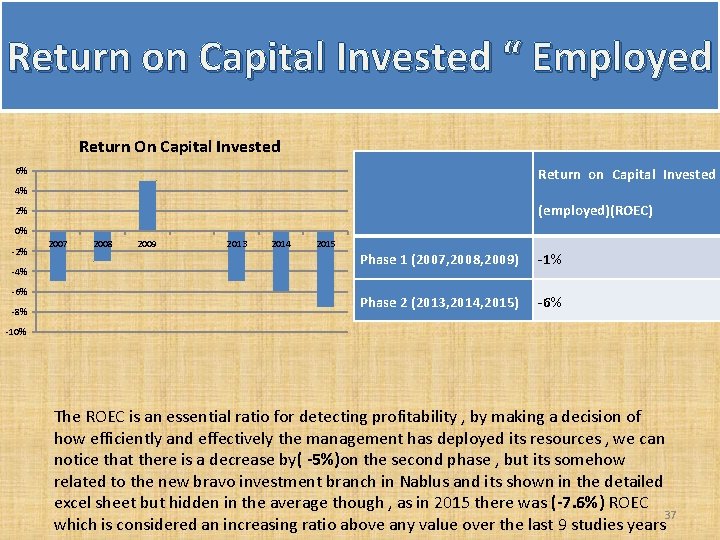
Return on Capital Invested “ Employed Return On Capital Invested 6% Return on Capital Invested 4% (employed)(ROEC) 2% 0% -2% -4% -6% -8% 2007 2008 2009 2013 2014 2015 Phase 1 (2007, 2008, 2009) -1% Phase 2 (2013, 2014, 2015) -6% -10% The ROEC is an essential ratio for detecting profitability , by making a decision of how efficiently and effectively the management has deployed its resources , we can notice that there is a decrease by( -5%)on the second phase , but its somehow related to the new bravo investment branch in Nablus and its shown in the detailed excel sheet but hidden in the average though , as in 2015 there was (-7. 6%) ROEC 37 which is considered an increasing ratio above any value over the last 9 studies years
Other Ratios Weeks OF Supply Average Markup of the Product Mix 38
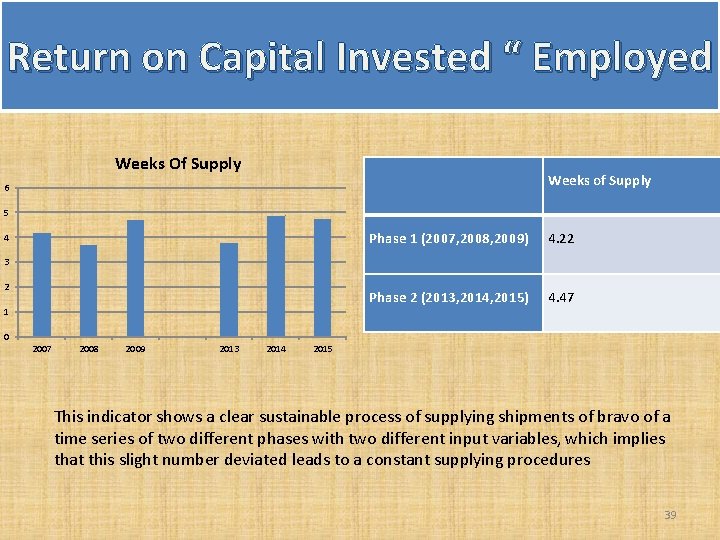
Return on Capital Invested “ Employed Weeks Of Supply Weeks of Supply 6 5 4 Phase 1 (2007, 2008, 2009) 4. 22 Phase 2 (2013, 2014, 2015) 4. 47 3 2 1 0 2007 2008 2009 2013 2014 2015 This indicator shows a clear sustainable process of supplying shipments of bravo of a time series of two different phases with two different input variables, which implies that this slight number deviated leads to a constant supplying procedures 39
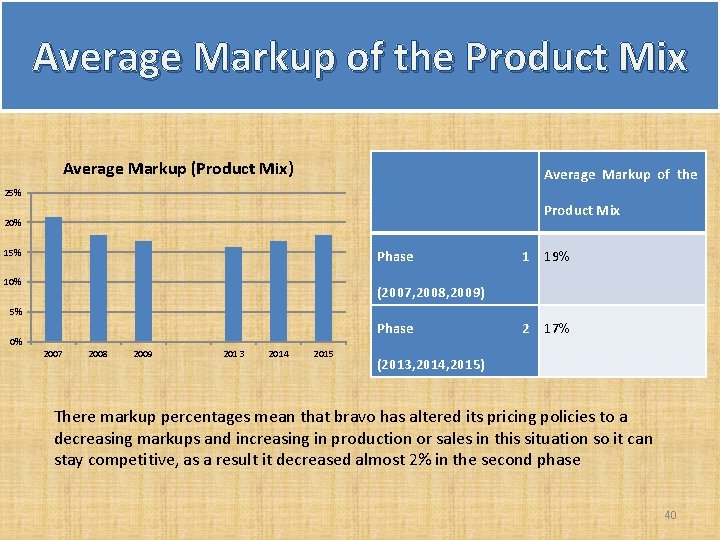
Average Markup of the Product Mix Average Markup (Product Mix) Average Markup of the 25% Product Mix 20% 15% Phase 10% 1 19% (2007, 2008, 2009) 5% Phase 0% 2007 2008 2009 2013 2014 2015 2 17% (2013, 2014, 2015) There markup percentages mean that bravo has altered its pricing policies to a decreasing markups and increasing in production or sales in this situation so it can stay competitive, as a result it decreased almost 2% in the second phase 40
SUMMARY and CONCLUSIONS 41
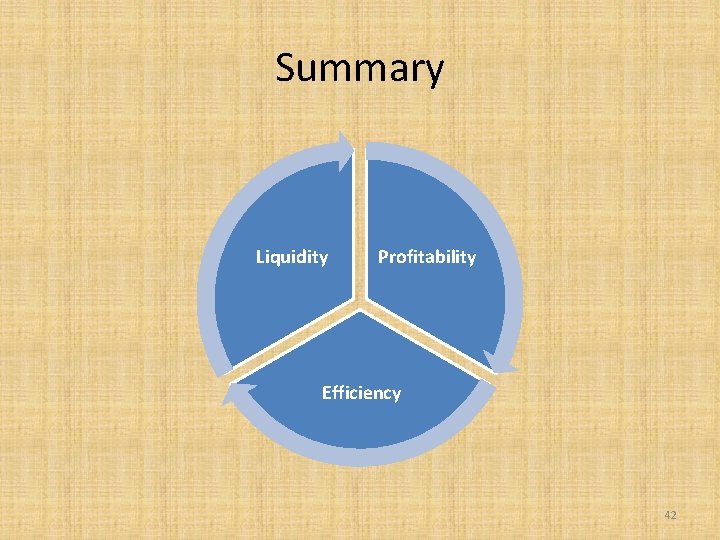
Summary Liquidity Profitability Efficiency 42
Recommendations • Bravo should be More Profitable and increase its liquidity. • Bravo has to increase the net income , it can be partially done by a purchasing strategy and the brand value. • Redesigning the Stores Layouts. • Workforce Efficiency. • Correctly allocating the cost and the overhead 43
44