
The ASEAN Context of Intercultural Communication Roles and
- Slides: 8
The ASEAN Context of Intercultural Communication: Roles and Purposes of Thai ELT Sutraphorn Tantiniranat (Khwan) The Manchester Institute of Education The University of Manchester
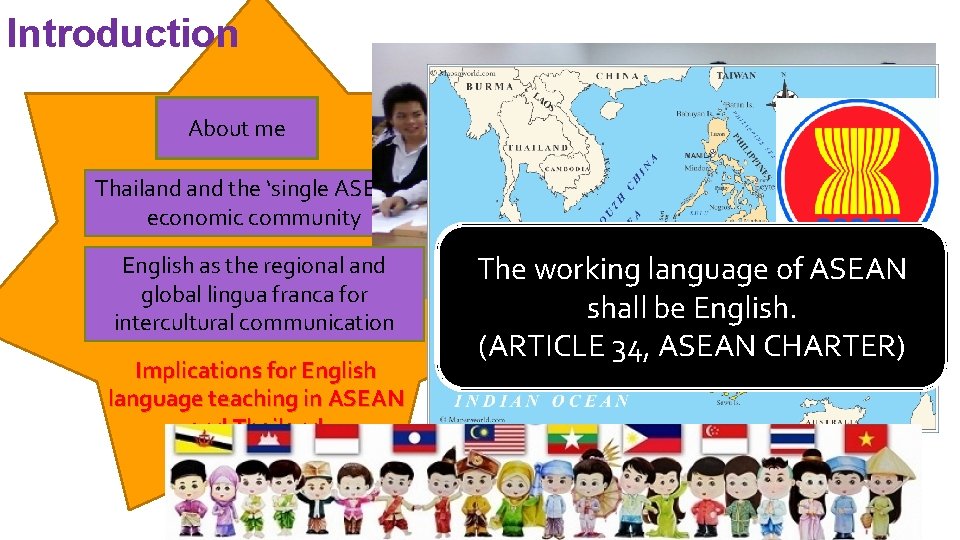
Introduction About me Thailand the ‘single ASEAN’ economic community English as the regional and global lingua franca for intercultural communication Implications for English language teaching in ASEAN and Thailand The working language of ASEAN shall be English. (ARTICLE 34, ASEAN CHARTER)
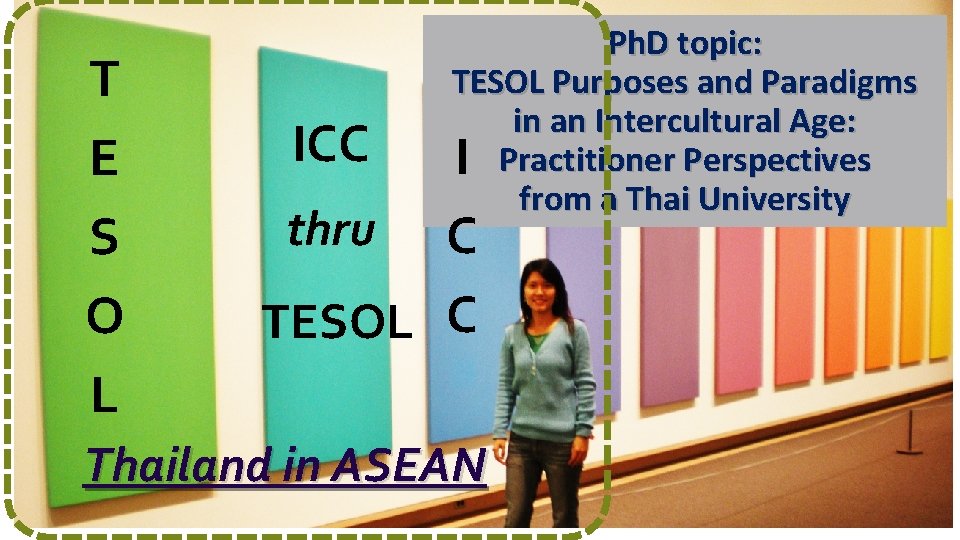
T E S O L ICC thru Ph. D topic: TESOL Purposes and Paradigms in an Intercultural Age: I Practitioner Perspectives from a Thai University C TESOL C Thailand in ASEAN
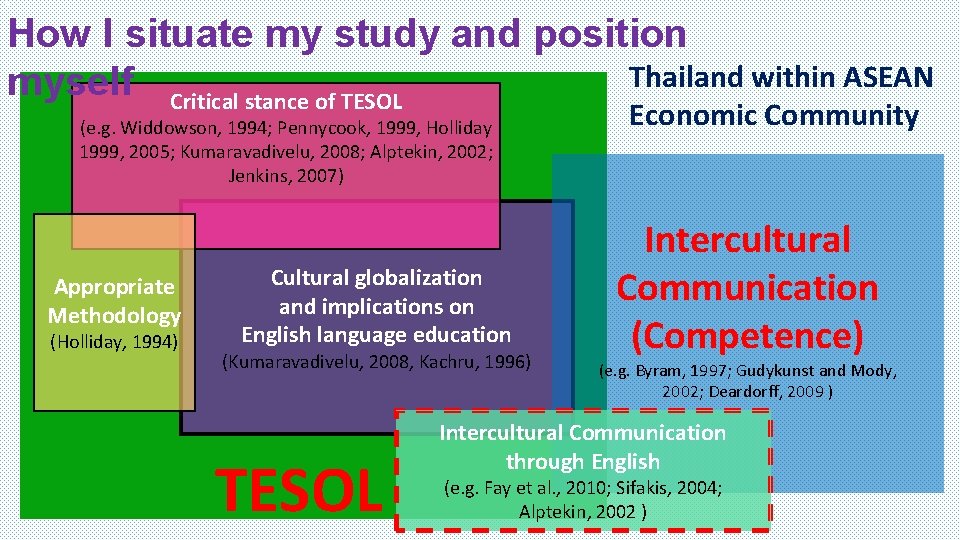
How I situate my study and position Thailand within ASEAN myself Critical stance of TESOL (e. g. Widdowson, 1994; Pennycook, 1999, Holliday 1999, 2005; Kumaravadivelu, 2008; Alptekin, 2002; Jenkins, 2007) Appropriate Methodology (Holliday, 1994) Cultural globalization and implications on English language education (Kumaravadivelu, 2008, Kachru, 1996) TESOL Economic Community Intercultural Communication (Competence) (e. g. Byram, 1997; Gudykunst and Mody, 2002; Deardorff, 2009 ) Intercultural Communication through English (e. g. Fay et al. , 2010; Sifakis, 2004; Alptekin, 2002 )
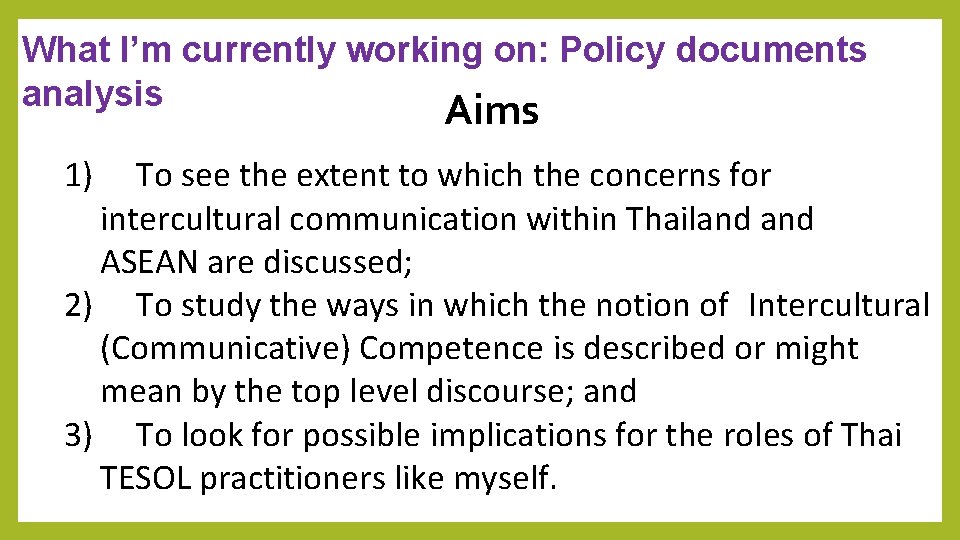
What I’m currently working on: Policy documents analysis Aims 1) To see the extent to which the concerns for intercultural communication within Thailand ASEAN are discussed; 2) To study the ways in which the notion of Intercultural (Communicative) Competence is described or might mean by the top level discourse; and 3) To look for possible implications for the roles of Thai TESOL practitioners like myself.
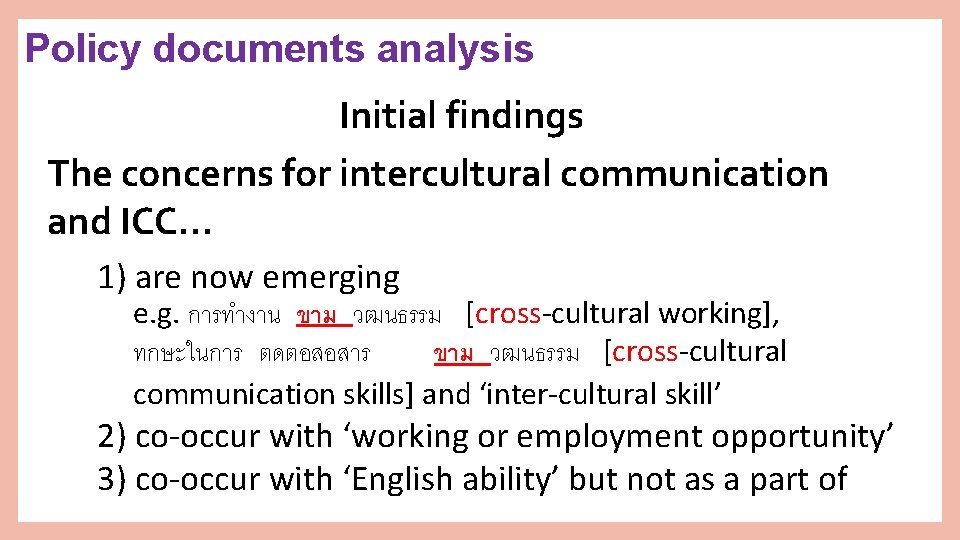
Policy documents analysis Initial findings The concerns for intercultural communication and ICC… 1) are now emerging e. g. การทำงาน ขาม วฒนธรรม [cross-cultural working], ทกษะในการ ตดตอสอสาร ขาม วฒนธรรม [cross-cultural communication skills] and ‘inter-cultural skill’ 2) co-occur with ‘working or employment opportunity’ 3) co-occur with ‘English ability’ but not as a part of
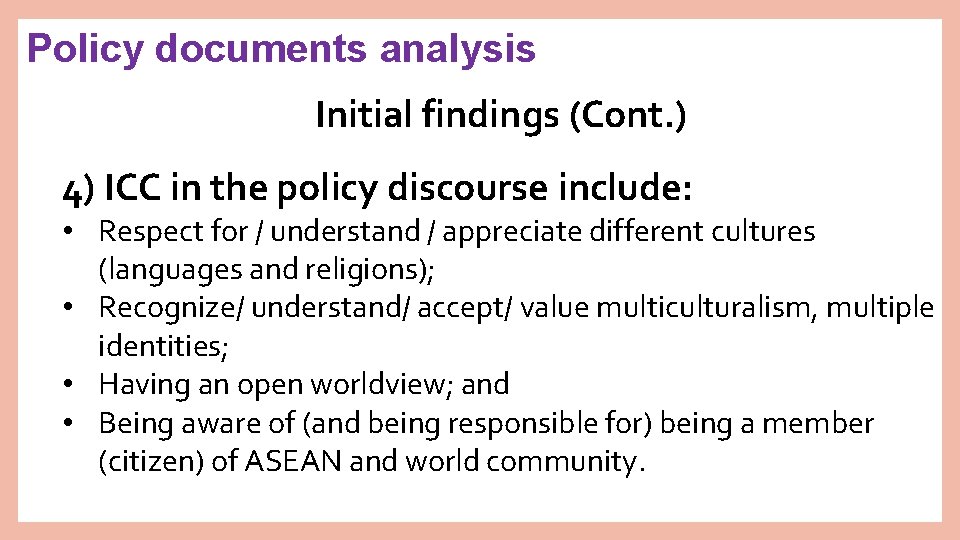
Policy documents analysis Initial findings (Cont. ) 4) ICC in the policy discourse include: • Respect for / understand / appreciate different cultures (languages and religions); • Recognize/ understand/ accept/ value multiculturalism, multiple identities; • Having an open worldview; and • Being aware of (and being responsible for) being a member (citizen) of ASEAN and world community.
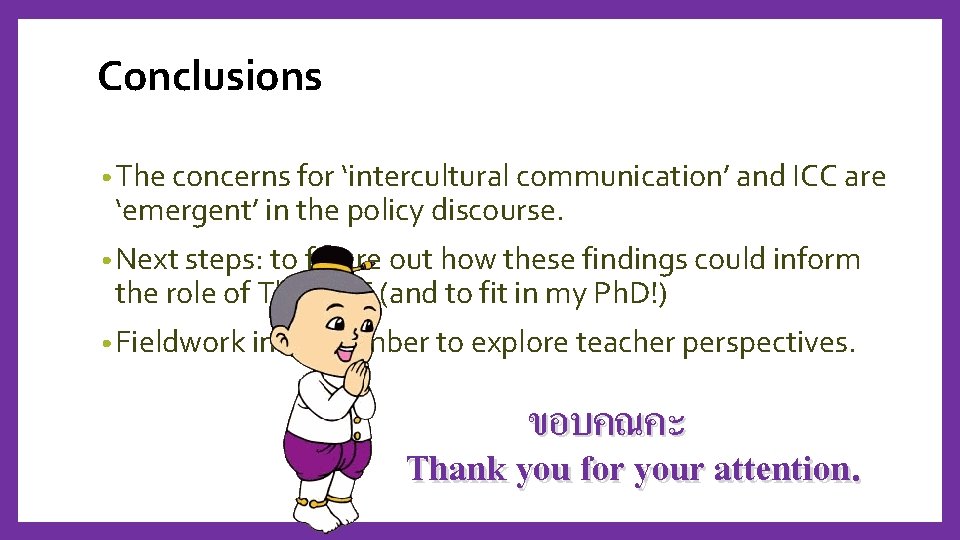
Conclusions • The concerns for ‘intercultural communication’ and ICC are ‘emergent’ in the policy discourse. • Next steps: to figure out how these findings could inform the role of Thai ELT (and to fit in my Ph. D!) • Fieldwork in September to explore teacher perspectives. ขอบคณคะ Thank you for your attention.