
The Aryans Definition Invasion Forced entry intrusion taking

- Slides: 26
The Aryans
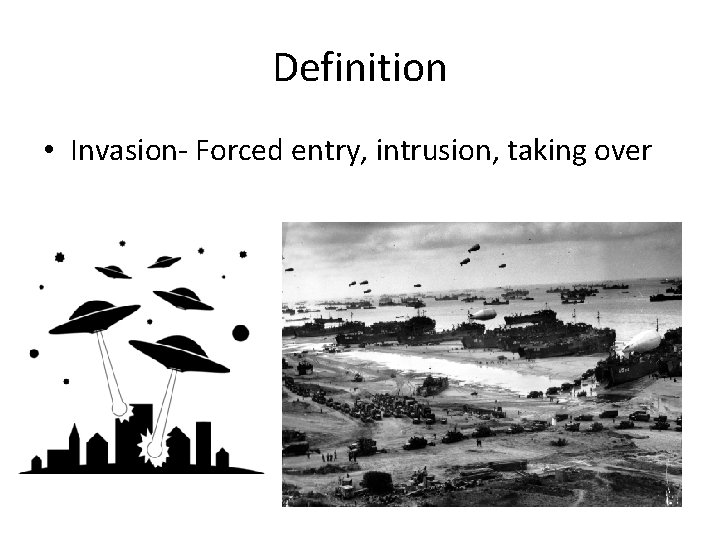
Definition • Invasion- Forced entry, intrusion, taking over
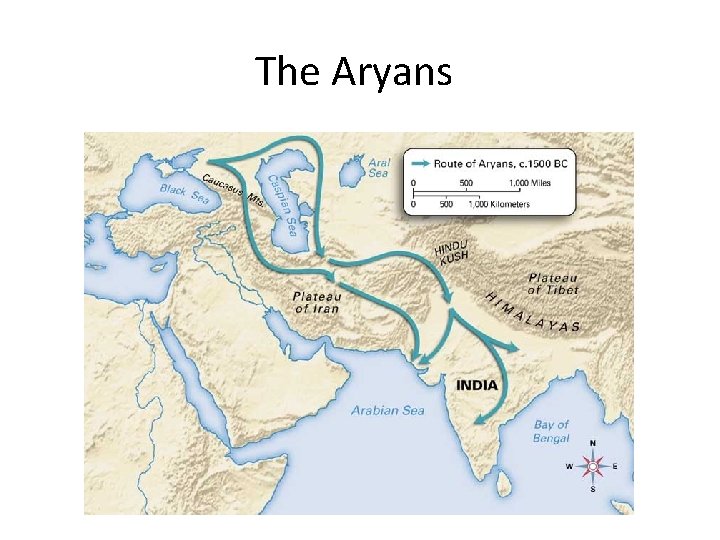
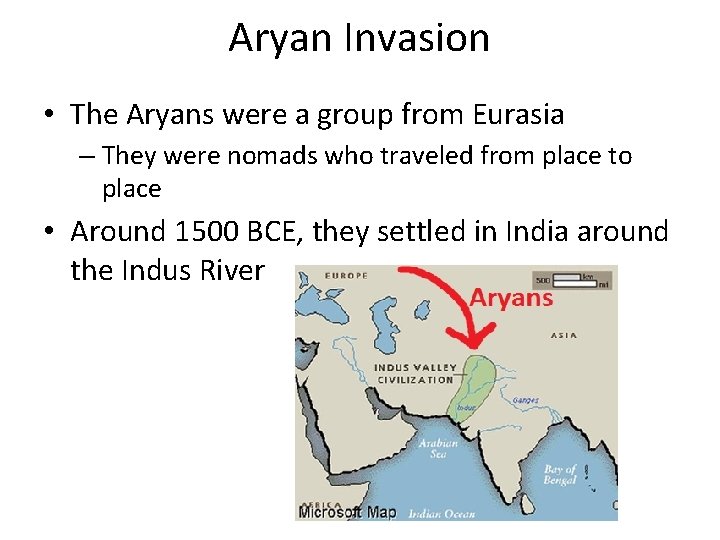
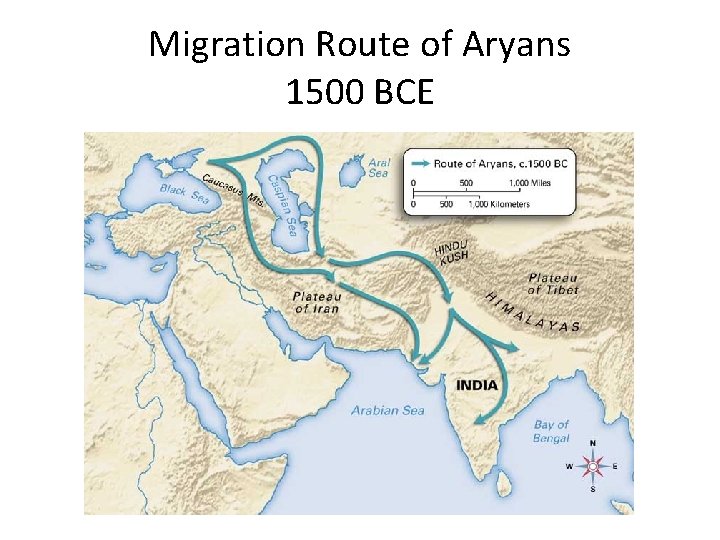
Aryan Invasion • The Aryans were a group from Eurasia – They were nomads who traveled from place to place • Around 1500 BCE, they settled in India around the Indus River
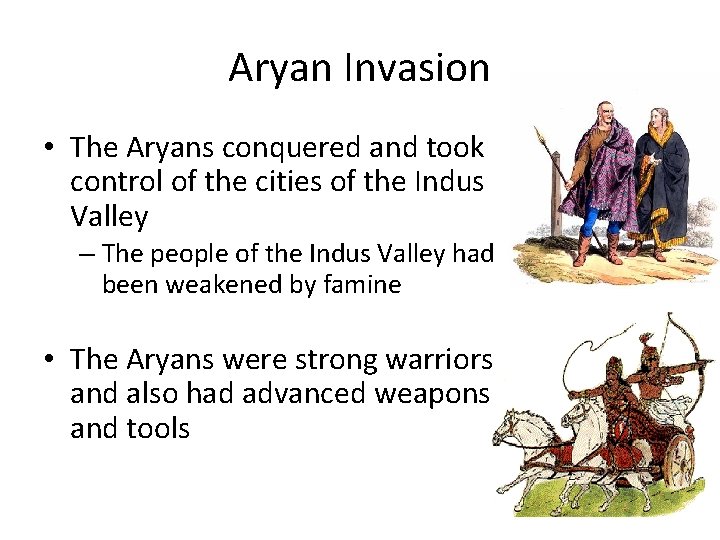
Aryan Invasion • The Aryans conquered and took control of the cities of the Indus Valley – The people of the Indus Valley had been weakened by famine • The Aryans were strong warriors and also had advanced weapons and tools
Migration Route of Aryans 1500 BCE
Cultural Diffusion • Cultural Diffusion- The spreading of culture – Ideas, technology, food, music, clothing, etc. • The Aryans gave up their nomadic lifestyle and settled in India – They brought their culture to India • Over time, Aryan culture merged with the local culture
Impact of Aryan Culture • The Aryans had major influence on Indian culture in 3 major areas • Religion: Hinduism • Written Language: Sanskrit • Social Structure: Caste System
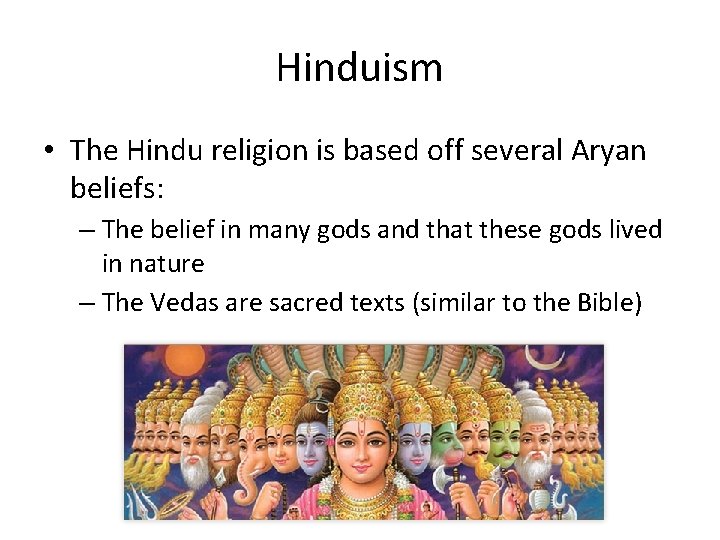
Hinduism • The Hindu religion is based off several Aryan beliefs: – The belief in many gods and that these gods lived in nature – The Vedas are sacred texts (similar to the Bible)
Hinduism • Today Hinduism is practiced by over 1 billion people and is the 3 rd largest religion in the world • It is also the oldest living religion in the world – (Oldest religion that is still practiced- Over 3, 000 years old)
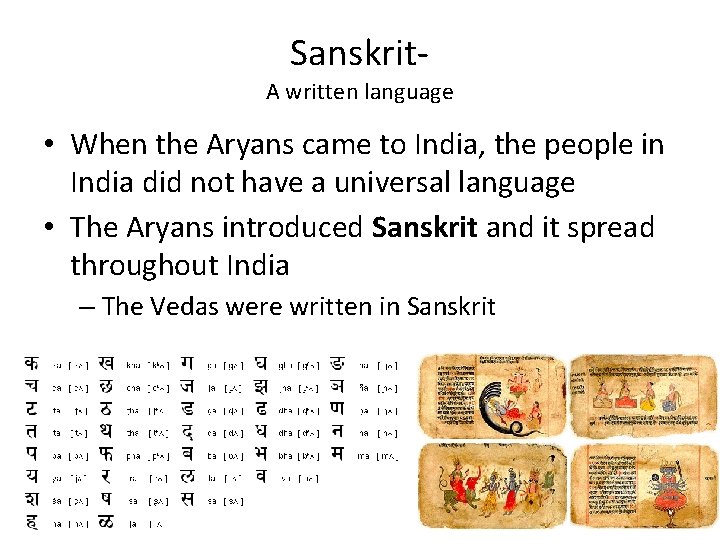
Sanskrit- A written language • When the Aryans came to India, the people in India did not have a universal language • The Aryans introduced Sanskrit and it spread throughout India – The Vedas were written in Sanskrit
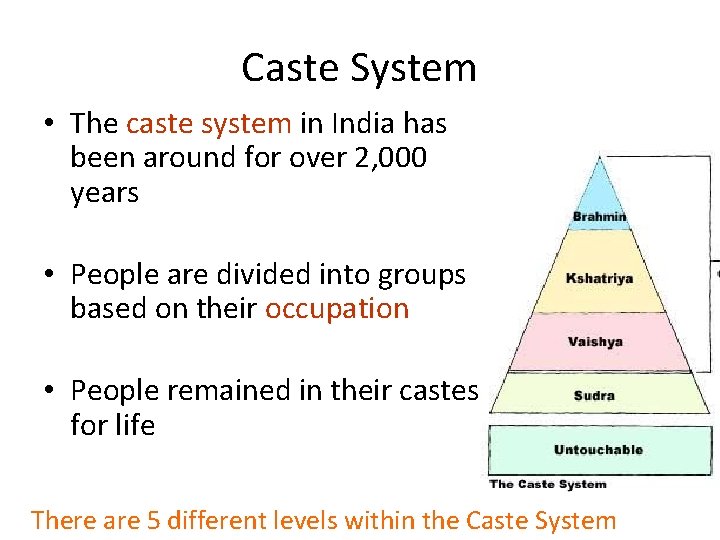
Caste System • The caste system in India has been around for over 2, 000 years • People are divided into groups based on their occupation • People remained in their castes for life There are 5 different levels within the Caste System
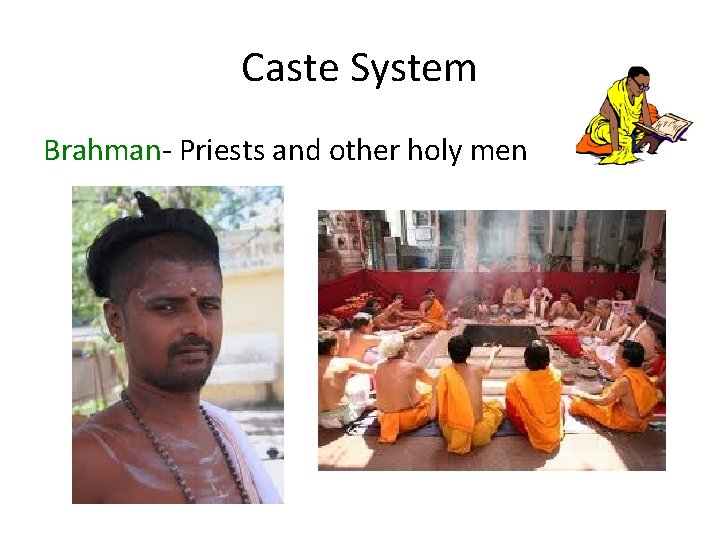
Caste System Brahman- Priests and other holy men
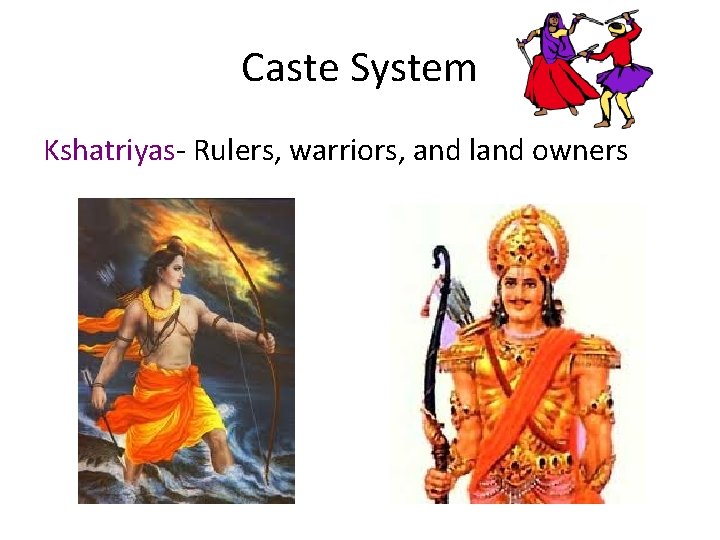
Caste System Kshatriyas- Rulers, warriors, and land owners
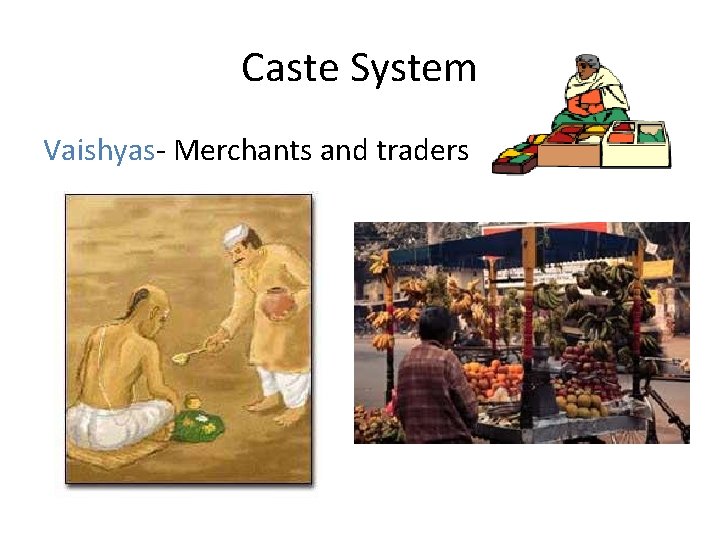
Caste System Vaishyas- Merchants and traders
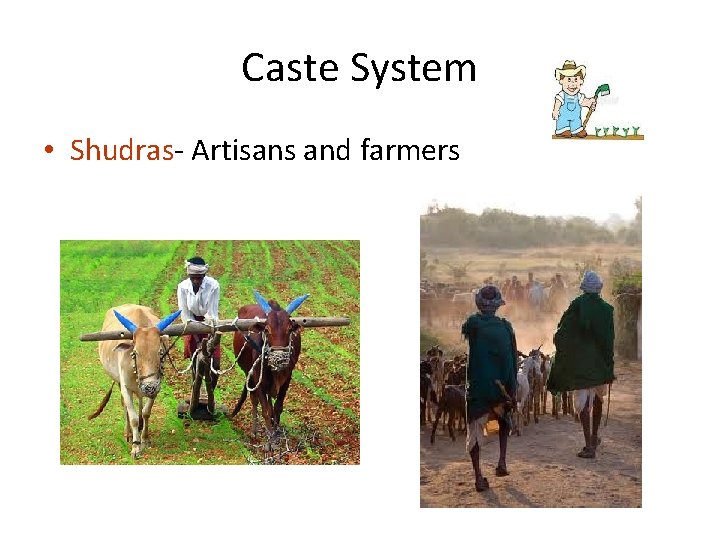
Caste System • Shudras- Artisans and farmers
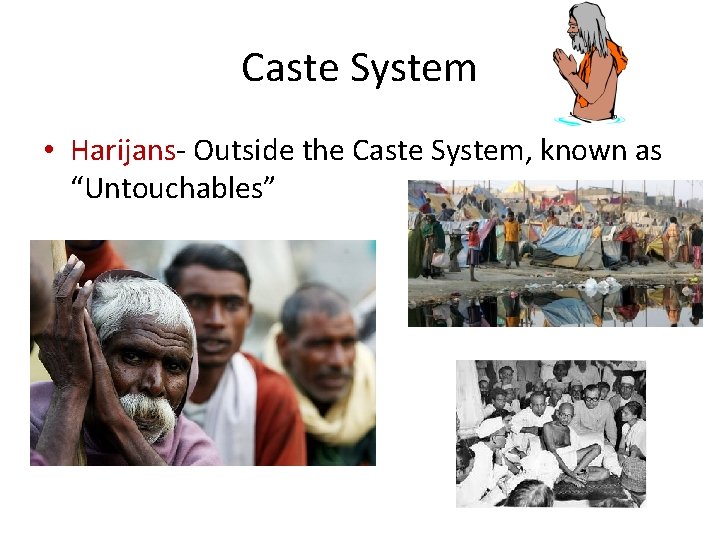
Caste System • Harijans- Outside the Caste System, known as “Untouchables”
Caste System • This was a dominant part of Indian culture until the mid-1900 s when it was made illegal – Although it is illegal, it is still followed in India as an unspoken rule • Gandhi fought for the rights of “untouchables”
Empires of India
Small Kingdoms of India • During the time of the Aryans (1500– 500 BCE), chiefdoms began to develop – Chiefdom- A group of villages under the control of one leader • Over time, these chiefdoms slowly changed into kingdoms with a central government • Most of India began to be divided into small states or kingdoms
Chandragupta Maurya • Strong military commander who rose to power at the age of 20 • United the kingdoms of Northern India, becoming the first true emperor of India • Created a dynasty- His sons would go on to rule the Mauryan Empire
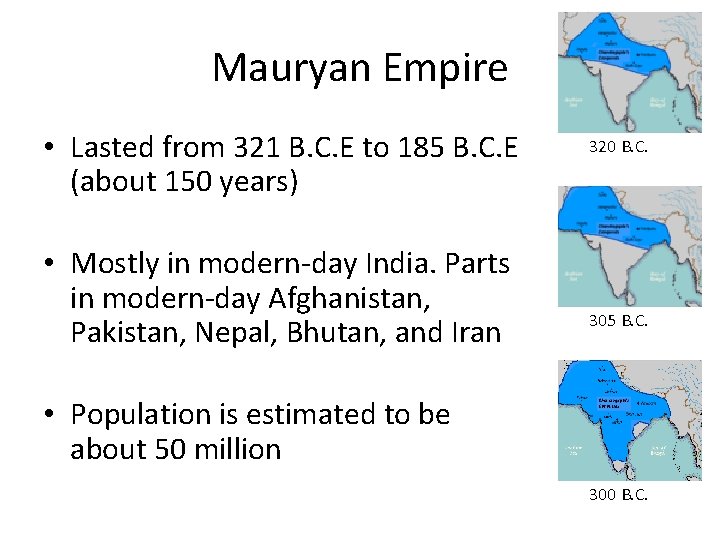
Mauryan Empire • Lasted from 321 B. C. E to 185 B. C. E (about 150 years) • Mostly in modern-day India. Parts in modern-day Afghanistan, Pakistan, Nepal, Bhutan, and Iran 320 B. C. 305 B. C. • Population is estimated to be about 50 million 300 B. C.
Maurya Empire • Developed a trading network across South Asia – Created a system of finance, administration, and security – Created the world’s first currency (money) • Ashoka the Great was the grandson of Chandragupta Maurya (ruled from 265 BCE-238 BCE) – Known for being a strong warrior and then later spreading Buddhism
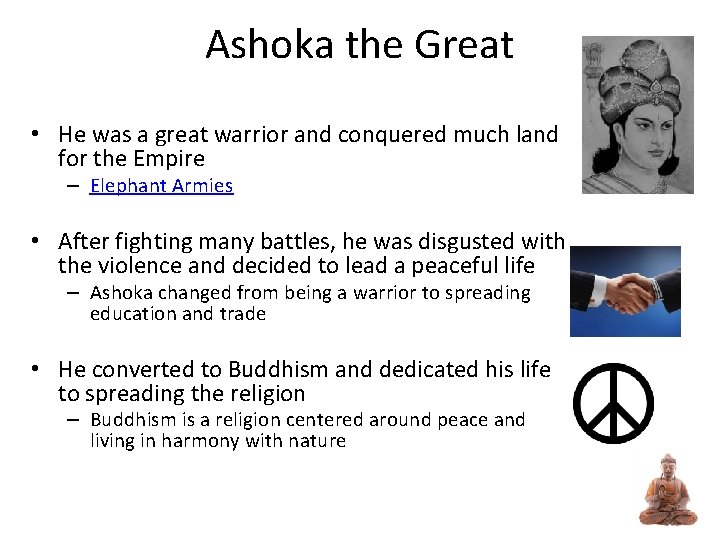
Ashoka the Great • He was a great warrior and conquered much land for the Empire – Elephant Armies • After fighting many battles, he was disgusted with the violence and decided to lead a peaceful life – Ashoka changed from being a warrior to spreading education and trade • He converted to Buddhism and dedicated his life to spreading the religion – Buddhism is a religion centered around peace and living in harmony with nature
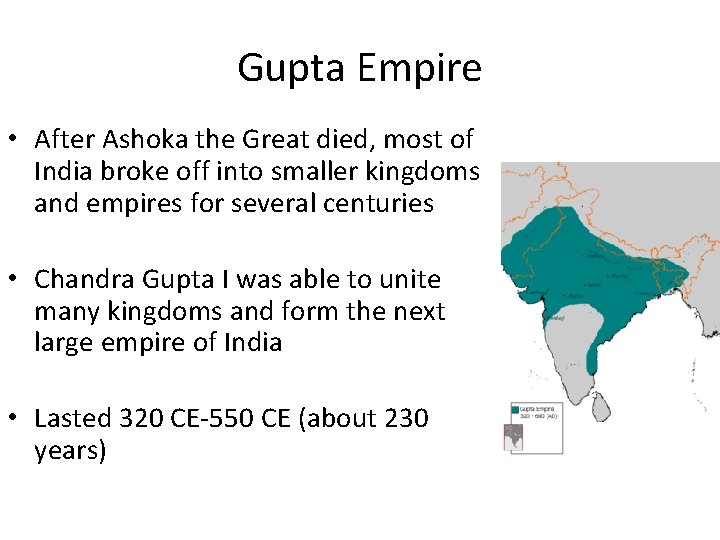
Gupta Empire • After Ashoka the Great died, most of India broke off into smaller kingdoms and empires for several centuries • Chandra Gupta I was able to unite many kingdoms and form the next large empire of India • Lasted 320 CE-550 CE (about 230 years)
Gupta Empire • Built roads, linking cities and towns and increasing trade – India was wealthy under the Gupta Empire • Hinduism became the main religion, although religious freedom was encouraged
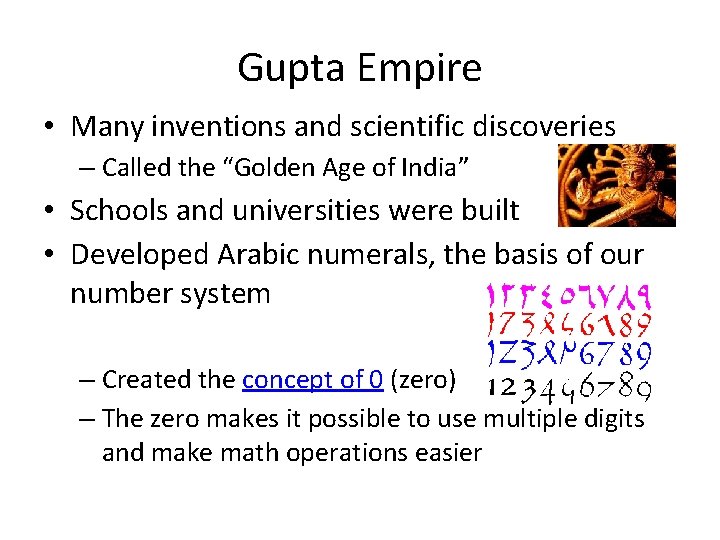
Gupta Empire • Many inventions and scientific discoveries – Called the “Golden Age of India” • Schools and universities were built • Developed Arabic numerals, the basis of our number system – Created the concept of 0 (zero) – The zero makes it possible to use multiple digits and make math operations easier